
lovethailand home >South Travel Attractions >Surat Thani Travel Attractions >Ban Ta Khun >Khao Phang > Khlong Saeng Wildlife Sanctuary
TL;DR: Khlong Saeng Wildlife Sanctuary is located at Khao Phang Subdistrict, Ban Ta Khun District, and connected protected areas in Wiphawadi District, Surat Thani Province, open Daily, with advance permission required for nature-study access, hours 08.30 – 16.30.

Khlong Saeng Wildlife Sanctuary
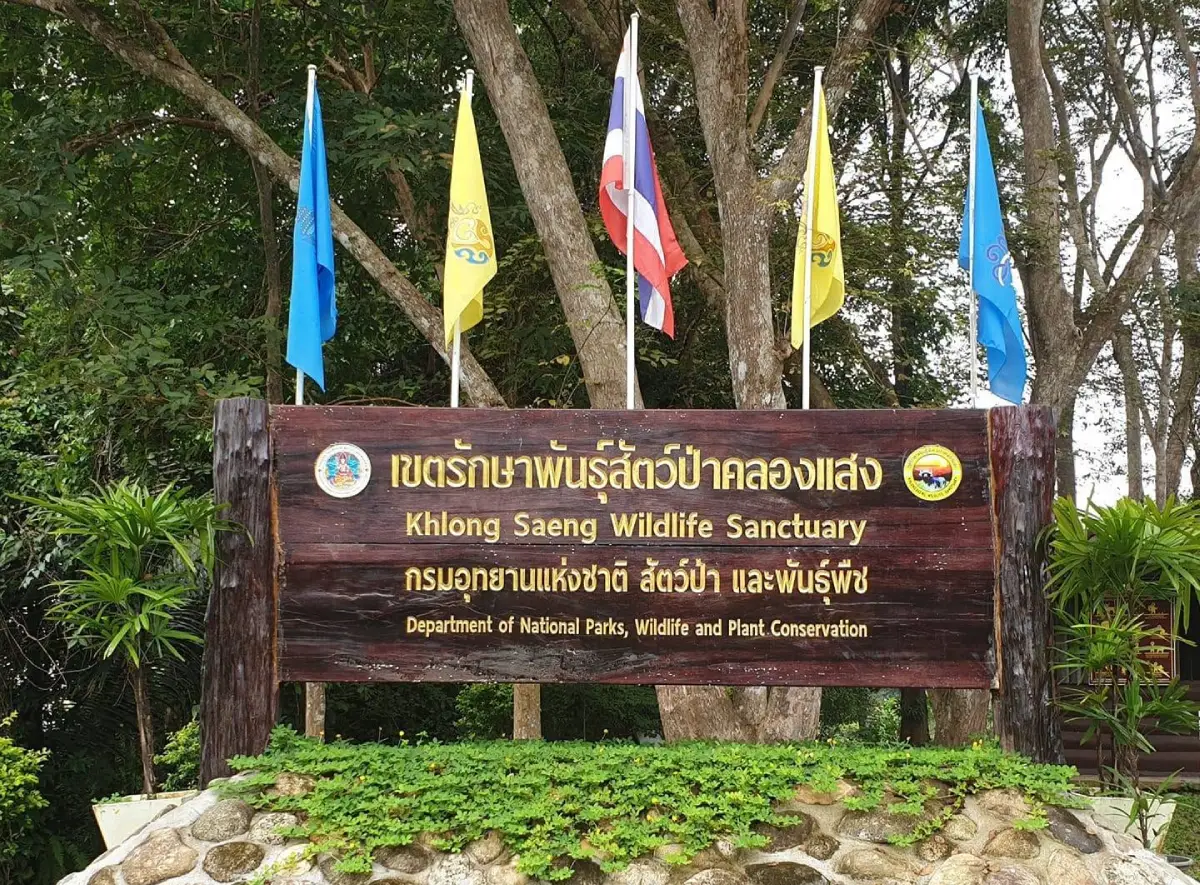
Open Days: Daily, with advance permission required for nature-study access
Opening Hours: 08.30 – 16.30
Khlong Saeng Wildlife Sanctuary in Surat Thani Province is one of southern Thailand’s most important protected forest areas. It is significant for wildlife conservation, watershed protection, biodiversity, and the history of conservation management in Thailand. The sanctuary was declared in 1974 and originally covered 772,500 rai across Takuk Nuea Subdistrict in Wiphawadi District and Khao Phang and Krai Son subdistricts in Ban Ta Khun District. Some areas were later revoked for the construction of Ratchaprapha Dam and its hydropower facilities, but Khlong Saeng remains a vast protected forest connected to Ratchaprapha Reservoir, Khlong Saeng, Khlong Khuan, Khlong Yai, Khlong Ya, Khlong Mon, Khlong Long, Khlong Mui, and the wider Khao Sok-Khlong Saeng forest complex.
The most important point for travelers to understand is that Khlong Saeng is a wildlife sanctuary, not a freely accessible recreational site like a typical national park. Anyone who wants to enter the protected area for nature study, research, documentary filming, or academic work must request permission through the Department of National Parks, Wildlife and Plant Conservation. Applicants must provide the list of visitors, the duration of the visit, the purpose, the necessity, and measures to prevent damage to the sanctuary. This strict process reflects the true role of Khlong Saeng as a wildlife habitat and watershed forest rather than a casual tourist attraction.
The landscape of Khlong Saeng Wildlife Sanctuary is mountainous, rugged, and ecologically rich. Earlier local descriptions record elevations from about 100 metres above sea level, while more recent conservation project data describes elevations from about 60 to 1,395 metres. The area includes steep mountains, tropical evergreen forest, lowland evergreen forest, limestone terrain, and many streams flowing into Ratchaprapha Reservoir. Older information identifies Khao Wong, at 1,272 metres, as an important peak, while later project data identifies Khao Langka Tuek, at 1,395 metres, as the highest peak within the referenced area. These differences come from separate area references and later updates after partial land revocations. What remains clear is that Khlong Saeng is a high, steep, forested watershed landscape within the Tapi River basin.
Khlong Saeng is an important tributary system connected to the Tapi and Phum Duang rivers. In the past, the Khlong Saeng basin was a large and highly fertile lowland tropical forest. After the construction of Ratchaprapha Dam, also known as Cheow Lan Dam, parts of the original river valley were flooded and transformed into a large reservoir. The landscape changed from parts of a forested river basin into a lake surrounded by limestone mountains, cliffs, and islands. Even so, the surrounding forest remains a crucial conservation area that protects plant and animal genetic resources.
What makes Khlong Saeng especially valuable is its wildlife diversity. The sanctuary supports large mammals and rare species such as elephants, gaur, banteng, deer, muntjac, serow, tigers, mouse deer, monkeys, langurs, squirrels, bears, dholes, civets, and small carnivores. It is also home to many birds, including hornbills, great hornbills, helmeted hornbills, raptors, pheasants, great argus, peafowl, and many other forest birds. This diversity shows that Khlong Saeng still retains a strong forest food web and remains one of the important wildlife habitats of southern Thailand.
Two species make the area particularly important for conservation: the hairy-nosed otter and the Asian arowana, locally known as pla taphat or dragon fish. The presence of such rare and sensitive species reflects the quality of wetlands, streams, riparian forest, and reservoir habitats within and around the sanctuary. Khlong Saeng is therefore not only scenic but also biologically significant.
The plant community is dominated by tropical evergreen forest with many important tree and plant species, including takhian thong, takhian hin, yang, siad cho, champa, yoong, krabak, nakhabut, phayom, tabaek, samor phiphek, krathon, wa, palms, bamboo, and rattan. These plants form the structure of the forest: large trees create the canopy, fruiting trees feed wildlife, bamboo and rattan support animal movement and shelter, and the whole forest helps retain moisture and reduce soil erosion.
Khlong Saeng also carries deep historical importance in Thai conservation. After the creation of Cheow Lan Reservoir in 1985, many animals were left stranded in flooded forest areas. Seub Nakhasathien and wildlife conservation officers worked with local labourers to rescue wildlife using boats and floating rafts as field bases. Teams searched islands, logs, trees, and flooded areas day and night. Records from this rescue work state that 116 species and 1,364 individual animals were rescued, including mammals, birds, and reptiles. This event became one of Thailand’s most important lessons on the ecological cost of large dam construction.
The wildlife rescue boat connected with Seub Nakhasathien is still associated with Khlong Saeng, and a project has been developed to preserve it as a memorial and learning space. This makes the sanctuary valuable not only for nature but also for collective memory. It tells the story of forest rangers, conservation officers, and the difficult work of protecting wildlife in a changing landscape.
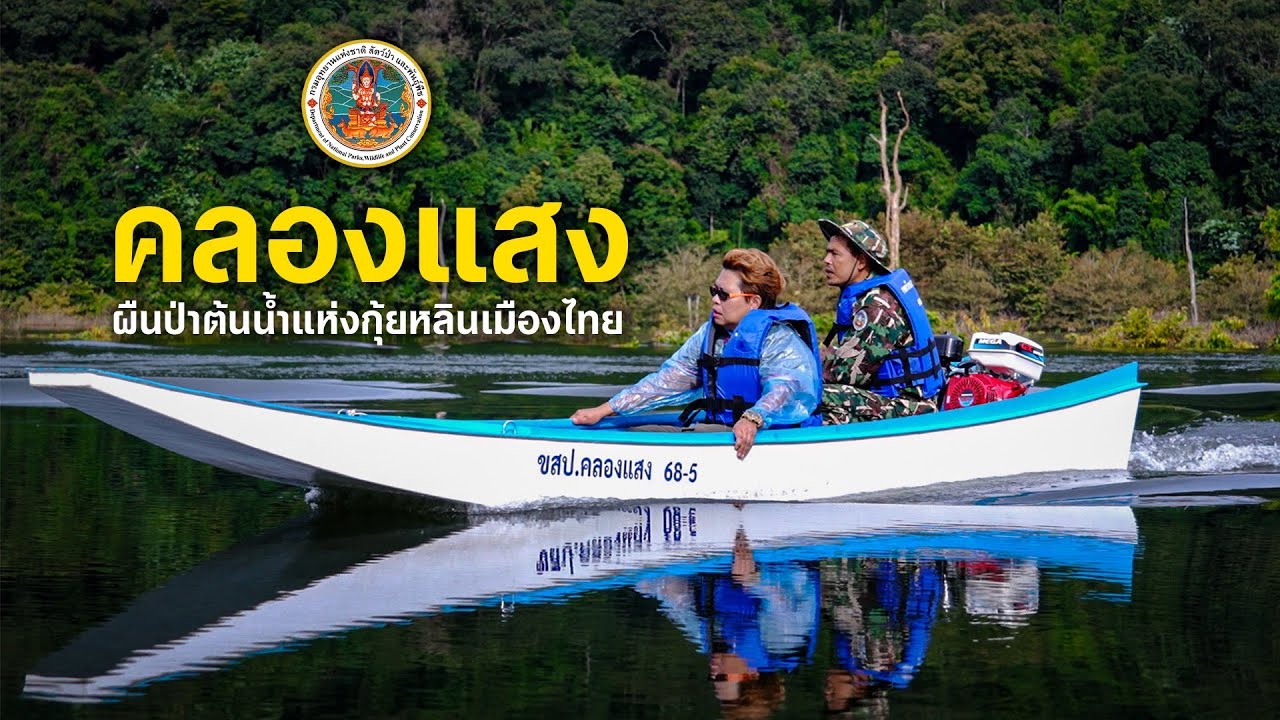
The sanctuary’s field operations include several ranger and patrol areas on both land and water, such as Khlong Yee, Khlong Mon, Khlong Ya, and the temporary Tham Jia floating ranger unit. Some of these units operate on floating platforms within Ratchaprapha Reservoir, functioning as water-based patrol bases. Their work includes preventing illegal hunting, forest encroachment, and illegal resource use, while also monitoring wildlife and coordinating field responses when animals are injured or at risk.
A 2026 report about an injured wild elephant in Khlong Saeng shows that the sanctuary continues to support large wildlife and that fieldwork remains demanding. Officers had to work around dense forest, a large reservoir, and nearby elephant herds. The response involved wildlife veterinarians, food support, patrol teams, camera traps, and drone surveys. This kind of work shows how complex wildlife conservation is in a landscape where forest, water, and large mammals interact closely.
For visitors interested in the area, the most accessible gateway is around Ban Chiew Lan, Ratchaprapha Dam, and the Ban Chiew Lan municipal tourist pier. This area is close to the Khlong Saeng Wildlife Sanctuary office and serves as the starting point for boat trips to floating accommodations on Cheow Lan Lake. Many lake routes pass through scenery connected to the Khlong Saeng and Khao Sok forest landscapes. Travelers often recognize the area through images of limestone mountains, emerald water, floating raft houses, Khao Sam Kloe, and thick forest surrounding the reservoir.
Travelers should distinguish between visiting Cheow Lan Lake and entering Khlong Saeng Wildlife Sanctuary. General visitors can use licensed boat services and floating resorts in permitted tourism areas. Entering the wildlife sanctuary itself for nature study, filming, research, or field access requires permission from the responsible authorities. Understanding this difference helps protect wildlife and ensures that tourism does not violate protected-area regulations.
Getting There usually begins from Surat Thani city or Surat Thani Airport. Travelers take Highway 401 toward Ban Ta Khun District, then turn toward Ratchaprapha Dam for about 12 kilometres. The road continues toward the Ban Chiew Lan tourist pier and the Khlong Saeng Wildlife Sanctuary office area. Directions to Khlong Saeng Wildlife Research Station describe the distance from Surat Thani city as about 70 kilometres. Travelers continuing by boat should arrange boats or floating accommodations in advance and check weather, water levels, and boat schedules before departure.
The Ratchaprapha Dam and Cheow Lan Lake area is the most practical way for travelers to experience the landscape associated with Khlong Saeng without entering restricted sanctuary zones. Common activities include boat sightseeing, overnight stays on floating raft houses, kayaking, morning mist viewing, photographing Khao Sam Kloe, and observing the forested limestone scenery around the lake. These activities should be done only within permitted service areas and with responsible operators.
The best time to travel around Ban Chiew Lan and Ratchaprapha Dam is when rainfall is not continuous, visibility is good, and boat travel is safe. The rainy season makes the forest lush and the lake dramatic, but heavy rain can affect roads and boat operations. Clearer weather is better for boat trips, viewpoints, and photography. Travelers should bring rain protection, suitable footwear, dry bags, and follow all instructions from boat operators and local officers.
Responsible behavior is essential around Khlong Saeng. Visitors should not disturb wildlife, make loud noise, litter, feed animals, collect plants, enter unauthorized routes, or use drones in sensitive areas without permission. The forest is home to elephants, gaur, banteng, hornbills, and many rare species. Good nature travel means keeping distance, reducing disturbance, and allowing wildlife to use the forest naturally.
Khlong Saeng Wildlife Sanctuary is therefore suitable for readers who want to understand Surat Thani’s natural heritage beyond ordinary travel routes. The area reveals the relationship between forest, mountain, river, dam, wildlife, and conservation history. From the surface of Ratchaprapha Reservoir, travelers see limestone cliffs and green forest. Behind that beautiful scenery is a protected watershed, a habitat for rare wildlife, a field base for forest rangers, and one of Thailand’s most meaningful conservation stories.
Visiting Khlong Saeng correctly begins with understanding that this is a sensitive conservation area of national importance, not just a point on a travel map. General travelers can experience the surrounding landscape through permitted routes around Ratchaprapha Dam and Cheow Lan Lake. Those who need to enter the wildlife sanctuary for nature study must obtain permission and follow the regulations of the Department of National Parks, Wildlife and Plant Conservation. This approach helps keep Khlong Saeng a safe home for wildlife, a living classroom, and a natural legacy of southern Thailand.
| Name | Khlong Saeng Wildlife Sanctuary |
| Location | Khao Phang Subdistrict, Ban Ta Khun District, and connected protected areas in Wiphawadi District, Surat Thani Province |
| Address | 45 Moo 3, Khao Phang Subdistrict, Ban Ta Khun District, Surat Thani 84230, Thailand |
| Coordinates | 9.24555, 98.67455 |
| Highlights | Large tropical evergreen forest, Khlong Saeng watershed, habitat of elephants, gaur, banteng, hornbills, hairy-nosed otters, and Asian arowana, plus the conservation history of wildlife rescue after the construction of Cheow Lan Dam |
| History | Declared as a wildlife sanctuary in 1974. The original area was 772,500 rai before partial revocations for Ratchaprapha Dam and hydropower facilities. The current protected area is about 722,068 rai |
| Name Origin | Named after Khlong Saeng, an important stream in the sanctuary and part of the Tapi-Phum Duang river system |
| Distinctive Features | Steep mountains, tropical evergreen forest, lowland evergreen forest, limestone terrain, multiple streams, and areas adjoining Ratchaprapha Reservoir |
| Travel Information | From Surat Thani city, take Highway 401 toward Ban Ta Khun, then turn toward Ratchaprapha Dam for about 12 km. The sanctuary office area is near the Ban Chiew Lan municipal tourist pier |
| Current Status | Active protected wildlife area with ongoing field operations. Nature-study access inside the sanctuary requires permission |
| Open Days | Daily, with advance permission required for nature-study access |
| Opening Hours | 08.30 – 16.30 |
| Nature-Study Permit Fee | No fee |
| Facilities | Wildlife sanctuary office, access route near Ratchaprapha Dam, Khlong Saeng Wildlife Research Station, and visitor service areas around Ban Chiew Lan pier |
| Main Areas / Zones | 1. Khlong Saeng Wildlife Sanctuary Office 2. Khlong Saeng Wildlife Research Station 3. Khlong Saeng Watershed And Main Streams 4. Khlong Yee Ranger Unit 5. Khlong Mon Ranger Unit 6. Khlong Ya Ranger Unit 7. Temporary Tham Jia Ranger Unit 8. Area Adjoining Ratchaprapha Reservoir |
| Caretaker | Pornthawat Chalermwong, Chief of Khlong Saeng Wildlife Sanctuary |
| Related Agencies | Department of National Parks, Wildlife and Plant Conservation, Tel. 02-561-0777; Wildlife Research Division, Tel. 02-940-6934 |
| Nearby Tourist Attractions | 1. Ban Chiew Lan Municipal Tourist Pier, about 1 km 2. Ratchaprapha Dam, about 3 km 3. Ratchaprapha Dam Viewpoint, about 3 km 4. Heart-Shaped Mountain Suspension Bridge, about 7 km 5. Khlong Saeng Market, about 8 km 6. Khao Sam Kloe, about 20 km by boat 7. Khao Na Nai Luang Dharma Park, about 25 km |
| Nearby Restaurants | 1. Khiang Khlong Chiew Larn Restaurant, about 7 km, Tel. 077-313-413 2. Ban Ta Tuk Restaurant, about 10 km 3. Ratchaprapha Dam Guesthouse Restaurant, about 3 km, Tel. 077-310-780 4. 500 Rai Floating Resort Restaurant, about 20 km by boat, Tel. 077-953-013 5. Nang Prai Floating Raft Restaurant, about 20 km by boat, Tel. 092-257-1959, 092-557-8435 6. Baipat Rim Khuean Restaurant, about 5 km |
| Nearby Accommodations | 1. Ratchaprapha Dam Guesthouse, about 3 km, Tel. 077-310-780, 081-956-6449 2. Belong Jin The Dam Resort, about 4 km 3. All Times Pool Villa, about 16 km, Tel. 096-649-2950 4. 500 Rai Floating Resort, about 20 km by boat, Tel. 077-953-013 5. Nang Prai Floating Raft House, about 20 km by boat, Tel. 092-257-1959, 092-557-8435 6. The Laguna Chiewlarn, about 20 km by boat, Tel. 098-445-1929, 082-041-1438 |
Frequently Asked Questions (FAQ)
Q: Where is Khlong Saeng Wildlife Sanctuary located?
A: It is in Surat Thani Province, covering areas of Takuk Nuea in Wiphawadi District and Khao Phang and Krai Son in Ban Ta Khun District. The main access area is near Ratchaprapha Dam and Ban Chiew Lan pier.
Q: Can visitors enter Khlong Saeng Wildlife Sanctuary freely?
A: No. It is not a freely accessible tourist site. Entry for nature study, research, or filming requires permission from the responsible authorities.
Q: What is Khlong Saeng Wildlife Sanctuary known for?
A: It is known for its large tropical evergreen forest, Khlong Saeng watershed, wildlife diversity, and the historic wildlife rescue work after the construction of Cheow Lan Dam.
Q: What wildlife can be found in Khlong Saeng?
A: The sanctuary supports elephants, gaur, banteng, deer, muntjac, serow, bears, dholes, civets, hornbills, great argus, peafowl, hairy-nosed otters, and Asian arowana.
Q: How do travelers get to the Khlong Saeng area?
A: From Surat Thani city, take Highway 401 to Ban Ta Khun District, then turn toward Ratchaprapha Dam. The sanctuary office area is near Ban Chiew Lan municipal tourist pier.
Q: What nearby places can general travelers visit?
A: Travelers can visit Ratchaprapha Dam, Ban Chiew Lan pier, Ratchaprapha Dam viewpoint, the Heart-Shaped Mountain Suspension Bridge, Khlong Saeng Market, and boat routes on Cheow Lan Lake.
Q: Why is Khlong Saeng important to Thai conservation history?
A: It is a major southern rainforest, a habitat for rare wildlife, a watershed forest, and the site connected with the 1985 wildlife rescue after the creation of Cheow Lan Reservoir.
 Category: ●Nature and Wildlife
 Group: ●National Parks and Marine Reserves
Last Update : 2 MonthAgo
 Last Update : 2 MonthAgo
 Click to Access the Navigation Map GPS
Khlong Saeng Wildlife Sanctuary Map
Recommend

 Art, Culture and Heritage
 Landmarks and Memorials(1)
 Art, Craft Centres, Tradition(8)
 Museums(5)
 Educational Places
 Educational Gardens, Farm(1)
 Places of Worship
 Temple(32)
 Other Sacred Sites(8)
 Research and Development
 Royal Project(1)
 Suburban Living
 Village, Community(6)
 Local Market(1)
National Parks and Marine Reserves(8)
 Mountain (Doi)(2)
 Dam, Reservoir, Lake(8)
 Waterfalls(34)
 Hot Springs(7)
 Caves(18)
 River, Canal(11)
 Bays and Beaches(30)
 Islands(16)
 Other natural attractions(10)
 Entertainment and Agricultural
 Animal camps and shows(6)
 Farms, Parks and Ecotourism(7)
 Outdoor and Adventure Activities(2)
 Shopping
 Shopping and Night Market(1)
 Travel Articles, Recipes
 Travel Review, Food Review(1)
 Southern Food Menu, Southern Food Recipes(1)


