
lovethailand home >South Travel Attractions >Surat Thani Travel Attractions >Muang Surat Thani >Wat Pradu > Chak Phra Tradition
TL;DR: Chak Phra Tradition is located at Surat Thani City Municipality, Mueang Surat Thani District, Surat Thani Province, Thailand, open 23 – 31 October 2026, hours According to the daily official event schedule announced by Surat Thani.
Chak Phra Tradition
Open Days: 23 – 31 October 2026
Opening Hours: According to the daily official event schedule announced by Surat Thani Province and Surat Thani City Municipality
The Chak Phra, Kathin Robe Offering, and Long-Boat Racing Festival in Surat Thani is one of the most important Buddhist and cultural festivals in southern Thailand. Held during the period after the End of Buddhist Lent, the festival brings together religious devotion, community merit-making, decorated Buddha boats, riverside traditions, long-boat racing, local arts, and the distinctive way of life of Surat Thani along the Tapi River. For travelers who want to understand southern Thai culture beyond beaches and islands, this festival offers one of the richest cultural experiences in the province.
In 2026, Surat Thani Province and Surat Thani City Municipality have prepared to hold the festival from 23 to 31 October 2026, for a total of 9 days and 9 nights. The official opening ceremony is scheduled for 27 October 2026. The main event areas are expected to remain in central Surat Thani, especially around the Tapi Riverfront, Saphan Narit, Na Mueang Road, Ban Don Road, Si Tapi Road, the City Pillar Shrine, and key procession routes within Surat Thani City Municipality. Visitors who want to see the heart of the tradition should plan their trip around the first waning moon of the 11th lunar month, the day closely associated with the Chak Phra ceremony after Buddhist Lent.
The core meaning of Chak Phra comes from Buddhist belief. According to tradition, after the Lord Buddha spent the rainy-season retreat in Tavatimsa Heaven to teach his mother, he returned to the human world after the end of Buddhist Lent. Devotees welcomed him with joy and invited him to be seated on a beautifully decorated pavilion before carrying him in procession. Southern Thai communities have preserved this belief as the Chak Phra or Lak Phra tradition, in which important Buddha images are placed on decorated Buddha boats and pulled through communities so that people can make merit, pay respect, and receive blessings.
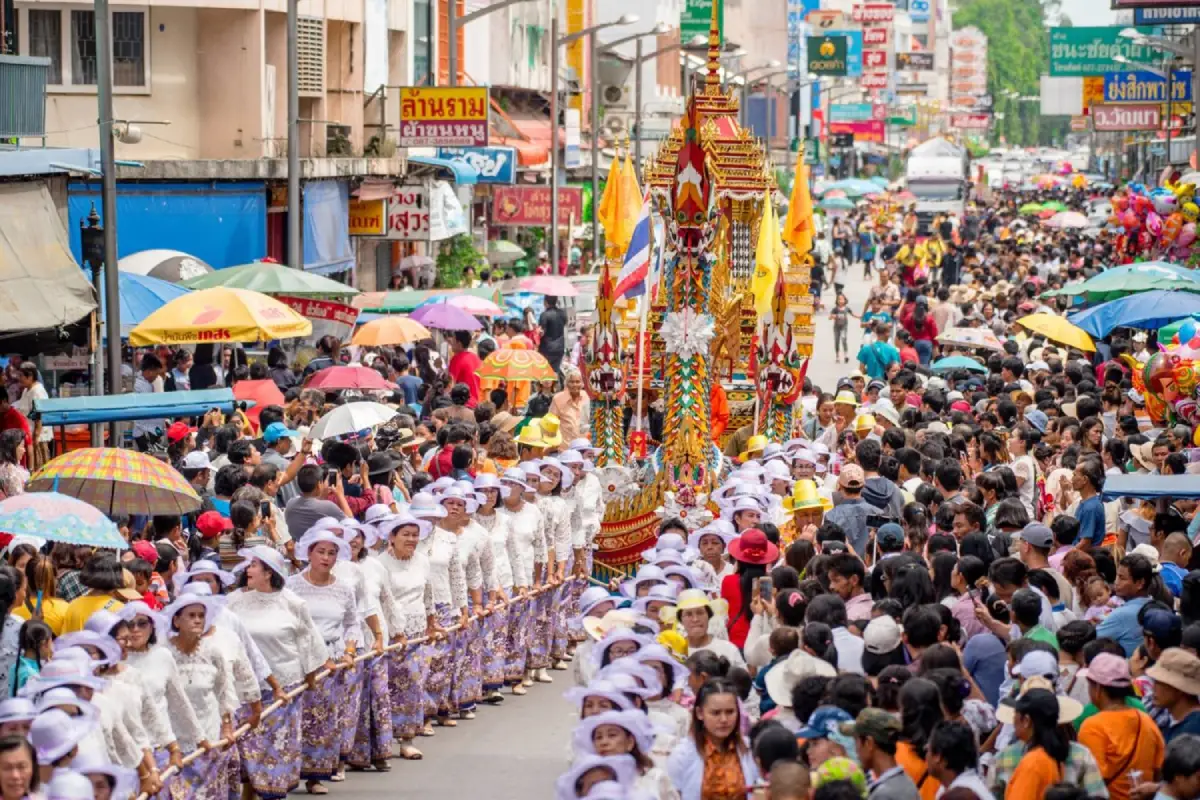
In Surat Thani, the word Chak Phra refers to much more than pulling a ceremonial vehicle. It represents a citywide act of faith that connects temples, homes, streets, rivers, monks, artisans, local communities, and visitors. Each temple prepares a Phanom Phra boat, a decorated ceremonial vehicle that carries a Buddha image. These boats are richly adorned with Thai motifs, naga forms, carved patterns, colorful ornaments, and elevated pavilions. Watching the boats is therefore not only a visual experience; it is also a way to appreciate Buddhist art, local craftsmanship, and the devotion of each community.
One of Surat Thani’s distinctive strengths is that the festival combines both land and water processions. The city has long been connected with the Tapi River, which has served as a transportation route, a source of livelihood, and a cultural gathering space. During the festival, the riverfront near Saphan Narit becomes a major setting for water processions, long-boat races, and ceremonial activities. The sight of decorated Buddha boats and racing boats along the river clearly reflects the relationship between faith and water in southern Thai life.
The land procession is equally important. Temples from different communities bring their decorated Buddha boats into the city. The procession usually moves along major roads, accompanied by dancers, local groups, musicians, devotees, and spectators. The sound of drums, chanting, cheering, and festive movement fills the streets. Visitors can watch the procession from designated areas along the route, particularly near Na Mueang Road, Don Nok Road, the provincial administrative area, and Saphan Narit, depending on the official traffic and procession plan for that year.
Another unique feature of Surat Thani’s festival is the Kathin-style robe offering in front of local homes. Residents prepare robe-offering displays in front of their houses or community spaces, turning ordinary streets into spaces of merit-making. These offerings are not merely decorative objects; they symbolize the participation of households throughout the city. This custom shows how deeply the festival is woven into everyday community life. It is not an event held only on a stage or at one venue. It spreads across homes, roads, temples, and neighborhoods.
The long-boat races add energy and excitement to the festival. Because Surat Thani is closely tied to the Tapi River, boat racing is both a sport and a cultural expression. The races require strength, timing, teamwork, and discipline. Spectators along the riverbank can feel the intensity of the rowers, the rhythm of paddles, and the excitement of the crowd. The royal-trophy long-boat races have become one of the festival’s most anticipated activities and a source of pride for the province.
One well-known idea associated with the festival is the experience of worshipping at one hundred temples and receiving holy water from one hundred vessels in a single day. This phrase reflects the scale and spiritual appeal of the event. During the festival, large numbers of Buddha boats from many temples gather in the city, allowing people to make merit and pay respect to many temple communities in one place. For visitors, this creates a rare opportunity to experience a major collective Buddhist merit-making event in the heart of Surat Thani.
Historically, the Chak Phra, Kathin Robe Offering, and Long-Boat Racing Festival in Surat Thani has been passed down for generations. Although there is no single confirmed starting year, the province has deep Buddhist and cultural roots, including historical connections with the Srivijaya period and the ancient center of Chaiya. These long-standing religious and artistic traditions have helped shape Surat Thani’s strong Buddhist cultural identity, which continues to be expressed through the festival today.
In modern times, the festival has developed into a major cultural tourism event while keeping its religious core. Surat Thani Province, Surat Thani City Municipality, the Provincial Administrative Organization, temples, cultural offices, tourism agencies, private organizations, and local communities work together to organize the event. Alongside the traditional ceremonies, visitors can enjoy decorated Buddha boat contests, robe-offering contests, exhibitions, cultural zones, light and sound performances, drone shows, and various community activities. This combination allows the festival to remain rooted in tradition while becoming accessible to younger generations and travelers.
For first-time visitors, understanding the main event areas is essential. The Tapi Riverfront and Saphan Narit are key locations for exhibitions, riverside ceremonies, long-boat races, evening activities, and large public gatherings. The land procession moves through important roads in the city, while the City Pillar Shrine and nearby areas may be connected with religious and ceremonial activities. Checking the official traffic announcements before attending is important because roads may be temporarily closed during major processions.
The morning of the first waning moon of the 11th lunar month is especially important. This is when the Chak Phra tradition reaches its symbolic peak. Visitors can expect a strong atmosphere of merit-making, decorated Buddha boats, robe-offering activities, and processions. During the afternoon, the riverfront is suitable for watching boat races or exhibitions. In the evening, the atmosphere changes again with lights, cultural performances, and festival crowds along the river.
When viewing the Buddha boats, travelers should pay attention to their artistic details. Each temple presents its own identity through design, color, ornamentation, and craftsmanship. Some boats emphasize delicate traditional beauty, while others are larger and more spectacular. The pavilion that carries the Buddha image is the heart of the boat, while naga designs and Thai motifs often decorate the front, sides, and roof. These details reveal the amount of labor, faith, and artistry invested by each temple community.
Another important symbol is khanom tom, a traditional sweet associated with the festival. Local households prepare khanom tom as part of the merit-making tradition, often offering or hanging it on the Buddha boats. For visitors, this sweet should be understood not only as local food but also as a ritual object connected with faith, generosity, and Buddhist celebration after Lent.
The festival is also a clear expression of community cooperation. Building and decorating a Buddha boat requires many people: monks, craftsmen, decorators, donors, organizers, musicians, dancers, procession teams, and local residents. Each person contributes in a different way. The festival survives because of this collective effort. Watching the procession therefore allows travelers to see the living strength of community culture rather than a staged performance alone.
As a travel experience, the Surat Thani Chak Phra Festival is highly practical because it takes place in the city center. Visitors have access to the airport, railway station, bus services, hotels, restaurants, markets, riverfront areas, and nearby attractions. A traveler can spend a full day at the festival, stay overnight in the city, and continue to nearby places such as Ko Lamphu, Surat Thani City Pillar Shrine, Wat Phatthanaram, or Pracha Rat Floating Market at Bang Bai Mai.
Travelers visiting for the first time should consider staying in the city center, especially around Talat, Na Mueang Road, Talat Mai Road, Karunrat Road, or areas close to Saphan Narit. These locations make it easier to walk or take a short ride to the event area. Because the festival attracts large crowds, hotels should be booked in advance. Those driving into the city should check official road-closure announcements and parking instructions before departure.
Getting There is convenient by several modes of transport. Travelers arriving by air can fly to Surat Thani Airport and continue by road into the city. Those arriving by train can get off at Surat Thani Railway Station in Phunphin District and take local transport into the city center. Long-distance buses also connect Surat Thani with other provinces. Once in the city, visitors can head toward Saphan Narit, the Tapi Riverfront, and the main procession routes announced for that year.
Visitors should dress respectfully and comfortably. Lightweight modest clothing, comfortable shoes, an umbrella or hat, and drinking water are recommended. Because the event includes religious activities, visitors should avoid blocking processions, entering restricted areas, or behaving disrespectfully near Buddha boats and ceremonial spaces. Photographers should arrive early, choose safe viewpoints, and avoid obstructing monks, dancers, rowers, or procession participants.
For photography, the best moments include the morning ceremony, the land procession of decorated Buddha boats, the long-boat races along the Tapi River, and the illuminated evening atmosphere. Each period offers a different mood. The morning is spiritual and ceremonial, the procession is colorful and energetic, the boat races are exciting, and the evening is visually dramatic with lights, performances, and riverside crowds.
Families visiting the festival can use it as a cultural learning experience for children. The event introduces young visitors to Buddhist Lent, merit-making, temple traditions, decorated Buddha boats, robe offerings, local sweets, long-boat racing, and community cooperation. It shows that Thai traditions are not only subjects in books but living practices maintained by real communities.
Compared with many cultural festivals, Surat Thani’s Chak Phra Festival is especially complete. It combines religion, art, craft, community, sport, river culture, and urban tourism in one event. Visitors do not have to choose between a solemn ritual and a lively festival atmosphere because both are present. In the morning, they can experience merit-making and processions. In the afternoon, they can watch boat races. In the evening, they can enjoy cultural shows and the atmosphere of the city by the Tapi River.
The festival also shows how local traditions can adapt to the modern era. Exhibitions, light and sound shows, drone displays, and cultural stages help make the tradition more accessible to contemporary audiences. At the same time, the core remains the same: bringing Buddha images onto decorated boats, making merit after Buddhist Lent, offering robes, and strengthening community bonds. This balance between preservation and adaptation is one reason the festival continues to attract both local people and travelers.
To make the trip more complete, visitors can combine the festival with nearby places such as Surat Thani City Pillar Shrine, Ko Lamphu, Ko Lamphu Park, Wat Phatthanaram, Talat San Chao, Pracha Rat Floating Market at Bang Bai Mai, and riverside restaurants. These stops help travelers understand the city’s religious life, river culture, food scene, and local neighborhoods beyond the main festival area.
Overall, the Chak Phra, Kathin Robe Offering, and Long-Boat Racing Festival in Surat Thani is one of the most meaningful cultural journeys in southern Thailand. It gathers Buddhist faith, decorated Buddha boats, robe offerings, river traditions, long-boat racing, local craftsmanship, and community spirit into one major event. Visitors leave not only with photographs of a beautiful festival, but also with a deeper understanding of why this tradition remains one of Surat Thani’s most important cultural treasures.
| Name | Chak Phra, Kathin Robe Offering, and Long-Boat Racing Festival, Surat Thani |
| Location | Surat Thani City Municipality, Mueang Surat Thani District, Surat Thani Province, Thailand |
| Main Event Areas | Tapi Riverfront, Saphan Narit, Na Mueang Road, Ban Don Road, Si Tapi Road, the City Pillar Shrine, and procession routes in Surat Thani City Municipality |
| Main Coordinates | Saphan Narit and the Tapi Riverfront, Mueang Surat Thani District, Surat Thani Province |
| Highlights | Decorated land and water Buddha boats, home-front robe offerings, robe-offering contests, royal-trophy long-boat races, exhibitions, cultural zones, light and sound shows, and large-scale Buddhist merit-making |
| History | A southern Thai post-Buddhist Lent tradition rooted in the belief of welcoming the Lord Buddha after his return from Tavatimsa Heaven, preserved in Surat Thani for generations |
| Name Origin | Chak Phra means pulling or drawing a Buddha image placed on a decorated ceremonial boat through the community for public merit-making and worship |
| Distinctive Features | A combination of land and water Chak Phra processions, home-front robe offerings, decorated Buddha boats from many temples, and long-boat racing along the Tapi River |
| Travel Information | Reach Surat Thani city by plane, train, bus, or private car, then continue to Saphan Narit, the Tapi Riverfront, and official procession routes in the city center |
| Current Status | The festival continues to be organized annually. The 2026 event is scheduled for 23 – 31 October 2026 for 9 days and 9 nights, with the opening ceremony scheduled for 27 October 2026. |
| Open Days | 23 – 31 October 2026 |
| Opening Hours | According to the daily official event schedule announced by Surat Thani Province and Surat Thani City Municipality |
| Facilities | Riverfront event areas, procession viewing spots, cultural zones, markets, restaurants, city hotels, local transport, and public services arranged by local authorities during the festival |
| Main Areas / Zones | Saphan Narit zone, Tapi Riverfront zone, land Buddha boat procession zone, water procession zone, long-boat racing zone, exhibition zone, cultural performance zone, and home-front robe-offering areas |
| Caretaker / Related Organizations | Surat Thani Province, Surat Thani City Municipality, Surat Thani Provincial Administrative Organization, Surat Thani Provincial Cultural Office, Tourism Authority of Thailand Surat Thani Office, temples, communities, and local partners |
| Main Contact Number | Surat Thani City Municipality, Tel. 077-272513 |
| Official Website / Official Page | Surat Thani City Municipality website, Surat Thani Province website, Public Relations Department websites, and official Chak Phra Surat Thani publicity channels |
| Nearby Tourist Attractions | 1. Surat Thani City Pillar Shrine, about 1 km 2. Ko Lamphu, about 2 km 3. Ko Lamphu Park, about 2 km 4. Wat Phatthanaram Royal Temple, about 2 km 5. Pracha Rat Floating Market at Bang Bai Mai, about 6 km |
| Nearby Restaurants | 1. Khao Phra Ram Long Song Lao O, about 1 km, Tel. 084-266-3008, 081-538-2875 2. Sun Hiang Restaurant, about 1 km, Tel. 077-281-367, 077-272-180 3. Good Cafe Suratthani, about 2 km, Tel. 063-789-5982 4. The Riverside, about 3 km, Tel. 077-210-162, 083-740-9981 5. Artia Seafood, about 9 km, Tel. 077-200-390, 089-926-3809 |
| Nearby Accommodations | 1. CBD Hotel Surat Thani, about 1 km, Tel. 077-281999 2. Rajthani Hotel, about 1 km, Tel. 077-203141, 077-203142 3. The Port Hostel, about 1 km, Tel. 086-5954444 4. Blu Monkey Hub & Hotel Suratthani, about 2 km, Tel. 092-5395939 5. S.22 Hotel Suratthani, about 3 km, Tel. 081-8205496 |
Frequently Asked Questions (FAQ)
Q: When is the Surat Thani Chak Phra Festival held?
A: The festival is held after the End of Buddhist Lent. In 2026, it is scheduled for 23 – 31 October 2026 for 9 days and 9 nights.
Q: Where does the festival take place?
A: The main areas are in Surat Thani city, especially the Tapi Riverfront, Saphan Narit, Na Mueang Road, Ban Don Road, Si Tapi Road, and official procession routes within Surat Thani City Municipality.
Q: What are the main highlights of the festival?
A: Highlights include decorated land and water Buddha boats, home-front robe offerings, merit-making with many temples, robe-offering contests, royal-trophy long-boat races, exhibitions, cultural performances, and evening light displays.
Q: What is the best time to visit?
A: The morning of the first waning moon of the 11th lunar month is best for the main Chak Phra ceremony and Buddha boat processions, while the afternoon is good for long-boat races and the evening for cultural shows.
Q: What is the Buddhist meaning of Chak Phra?
A: The tradition is linked to the belief that the Lord Buddha returned from Tavatimsa Heaven after Buddhist Lent, and devotees welcomed him by carrying or pulling him in procession.
Q: How can travelers get to the festival?
A: Travelers can reach Surat Thani by plane, train, bus, or private car, then continue to Saphan Narit, the Tapi Riverfront, or the official procession routes in the city center.
Q: Are there hotels near the festival area?
A: Yes. Nearby options include CBD Hotel Surat Thani, Rajthani Hotel, The Port Hostel, Blu Monkey Hub & Hotel Suratthani, and S.22 Hotel Suratthani.
Q: How should visitors prepare for the festival?
A: Visitors should dress modestly, wear comfortable shoes, bring sun or rain protection, check official traffic announcements, and avoid blocking processions or religious ceremonies.
 Category: ●Art, Culture and Heritage
 Group: ●Art, Craft Centres, Tradition
Last Update : 2 MonthAgo
 Last Update : 2 MonthAgo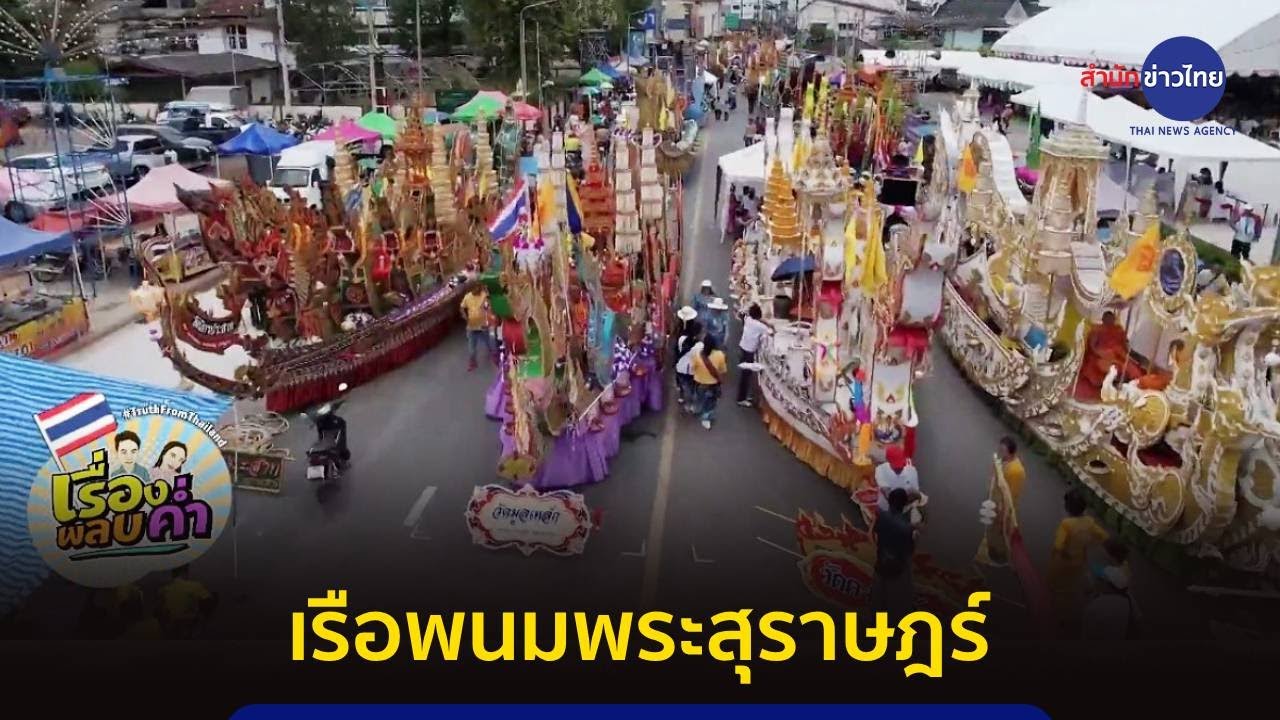

 Landmarks and Memorials(1)
Art, Craft Centres, Tradition(8)
Landmarks and Memorials(1)
Art, Craft Centres, Tradition(8)
 Museums(5)
 Educational Places
 Educational Gardens, Farm(1)
 Places of Worship
 Temple(32)
 Other Sacred Sites(8)
 Research and Development
 Royal Project(1)
 Suburban Living
 Village, Community(6)
 Local Market(1)
 Nature and Wildlife
 National Parks and Marine Reserves(8)
 Mountain (Doi)(2)
 Dam, Reservoir, Lake(8)
 Waterfalls(34)
 Hot Springs(7)
 Caves(18)
 River, Canal(11)
 Bays and Beaches(30)
 Islands(16)
 Other natural attractions(10)
 Entertainment and Agricultural
 Animal camps and shows(6)
 Farms, Parks and Ecotourism(7)
 Outdoor and Adventure Activities(2)
 Shopping
 Shopping and Night Market(1)
 Travel Articles, Recipes
 Travel Review, Food Review(1)
 Southern Food Menu, Southern Food Recipes(1)


