
lovethailand home >South Travel Attractions >Surat Thani Travel Attractions >Phanom >Ton Yuan > Pra Kai Petch Cave
TL;DR: Pra Kai Petch Cave, Surat Thani attractions : Nature and Wildlife, Caves.

Pra Kai Petch Cave
Open Days: Access is subject to Khao Sok National Park authorization, weather conditions and boat operations on Cheow Lan Lake. Current 2026 tour programs continue to include Pra Kai Petch Cave.
Opening Hours: The recommended visiting period is approximately 09:00–16:00 on a dry day with suitable weather. Confirm current cave and boat access before departure.
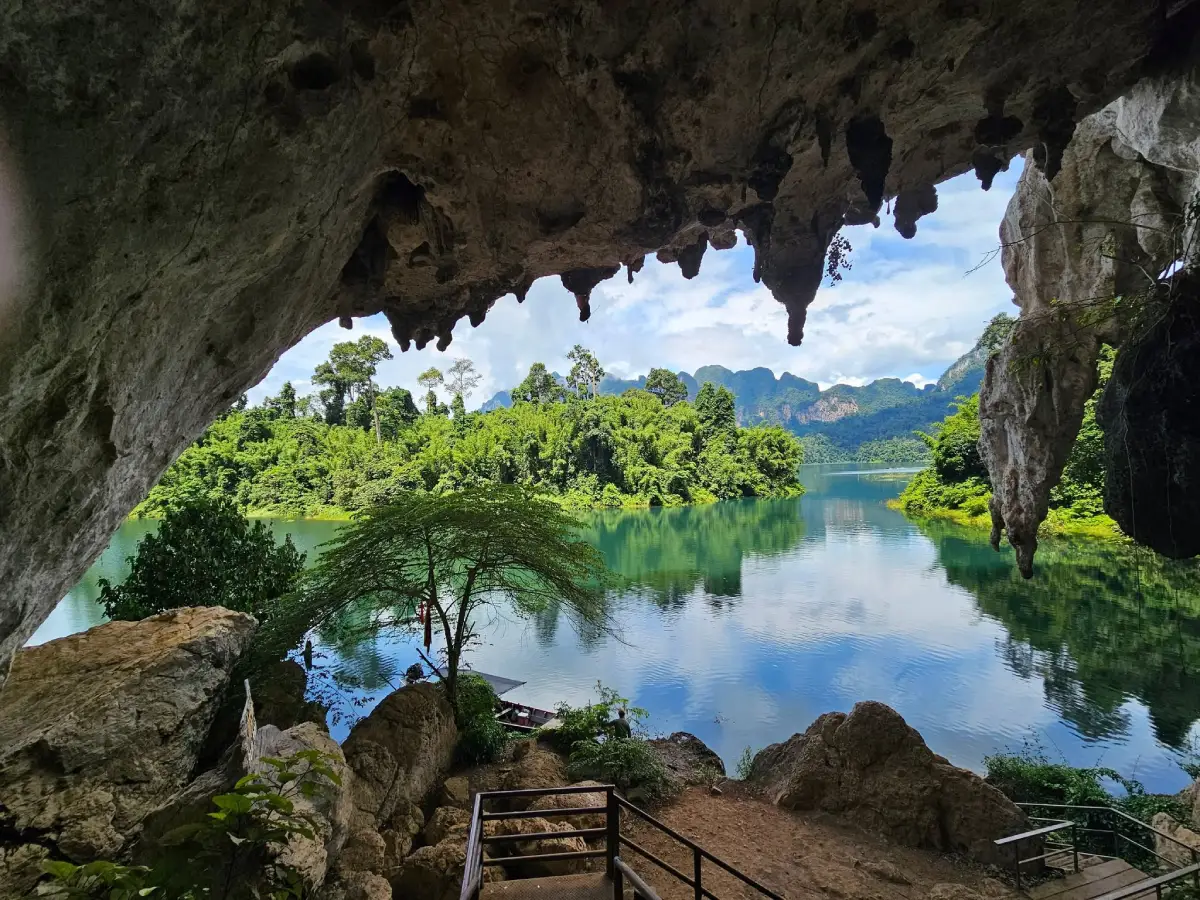
Pra Kai Petch Cave is a limestone cave inside the Ratchaprapha Dam reservoir, or Cheow Lan Lake, in Khao Sok National Park, Surat Thani. The cave is approximately 100 meters long and is known for stalactites, stalagmites, coral-like limestone formations and mineral surfaces that sparkle when illuminated, giving the cave its name. The cave remains part of current Cheow Lan Lake tourism itineraries in 2026 and is reached by boat from the Ratchaprapha or Ban Cheow Lan pier area. Visits are best made during daylight in dry weather and remain subject to national-park conditions. Current admission to the Ratchaprapha Dam zone is 40 baht for Thai adults and 20 baht for Thai children, and 300 baht for foreign adults and 150 baht for foreign children. Boat transport and tour services are additional.
Pra Kai Petch Cave in Surat Thani is one of the distinctive cave attractions within Cheow Lan Lake in Khao Sok National Park. The cave lies in Khao Phang Subdistrict, Ban Ta Khun District, surrounded by the steep limestone mountains and broad reservoir landscape associated with Ratchaprapha Dam. Its appeal comes from more than the formations inside the cave. Reaching it involves traveling by boat through a dramatic karst landscape, approaching the limestone shore and then moving from the open lake environment into an underground chamber shaped by water over geological time.
Pra Kai Petch Cave remains an active tourism site. Ban Cheow Lan Municipality continues to list the cave among local attractions, while current 2026 Cheow Lan Lake tour programs still include it as a cave stop. There is therefore no indication that the site has been permanently closed. Daily access, however, must be distinguished from general operating status. The cave lies within a protected national-park environment and can be affected by rain, lake conditions, boat operations and ranger safety assessments. A cave that is generally open to tourism may still be unavailable on an individual day.
An open-map reference places the cave entrance at approximately 8.96773, 98.70429, while geotagged photographs taken at the cave in 2024 record a very similar position. These coordinates are useful for understanding where the cave lies within the reservoir, but they should not replace navigation by an experienced boat operator. Cheow Lan Lake contains numerous inlets, narrow channels, limestone cliffs and isolated peaks. A straight line on a digital map does not represent the navigable route a boat must actually follow.
The interior length of Pra Kai Petch Cave is approximately 100 meters. This makes it considerably easier to incorporate into a lake itinerary than cave routes requiring several kilometers of forest trekking. Some current boat programs describe approaching close to the cave entrance, disembarking and walking only a relatively short distance before entering. The cave is therefore suitable for travelers seeking a natural cave experience without committing an entire day to a strenuous jungle approach. Natural rock, steps and wet surfaces still require careful movement.
The feature most closely associated with the cave's name is the sparkling appearance of certain rock surfaces under light. “Pra Kai Petch” refers to a diamond-like sparkle, not to the presence of actual diamonds. Mineral deposits and textured limestone surfaces can reflect a flashlight as small points of light. The effect changes as either the visitor or the light source moves, so a formation that looks relatively plain from one angle may become noticeably reflective from another.
The cave is also known for formations commonly described as coral stone. This refers to their coral-like appearance rather than marine coral embedded inside the mountain. Mineral growth can form branching, nodular and irregular surfaces that visually resemble coral. Combined with conventional stalactites, stalagmites and reflective mineral surfaces, these formations give Pra Kai Petch Cave a varied interior despite its relatively short length.
The formation of the cave begins with the interaction of rainwater, carbon dioxide and limestone. Rain absorbs carbon dioxide from the atmosphere and even more as it moves through soil containing organic material. This creates weak carbonic acid. When the water encounters calcium carbonate in limestone, part of the rock can dissolve and move with the water through joints and fractures. Over very long periods, tiny cracks can become wider pathways and eventually develop into cave passages.
Once mineral-rich water reaches an underground air space, conditions change again. Carbon dioxide can escape from the water, causing calcium carbonate to precipitate as solid mineral. Deposits growing from the ceiling gradually form stalactites. Drops reaching the floor leave additional mineral behind and can build stalagmites upward. If an upward and downward formation eventually meet, they may become a limestone column. The process is slow and varies according to water supply, temperature, humidity and the chemistry of individual drip points.
The cave chamber itself therefore developed before many of the large decorative formations visitors see today. Water followed weaknesses in the limestone, slowly enlarged them through dissolution and created increasingly open underground spaces. What begins as a tiny water-filled fracture can, over thousands or millions of years, develop into a cavity large enough for people to enter. Actual cave development is more complex than a single chemical reaction, but water moving through soluble limestone remains the central process.
This type of landscape is known as karst. Karst terrain develops where soluble rock, especially limestone, is progressively shaped by water. Typical features can include steep limestone towers, cliffs, sinkholes, disappearing streams, underground drainage and caves. The spectacular limestone peaks rising from Cheow Lan Lake are therefore not simply scenic objects. They are part of a much larger karst system that records the geological development of this region of southern Thailand.
Before the creation of the Ratchaprapha reservoir, the landscape consisted of valleys, streams and connected limestone mountains. When the dam impounded water, lower valleys were submerged while higher limestone peaks remained above the water as islands and cliffs. This transformed how places such as Pra Kai Petch Cave are reached. Today, the boat journey across the lake is integral to the visit and provides a rare opportunity to see large karst structures directly from water level.
Ratchaprapha Dam is a rockfill dam with a clay core. It stands 94 meters above its foundation and has a crest 761 meters long. The reservoir covers approximately 185 square kilometers and has a storage capacity of about 5.639 billion cubic meters. These figures help explain the scale of travel inside Cheow Lan Lake. Attractions that appear relatively close on a map may require a much longer boat route around cliffs, peninsulas and narrow channels.
Khao Sok National Park surveyed Pra Kai Petch Cave for its suitability and safety before developing it as a tourism attraction within the reservoir zone. The objective was to provide visitors with an opportunity to experience the underground limestone environment in addition to the famous lake scenery. Its approximately 100-meter length and relatively convenient lake access make it suitable for inclusion in day tours and floating-raft itineraries.
A cave being considered suitable for tourism does not mean its conditions are identical every day. Pra Kai Petch Cave remains a natural environment. Rain can increase dripping water, make rock and soil slippery, affect the approach to the entrance and alter conditions on the lake. Long-term suitability as an attraction and short-term safety on a particular date are separate issues. Visitors should always follow the assessment made by park staff and experienced boat operators.
Older site information recommends visiting between approximately 09:00 and 16:00 and choosing a day without rain or poor weather. This remains a practical daytime window because the trip involves boarding and leaving boats as well as approaching a natural cave entrance. Although artificial light is required inside the cave, returning to the lake while adequate daylight remains makes navigation and boarding considerably easier.
Weather at the pier should not be treated as the only indicator of conditions around the cave. Cheow Lan Lake covers a large mountainous area in which rainfall can vary from one basin to another. The sky may be clear near the marina while rain is falling deeper inside the reservoir. Boat operators and park personnel have better field information on these local conditions. If they recommend changing the itinerary, visitors should use an alternative lake attraction instead of insisting on cave entry.
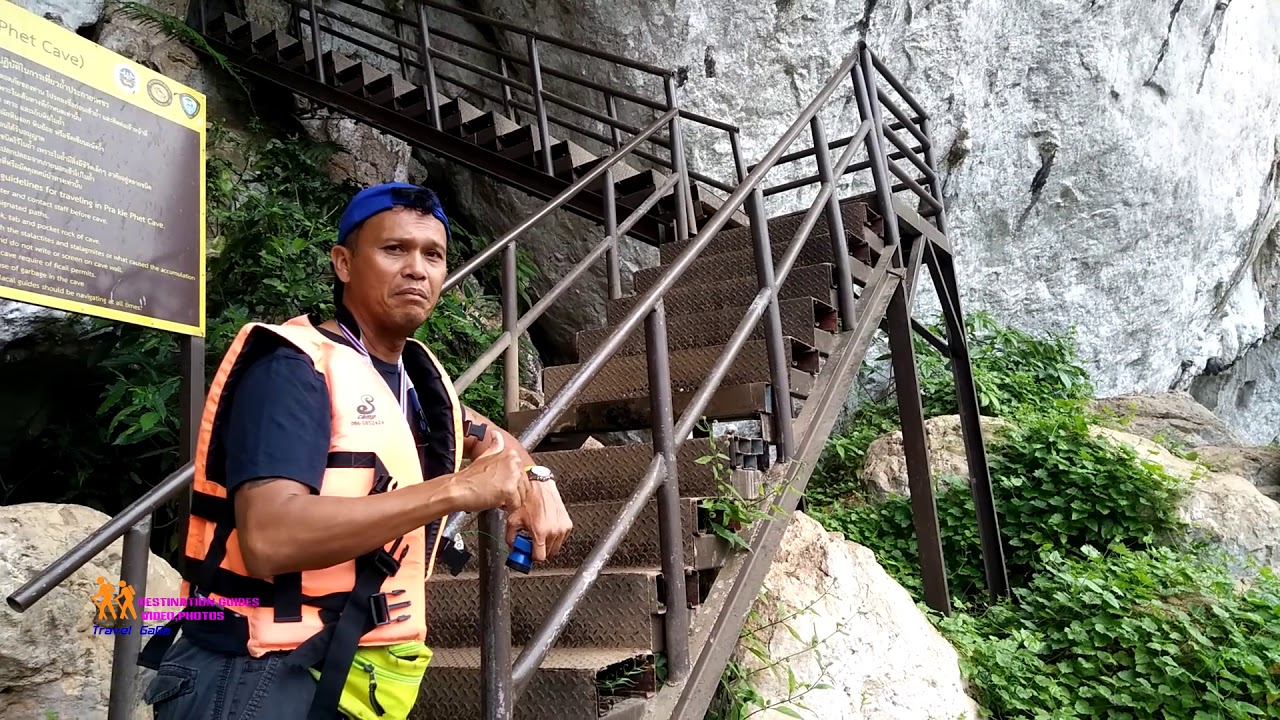
Local cave information describes sections of the floor as wet, muddy and slippery. Such conditions are natural in an active limestone cave where water still moves through cracks and drips from the ceiling. Closed or securely strapped footwear with reliable traction is therefore more appropriate than smooth-soled sandals. Visitors should not use stalagmites or stalactites as handholds for balance, because these natural formations are fragile and were not created to support human weight.
A flashlight or guide-provided lighting is essential for seeing the cave properly. Natural daylight may reach parts of the entrance zone, but illumination falls quickly deeper inside. A headlamp is particularly practical because both hands remain free. Travelers wishing to photograph the cave with a mobile phone should make sure the phone is sufficiently charged and should not rely on it as the group's only source of light.
Many of the cave's most interesting features are small rather than monumental. Visitors can observe mineral ridges, flowstone surfaces, small nodular deposits and delicate stalactites in addition to larger formations. Some local descriptions note unusual small stalactites resembling hair or fine roots. Walking slowly makes it easier to notice these details and reduces the temptation to touch the formations for a closer look.
The central conservation rule is to look without touching. Some formations remain actively wet and continue accumulating mineral deposits. Repeated contact by visitors can leave oils and dirt on surfaces that took extremely long periods to develop. Breaking, collecting or moving cave material is unacceptable. Objects should not be placed in cracks for photography, offerings or personal markers, because they become foreign material inside a protected natural system.
Writing or carving names on the cave walls is equally damaging. A small mark can persist far longer underground than it would on an exposed outdoor surface. One piece of graffiti also tends to encourage others. The cave should look essentially unchanged after each visitor group leaves. Photographs and memories are appropriate souvenirs; limestone fragments are not.
Ban Cheow Lan Municipality also notes that bats occur inside Pra Kai Petch Cave. Visitors should therefore treat the cave as wildlife habitat rather than simply an empty geological attraction. Bats should not be shouted at, chased, touched or deliberately made to fly. In 2026, Thailand's Department of National Parks issued general precautions for cave and natural attractions containing bats, recommending protective masks, particularly N95 masks, long sleeves, long trousers and closed shoes, while avoiding contact with bat droppings, urine and saliva.
These precautions are nationwide preventive measures and do not mean that an outbreak has been identified specifically at Pra Kai Petch Cave. Their purpose is to maintain a safe boundary between people and wildlife. Visitors should not handle bats or droppings and should avoid eating inside the cave. Hands should be cleaned after leaving the cave and before eating.
Repeated close-range flash photography should be avoided around roosting bats. Light needed for safe walking is necessary, but powerful illumination should not be directed at animals continuously. A restrained approach produces less disturbance and preserves the atmosphere of the cave. Wildlife observation is most meaningful when animals are allowed to continue their normal behavior.
Families should judge suitability according to a child's ability to walk safely on wet and uneven ground rather than age alone. Children need to follow instructions, avoid running or climbing and understand that cave formations must not be touched. Families with very young children can limit the visit to the easiest accessible areas if conditions require it. Completing every meter of the cave is not necessary for a worthwhile experience.
Older travelers and people with knee, ankle, balance or vision limitations should ask about current entrance conditions before boarding the boat. A cave only 100 meters long can still be challenging when movement involves boarding a boat, stepping onto a natural shoreline and walking on damp rock. Those who do not find cave entry suitable can still enjoy Cheow Lan Lake, limestone scenery and boat sightseeing.
The cave is not wheelchair accessible in a practical sense because it is reached by boat and contains natural terrain around the entrance and inside. Travelers with mobility requirements should discuss them with the tour provider before booking. Doing so allows the operator to recommend alternative lake stops rather than discovering an access problem only after traveling deep into the reservoir.
For photographers, morning departures provide more time flexibility and generally avoid the hottest part of the day on the lake. The cave entrance creates a strong contrast between daylight and the darker interior, while internal formations require careful low-light technique. People can provide scale in photographs without climbing onto limestone. Visitors should never step backward blindly while framing a shot on an uneven cave floor.
Geology enthusiasts can observe relationships between fractures, dripping points and the location of formations. Stalactites often occur where water enters from above, while stalagmites show where mineral-rich droplets repeatedly reach the floor. Coral-like surfaces and flowstone demonstrate that water can move across rock in ways other than simple vertical dripping. These patterns make the cave a useful natural classroom.
Looking at the cave in this way reveals that stalactites and stalagmites cannot be separated from the larger mountain. Rain falling on the forest above must move through soil and fractures before appearing as underground drips. Changes to vegetation, drainage or rock surfaces outside the cave can therefore influence processes below. Cave conservation ultimately depends on protecting the surrounding karst and forest as well as individual formations.
The wider reservoir environment is part of Khao Sok National Park's rainforest and limestone ecosystem. Traveling by boat offers a perspective very different from entering the park near Khlong Sok headquarters. Vertical cliffs, narrow water passages, secluded coves and forested limestone islands appear along the route. The boat journey should therefore be treated as part of the attraction rather than simply transport to the cave.
Khao Sam Kloe, the famous group of three limestone towers, lies approximately 3 kilometers from the cave by mapped position and is one of Cheow Lan Lake's best-known landmarks. Many Pra Kai Petch Cave tours also include a stop for photographs at Khao Sam Kloe. The exact order of the stops depends on boat routing, weather and traffic at each attraction.
Other nearby mapped points include the Khlong Ka floating area at approximately 1.5 kilometers, Khlong Kla Jungle Trail at approximately 2 kilometers, Khlong Ka Waterfall at approximately 3 kilometers and Nang Prai Raft House at approximately 4 kilometers. Their proximity shows that Pra Kai Petch Cave sits within a dense cluster of lake-based attractions. Access to each site still depends on current park arrangements.
Nang Prai Raft House is a familiar stop within the Cheow Lan Lake tourism network, and some itineraries use floating facilities for meals or rest periods. Travelers staying overnight have additional flexibility because lake activities can be spread over two days. Anyone specifically interested in Pra Kai Petch Cave should nevertheless confirm that their accommodation or tour includes this cave, as different packages may visit different caves.
Pakarang Cave is frequently mentioned together with Pra Kai Petch Cave, but they are separate attractions. Confusion is understandable because Pra Kai Petch contains formations described as coral-like. “Coral-like limestone” inside Pra Kai Petch does not make it the same place as Pakarang Cave. Travelers booking a boat should state the name of the intended cave clearly.
Nam Thalu Cave is another separate cave and should not be confused with Pra Kai Petch. Nam Thalu contains a stream and has stricter seasonal safety considerations, particularly when flash-flood risk is elevated. During periods when Nam Thalu is unsuitable, some operators may substitute Pra Kai Petch. This is one reason online itineraries sometimes mix descriptions of different Khao Sok caves.
Pra Kai Petch does not require specialist technical caving skills for normal tourism access, but visitors should still prepare for natural terrain. Secure footwear, controlled walking and attention to guide instructions matter more than speed. Where groups stop for photography, waiting for space is safer than squeezing past people on uneven rock.
Carry only necessary equipment. Large backpacks can restrict movement and strike formations in confined areas. Quick-drying clothing works well in Khao Sok's humid environment, while a waterproof bag protects phones, cameras, medication and documents from boat spray. Every bottle, wrapper and other item carried into the area should leave with the visitor.
Food should not be eaten inside the cave. Apart from hygiene concerns, food scraps can alter animal behavior and introduce waste into an underground ecosystem. Day tours often organize meals at a raft house or designated lake stop. Visitors with special dietary requirements should inform the operator before departure because options become limited once the boat moves away from the developed pier area.
Extra care is required when transferring between the boat and shore. Wait until the boat operator has stabilized the vessel before stepping out. Do not jump from the bow onto wet rock. Cameras should remain packed during boarding and disembarking and can be taken out once stable footing has been established.
A life jacket is an essential part of lake travel and should be worn according to the boat operator's instructions. The reservoir is deep, and apparently calm water can change with wind. Boat safety and cave safety are separate parts of the same trip, and both deserve equal attention.
People prone to motion sickness should prepare before departure because reaching deeper areas of Cheow Lan Lake takes longer than a short sightseeing circuit near the dam. Sitting in a stable position, looking toward the horizon and using appropriate motion-sickness medication following medical or pharmacy advice can make the subsequent cave visit considerably more comfortable.
Rainy conditions can create beautiful mist around the limestone peaks, but they also bring wet boat travel, slippery rock and less predictable cave access. Travelers should accept from the outset that a cave visit may be modified or canceled. An itinerary with an alternative lake stop is far more practical than treating cave entry as mandatory regardless of conditions.
Drier weather generally makes access easier, yet a limestone cave remains naturally humid. Dripping water can keep some surfaces slippery even after several rain-free days. Visitors should test footing and move at a pace that allows them to stop immediately when the surface changes.
A practical day trip begins with arriving at Ratchaprapha Pier in the morning, meeting the boat operator, paying required fees and receiving a briefing before entering the reservoir. Tours including Pra Kai Petch often combine the cave with Khao Sam Kloe and other lake scenery. The total trip therefore involves significantly more time than the 100-meter cave walk alone.
Visitors staying on a floating raft have greater flexibility. Depending on the raft's location, the boat journey to the cave may be much shorter than traveling from the mainland pier. Confirm the exact cave itinerary before booking, because an accommodation package described only as including a “cave tour” could refer to Pakarang Cave or another attraction.
Drivers should navigate to Ratchaprapha Pier or Ban Cheow Lan Municipality Pier rather than setting the cave coordinate as the car destination. There is no road to the cave entrance. The mainland pier area provides boat services, parking, food and visitor facilities and is the appropriate place to organize the water portion of the journey.
Getting There from Surat Thani city, travel toward Ban Ta Khun District and Ratchaprapha Dam in Khao Phang Subdistrict. Continue to Ratchaprapha Pier or Ban Cheow Lan Municipality Pier. From there, travel by boat into Cheow Lan Lake on an itinerary that specifically lists Pra Kai Petch Cave. Boats pass through the limestone reservoir landscape before reaching the cave area, where visitors disembark and continue on foot into the natural cave.
Travelers staying near Khao Sok National Park headquarters in Khlong Sok should remember that the headquarters zone and the Ratchaprapha Dam pier are separate parts of the park. A hotel near the main Khao Sok entrance is not beside the Cheow Lan boat pier. Anyone with an early boat departure should allow additional road-transfer time or stay in the Khao Phang and Ratchaprapha area the night before.
Current national-park admission for the Ratchaprapha Dam zone is 40 baht for Thai adults and 20 baht for Thai children, and 300 baht for foreign adults and 150 baht for foreign children. This is national-park admission rather than a separate Pra Kai Petch Cave ticket. Boat transport, meals, accommodation and tour services are additional unless clearly included in a package.
Travelers visiting both the Khlong Sok headquarters zone and the Ratchaprapha Dam zone on the same day should keep their admission receipt or ticket. Tourism Authority of Thailand information states that admission is paid once at the highest applicable rate for same-day travel across the two zones. Boat and pier-related charges remain separate.
Khao Sok National Park, under Thailand's Department of National Parks, Wildlife and Plant Conservation, is the principal authority responsible for the protected area. The park can be contacted at +66 77 395139. Ban Cheow Lan Municipality's visitor information service can be contacted at +66 77 346096 for local tourism information around the dam and pier.
Restaurants are concentrated around Ratchaprapha Pier rather than at the remote cave entrance. Current nearby options include Bai Pad Rim Keon Restaurant, Cafe Khaosok Cheow Lan, Cheow Lan Community Cafe, Baan Suan Cafe & Restaurant and Zaab House Surat Thani. Eating on the mainland before departure is often the easiest option for short trips.
Full-day tours frequently arrange lunch at a floating facility inside the reservoir. Travelers with allergies or dietary restrictions should tell the operator in advance. Once a boat reaches the interior of the lake, food choices are far more limited than in Ban Ta Khun, and eating inside the cave should not be treated as an alternative.
Land-based accommodations close to the pier are convenient for early boat departures. Current nearby choices include Nalintara Resort @ Cheow Lan, Pimrada Garden Resort, Porjai Resort, Belong Jin The Dam Resort and Bansuanphutarn. Staying on the Khao Phang side can significantly reduce morning transfer time compared with staying near Khlong Sok park headquarters.
Bansuanphutarn, approximately 3.3 kilometers from the pier, has current direct contact information and is suitable for travelers with their own transport. Travelers wanting the shortest possible transfer can consider accommodation within roughly 2 kilometers of the marina and confirm early-morning transportation before booking.
Floating accommodation provides an entirely different experience. Raft houses are distributed through the reservoir and may offer kayaking, wildlife observation and boat excursions in addition to cave visits. Distances from individual raft houses to Pra Kai Petch vary substantially, so travelers should confirm the itinerary directly rather than selecting accommodation solely by photographs.
With one full day, a balanced itinerary can include a morning boat departure, Khao Sam Kloe, Pra Kai Petch Cave, lunch and additional lake sightseeing or swimming where permitted. This provides both above-water karst scenery and an underground limestone experience without requiring the long forest approach associated with more demanding cave routes.
With two days and one night, activities can be spread more comfortably. One day can focus on the lake and cave while the second morning can be used for mist, wildlife observation or paddling before returning to the mainland. This also provides more flexibility if weather forces a change to the original cave schedule.
Confirm the return-boat time and meeting point before leaving the pier. Mobile-phone coverage is not consistent throughout Cheow Lan Lake, so visitors should not depend on last-minute messaging. Know the operator's name, boat arrangement and group meeting instructions before entering the reservoir.
Essential medication, sun protection, a hat and waterproof storage should remain with the traveler rather than being left in the car. Although the cave interior is cooler and darker, the boat journey can involve prolonged direct sun exposure. Waterproof storage is especially useful during boat transfers and sudden showers.
Drones should not be flown inside the cave. Flight in an enclosed space creates a collision risk and can disturb bats. Drone use elsewhere within a national park is subject to relevant authorization and park rules. Visitors should confirm permission rather than assuming that seeing aerial footage online means unrestricted flying is allowed.
Responsible tourism also means reducing waste on the lake. Keep bottles, food packaging and tissues secured until they can be disposed of properly. Do not throw food into the reservoir or leave anything inside the cave. The lake is both a major tourism landscape and an important water system, making litter control especially important.
Pra Kai Petch Cave is particularly useful as a natural classroom because the water cycle can be followed from the mountain surface to underground mineral deposits. Rain falls on limestone, enters fractures, dissolves part of the rock, enlarges underground pathways and later deposits mineral again to create speleothems. Understanding this sequence transforms a cave visit from simple sightseeing into direct observation of ongoing geological processes.
Learning should rely on observation rather than collecting specimens. Photograph small textures instead of breaking or removing them. Loose material on the floor should remain where it is found. The best field practice in a protected cave is to leave the physical environment unchanged.
Pra Kai Petch also demonstrates why Khao Sok contains numerous caves with very different characteristics. The extensive limestone terrain allows water to create many underground systems. Some caves are relatively dry, some contain streams, some require long forest walks and others, such as Pra Kai Petch, are approached from Cheow Lan Lake. The conditions of one cave should never be assumed to apply to another.
The particular strength of Pra Kai Petch is the combination of relatively convenient boat access, a manageable cave length and varied formations. Its proximity to Khao Sam Kloe also makes it practical for first-time Cheow Lan visitors who want to add a genuine limestone cave to a lake itinerary without turning the entire day into a strenuous trek.
Easy access also increases the importance of conservation. A cave visited frequently can accumulate damage from touching, littering and off-route movement much faster than an isolated cave. Operators, guides and visitors therefore share responsibility for keeping human impact within the smallest possible area.
Before departure, confirm four points: whether the cave is accessible that day, the current weather across the reservoir, the exact boat meeting point and what fees or services are included in the booking. Checking these details in advance prevents a large part of the confusion that can occur at the pier.
Save the Khao Sok National Park number, +66 77 395139, and the Ban Cheow Lan visitor-information number, +66 77 346096. Travelers using a private operator should also save the day's boat or tour coordinator. In a large reservoir with inconsistent mobile coverage, knowing the responsible operator is more useful than relying only on an online map.
Pra Kai Petch Cave demonstrates how very small natural processes can eventually create a large landscape. Individual raindrops, thin mineral layers and tiny fractures can, over immense periods, form underground chambers and elaborate limestone structures. Walking through approximately 100 meters of cave is therefore a journey through the visible results of processes that began long before tourism reached Cheow Lan Lake.
For travelers planning a first visit to Ratchaprapha Dam and looking for a cave that can fit comfortably into a lake itinerary, Pra Kai Petch is a strong choice whenever park conditions allow access. Its attractions include stalactites, stalagmites, coral-like formations, sparkling mineral surfaces and a relatively compact route that can be combined with Khao Sam Kloe and reservoir sightseeing.
The best visit is not the fastest one. Walk slowly, examine the details, choose a dry and suitable day, wear footwear with good traction, use lighting responsibly, avoid touching the formations, leave bats undisturbed and follow park instructions. If access is suspended, accept the change rather than attempting to enter independently. Safety and conservation are what allow the cave to remain available for future visitors.
Combining the boat journey, Cheow Lan Lake scenery, limestone towers, cave-development processes and sparkling underground formations makes Pra Kai Petch much more than a short photo stop. The journey connects the enormous reservoir landscape outside with the tiny mineral deposits created by individual water droplets inside the mountain, providing one of the clearest ways to understand both the beauty and geological character of Khao Sok National Park.
| Name | Pra Kai Petch Cave |
| Location | Ratchaprapha Dam Reservoir, Khao Sok National Park, Khao Phang Subdistrict, Ban Ta Khun District, Surat Thani 84230, Thailand |
| Reference Coordinates | Approximately 8.96773, 98.70429 |
| Managing Authority | Khao Sok National Park, Department of National Parks, Wildlife and Plant Conservation |
| Type | Limestone cave and natural attraction within Cheow Lan Lake |
| Cave Length | Approximately 100 m |
| Highlights | Stalactites, stalagmites, coral-like limestone formations, sparkling mineral surfaces and bats inhabiting the cave |
| Access | Travel by boat into Cheow Lan Lake, disembark near the cave entrance and continue on foot through the natural cave route |
| Current Status | Still listed by Ban Cheow Lan Municipality and included in 2026 Cheow Lan Lake tour programs. Daily access is subject to park authorization and weather. |
| Open Days | According to current Khao Sok National Park access conditions |
| Recommended Visiting Time | Approximately 09:00–16:00 on a dry day with suitable weather |
| National Park Admission – Ratchaprapha Dam Zone | Thai: Adult 40 baht, Child 20 baht / Foreign Visitor: Adult 300 baht, Child 150 baht. Boat transport, meals, accommodation and tour services are separate. |
| Getting There | Travel to Ratchaprapha Pier or Ban Cheow Lan Municipality Pier in Khao Phang, Ban Ta Khun, then take a boat itinerary that specifically includes Pra Kai Petch Cave. |
| Recommended Equipment | Closed non-slip footwear, flashlight or headlamp, waterproof bag, drinking water, long sleeves, long trousers and an appropriate mask for a bat cave environment |
| Visitor Guidelines | Do not touch or break cave formations, write on cave walls, remove natural material, leave rubbish, disturb bats or enter when park staff suspend access. |
| Khao Sok National Park Contact | +66 77 395139 |
| Ban Cheow Lan Visitor Information | +66 77 346096 |
| Nearby Attractions | 1. Khlong Ka Lakehouse – about 1.5 km, Tel. +66 96 329 6583 2. Khlong Kla Jungle Trail – about 2 km 3. Khlong Ka Waterfall – about 3 km 4. Khao Sam Kloe – about 3 km 5. Nang Prai Raft House – about 4 km, Tel. +66 96 329 6583 |
| Restaurants Near Ratchaprapha Pier | Distances are referenced from Ratchaprapha Pier 1. Bai Pad Rim Keon Restaurant – about 0.1 km, Tel. +66 84 636 9240 2. Cafe Khaosok Cheow Lan – about 0.2 km, Tel. +66 63 189 1989 3. Cheow Lan Community Cafe – about 0.5 km 4. Baan Suan Cafe & Restaurant – about 1.8 km, Tel. +66 87 889 3322 5. Zaab House Surat Thani – about 2.5 km, Tel. +66 99 407 0767 |
| Accommodations Near Ratchaprapha Pier | Distances are referenced from Ratchaprapha Pier 1. Nalintara Resort @ Cheow Lan – about 1.8 km, Tel. +66 64 924 4488 2. Pimrada Garden Resort – about 1.9 km, Tel. +66 81 476 5745 3. Porjai Resort – about 2.5 km, Tel. +66 93 639 1674 4. Belong Jin The Dam Resort – about 3.2 km, Tel. +66 77 380 439 5. Bansuanphutarn – about 3.3 km, Tel. +66 93 029 9799 |
Frequently Asked Questions (FAQ)
Q: Where is Pra Kai Petch Cave?
A: Pra Kai Petch Cave is inside the Ratchaprapha Dam reservoir in Khao Sok National Park, Khao Phang Subdistrict, Ban Ta Khun District, Surat Thani. Visitors reach it by boat from the Ratchaprapha or Ban Cheow Lan pier area.
Q: Is Pra Kai Petch Cave still open to visitors?
A: Yes. The cave remains listed by Ban Cheow Lan Municipality and is included in current 2026 lake-tour itineraries. Entry on a specific day still depends on Khao Sok National Park authorization and weather conditions.
Q: What is special about Pra Kai Petch Cave?
A: The approximately 100-meter cave contains stalactites, stalagmites, coral-like limestone formations, unusual small formations and mineral surfaces that sparkle when illuminated, giving the cave its name.
Q: What time is best for visiting Pra Kai Petch Cave?
A: Approximately 09:00–16:00 is a practical visiting period. Choose a dry day with suitable weather and confirm lake and cave access before the boat departs.
Q: How much does it cost to visit Pra Kai Petch Cave?
A: There is no separately published official Pra Kai Petch Cave admission charge. National-park admission for the Ratchaprapha Dam zone is 40 baht for Thai adults and 20 baht for Thai children, and 300 baht for foreign adults and 150 baht for foreign children. Boat transport and tour services cost extra.
Q: Can visitors drive directly to Pra Kai Petch Cave?
A: No. Cars can reach Ratchaprapha Pier or Ban Cheow Lan Municipality Pier. From there, visitors must continue by boat into Cheow Lan Lake and disembark near the cave.
Q: What should visitors bring to Pra Kai Petch Cave?
A: Bring closed footwear with reliable grip, a flashlight or headlamp, waterproof storage, drinking water, long sleeves, long trousers and an appropriate mask. Some cave surfaces can be wet and bats are reported inside the cave.
Q: What attractions can be combined with Pra Kai Petch Cave?
A: Depending on current park access and the selected boat itinerary, nearby options include Khao Sam Kloe, Khlong Ka, Khlong Ka Waterfall, Khlong Kla Jungle Trail and Nang Prai Raft House.
 Category: ●Nature and Wildlife
 Group: ●Caves
Last Update : 2 MonthAgo
 Last Update : 2 MonthAgo
 Click to Access the Navigation Map GPS
Pra Kai Petch Cave Map
Recommend

 Art, Culture and Heritage
 Landmarks and Memorials(1)
 Art, Craft Centres, Tradition(8)
 Museums(5)
 Educational Places
 Educational Gardens, Farm(1)
 Places of Worship
 Temple(32)
 Other Sacred Sites(8)
 Research and Development
 Royal Project(1)
 Suburban Living
 Village, Community(6)
 Local Market(1)
 National Parks and Marine Reserves(8)
 Mountain (Doi)(2)
 Dam, Reservoir, Lake(8)
 Waterfalls(34)
 Hot Springs(7)
Caves(18)
 River, Canal(11)
 Bays and Beaches(30)
 Islands(16)
 Other natural attractions(10)
 Entertainment and Agricultural
 Animal camps and shows(6)
 Farms, Parks and Ecotourism(7)
 Outdoor and Adventure Activities(2)
 Shopping
 Shopping and Night Market(1)
 Travel Articles, Recipes
 Travel Review, Food Review(1)
 Southern Food Menu, Southern Food Recipes(1)


