
lovethailand home >South Travel Attractions >Surat Thani Travel Attractions >Phanom >Phanom > Dok Bua Phut
TL;DR: Dok Bua Phut, Surat Thani attractions : Nature and Wildlife, Other natural attractions.

Dok Bua Phut
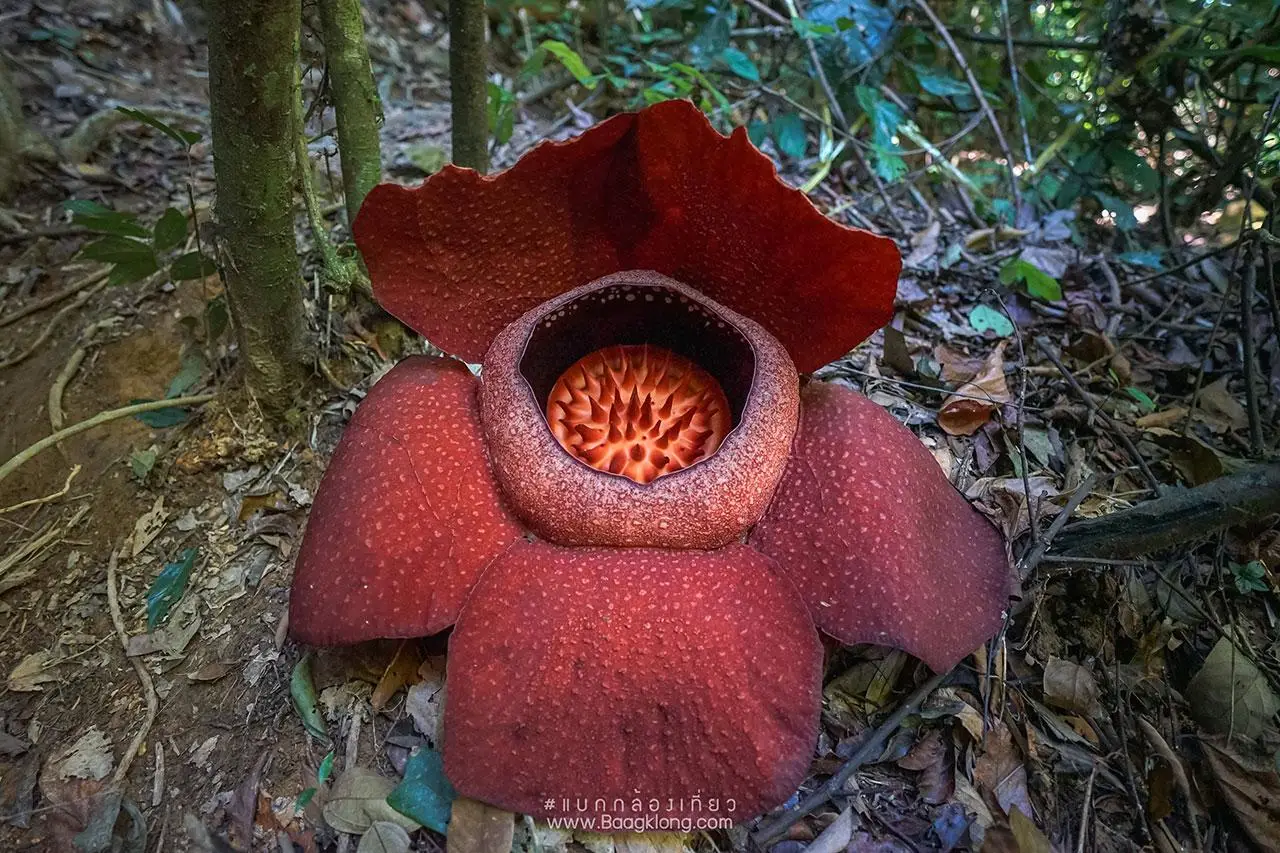
Open Days: Khao Sok National Park Opens Daily; The Rafflesia Nature Trail Opens Seasonally From 1 November – 30 April
Opening Hours: 08.00 – 16.30 For Park Registration, Visitor Services, And Daytime Access
Dok Bua Phut in Surat Thani, also known as Rafflesia kerrii, is one of the rarest and most remarkable natural attractions in Khao Sok National Park, Phanom District, Surat Thani Province. This extraordinary parasitic plant is famous for producing a huge reddish-maroon flower with thick, water-filled petals, a strong carrion-like smell, and a very short blooming period. Travelers who want to see it should plan their visit during the main blooming season from late year to early year, register with the national park, and enter the trail with park staff or a local guide.
Dok Bua Phut is not an ordinary wildflower. It is a true parasitic plant that does not have typical leaves, stems, or roots like most plants. Its scientific name is Rafflesia kerrii Meijer, and it survives by drawing nutrients from host vines in the Tetrastigma group, locally associated with the vine known in Thai as yan kai tom. The flower develops slowly on or near the host vine before emerging from the forest floor as a large bud and finally opening into one of the most unusual flowers in Thailand.
The main attraction of Dok Bua Phut is its size and rarity. When fully open, the flower can reach around 70–100 centimeters in diameter according to local and botanical references. Its thick petals spread outward like a large natural bowl or a plant pot, which matches the traditional description that compares the open flower to a giant pot. The color is usually deep red, dark reddish brown, or maroon, with a heavy, fleshy texture that immediately separates it from ordinary forest flowers.
Although the flower is visually impressive, its smell is not pleasant. Dok Bua Phut releases a strong odor similar to decaying flesh. This smell is part of its natural pollination strategy because it attracts flies and other insects that help carry pollen. The odor is not a sign of disease or decay while the flower is fresh; it is an ecological adaptation that allows the plant to reproduce in the humid rainforest environment of southern Thailand.
Each flower blooms for only about 4–6 days before it begins to wither, darken, and decompose naturally. This short blooming window makes a successful visit highly dependent on timing. Visitors should not expect to see a fully open flower every day throughout the season. The best approach is to contact Khao Sok National Park or a local guide before traveling, so that the latest condition of buds and blooming flowers can be checked before entering the trail.
The well-known Rafflesia viewing area is within Khao Sok National Park in Khlong Sok Subdistrict, Phanom District, Surat Thani Province. The original local travel information describes the route as being about 2 kilometers from the national park area, followed by a walking trail of about 1.5 kilometers uphill through forest terrain. The trail is a real nature walk, not a flat urban path. Visitors should wear proper walking shoes, carry drinking water, dress for humid forest conditions, and avoid leaving the marked route.
Khao Sok National Park is one of southern Thailand’s most important rainforest areas. Its landscape includes limestone mountains, forested hills, cliffs, streams, waterfalls, and rich evergreen forest. A trip to see Dok Bua Phut is therefore not only about one rare flower; it is also a journey into a tropical rainforest ecosystem where vines, soil moisture, insects, plant roots, and shaded forest conditions all work together to support this delicate species.
Dok Bua Phut is the provincial flower of Surat Thani and an important natural symbol of Khao Sok. Rafflesia kerrii was formally described as a scientific species in 1984. The species name kerrii honors Dr. A.F.G. Kerr, who explored plants in this region, while the genus name Rafflesia is associated with Sir Stamford Raffles, whose name is tied to the wider group of giant parasitic flowers known in Southeast Asia. Rafflesia species are famous in countries such as Thailand, Malaysia, and Indonesia, while Khao Sok remains one of Thailand’s most important places to experience Rafflesia kerrii in nature.
The fragile ecology of the plant is the reason visitors must behave carefully. Dok Bua Phut depends completely on its host vine. If the vine or the surrounding soil is damaged, young buds may be destroyed before they ever bloom. Visitors should not touch the flower, step off the trail, move leaves around the forest floor, pick any part of the plant, or place bags and tripods on sensitive ground near the flower. The proper way to view Dok Bua Phut is to stand where the guide indicates, take photos from a safe distance, and leave the plant undisturbed.
The main viewing season is generally from November to April, with many visitors planning trips during the cool and early dry season. Some years may produce flowers at slightly different times depending on rainfall, humidity, and the development stage of each bud. The Rafflesia nature trail around Khao Sok’s Km.111 area is closed seasonally from 1 May to 31 October to allow natural recovery and to protect visitors during less suitable trail conditions. Travelers should therefore plan Rafflesia trips within the open season and avoid assuming year-round access to the flower trail.
Travel usually begins at the Khao Sok National Park headquarters in Moo 6, Khlong Sok Subdistrict, Phanom District, Surat Thani Province. Visitors driving from Surat Thani can take Highway 401 on the Surat Thani–Takua Pa route toward Phanom and Khlong Sok. After reaching the park entrance area, visitors should contact the park office, pay the entrance fee, register if needed, and ask about trail conditions before continuing to the Rafflesia viewing route.
Getting There without a private vehicle is also possible. Travelers can take vans or buses that run along the Surat Thani–Takua Pa route and get off near the Khao Sok National Park entrance. From there, local transport can take visitors to the park office or nearby accommodation. Travelers arriving from Surat Thani Railway Station in Phunphin should connect with transport heading toward Khao Sok or Phuket. Visitors coming from Phuket, Khao Lak, Takua Pa, or Krabi can also use vans or buses that pass through the Khao Sok route. Public transport users should allow extra time for transfers, registration, and guide arrangements.
The national park entrance fee applies because the Rafflesia trail is inside Khao Sok National Park. The current standard fee for this group of Thai national parks is 40 baht for Thai adults, 20 baht for Thai children, 200 baht for foreign adults, and 100 baht for foreign children. Vehicle fees are charged separately depending on vehicle type. Travelers should complete registration and follow all park safety and conservation rules before entering the nature trail.
The area is managed by Khao Sok National Park under the Department of National Parks, Wildlife and Plant Conservation. The park office is the main contact point for trail status, seasonal access, blooming updates, guide arrangements, entrance fees, and safety instructions. Publicly listed phone numbers for Khao Sok National Park include 077-395-155 and 077-395-139. The original local travel information also lists a local guide contact, Mr. Santi Thongchan, known as Ti, at 086-741-4919 and 077-397-196.
The coordinates 8.9430375, 98.533738 can be used for navigation to the Khao Sok National Park headquarters. Visitors should use the park headquarters as the starting point rather than trying to navigate directly to a fixed flower coordinate. Dok Bua Phut does not bloom at one permanent tourist marker; flowers appear where buds develop on host vines. For this reason, park staff or a local guide must direct visitors to the active viewing spot during the blooming period.
A key point for travelers is that Rafflesia flowers do not bloom continuously across the whole forest. A flower may be spectacular when open, but its open stage lasts only a few days. Buds take many months to develop, and even during the right season there may be periods without a fully open flower. Contacting the park before visiting helps travelers choose the right timing and also helps the park manage visitor flow on the forest trail.
The trail is suitable for travelers who are physically ready for a humid uphill forest walk. The original local description mentions walking uphill through about two hills and continuing on foot for around 1.5 kilometers. The path may include slopes, roots, wet soil, rocks, and leaf litter. Older travelers, young children, and anyone with knee, ankle, heart, or breathing conditions should assess their readiness before starting. Visitors should avoid entering late in the day and should not walk the route alone.
Recommended items include closed walking shoes, drinking water, a hat, light long-sleeved clothing, mosquito repellent, a waterproof bag for a phone or camera, and personal medicine. After rain, the forest can be slippery and humid, and leeches may be present in some conditions. Sandals and smooth-soled shoes are not suitable for the trail. Clothing should be practical, breathable, and easy to move in.
Photography should be done without disturbing the plant. Visitors should zoom in or photograph from the guide-approved viewing point rather than stepping closer to the flower. Bags, tripods, and other gear should not be placed on the sensitive forest floor near the host vine or young buds. Respecting the viewing boundary allows travelers to get memorable photos while protecting the flower and its habitat.
Khao Sok offers several nearby attractions that can be combined with a Rafflesia trip. Popular natural sites include Mae Yai Waterfall, Bang Hua Rat Waterfall, Wing Hin Waterfall, Wang Yao, Tang Nam Gorge, Ton Kloi Waterfall, and Ratchaprapha Dam. Each site has a different travel style. Some are better for forest walks, some for waterfalls, and some for boat trips through limestone scenery. Visitors should plan according to season, rainfall, water levels, and official park announcements.
Staying overnight near Khao Sok National Park is a practical choice for travelers who want a smoother Rafflesia experience. The Khlong Sok area has many guesthouses, lodges, resorts, restaurants, and tour services near the park entrance. Visitors can stay close to the park, register early in the morning, walk the trail while temperatures are more comfortable, and spend the afternoon relaxing or visiting nearby waterfalls. With 2 days or more, travelers can extend the trip to Ratchaprapha Dam and Cheow Lan Lake.
From an educational perspective, Dok Bua Phut is a powerful example of the relationship between parasitic plants, host vines, rainforest moisture, pollinating insects, and habitat conservation. If the forest is damaged or host vines decline, the flower cannot survive properly. A visit to see Dok Bua Phut is therefore not only about finding the largest flower in Thailand. It is a chance to understand how delicate and interconnected rainforest life can be.
Dok Bua Phut in Surat Thani is best suited to nature lovers, forest walkers, students, families interested in ecology, and travelers who value rare natural experiences. It is not ideal for a rushed visit or for travelers expecting a guaranteed flower on demand. The reward comes from planning well, respecting the forest, accepting the rhythm of nature, and entering the trail with the right expectations.
With careful planning, a trip to see Dok Bua Phut at Khao Sok can become one of the most memorable nature experiences in Surat Thani. Visitors encounter a giant flower, a humid rainforest, limestone landscapes, and a living lesson in conservation within the same journey. The experience is valuable not only for photography, but also for understanding why rare species and their habitats must be protected for future generations.
| Name | Dok Bua Phut / Rafflesia Kerrii / Bua Tum At Khao Sok National Park |
| Location | Rafflesia Nature Trail, Khao Sok National Park, Khlong Sok Subdistrict, Phanom District, Surat Thani Province |
| Address | Khao Sok National Park Headquarters, Moo 6, Khlong Sok Subdistrict, Phanom District, Surat Thani 84250, Thailand |
| Coordinates | Khao Sok National Park Headquarters: 8.9430375, 98.533738; use the park office as the starting point before entering the Rafflesia trail |
| Highlights | Rare parasitic plant, Thailand’s largest flower, thick reddish petals, and a strong carrion-like smell used to attract pollinating insects |
| Scientific Name | Rafflesia kerrii Meijer |
| History / Importance | Provincial flower of Surat Thani, formally described as a scientific species in 1984, and one of the signature plants of Khao Sok’s rainforest |
| Distinctive Features | A giant bowl-like flower with 5–6 thick petals, generally around 70–100 cm in diameter, blooming for only about 4–6 days |
| Host Plant | Host vines in the Tetrastigma group, locally associated with the vine known as yan kai tom |
| Blooming Season | Main season around November – April; visitors should contact the park before traveling because each flower blooms for only a few days |
| Travel Information | From Khao Sok National Park headquarters, continue about 2 km to the trail area and walk uphill through the forest for about 1.5 km with park staff or a local guide |
| Current Status | Khao Sok National Park is open as usual; the Rafflesia trail is seasonal and closes for natural recovery from 1 May – 31 October |
| Open Days | The national park opens daily; the Rafflesia trail opens seasonally from 1 November – 30 April |
| Opening Hours | 08.00 – 16.30 for park registration, visitor services, and daytime access |
| Fees | Thai adults 40 baht, Thai children 20 baht; foreign adults 200 baht, foreign children 100 baht; vehicle fees are charged separately by type |
| Facilities | Visitor center, park office, nature trails, accommodation, camping area, welfare restaurant, and private lodges near the park entrance |
| Main Areas / Zones | Rafflesia nature trail around Km.111–112, Mae Yai Waterfall, Bang Hua Rat Waterfall, Wang Yao, Tang Nam Gorge, Ton Kloi Waterfall, and the Ratchaprapha Dam area |
| Caretaker | Khao Sok National Park, Department of National Parks, Wildlife and Plant Conservation |
| Main Contact Number | Khao Sok National Park Tel. 077-395-155, 077-395-139; local guide Mr. Santi Thongchan Tel. 086-741-4919, 077-397-196 |
| Nearby Tourist Attractions | 1. Mae Yai Waterfall, about 4.5 km 2. Bang Hua Rat Waterfall, about 3 km 3. Wing Hin Waterfall, about 3 km 4. Wang Yao, about 3 km 5. Tang Nam Gorge, about 6 km 6. Ton Kloi Waterfall, about 9 km 7. Ratchaprapha Dam, about 60 km |
| Nearby Restaurants | 1. Chao Italian Ristorante, about 0.1 km, Tel. +66 87-264-2106 2. Sawasdee Restaurant, about 0.3 km, Tel. 089-725-2244, 089-725-2277 3. Rafflesia Cafe, about 2 km, Tel. +66 77-395-159 4. Wild Elephant Terrace Restaurant By Montania Lifestyle, about 2 km, Tel. 061-170-7071 5. Cosy Cafe & Restaurant At Khao Sok, about 1 km, Tel. +66 96-651-2813 6. The Misty Restaurant, about 1 km, Tel. +66 62-337-0607 |
| Nearby Accommodations | 1. Khao Sok River Lodge, about 0.3 km, Tel. +66 89-725-2244, +66 89-725-2277 2. Morning Mist Resort, about 0.8 km, Tel. +66 62-337-0607 3. Khao Sok Rainforest Resort, about 1.5 km, Tel. +66 64-224-9654 4. Montania Lifestyle Hotel, about 2 km, Tel. +66 94-565-9442 5. Hotel Khao Sok & Spa, about 2.7 km, Tel. +66 87-931-0609 |
Frequently Asked Questions (FAQ)
Q: Where is Dok Bua Phut in Surat Thani located?
A: Dok Bua Phut is found on a nature trail inside Khao Sok National Park in Khlong Sok Subdistrict, Phanom District, Surat Thani Province. Visitors should begin at the park headquarters for registration and guidance.
Q: When is the best time to see Dok Bua Phut?
A: The main viewing season is around November to April, but each flower blooms for only a few days, so visitors should contact the park or a local guide before traveling.
Q: Why is Dok Bua Phut special?
A: It is a rare parasitic plant with a very large reddish flower, thick fleshy petals, a strong smell, and the reputation of being the largest flower in Thailand.
Q: Do visitors need a guide?
A: Yes. A park officer or local guide is strongly recommended because the trail is an uphill forest route and the active blooming location changes according to where flowers appear.
Q: Is the Rafflesia trail difficult?
A: The trail involves an uphill forest walk of about 1.5 km after reaching the trail area. It is suitable for visitors who are physically ready and wear proper walking shoes.
Q: Is there an entrance fee?
A: Yes. The route is inside Khao Sok National Park. The entrance fee is 40 baht for Thai adults, 20 baht for Thai children, 200 baht for foreign adults, and 100 baht for foreign children, with vehicle fees charged separately.
Q: What should visitors bring?
A: Visitors should bring closed walking shoes, drinking water, a hat, suitable forest-walking clothes, mosquito repellent, a waterproof bag, and personal medicine if needed.
Q: Why should visitors stay on the marked trail?
A: The forest floor may contain host vines and young Rafflesia buds hidden under leaves. Stepping off the trail can damage the plant, its host vine, and the delicate rainforest ecosystem.
 Category: ●Nature and Wildlife
 Group: ●Other natural attractions
Last Update : 2 MonthAgo
 Last Update : 2 MonthAgo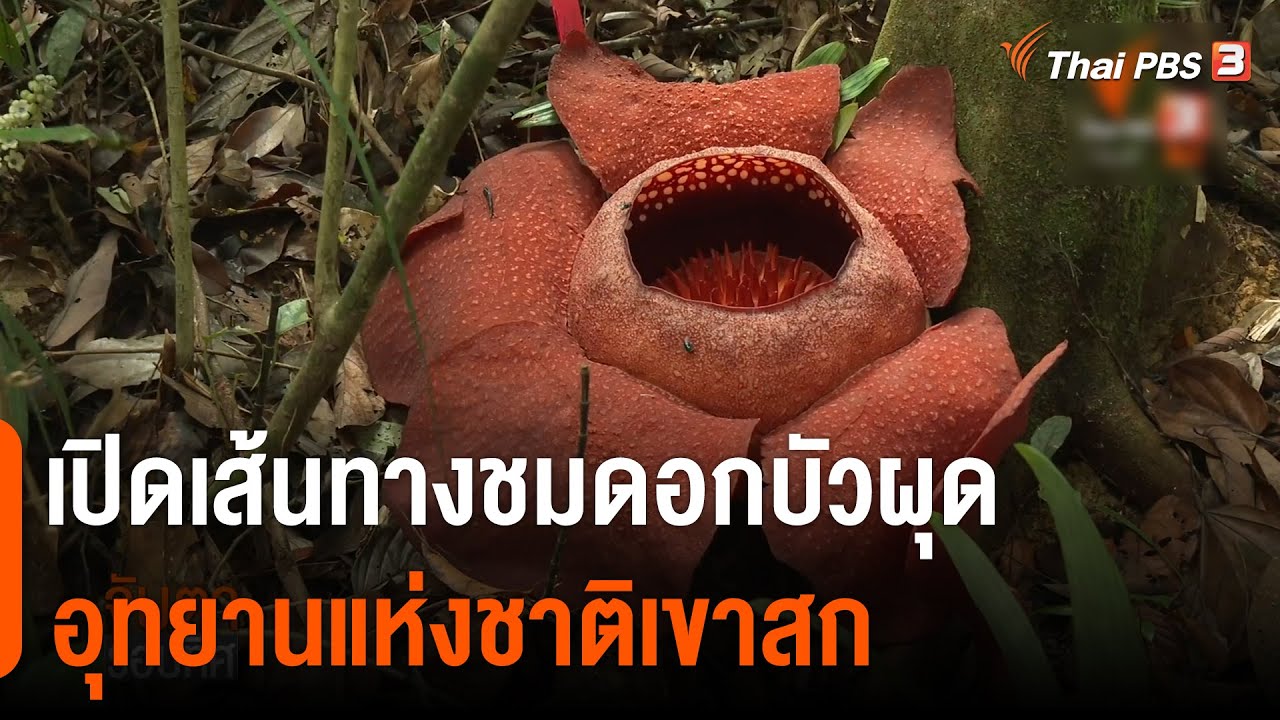
 Click to Access the Navigation Map GPS
Dok Bua Phut Map
Recommend

 Art, Culture and Heritage
 Landmarks and Memorials(1)
 Art, Craft Centres, Tradition(8)
 Museums(5)
 Educational Places
 Educational Gardens, Farm(1)
 Places of Worship
 Temple(32)
 Other Sacred Sites(8)
 Research and Development
 Royal Project(1)
 Suburban Living
 Village, Community(6)
 Local Market(1)
 National Parks and Marine Reserves(8)
 Mountain (Doi)(2)
 Dam, Reservoir, Lake(8)
 Waterfalls(34)
 Hot Springs(7)
 Caves(18)
 River, Canal(11)
 Bays and Beaches(30)
 Islands(16)
Other natural attractions(10)
Islands(16)
Other natural attractions(10)
 Entertainment and Agricultural
 Animal camps and shows(6)
 Farms, Parks and Ecotourism(7)
 Outdoor and Adventure Activities(2)
 Shopping
 Shopping and Night Market(1)
 Travel Articles, Recipes
 Travel Review, Food Review(1)
 Southern Food Menu, Southern Food Recipes(1)


