
lovethailand home >South Travel Attractions >Surat Thani Travel Attractions >Don Sak >Don Sak > Wat Khao Suwan Pradit
TL;DR: Wat Khao Suwan Pradit is located at Don Sak Subdistrict, Don Sak District, Surat Thani Province, Thailand, open Daily, hours 08.00 – 17.00.
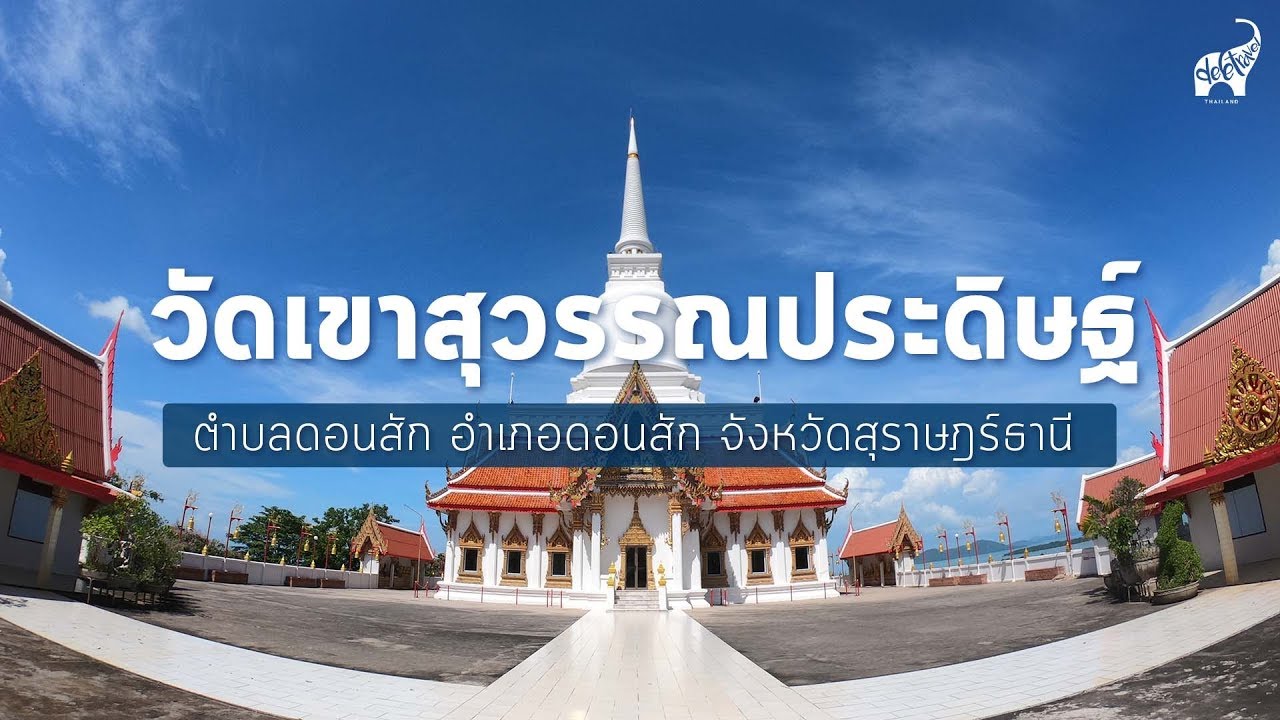
Wat Khao Suwan Pradit
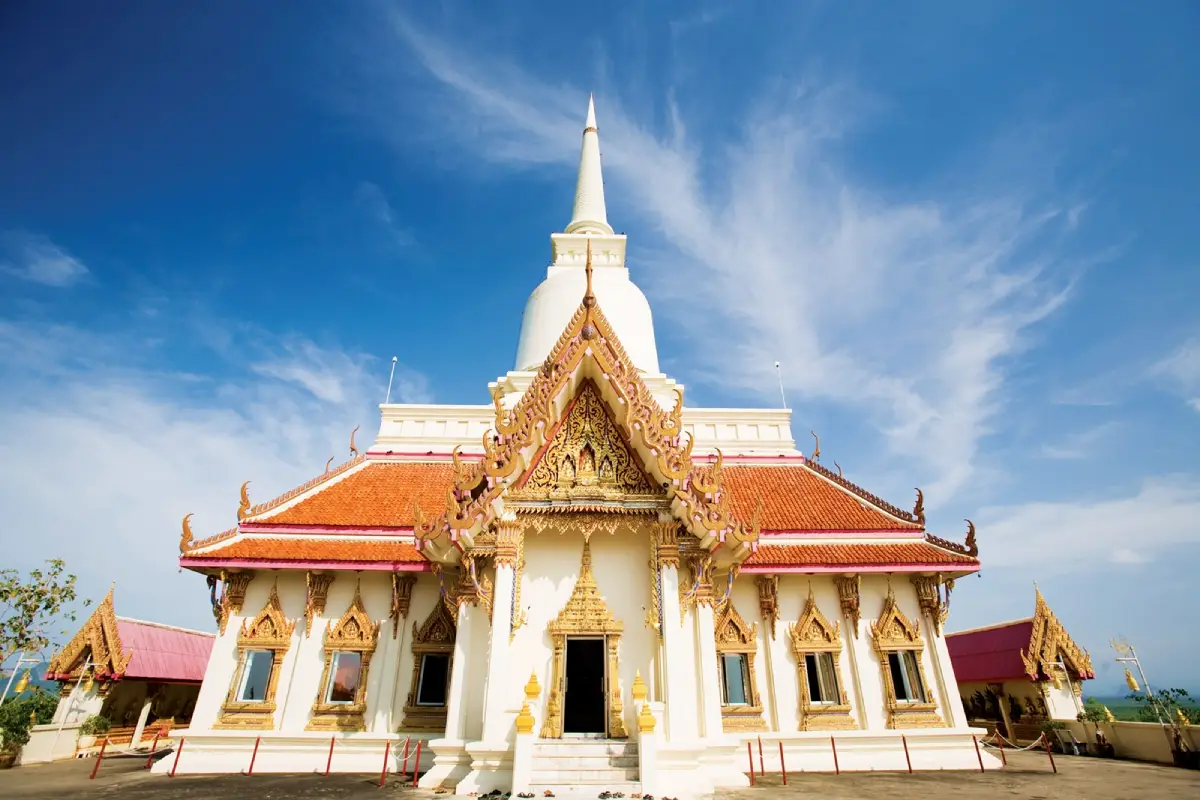
Open Days: Daily
Opening Hours: 08.00 – 17.00
Wat Khao Suwan Pradit in Surat Thani Province is one of the most meaningful cultural and religious sites in Don Sak District. The temple is suitable for travelers who want to pay respect to the Buddha relics, visit the glass coffin of Luang Pho Choi, learn about a revered southern Thai monk, and enjoy panoramic views of the Gulf of Thailand from a hilltop temple. Located in Don Sak Subdistrict, about 1 kilometer from the main Don Sak community area, the temple can be reached conveniently from the Surat Thani–Nakhon Si Thammarat route, Highway 401.
Wat Khao Suwan Pradit is important not only as a Buddhist temple but also as a spiritual landmark of Don Sak. The site was formerly known locally as “Wat Khao Lan,” a name connected with the open hill landscape where the temple stands. Local belief also connects the hill with a guardian spirit known in the community. Over time, the area developed into an important temple associated with Phra Khru Suwan Pradit Kan, better known as Luang Pho Choi, a highly respected southern Thai monk who helped establish and develop the temple.
Luang Pho Choi, later known by his ecclesiastical title Phra Kittimongkhon Phiphat, remains central to the identity of Wat Khao Suwan Pradit. He was deeply respected by local people for his religious leadership and for his contributions to the development of Don Sak. After he passed away in 1993, his preserved body was enshrined in a glass coffin inside the ordination hall so that devotees and visitors could continue to pay respect. A visit to this temple is therefore not simply a scenic stop; it is also a way to understand the living memory and gratitude that the Don Sak community holds for Luang Pho Choi.
The most important sacred structure at Wat Khao Suwan Pradit is the hilltop pagoda that enshrines Buddha relics obtained from Wat Phra Kiat in Hot District, Chiang Mai Province. The pagoda stands on the upper level of the temple compound and is one of the most recognizable landmarks in Don Sak. Once visitors reach the top of the hill, they can pay respect to the relics in a peaceful setting while looking out over the surrounding coastal landscape. The open courtyard around the pagoda provides wide views and creates a calm atmosphere for prayer, reflection, and photography.
One of the temple’s strongest attractions is the combination of sacred space and hilltop geography. Visitors can reach the upper level either by walking up the stairs or by driving along the concrete road that leads to the hilltop. This makes the temple accessible for elderly visitors, families, and travelers with limited time. At the top, there is parking space and an open area for walking around the pagoda and viewing the scenery. The temple is especially memorable for travelers who want to combine a Buddhist visit with a viewpoint over Don Sak and the Gulf of Thailand.
From the hilltop area and the viewing pavilion, visitors can see Pak Nam Don Sak, Laem Thuat, Ko Raet, Ko Nok Phao, Ko Samui, and the coastal communities around the bay. This broad seascape is one reason Wat Khao Suwan Pradit is often recommended as a temple viewpoint in Surat Thani. Morning and late afternoon are comfortable times to visit because the light is softer and the hilltop atmosphere is usually calmer than at midday.
The Luang Pho Choi pavilion is another essential area of the temple. Inside, visitors can pay respect to the glass coffin containing the preserved body of Phra Kittimongkhon Phiphat, or Luang Pho Choi. Many Thai visitors come specifically to honor him, ask for blessings, and remember his contributions to the temple and to Don Sak. For foreign travelers, this area offers a chance to observe how Thai Buddhist communities continue to honor revered monks after their passing, not as distant historical figures but as spiritual teachers whose legacy remains active in community life.
Other important objects and areas inside the temple include the ordination hall, a metal principal Buddha image from the Ayutthaya period, a ceremonial dressed Buddha image used for boat-procession traditions, a replica Buddha footprint, the monument of Princess Vibhavadi Rangsit, and statues of three former abbots. These features give the temple multiple layers of meaning: Buddhist devotion, local history, royal memory, southern Thai ritual culture, and the personal legacy of respected monks.
The temple also has a small museum connected with its religious and community history. Items displayed include Luang Pho Choi’s personal belongings, stucco Buddha images, palm-leaf sermon manuscripts, household utensils such as bowls, pots, and containers, and natural specimens such as preserved animals and marine-related objects. The museum adds another dimension to the visit because it helps travelers see Wat Khao Suwan Pradit as a place of memory, learning, and local heritage, not only as a temple for worship.
The most important annual tradition of the temple is the robe procession to the pagoda, held on 15 February every year. This ceremony is a major Buddhist tradition of Don Sak and Surat Thani. Local people gather to bring cloth to the temple and offer it in reverence to the relic pagoda. The event expresses devotion to the Buddha relics, unity among the community, and gratitude toward the temple’s spiritual heritage. The pagoda was initiated in 1983 by Luang Pho Choi as a focal point for Buddhist faith.
The annual robe procession is more than a local festival. It is a living ritual in which the people of Don Sak come together for merit-making, worship, and cultural continuity. In 2022, the tradition was elevated as a local tradition of Surat Thani Province to promote Buddhist activity and cultural tourism. For travelers interested in local Buddhist festivals, visiting around 15 February offers the clearest view of Wat Khao Suwan Pradit as a living community temple rather than only a scenic attraction.
Wat Khao Suwan Pradit is also connected with the moral community of the temple. The teachings and example of Luang Pho Choi continue to inspire local development, environmental care, moral education, and community participation. His role in Don Sak is remembered not only through statues or stories, but also through the way the community continues to organize temple activities, preserve traditions, and pass on local values to younger generations.
For travelers visiting Surat Thani, Wat Khao Suwan Pradit is an excellent stop before or after traveling to Don Sak Pier. It is close to the main community area and the ferry routes, making it easy to include before continuing to Ko Samui, Ko Pha-ngan, or the coastal areas around Don Sak. Families should allow more than a few minutes here because the temple has several areas worth seeing, including the ordination hall, Luang Pho Choi pavilion, museum, hill road, pagoda, viewpoint, and viewing pavilion.
A good way to visit is to start at the lower temple area, pay respect to Luang Pho Choi, observe the ordination hall and museum, and then continue to the hilltop pagoda. This route helps visitors understand the temple in sequence: first the revered monk and community history, then the sacred relic pagoda and hilltop view. Visitors walking up should wear comfortable footwear, while those driving to the top should proceed carefully because the road climbs the hill.
For photography, Wat Khao Suwan Pradit offers several attractive angles: the pagoda on the hilltop, the coastline from the viewing area, Don Sak town from above, the Gulf of Thailand, and the religious buildings inside the temple compound. Visitors should behave respectfully, especially near the glass coffin of Luang Pho Choi and inside the ordination hall. Avoid loud behavior, intrusive photography, and disturbing anyone who is praying or making merit.
Getting There from Surat Thani city is straightforward. Take Highway 401 toward Don Sak and Nakhon Si Thammarat. Once you reach Don Sak District, the temple is about 1 kilometer from the main Don Sak community area. The road into the temple is convenient, and cars can drive up to the hilltop section. Travelers without a private vehicle can take transport passing through Don Sak and continue by local transport to the temple. Using map navigation is recommended, especially for visitors who plan to stop at the temple before going to Don Sak Pier or the ferry terminals.
For trip planning, allow around 1–2 hours if you want to pay respect to Luang Pho Choi, visit the museum, go up to the pagoda, and enjoy the hilltop viewpoint without rushing. During the annual robe procession on 15 February, visitors should allow extra time because many local people attend the event. On regular days, the temple is peaceful and suitable for travelers seeking a quiet cultural stop in Don Sak.
Nearby attractions can be combined easily with Wat Khao Suwan Pradit. After visiting the temple, travelers can continue to Wat Don Sak, Ko Raet, Nang Kam Beach, Don Sak Pier, or local seafood restaurants in Don Sak. A practical route is to visit the temple in the morning, continue to a coastal community or Ko Raet, eat seafood in Don Sak, and then proceed to the pier or a seaside accommodation. This route is suitable for travelers interested in faith, culture, local scenery, and the quieter side of Surat Thani beyond its famous islands.
| Name | Wat Khao Suwan Pradit |
| Location | Don Sak Subdistrict, Don Sak District, Surat Thani Province, Thailand |
| Address | 27 Moo 5, Don Sak–Khanom Road, Don Sak Subdistrict, Don Sak District, Surat Thani 84220, Thailand |
| Highlights | Hilltop pagoda enshrining Buddha relics, Luang Pho Choi pavilion, glass coffin of Luang Pho Choi, temple museum, and panoramic Gulf of Thailand viewpoint |
| History | Formerly known as Wat Khao Lan, the temple was developed by Phra Khru Suwan Pradit Kan, or Luang Pho Choi, a revered southern Thai monk associated with Don Sak |
| Name Origin | The former name Wat Khao Lan referred to the open hill landscape. The current name is associated with Luang Pho Choi’s ecclesiastical title, Phra Khru Suwan Pradit Kan |
| Distinctive Features | A hilltop Buddhist temple where cars can reach the upper level, with views of Pak Nam Don Sak, Ko Raet, Ko Nok Phao, Ko Samui, and the surrounding coastline |
| Important Sacred Objects | Relic pagoda, Luang Pho Choi pavilion, ordination hall, Ayutthaya-period metal Buddha image, ceremonial dressed Buddha image, replica Buddha footprint, and Princess Vibhavadi Rangsit monument |
| Main Areas / Zones | Lower Temple Area, Ordination Hall, Luang Pho Choi Pavilion, Temple Museum, Hill Road, Hilltop Pagoda, Viewing Courtyard, Viewing Pavilion, Hilltop Parking Area |
| Important Former Abbot | Phra Kittimongkhon Phiphat, also known as Luang Pho Choi, former abbot and revered spiritual figure of Don Sak |
| Traditions / Activities | Annual robe procession to the relic pagoda at Wat Khao Suwan Pradit, held every year on 15 February |
| Current Status | Open for visitors to worship, pay respect to Luang Pho Choi, visit the temple museum, and go up to the hilltop relic pagoda |
| Open Days | Daily |
| Opening Hours | 08.00 – 17.00 |
| Travel Information | From Surat Thani city, take Highway 401 toward Don Sak. The temple is about 1 km from the main Don Sak community area. Cars can drive up to the hilltop, where parking is available |
| Main Contact Number | 081-476-4225, 085-112-9771 |
| Nearby Tourist Attractions | 1. Wat Don Sak, about 2 km 2. Ko Raet, about 4 km 3. Nang Kam Beach, about 8 km 4. Don Sak Pier, about 9 km 5. Mangrove Beach Cafe & Resort / Bang Nam Chuet Seaside Area, about 10 km |
| Nearby Restaurants | 1. Pa Ting Restaurant Don Sak, about 2 km, Tel. 077-371-126, 092-956-5593, 097-426-1945 2. Sarawat Yai Restaurant, about 3 km, Tel. 087-657-2512 3. Mangrove Beach Cafe, about 10 km, Tel. 094-893-6545 4. Chill Lay Beach Bar and Grill, about 11 km, Tel. 063-149-4541 5. Baan Pod Seafood & Fishing, about 18 km, Tel. 092-418-7918 |
| Nearby Accommodations | 1. Donsak Ville, about 2 km, Tel. 096-825-8525 2. Sea Sun Moon Hostel, about 2 km, Tel. 062-446-4239 3. Sleep4cheap@Donsak, about 2 km, Tel. 062-449-4691 4. Wanghin Bungalow, about 3 km 5. Ma Lay Resort, about 10 km, Tel. 061-237-3285 |
Frequently Asked Questions (FAQ)
Q: Where is Wat Khao Suwan Pradit located?
A: Wat Khao Suwan Pradit is located in Don Sak Subdistrict, Don Sak District, Surat Thani Province, about 1 kilometer from the main Don Sak community area along Highway 401.
Q: What are the opening days and hours of Wat Khao Suwan Pradit?
A: The temple is open daily from 08.00 to 17.00.
Q: What is Wat Khao Suwan Pradit best known for?
A: It is best known for the hilltop pagoda enshrining Buddha relics, the Luang Pho Choi pavilion, the glass coffin of Luang Pho Choi, the temple museum, and panoramic views of the Gulf of Thailand.
Q: Can visitors drive to the hilltop area of the temple?
A: Yes. Cars can drive up to the hilltop area, where visitors can park and continue to the relic pagoda and viewpoint.
Q: Who was Luang Pho Choi?
A: Luang Pho Choi, also known as Phra Kittimongkhon Phiphat, was a former abbot and the key monk associated with the development of Wat Khao Suwan Pradit. His preserved body is enshrined in a glass coffin inside the temple.
Q: What is the main annual tradition at Wat Khao Suwan Pradit?
A: The main annual tradition is the robe procession to the relic pagoda, held every year on 15 February.
Q: How long should travelers spend at Wat Khao Suwan Pradit?
A: Plan around 1–2 hours to pay respect to Luang Pho Choi, visit the museum, go up to the hilltop pagoda, and enjoy the viewpoint without rushing.
Q: What nearby places can be visited with Wat Khao Suwan Pradit?
A: Nearby places include Wat Don Sak, Ko Raet, Nang Kam Beach, Don Sak Pier, and seafood restaurants in Don Sak.
 Category: ●Places of Worship
 Group: ●Temple
Last Update : 2 MonthAgo
 Last Update : 2 MonthAgo
 Click to Access the Navigation Map GPS
Wat Khao Suwan Pradit Map
Recommend

 Art, Culture and Heritage
 Landmarks and Memorials(1)
 Art, Craft Centres, Tradition(8)
 Museums(5)
 Educational Places
 Educational Gardens, Farm(1)
Temple(32)
 Other Sacred Sites(8)
 Research and Development
 Royal Project(1)
 Suburban Living
 Village, Community(6)
 Local Market(1)
 Nature and Wildlife
 National Parks and Marine Reserves(8)
 Mountain (Doi)(2)
 Dam, Reservoir, Lake(8)
 Waterfalls(34)
 Hot Springs(7)
 Caves(18)
 River, Canal(11)
 Bays and Beaches(30)
 Islands(16)
 Other natural attractions(10)
 Entertainment and Agricultural
 Animal camps and shows(6)
 Farms, Parks and Ecotourism(7)
 Outdoor and Adventure Activities(2)
 Shopping
 Shopping and Night Market(1)
 Travel Articles, Recipes
 Travel Review, Food Review(1)
 Southern Food Menu, Southern Food Recipes(1)


