
lovethailand home >South Travel Attractions >Phuket Travel Attractions >Ka Thu >Ka Thu > Phuket Mining Museum
TL;DR: Phuket Mining Museum is located at Old Tho Sung mining area, Moo 5, Kathu – Koh Kaew Road, Kathu Subdistrict, Kathu District, Phuket, near Loch Palm Golf Club, open Daily, hours 09.00 – 16.00.
Phuket Mining Museum
Open Days: Daily
Opening Hours: 09.00 – 16.00
Phuket Mining Museum, also known as Kathu Mining Museum, is one of Phuket’s most important learning centers for the history of tin mining. It is located at the old Tho Sung mining area on Moo 5, Kathu – Koh Kaew Road, Kathu Subdistrict, Kathu District, Phuket, close to Loch Palm Golf Club. The museum preserves the memory of the period when tin was the economic foundation of Phuket, long before the island became internationally known for beaches and tourism.
The museum is important because it helps visitors understand a deeper layer of Phuket. Behind the modern image of the island as a beach and resort destination, Phuket was once strongly shaped by tin mining. Kathu was one of the major mining communities on the island, with workers, Hokkien Chinese settlers, mine owners, tools, machines, trade networks, shrines, and local ways of life built around the tin economy. Phuket Mining Museum therefore opens a door into the economic, social, and cultural roots of the province.
The museum was created to support the conservation of natural resources, community history, and the story of Kathu, an area that once had tin mines across much of its landscape. Old mine pits, waterways, hillsides, soil layers, and mining tools all reflect the knowledge and labor of earlier generations. Building the museum within an old mining area gives the site strong meaning, because visitors are not learning about mining in an abstract space. They are standing in a place connected with the history being presented.
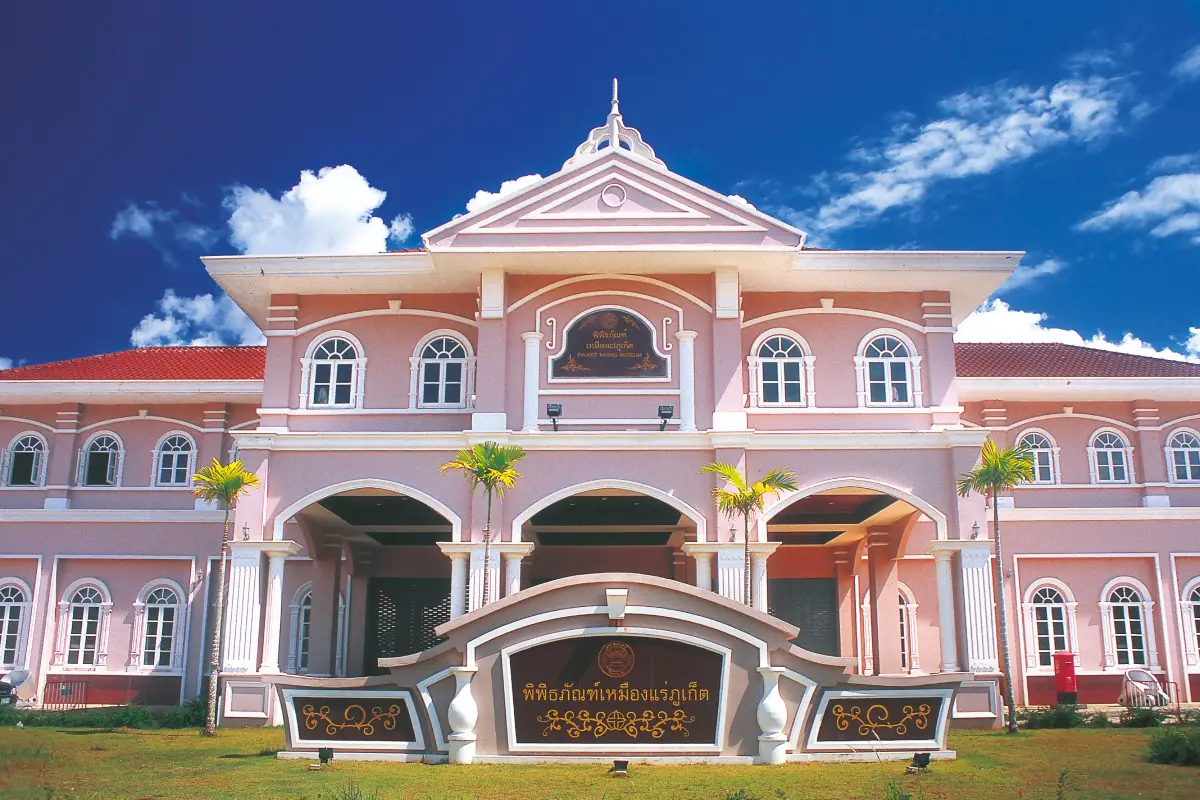
The main museum building is a pastel-pink Sino-Portuguese style structure known as “Ang Mo Lao Nai Hua Mueang,” or the mine owner’s mansion. Its arches, windows, plaster decoration, and central courtyard atmosphere recall the architectural character of old Phuket during the mining era. This design links the museum with the heritage buildings seen in Phuket Old Town and helps visitors understand how tin mining influenced the island’s architecture and urban identity.
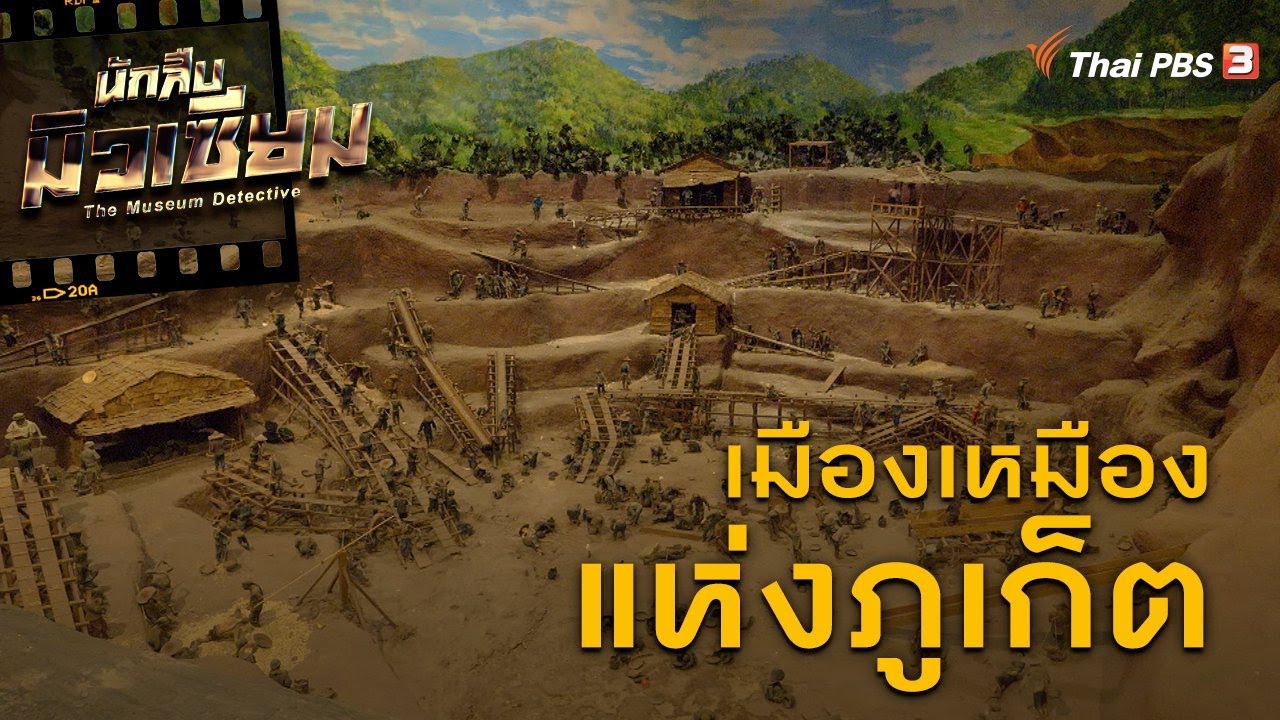
The exhibitions are designed as a life museum and are divided into two main parts: outdoor and indoor displays. The outdoor area presents traditional mining methods such as open running mines, shaft mines, carrying mines, hydraulic mining, and dredge-related mining displays. The indoor section presents the history of tin mining, the lifestyle of miners, mining tools, machines, reconstructed scenes, and community life connected with the industry.
The outdoor area gives visitors a broad picture of how mining was done in the past. Tin mining did not follow only one method. The techniques changed according to landscape, available water, labor, technology, and the richness of ore deposits. Running mines used flowing water and separation techniques. Shaft mines involved digging into the earth. Carrying mines relied heavily on human labor. Hydraulic mining used water pressure to expose ore-bearing soil. Dredge mining later represented a larger and more industrial method. Seeing these forms together helps visitors understand the development of Phuket’s mining industry.
Inside the Ang Mo Lao building, the museum tells the story of mining through detailed scenes and objects. Visitors can see the lives of miners, tools used for extracting and separating ore, transport equipment, machinery models, mine-owner office settings, market scenes, household life, and reconstructed community spaces. The exhibition does not explain tin only as a technical subject. It connects tin with people, families, labor, migration, and the everyday life of mining communities.
Phuket’s tin-mining history is closely connected with Chinese migration, especially Hokkien Chinese settlers who came to work, trade, and build communities on the island. Kathu was one of the places deeply affected by this movement. As Chinese workers and merchants arrived, they brought language, food, religious beliefs, shrines, festivals, family networks, and business culture. These elements mixed with local Phuket life and later shaped the island’s food, Vegetarian Festival, Baba culture, architecture, and old-town identity.
For this reason, Phuket Mining Museum is not only a place to see mining tools. It explains why Phuket has so many Sino-Portuguese buildings, why Hokkien Chinese food is so important, why Chinese shrines remain central to local communities, and why the Phuket Vegetarian Festival is so deeply rooted. Understanding tin mining is one of the best ways to understand the cultural system that shaped modern Phuket.
The relationship between mining and the landscape of Kathu is another key theme. Kathu lies inland, surrounded by hills, valleys, and former mining areas. Mining here required knowledge of soil, water, terrain, and ore layers. Miners needed to understand where to dig, how to wash and separate ore, how to manage water, and how to work safely in changing ground conditions. The museum helps visitors see that mining was both physical labor and local technical knowledge.
The tools and machines on display are evidence of the technology of the mining period. Smaller tools represent daily labor and local skill, while larger machines and models show the development of more industrial-scale operations. Together, they reveal that mining had many levels, from small manual work to larger systems involving capital, machinery, and organized production.
The museum also presents miners as members of a community, not only as laborers. Mining communities needed houses, markets, food, ceremonies, beliefs, and social networks. People lived, worked, cooked, prayed, celebrated, and raised families around the mining economy. By reconstructing scenes of miners’ lives, the museum helps visitors see the human world behind Phuket’s tin wealth.
For architecture lovers, the museum building itself is a major highlight. The pink Sino-Portuguese facade, arches, plaster details, windows, and spacious grounds create a strong visual impression. Visitors who have walked through Phuket Old Town will recognize the connection between the museum building and the old mansions, shop-houses, and schools that were influenced by wealth from the mining era.
Phuket Mining Museum is suitable for many types of visitors. Students can use it as a learning site for local history, geography, economy, and community life. General travelers can use it as an introduction to Phuket before exploring Kathu, Phuket Old Town, or Chinese shrines. Writers and content creators can use it to understand the connection between tin mining and Phuket identity. Families can bring children to learn from realistic scenes rather than only from books.
Visitors should allow at least 1 to 2 hours to explore the indoor and outdoor sections, read the displays, take photographs, and understand the mining story at a comfortable pace. Guided narration is offered in scheduled rounds at 09.30, 11.00, 13.00, and 14.30. Joining a narration round helps visitors understand the meaning of mining tools, mine types, and reconstructed scenes more clearly.
Admission fees are divided by visitor category. Thai adults pay 50 baht, Thai children pay 20 baht, foreign adults pay 100 baht, and foreign children pay 50 baht. The museum is suitable for families, schools, study groups, and visitors interested in Phuket history. Groups should contact the museum in advance to confirm narration rounds, access, and staff availability.
Getting There is easiest by private car, rental car, taxi, or app-based ride service. From Phuket Town, take Wichit Songkhram Road toward Kathu, then continue along the Kathu – Koh Kaew Road toward Loch Palm Golf Club and British International School Phuket. The museum is located in Moo 5, Kathu Subdistrict. The distance from Phuket Town is about 13 km and the drive usually takes around 25 to 35 minutes depending on traffic.
From Patong Beach, visitors can drive through Kathu toward Wichit Songkhram Road and then continue to the Kathu – Koh Kaew route. The journey usually takes around 25 to 40 minutes depending on traffic. From Phuket International Airport, the drive normally takes around 45 to 60 minutes. Public transport is less convenient because the museum is located away from the main tourist roads in a quieter inland area.
The museum can be combined with other places in Kathu for a meaningful heritage route. Visitors can start at Phuket Mining Museum to understand the mining industry, then continue to Kathu Local Heritage Conservation Center, Kathu Shrine, Wat Kathu, Kathu Waterfall, or Loch Palm Golf Club. With more time, the route can extend to Phuket Old Town, Phuket Thai Hua Museum, Chinpracha House, and Chinese shrines in town to connect the mining story with urban heritage.
Compared with Kathu Local Heritage Conservation Center, which is a smaller community-based learning space inside Ban Kathu School, Phuket Mining Museum is larger and more structured. It tells the mining story through architecture, outdoor displays, indoor galleries, and reconstructed scenes. Visiting both places together gives a more complete view of Kathu: the broad history of the mining industry and the smaller everyday memory of the local community.
The best time to visit is in the morning or early afternoon because the museum closes at 16.00. Visitors who want to join the final narration round should arrive before 14.30. Since part of the exhibition area is outdoors, comfortable shoes, sun protection, and drinking water are useful on hot days.
Photography lovers will enjoy the pink Sino-Portuguese building, entrance area, open grounds, and mining dioramas. Visitors should follow museum rules, avoid climbing on displayed equipment, avoid touching objects without permission, and respect other visitors. Commercial photography or filming should be arranged with the museum or caretaker in advance.
Phuket Mining Museum is valuable because it explains how Phuket changed from a tin-mining island into a modern tourism province. It links underground resources with Sino-Portuguese architecture, mining labor with Hokkien Chinese communities, and old economic networks with schools, shrines, associations, and old town buildings that still shape Phuket today. A visit here gives depth to any cultural trip around the island.
In summary, Phuket Mining Museum is an essential historical and cultural attraction for anyone who wants to understand Phuket beyond beaches. Its outdoor mining displays, Ang Mo Lao mine-owner building, tin-mining history, miners’ lifestyle exhibits, tools, machines, and reconstructed scenes explain the foundation of Phuket before the tourism era. The museum does not only tell the story of Kathu; it tells one of the most important origin stories of Phuket as a whole.
| Name | Phuket Mining Museum / Kathu Mining Museum |
| Location | Old Tho Sung mining area, Moo 5, Kathu – Koh Kaew Road, Kathu Subdistrict, Kathu District, Phuket, near Loch Palm Golf Club |
| Address | 45 Moo 5, Kathu – Koh Kaew Road, Kathu Subdistrict, Kathu District, Phuket 83120, Thailand |
| Coordinates | 7.920364, 98.335135 |
| Highlights | Life museum exhibitions about Phuket tin mining, the Sino-Portuguese Ang Mo Lao mine-owner building, outdoor mining-method displays, mining tools, machinery models, and reconstructed scenes of miners’ lives |
| History / Context | Created to conserve natural resources, Kathu community history, and the memory of Phuket’s tin-mining era. The museum project began in 1999 and was completed in 2008. |
| Building Features | A pastel-pink Sino-Portuguese building called Ang Mo Lao Nai Hua Mueang, with arches, plaster decoration, windows, and an atmosphere connected with Phuket’s mining-era heritage |
| Main Areas / Zones | Outdoor mining-method display area, Ang Mo Lao building, tin-mining history gallery, miners’ lifestyle gallery, tools and machinery area, reconstructed mining community scenes, and photo areas around the museum building |
| Travel Information | From Phuket Town, take Wichit Songkhram Road toward Kathu, then continue along the Kathu – Koh Kaew Road toward Loch Palm Golf Club and British International School Phuket. The distance from Phuket Town is about 13 km and the drive usually takes around 25 – 35 minutes. |
| Current Status | Open as a museum and learning center for Phuket’s tin-mining history |
| Open Days | Daily |
| Opening Hours | 09.00 – 16.00 |
| Narration Rounds | 09.30, 11.00, 13.00, and 14.30 |
| Admission Fee | Thai adults 50 baht / Thai children 20 baht Foreign adults 100 baht / Foreign children 50 baht |
| Suggested Visit Duration | About 1 – 2 hours |
| Facilities | Indoor exhibition galleries, outdoor display areas, photo spots, narration room, parking area, and rest areas around the museum |
| Caretaker / Related Organization | Kathu Town Municipality and local organizations involved in Kathu community heritage conservation |
| Main Contact Number | 088-766-0962, 076-321-073, 076-510-115 |
| Nearby Tourist Attractions | 1. Loch Palm Golf Club, about 1 km 2. Kathu Local Heritage Conservation Center, about 4 km 3. Kathu Shrine, about 4 km 4. Wat Kathu, about 4 km 5. Kathu Waterfall, about 5 km 6. Andamanda Phuket, about 7 km 7. Chillva Market, about 8 km 8. Phuket Old Town, about 13 km |
| Nearby Restaurants | 1. Krua Pai Lin Kathu Waterfall, about 5 km, Tel. 081-956-2490 2. Krua Ohm Phuket, about 6 km, Tel. 076-631-523 3. Jongjit Kitchen Hokkien Noodles, about 6 km, Tel. 062-864-4559 4. Hangout Cafe, about 6 km, Tel. 093-198-2279, 082-561-8054 5. Pizzeria Da Moreno Kathu, about 7 km, Tel. 085-796-4712 6. BAAN Kathu, about 7 km, Tel. 080-669-9944 |
| Nearby Accommodations | 1. Tinidee Golf Resort Phuket, about 2 km, Tel. 076-321-925 2. The Par Phuket, about 5 km, Tel. 076-510-960 3. Areca Resort & Spa, about 6 km, Tel. 076-319-018-9 4. Ramada Plaza by Wyndham Chao Fah, about 8 km 5. Travelodge Phuket Town, about 8 km 6. The Pago Design Hotel Phuket, about 10 km, Tel. 076-373-111 7. Blu Monkey Hub & Hotel Phuket, about 10 km, Tel. 076-354-266 |
Frequently Asked Questions (FAQ)
Q: Where is Phuket Mining Museum located?
A: Phuket Mining Museum is located at 45 Moo 5, Kathu – Koh Kaew Road, Kathu Subdistrict, Kathu District, Phuket, near Loch Palm Golf Club and the old Tho Sung mining area.
Q: What are the opening days and hours?
A: The museum opens daily from 09.00 to 16.00.
Q: How much is the admission fee?
A: Thai adults pay 50 baht, Thai children pay 20 baht, foreign adults pay 100 baht, and foreign children pay 50 baht.
Q: What can visitors see inside Phuket Mining Museum?
A: Visitors can see exhibitions about Phuket’s tin-mining history, miners’ lifestyles, mining tools, machines, reconstructed mining scenes, and outdoor displays of traditional mining methods such as running mines, shaft mines, carrying mines, hydraulic mines, and dredge mining.
Q: Why is Phuket Mining Museum important?
A: The museum explains the economic and cultural foundation of Phuket during the tin-mining era, including Kathu community history, Hokkien Chinese settlement, Sino-Portuguese architecture, and the roots of Phuket’s old town identity.
Q: How long should visitors spend at the museum?
A: Visitors should allow about 1 to 2 hours to explore both the indoor galleries and outdoor displays at a comfortable pace.
Q: Are there guided narration rounds?
A: Yes. Narration rounds are scheduled at 09.30, 11.00, 13.00, and 14.30.
Q: What nearby places can be visited with the museum?
A: Nearby places include Kathu Local Heritage Conservation Center, Kathu Shrine, Wat Kathu, Kathu Waterfall, Andamanda Phuket, Chillva Market, and Phuket Old Town.
 Category: ●Art, Culture and Heritage
 Group: ●Museums
Last Update : 2 MonthAgo
 Last Update : 2 MonthAgo
 Click to Access the Navigation Map GPS
Phuket Mining Museum Map
Recommend

 Landmarks and Memorials(7)
 Art, Craft Centres, Tradition(5)
Museums(4)
 Historic Homes and Cities(1)
 Art Gallery(1)
 Educational Places
 Educational Gardens, Farm(2)
 Places of Worship
 Temple(14)
 Mosque(47)
 Other Sacred Sites(15)
 Suburban Living
 Village, Community(2)
 Floating Market(1)
 Nature and Wildlife
 National Parks and Marine Reserves(2)
 Mountain (Doi)(2)
 Dam, Reservoir, Lake(1)
 Waterfalls(4)
 Bays and Beaches(30)
 Islands(12)
 Other natural attractions(10)
 Entertainment and Agricultural
 Zoos and Aquariums(2)
 Stadium(2)
 Farms, Parks and Ecotourism(4)
 Amusement Park(2)
 Waterpark(6)
 Theater(1)
 Outdoor and Adventure Activities(1)
 Shopping
 Shopping and Night Market(1)
 Travel Articles, Recipes
 Travel Review, Food Review(1)
 Southern Food Menu, Southern Food Recipes(5)


