
lovethailand home >South Travel Attractions >Phuket Travel Attractions >Ka Thu >Ka Thu > Kathu Shrine
TL;DR: Kathu Shrine is located at Wichit Songkram Road, Kathu Subdistrict, Kathu District, Phuket, open Daily, hours 08.00 – 17.00. Highlights include Historic Chinese shrine in Kathu and the birthplace of the Phuket Vegetarian Festival.
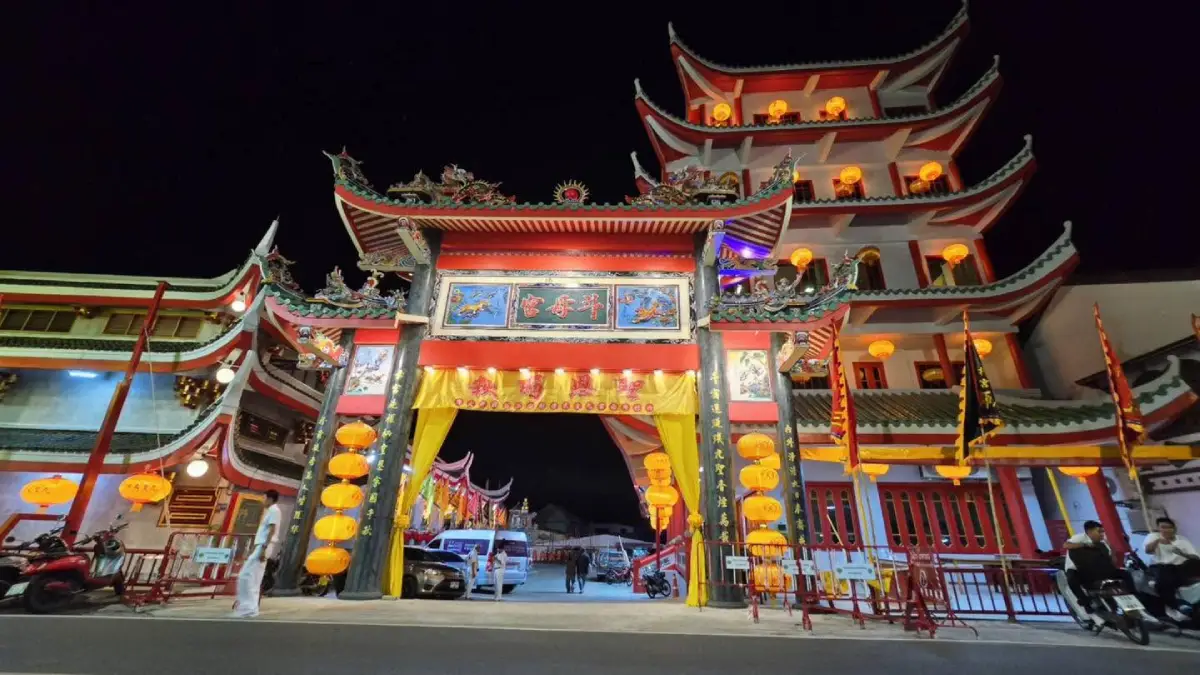
Kathu Shrine
Open Days: Daily
Opening Hours: 08.00 – 17.00
Kathu Shrine, also known as Aam Kathu or Lai Thu Tao Bo Keng Shrine, is one of the most historically important Chinese shrines in Phuket. Located at 37/1 Moo 4, Wichit Songkram Road, Kathu Subdistrict, Kathu District, Phuket, the shrine is widely regarded as the birthplace of the Phuket Vegetarian Festival. For travelers who want to understand Phuket beyond beaches and old-town architecture, Kathu Shrine offers a direct connection to the island’s Chinese mining communities, Hokkien spiritual culture, and one of Phuket’s most important annual traditions.
The importance of Kathu Shrine comes from its role as the origin point of the Phuket Vegetarian Festival. According to local history, during the period when many Chinese migrants worked in Phuket’s tin mines, an epidemic broke out in the Kathu community. At the same time, a Chinese opera troupe was performing in Ban Kathu. Members of the troupe believed that illness had occurred because they had not observed the vegetarian discipline they traditionally followed in China. They then organized a 9-day and 9-night vegetarian observance and helped establish a shrine for the rituals. After the ceremony, the epidemic disappeared, and the Kathu villagers developed strong faith in the practice. The observance continued every year and gradually spread across Phuket.
This story gives Kathu Shrine a special position among Chinese shrines in Phuket. It is not simply one of the shrines that later joined the Vegetarian Festival; it is the place where the Phuket version of the tradition began. Local people call the shrine Aam Kathu, while the term Chai Tueng refers to a sacred vegetarian observance hall associated with the Nine Emperor Gods. These names reflect the shrine’s identity as both a place of worship and a ritual center for vegetarian discipline.
A later stage in the shrine’s history involved Luang Amnat Nararak, an important leader of the Ban Kathu community and ancestor of the Tantawet family. He sent representatives to Jiangxi Province in China to bring back sacred incense ash, known locally as “hiao ian,” together with an incense urn. These sacred objects were brought to Kathu Shrine so that the vegetarian rituals could be conducted properly according to Chinese tradition. This event strengthened the shrine’s ritual authority and helped confirm Kathu Shrine as the origin of the Phuket Vegetarian Festival.
Kathu Shrine also preserves the memory of Phuket’s tin-mining era. Kathu was once rich in tin deposits, which attracted large numbers of Chinese workers to the island. These migrants brought their language, beliefs, deity worship, ancestor veneration, and ritual practices with them. The shrine therefore grew out of the spiritual needs of a Chinese mining community and eventually became a central place of faith for the wider Kathu area.
The shrine was formerly known as Kio Hong Ya Shrine and is connected with the Nine Emperor Gods tradition. It also honors important deities associated with the Vegetarian Festival, including Tian Hu Nguan Soi, Sam-Hu-Ong-Iah, and Lee Lochia. These deities are linked with the conduct of rituals and the spiritual authority of the festival. Their presence gives Kathu Shrine a deep ritual structure that extends beyond ordinary daily worship.
The present shrine building has been renovated and enlarged while preserving its Chinese shrine identity. Visitors will see a Chinese-style roof, auspicious red, green, and gold colors, deity images, wooden sacred figures, altar tables, and ritual spaces used during the festival period. Although the current structure is larger and more elegant than earlier versions, the shrine still functions as a community place of worship rather than a purely tourist-oriented attraction.
One of the most admired images inside Kathu Shrine is the statue of Guanyin, the goddess of compassion. The statue wears a white robe, has a calm and benevolent expression, bears a red mark on the forehead, holds a sacred water vessel in the right hand, and raises the left hand in a blessing gesture while standing on a dragon base. This statue is highly respected by local devotees and is one of the most beautiful Chinese deity images in the shrine.
In addition to the Guanyin statue, Kathu Shrine contains several Chinese deity images associated with protection, prosperity, health, and family well-being. Devotees visit the shrine to pray for good health, safety, success in work and business, family harmony, and peace of mind. A visit here is therefore not only a cultural stop; it is an opportunity to observe a living place of devotion that local people continue to use throughout the year.
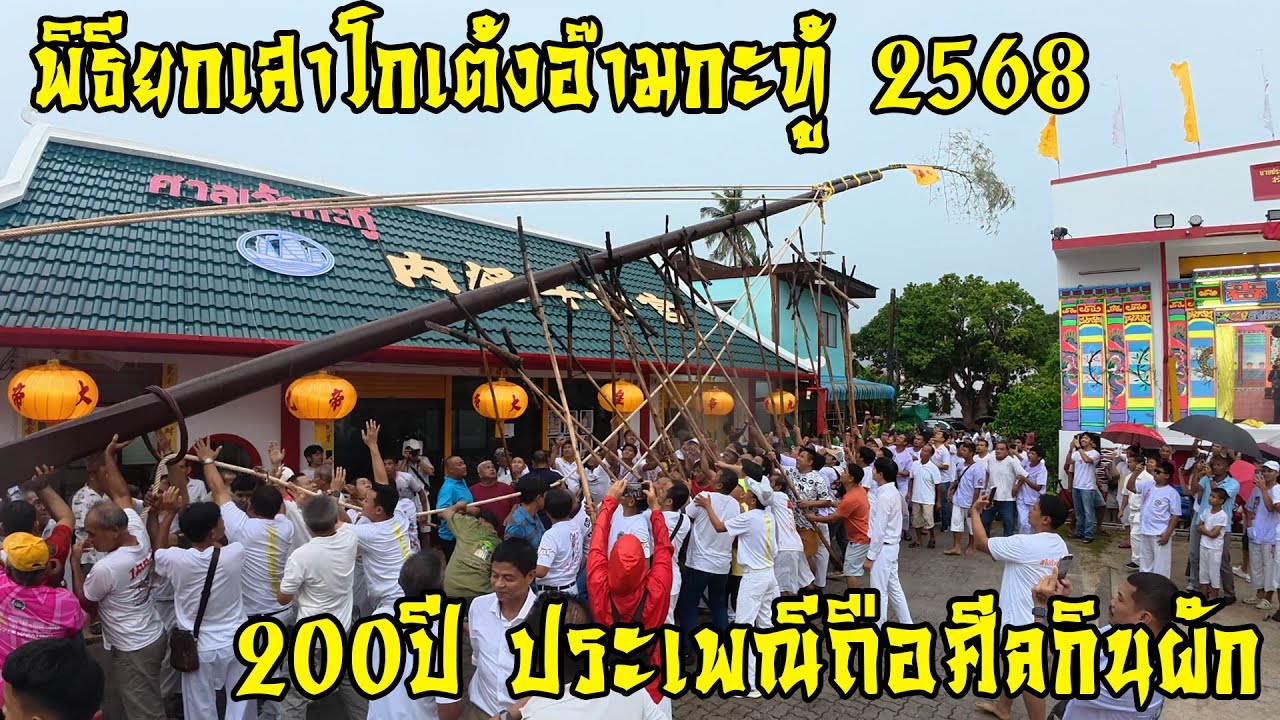
During the Phuket Vegetarian Festival, Kathu Shrine becomes especially active. Devotees wear white clothing, join ceremonies, make offerings, eat vegetarian food, and observe ritual discipline for 9 days. The shrine is associated with major festival activities such as the opening rituals, the raising of the ceremonial pole, the invitation of sacred deities, processions, firewalking, and other ritual acts performed by spirit mediums. The atmosphere is filled with incense, firecrackers, vegetarian food, and intense communal devotion.
The Vegetarian Festival at Kathu Shrine is important because it shows that the event is not merely a vegetarian food celebration. It is a complete ritual system involving purification, merit-making, deity worship, moral discipline, and community participation. Local families, ritual participants, spirit mediums, volunteers, and visitors all gather around the shrine. This makes Kathu Shrine one of the best places to understand the spiritual meaning behind the Phuket Vegetarian Festival.
On ordinary days, Kathu Shrine is quieter and easier to explore slowly. Visitors can observe the Chinese architectural details, lanterns, altar tables, wooden carvings, deity images, and the peaceful rhythm of local worship. Modest dress is recommended. Visitors should speak softly, avoid blocking worshippers, refrain from touching sacred objects without permission, and follow any signs or instructions inside the shrine. Photography should be done respectfully, especially during ceremonies.
Getting There is convenient by private car, rental car, taxi, or local transport. From Phuket Town, follow Ranong Road and Wichit Songkram Road toward Kathu. Continue past the Ket Ho area and drive into the Kathu community. The shrine is located on Wichit Songkram Road. Travelers can also search for “Kathu Shrine” in a navigation app. The road around the shrine passes through an old community area, so visitors should drive carefully and park only in appropriate places.
Travelers coming from the Lotus or Patong direction can follow Wichit Songkram Road toward Kathu and turn toward the shrine from the main route. During the Vegetarian Festival, traffic near the shrine can be heavier, parking may be limited, and ceremonial activities may affect road access. Visitors who plan to see major rituals should allow extra travel time and use designated parking areas.
Kathu Shrine can be combined with several nearby attractions in the same itinerary. Wat Kathu is close to the shrine, while Phuket Mining Museum, Kathu Waterfall, Phuket Wake Park, and Phuket Old Town are within driving distance. This makes the shrine a strong anchor for a cultural route connecting Chinese shrine history, tin-mining heritage, local food, and the natural landscape of Kathu.
The food around Kathu Shrine adds another layer to the visit. Nearby local restaurants such as Krua Jongjit, known for Hokkien noodles, Ya Jin Khao Man Kai Nai Thu, and other Kathu eateries make the area suitable for a short cultural and food trip. Travelers can visit the shrine, eat local Phuket food, and continue to nearby attractions without needing to travel far.
Kathu Shrine is one of the clearest places to understand Phuket’s Chinese-Thai cultural identity. The shrine connects tin mining, Chinese migration, the opera troupe legend, epidemic recovery, sacred incense ash from China, deity worship, and the annual Vegetarian Festival. Every part of the shrine, from its sacred images to its festival rituals, reflects the way Phuket’s Chinese community preserved its traditions while adapting to life on the island.
For visitors seeking a deeper cultural experience in Phuket, Kathu Shrine is essential. It explains why the Phuket Vegetarian Festival matters, how the tradition began, and why local people continue to respect this shrine so strongly. A visit here offers history, faith, architecture, community life, and a direct connection to one of Phuket’s most famous cultural events.
| Name | Kathu Shrine / Aam Kathu / Lai Thu Tao Bo Keng Shrine |
| Location | Wichit Songkram Road, Kathu Subdistrict, Kathu District, Phuket |
| Address | 37/1 Moo 4, Wichit Songkram Road, Kathu Subdistrict, Kathu District, Phuket 83120, Thailand |
| Coordinates | 7.91642, 98.34508 |
| Highlights | Historic Chinese shrine in Kathu and the birthplace of the Phuket Vegetarian Festival |
| History | Connected with Chinese tin-mine workers, a Chinese opera troupe, an epidemic in Ban Kathu, a 9-day vegetarian observance, and the later return of sacred incense ash and an incense urn from Jiangxi Province, China |
| Name Origin | Aam is the local Phuket word for a Chinese shrine; Chai Tueng refers to a sacred vegetarian observance hall associated with the Nine Emperor Gods. |
| Distinctive Features | Renovated Chinese shrine building, Chinese deity images, old wooden sacred carvings, altar tables, and the white-robed Guanyin statue standing on a dragon base |
| Travel Information | From Phuket Town, follow Ranong Road and Wichit Songkram Road toward Kathu and continue into the Kathu community, or search for “Kathu Shrine” in a navigation app. |
| Current Status | Open to worshippers and visitors and remains one of the key shrines of the Phuket Vegetarian Festival |
| Open Days | Daily |
| Opening Hours | 08.00 – 17.00 |
| Fees | Free admission; donations are welcome |
| Facilities | Worship areas, main shrine building, front courtyard, altar tables, ritual spaces, and vegetarian food hall during the Phuket Vegetarian Festival |
| Main Areas / Zones | Main shrine hall, Chinese deity worship area, altar tables, old wooden sacred carvings, Guanyin area, and Vegetarian Festival ritual areas |
| Main Contact Number | 076-202-245 |
| Official Website / Official Page | Facebook: Kathu Shrine 內杍斗母宮 |
| Nearby Tourist Attractions | 1. Wat Kathu, about 0.5 km 2. Phuket Mining Museum, about 4 km 3. Kathu Waterfall, about 4 km 4. Phuket Wake Park, about 5 km 5. Phuket Old Town, about 6 km |
| Nearby Restaurants | 1. Krua Jongjit Hokkien Noodles, about 0.3 km, Tel. 062-864-4559 2. Ya Jin Khao Man Kai Nai Thu, about 0.1 km, Tel. 087-270-7298, 081-477-0867 3. Khrua Was Jongjit 2, about 1 km, Tel. 062-864-4559 4. The Cafe Mookata, about 1 km, Tel. 076-624-182 5. Tam Saab Khon 101, about 4 km, Tel. 093-627-2045 |
| Nearby Accommodations | 1. The Par Phuket, about 3 km, Tel. 076-510-960 2. Serenity Lakeside Resort, about 4 km, Tel. 086-281-0472 3. Tinidee Golf Resort Phuket, about 4 km, Tel. 076-321-925 4. Areca Resort & Spa, about 5 km, Tel. 076-319-018 5. The Palms Residence Phuket, about 6 km, Tel. 076-304-407 |
Frequently Asked Questions (FAQ)
Q: Where is Kathu Shrine located?
A: Kathu Shrine is located at 37/1 Moo 4, Wichit Songkram Road, Kathu Subdistrict, Kathu District, Phuket.
Q: What are the opening hours of Kathu Shrine?
A: Kathu Shrine is open daily from 08.00 to 17.00.
Q: Is there an admission fee for Kathu Shrine?
A: No. Admission is free, and visitors may make donations if they wish.
Q: Why is Kathu Shrine important to Phuket?
A: Kathu Shrine is regarded as the birthplace of the Phuket Vegetarian Festival and is closely connected with the history of Chinese tin-mine workers in Kathu.
Q: How did the Phuket Vegetarian Festival begin at Kathu Shrine?
A: The tradition began when a Chinese opera troupe in Ban Kathu organized a 9-day vegetarian observance during an epidemic. After the illness disappeared, local residents continued the practice every year.
Q: What can visitors see inside Kathu Shrine?
A: Visitors can see Chinese deity images, old wooden sacred carvings, altar tables, and a white-robed Guanyin statue standing on a dragon base.
Q: What nearby places can be combined with a visit to Kathu Shrine?
A: Nearby places include Wat Kathu, Phuket Mining Museum, Kathu Waterfall, Phuket Wake Park, and Phuket Old Town.
 Category: ●Places of Worship
 Group: ●Other Sacred Sites
Last Update : 2 MonthAgo
 Last Update : 2 MonthAgo
 Click to Access the Navigation Map GPS
Kathu Shrine Map
Recommend

 Art, Culture and Heritage
 Landmarks and Memorials(7)
 Art, Craft Centres, Tradition(5)
 Museums(4)
 Historic Homes and Cities(1)
 Art Gallery(1)
 Educational Places
 Educational Gardens, Farm(2)
 Temple(14)
 Mosque(47)
Other Sacred Sites(15)
 Suburban Living
 Village, Community(2)
 Floating Market(1)
 Nature and Wildlife
 National Parks and Marine Reserves(2)
 Mountain (Doi)(2)
 Dam, Reservoir, Lake(1)
 Waterfalls(4)
 Bays and Beaches(30)
 Islands(12)
 Other natural attractions(10)
 Entertainment and Agricultural
 Zoos and Aquariums(2)
 Stadium(2)
 Farms, Parks and Ecotourism(4)
 Amusement Park(2)
 Waterpark(6)
 Theater(1)
 Outdoor and Adventure Activities(1)
 Shopping
 Shopping and Night Market(1)
 Travel Articles, Recipes
 Travel Review, Food Review(1)
 Southern Food Menu, Southern Food Recipes(5)


