
lovethailand home >South Travel Attractions >Phuket Travel Attractions >Muang Phuket >Talat Nuea > Jui Tui Shrine
TL;DR: Jui Tui Shrine is located at Soi Phutorn, Ranong Road, Talat Nuea, Mueang Phuket District, Phuket, open Daily, hours 08.00 – 20.30.
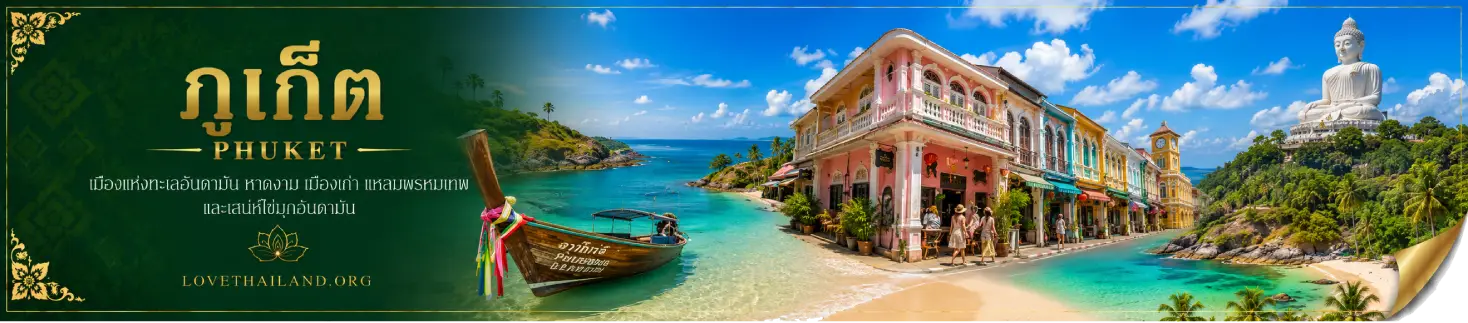
Jui Tui Shrine
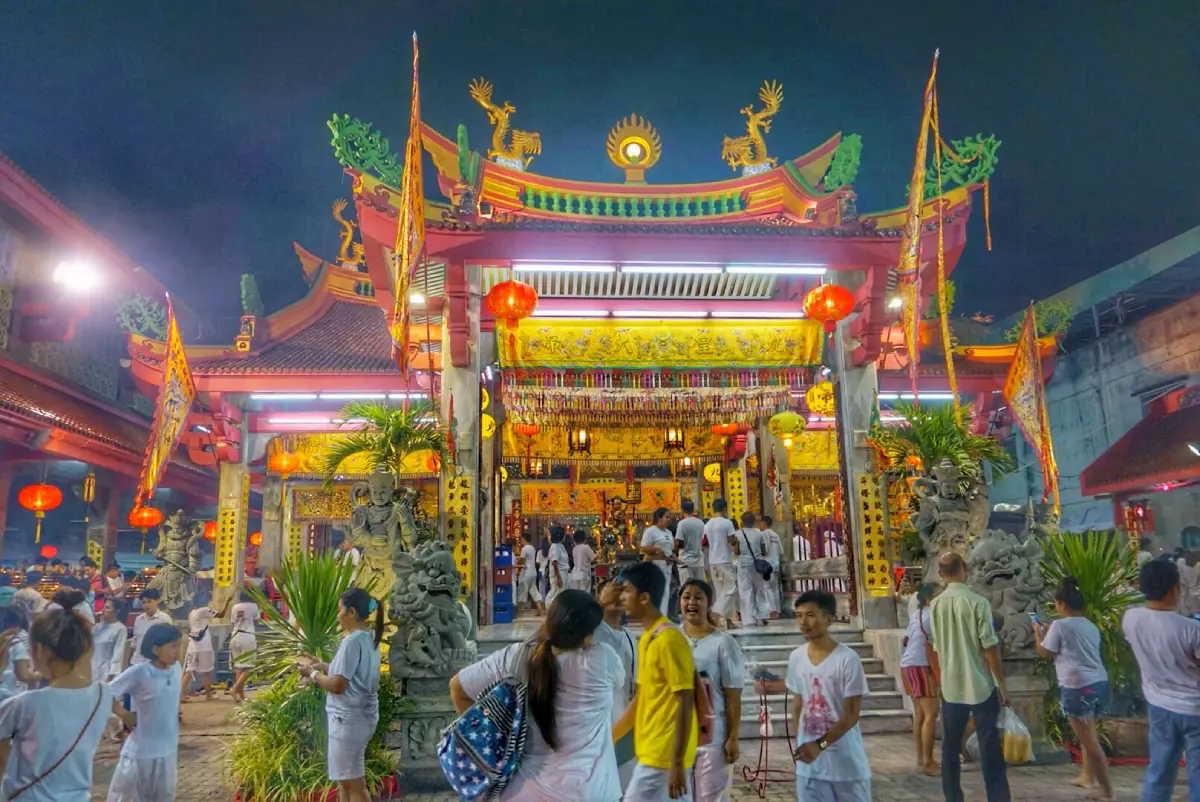
Open Days: Daily
Opening Hours: 08.00 – 20.30
Jui Tui Shrine, also known as Jui Tui Tao Bo Keng, is one of the most important Chinese shrines in Phuket Town. Located on Soi Phutorn off Ranong Road in Talat Nuea, Mueang Phuket District, the shrine stands next to Put Jaw Shrine and within easy reach of Phuket Old Town. For travelers who want to understand Phuket beyond its beaches, Jui Tui Shrine offers a direct view into the island’s Chinese heritage, Taoist beliefs, Hokkien community roots, and the long-standing Phuket Vegetarian Festival.
The shrine is a living place of worship rather than a static historical monument. Local residents visit throughout the year to make offerings, pray for good health, ask for blessings for family members, seek protection before travel, and mark important moments in life. Visitors will see red-and-gold Chinese architectural details, dragon motifs, stone guardian lions, lanterns, incense burners, deity altars, and worshippers moving through the shrine with a calm but deeply focused sense of devotion. This combination of architecture, ritual, and community life makes Jui Tui Shrine one of the most meaningful cultural stops in central Phuket.
The history of Jui Tui Shrine is closely tied to Phuket’s old Chinese community and to a fire that destroyed an earlier shrine connected with a Chinese opera troupe in the Rommanee Lane area. After the fire, surviving sacred images and ritual objects were moved from the old site. One group of community leaders later established what became Bang Neow Shrine, while another group contacted the landowner of a site in Moo 8, Talat Nuea, to build a new shrine. The area was formerly a betel garden, and to the east there was once a large canal where sizeable sailing boats could come in and moor. After the community reached an agreement with the landowner, the remaining Chinese deity images were enshrined at the new site, and the shrine that locals came to call Jui Tui gradually became one of Phuket Town’s major spiritual landmarks.
The name “Jui Tui” preserves a memory of the area’s former landscape and way of life. In local Chinese usage, “Jui” refers to water, while “Tui” refers to a rice-pounding mortar. The name reflects the old canal-front environment where water and a water-powered mechanism were associated with pounding harvested rice. For this reason, the shrine’s name is not merely decorative. It records a vanished landscape of canals, gardens, working communities, and local livelihoods before this part of Phuket developed into the dense urban district visitors see today.
Inside the shrine are several Chinese deity images and worship areas connected with Taoist and Hokkien traditions. The atmosphere is richly symbolic: red and gold express auspiciousness, the dragon motifs convey sacred power, and the altars represent a long relationship between the shrine and local families. Many Phuket residents regard the shrine as a trusted spiritual place, especially for blessings related to well-being, studies, career, family harmony, and safe journeys. Even travelers who do not participate in the rituals can appreciate the shrine as a cultural space where Phuket’s Chinese identity remains visible and active.
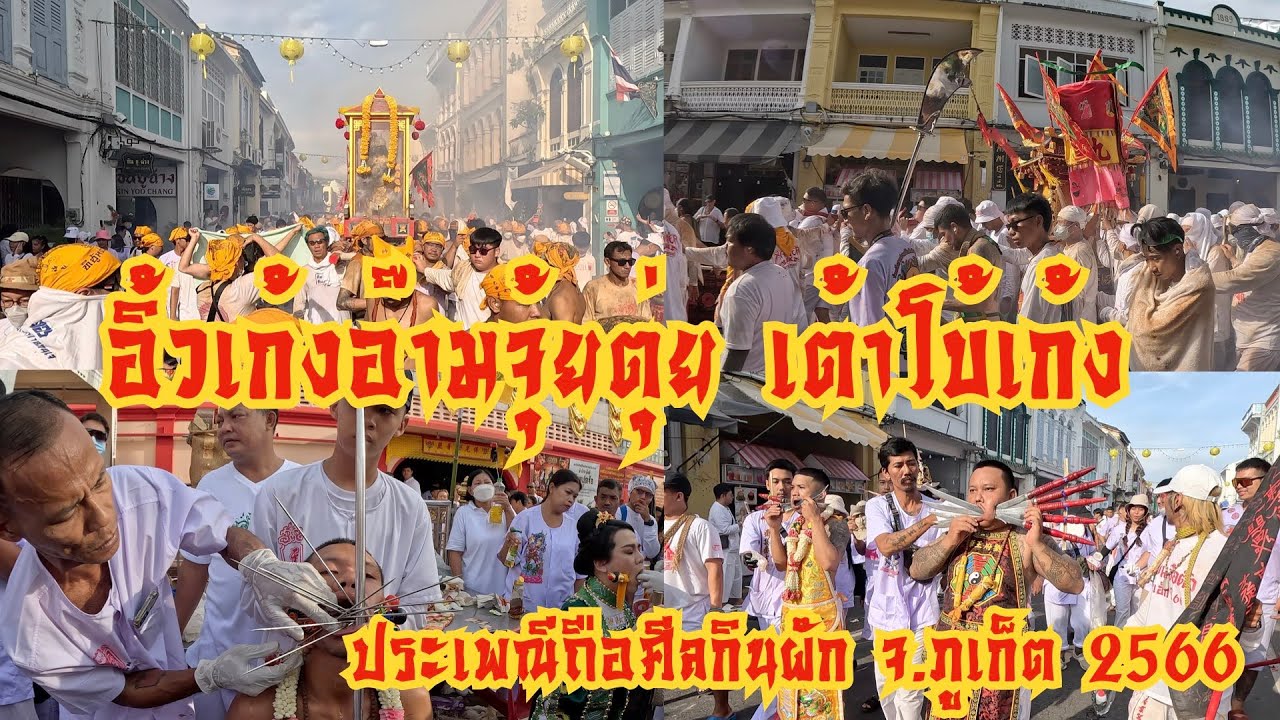
Jui Tui Shrine becomes especially important during the Phuket Vegetarian Festival, one of the island’s most famous annual cultural events. During the festival period, the shrine and the surrounding streets fill with devotees in white clothing, ritual participants, processions, offerings, and vegetarian food stalls. The festival follows the ninth lunar month of the Chinese calendar and involves purification of body and mind, abstaining from meat, observing moral discipline, and participating in ceremonies that reinforce spiritual merit and communal solidarity. For visitors, Jui Tui Shrine is one of the key places to experience the seriousness, intensity, and continuity of this tradition.
The shrine also helps explain Phuket Town as a layered cultural landscape. Phuket is not only a beach destination; it is also a historic trading and mining island shaped by Chinese migration, local commerce, Hokkien ritual life, Sino-Portuguese architecture, and food culture. Jui Tui Shrine sits close to Phuket Old Town, Baan Chinpracha, Thai Hua Museum, Thalang Road, and other heritage sites, making it easy to include in a walking route. Travelers can start with a visit to the shrine, continue to Put Jaw Shrine next door, walk toward the old commercial streets, and then explore local restaurants serving Phuket dishes such as Hokkien noodles, moo hong, o-tao, and other island specialties.
On ordinary days, Jui Tui Shrine is relatively calm and suitable for slow observation. Visitors can spend time looking at the roof details, entrance gate, courtyard, deity altars, Chinese calligraphy, ceremonial objects, and the daily rhythm of worship. Photography is generally best approached with restraint. The shrine is an active sacred site, so visitors should dress politely, avoid blocking worshippers, keep their voices low, and follow any signs or instructions given by shrine staff. During ceremonies, especially in the Vegetarian Festival period, extra sensitivity is needed because the shrine becomes a ritual space for local devotees.
The best time to visit on a regular day is in the morning or late afternoon, when the weather is more comfortable for walking around Phuket Town. Travelers who want a quieter cultural visit should avoid the most crowded festival hours. Travelers who specifically want to see the Phuket Vegetarian Festival should check the annual schedule in advance, as ritual days and procession routes follow the Chinese lunar calendar and vary each year. During the festival, roads around the shrine may be congested or temporarily closed, so it is wise to walk from a nearby parking area or use local transport.
Getting There is straightforward because the shrine is in central Phuket Town. From Phuket Old Town, it is possible to walk to Jui Tui Shrine in about 10–15 minutes depending on the starting point. From Rasada Road, drive toward Suriyadej Circle, also known as the Fountain Circle, continue along Ranong Road, pass the main market area, and turn into Soi Phutorn. The shrine is located near Put Jaw Shrine. From the Thai Nan intersection or the Wichit Songkhram Road side, continue toward Ranong Road and turn into Soi Phutorn. Because the old town streets can be narrow and parking is limited during busy hours, using local transport or parking slightly farther away is often more convenient.
For travelers interested in cultural history, Jui Tui Shrine is one of the clearest places to understand the Phuket Vegetarian Festival beyond its public processions. The festival is not simply a food event; it is rooted in ritual purification, deity worship, community cooperation, and the continuity of Chinese spiritual practice in Phuket. The shrine preserves this meaning through its annual ceremonies, daily worship, community administration, and the ongoing participation of local families. A visit to Jui Tui Shrine therefore gives foreign travelers a more complete understanding of why Phuket’s vegetarian tradition remains powerful after generations of social and urban change.
As a travel experience, Jui Tui Shrine does not require a long visit, but it adds significant depth to any Phuket Town itinerary. A typical visit may take 30–60 minutes for worship, photography, and a slow look at the shrine architecture. It can easily be combined with Put Jaw Shrine, Baan Chinpracha, Phuket Thai Hua Museum, Thalang Road, local coffee shops, and old-town restaurants. This makes the shrine ideal for travelers who prefer compact, walkable cultural routes rather than long transfers between distant attractions.
Jui Tui Shrine remains open to worshippers and visitors and continues to play an important role in Phuket’s Chinese-Thai community. Its value lies in the way it brings together history, faith, architecture, ritual, and neighborhood life in one accessible place. Whether visited quietly on a normal day or during the energy of the Phuket Vegetarian Festival, the shrine offers one of the most authentic cultural experiences in Phuket Town and should be included by travelers who want to understand the island’s heritage in a deeper and more respectful way.
| Name | Jui Tui Shrine, also known as Jui Tui Tao Bo Keng |
| Location | Soi Phutorn, Ranong Road, Talat Nuea, Mueang Phuket District, Phuket |
| Address | 283 Soi Phutorn, Ranong Road, Talat Nuea, Mueang Phuket District, Phuket 83000, Thailand |
| Coordinates | 7.8832, 98.3834 |
| Highlights | Historic Chinese shrine in central Phuket Town, a major spiritual center for the Chinese-Thai community and one of the important sites of the Phuket Vegetarian Festival |
| History | Linked to the Chinese opera troupe tradition in Rommanee Lane, the fire that destroyed an earlier shrine, the relocation of deity images, and the continuing Hokkien Chinese ritual culture of Phuket |
| Name Origin | “Jui” refers to water and “Tui” refers to a rice-pounding mortar, recalling the former canal landscape and water-powered rice-pounding activity in the area |
| Distinctive Features | Red-and-gold Chinese shrine architecture, deity altars, incense burners, Chinese lanterns, dragon motifs, stone guardian lions, and an active daily worship atmosphere |
| Travel Information | About 10–15 minutes on foot from central Phuket Old Town. By car, follow Ranong Road and turn into Soi Phutorn near Put Jaw Shrine. |
| Current Status | Open to worshippers and visitors and remains one of the important shrines in Phuket Town |
| Open Days | Daily |
| Opening Hours | 08.00 – 20.30 |
| Fees | Free admission |
| Facilities | Worship areas, deity altars, ritual spaces, and visitor areas around the shrine |
| Main Areas / Zones | Entrance and front courtyard, main worship hall, Chinese deity altars, and ritual areas used during the Phuket Vegetarian Festival |
| Caretaker | Kittiwong Chansattham, Foundation President and Executive Chairman of Jui Tui Tao Bo Keng Shrine |
| Main Contact Number | 076-213-243 |
| Official Website / Official Page | facebook.com/juitui.phuket |
| Nearby Tourist Attractions | 1. Put Jaw Shrine, about 0.1 km 2. Baan Chinpracha, about 0.6 km 3. Phuket Thai Hua Museum, about 0.8 km 4. Thalang Road, Phuket Old Town, about 1 km 5. Shrine of the Serene Light, about 1 km |
| Nearby Restaurants | 1. Mee Ton Poe Phuket Town, about 1 km, Tel. 076-216-293 2. Lock Tien, about 1 km, Tel. 084-307-9903 3. One Chun, about 1 km, Tel. 076-355-909 4. Raya Restaurant, about 1 km, Tel. 076-218-155 5. Tu Kab Khao, about 1 km, Tel. 076-608-888 |
| Nearby Accommodations | 1. The Memory at On On Hotel, about 1 km, Tel. 076-363-700 2. Casa Blanca Boutique Hotel Phuket, about 1 km, Tel. 076-219-019 3. Pearl Hotel Phuket, about 2 km, Tel. 076-211-044 4. Courtyard by Marriott Phuket Town, about 2 km, Tel. 076-643-555 5. Novotel Phuket City Phokeethra, about 2 km, Tel. 076-397-777 |
Frequently Asked Questions (FAQ)
Q: Where is Jui Tui Shrine located?
A: Jui Tui Shrine is located on Soi Phutorn off Ranong Road in Talat Nuea, Mueang Phuket District, Phuket, next to Put Jaw Shrine and close to Phuket Old Town.
Q: What are the opening hours of Jui Tui Shrine?
A: Jui Tui Shrine is open daily from 08.00 to 20.30.
Q: Is there an admission fee for Jui Tui Shrine?
A: No. Admission to Jui Tui Shrine is free.
Q: Why is Jui Tui Shrine important during the Phuket Vegetarian Festival?
A: Jui Tui Shrine is one of the major shrines involved in the Phuket Vegetarian Festival, with ceremonies, processions, and large numbers of devotees gathering there during the festival period.
Q: What does the name Jui Tui mean?
A: “Jui” refers to water and “Tui” refers to a rice-pounding mortar, reflecting the area’s former canal landscape and water-powered rice-pounding activity.
Q: How should visitors dress at Jui Tui Shrine?
A: Visitors should dress politely, behave respectfully, keep their voices low, and avoid taking photos where signs prohibit photography or during sensitive ritual moments.
Q: Can travelers walk from Phuket Old Town to Jui Tui Shrine?
A: Yes. The shrine is within walking distance from central Phuket Old Town, usually about 10–15 minutes depending on the starting point.
 Category: ●Places of Worship
 Group: ●Other Sacred Sites
Last Update : 2 MonthAgo
 Last Update : 2 MonthAgo
 Click to Access the Navigation Map GPS
Jui Tui Shrine Map
Recommend

 Art, Culture and Heritage
 Landmarks and Memorials(7)
 Art, Craft Centres, Tradition(5)
 Museums(4)
 Historic Homes and Cities(1)
 Art Gallery(1)
 Educational Places
 Educational Gardens, Farm(2)
 Temple(14)
 Mosque(47)
Other Sacred Sites(15)
 Suburban Living
 Village, Community(2)
 Floating Market(1)
 Nature and Wildlife
 National Parks and Marine Reserves(2)
 Mountain (Doi)(2)
 Dam, Reservoir, Lake(1)
 Waterfalls(4)
 Bays and Beaches(30)
 Islands(12)
 Other natural attractions(10)
 Entertainment and Agricultural
 Zoos and Aquariums(2)
 Stadium(2)
 Farms, Parks and Ecotourism(4)
 Amusement Park(2)
 Waterpark(6)
 Theater(1)
 Outdoor and Adventure Activities(1)
 Shopping
 Shopping and Night Market(1)
 Travel Articles, Recipes
 Travel Review, Food Review(1)
 Southern Food Menu, Southern Food Recipes(5)


