
lovethailand home >South Travel Attractions >Phuket Travel Attractions >Ka Thu >Ka Thu > Kathu Local Heritage Conservation Center
TL;DR: Kathu Local Heritage Conservation Center is located at Inside Ban Kathu School, Moo 2, Kathu District, Phuket Province, open Monday – Friday, hours 08.00 – 16.00.
Kathu Local Heritage Conservation Center
Open Days: Monday – Friday
Opening Hours: 08.00 – 16.00
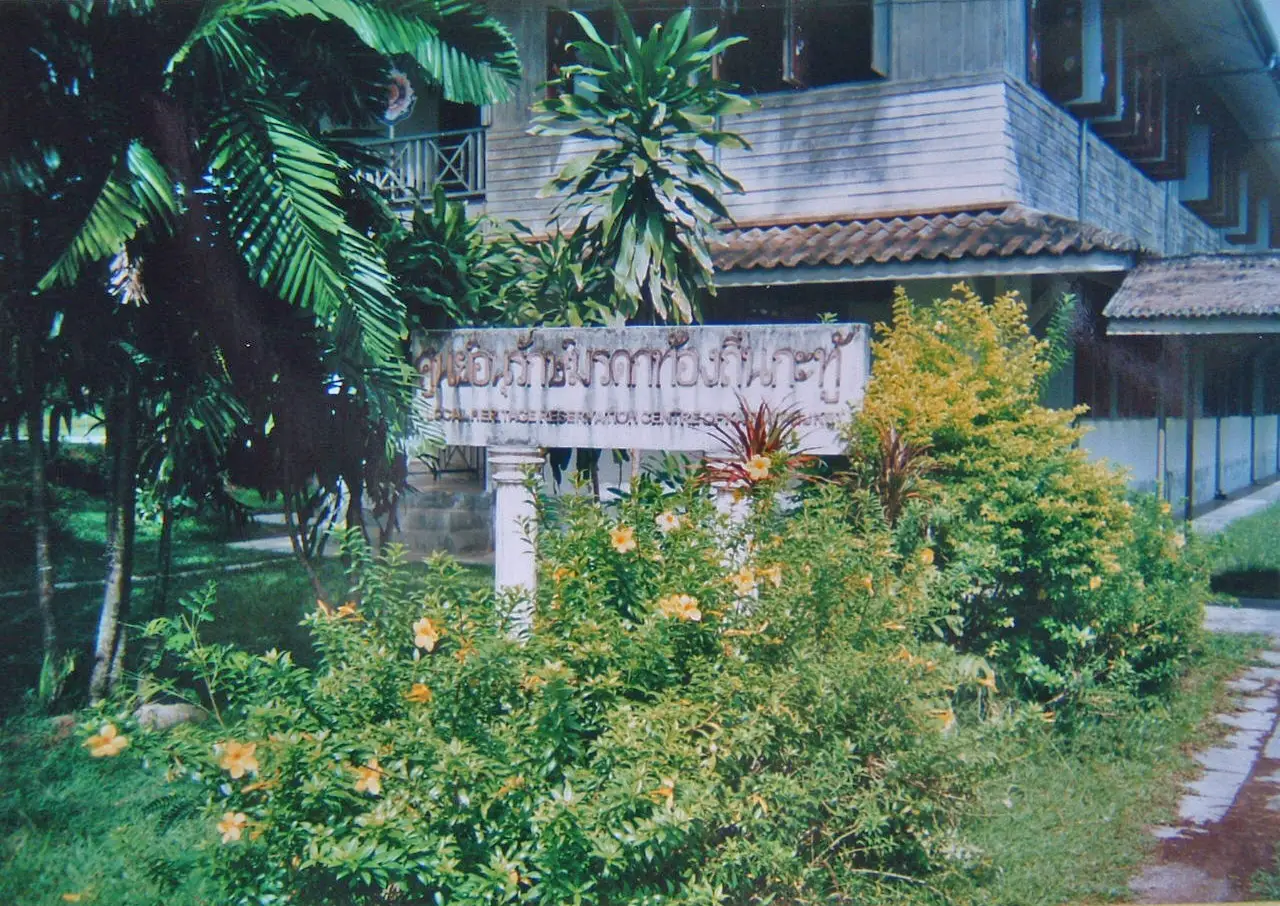
Kathu Local Heritage Conservation Center in Phuket is a small but meaningful community learning center located inside Ban Kathu School, Moo 2, Kathu District, Phuket Province. It is about 7 km from Phuket Town. From the town area, visitors travel along Wichit Songkhram Road toward Kathu, pass the Wat Ket Ho intersection, turn into Kathu community, and continue to Ban Kathu School. The center preserves local memory through displays of mineral samples, tin-mining materials, diamond-like waste stone, models of traditional mining, mining tools, household objects, and everyday items that reflect the lifestyle, culture, and community history of Kathu.
The value of Kathu Local Heritage Conservation Center is not in the size of the building or the modernity of its exhibition design. Its importance lies in its role as a community memory space. Kathu is one of the areas most closely connected with Phuket’s tin-mining past. Before Phuket became a world-famous tourism destination, inland areas such as Kathu were shaped by tin deposits, mining work, Chinese migration, local shrines, household life, and community traditions. The center helps visitors understand Phuket from the ground level of local life rather than only through beaches, old town streets, or modern tourist attractions.
Inside the center, mineral samples introduce visitors to the natural resources that shaped the area. Tin mining was one of the forces that brought workers, traders, investment, and settlement to Phuket. Seeing minerals and related materials helps make this history tangible. It allows visitors to understand that mining was not just an economic term, but something rooted in the soil, hills, streams, labor, and daily work of local communities.
The models of traditional mining are especially useful for understanding how mining worked in the past. Mining was not only an industry; it was a way of life involving workers, water systems, soil, tools, movement, and cooperation. The models help visitors visualize work conditions before modern machinery became common. They also show the human effort behind Phuket’s economic growth during the mining period.
The mining equipment on display is valuable evidence of local technology and practical skill. Each tool reflects the relationship between people and mineral resources. The exhibition helps visitors see that mining history is not only about large pits or machines. It also involved smaller tools, repeated manual tasks, and the everyday knowledge of workers who understood the land and its resources.
In addition to mining, the center displays household objects and everyday tools connected with Kathu community life. These include items used in kitchens, homes, gardens, food preparation, and daily activities. Such objects expand the story from mining to ordinary life. They show that Kathu was not only a mining zone but also a living community with families, houses, food traditions, beliefs, and relationships between neighbors.
This type of exhibition is important because local history is not made only by major events or famous people. It is also carried by ordinary objects. Grinding tools, bowls, teapots, food-making tools, garden equipment, and household items all reveal how people lived. A visit to the center is therefore like reading Kathu’s history through objects once used by local people.
Kathu is also closely linked with the Phuket Vegetarian Festival, one of the province’s most important cultural traditions. The festival’s origin story is connected with Kathu during the tin-mining period, when many Chinese migrants came to the area as mining workers. Their beliefs, shrines, family gods, and ritual practices gradually became part of Kathu and Phuket’s cultural identity.
Photographs and stories related to the Kathu Shrine vegetarian tradition add an important cultural layer to the center. They show the connection between mining, Chinese migration, shrines, and ritual life. Visitors can better understand that the Phuket Vegetarian Festival is not simply a food festival or tourist event. It is part of a deeper spiritual and community heritage that grew from labor history, illness, faith, and shared ritual practice in Kathu.
As a learning place, the center is highly suitable for students, teachers, researchers, writers, and visitors interested in local history. Its content is tied directly to the surrounding community. Visitors can connect the displayed objects with real places nearby, such as Kathu Shrine, Wat Kathu, Kathu Waterfall, Wichit Songkhram Road, and the older mining landscape of the district.
The center is also an example of conservation that begins at the community level. By keeping local objects, tools, documents, models, and stories inside a school, the heritage of Kathu becomes part of education. Children and young people in the area can learn about their own hometown, while visitors can see how local memory is preserved through community cooperation rather than only through large museums.
Compared with Phuket Mining Museum, which is a larger museum located in the former mining area of Tho Sung, Kathu Local Heritage Conservation Center feels more intimate and community-based. Phuket Mining Museum presents the broader story of tin mining in a more formal setting, while this center preserves everyday objects, local tools, and community memory within Ban Kathu School. Visiting both places together gives a more complete understanding of Kathu’s mining heritage.
The center is free to visit during government office hours. Most visitors should allow about 30 minutes to 1 hour to see the displays and understand the main themes. School groups, researchers, or visitors planning an educational visit should contact the school in advance, because the center is located within an active school area.
The best time to visit is during weekday office hours, either in the morning or early afternoon. Since the center is inside a school, visitors should respect the learning environment. Dress politely, avoid loud noise, do not enter classroom areas without permission, and contact staff before viewing the exhibits.
Getting There is straightforward from Phuket Town. Take Wichit Songkhram Road toward Kathu, continue to the Wat Ket Ho intersection, turn right toward Kathu community, then turn left into Ban Kathu School. The distance from Phuket Town is about 7 km and the journey normally takes around 15 to 25 minutes depending on traffic. From Patong Beach, visitors can travel through Kathu toward Wichit Songkhram Road, usually taking about 20 to 35 minutes depending on traffic.
Private car, rental car, taxi, or app-based ride service is the most convenient way to visit. The center is not a commercial attraction with dedicated tourist transport, so visitors should navigate to Ban Kathu School or Tessaban 2 Ban Kathu School. Since some surrounding roads pass through local community areas, drivers should travel carefully and allow extra time.
A good Kathu cultural route can begin at Kathu Local Heritage Conservation Center, then continue to Kathu Shrine, Wat Kathu, Kathu Waterfall, and Phuket Mining Museum. This route gives visitors several perspectives on Kathu: community objects, Chinese shrine culture, Buddhist heritage, local nature, and the wider history of tin mining.
Visitors with more time can connect Kathu with Phuket Old Town, Chinpracha House, Phuket Thai Hua Museum, Phuket Provincial Cultural Centre, or other heritage sites. Phuket Old Town explains architecture and Chinese-Thai urban life. Chinpracha House shows the domestic world of a wealthy mining-era family. Phuket Thai Hua Museum explains Chinese migration and education. Kathu Local Heritage Conservation Center adds the community-level roots behind these larger historical themes.
This center is best for visitors who want to learn carefully rather than simply take quick photos. The value of the place comes from observing objects, reading details, and connecting them with Kathu’s history. Minerals, mining tools, household items, and festival images are not separate things. They are all parts of one larger story about a community shaped by natural resources, labor, belief, and local memory.
For general readers, the center helps explain why Kathu matters in Phuket history. Kathu is not just a district between Phuket Town and Patong. It is an old community with economic roots in tin mining and cultural roots in Chinese shrines, local rituals, and the Vegetarian Festival. Understanding Kathu makes it easier to understand Phuket as a whole.
Visitors should check access before traveling, especially during public holidays, school holidays, or school activity periods. Calling in advance helps confirm whether the exhibition area is available. Since the center is located in a school, visitors should treat the place respectfully and avoid disturbing teaching activities.
In summary, Kathu Local Heritage Conservation Center is a valuable place for understanding Phuket beyond mainstream tourism. Its displays of minerals, diamond-like waste stone, traditional mining models, mining equipment, household objects, and community stories preserve the memory of Kathu’s tin-mining past and local culture. Although it is small, it has strong cultural meaning as a school-based community heritage center that keeps Kathu’s history visible for students, residents, and visitors.
| Name | Kathu Local Heritage Conservation Center |
| Location | Inside Ban Kathu School, Moo 2, Kathu District, Phuket Province |
| Address | Ban Kathu School, Moo 2, Wichit Songkhram Road, Kathu Subdistrict, Kathu District, Phuket 83120, Thailand |
| Highlights | A school-based local heritage learning center displaying minerals, diamond-like waste stone, traditional mining models, mining equipment, household objects, and the community history of Kathu |
| Historical Context | Connected with Kathu’s tin-mining past and the local community history that shaped Phuket before the modern tourism era |
| Distinctive Features | An intimate community learning center that preserves real objects, tools, and stories related to mining, local life, and Kathu heritage |
| Main Areas / Zones | Mineral and stone display area, traditional mining model area, mining equipment area, household object area, and Kathu community life display area |
| Travel Information | From Phuket Town, take Wichit Songkhram Road toward Kathu, pass the Wat Ket Ho intersection, turn into Kathu community, and continue to Ban Kathu School. The distance from Phuket Town is about 7 km. |
| Current Status | Open as a local heritage learning center inside Ban Kathu School during government office hours |
| Open Days | Monday – Friday |
| Opening Hours | 08.00 – 16.00 |
| Admission Fee | Free Admission |
| Facilities | Exhibition area inside the school, community learning space, and parking in or near the school area depending on school activities |
| Caretaker / Related Organization | Ban Kathu School and local organizations involved in Kathu heritage conservation |
| Main Contact Number | 076-321-035 |
| Nearby Tourist Attractions | 1. Kathu Shrine, about 1 km 2. Wat Kathu, about 1 km 3. Kathu Waterfall, about 4 km 4. Phuket Mining Museum, about 5 km 5. Chillva Market, about 6 km 6. Phuket Provincial Cultural Centre, about 7 km 7. Phuket Old Town, about 8 km |
| Nearby Restaurants | 1. Im Aroi Khao Man Gai at Kathu Fresh Market, about 1 km, Tel. 095-414-5750 2. Hangout Cafe, about 1 km, Tel. 093-198-2279, 082-561-8054 3. Krua Jongjit Phuket, about 1.5 km, Tel. 062-864-4559 4. Krua Ohm Phuket, about 2 km, Tel. 076-631-523 5. Krua Pailin Kathu Waterfall, about 4 km, Tel. 076-321-395, 081-956-2490 6. BAAN Kathu, about 4 km, Tel. 080-669-9944 |
| Nearby Accommodations | 1. Areca Resort & Spa, about 4 km 2. Tinidee Golf Resort Phuket, about 5 km 3. The Par Phuket, about 5 km 4. Travelodge Phuket Town, about 7 km 5. The Pago Design Hotel Phuket, about 8 km, Tel. 076-373-111 6. Blu Monkey Hub & Hotel Phuket, about 9 km, Tel. 076-354-266 |
Frequently Asked Questions (FAQ)
Q: Where is Kathu Local Heritage Conservation Center located?
A: It is located inside Ban Kathu School, Moo 2, Kathu District, Phuket Province, about 7 km from Phuket Town.
Q: What does the center display?
A: The center displays mineral samples, diamond-like waste stone, traditional mining models, mining equipment, household objects, and stories about Kathu community life.
Q: What are the opening days and hours?
A: The center opens Monday to Friday from 08.00 to 16.00 during government office hours.
Q: Is there an admission fee?
A: No. Visitors can enter free of charge during opening hours.
Q: Why is Kathu Local Heritage Conservation Center important?
A: It preserves the memory of Kathu’s tin-mining past, local household life, community culture, and heritage connected with Phuket’s wider history.
Q: How long should visitors spend at the center?
A: Most visitors should allow about 30 minutes to 1 hour. Educational groups should contact the school in advance.
Q: What nearby places can be visited with the center?
A: Nearby places include Kathu Shrine, Wat Kathu, Kathu Waterfall, Phuket Mining Museum, Chillva Market, Phuket Provincial Cultural Centre, and Phuket Old Town.
Q: What should visitors be careful about?
A: Since the center is located inside a school, visitors should dress politely, contact staff before entering, avoid disturbing classes, and use the area respectfully.
 Category: ●Art, Culture and Heritage
 Group: ●Art, Craft Centres, Tradition
Last Update : 2 MonthAgo
 Last Update : 2 MonthAgo
 Click to Access the Navigation Map GPS
Kathu Local Heritage Conservation Center Map
Recommend

 Landmarks and Memorials(7)
Art, Craft Centres, Tradition(5)
 Museums(4)
 Historic Homes and Cities(1)
 Art Gallery(1)
 Educational Places
 Educational Gardens, Farm(2)
 Places of Worship
 Temple(14)
 Mosque(47)
 Other Sacred Sites(15)
 Suburban Living
 Village, Community(2)
 Floating Market(1)
 Nature and Wildlife
 National Parks and Marine Reserves(2)
 Mountain (Doi)(2)
 Dam, Reservoir, Lake(1)
 Waterfalls(4)
 Bays and Beaches(30)
 Islands(12)
 Other natural attractions(10)
 Entertainment and Agricultural
 Zoos and Aquariums(2)
 Stadium(2)
 Farms, Parks and Ecotourism(4)
 Amusement Park(2)
 Waterpark(6)
 Theater(1)
 Outdoor and Adventure Activities(1)
 Shopping
 Shopping and Night Market(1)
 Travel Articles, Recipes
 Travel Review, Food Review(1)
 Southern Food Menu, Southern Food Recipes(5)


