
lovethailand home >Eastern Travel Attractions >Trat Travel Attractions >Bo Rai >Chang Thun > Chong Chang Thun Eco-Cultural Museum
TL;DR: Chong Chang Thun Eco-Cultural Museum is located at Chang Thun Subdistrict, Bo Rai District, Trat Province 23140, open Daily, hours 08.30 – 16.30.
Chong Chang Thun Eco-Cultural Museum
Open Days: Daily
Opening Hours: 08.30 – 16.30
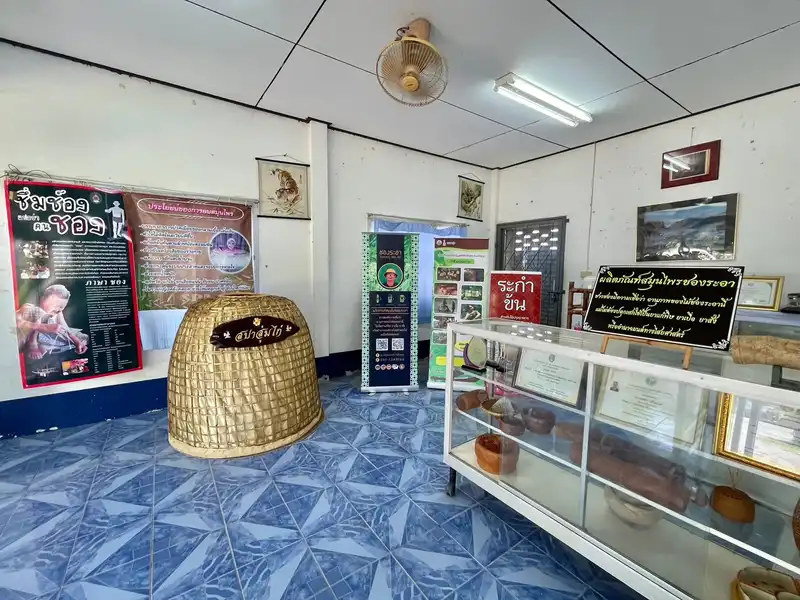
The Chong Chang Thun Eco-Cultural Museum, also known as Ban Chang Thun Ecomuseum, is located in Chang Thun Subdistrict, Bo Rai District, Trat Province. It is a community-based learning destination that presents the ecological knowledge, cultural memory, local wisdom, beliefs, foodways, medicinal plants, and everyday life of the Chong and Chong-Samrae people. Unlike a conventional museum where visitors only look at objects inside a building, this ecomuseum uses the entire community as a living classroom. Visitors learn through real landscapes, local people, hands-on activities, and cultural experiences that still exist in the daily life of Ban Chang Thun.
Ban Chang Thun is an old community in Bo Rai District, an area closely connected with the Chong people, one of the indigenous ethnic groups of eastern Thailand. The Chong have long lived in parts of Chanthaburi, Trat, and nearby areas. They have their own language, food culture, medicinal plant knowledge, rituals, and ways of understanding the forest. Over time, some parts of this heritage have faded as younger generations entered modern education systems and new lifestyles. The ecomuseum was developed to help restore, preserve, and share this cultural heritage with both local youth and visitors.
The strength of the Chong Chang Thun Eco-Cultural Museum lies in the idea of an ecomuseum. Here, a museum is not limited to display cases or old objects. The village itself becomes the museum, the surrounding landscape becomes the exhibition space, and community members become cultural interpreters. Travelers do not simply read information; they listen to local stories, join activities, observe traditional knowledge, and see how culture and ecology remain connected in a living community.
The museum offers several distinctive learning activities, including the Salenger activity, the Samrong seed bank activity, the slingshot Samrong planting activity, the Chong check dam demonstration, gemstone panning demonstration, Chong-style bamboo rice roasting, and the Phi Hing ancestral-spirit learning activity. Together, these activities show that community-based tourism in Ban Chang Thun is not designed only for entertainment. It is designed to teach ecological responsibility, cultural respect, local identity, and the value of inherited knowledge.
The Salenger activity is one of the most memorable experiences for visitors. The name refers to riding a local sidecar vehicle through the community. Visitors travel slowly through village routes, orchards, rubber plantations, learning areas, and natural surroundings. The charm of this activity lies in its simplicity. Instead of rushing through the village in a tourist vehicle, travelers move at a relaxed pace and see homes, gardens, plants, and the daily environment of local people. It is an easy way to understand how the community is connected with its land.
The Samrong seed bank activity reflects the community’s concern for local plant conservation. Samrong is associated with local ecology and traditional knowledge in eastern Thailand. A seed bank is not only a storage place for seeds; it also represents the community’s effort to protect plant diversity, encourage replanting, and pass knowledge about useful native plants to future generations. This activity helps visitors understand that conservation begins with recognizing the value of local species.
The slingshot Samrong planting activity turns environmental learning into an enjoyable hands-on experience. Visitors learn how seeds can be dispersed or planted through a playful method that still carries ecological meaning. Using a slingshot makes the activity engaging for children, students, and adults, but the deeper lesson is that everyone can take part in restoring nature. Even a small activity can become a way to reconnect people with forests and native plants.
The Chong check dam demonstration is another important learning base. It introduces local water-management wisdom and shows how the Chong community understands streams, moisture, forests, and soil. A check dam helps slow down water flow, retain moisture, and support the surrounding ecosystem. Through this activity, visitors learn that water is not just a resource for immediate use. It is part of a larger natural system that supports plants, gardens, medicinal herbs, and community life.
The gemstone panning demonstration connects Ban Chang Thun with the history of Bo Rai District, which was once associated with gemstone mining and the search for precious stones. Visitors can learn how gemstone panning requires patience, careful observation, and skill. This activity links the community’s living culture with the economic history of the district, allowing travelers to understand how natural resources once shaped local livelihoods and settlement patterns.
The Chong-style bamboo rice roasting activity introduces visitors to local food wisdom. Bamboo rice is found in many parts of Thailand, but in Ban Chang Thun it becomes a way to learn about local materials, cooking techniques, fire control, and community food culture. Preparing and roasting bamboo rice requires knowledge of bamboo, sticky rice, coconut milk or local ingredients, and the right timing. The activity shows that traditional food is not only about taste, but also about materials, environment, and experience.
The Phi Hing activity is connected with Chong beliefs and ancestral-spirit traditions. It helps visitors understand the worldview of the community, especially respect for ancestors, kinship, and ritual relationships. Phi Hing should not be seen as a mysterious performance for entertainment. It is part of a belief system that reflects gratitude, family bonds, and the role of elders in preserving cultural continuity. Visitors should approach this activity with respect and sensitivity.
Beyond the main activities, Ban Chang Thun is also known for traditional herbs and local wellness wisdom. One well-known community activity is the chicken-coop herbal steam spa, which adapts local medicinal plants into a community-based wellness experience. This shows how older knowledge can be transformed into an accessible tourism activity while still preserving its cultural roots. Local herbs, forest plants, and household wisdom remain important parts of the community’s identity.
The community also preserves knowledge of local food plants and craft materials such as wild bananas, Lapang leaves, Khlum leaves, herbs, and woven products made from Khlum. These plants are not only ingredients or raw materials. They are part of a larger relationship between people and forest. Some are used for food, some for wrapping, some for weaving, some for medicine, and some for ritual purposes. Through these stories, visitors can see how the forest functions as a living cultural landscape.
The Chong Chang Thun Eco-Cultural Museum is especially valuable for travelers who want to see Trat beyond the sea, islands, and beaches. Trat is often associated with Ko Chang, Ko Kut, and Ko Mak, but Bo Rai District offers another side of the province: forests, hills, gemstone history, ethnic culture, medicinal plants, and old communities. A visit to Ban Chang Thun reveals Trat as a province of ecological and cultural diversity, not only a coastal destination.
For families and schools, this ecomuseum is an excellent outdoor classroom. Children and students can learn through doing: riding the Salenger, planting Samrong seeds, learning about check dams, trying gemstone panning, roasting bamboo rice, and listening to stories about ancestral beliefs. These experiences help young visitors remember lessons more deeply than classroom lectures alone. They also encourage respect for nature, local knowledge, and cultural diversity.
For travelers interested in anthropology, ethnic culture, or community-based tourism, Ban Chang Thun is a meaningful place to study. It contains layers of language, belief, ritual, kinship, elder knowledge, local ecology, and modern adaptation. The tourism activities are not separated from community life. Instead, they are carefully selected pieces of living knowledge that the community considers important and wishes to pass on.
Visitors should plan ahead, especially when joining activities as a group. Many learning bases require local facilitators, materials, and community preparation. Contacting the community in advance allows the local team to arrange guides, ingredients, tools, and activity sequences properly. This helps visitors receive a more complete and respectful experience.
Getting There from Trat town is most convenient by private car, rental car, or local hired vehicle. Travel toward Bo Rai District and continue to Chang Thun Subdistrict. The distance from Trat town is about 80 km. Travelers coming from Bangkok can follow Sukhumvit Road through Chon Buri, Rayong, and Chanthaburi before entering Trat and continuing toward Bo Rai. The visit can be combined with Gem City Museum, Namtok Khlong Kaeo National Park, Khlong Kaeo Waterfall, and other cultural or natural attractions in the area.
Visitors should dress politely and comfortably for outdoor activities. Walking shoes, a hat, drinking water, and sun protection are recommended. During activities related to streams, forests, gardens, or check dams, follow the guidance of community facilitators. For belief-related activities such as Phi Hing, listen respectfully, avoid mockery, do not touch ritual items without permission, and take photographs only where the community allows.
The greatest value of the Chong Chang Thun Eco-Cultural Museum is that it brings fading cultural knowledge back into the present. The community does not allow its heritage to remain only in memory. Instead, it organizes, explains, and shares local wisdom through tourism that creates income, pride, and cultural continuity. Every activity is therefore more than a fun experience. It is a statement that Chong knowledge is still alive and can still speak meaningfully to people today.
The Chong Chang Thun Eco-Cultural Museum is a worthwhile stop for travelers who want to understand Trat through forests, people, and indigenous culture. Riding the Salenger, learning about the Samrong seed bank, planting Samrong seeds with a slingshot, making a Chong check dam, panning for gemstones, roasting Chong-style bamboo rice, and learning about Phi Hing all turn a visit into something deeper than ordinary sightseeing. It becomes a journey into memory, belief, and local wisdom that Ban Chang Thun continues to preserve with pride.
| Name | Chong Chang Thun Eco-Cultural Museum / Ban Chang Thun Ecomuseum |
| Location | Chang Thun Subdistrict, Bo Rai District, Trat Province 23140 |
| Address | 99 Moo 1, Chang Thun Subdistrict, Bo Rai District, Trat Province 23140 |
| Highlights | A living eco-cultural learning center of the Chong and Chong-Samrae people, featuring Salenger rides, Samrong seed bank, slingshot Samrong planting, Chong check dam, gemstone panning, Chong-style bamboo rice, and Phi Hing belief learning |
| History / Importance | Developed as an ecomuseum to restore and transmit the ecological heritage, culture, language, local wisdom, and beliefs of the Chong community in Ban Chang Thun, Bo Rai District, Trat Province |
| Distinctive Features | Uses the real community as a learning space, with local people interpreting nature, herbs, food, rituals, local history, and ethnic identity |
| Main Areas / Zones | Community activity center, Salenger route, Samrong seed bank base, slingshot Samrong planting base, Chong check dam base, gemstone panning base, Chong-style bamboo rice base, Phi Hing learning base, herbal learning area, and Chong community trail |
| Caretaker | Chong Ban Chang Thun Ecomuseum Community Enterprise and Ban Chang Thun Community |
| Current Status | Open as a community-based learning attraction |
| Open Days | Daily |
| Opening Hours | 08.30 – 16.30 |
| Main Contact Number | 090-124-9068 |
| somchaipruangwet@gmail.com | |
| Official Page | Ban Chang Thun Ecomuseum |
| Facilities | Visitor welcome area, community activity bases, local facilitators, herbal learning area, outdoor activity spaces, and community-based tourism services |
| Travel Information | From Trat town, travel toward Bo Rai District and continue to Chang Thun Subdistrict, about 80 km. Best reached by private car, rental car, or local hired vehicle |
| Nearby Tourist Attractions | 1. Chong Chang Thun Eco-Cultural Museum, about 0 km 2. Gem City Museum Bo Rai, about 25 km 3. Wat Bo Phloi, about 27 km 4. Namtok Khlong Kaeo National Park, about 35 km 5. Khlong Kaeo Waterfall, about 38 km 6. Trat Town, about 80 km |
| Nearby Restaurants | 1. Chang Thun Toast Shop, about 2 km, Tel. 098-742-5466 2. Mawa Cafe, about 25 km, Tel. 082-364-0944 3. The Kop & Pear Cafe Bo Rai, about 26 km, Tel. 098-993-0199 4. PunThai Coffee Thetsaban 3 Bo Rai, about 26 km, Tel. 093-135-2270 5. Mai Chai Ban Ku Trat, about 26 km, Tel. 065-002-7203 |
| Nearby Accommodations | 1. Borai Resort, about 27 km, Tel. 085-054-4555 2. Bai Boon Resort, about 28 km 3. Baan Roi Pi Riverside Resort Huai Raeng, about 65 km, Tel. 081-308-9823, 081-351-5672 4. Trat Center Hotel, about 80 km, Tel. 039-531-234, 086-749-8899 5. Trat City Hotel, about 80 km, Tel. 039-510-711 |
Frequently Asked Questions (FAQ)
Q: Where is the Chong Chang Thun Eco-Cultural Museum located?
A: It is located in Chang Thun Subdistrict, Bo Rai District, Trat Province, and serves as a learning center for Chong and Chong-Samrae culture.
Q: What activities are available at the museum?
A: Activities include Salenger rides, Samrong seed bank, slingshot Samrong planting, Chong check dam demonstration, gemstone panning, Chong-style bamboo rice roasting, and Phi Hing belief learning.
Q: What is the Salenger activity?
A: Salenger is a local sidecar ride through the community, gardens, natural surroundings, and learning bases of Ban Chang Thun.
Q: What is the Phi Hing activity about?
A: Phi Hing is related to Chong ancestral-spirit beliefs. It helps visitors understand gratitude, kinship, elder roles, and local ritual traditions.
Q: Who should visit this ecomuseum?
A: It is suitable for families, students, cultural travelers, and anyone interested in Chong ethnicity, local herbs, forest wisdom, and community-based tourism.
Q: Should visitors contact the community before joining activities?
A: Yes. Advance contact is recommended, especially for groups, so the community can prepare facilitators, materials, and activity bases properly.
Q: How can visitors travel from Trat town to Ban Chang Thun?
A: Travel from Trat town toward Bo Rai District and continue to Chang Thun Subdistrict, about 80 km. A private car, rental car, or local hired vehicle is recommended.
Q: What nearby attractions can be combined with this visit?
A: Visitors can combine the trip with Gem City Museum, Wat Bo Phloi, Namtok Khlong Kaeo National Park, Khlong Kaeo Waterfall, and Trat town.
 Category: ●Art, Culture and Heritage
 Group: ●Museums
Last Update : 5 MonthAgo
 Last Update : 5 MonthAgo
 Click to Access the Navigation Map GPS
Chong Chang Thun Eco-Cultural Museum Map
Recommend

 Historical Sites and Monuments(1)
 Landmarks and Memorials(1)
 Art, Craft Centres, Tradition(3)
Museums(2)
 Educational Places
 Museum for Study(1)
 Educational Gardens, Farm(2)
 Places of Worship
 Temple(11)
 Mosque(2)
 Other Sacred Sites(2)
 Suburban Living
 Village, Community(6)
 Local Market(2)
 Nature and Wildlife
 National Parks and Marine Reserves(2)
 Mountain (Doi)(1)
 Dam, Reservoir, Lake(3)
 Waterfalls(15)
 River, Canal(1)
 Bays and Beaches(21)
 Islands(19)
 Other natural attractions(12)
 Entertainment and Agricultural
 Outdoor and Adventure Activities(1)
 Shopping
 Shopping and Night Market(1)
 Travel Articles, Recipes
 Travel Review, Food Review(1)


