
lovethailand home >Eastern Travel Attractions >Trat Travel Attractions >Koh Kut >Koh Kut > Khao Ruea Rop
TL;DR: Khao Ruea Rop is located at Ban Ngam Kho, Ko Kut Subdistrict, Ko Kut District, Trat Province, Thailand, open Daily, hours Visit according to local site conditions and regulations.
Khao Ruea Rop
Open Days: Daily
Opening Hours: Visit according to local site conditions and regulations
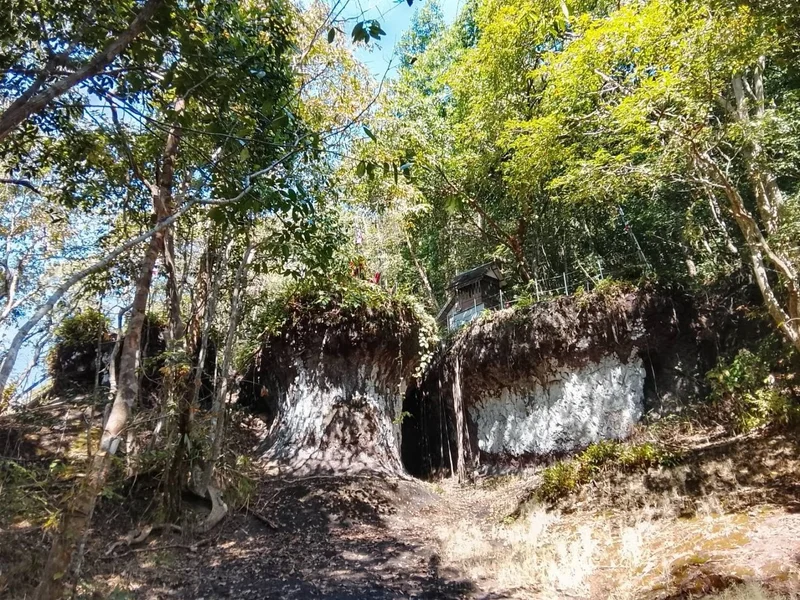
Khao Ruea Rop on Koh Kood in Trat Province is one of the island’s most unusual cultural and natural landmarks. Located on a hill in the central part of Koh Kood, in the Ban Ngam Kho area of Ko Kut Subdistrict, this site is known for large natural rock formations that resemble 3 royal warships lined up on the mountain. Between these stone “warships” stands a life-size statue of Admiral Prince Abhakara Kiartivongse, Prince of Chumphon, widely respected in Thailand as the Father of the Royal Thai Navy. The site also includes a 32-inch Phra Buddha Prathan Phra Ratcha Nawi image and a shrine dedicated to Luang Pu Suk of Wat Pak Khlong Makham Thao, the revered teacher of the Prince of Chumphon.
Khao Ruea Rop is ideal for travelers who want to experience a deeper side of Koh Kood beyond beaches, clear water, and seaside resorts. This hilltop site combines nature, local belief, naval history, and spiritual respect in one compact location. Visitors travel into the island’s inland area, pass through a quieter natural landscape, and arrive at a place where huge rocks appear like warships resting among the hills. The atmosphere is peaceful, unusual, and strongly symbolic.
For quick trip planning, Khao Ruea Rop is a short but meaningful stop on Koh Kood. Travelers can reach the area by car or motorcycle, then walk about 50 meters to the main site. The walk is not long, but the ground is natural and rocky, so comfortable shoes are recommended. The site is also associated with a cave called Tham Laplae, where many ancient objects were reportedly found in the past. The cave is now closed and should not be entered for safety reasons and out of respect for local regulations.
The name Khao Ruea Rop comes from the distinctive appearance of the mountain rocks. The large stone formations, about 3 to 4 meters high, look like the bows of 3 warships. This natural shape gives the site its identity. When seen together with the statue of the Prince of Chumphon standing between the 3 rock formations, the area feels like a natural memorial, a sacred place, and a hilltop landmark all at once.
Admiral Prince Abhakara Kiartivongse, Prince of Chumphon, is one of the most respected figures in Thai naval history. Thai sailors, fishermen, naval officers, and coastal communities widely honor him as the Father of the Royal Thai Navy. Shrines dedicated to him can be found in many coastal provinces of Thailand. The presence of his statue at Khao Ruea Rop gives the site special meaning for visitors who come to pay respect, ask for protection, and seek blessings for safe journeys, work, and good fortune.
The site also contains the Phra Buddha Prathan Phra Ratcha Nawi image, which adds a calm Buddhist presence to the hilltop. Together with the shrine of Luang Pu Suk, the sacred elements of Khao Ruea Rop create a layered spiritual atmosphere. Visitors often pay respect to the Buddha image, the Prince of Chumphon, and Luang Pu Suk during the same visit, reflecting a Thai style of devotion that connects Buddhism, respected teachers, and national history.
Luang Pu Suk of Wat Pak Khlong Makham Thao is an important revered monk in Thai spiritual history and is closely associated with the Prince of Chumphon. The shrine to Luang Pu Suk at Khao Ruea Rop adds another layer of meaning to the site. It connects the landmark not only to the Royal Thai Navy but also to the tradition of Thai spiritual teachers and local devotional culture.
Tham Laplae, the mysterious cave associated with Khao Ruea Rop, adds a sense of legend to the site. Stories say that many ancient objects were found there in the past. Today the cave is closed, and visitors should not try to enter it. Even without entering the cave, its story contributes to the cultural depth of Khao Ruea Rop and reminds travelers that Koh Kood has more than natural beauty; it also has local legends, hidden histories, and sacred places.
The value of Tham Laplae is not in entering the cave, but in understanding its role in the local narrative. Koh Kood is a large island with beaches, forests, waterfalls, old communities, and quiet inland areas. The story of the cave and ancient objects suggests that the island has layers of history and belief beyond its image as a tropical beach destination.
The walk up to Khao Ruea Rop is short, with only about 50 meters on foot after arriving near the access point. However, the area remains a natural hill with rocks and uneven ground. Visitors should walk carefully, especially after rain. Climbing unsafe rock surfaces, writing on the stones, or behaving disrespectfully around the shrine area should be avoided. The place should be treated as both a natural landmark and a sacred site.
Visitors should dress modestly and behave respectfully. Although Khao Ruea Rop is not a temple, it contains a Buddha image, a statue of the Prince of Chumphon, and a shrine to Luang Pu Suk. Travelers should keep noise low, avoid littering, and take photographs in a respectful manner. Climbing on sacred structures or posing in inappropriate ways near the shrine area is not suitable.
In terms of landscape, Khao Ruea Rop shows another side of Koh Kood. The island is famous for beaches such as Klong Chao and Ao Tapao, but it also has forested hills, waterfalls, local villages, and inland sacred places. Visiting Khao Ruea Rop helps travelers understand that Koh Kood is not only a beach island. It is also a place of local belief, natural rock formations, and quiet hill scenery.
Khao Ruea Rop can easily be included in a half-day or full-day Koh Kood itinerary. Travelers staying near Klong Chao, Ao Tapao, or Ngam Kho Beach can travel by motorcycle, local vehicle, or resort transport to the site, walk briefly to the hilltop, pay respect, and then continue to nearby attractions such as Klong Chao Waterfall, Klong Chao Beach, Ao Tapao, Ao Salad, or the giant Makha tree.
Getting There is possible by car or motorcycle on Koh Kood. Travel to the Ban Ngam Kho area, then walk about 50 meters to reach the main site. The route is suitable for travelers comfortable with driving on island roads. Some parts of Koh Kood have slopes and curves, so visitors who are not confident riding motorcycles should use resort transport or local vehicles. It is best to visit during daylight and avoid going up during heavy rain.
To reach Koh Kood from mainland Trat, travelers normally take a passenger boat from piers in the Laem Sok area or from the pier designated by the boat operator. Boat schedules should be checked before travel, especially during the monsoon season or when the sea is rough. After arriving on Koh Kood, travelers can reach Khao Ruea Rop by local transfer, resort vehicle, rental motorcycle, or hired transport depending on where they stay.
The best time to visit Khao Ruea Rop is in the morning or late afternoon, when the weather is less hot. Although the walking distance is short, the rocky hill environment can feel warm during midday. Visitors should bring drinking water, wear comfortable shoes, and use sun protection. Morning visits are generally quieter and offer softer light for photography.
Khao Ruea Rop adds important variety to a Koh Kood trip. Many travelers know Koh Kood for Klong Chao Beach, Ao Phrao, Klong Chao Waterfall, Ao Tapao, and crystal-clear sea. Khao Ruea Rop introduces another dimension: faith, naval history, unusual rock formations, and local legends. This makes Koh Kood more than a simple tropical island getaway.
For travelers interested in Thai naval history, paying respect to the Prince of Chumphon at Khao Ruea Rop has a special emotional meaning. The site is located on an island in Trat Province, a coastal province closely connected with the sea. Although Khao Ruea Rop is not a large military memorial, the natural stone warships and the statue of the Prince of Chumphon create a strong symbolic link to the Royal Thai Navy, sea travel, and protection.
From a cultural tourism perspective, Khao Ruea Rop is a good example of how nature and local belief can merge. The warship-like rocks are natural formations, but the placement of sacred statues and shrines has transformed the area into a place of devotion. Visitors should therefore appreciate not only the strange shape of the rocks but also the respect that local people have given to the site.
For foreign travelers, Khao Ruea Rop can be understood as a sacred hill landmark on Koh Kood. It features natural rocks shaped like warships, a shrine to the Prince of Chumphon, a Buddha image, and a local legend connected with a closed cave. It is a compact but meaningful stop for those who want to understand Koh Kood beyond beaches and resorts.
Important precautions include not entering Tham Laplae, not walking outside the safe path, not climbing risky rock surfaces, and checking the weather before visiting. During heavy rain, the ground and rocks may become slippery. Evening or night visits are not recommended because the area is on a hill and is not a brightly lit tourist district.
To enjoy Khao Ruea Rop properly, visitors should not rush. After reaching the site, take time to view the 3 stone warships from different angles, observe how the statue of the Prince of Chumphon is positioned among them, pay respect to the Buddha image and Luang Pu Suk shrine, and sit quietly for a moment. The site does not offer many activities, but its value lies in stillness, symbolism, and atmosphere.
A practical one-day route can begin with Klong Chao Waterfall in the morning, followed by Khao Ruea Rop for worship and photos, then an afternoon at Klong Chao Beach, Ao Tapao, or Ngam Kho Beach. This route combines waterfall, hilltop shrine, local legend, and seaside relaxation in one day.
For travelers staying 2 or 3 days on Koh Kood, Khao Ruea Rop is best planned as a short inland stop between beach and waterfall visits. It does not require a full day, but it deserves enough time for walking, photography, and respectful worship. Visiting on a clear day makes the walk easier and the atmosphere more pleasant.
Overall, Khao Ruea Rop is a small but deeply distinctive attraction. Its natural stone warships, the story of Tham Laplae, the statue of the Prince of Chumphon, the Buddha image, and the shrine of Luang Pu Suk make it one of the most meaningful cultural-natural places on Koh Kood. Travelers who want to see another side of the island should include it in their itinerary because it completes the picture of Koh Kood as a place of sea, forest, faith, and local legend.
| Name | Khao Ruea Rop |
| Location | Ban Ngam Kho, Ko Kut Subdistrict, Ko Kut District, Trat Province, Thailand |
| Address | Khao Ruea Rop area, Ban Ngam Kho, Ko Kut Subdistrict, Ko Kut District, Trat 23000, Thailand |
| Highlights | Natural rocks shaped like 3 royal warships, shrine of the Prince of Chumphon, Phra Buddha Prathan Phra Ratcha Nawi image, Luang Pu Suk shrine, and Tham Laplae cave, which is now closed |
| History | A sacred hill landmark on Koh Kood connected with local cave legends, ancient object discoveries, and devotion to Admiral Prince Abhakara Kiartivongse, Prince of Chumphon |
| Name Origin | The name comes from the large natural rocks that resemble 3 warships lined up on the mountain |
| Distinctive Features | Large natural rock formations about 3–4 meters high shaped like warship bows, combined with a sacred shrine area on a hill in central Koh Kood |
| Travel Information | Travel by car or motorcycle on Koh Kood to the Ban Ngam Kho area, then walk about 50 meters to the main site |
| Current Status | Open as a local attraction and worship site on Koh Kood; Tham Laplae cave is closed and should not be entered |
| Open Days | Daily |
| Opening Hours | Visit according to local site conditions and regulations |
| Facilities | Nearby parking area, short walking path, Buddha image, Prince of Chumphon shrine, Luang Pu Suk shrine, and the stone warship formations |
| Main Areas / Zones | Walking path zone, 3 stone warship zone, Prince of Chumphon shrine zone, Phra Buddha Prathan Phra Ratcha Nawi zone, Luang Pu Suk shrine zone, and closed Tham Laplae cave area |
| Caretaker | Located within the administrative area of Ko Kut Subdistrict Administrative Organization, Ko Kut District, Trat Province |
| Main Contact Number | Ko Kut Subdistrict Administrative Organization Tel. 081-762-4360 |
| Official Website / Official Page | www.kokut.go.th |
| Nearby Tourist Attractions | 1. Ngam Kho Beach, about 3 km 2. Klong Chao Waterfall, about 6 km 3. Klong Chao Beach, about 7 km 4. Ao Tapao, about 8 km 5. Giant Makha Tree, Koh Kood, about 10 km 6. Ao Salad, about 12 km |
| Nearby Restaurants | 1. Local restaurants around Ban Ngam Kho, about 3 km 2. Restaurants and cafés around Klong Chao Beach, about 7 km 3. Seafood restaurants around Ao Tapao, about 8 km 4. Resort restaurants around Klong Chao, about 7 km 5. Community restaurants around Ao Salad, about 12 km |
| Nearby Accommodations | 1. Koh Kood Resort near Ngam Kho Beach, about 3 km 2. Siam Beach Resort Koh Kood near Ngam Kho Beach, about 3 km 3. High Season Pool Villa & Spa near Klong Chao, about 7 km 4. Peter Pan Resort Koh Kood near Klong Chao, about 7 km 5. Shantaa Koh Kood near Ao Tapao, about 8 km 6. Wendy The Pool Resort near Klong Chao, about 7 km |
Frequently Asked Questions (FAQ)
Q: Where is Khao Ruea Rop located?
A: Khao Ruea Rop is located in Ban Ngam Kho, Ko Kut Subdistrict, Ko Kut District, Trat Province, on a hill in the central part of Koh Kood.
Q: What is special about Khao Ruea Rop?
A: The site is known for natural rocks shaped like 3 warships, the shrine of the Prince of Chumphon, a Buddha image, the Luang Pu Suk shrine, and the local story of Tham Laplae cave.
Q: Can visitors enter Tham Laplae cave?
A: No. Tham Laplae cave is closed and should not be entered. Visitors should remain in the permitted outdoor areas for safety.
Q: Is the walk to Khao Ruea Rop difficult?
A: The walk is short. Visitors can travel close to the site by car or motorcycle, then walk about 50 meters. Comfortable shoes are recommended because the area is natural and rocky.
Q: Is there an entrance fee for Khao Ruea Rop?
A: No official entrance fee is listed for Khao Ruea Rop. Visitors should follow local regulations and respect the sacred nature of the site.
Q: What should visitors wear at Khao Ruea Rop?
A: Visitors should dress modestly and wear shoes suitable for walking on natural ground, as the site includes sacred shrines and rocky paths.
Q: What is the best time to visit Khao Ruea Rop?
A: Morning or late afternoon is best because the weather is cooler. Visitors should avoid heavy rain and night visits.
Q: What nearby places can be visited after Khao Ruea Rop?
A: Nearby places include Ngam Kho Beach, Klong Chao Waterfall, Klong Chao Beach, Ao Tapao, the Giant Makha Tree, and Ao Salad.
 Category: ●Nature and Wildlife
 Group: ●Mountain (Doi)
Last Update : 5 MonthAgo
 Last Update : 5 MonthAgo

 Click to Access the Navigation Map GPS
Khao Ruea Rop Map
Recommend

 Art, Culture and Heritage
 Historical Sites and Monuments(1)
 Landmarks and Memorials(1)
 Art, Craft Centres, Tradition(3)
 Museums(2)
 Educational Places
 Museum for Study(1)
 Educational Gardens, Farm(2)
 Places of Worship
 Temple(11)
 Mosque(2)
 Other Sacred Sites(2)
 Suburban Living
 Village, Community(6)
 Local Market(2)
 National Parks and Marine Reserves(2)
Mountain (Doi)(1)
 Dam, Reservoir, Lake(3)
 Waterfalls(15)
 River, Canal(1)
 Bays and Beaches(21)
 Islands(19)
 Other natural attractions(12)
 Entertainment and Agricultural
 Outdoor and Adventure Activities(1)
 Shopping
 Shopping and Night Market(1)
 Travel Articles, Recipes
 Travel Review, Food Review(1)


