
lovethailand home >Eastern Travel Attractions >Chon Buri Travel Attractions >Si Ra Cha >Bang Phra > Rajamangala University of Technology Tawan-Ok (Ban..
TL;DR: Rajamangala University of Technology Tawan-Ok (Bang Phra Campus), Chon Buri attractions : University, Rajamangala University of Technology.

Rajamangala University of Technology Tawan-Ok (Bang Phra Campus)
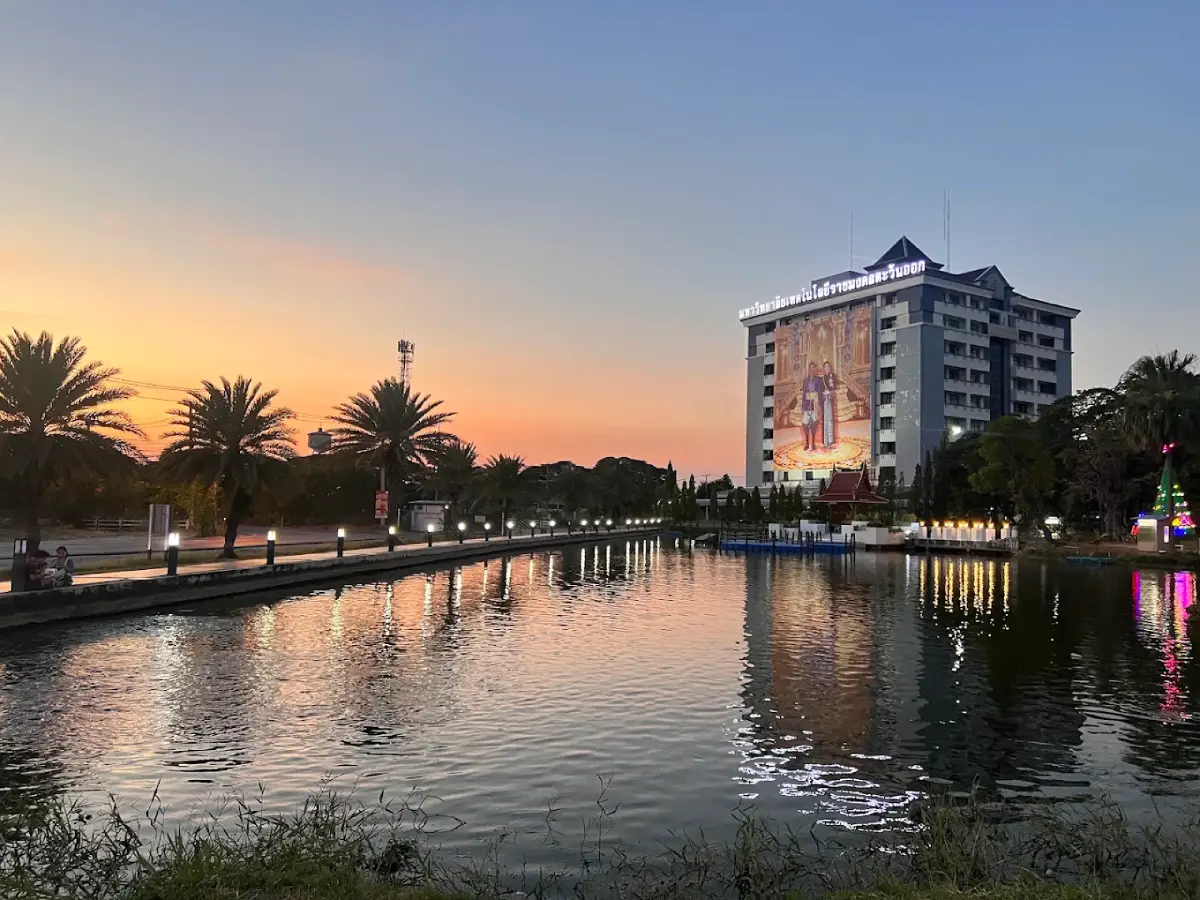
Open Days: Monday – Friday (University Administrative Offices, Excluding Public Holidays)
Opening Hours: 08:30 – 16:30 (Administrative Office Hours)
Rajamangala University of Technology Tawan-ok, Bang Phra Campus, is located at 43 Moo 6, Bang Phra Subdistrict, Si Racha District, Chon Buri Province 20110, Thailand. The Bang Phra campus serves as the location of the university's Office of the President and its principal administrative center. Rajamangala University of Technology Tawan-ok is a public university specializing in science, technology, agriculture, engineering, veterinary medicine, business administration, and practice-oriented professional education. The educational history of Bang Phra dates back to 4 April 1958, when Bang Phra Agricultural College was established under the Department of Vocational Education. The institution subsequently developed through the College of Technology and Vocational Education and the Rajamangala Institute of Technology before becoming part of Rajamangala University of Technology Tawan-ok on 19 January 2005. Today, Bang Phra continues to preserve its agricultural heritage while advancing modern technology, scientific research, innovation, and workforce development for eastern Thailand.
The distinctive character of the Bang Phra Campus lies in its longstanding tradition of practical education. Its surroundings include green spaces, academic buildings, administrative offices, scientific laboratories, agricultural facilities, research areas, student activity buildings, and facilities for technology transfer. Over the decades, the institution has evolved from an agricultural college focused on teacher training and agricultural occupations into a multidisciplinary university campus. Throughout this transformation, the principle of applying academic knowledge to practical work has remained fundamental to its educational identity.
The campus is situated in Bang Phra, an established coastal community in eastern Thailand. The local landscape combines the sea, lowland agricultural areas, hills, forests, and freshwater resources. Nearby natural features include Bang Phra Reservoir, the forested Khao Khiao area, Chan Ta Then Waterfall, and coastal communities along the Gulf of Thailand. This geographical diversity makes Bang Phra particularly relevant to education in agriculture, environmental management, natural resources, and ecological systems. It also provides a valuable setting for connecting university knowledge with local livelihoods and regional development.
Historically, Bang Phra has been associated with coastal settlement, maritime trading, fishing, and agriculture. Accounts of the area's past refer to Bang Phra Ruea among the historic coastal communities of eastern Thailand. People living near the sea depended on fishing and trade, while those farther inland cultivated rice, field crops, and fruit trees. Water flowing from the surrounding hills supported agricultural activities and contributed to the development of local communities.
Bang Phra's Sukhrip Canal once served as an important connection between inland agricultural areas and the coast, supporting both farming and the transportation of goods. The construction of Sukhumvit Road, the expansion of settlements, and the development of Bang Phra Reservoir gradually transformed transportation patterns and land use. These changes help explain how Bang Phra evolved from an agricultural and maritime community into a location suitable for a major institution specializing in agriculture and technology.
The educational institution at Bang Phra began on 4 April 1958 with the establishment of Bang Phra Agricultural College, Chon Buri Province, under Thailand's Department of Vocational Education, Ministry of Education. Its original mission was to prepare agricultural professionals and teachers capable of supporting agricultural development. At the time, agriculture remained central to Thailand's economy, and the country needed knowledgeable personnel with practical skills in crop production, livestock, and vocational teaching.
The college's early academic programs included the Primary Agricultural Teacher Certificate, introduced in 1958. Programs for secondary agricultural teachers and upper-secondary vocational agricultural education followed in 1962. In 1973, the institution offered an advanced vocational certificate in agriculture, followed by a higher technical vocational certificate program in 1974. These developments demonstrate the gradual expansion of professional agricultural education and the increasing level of technical knowledge available to students.
On 27 February 1975, Bang Phra Agricultural College entered a new phase as part of the College of Technology and Vocational Education. Bang Phra Campus and the Faculty of Agriculture operated in a shared educational environment. The faculty was responsible for degree-level education, while the campus continued providing other forms of vocational agricultural training. Staff, teaching facilities, equipment, and physical resources were shared, supporting the continuity of the institution's educational activities.
The year 1975 also marked an important expansion into bachelor's degree education in agricultural technology. Programs in agricultural science included fields associated with field crops, horticulture, animal science, and agricultural education. This development represented a transition from vocational training toward a broader higher education model combining scientific knowledge, practical skills, research, and agricultural technology.
On 15 September 1988, the institution entered the Rajamangala Institute of Technology era. This period reflected a growing emphasis on advanced vocational education, science, and technology. Academic development increasingly focused on preparing technically skilled professionals and connecting practical expertise with industrial and economic needs. At Bang Phra, agricultural sciences remained important while new technological disciplines gradually became part of the institution's educational direction.
A major transformation occurred with the Rajamangala University of Technology Act B.E. 2548 (2005). The legislation was published in the Royal Gazette on 18 January 2005 and took effect on 19 January 2005. It reorganized the former Rajamangala Institute of Technology into nine universities, creating separate university institutions with an emphasis on science, technology, and advanced professional education.
Under the legislation, Rajamangala University of Technology Tawan-ok was formed by combining Chakrabongse Bhuvanarth Campus, Uthenthawai Campus, Bang Phra Campus, Chanthaburi Campus, and the Faculty of Agriculture at Bang Phra. The Office of the President was established at Bang Phra in Chon Buri Province, giving this location a dual role as an academic campus and the university's principal administrative center.
The establishment of Rajamangala University of Technology Tawan-ok formed part of Thailand's broader educational reforms. The new university structure was designed to strengthen science and technology education, provide advanced professional qualifications, support scientific research, develop innovation, and offer academic services to society. It also improved pathways for graduates of vocational education institutions to continue into university-level professional programs.
In 2019, the university became part of the higher education system administered by Thailand's newly established Ministry of Higher Education, Science, Research and Innovation. This national reorganization brought higher education, scientific development, research, and innovation policy under a coordinated governmental framework. The shift was consistent with the university's increasingly important role in developing knowledge and technologies for contemporary industries.
The name Rajamangala carries the historical identity inherited from the Rajamangala Institute of Technology, whose royal name and symbols hold particular significance for the institution. The word Tawan-ok means "east," reflecting the university's regional connections. Bang Phra, meanwhile, is the name of the historic community and subdistrict in Si Racha. Together, these names connect the institution's technological education heritage with its geographical and cultural roots.
The university emblem preserves the traditional Rajamangala visual identity, incorporating royal symbols, the Great Crown of Victory, and Thai decorative motifs associated with the institution's history. The official university color is sea blue, also described as turquoise sea. The university tree is the Payom, a native flowering tree known for its pale cream-white blossoms. These symbols form part of the institutional identity shared by students, employees, and alumni.
Practice-oriented education has been central to the Bang Phra tradition since its early agricultural college years. This educational approach emphasizes both theoretical knowledge and the ability to apply scientific principles through experiments, technical equipment, fieldwork, and professional operations. It is especially important in agriculture, engineering, food science, environmental management, and veterinary medicine, where professional competence depends on practical experience as well as academic understanding.
As of 2026, Associate Professor Dr. Rerkchai Fooprateepsiri serves as President of Rajamangala University of Technology Tawan-ok. The university's development emphasizes agricultural research, sustainable natural resource management, technological innovation, knowledge transfer, and collaboration with external organizations. Its research directions also reflect the growing importance of modern industrial technology and economic transformation in Thailand.
The Bang Phra campus includes several academic units: the Faculty of Agriculture and Natural Resources, Faculty of Humanities and Social Sciences, Faculty of Science and Technology, School of Engineering and Innovation, Faculty of Veterinary Medicine, and Institute of Educational Innovation and Lifelong Learning. Together, these units provide education, research, professional development, and academic services across a range of applied disciplines.
The Faculty of Agriculture and Natural Resources is particularly important to Bang Phra's institutional history. Its academic fields include animal science, aquaculture technology and management, crop production technology, mechanical and agricultural machinery engineering, and sustainable industrial management. These fields address agricultural production and resource management from the farm level to wider industrial systems, supporting the development of more efficient and technologically advanced agriculture.
Animal science education involves understanding animal biology, livestock management, feed production, and agricultural productivity. Crop production studies examine cultivation methods and the management of agricultural resources. Aquaculture education contributes to knowledge relevant to fisheries and food production, while agricultural machinery engineering connects mechanical design and technical systems with farming operations.
The Faculty of Humanities and Social Sciences provides education in English communication, business administration, management, accountancy, logistics, digital supply chains, and aviation management. These disciplines are relevant to eastern Thailand's commercial and industrial environment, where international trade, transportation, tourism, manufacturing, and service industries play major economic roles. Business education develops both management knowledge and the capacity to make decisions in changing organizational and economic conditions.
The Faculty of Science and Technology specializes in disciplines including food science, computer science, information and communication technology, health and beauty products, culinary technology, environmental management and safety, and biological product innovation. Its academic activities connect scientific principles with product development, quality management, food production, digital systems, and environmental applications.
A distinctive aspect of science and technology education at Bang Phra is its practical connection with industry. Chemistry and biology can be applied to the development of foods, cosmetics, and biological products. Information and communication technologies help support modern business processes, while environmental sciences contribute to workplace safety and sustainable operations. These disciplines prepare students for professional environments requiring interdisciplinary skills and continued technological learning.
The School of Engineering and Innovation provides education in mechanical engineering, mechatronics, robotics, industrial engineering, logistics, and energy technology management. These disciplines support the development of automated systems, manufacturing processes, industrial efficiency, and technological infrastructure. Engineering education combines analysis, design, problem-solving, and the practical application of technical systems.
The Faculty of Veterinary Medicine represents the expansion of Bang Phra's agricultural expertise into animal health and veterinary sciences. Its academic programs include Veterinary Medicine, Animal Health Science, and graduate studies related to animal health and biomedical sciences. These disciplines prepare professionals for animal healthcare, disease prevention, and the responsible management of animal health in both companion animals and agricultural livestock.
The Faculty of Veterinary Medicine's animal hospital is an important link between academic education and veterinary services. The hospital has a history of providing services since 2012 and supports clinical practice and professional learning. Such facilities demonstrate the practical value of veterinary education and the university's contribution to animal owners and the wider community.
The Institute of Educational Innovation and Lifelong Learning supports contemporary approaches to education and professional development. The university's 2026 academic program database includes Architecture and doctoral-level Information Technology under this institute. Its broader educational identity reflects the growing importance of lifelong learning, continuing professional development, and the ability to adapt to changing technologies.
According to the university's official academic program database for the 2026 academic year, Rajamangala University of Technology Tawan-ok offers 89 academic programs across the institution, with 33 assigned to the Bang Phra area. These include bachelor's, master's, and doctoral programs. The range of qualifications reflects Bang Phra's role in providing both undergraduate professional education and advanced study for specialists and researchers.
Research and innovation at the university remain closely connected with agricultural development and technology transfer. Major areas of academic interest include crop and livestock production, food product development, conservation of natural resources, industrial technologies, and sustainable practices. In October 2026, the university participated in discussions with the wider Rajamangala university network concerning agricultural research and electric vehicle technologies, highlighting efforts to connect academic research with practical national development needs.
One of the most distinctive learning institutions associated with Bang Phra is the Rajamangala Tawan-ok Lotus Institute. It focuses on the study, research, conservation, and development of lotus varieties. Its work connects botany, horticulture, propagation techniques, conservation, and technology transfer. The lotus also has deep cultural significance in Thailand, appearing in Buddhist traditions, food culture, decorative arts, and everyday uses of plants.
The study of lotus plants involves both scientific knowledge and cultural appreciation. Lotus varieties differ in flower color, shape, fragrance, structure, and growing requirements. Research and conservation activities can contribute to plant biodiversity, ornamental horticulture, and the development of economic applications. They also provide opportunities for educational programs connecting nature, science, and traditional Thai cultural values.
Among the campus's important buildings is the Sapphawit Borrikan Building, which accommodates university administrative and service functions. The General Affairs Division of the Office of the President is located on the fourth floor. The building also contains meeting facilities used for administrative and academic activities, making it an important center for coordination among university departments.
The Mangkhal Ubon Auditorium is another significant campus facility. It hosts major university ceremonies, foundation anniversary events, cultural programs, and student activities. Its role extends beyond providing a meeting venue, as it serves as a shared space for preserving university traditions and strengthening connections among students, academic staff, and employees.
The Central Library and Academic Resource Building support independent study, access to information resources, and academic research. Specialized laboratories and teaching facilities provide practical training for students in different disciplines. Agricultural greenhouses, fieldwork areas, and technical equipment help maintain the institution's longstanding emphasis on experience-based education.
The Bang Phra campus also provides student accommodation, including residence buildings such as Suphannika and Saraphi for female students. Recreational facilities include football fields, futsal areas, basketball courts, volleyball courts, beach volleyball facilities, and sepak takraw areas. These amenities contribute to student life and support the development of a balanced university community.
University traditions are closely associated with institutional history, gratitude, moral responsibility, and community identity. January 19 is an important anniversary date associated with the university's legal establishment in 2005. Bang Phra also has its own historical anniversary on April 4, commemorating the establishment of Bang Phra Agricultural College in 1958. Recognizing these separate dates is important because they represent distinct stages in the institution's development.
On 16 January 2026, Rajamangala University of Technology Tawan-ok organized its foundation anniversary program at Mangkhal Ubon Auditorium. Activities included ceremonies paying respect to sacred sites associated with the university, Buddhist chanting, commemorations of royal contributions to the institution, and recognition awards for individuals who had made significant contributions to university life. The gathering brought together members of the university community from different locations and academic units.
Other cultural activities help maintain the university's connection with Thai traditions. On 2 April 2026, the campus hosted Thai Cultural Heritage Conservation Day activities and a Songkran cultural preservation program at Mangkhal Ubon Auditorium. Such events promote awareness of cultural heritage while creating opportunities for staff and students to participate in traditional activities and strengthen their relationships within the university.
New-student welcoming activities also form part of campus life. In 2025, Bang Phra organized a First Date program for incoming students, helping them become familiar with university facilities, meet senior students, and develop friendships with their new classmates. These activities support a smooth transition into university life and encourage a sense of belonging and responsibility among students.
One of the most recognizable events associated with the institution is the Bang Phra Agricultural Fair, known in Thai as Kaset Bang Phra Fair. The event is strongly connected with the university's agricultural heritage and has traditionally included agricultural exhibitions, academic activities, displays of practical knowledge, and the sale of agricultural and locally developed products. In 2026, the university issued an announcement preparing for the 30th edition of the fair, demonstrating the continuity of this important institutional activity.
The significance of the agricultural fair lies in its ability to connect the university with farmers, local residents, entrepreneurs, and the general public. Agricultural knowledge, food production, livestock management, plant cultivation, and value-added product development can be communicated through accessible demonstrations and exhibitions. The event also provides valuable opportunities for students to develop presentation, teamwork, and public communication skills.
Bang Phra's cultural identity extends beyond the university grounds. The local community is known for traditions such as Kong Khao and the Phaya Yom procession, both associated with coastal life and traditional beliefs. The Phaya Yom procession was registered as part of Thailand's national intangible cultural heritage on 3 September 2013. These traditions provide an important cultural context for understanding the area in which the university developed.
The Kong Khao tradition historically brought residents together to share food and participate in rituals expressing community unity and local beliefs. The Phaya Yom procession involves the creation and ceremonial movement of a figure representing the Lord of Death, symbolically carrying away misfortune, suffering, and harmful influences from the community. The tradition reflects a distinctive relationship between local spiritual beliefs and the maritime environment of Bang Phra.
Studying these local traditions alongside scientific and technological education reveals a broader dimension of the university's social role. A university can contribute not only through the production of graduates and research but also through cultural documentation, the preservation of community knowledge, and the communication of regional heritage. For students, understanding Bang Phra's history and traditions can strengthen their connection with the place where they study.
For visitors interested in educational tourism, Bang Phra Campus offers insight into Thailand's agricultural education history and contemporary applied sciences. Agricultural research facilities, plant studies, animal sciences, engineering laboratories, and educational innovation programs provide opportunities for organized academic visits. Access to research stations, agricultural greenhouses, laboratories, and restricted academic facilities must be arranged with the responsible university departments in advance.
Several important natural and cultural attractions are situated in the surrounding Bang Phra area. These include Bang Phra Reservoir, Chan Ta Then Waterfall in the Khao Khiao–Khao Chomphu Wildlife Sanctuary, local coastal areas, and Wat Bang Phra Worawihan. The combination of university facilities and nearby attractions creates opportunities for educational trips focusing on agriculture, ecology, cultural traditions, and regional history.
Bang Phra Reservoir is particularly important for its contribution to water management, agriculture, industrial water use, and domestic water supply. The surrounding environment also supports many bird species and was designated the Bang Phra Reservoir Non-Hunting Wildlife Area in 1976. It is an interesting example of the relationship between freshwater management, biodiversity conservation, and the economic development of the surrounding region.
Getting There: Rajamangala University of Technology Tawan-ok, Bang Phra Campus, can be reached by private car via Sukhumvit Road in Si Racha District, Chon Buri Province. Travelers from Bangkok can use Motorway Route 7 and continue toward Bang Phra using the appropriate connecting roads. The campus address for navigation is 43 Moo 6, Bang Phra Subdistrict, Si Racha District, Chon Buri 20110.
Visitors traveling by public transportation can take services to Si Racha or Bang Phra and continue to the campus by local transport or taxi, depending on available routes and schedules. Those visiting a particular faculty or administrative office should confirm their destination building before traveling, as the campus contains multiple academic and administrative facilities. The Office of the President and General Affairs Division are located in the Sapphawit Borrikan Building.
Rajamangala University of Technology Tawan-ok, Bang Phra Campus, represents an important connection between Thailand's agricultural education heritage and the development of contemporary science and technology. Beginning as Bang Phra Agricultural College in 1958, the institution developed through several educational systems before becoming the principal administrative location of Rajamangala University of Technology Tawan-ok in 2005. Today, it continues to emphasize practical education while advancing agriculture, engineering, veterinary medicine, business, applied sciences, and technological innovation. Its relationship with Bang Phra's natural environment and cultural traditions remains an important part of the institution's regional identity and its contribution to Thai society.
Rajamangala University of Technology Tawan-ok — Bang Phra Campus Summary Table
| University Name | Rajamangala University of Technology Tawan-ok, Bang Phra Campus |
| Thai Name | มหาวิทยาลัยเทคโนโลยีราชมงคลตะวันออก วิทยาเขตบางพระ |
| Institution Type | Public University Specializing in Science and Technology |
| Location | Bang Phra, Si Racha District, Chon Buri Province, Thailand |
| Address | 43 Moo 6, Bang Phra Subdistrict, Si Racha District, Chon Buri 20110, Thailand |
| Original Institution Established | 4 April 1958 |
| Original Name | Bang Phra Agricultural College, Chon Buri Province |
| University Establishment | 19 January 2005 |
| Historical Development | 1. 1958: Bang Phra Agricultural College 2. 1975: College of Technology and Vocational Education, Bang Phra Campus and Faculty of Agriculture 3. 1988: Rajamangala Institute of Technology 4. 2005: Rajamangala University of Technology Tawan-ok |
| Institutional Age in 2026 | 68 Years Since Bang Phra Agricultural College; 21 Years Since the Establishment of Rajamangala University of Technology Tawan-ok |
| University President | Associate Professor Dr. Rerkchai Fooprateepsiri |
| University Color | Sea Blue / Turquoise Sea |
| University Tree | Payom Tree |
| Institutional Identity | Practice-Oriented Education, Agricultural Science, Technology, and Innovation |
| Academic Units at Bang Phra | 1. Faculty of Agriculture and Natural Resources 2. Faculty of Humanities and Social Sciences 3. Faculty of Science and Technology 4. School of Engineering and Innovation 5. Faculty of Veterinary Medicine 6. Institute of Educational Innovation and Lifelong Learning |
| Academic Programs in 2026 | 33 Programs at Bang Phra, Out of 89 Programs Across the University |
| Other University Locations | 1. Chakrabongse Bhuvanarth Area, Bangkok 2. Uthenthawai Area, Bangkok 3. Chanthaburi Campus, Chanthaburi Province |
| Academic Strengths | Agriculture, Crop and Livestock Production, Veterinary Medicine, Food Science, Digital Technology, Engineering, Robotics, Logistics, Energy Management, and Industrial Innovation |
| Important Campus Facilities | 1. Sapphawit Borrikan Building 2. Mangkhal Ubon Auditorium 3. Central Library and Academic Resource Building 4. Rajamangala Tawan-ok Lotus Institute 5. Faculty of Veterinary Medicine Animal Hospital 6. Faculty Buildings and Laboratories 7. Agricultural Research and Practical Training Areas |
| Traditions and Events | University Foundation Anniversary, Royal Commemorative Activities, Songkran Cultural Events, New Student Orientation, and Bang Phra Agricultural Fair |
| Administrative Office Days | Monday – Friday, Excluding Public Holidays |
| Administrative Office Hours | 08:30 – 16:30 |
| Educational Visits | Advance Permission Required for Research Stations, Agricultural Facilities, Laboratories, Animal Hospital, and Restricted Academic Areas |
| Facilities | Library, Auditorium, Student Dormitories, Dining Facilities, Laboratories, Agricultural Training Areas, Sports Facilities, and Administrative Parking Areas |
| Getting There | Via Sukhumvit Road or Motorway Route 7, Connecting to Bang Phra in Si Racha District; Local Transportation from Si Racha or Bang Phra |
| Nearby Attractions | 1. Bang Phra Reservoir and Bang Phra Reservoir Non-Hunting Wildlife Area 2. Chan Ta Then Waterfall 3. Wat Bang Phra Worawihan 4. Bang Phra Fishing Pier 5. King Rama IX Commemorative Seaside Park, Bang Phra |
| Nearby Restaurants | 1. Jay To Fish Head Soup – Tel. +66 85 232 8258 2. Fukuden Izakaya – Tel. +66 38 312 911 3. Rim Thalay Bangphra Seafood – Tel. +66 89 094 9715 4. Rimhaad Seafood – Tel. +66 86 833 2862 5. Talaychon Siracha Seafood Restaurant |
| Nearby Accommodation | 1. Porestva Hotel Bang Phra – Tel. +66 97 218 3629 2. Balcony Seaside Sriracha Hotel – Tel. +66 38 312 777 3. Nara Residence – Tel. +66 63 442 1452 4. The Sea Breeze Pool Villa Bangphra Bangsaen – Tel. +66 99 219 8444 5. Two Fifty Nine Resort (Formerly Thai Crystal Resident) – Tel. +66 84 099 9877 |
| University Telephone | +66 33 136 099 |
| Office of the President / General Affairs | +66 33 136 099 Ext. 1161–1166, Sapphawit Borrikan Building, 4th Floor |
| Graduate Studies Office | +66 82 361 4503 |
| Official Website | https://www.rmutto.ac.th |
| Current Status | Operating as an Academic Campus and Principal Administrative Location of Rajamangala University of Technology Tawan-ok in Academic Year 2026 |
Rajamangala University of Technology Tawan-ok — Bang Phra Campus Academic Programs, Academic Year 2026
| Faculty / Academic Unit | Degree Programs and Fields of Study |
| Faculty of Agriculture and Natural Resources | Bachelor's Degree Programs (5) 1. Bachelor of Science in Animal Science 2. Bachelor of Science in Aquaculture Technology and Management 3. Bachelor of Science in Crop Production Technology 4. Bachelor of Engineering in Mechanical and Agricultural Machinery Engineering 5. Bachelor of Science in Sustainable Industrial Management Technology 1. Master of Science in Crop Production Technology |
| Faculty of Humanities and Social Sciences | Bachelor's Degree Programs (6) 1. Bachelor of Arts in English for International Communication 2. Bachelor of Business Administration 3. Bachelor of Business Administration in Digital Logistics and Supply Chain Management 4. Bachelor of Business Administration in Management 5. Bachelor of Accountancy 6. Bachelor of Business Administration in Aviation Management 1. Master of Business Administration 1. Doctor of Business Administration |
| Faculty of Science and Technology | Bachelor's Degree Programs (7) 1. Bachelor of Science in Health and Beauty Products 2. Bachelor of Science in Culinary Technology and Services 3. Bachelor of Science in Computer Science 4. Bachelor of Science in Food Science and Technology 5. Bachelor of Science in Information and Communication Technology 6. Bachelor of Science in Environmental Management and Safety 7. Bachelor of Science in Biological Product Innovation 1. Master of Science in Biological Product Innovation |
| School of Engineering and Innovation | Bachelor's Degree Programs (3) 1. Bachelor of Engineering in Mechatronics and Robotics Engineering 2. Bachelor of Engineering in Industrial Engineering and Logistics 3. Bachelor of Engineering in Mechanical Engineering 1. Master of Engineering in Energy Technology Management 2. Master of Engineering in Mechatronics and Robotics Engineering 1. Doctor of Philosophy in Energy Technology Management |
| Faculty of Veterinary Medicine | Undergraduate and Professional Degree Programs (2) 1. Bachelor of Science in Animal Health Science 2. Doctor of Veterinary Medicine 1. Master of Science in Animal Health Science and Biomedical Sciences |
| Institute of Educational Innovation and Lifelong Learning | Bachelor's Degree Program (1) 1. Bachelor of Architecture in Architecture 1. Doctor of Philosophy in Information Technology |
Frequently Asked Questions (FAQ)
Q: Where is Rajamangala University of Technology Tawan-ok, Bang Phra Campus, located?
A: The campus is located at 43 Moo 6, Bang Phra Subdistrict, Si Racha District, Chon Buri 20110, Thailand. It also accommodates the university's Office of the President.
Q: What are the opening days and hours of the Bang Phra Campus?
A: The administrative offices generally operate Monday to Friday, 08:30–16:30, excluding public holidays. Academic buildings, the animal hospital, and specialized facilities may follow different schedules.
Q: When was Bang Phra Campus established?
A: The institution began as Bang Phra Agricultural College on 4 April 1958. Rajamangala University of Technology Tawan-ok was formally established on 19 January 2005.
Q: Which faculties and academic units are located at Bang Phra?
A: They include the Faculty of Agriculture and Natural Resources, Faculty of Humanities and Social Sciences, Faculty of Science and Technology, School of Engineering and Innovation, Faculty of Veterinary Medicine, and Institute of Educational Innovation and Lifelong Learning.
Q: How many academic programs does Bang Phra Campus offer?
A: The official academic program database for 2026 lists 33 programs at Bang Phra out of 89 programs across the entire university, covering bachelor's, master's, and doctoral levels.
Q: What is Rajamangala University of Technology Tawan-ok known for?
A: The university is known for practice-oriented professional education, agriculture, veterinary medicine, food science, digital technology, engineering, robotics, business management, and industrial innovation.
Q: Can members of the public arrange an educational visit to Bang Phra Campus?
A: Educational groups and other visitors may contact the university to arrange approved study tours or participate in public academic events. Visits to laboratories, research stations, agricultural facilities, and other restricted areas require authorization from the relevant departments.
Q: What is the Bang Phra Agricultural Fair?
A: The fair is an institutional event that shares agricultural knowledge, technology, research, and products with the public. In 2026, the university issued an announcement preparing for the 30th edition of the event.
 Category: ●University
 Group: ●Rajamangala University of Technology
Last Update : 1 WeekAgo
 Last Update : 1 WeekAgo

 Click to Access the Navigation Map GPS
Rajamangala University of Technology Tawan-Ok (Bang Phra Campus) Map
Recommend

 Art, Culture and Heritage
 Historical Sites and Monuments(4)
 Landmarks and Memorials(4)
 Royal Palace(1)
 Art, Craft Centres, Tradition(5)
 Museums(11)
 Art Gallery(1)
 Educational Places
 Educational Gardens, Farm(2)
 Training Center(2)
 Public university(3)
 Autonomous Universities(1)
Rajamangala University of Technology(1)
 Private University(2)
 Places of Worship
 Temple(42)
 Church(1)
 Mosque(2)
 Other Sacred Sites(15)
 Suburban Living
 Village, Community(5)
 Local Market(4)
 Floating Market(1)
 Nature and Wildlife
 National Parks and Marine Reserves(2)
 Mountain (Doi)(2)
 Dam, Reservoir, Lake(4)
 Waterfalls(3)
 Caves(3)
 Bays and Beaches(20)
 Islands(7)
 Other natural attractions(1)
 Entertainment and Agricultural
 Zoos and Aquariums(7)
 Animal camps and shows(2)
 Stadium(9)
 Farms, Parks and Ecotourism(9)
 Amusement Park(3)
 Waterpark(5)
 Theater(5)
 Cinema(1)
 Outdoor and Adventure Activities(4)
 Shopping
 Shopping and Night Market(1)
 Travel Articles, Recipes
 Travel Review, Food Review(1)


