
lovethailand home >Northeastern Travel Attractions >Udon Thani Travel Attractions >Nong Han >Ban Chiang > Wat Santiwanaram
TL;DR: Wat Santiwanaram is located at Ban Chiang, Village No. 11, Ban Chiang Subdistrict, Nong Han District, Udon Thani Province, Thailand, open Daily, hours 08.00 – 17.00.
Wat Santiwanaram
Open Days: Daily
Opening Hours: 08.00 – 17.00
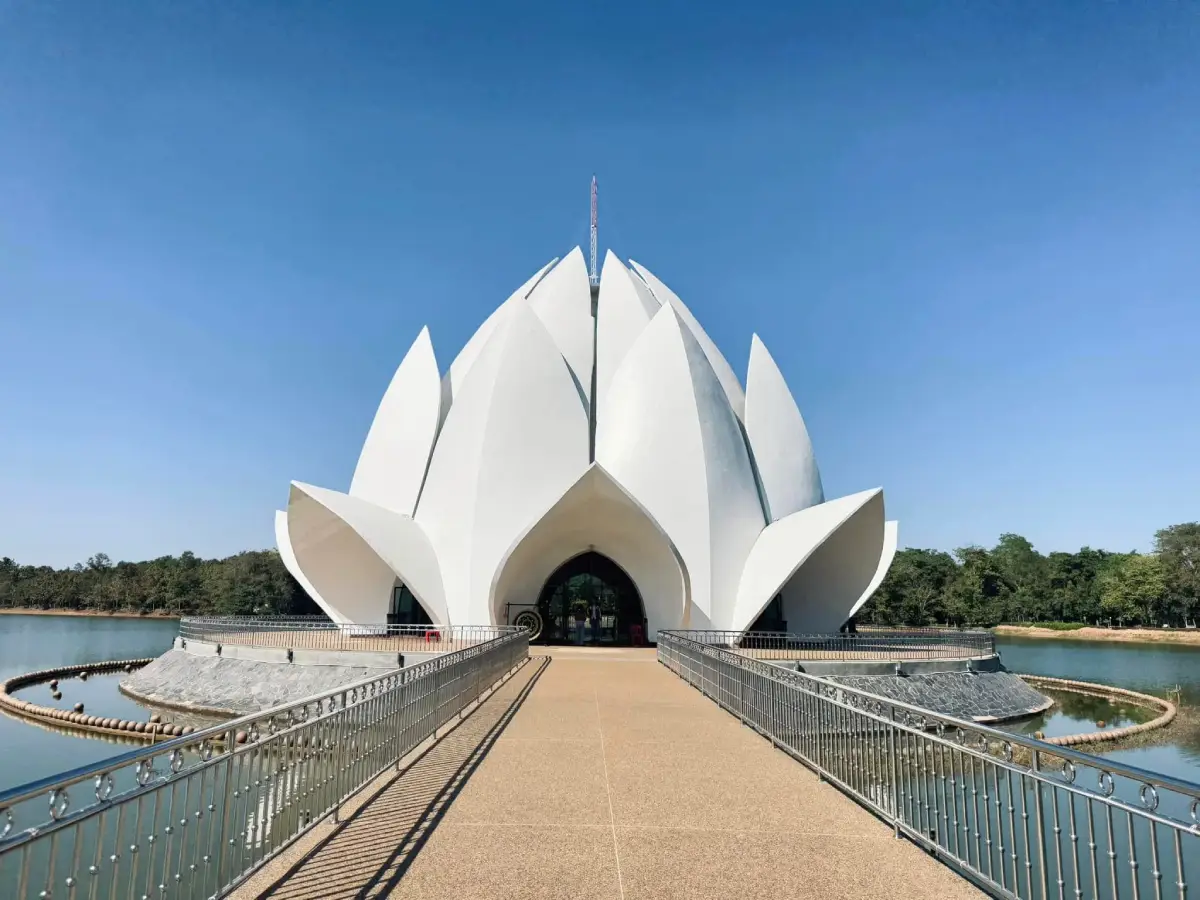
Wat Santiwanaram in Udon Thani, also known locally as Wat Pa Dong Rai, is an important forest temple in Ban Chiang Subdistrict, Nong Han District, Udon Thani Province. The temple is best known for its white lotus-shaped ordination hall standing in the middle of a pond, one of the most distinctive Buddhist architectural landmarks in northeastern Thailand. It is a meaningful place for travelers who want to pay respect to the Buddha, make merit, practice meditation, walk through a peaceful natural setting, feed fish, observe birds, and experience a temple that conserves both animals and plant species within its grounds. Wat Santiwanaram is not only a photogenic temple; it is a living Buddhist site where architecture, nature, meditation, and local faith come together in a calm forest-temple environment.
The temple is located at Ban Chiang, Village No. 11, Ban Chiang Subdistrict, Nong Han District, Udon Thani Province, north of the Ban Chiang cultural community and not far from Ban Chiang National Museum. As visitors enter the temple grounds, the atmosphere changes from ordinary village roads into a quieter landscape of trees, water, birds, fish, and open temple space. This setting gives Wat Santiwanaram the character of a forest temple rather than a city temple. It is suitable for slow travel, quiet reflection, Buddhist practice, nature observation, and cultural sightseeing in one trip.
The temple was established in 1942. Local people have long called it Wat Pa Dong Rai, a name that reflects the original landscape of forest and cultivated land around Ban Chiang. The temple was founded through cooperation between the local community and the Buddhist monastic order as a place for religious practice, especially meditation and insight practice. Over time, it developed into a Buddhist park and one of the most recognized temples in the Ban Chiang area. Its forest-temple roots remain visible in the peaceful atmosphere, natural surroundings, and strong emphasis on meditation and moral training.
Although Wat Santiwanaram is widely known as a beautiful temple in Udon Thani, its deeper identity lies in its role as a place for spiritual training. Monks, novices, laymen, laywomen, local residents, students, and visitors have used the temple as a space for meditation, Dhamma learning, discipline, and moral education. Schools in the area have brought students here for Dhamma camps, meditation practice, and training in mindful living. The temple therefore serves not only religious purposes, but also educational and community-building purposes for Ban Chiang and nearby districts.
The lotus-shaped ordination hall in the middle of the water is the main symbol of Wat Santiwanaram. The hall stands in a large pond locally known as Nong Nam Isan Khiao. A white bridge leads from the shore to the ordination hall, with two naga figures at the front creating a dramatic and sacred entrance. From the shore, the white lotus structure appears to rise from the water like a blooming lotus. This image has become the most recognizable view of the temple and one of the best-known photo spots in the Ban Chiang area.
The lotus is one of the most important symbols in Buddhism. It represents purity, awakening, and spiritual growth. Although the lotus grows from mud, it rises above the water and blooms cleanly under the light. This meaning is expressed directly through the architecture of Wat Santiwanaram’s ordination hall. Walking across the bridge toward the lotus-shaped hall feels like moving from the outside world into a calmer inner space. The experience is visual, symbolic, and spiritual at the same time.
The idea for the lotus-shaped ordination hall is closely connected with Phra Khru Pisan Thammapanee, the former abbot of Wat Santiwanaram. He was inspired after seeing a lotus-shaped building in India and wanted to create a Buddhist ordination hall that would reclaim the lotus as a powerful symbol of Buddhism. Construction began in 2001. After Phra Khru Pisan Thammapanee passed away, Phra Maha Bang Khemananto continued the project until the lotus hall was completed. The building has since become a major Buddhist landmark of Udon Thani and an important symbol of the temple’s identity.
Inside the ordination hall, a white principal Buddha image serves as the spiritual center of the space. The interior is decorated with murals depicting scenes from the life of the Buddha. The walls, ceiling, light, and symbolic lotus form create a peaceful and elegant atmosphere. Visitors can pay respect to the Buddha image, sit quietly for reflection, and observe the details of the murals. The hall is not only visually beautiful; it is also designed to encourage calmness, mindfulness, and reverence.
A walkway around the ordination hall allows visitors to view the surrounding pond, trees, and temple landscape. The water around the hall is home to many fish, and many visitors make merit by feeding them at appropriate areas. This activity fits the temple’s atmosphere of compassion and generosity. Visitors should feed fish responsibly, use suitable fish food, and avoid throwing plastic or waste into the pond so that the water remains clean and healthy for the animals.
Besides fish, Wat Santiwanaram is known for conserving several kinds of animals, including different species of birds, water birds, rabbits, and other animals that live within the temple’s natural environment. The combination of trees, water, and quiet forest space provides shelter for these animals. Visitors who walk around the temple in the morning or late afternoon often notice birds flying over the pond or resting among the trees. These scenes give the temple a living natural quality, showing how Buddhist space and nature conservation can exist together.
The conservation of plant species is also an important part of the temple’s character. The grounds contain many kinds of trees, flowering plants, ornamental plants, and garden areas that provide shade, beauty, and ecological value. The plants make the temple cooler and more pleasant for walking, meditation, and quiet rest. Visitors should see the vegetation not merely as decoration, but as part of the temple’s natural and spiritual environment. The greenery helps create the peaceful feeling that defines Wat Santiwanaram.
The temple grounds function like a Buddhist park. Important areas include the lotus-shaped ordination hall, the pond, the naga bridge, meditation spaces, monks’ residences, forest areas, conservation zones, and fish-feeding areas. Different visitors use the temple in different ways. Some come to worship and photograph the lotus hall. Some come to sit quietly by the water. Some walk through the gardens and observe birds. Others come for meditation practice or Dhamma training. This diversity of use is one reason Wat Santiwanaram remains meaningful to both local residents and travelers.
Phra Khru Pisan Thammapanee, also known as Phra Maha Somdi Suwanno, was a key figure in the development of Wat Santiwanaram. He was the former abbot and a major force behind the temple’s direction as a place of meditation, conservation, education, and public benefit. A lifelike statue of him inside the temple allows disciples and visitors to pay respect and remember his teachings. He passed away on September 24, 2011, but his ideas about meditation, forest conservation, youth training, and Buddhist architecture continue to shape the temple today.
Phra Maha Bang Khemananto serves as the abbot and head of the meditation center at Wat Santiwanaram. He continued the construction of the lotus-shaped ordination hall and helped preserve the temple’s role as a place for Buddhist practice. Under this continuing leadership, the temple remains more than an architectural attraction. It continues to function as a meditation site, a religious learning space, and a peaceful place for the local community and visitors.
The temple’s location near Ban Chiang adds another layer of cultural value. Ban Chiang is a UNESCO World Heritage cultural area famous for its prehistoric archaeology, painted pottery, and long human settlement history. Travelers can easily combine Wat Santiwanaram with Ban Chiang National Museum, Wat Pho Si Nai, and the Ban Chiang cultural community. This route allows visitors to experience archaeology, Buddhist culture, local crafts, architecture, and nature in the same area.
Wat Santiwanaram is suitable for many types of travelers. Elderly visitors can come for merit-making and peaceful worship. Families can bring children to learn about temples, fish, birds, plants, and respectful behavior in religious places. Photographers can capture the lotus hall from many angles, especially from the bridge and the edge of the pond. Visitors interested in meditation can experience a space designed for calmness and inner reflection. The temple is also highly suitable for international travelers because the lotus symbolism is visually clear and easy to understand.
For foreign visitors, Wat Santiwanaram presents a clear and memorable expression of Thai Buddhism. Even without deep knowledge of Buddhist art, visitors can understand the message of a white lotus rising from water. The bridge, pond, lotus form, Buddha image, and quiet natural setting create a complete experience. The movement from the shore to the ordination hall feels like a movement from daily life toward stillness. This makes the temple both visually impressive and spiritually accessible.
The best times to visit are in the morning and late afternoon. The morning offers a cooler atmosphere, softer light, birdsong, and a quieter temple experience. Late afternoon gives beautiful reflections on the water and a gentler view of the lotus hall. On Buddhist holy days and important religious occasions, visitors may see local people making merit and attending temple activities. During these times, it is especially important to behave respectfully and keep noise low around meditation areas and sacred buildings.
Getting There from central Udon Thani is easiest by private car, rental car, or chartered local vehicle. Travelers should head toward Nong Han District and Ban Chiang Subdistrict. The temple is about 55 to 60 kilometers from Udon Thani city, and the journey usually takes around 1 to 1.5 hours depending on traffic. From the Ban Chiang community, continue toward Wat Pa Dong Rai for about 3 kilometers. This route is convenient for travelers who want to combine the temple with Ban Chiang National Museum, Wat Pho Si Nai, and the Ban Chiang cultural village.
Travelers without a private vehicle should plan transportation in advance. They can travel from Udon Thani city to Nong Han or Ban Chiang and then continue by local hired vehicle to the temple. A chartered car is the most practical option for visitors who want to visit several sites in one day. It also helps avoid waiting for local transport and gives enough time to explore the temple calmly.
Upon arrival, visitors should begin by walking across the bridge to the lotus-shaped ordination hall, paying respect to the principal Buddha image, and viewing the murals inside. After that, they can walk around the pond, feed fish at suitable areas, observe birds, and enjoy the plant conservation areas. Visitors who enjoy photography should take wide-angle views from the shore, bridge compositions leading toward the hall, and reflection shots on the pond.
Temple etiquette is important. Visitors should dress modestly, avoid loud behavior, avoid disturbing monks or meditation practitioners, keep the temple clean, and refrain from throwing waste into the pond. Fish should be fed only in appropriate areas, and visitors should not chase, touch, or frighten animals. Shoes should be removed before entering sacred buildings, and photography should be done respectfully. Wat Santiwanaram is both a tourist destination and a place of Buddhist practice, so respectful conduct preserves the atmosphere for everyone.
A good half-day itinerary can begin at Ban Chiang National Museum, continue to Wat Pho Si Nai, and then end at Wat Santiwanaram for a peaceful temple visit. Travelers with a full day can add the Ban Chiang cultural community, local pottery shops, the Red Lotus Sea, or Kham Chanot depending on season and travel time. This makes the temple an excellent addition to a cultural route through northern Udon Thani.
Wat Santiwanaram is more than a beautiful temple in Udon Thani. It brings together Buddhist faith, lotus symbolism, forest-temple practice, animal conservation, plant conservation, community learning, and peaceful natural scenery. Visitors can pay respect to the Buddha, admire the lotus-shaped ordination hall, understand the meaning of the lotus in Buddhism, walk through a quiet conservation landscape, and connect the experience with nearby Ban Chiang World Heritage culture. For travelers who want a deeper and calmer experience in Udon Thani, Wat Santiwanaram is one of the most meaningful places to visit.
| Name | Wat Santiwanaram, also known as Wat Pa Dong Rai |
| Location | Ban Chiang, Village No. 11, Ban Chiang Subdistrict, Nong Han District, Udon Thani Province, Thailand |
| Address | No. 3, Ban Chiang, Village No. 11, Ban Chiang Subdistrict, Nong Han District, Udon Thani 41320, Thailand |
| Highlights | White lotus-shaped ordination hall in the middle of a pond, naga bridge, Nong Nam Isan Khiao pond, Buddhist murals, meditation areas, and a peaceful forest-temple environment |
| History | Established in 1942 and traditionally known by local residents as Wat Pa Dong Rai. The temple was founded as a place for meditation practice and later developed into a Buddhist park and major cultural attraction near Ban Chiang |
| Name Origin | The name Santiwanaram refers to peacefulness in a forest setting, while Wat Pa Dong Rai is the local name connected with the original landscape around Ban Chiang |
| Distinctive Features | A forest meditation temple known for its lotus-shaped ordination hall, animal conservation areas with birds, fish, rabbits and other animals, and diverse plant conservation within the temple grounds |
| Travel Information | From central Udon Thani, travel toward Nong Han District and Ban Chiang Subdistrict. From the Ban Chiang community, continue toward Wat Pa Dong Rai for about 3 km. A private car, rental car, or chartered local vehicle is recommended |
| Current Status | Open for visitors, worshippers, merit-making, meditation practice, nature walks, and viewing the lotus-shaped ordination hall |
| Open Days | Daily |
| Opening Hours | 08.00 – 17.00 |
| Facilities | Parking area, road access to the temple, worship areas, pavilions, meditation areas, fish-feeding area, pond walkway, and natural areas within the temple grounds |
| Main Areas / Zones | Lotus-Shaped Ordination Hall In The Pond Bridge And Naga Entrance Nong Nam Isan Khiao Pond And Fish-Feeding Area Principal Buddha Image And Buddhist Murals Inside The Hall Statue Of Phra Khru Pisan Thammapanee Meditation Area And Monks’ Residences Plant And Animal Conservation Areas Pavilions And Multipurpose Grounds |
| Abbot / Caretaker | Phra Maha Bang Khemananto |
| Main Contact Number | 086-229-7739 |
| Official Website / Official Page | Phra Ajarn Rawee Wat Pa Dong Rai Facebook Page |
| Nearby Tourist Attractions | 1. Ban Chiang Cultural Tourism Community, about 3 km, Tel. 096-456-6926 2. Ban Chiang National Museum, about 4 km, Tel. 042-235-040 3. Wat Pho Si Nai And Ban Chiang Excavation Pit, about 4 km 4. Ban Chiang Pottery And Handicraft Shops, about 4 km 5. Nong Han Town, about 20 km 6. Red Lotus Sea, Kumphawapi District, about 55 km 7. Kham Chanot Wang Nakhin, about 65 km |
| Nearby Restaurants | 1. Lap Ped Ban Chiang, about 4 km, Tel. 090-583-3437 2. Khao Ngai Restaurant, Ban Chiang, about 4 km 3. Ban Chiang Lap Ped, about 4 km 4. Coffee Ban Chiang, about 4 km 5. 23 Studio Ban Chiang, about 4 km 6. Mae Daeng Kitchen On The Ban Chiang Route, about 12 km 7. Local Restaurants In Nong Han Town, about 20 km |
| Nearby Accommodations | 1. Ban Chiang Community Homestays, about 4 km 2. R Homestay Ban Chiang, about 4 km, Tel. 061-426-2945 3. Kasalong View Resort Nonghan, about 20 km, Tel. 042-261-233, 061-078-6833 4. Nonghan Grand Hotel And Resort, about 22 km, Tel. 042-111-408 5. Moai Homeplace, about 25 km, Tel. 099-587-9990 6. Accommodations In Udon Thani City, about 60 km |
Frequently Asked Questions (FAQ)
Q: Where is Wat Santiwanaram located?
A: Wat Santiwanaram, also known as Wat Pa Dong Rai, is located at Ban Chiang, Village No. 11, Ban Chiang Subdistrict, Nong Han District, Udon Thani Province, near the Ban Chiang World Heritage cultural area.
Q: What are the opening days and hours of Wat Santiwanaram?
A: The temple is open daily from 08.00 to 17.00. Morning and late afternoon are the best times for worship, walking, photography, and enjoying the peaceful atmosphere.
Q: What is the main highlight of Wat Santiwanaram?
A: The main highlight is the white lotus-shaped ordination hall standing in the middle of a pond, reached by a bridge with naga figures and decorated inside with Buddhist murals and a principal Buddha image.
Q: Is Wat Santiwanaram known by another name?
A: Yes. Local people also know the temple as Wat Pa Dong Rai, and it is often described as a Buddhist park near Ban Chiang.
Q: Are there animals and plants inside Wat Santiwanaram?
A: Yes. The temple conserves a peaceful natural area with fish, different kinds of birds, water birds, rabbits, and many plant species, creating a calm forest-temple environment.
Q: Who is the abbot of Wat Santiwanaram?
A: The abbot and head of the meditation center at Wat Santiwanaram is Phra Maha Bang Khemananto, who continued the development of the lotus-shaped ordination hall and the temple’s meditation role.
Q: How can travelers get to Wat Santiwanaram?
A: From Udon Thani city, travel toward Nong Han District and Ban Chiang Subdistrict. From the Ban Chiang community, continue toward Wat Pa Dong Rai for about 3 km. A private car, rental car, or chartered local vehicle is recommended.
Q: What nearby places can visitors combine with Wat Santiwanaram?
A: Nearby places include Ban Chiang National Museum, Wat Pho Si Nai, Ban Chiang Cultural Tourism Community, Ban Chiang pottery shops, the Red Lotus Sea, and Kham Chanot.
 Category: ●Places of Worship
 Group: ●Temple
Last Update : 3 MonthAgo
 Last Update : 3 MonthAgo

 Click to Access the Navigation Map GPS
Wat Santiwanaram Map
Recommend

 Art, Culture and Heritage
 Historical Sites and Monuments(1)
 Landmarks and Memorials(1)
 Art, Craft Centres, Tradition(2)
 Museums(2)
Temple(21)
 Other Sacred Sites(8)
 Suburban Living
 Village, Community(3)
 Nature and Wildlife
 National Parks and Marine Reserves(3)
 Mountain (Doi)(1)
 Dam, Reservoir, Lake(8)
 Waterfalls(6)
 Caves(1)
 River, Canal(4)
 Islands(1)
 Other natural attractions(1)
 Entertainment and Agricultural
 Farms, Parks and Ecotourism(3)
 Waterpark(2)
 Shopping
 Shopping and Night Market(1)
 Travel Articles, Recipes
 Travel Review, Food Review(1)


