
lovethailand home >Northeastern Travel Attractions >Udon Thani Travel Attractions >Nong Han >Ban Chiang > Wat Pho Si Nai
TL;DR: Wat Pho Si Nai is located at Ban Chiang, Village No. 1, Ban Chiang Subdistrict, Nong Han District, Udon Thani Province, Thailand, open Daily, hours 08.30 – 16.00.

Wat Pho Si Nai
Open Days: Daily
Opening Hours: 08.30 – 16.00
Wat Pho Si Nai in Udon Thani is an old community temple in Ban Chiang, Ban Chiang Subdistrict, Nong Han District, Udon Thani Province. It is one of the most important places within the Ban Chiang archaeological landscape because the temple compound contains an archaeological excavation pit where visitors can see burial evidence, prehistoric human skeletons, pottery vessels, and cultural layers associated with the Ban Chiang civilization. This makes Wat Pho Si Nai more than a local Buddhist temple. It is also a major learning site for archaeology, anthropology, ancient technology, burial practice, and one of Thailand’s most significant World Heritage cultural landscapes.
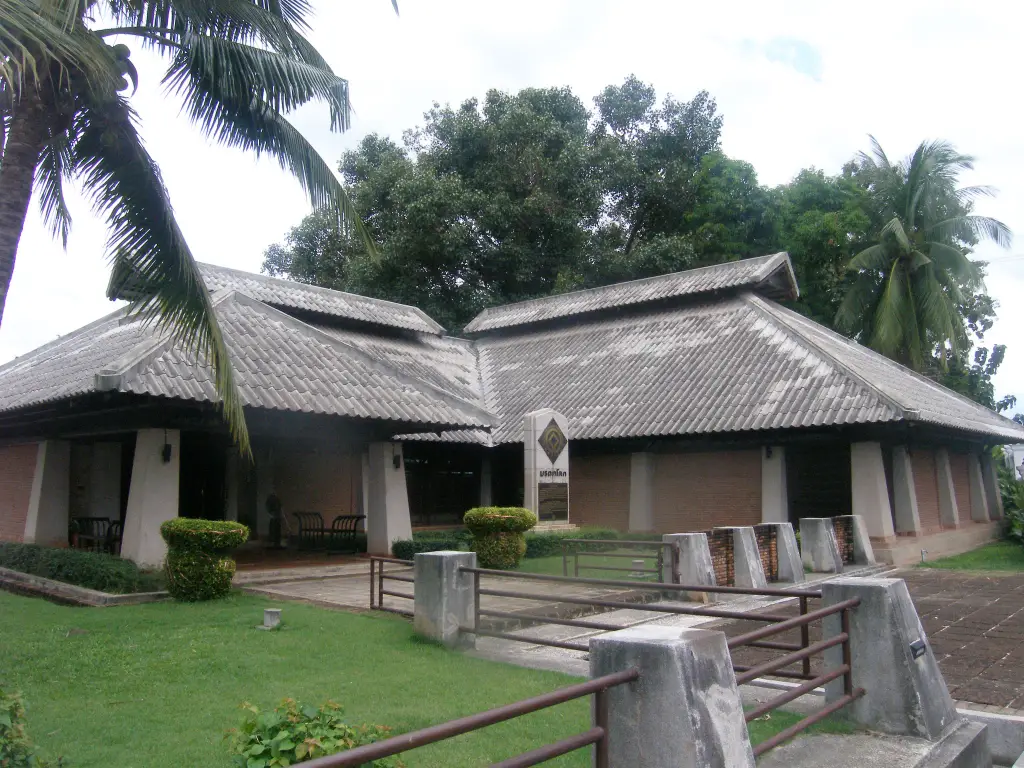
The main highlight of Wat Pho Si Nai is the archaeological excavation pit inside the temple. The pit has an L-shaped layout and is protected by a roofed exhibition building. Inside, visitors can observe human skeletal remains, pottery vessels of different sizes, burial contexts, and interpretive displays that explain how archaeologists study the past through soil layers, artifact positions, and burial patterns. Unlike a standard museum gallery where objects are separated from their original context, this site allows visitors to see how bodies, pots, tools, and layers of earth relate to one another inside the actual archaeological area.
Wat Pho Si Nai is located in Ban Chiang, one of the best-known prehistoric archaeological areas in Southeast Asia. Ban Chiang was inscribed as a UNESCO World Heritage cultural site in 1992 because of its importance in demonstrating early settlement, technological development, and cultural evolution in this region. Wat Pho Si Nai is especially valuable because it preserves an excavation context within a living temple compound. The site is also close to Ban Chiang National Museum, which serves as the main interpretive museum for the wider archaeological area.
The temple itself has a long history as a local Buddhist temple. Wat Pho Si Nai is a local temple under the Mahanikaya order and was registered as a temple in 1847. For generations, it has served the Ban Chiang community as a place for worship, merit-making, Buddhist ceremonies, and community gatherings. What makes it distinctive is that the temple stands on cultural layers associated with the Ban Chiang archaeological tradition. As a result, it carries two identities at the same time: a functioning Buddhist temple and a site of outstanding archaeological importance.
The ordination hall of Wat Pho Si Nai also reflects the temple’s religious history. The former hall was a wooden structure built on a mound where laterite stones were present. It was repaired several times, and between 1975 and 1979, Phra Khru Wimon Panyakorn, the 30th abbot of the temple, had a new reinforced-concrete ordination hall built. Inside the hall is a local-style stucco Buddha image in the subduing Mara posture. The presence of this hall and sacred Buddha image shows that the temple remains a place of Buddhist devotion, not only a heritage display area.
The archaeological importance of Ban Chiang became widely recognized after discoveries of prehistoric artifacts in the area. In 1972, the Fine Arts Department began systematic surveys and excavations at Ban Chiang, including the area of Wat Pho Si Nai. The excavations revealed bronze and iron tools, pottery vessels, ornaments, and other artifacts buried together with human skeletons. These findings transformed Ban Chiang into a key site for understanding agricultural communities, metallurgy, burial customs, and long-term cultural development in mainland Southeast Asia.
The excavation pit at Wat Pho Si Nai was later improved as an open-air archaeological museum. After the royal visit to the Ban Chiang excavation areas on March 20, 1972, the Fine Arts Department developed the excavation pit inside Wat Pho Si Nai for public education. The protected building now allows visitors to view archaeological evidence safely and clearly. The display shows the process of excavation, the appearance of burial layers, the position of human remains, and the placement of pottery vessels associated with funerary practices.
The most powerful part of visiting Wat Pho Si Nai is the ability to see archaeological evidence in context. Human skeletons and pottery vessels appear in relation to one another, making it easier to understand prehistoric burial customs. Some pottery vessels were placed near the head or feet of the deceased. In some cultural phases, broken pottery was placed beneath or over the body as part of burial practice. These patterns reveal belief systems, ritual behavior, and relationships between the living and the dead in prehistoric Ban Chiang society.
Archaeological studies at Wat Pho Si Nai help divide the Ban Chiang cultural sequence into three main periods: early, middle, and late. The early period includes extended supine burials, flexed burials, and infant burials in pottery jars. The middle period shows practices such as breaking pottery and using fragments in burials, along with evidence of metal objects. The late period is especially known for painted pottery with increasingly complex designs, including circles, spirals, curved lines, S-shaped patterns, and Z-shaped patterns. These changes show gradual cultural development across generations.
Ban Chiang pottery is one of the best-known forms of evidence from the site. The painted designs on the vessels are not valuable only because they are beautiful. They also provide information about social development, symbolic thought, craftsmanship, and ritual practice. Simpler designs in earlier phases gradually developed into more complex patterns in later periods. When seen in the context of burial pits, these vessels become more than household objects. They become part of funerary practice and a reflection of how people expressed belief, identity, and care for the dead.
The study of human skeletal remains from Ban Chiang provides a detailed picture of ancient life. The information provided for this article states that adult males at Ban Chiang had an average height of about 162.5 to 172.5 centimeters, while adult females averaged about 147.5 to 155 centimeters. The average age at death was around 31 years, and in the earliest settlement phase, child mortality was higher than adult mortality. These details help visitors understand that the people of Ban Chiang were real individuals who lived, worked, suffered illness, formed communities, and were buried with care.
Teeth and bones also provide evidence of health conditions, including tooth decay, blood-related abnormalities, and other biological stress indicators. The study of human remains is therefore not just about measuring skeletons. It is a way of reconstructing daily life, diet, disease, age, and population structure. Visitors should view the human remains at Wat Pho Si Nai with respect, recognizing that they represent real people from the past rather than objects of curiosity.
Animal bones and shell remains from Ban Chiang also help explain the ancient environment. Evidence from aquatic animals, wild animals, and shells suggests that when the community first settled in the area, there were reliable water sources near the village throughout the year. The surrounding landscape included forested areas and a monsoon climate. After more than 3,000 years, the amount of available water declined and the surrounding forest environment gradually changed into more open land. This shift is associated with the expansion of cultivation by prehistoric Ban Chiang communities.
The animal remains are especially informative. Archaeologists identified domestic animals, wild animals, aquatic species, and small mammals. Water buffalo bones are particularly important because some evidence suggests that buffalo were used for labor, as certain foot bones show stress related to traction. This evidence, together with iron tools, indicates that Ban Chiang communities developed more advanced agricultural practices over time. The people were not simply living by hunting and gathering; they were organizing animals, tools, labor, and land for food production.
For this reason, Wat Pho Si Nai helps visitors understand that Ban Chiang was not only a place famous for painted pottery. It was a complex prehistoric community with burial customs, pottery production, metal technology, agriculture, domesticated animals, changing environments, and cultural connections with other communities. Every element inside the excavation pit matters: the position of a skeleton, the location of a pot, a metal object, a bead, a shell, an animal bone, and the layer of earth in which it was found.
The relationship between Wat Pho Si Nai and Ban Chiang National Museum is essential. The main museum stands about 500 meters from the Wat Pho Si Nai excavation pit. The museum contains several exhibition areas, including the main service building, the permanent exhibition building, the Tai Phuan exhibition house, and displays of artifacts recovered from Wat Pho Si Nai. To understand Ban Chiang properly, visitors should see both the museum and the excavation pit. The museum explains the broader story, while Wat Pho Si Nai shows the archaeological context in the real landscape.
A recommended route is to begin at Ban Chiang National Museum, where visitors can learn about the chronology of archaeological research, prehistoric pottery, metal tools, ornaments, burial practice, and the World Heritage significance of Ban Chiang. After that, continue to Wat Pho Si Nai to see the excavation pit itself. This order helps visitors understand where the objects in the museum came from and why context is so important in archaeology. An object removed from its context tells only part of the story; an object seen in relation to a burial and soil layer tells much more.
Wat Pho Si Nai remains a Buddhist temple as well as an archaeological site. Visitors should therefore respect both its religious and heritage roles. The temple has an ordination hall, a principal Buddha image, and areas used by the local community for religious activities. Modest clothing, quiet behavior, and careful movement inside the exhibition area are essential. Visitors should not touch archaeological remains, climb on structures, or disturb the temple environment. This respect helps preserve both the spiritual and cultural value of the place.
Wat Pho Si Nai is suitable for many types of travelers. History lovers can study one of Thailand’s most important prehistoric sites. Anthropology enthusiasts can learn about ancient bodies, disease, mortality, and social life. Art and design visitors can observe how pottery patterns developed over time. Families can bring children for meaningful learning outside the classroom. International visitors can see how a World Heritage archaeological site remains connected to a living Thai Buddhist temple and a local community.
Getting There is easiest by private car, rental car, or chartered local vehicle. From central Udon Thani, travel toward Nong Han District and Ban Chiang Subdistrict. The distance from Udon Thani city to Ban Chiang is about 50 to 55 kilometers, and the drive usually takes around 1 to 1.5 hours depending on traffic. Travelers can also go to Nong Han town first and then continue by local transport to Ban Chiang. Having a vehicle is the most convenient option because it allows visitors to combine the museum, Wat Pho Si Nai, the local community, craft shops, and nearby attractions in one trip.
Travelers without a private vehicle should plan ahead. Local transport from Nong Han to Ban Chiang is possible, but a hired vehicle is more practical for those who want to visit several sites in one day. A chartered car is especially useful for families, elderly travelers, and foreign visitors who prefer a clear schedule. It also makes it easier to return to Udon Thani city or continue to other destinations such as the Red Lotus Sea or Kham Chanot.
The best time to visit is in the morning or early afternoon. The excavation pit is covered by a roof, but moving between the temple, museum, village, and nearby shops is more comfortable when there is enough time before closing. Visitors should allow at least 1 to 2 hours for Wat Pho Si Nai and additional time for Ban Chiang National Museum. A slow visit is more rewarding because the meaning of the site lies in details such as soil layers, body positions, pottery placement, and burial patterns.
For a full cultural day trip, begin at Ban Chiang National Museum, continue to Wat Pho Si Nai, walk through the Ban Chiang cultural community, visit local pottery or craft shops, and then eat in Nong Han town. During the cool season, travelers may combine the route with the Red Lotus Sea in Kumphawapi District. Travelers interested in contemporary belief and local pilgrimage culture may continue to Kham Chanot, but travel time should be planned carefully because it is farther from Ban Chiang.
The value of Wat Pho Si Nai is that it makes Ban Chiang tangible. Visitors do not only read that Ban Chiang is thousands of years old. They stand in front of burial pits, see skeletal remains, observe pottery vessels in context, and understand how human life is preserved in the earth. This direct experience is different from reading a textbook or looking at photographs. It shows the scale, depth, and relationship of the evidence in a way that only an actual archaeological site can provide.
Visitors should remember that the skeletons and artifacts represent real human lives. They are not decorations or curiosities. They are evidence of people who once lived, worked, became ill, raised families, held beliefs, and were buried with meaning. Archaeology allows later generations to understand the past while preserving respect for those who came before. Visiting Wat Pho Si Nai with care and humility is therefore part of protecting the cultural heritage of Ban Chiang.
When its temple history, excavation pit, burial evidence, pottery, metal tools, environmental data, and connection with Ban Chiang National Museum are considered together, Wat Pho Si Nai is one of the essential places to visit in Udon Thani for anyone interested in history and culture. It offers worship, learning, archaeology, World Heritage significance, and community identity in one location. For travelers who want to understand Ban Chiang beyond its famous painted pottery, Wat Pho Si Nai provides one of the clearest and most meaningful experiences in the entire area.
| Name | Wat Pho Si Nai And Wat Pho Si Nai Excavation Pit |
| Location | Ban Chiang, Village No. 1, Ban Chiang Subdistrict, Nong Han District, Udon Thani Province, Thailand |
| Address | Ban Chiang Subdistrict, Nong Han District, Udon Thani 41320, Thailand |
| Highlights | Archaeological excavation pit inside a temple, roofed display building, prehistoric human skeletons, pottery vessels, metal tools, burial evidence, and cultural layers of the Ban Chiang civilization |
| History | Wat Pho Si Nai was registered as a temple in 1847. The archaeological excavation in the temple area began systematically in 1972 and is associated with the prehistoric Ban Chiang culture |
| Name Origin | Wat Pho Si Nai is the traditional name of this Ban Chiang community temple. The word “Nai” helps distinguish it from other local places with similar temple names |
| Distinctive Features | A local Mahanikaya Buddhist temple that preserves and displays a real archaeological excavation pit within the Ban Chiang World Heritage cultural landscape |
| Travel Information | From central Udon Thani, travel toward Nong Han District and Ban Chiang Subdistrict. The distance is about 50 – 55 km. A private car, rental car, or chartered local vehicle is recommended. Travelers using public transport should continue from Nong Han town to Ban Chiang by local vehicle |
| Current Status | Open to visitors for viewing the archaeological excavation pit, while the temple continues to function as a local Buddhist temple for the Ban Chiang community |
| Open Days | Daily |
| Opening Hours | 08.30 – 16.00 |
| Fees | Thai visitors: 30 baht Foreign visitors: 150 baht Exemptions apply to students in uniform, Thai senior citizens, Buddhist monks, novices, and religious clergy |
| Facilities | Roofed excavation display building, interpretive displays, temple worship area, walking route around the excavation pit, and visitor information through Ban Chiang National Museum |
| Main Areas / Zones | Wat Pho Si Nai Ordination Hall Local-Style Stucco Buddha Image In Subduing Mara Posture Wat Pho Si Nai Excavation Pit Building L-Shaped Excavation Pit Prehistoric Human Skeleton Display Area Pottery And Burial Evidence Display Area Ban Chiang Archaeological Interpretation Area |
| Abbot / Caretaker | The current abbot’s name is not available in verified public sources Archaeological display caretaker: Ban Chiang National Museum, Fine Arts Department |
| Main Contact Number | Ban Chiang National Museum, Tel. 042-235-040 Ban Chiang Municipality Office, Tel. 042-235-001 |
| Official Website / Official Page | Ban Chiang National Museum, Fine Arts Department Ban Chiang National Museum Official Facebook Page |
| Nearby Tourist Attractions | 1. Ban Chiang National Museum, about 0.5 km 2. Ban Chiang Cultural Tourism Community, about 0.6 km, Tel. 096-456-6926 3. Ban Chiang Pottery And Handicraft Shops, about 1 km 4. Wat Santiwanaram, about 14 km 5. Nong Han Town, about 16 km 6. Red Lotus Sea, Kumphawapi District, about 55 km 7. Kham Chanot Wang Nakhin, about 58 km |
| Nearby Restaurants | 1. Local Restaurants In Ban Chiang Community, about 1 km 2. Restaurants Around Ban Chiang Museum And Cultural Community, about 1 km 3. Local Restaurants In Nong Han Town, about 16 km 4. Khanom Chin Chao Wang Nong Han, about 17 km, Tel. 098-828-9955 5. Jungle Cafe Nong Han Branch, about 17 km, Tel. 085-646-9149 6. Steak Nok Mueang Cafe Nong Han, about 17 km, Tel. 080-010-2216 7. Owa Shabu Nong Han Branch, about 17 km, Tel. 063-743-3309 |
| Nearby Accommodations | 1. Ban Chiang Cultural Conservation Homestay, about 1 km 2. Homestays In Ban Chiang Community, about 1 km 3. Kasalong View Resort Nonghan, about 18 km, Tel. 042-261-233 4. Nonghan Grand Hotel And Resort, about 22 km, Tel. 042-111-408, 098-175-1235 5. Moai Homeplace, about 24 km, Tel. 099-587-9990 6. Accommodations In Udon Thani City, about 55 km |
Frequently Asked Questions (FAQ)
Q: Where is Wat Pho Si Nai located?
A: Wat Pho Si Nai is located in Ban Chiang, Village No. 1, Ban Chiang Subdistrict, Nong Han District, Udon Thani Province. It is close to Ban Chiang National Museum and forms part of the Ban Chiang archaeological area.
Q: What are the opening days and hours of Wat Pho Si Nai excavation pit?
A: The excavation pit at Wat Pho Si Nai is open daily from 08.30 to 16.00. It is best visited together with Ban Chiang National Museum on the same day.
Q: Is there an admission fee for Wat Pho Si Nai?
A: Yes. Admission to the excavation pit is 30 baht for Thai visitors and 150 baht for foreign visitors. Exemptions apply to students in uniform, Thai senior citizens, Buddhist monks, novices, and religious clergy.
Q: What is the main highlight of Wat Pho Si Nai?
A: The main highlight is the archaeological excavation pit inside the temple, where visitors can see prehistoric human skeletons, pottery vessels, burial evidence, and cultural layers of the Ban Chiang civilization in their original context.
Q: How is Wat Pho Si Nai related to Ban Chiang World Heritage Site?
A: Wat Pho Si Nai is one of the important areas within the Ban Chiang archaeological landscape. Its excavation pit preserves evidence of prehistoric settlement, burial customs, and artifacts associated with the Ban Chiang culture.
Q: Should visitors go to Ban Chiang National Museum or Wat Pho Si Nai first?
A: It is recommended to start at Ban Chiang National Museum to understand the overall history and cultural sequence, then continue to Wat Pho Si Nai to see the real excavation context.
Q: How can travelers get to Wat Pho Si Nai?
A: From central Udon Thani, travel toward Nong Han District and Ban Chiang Subdistrict. The distance is about 50 to 55 km. A private car, rental car, or chartered local vehicle is the most convenient option.
Q: What nearby places can travelers visit after Wat Pho Si Nai?
A: Nearby places include Ban Chiang National Museum, Ban Chiang Cultural Tourism Community, Ban Chiang pottery shops, Wat Santiwanaram, Nong Han town, the Red Lotus Sea, and Kham Chanot.
 Category: ●Places of Worship
 Group: ●Temple
Last Update : 3 MonthAgo
 Last Update : 3 MonthAgo
 Click to Access the Navigation Map GPS
Wat Pho Si Nai Map
Recommend

 Art, Culture and Heritage
 Historical Sites and Monuments(1)
 Landmarks and Memorials(1)
 Art, Craft Centres, Tradition(2)
 Museums(2)
Temple(21)
 Other Sacred Sites(8)
 Suburban Living
 Village, Community(3)
 Nature and Wildlife
 National Parks and Marine Reserves(3)
 Mountain (Doi)(1)
 Dam, Reservoir, Lake(8)
 Waterfalls(6)
 Caves(1)
 River, Canal(4)
 Islands(1)
 Other natural attractions(1)
 Entertainment and Agricultural
 Farms, Parks and Ecotourism(3)
 Waterpark(2)
 Shopping
 Shopping and Night Market(1)
 Travel Articles, Recipes
 Travel Review, Food Review(1)


