
lovethailand home >Northeastern Travel Attractions >Nong Khai Travel Attractions >Muang Nongkhai >Phra That Bang Phuan > Phra That Nong Khai
TL;DR: Phra That Nong Khai is located at In the Mekong River opposite the Wat That community, Nong Khai Municipality, Mueang Nong Khai District, Nong Khai Province, open Daily, hours 07.00 – 17.00.
Phra That Nong Khai
Open Days: Daily
Opening Hours: 07.00 – 17.00
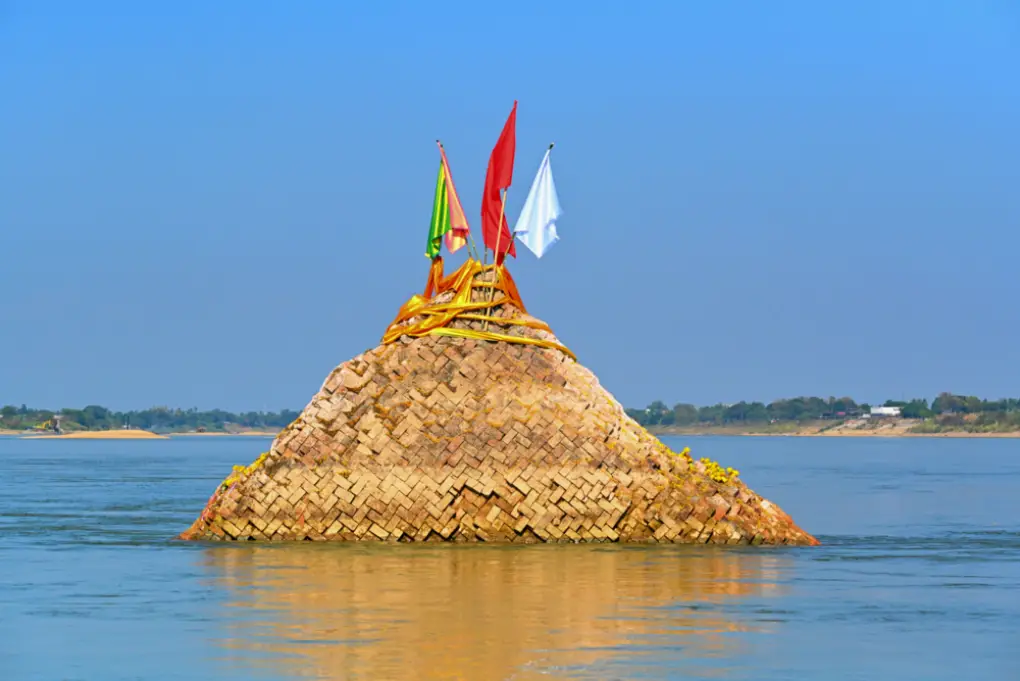
Phra That Nong Khai, also known as Phra That Klang Nam or Phra That La Nong, is an ancient sacred stupa ruin standing in the Mekong River in Mueang Nong Khai District, Nong Khai Province. Located near the Wat That community on the Thai side of the river, this partially submerged relic monument is one of the most distinctive spiritual landmarks of Nong Khai. It is not a conventional temple building that visitors can walk around at all times. Instead, it is a weathered sacred structure shaped by history, faith, erosion, and the seasonal rhythm of the Mekong River.
For travelers visiting Nong Khai, Phra That Klang Nam offers a deeply different experience from ordinary temple sightseeing. The original stupa stands in the river and becomes clearly visible during periods when the Mekong water level drops. At other times, only parts of the structure may be visible, or the stupa may be partly hidden by the river. This seasonal character makes the site especially memorable, because every visit is connected to the natural movement of the Mekong. The place combines sacred history, river landscape, local devotion, and border-town atmosphere in one setting.
According to the Urangkhathat legend, Phra That Nong Khai enshrines 9 relics from the Buddha’s footprint. This belief gives the stupa major religious importance for Buddhists in Nong Khai and the wider Mekong region. Local people have long treated the site as a sacred relic stupa of the city. Devotees come to pay respect, offer cloth, make merit, and remember the Buddha through a sacred monument that has survived in a damaged but powerful form in the middle of the river.
Underwater archaeological surveys by Regional Archaeology Office 7 found that the original stupa had a square base measuring 17.2 meters on each side, with indented corners at the base. Its original height was approximately 28.5 meters, and the structure was found broken into 3 sections. Based on its architectural form, scholars have suggested that it was probably built around the 20th–22nd Buddhist centuries. The stupa’s form is often compared with Phra That Bang Phuan, another important relic stupa in Nong Khai Province. These details show that Phra That Klang Nam is not only a sacred object of belief, but also an archaeological site of historical and architectural importance.
The old chronicle Prachum Phongsawadan Part 70 records that the stupa of Nong Khai collapsed on the waxing 9th day of the 9th lunar month in 1847. Over time, the Mekong River eroded the riverbank, gradually changing the landscape around the original site. What was once closer to the riverbank eventually became a ruined stupa visible in the middle of the river. This history gives Phra That Klang Nam a unique identity: it is a monument transformed not only by time, but also by the force of water and the changing geography of the Mekong.
The name “Phra That La Nong” is the older local name of the stupa. It reflects the relationship between the sacred monument and the identity of Nong Khai itself. Today, many visitors call it Phra That Klang Nam, meaning the stupa in the water, because of its present appearance in the Mekong. Both names are meaningful. The older name preserves local memory, while the newer name describes the unforgettable image of an ancient stupa rising from the river.
Viewed from the riverbank, Phra That Klang Nam looks different depending on the season. During high water, the monument may be less visible. During low water, the remaining brick-and-plaster structure appears more clearly, often wrapped with colorful cloth and marked with flags and offerings. This image is one of the most powerful sights in Nong Khai: a sacred ruin standing in the Mekong, weathered by water yet still honored by generations of worshippers.
Near the riverbank, a replica of Phra That La Nong has been built so that worshippers and visitors can pay respect throughout the year, even when the original stupa in the river is not easily accessible. This riverside replica plays an important role in maintaining continuous devotion to the sacred site. It also helps visitors understand the relationship between the original stupa in the Mekong and the community area on the Thai bank of the river.
Phra That Klang Nam is closely tied to the everyday life of Nong Khai as a Mekong river city. The Mekong is not merely a scenic background here. It defines how the site is seen, approached, and experienced. Local people understand the changing water levels, the best time to see the stupa, and the seasons when boats can take visitors closer to the monument. This relationship between faith and river makes the site feel alive. It changes every year with the movement of the water.
A first visit usually begins at the riverside area near the replica stupa and the boat service point, when boat service is available. From the riverbank, visitors can look across the Mekong toward the original stupa’s position in the water. When the water level is low enough and boats are operating, visitors can take a boat closer to the original stupa. Boat service for worship is normally available from 07.00 to 17.00 during the operating season. The boat fee is 200 Baht per boat, with a capacity of up to 10 passengers.
The boat trip to Phra That Klang Nam is a special experience. Instead of walking into a temple compound, visitors move from the riverbank into the Mekong itself. From the boat, the city of Nong Khai appears from a different angle, and the original stupa becomes a sacred focal point surrounded by flowing water. Devotees often offer flowers, incense, candles, cloth, or silent prayers. The experience is peaceful and meaningful, but it also requires care because the monument stands in a living river with changing current and water levels.
Although the original stupa is broken and partly submerged, its religious significance remains strong. In fact, the damaged form of the monument deepens the emotional power of the place. Visitors can sense the passage of centuries, the force of the river, and the determination of the local community to preserve memory and devotion. Paying respect at Phra That Klang Nam is therefore both an act of faith and a way to honor Nong Khai’s cultural heritage.
Phra That Klang Nam is also connected with local annual traditions. The worship festival of Phra That La Nong includes offerings of bai si trays from communities within Nong Khai Municipality, ceremonial dances offered to the stupa, and merit-making activities such as floating robe-offering ceremonies. These traditions show that the stupa remains part of living community life. It is not an abandoned ruin, but a sacred center that continues to gather devotion.
The site fits naturally into a Nong Khai riverside travel route. Visitors can begin at Phra That Klang Nam in the morning, continue to Tha Sadet Market, visit Wat Pho Chai Royal Temple to pay respect to Luang Pho Phra Sai, and then continue to the First Thai–Lao Friendship Bridge or Sala Keoku. This route gives travelers a well-rounded view of Nong Khai: sacred relics, Buddhist devotion, border trade, river scenery, and local culture.
Wat Pho Chai is one of the most important nearby temples. It enshrines Luang Pho Phra Sai, the highly revered Buddha image of Nong Khai. Traveling from Phra That Klang Nam to Wat Pho Chai allows visitors to experience 2 major spiritual landmarks of the province in one trip. Phra That Klang Nam represents the sacred relic tradition of the Mekong, while Wat Pho Chai represents the living temple devotion of the city.
Tha Sadet Market, also known as an important riverside market area, is another convenient stop near Phra That Klang Nam. It is associated with Nong Khai’s long history of cross-border trade and riverfront commerce. Visitors can walk along the Mekong, shop for local products, enjoy food, and continue learning about the everyday life of the border town. Combining the market with the stupa creates a natural connection between faith and local urban life.
The First Thai–Lao Friendship Bridge is also close enough to include in the same itinerary. The bridge links Nong Khai in Thailand with the Lao side across the Mekong River and symbolizes the province’s role as a gateway between 2 countries. When seen together with Phra That Klang Nam, the bridge helps visitors understand how the Mekong functions as a sacred river, a border, a route of movement, and a shared cultural landscape.
Sala Keoku offers another contrasting but meaningful experience. This sculpture park is famous for its large concrete religious and philosophical sculptures. A route that includes both Phra That Klang Nam and Sala Keoku gives visitors a wide view of Nong Khai’s spiritual imagination: one site is an ancient ruined stupa in the river, while the other is a modern sculpture landscape filled with symbolic forms.
The best time to visit Phra That Klang Nam is in the morning or late afternoon. Morning light gives the Mekong a calm atmosphere, while late afternoon offers softer light for viewing and photography. The low-water season gives the best chance to see the original stupa clearly, often between around October and May, depending on the river level each year. During the rainy season or high-water periods, the original stupa may not be as visible, but visitors can still pay respect at the riverside replica and enjoy the Mekong view.
Visitors should dress respectfully because the site is sacred to local Buddhists. Even though the viewing area is an open riverside space, many people come here with religious devotion. Proper clothing, quiet behavior, and care for the environment are important. Visitors should not leave rubbish near the river, should not damage any part of the sacred site, and should treat the remaining stupa with respect.
Photography is possible from the riverbank and from the boat, when boat trips are operating. Popular views include the original ruined stupa in the Mekong, cloth and flags wrapped around the structure, the riverside replica, and the river landscape with Laos visible across the water. Safety should always come first, especially when taking photos from a boat or near the riverbank.
Historically, Phra That Nong Khai helps explain the development of riverside communities along the Mekong. The old Wat That area and the original stupa show that the riverbank was once a major religious and settlement zone. Riverbank erosion later transformed the stupa into a monument in the middle of the river. This change is an important example of how natural forces can reshape cultural landscapes and create new meanings for sacred places.
The stupa also helps visitors understand Nong Khai as a river city. The Mekong is a national border, a trade route, a source of food, a sacred landscape, and a cultural connector between communities on both sides. Standing on the Thai bank and looking toward Phra That Klang Nam, visitors can see faith, water, history, and border geography in a single view.
For families traveling with children, Phra That Klang Nam is a useful learning site. It can be used to explain Buddhist relic traditions, archaeology, local legends, river erosion, seasonal water levels, and the importance of heritage conservation. Children can see that a place does not need to be perfectly preserved to be valuable. Even a damaged ruin can carry deep historical and spiritual meaning.
For travelers interested in archaeology, key features include the large square base, indented corners, brick-and-plaster construction, and the stupa’s relationship to the former riverbank. The underwater survey results confirm that this is a true archaeological monument with measurable architectural features. Understanding these details makes the visit more meaningful than simply viewing a river ruin from a distance.
For Buddhist travelers, paying respect at Phra That Klang Nam can feel deeply calm and personal. Some visitors offer cloth, some make silent wishes, and some simply stand by the Mekong in reverence. The setting of the stupa in the river creates a contemplative atmosphere that is different from ordinary temple visits. Faith and nature become part of the same experience.
The area around Phra That Klang Nam connects easily with riverside life in Nong Khai. Nearby areas include walking routes, viewpoints, restaurants, cafés, and city hotels. Visitors staying in town can visit the stupa in the morning before walking through Tha Sadet Market, or come in the evening before dinner along the Mekong. This makes the site practical for slow travel and relaxed cultural exploration.
Nearby food options include local breakfast shops, riverside restaurants, Vietnamese-style restaurants, cafés, and family dining places. Jeen Zan Kai Kata Nong Khai is a convenient breakfast option near the riverside. Macky’s Riverside Kitchen and Daeng Naem Nueng Nong Khai are well-known options in the riverside and town area. Cà Phê Việt and Khong Cafe & Bistro Nongkhai are also suitable choices for travelers who want to continue eating or relaxing after visiting the stupa.
Accommodation options are concentrated in Nong Khai city. Travelers who want convenient access to Tha Sadet Market, the Mekong riverfront, and Phra That Klang Nam can stay at White Inn Nongkhai Hotel, HOP INN Nong Khai, or Amanta Hotel Nongkhai. Those who prefer more space or resort-style facilities can consider Crystal Nongkhai Hotel or Park & Pool Resort. Staying in town makes it easy to combine the stupa with other attractions in one or two days.
There is no admission fee for viewing Phra That Klang Nam from the riverbank or paying respect at the riverside replica. Visitors who take a boat closer to the original stupa during the operating season pay a boat fee of 200 Baht per boat, with up to 10 passengers. This is a boat service fee rather than an entrance fee to the monument. For groups, the cost can be shared conveniently among passengers.
Safety is important when taking a boat to the stupa. Passengers should wear life jackets, remain seated, avoid sudden movement, and follow the boat operator’s instructions. The Mekong River is wide, and its current and water level change with the season. A careful approach allows visitors to enjoy the sacred journey safely.
Travelers using a private car can search for Phra That La Nong, Phra That Klang Nam, or Soi Wat That in Nai Mueang Subdistrict, Mueang Nong Khai District. The riverside viewing point is close to the replica stupa and the boat service area during low water. From Tha Sadet Market, the site is about 2 kilometers away. From Nong Khai Railway Station or the First Thai–Lao Friendship Bridge, travelers can reach the area by car, taxi, or local transport.
Getting There is convenient from central Nong Khai. Follow the riverside route toward Soi Wat That in Nai Mueang Subdistrict. The destination is near the riverside replica of Phra That La Nong and the boat service point during the low-water season. The site is about 2 kilometers from Tha Sadet Market, about 3 kilometers from Wat Pho Chai, about 4 kilometers from the First Thai–Lao Friendship Bridge, and about 5 kilometers from Nong Khai Railway Station. Private cars, rental cars, taxis, and local motorcycle taxis are practical options.
Travel planning should take the Mekong water level into account. Travelers who want to see the original stupa clearly or take a boat closer to it should choose the low-water season and check the local situation before visiting. During high-water periods, the riverside replica and the Mekong view still make the site worth visiting. Morning and late afternoon are the most comfortable times for a calm visit.
Overall, Phra That Nong Khai or Phra That Klang Nam is one of Nong Khai’s most meaningful sacred and historical sites. Its value does not come from a perfectly preserved monument, but from a broken relic stupa that continues to hold the faith of the community. The site brings together Buddhist legend, archaeology, local tradition, river landscape, and the memory of a Mekong border city. A visit here gives travelers a deeper understanding of Nong Khai beyond ordinary sightseeing.
| Name | Phra That Nong Khai / Phra That Klang Nam / Phra That La Nong |
| Location | In the Mekong River opposite the Wat That community, Nong Khai Municipality, Mueang Nong Khai District, Nong Khai Province |
| Address / Riverside Access Point | Soi Wat That, Nai Mueang Subdistrict, Mueang Nong Khai District, Nong Khai Province 43000, Thailand |
| Highlights | Ancient ruined stupa in the Mekong River, an important sacred site of Nong Khai with a riverside replica for year-round worship |
| History | Believed to have been built around the 20th–22nd Buddhist centuries. The chronicle Prachum Phongsawadan Part 70 records that the stupa collapsed on the waxing 9th day of the 9th lunar month in 1847 |
| Key Evidence | Underwater surveys found a square base measuring 17.2 meters on each side, indented corners, an original height of about 28.5 meters, and 3 broken sections |
| Importance | According to the Urangkhathat legend, the stupa enshrines 9 relics from the Buddha’s footprint and is a major sacred landmark of Nong Khai on the Mekong River |
| Name Origin | The older local name is “Phra That La Nong.” It is now widely known as “Phra That Klang Nam” because the ruined stupa appears in the middle of the Mekong River |
| Main Areas / Zones | 1. Original ruined stupa in the Mekong River 2. Riverside replica of Phra That La Nong 3. Mekong riverside viewpoint 4. Boat service point during the low-water season 5. Wat That community and riverside area |
| Annual Tradition / Activities | Phra That La Nong worship festival, bai si tray offerings, ceremonial dances, and floating robe-offering merit activities |
| Caretaker / Local Area | Wat That community, local boat operators, and local authorities within Nong Khai Municipality |
| Travel Information | From central Nong Khai, follow the Mekong riverside route to Soi Wat That, Nai Mueang Subdistrict. The site is near the riverside replica and boat service point, about 2 km from Tha Sadet Market and about 4 km from the First Thai–Lao Friendship Bridge |
| Current Status | Open for riverside viewing and worship. Boat access depends on Mekong water level and local boat operation |
| Open Days | Daily |
| Opening Hours | 07.00 – 17.00 for boat worship service during operating periods |
| Fees / Boat Fee | No riverside admission fee. Boat worship service is 200 Baht per boat, up to 10 passengers |
| Facilities | Riverside area, viewpoint, replica worship point, seasonal boat service point, shops and restaurants in nearby central Nong Khai |
| Nearby Tourist Attractions | 1. Tha Sadet Market, about 2 km 2. Wat Pho Chai Royal Temple, about 3 km, Tel. 084-796-9143 3. First Thai–Lao Friendship Bridge, about 4 km 4. Nong Thin Public Park, about 4 km 5. Sala Keoku, about 6 km 6. Nong Khai Provincial Museum, about 3 km |
| Nearby Restaurants | 1. Jeen Zan Kai Kata Nong Khai, about 1 km, Tel. 091-419-9559 2. Macky’s Riverside Kitchen, about 2 km 3. Daeng Naem Nueng Nong Khai, about 2 km, Tel. 042-411-961 4. Cà Phê Việt Nong Khai, about 3 km, Tel. 085-824-2356 5. Khong Cafe & Bistro Nongkhai, about 6 km, Tel. 098-402-2971 |
| Nearby Accommodations | 1. White Inn Nongkhai Hotel, about 3 km, Tel. 042-422-666, 096-259-8246 2. HOP INN Nong Khai, about 4 km, Tel. +66(0)2-080-2222 3. Amanta Hotel Nongkhai, about 4 km, Tel. 042-412-899 4. Crystal Nongkhai Hotel, about 5 km, Tel. 042-464-678 5. Park & Pool Resort, about 6 km, Tel. 088-568-2300 |
Frequently Asked Questions (FAQ)
Q: Where is Phra That Nong Khai or Phra That Klang Nam located?
A: Phra That Nong Khai or Phra That Klang Nam is located in the Mekong River opposite the Wat That community in Nong Khai Municipality, Mueang Nong Khai District. The riverside access point is around Soi Wat That, Nai Mueang Subdistrict.
Q: What are the opening hours of Phra That Klang Nam?
A: Visitors can view and worship from the riverside daily. The boat worship service, when operating, is available from 07.00 to 17.00.
Q: Is there an admission fee for Phra That Klang Nam?
A: There is no admission fee for riverside viewing. Boat worship service costs 200 Baht per boat, with up to 10 passengers.
Q: When is the best time to see Phra That Klang Nam clearly?
A: The best time is during the low-water season of the Mekong, often around October to May. Visibility depends on the river level each year.
Q: Why is Phra That Klang Nam important?
A: According to the Urangkhathat legend, it enshrines 9 relics from the Buddha’s footprint. It is also an important sacred landmark and archaeological site of Nong Khai.
Q: Can visitors take a boat to Phra That Klang Nam?
A: Yes, when the water level is suitable and local boat service is operating. Passengers should wear life jackets and follow the boat operator’s instructions.
Q: What attractions are near Phra That Klang Nam?
A: Nearby attractions include Tha Sadet Market, Wat Pho Chai Royal Temple, the First Thai–Lao Friendship Bridge, Nong Thin Public Park, Sala Keoku, and Nong Khai Provincial Museum.
Q: How can travelers get to Phra That Klang Nam from central Nong Khai?
A: Follow the Mekong riverside route to Soi Wat That in Nai Mueang Subdistrict. The site is about 2 km from Tha Sadet Market and about 4 km from the First Thai–Lao Friendship Bridge.
 Category: ●Places of Worship
 Group: ●Other Sacred Sites
Last Update : 3 MonthAgo
 Last Update : 3 MonthAgo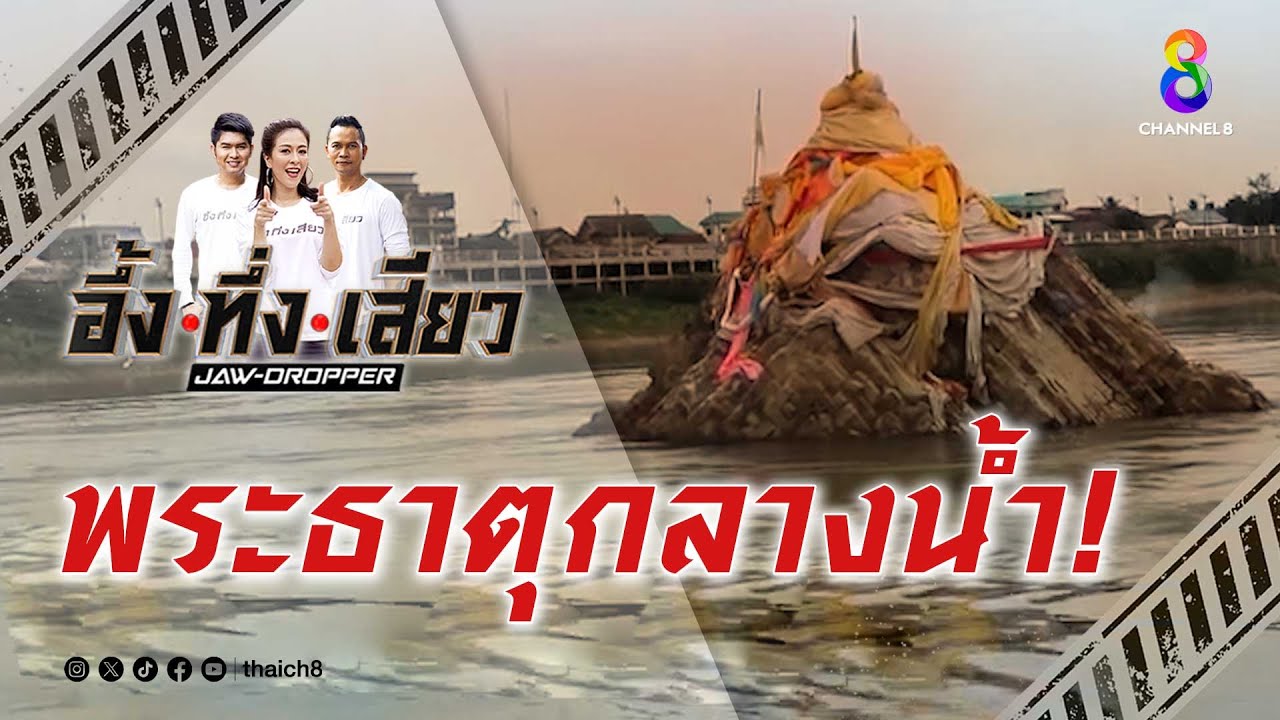
 Click to Access the Navigation Map GPS
Phra That Nong Khai Map
Recommend

 Art, Culture and Heritage
 Historical Sites and Monuments(1)
 Landmarks and Memorials(2)
 Art, Craft Centres, Tradition(1)
 Educational Places
 Educational Gardens, Farm(1)
 Temple(16)
 Mosque(1)
Other Sacred Sites(8)
Mosque(1)
Other Sacred Sites(8)
 Suburban Living
 Village, Community(3)
 Local Market(4)
 Nature and Wildlife
 National Parks and Marine Reserves(2)
 Dam, Reservoir, Lake(2)
 Waterfalls(4)
 River, Canal(8)
 Bays and Beaches(1)
 Entertainment and Agricultural
 Farms, Parks and Ecotourism(2)
 Shopping
 Shopping and Night Market(1)
 Travel Articles, Recipes
 Travel Review, Food Review(1)


