
lovethailand home >Northeastern Travel Attractions >Nakhon Phanom Travel Attractions >Muang Nakhon Phanom >Nai Muang > Na Muang Nakhon Phanom Dam
TL;DR: Na Muang Nakhon Phanom Dam, Nakhon Phanom attractions : Nature and Wildlife, Dam, Reservoir, Lake.
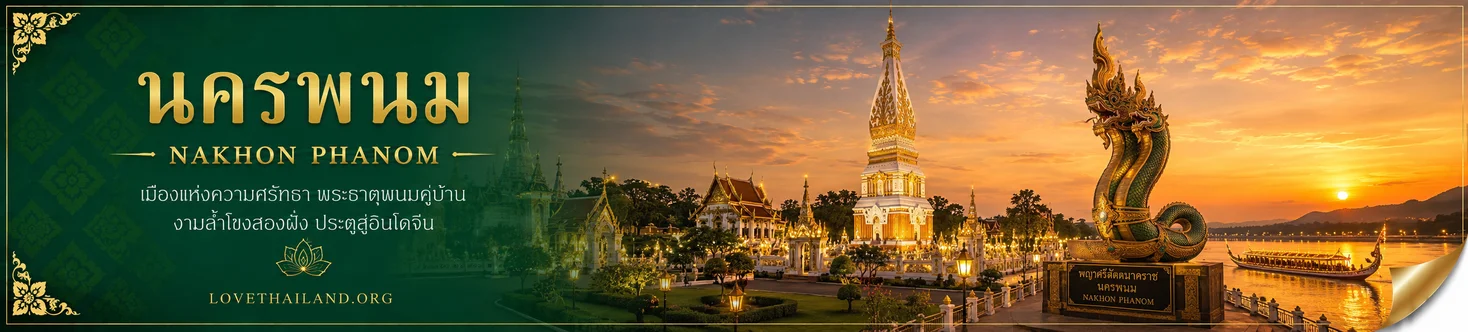
Na Muang Nakhon Phanom Dam
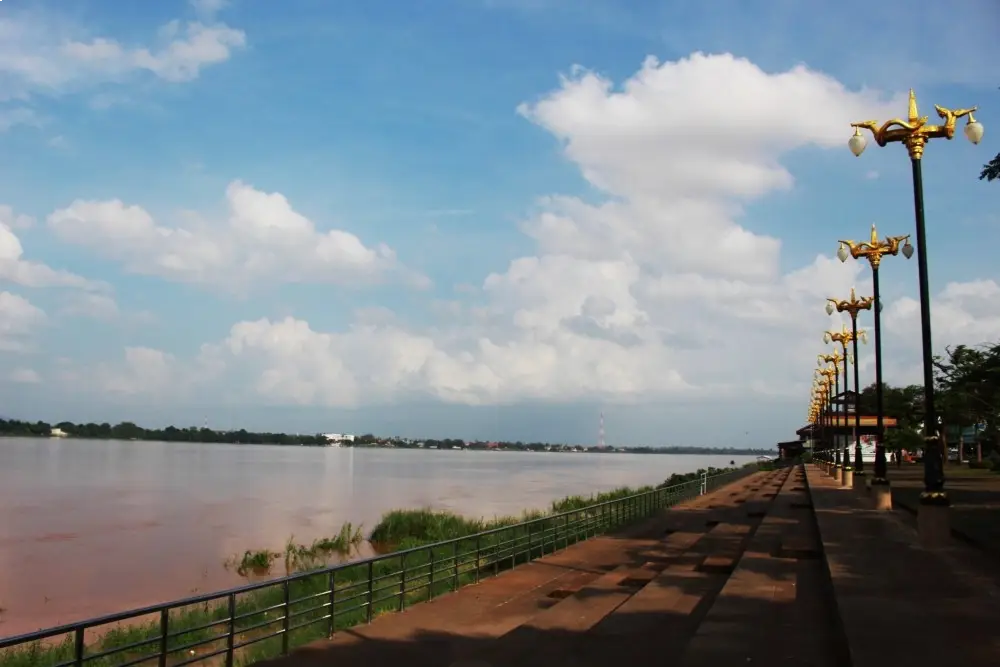
Open Days: Open daily. The public riverfront area is accessible throughout the day, except during special events, maintenance work, or temporary restrictions caused by changing Mekong River levels.
Opening Hours: Open 24 hours. The recommended visiting time is 05.30–21.00 for walking, exercising, sightseeing, and visiting nearby shops and restaurants.
Admission Fee: Free admission. Special activities, food, beverages, shopping, and other services are charged separately by individual providers.
Nakhon Phanom City Riverfront Embankment is a riverbank protection structure and public promenade running parallel to Sunthorn Wichit Road in Nakhon Phanom Municipality. The area serves several purposes at once: it protects the riverbank from erosion, provides walking and exercise routes, functions as an event venue for the province, and offers clear views across the Mekong River toward Tha Khaek in Khammouane Province, Lao People’s Democratic Republic. Visitors commonly come in the morning to watch the sun rise above the Lao riverbank, while the evening is suitable for enjoying the changing sky, feeling the river breeze, walking, buying food, and experiencing the relaxed pace of life in Nakhon Phanom.
The term “Nakhon Phanom City Riverfront Embankment” does not refer to a large water-storage dam or a hydroelectric facility. It describes the riverbank reinforcement structure along the Mekong that has been developed into an extensive urban public space. The upper embankment and roadside area include open plazas, pavements, seating areas, lighting, the Phaya Si Sattanakharat monument, cycling paths, event spaces, and scenic viewpoints. The word “embankment” reflects its original role in protecting the riverbank, while its present function has expanded to include a public park and central-city sightseeing route used by local residents in their everyday lives.
The riverfront embankment lies along Sunthorn Wichit Road, Nai Mueang Subdistrict, Mueang Nakhon Phanom District, Nakhon Phanom Province. Major sections of the route extend from the southern area near riverfront hotels and government buildings, passing Phaya Si Sattanakharat Plaza, Indochina Market, the former pier, Nakhon Phanom Walking Street, the Vietnamese Memorial Clock Tower, historic buildings, and continuing north toward Saint Anna Nong Saeng Church. Visitors may take a short walk around the Naga plaza or plan a longer walking or cycling route covering several kilometres, depending on their available time and physical condition.
One of the riverfront’s principal attractions is its broad, unobstructed view. Few tall buildings block the river, allowing visitors looking east to see the wide Mekong and Tha Khaek directly across the water. On clear days, buildings, houses, and the limestone mountains of Khammouane Province can be seen behind the Lao town. This view gives the Nakhon Phanom riverfront a distinctive character among Thailand’s border cities because natural scenery, historic urban architecture, and a neighbouring country can all be seen within a single panorama.
Early morning is when the riverfront reveals its atmosphere most clearly. The sun gradually rises above the Lao side and casts light across the water, which changes colour according to the clouds, mist, and river level. Local residents begin running, walking briskly, cycling, exercising, or buying breakfast from nearby shops. The air is relatively comfortable before the heat becomes intense, and traffic remains light. Visitors wishing to photograph the sunrise should arrive approximately 20–30 minutes before the scheduled sunrise to select a suitable position and capture the sky as its colours begin to change.
Although the Nakhon Phanom riverfront faces east and is best known for sunrise views, the evening has a different form of beauty. Sunlight from behind the city illuminates the Lao riverbank, clouds, and water in shades of gold, orange, and pink. At the same time, lights along the embankment, shops, Phaya Si Sattanakharat Plaza, and nearby buildings begin to switch on. The city becomes livelier before nightfall, making this a suitable time for walking, dining, and photographing the illuminated riverfront.
The scenery changes according to the Mekong River level and the season. During the dry season, lower water levels reveal more of the riverbank, sandbars, and sandy areas. The water often appears lighter in colour, and the current may look calmer. During the rainy season, the river becomes wider, fuller, and faster, while sediment from upstream areas darkens the water. Visitors therefore encounter different views at different times of the year. During periods of high water, warning signs must be followed, and visitors should not enter stairways or areas close to the water that have been closed by officials.
The embankment’s original purpose was to protect the riverbank and reduce erosion caused by the Mekong. During the rainy season, the direction and strength of the current can change according to the volume of water arriving from several countries within the Mekong Basin. Without protective structures, riverfront roads, buildings, public utilities, and urban areas could be affected. Developing the embankment as a public space allows infrastructure protection and quality-of-life improvements to operate together. Residents can use the area for exercise and recreation, while authorities can monitor river levels and maintain the riverbank more efficiently.
Sunthorn Wichit Road, which runs beside the embankment, is one of the streets that most clearly expresses the identity of Nakhon Phanom. On one side are the Mekong River and the promenade; on the other are hotels, restaurants, cafés, commercial buildings, religious sites, old houses, and urban communities. Walking along this road provides more than a river view. Visitors encounter a mixture of Thai, Lao, Vietnamese, Chinese, and Western architectural influences created by the city’s history of trade, migration, and communication across the river.
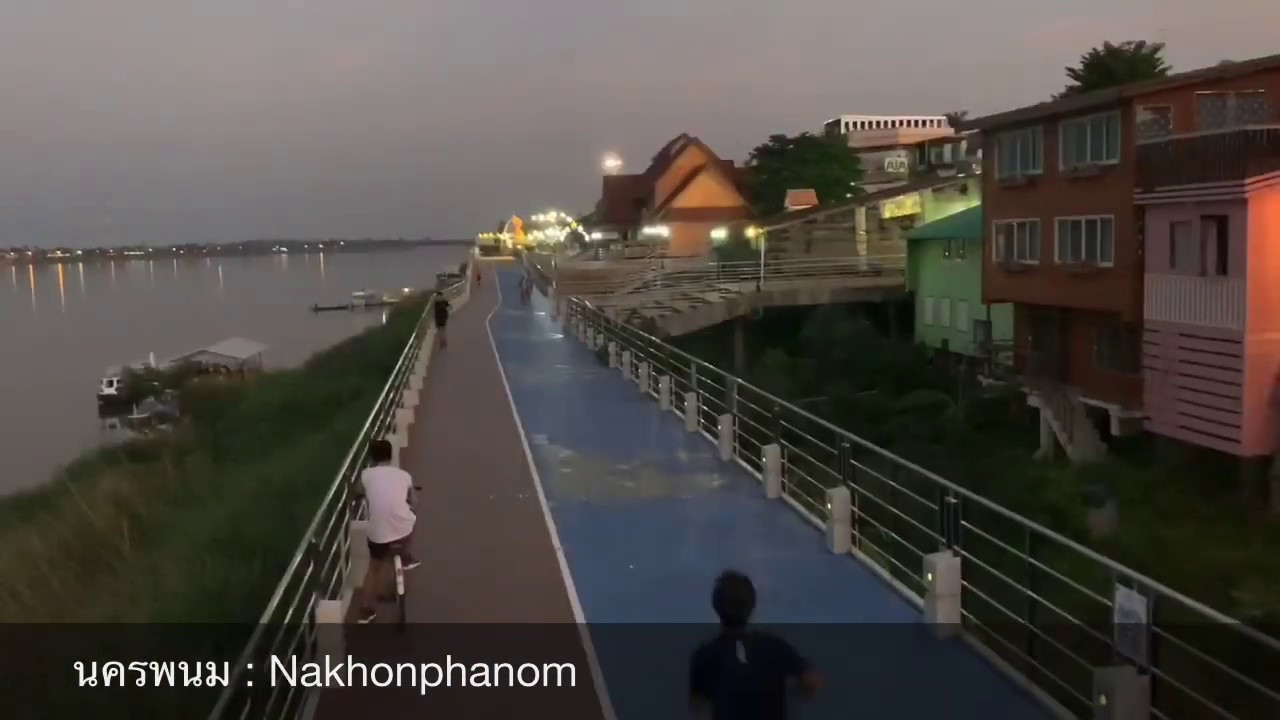
The riverside walking route is popular with people who exercise because the surface is relatively continuous, the scenery remains visible throughout the route, and the distance can be adjusted to suit individual ability. Beginners may walk around Phaya Si Sattanakharat Plaza and Indochina Market, while those seeking a longer workout can continue toward the clock tower, Saint Anna Church, or the southern part of the city. The promenade is busiest in the morning and evening. Visitors should keep to an appropriate side, avoid stopping suddenly in the middle of the path, and leave adequate space for older people and wheelchair users.
Cycling beside the Mekong is another popular activity because the route is flat and connects several important places in the city. A bicycle allows visitors to cover a greater distance than walking without using a car. Cyclists should reduce their speed in crowded pedestrian areas and remain alert for children, older people, and visitors stopping to take photographs. Racing or riding in wide groups that obstruct the route should be avoided. When crossing Sunthorn Wichit Road, cyclists should dismount and use a crossing point where approaching vehicles can be seen clearly.
Runners can use the embankment for both short- and long-distance training. The open river breeze makes the route feel less confined, but temperatures rise quickly after 08.00 during the hot season. Running is therefore more suitable early in the morning or after 17.00. Runners should carry water and rest if they experience dizziness, headaches, or an irregular heartbeat. At night, visible clothing should be worn, and headphones should not be played so loudly that vehicles or bicycles cannot be heard.
Phaya Si Sattanakharat Plaza is one of the most important landmarks along the riverfront. It is located near the junction of Sunthorn Wichit Road and Nittayo Road. The monument is a brass sculpture of a seven-headed Naga coiled upon an octagonal base, facing and releasing water toward the Mekong River. The monument and its base stand approximately 15 metres high and weigh around 9 tonnes. Its dignified form can be seen from a distance during both the day and night. When the decorative lighting is switched on, the Naga reflects a golden glow and becomes one of the city’s most prominent photography locations.
Belief in the Naga is deeply connected with the Mekong River and the ways of life found on both the Thai and Lao sides. Phaya Si Sattanakharat is respected as a symbol of abundance, protection, prosperity, and good fortune. Visitors commonly make offerings of flowers, incense, candles, or prepared worship sets sold nearby. Some pray for success in employment, finances, travel, or personal goals. Offerings should be placed only in designated areas, never on railings or walkways, and remaining materials should be disposed of properly.
From 7–13 July each year, Nakhon Phanom Province organises the Phaya Si Sattanakharat Worship Festival. Activities include religious ceremonies, ceremonial dances, cultural performances, community-product markets, and several forms of celebration. Large numbers of visitors gather along the riverfront, so traffic arrangements and parking conditions differ from ordinary days. Those wishing to attend the ceremony should arrive early, dress respectfully, and check the programme issued by provincial or municipal authorities because stage locations, processions, and ceremonial times can be adjusted each year.
Appropriate conduct when paying respect to Phaya Si Sattanakharat includes not climbing onto the base, touching the sculpture, leaving food or offerings where they obstruct the walkway, or posing for photographs that mock local beliefs. During ceremonies, space should be given to ritual participants and older visitors. Flowers, krathongs, or other materials should be released into the river only as part of authorised activities because even materials that appear natural can become waste and affect the Mekong ecosystem.
Indochina Market is situated along the riverfront a short distance from Phaya Si Sattanakharat Plaza. The market reflects Nakhon Phanom’s role as a border trading city. Products may include household goods, clothing, dried foods, souvenirs, local products, and goods associated with neighbouring countries. The number and arrangement of shops vary according to the day, time, and city events. Shoppers should check prices, product quality, and origin, particularly when purchasing food, medicine, herbal products, or goods subject to cross-border import restrictions.
The area around Indochina Market and the former pier was once an important centre for travel and trade across the Mekong before the Third Thai–Lao Friendship Bridge came into widespread use. Residents of Nakhon Phanom and Tha Khaek crossed the river by boat to trade, visit relatives, and conduct personal business. Memories of the former port city remain visible in buildings, shops, food, and local speech. Although modern border procedures have changed, the riverfront continues to communicate the long relationship between communities on the two sides.
Travellers wishing to visit Tha Khaek should not attempt to board a boat from an arbitrary point along the embankment. International crossings must use official border channels, together with a passport or an eligible border pass in accordance with current regulations. Boat services, piers, departure times, and immigration requirements can change. Travellers should confirm current information with immigration authorities or an authorised service provider before departure and should not rely solely on outdated travel reviews.
Nakhon Phanom Walking Street links the riverfront atmosphere with the Vietnamese Memorial Clock Tower district. It is generally held on Friday, Saturday, and Sunday evenings along Sunthorn Wichit Road. Vendors sell local food, Vietnamese dishes, desserts, souvenirs, clothing, handicrafts, and other products, and small performances may also be staged. Traffic arrangements change when the walking street is operating, and the area can become crowded. Visitors should walk carefully, protect their belongings, and carry a reasonable amount of cash. Although many vendors accept electronic payments, mobile signals or banking systems may become congested during busy periods.
The Vietnamese Memorial Clock Tower symbolises the relationship between Nakhon Phanom and its Vietnamese community. It stands within the historic district near the Mekong and serves as an important meeting point during the walking street. Many surrounding houses and commercial buildings feature masonry construction, windows, doors, and decorative details influenced by French and Vietnamese architecture. Walking from Phaya Si Sattanakharat Plaza to the clock tower therefore combines river views, food, and community history within a single route.
The Vietnamese community has played an important role in Nakhon Phanom’s economy and food culture. Common dishes such as khai kratha, Vietnamese rice-noodle soup, naem nueang, Vietnamese steamed rice dumplings, Vietnamese-style crispy pancakes, moo yor, and Vietnamese coffee have become part of the city’s culinary identity. Visitors can begin the day with a Vietnamese-style breakfast, walk beside the Mekong, and return in the evening to sample food at local markets or roadside restaurants. This experience demonstrates that border culture cannot be divided neatly into Thai and Lao components; it has developed through exchanges among several communities.
The historic district along Sunthorn Wichit Road contains buildings worth observing in detail. Old plaster walls, pastel colours, ventilation openings, wrought-iron details, and balconies reveal the design preferences of different periods. Some buildings have been converted into hotels, cafés, restaurants, or souvenir shops, while others remain private homes. Photographers should remain in public areas and request permission before photographing inside a residence. They should not lean against doors, climb stairs, or move private objects to create a staged composition.
The Former Nakhon Phanom Governor’s Residence is a local history attraction located near the embankment. Its architecture combines Western and local influences, and the building stands in a shaded compound connected with stories of city administration, important historical figures, and relations between Thailand and neighbouring countries. Its internal opening days and hours may differ from those of the public riverfront. Visitors wishing to enter the museum should check its latest schedule and should not assume that the interior is open 24 hours like the riverside promenade.
Saint Anna Nong Saeng Church stands toward the northern end of the Mekong riverfront route. It is a significant Catholic religious site for Nakhon Phanom’s Christian community. The church is recognised by its twin towers and its location near the river, making it suitable for inclusion in a walking or cycling tour of the city. Visitors should dress respectfully, speak quietly, and avoid interrupting Mass. Access to the interior depends on religious activities and permission from the church’s caretakers.
Wat Mahathat is another religious site that can be combined with a riverfront itinerary. The temple contains the birthday relic associated with people born on Saturday and remains an important centre of local faith. Visitors commonly worship at the stupa, make merit, and view the temple’s religious art. Combining the riverside route with a temple visit reveals the relationship between the city and religion, as many important temples were established near the river when it served as the community’s main transportation route.
The city riverfront is a principal viewing area for the Nakhon Phanom Illuminated Boat Procession, held around the end of Buddhist Lent. Large illuminated boats are decorated with lamps or lighting systems forming designs associated with Buddhism, national institutions, provincial identity, and community beliefs before moving along the Mekong River. Large crowds gather throughout the riverfront area. Visitors should plan in advance, reserve accommodation before the festival, use public transport or walk from their hotel, and avoid standing in emergency access routes designated by officials.
The illuminated boat tradition is connected with beliefs involving worship of the Buddha’s footprint, veneration of the Buddha, asking forgiveness from the river, and releasing misfortune. The sight of illuminated boats moving through the darkness with Tha Khaek in the background is one of Nakhon Phanom’s most famous images. Spectators must prioritise safety by not climbing railings, entering closed riverside steps, or operating drones without permission. The area is densely crowded and lies close to an international border.
Loy Krathong and other cultural activities are also held along the city embankment because the area contains spacious plazas directly connected to the river. Krathongs should be made from natural materials without needles, wire, foam, or plastic and should be released only at points organised by officials. Visitors should not attempt to reach steep banks or areas with strong currents. After the event, organisers and participants should help reduce waste so that large quantities of material do not enter the Mekong ecosystem.
During Songkran, Nakhon Phanom organises Khao Pun Road activities and cultural events connected with the Mekong riverfront district. The atmosphere includes local food, music, traditional clothing, and water activities in designated areas. Participants should use water guns with moderate pressure and should not splash drivers, older people, monks, or anyone who indicates that they do not wish to participate. Wet and slippery surfaces require additional care. Locations and times may change each year, so the latest event announcement should be checked.
On ordinary days, the riverfront naturally reflects everyday life in Nakhon Phanom. In the morning, older residents exercise, vendors prepare their shops, and workers stop to buy food. The area becomes quieter during the heat of the day. In the evening, families, children, students, tourists, and cyclists return. Sitting beside the river to observe small boats, the current, and the lights from Tha Khaek allows visitors to experience the city without rushing from one attraction to another.
Popular photography locations include Phaya Si Sattanakharat Plaza, the riverside railing with Tha Khaek in the background, the Vietnamese Memorial Clock Tower, historic buildings, the cycling path, and Saint Anna Church. Morning is suitable for photographing the sunrise and reflections on the river, while evening is ideal for city lights, decorative lighting, and the sky after sunset. Tripods should not obstruct walking or running routes, and photographers should avoid stepping backwards toward the edge of the embankment without checking the ground.
A telephoto lens can capture architectural details and mountains around Tha Khaek, but photographers should avoid recording controlled zones, checkpoints, or official operations in a misleading manner. Because the Mekong riverfront is an international border area, drone use must comply with aviation laws, registration requirements, and security restrictions. Registering a drone does not automatically permit it to be flown at every location or at any time.
Families can bring children to walk along the riverfront, but close supervision is required because some sections are beside stairs, railings, roads, and cycling paths. Children should not climb railings, run across the path in front of bicycles, or approach the water without an adult. Parents should bring drinking water, hats, and comfortable footwear. During festivals, the child’s name and a parent’s telephone number should be placed in a pocket or written on a wristband.
Older visitors and wheelchair users can access many flat sections of the riverfront, although ramps, toilets, and surface conditions may not be equally continuous along the entire route. Phaya Si Sattanakharat Plaza or another spacious area with nearby parking is a suitable starting point. Visitors should check for events or road closures before travelling. Companions should watch for changes in pavement height, wet surfaces, and bicycles approaching from behind.
From approximately November to February, the weather beside the Mekong can be cool, particularly in the early morning and at night. River winds may make the temperature feel lower than in inland parts of the city. Visitors should carry a light jacket or windbreaker. This season is suitable for walking, cycling, and sitting beside the river for longer periods, but it is also a popular travel season. Accommodation near the riverfront should be booked in advance for holidays and festival periods.
March to May is the hot season. Sunlight reflected from the pavement and the water can make conditions feel hotter than the recorded temperature. Midday is not suitable for long walks. Visitors should come before 08.00 or after 17.00, apply sunscreen, wear a hat, and drink water regularly. Nearby cafés and shops provide air-conditioned places to rest before returning to the promenade after temperatures begin to fall.
The rainy season, approximately from May to October, often creates colourful cloud formations above the Mekong, but heavy rain and strong winds can develop quickly. Some parts of the promenade become slippery, and river levels may rise. Authorities may close stairs or areas close to the water for safety. Visitors should carry a compact umbrella or raincoat, avoid sheltering under large trees during thunderstorms, and stay away from metal railings during repeated lightning.
When the Mekong River is high, provincial and municipal authorities closely monitor conditions. Visitors must not move barriers or enter closed areas to take photographs. Although the surface may appear calm from above, the current below can be powerful and may carry branches or other debris. Falling into the Mekong is a serious emergency in which rescue can be difficult. Visitors should never sit on the railings, lean too far over the edge, or attempt to touch the water at locations without a safe pier.
Food is an important part of a visit to the riverfront because the surrounding area offers Isan food, Thai food, Vietnamese cuisine, Mekong fish, cafés, and breakfast restaurants. Recommended dishes include khai kratha, Vietnamese rice-noodle soup, naem nueang, moo yor, Vietnamese steamed rice dumplings, khao pun, Mekong fish, som tam, and seasonal local dishes. Visitors with food allergies should ask about sauces, peanuts, seafood, and fermented ingredients before ordering because many dishes contain several mixed seasonings.
Mekong fish appears on the menus of many local restaurants, but available species, prices, and supply change according to the season, fishing regulations, and purchasing sources. Diners should select restaurants that identify fish species clearly and avoid supporting the sale of protected aquatic animals or undersized fish. Responsible dining beside the Mekong reduces pressure on natural resources and supports businesses using legally and sustainably sourced ingredients.
A morning itinerary can begin at approximately 05.30 at Phaya Si Sattanakharat Plaza. Visitors can watch the sky before sunrise, exercise along the embankment, and observe Tha Khaek as the morning light begins to appear. They can then stop for khai kratha, Vietnamese rice-noodle soup, or coffee before exploring Indochina Market and the historic district. This itinerary takes approximately 3–4 hours and avoids the intense midday heat.
An evening itinerary can begin at approximately 16.30 with a walk from Phaya Si Sattanakharat Plaza along the Mekong. Visitors can enjoy the changing sky, stop at a café or restaurant, and continue toward the Vietnamese Memorial Clock Tower. On Friday, Saturday, or Sunday, they can buy food and souvenirs at the walking street. After dark, visitors can return to see the illuminated Naga monument and the city lights of Tha Khaek before travelling back to their accommodation.
Visitors with a full day can begin beside the Mekong in the morning, continue to Wat Mahathat, visit the Former Nakhon Phanom Governor’s Residence, and stop for lunch. The afternoon can be spent at Saint Anna Church and the historic community district before returning to the embankment in the evening. This route presents Buddhism, Christianity, government history, the Vietnamese community, and Nakhon Phanom’s relationship with the Mekong within a single day.
Nakhon Phanom Airport is approximately 17 kilometres from the city riverfront. Travellers can use a taxi, rental car, or hotel transfer, and the journey usually takes approximately 20–30 minutes depending on traffic. Guests staying at hotels along Sunthorn Wichit Road can generally walk to the embankment without using another vehicle. Before leaving the airport, travellers should confirm the exact hotel name and destination because the term “Mekong riverfront” is used by many accommodations located along different parts of the city.
Travel Information for private vehicles is straightforward. Navigation systems can be set for Phaya Si Sattanakharat Plaza, Indochina Market, or the Vietnamese Memorial Clock Tower, all of which lie along Sunthorn Wichit Road in central Nakhon Phanom. Cars may be parked in permitted roadside spaces, hotel parking areas, or municipal parking zones. Drivers must observe no-parking signs, road-cleaning schedules, and festival road closures. Vehicles should not block entrances, wheelchair ramps, or emergency access routes.
Travellers arriving by intercity bus can get off at Nakhon Phanom Bus Terminal and continue to the Mekong riverfront by hired vehicle, motorised tricycle, or ride-hailing service. The distance from the terminal is approximately 3–5 kilometres, depending on the destination. The fare should be agreed upon in advance or checked through an application. Visitors staying near the clock tower or Naga plaza can reach most central attractions on foot or by bicycle.
Facilities along the embankment include lighting, benches, activity plazas, walking paths, cycling paths, restaurants, cafés, hotels, parking areas, and toilets available in certain shops, hotels, and event zones. Public toilets are not distributed continuously along the entire route. Older people, families, and visitors with medical conditions should therefore plan their rest stops in advance. Temporary toilets and additional service points may be installed during festivals.
Pets should remain on a lead and under control at all times. Owners must collect waste and prevent pets from running across cycling paths or approaching people who do not wish to interact with animals. Some restaurants and worship areas do not allow pets, so individual rules should be checked. Animals should not be allowed to enter the river or drink directly from the Mekong because currents, contamination, and unstable riverbank surfaces may be dangerous.
Keeping the area clean is the responsibility of every visitor. Food packaging, plastic cups, straws, bags, worship materials, and cigarette ends can easily be blown into the river. Waste should be placed in bins with lids or carried away when bins are full. Large quantities of food should not be given to fish, birds, or stray animals because leftovers pollute the water and change animal behaviour. Smoking should be limited to permitted areas, and cigarette ends must be completely extinguished.
During concerts, markets, worship ceremonies, illuminated boat events, Songkran, or Loy Krathong, sections of the riverfront may be closed for stages, lighting systems, market stalls, or safety barriers. Access times, parking, and walking routes can differ from ordinary days. Visitors should follow instructions from officials, never move barriers, and avoid bringing large bags into crowded areas.
In an emergency, visitors should identify their location using a nearby landmark, such as Phaya Si Sattanakharat Plaza, Indochina Market, the clock tower, or Saint Anna Church, rather than saying only that they are beside the Mekong. The embankment extends over a considerable distance. If someone falls into the water, untrained bystanders should not jump in without rescue equipment. They should call for help, contact emergency officials, and use a lifebuoy or other nearby safety equipment when possible.
Nakhon Phanom Municipality is the principal authority coordinating public areas within the city. It maintains public order, activities, and municipal services in cooperation with Nakhon Phanom Province, engineering authorities, marine officials, police, security agencies, and individual event organisers. Damaged paving, failed lighting, open drain covers, accumulated waste, or damaged public equipment can be reported to Nakhon Phanom Municipality at 042-512005. A clear landmark and photograph should be provided to help officials inspect the problem quickly.
Staying near the city embankment allows visitors to watch the sunrise without travelling a long distance early in the morning. Several hotels stand opposite Phaya Si Sattanakharat Plaza or along Sunthorn Wichit Road. Guests should confirm whether the room they are booking genuinely has a river view because a hotel described as being beside the Mekong does not necessarily provide river-facing views from every room. Accommodation may become fully booked well in advance during the Illuminated Boat Procession, the Phaya Si Sattanakharat festival, and winter holidays.
Visitors seeking a lively atmosphere can stay near Phaya Si Sattanakharat Plaza or the clock tower, where restaurants, markets, and the walking street are within easy walking distance. However, events and weekend nights may bring additional noise and traffic. Travellers preferring quieter surroundings can select hotels north or south of the central embankment and use a bicycle or hired vehicle to reach the main area. Accommodation should be selected according to the river view, noise level, parking, lift access, and required walking distance.
International travellers can use the riverfront as a starting point for understanding Nakhon Phanom because the area brings together border geography, Naga beliefs, the Vietnamese community, local cuisine, historic architecture, and riverside life within walking distance. English signs may not be available at every point. Digital maps and saved Thai-language place names make it easier to ask local residents for directions. Travelling to Laos requires separate checks of passport, visa, border-crossing, and immigration requirements.
The value of the Nakhon Phanom City Riverfront Embankment does not come from a single structure or landmark. It comes from the way the area connects local everyday life with tourism. Residents use the promenade to run, walk, meet others, and organise events, while visitors watch the sunrise, worship Phaya Si Sattanakharat, taste Vietnamese food, explore markets, and learn about the historic city. Sharing the area respectfully is therefore central to the riverfront experience.
Visitors who spend more than a few minutes taking photographs will see Nakhon Phanom in several moods: the calm before sunrise, the lively breakfast period, the quiet heat of midday, the activity of evening walkers, and lights reflected on the river at night. Looking across the water toward Tha Khaek reveals how a political border does not completely separate the geography, culture, and collective memories of communities living along the Mekong.
Nakhon Phanom City Riverfront Embankment is therefore more than a recreational location. It is a protective urban structure, a riverside reception space, a health route, a place of faith, a stage for traditional festivals, and an entry point into the history of Nakhon Phanom. Travellers can visit throughout the year by selecting an appropriate time and activity. Morning is suitable for sunrise views and exercise, evening is ideal for food, the walking street, and city lights, while festival periods offer large-scale cultural experiences. By following local rules, keeping the area clean, and respecting both the river and the community, visitors help preserve one of Thailand’s most enjoyable Mekong promenades.
| Name | Nakhon Phanom City Riverfront Embankment |
| English Name | Nakhon Phanom City Riverfront Embankment |
| Place Type | Riverbank protection embankment, riverside promenade, public park, event plaza, and urban sightseeing route |
| Location | Sunthorn Wichit Road, Nai Mueang Subdistrict, Mueang Nakhon Phanom District, Nakhon Phanom Province 48000 |
| Distinctive Features | A riverside embankment and promenade running parallel to the Mekong River, with views of Tha Khaek in Khammouane Province, Lao PDR. Suitable for sunrise viewing, walking, running, cycling, and exploring the historic city. |
| Highlights | Phaya Si Sattanakharat Plaza, Mekong River views, Indochina Market, Nakhon Phanom Walking Street, the Vietnamese Memorial Clock Tower, historic buildings, and the Illuminated Boat Procession venue |
| Main Areas / Zones | 1. Phaya Si Sattanakharat Plaza 2. Mekong riverside walking and cycling paths 3. Indochina Market and the former pier area 4. Nakhon Phanom Walking Street 5. Vietnamese Memorial Clock Tower and the historic district 6. Festival plazas used for the Illuminated Boat Procession, Loy Krathong, and provincial events 7. The continuous riverfront route toward Saint Anna Nong Saeng Church |
| Recommended Activities | Watch the sunrise, walk, run, cycle, worship Phaya Si Sattanakharat, take photographs, try Vietnamese food, visit the market, and attend traditional festivals |
| Important Traditions And Events | The Phaya Si Sattanakharat Worship Festival from 7–13 July, the Illuminated Boat Procession around the end of Buddhist Lent, Loy Krathong, Songkran, and provincial events scheduled each year |
| Management And Coordination | Nakhon Phanom Municipality, working with Nakhon Phanom Province and relevant authorities according to the type of activity |
| Current Status | Open normally as a public area and tourist attraction. Certain sections may close temporarily during events, maintenance work, or periods of high Mekong River levels. |
| Open Days | Daily |
| Opening Hours | Open 24 hours; recommended visiting time 05.30–21.00 |
| Admission Fee | Free admission |
| Facilities | Walking paths, cycling paths, lighting, benches, activity plazas, restaurants, cafés, hotels, parking areas, and toilets available at certain shops, hotels, and event areas |
| Best Visiting Times | 05.30–08.00 for sunrise and exercise, or 16.30–20.30 for walking, dining, and viewing the illuminated city |
| Travel Information | Set a navigation system for Phaya Si Sattanakharat Plaza on Sunthorn Wichit Road. The riverfront is approximately 17 km from Nakhon Phanom Airport and approximately 3–5 km from Nakhon Phanom Bus Terminal. |
| Main Contact Number | Nakhon Phanom Municipality, Tel. 042-512005 |
| Nearby Tourist Attractions | 1. Phaya Si Sattanakharat Plaza — within the riverfront area 2. Indochina Market — approximately 0.4 km 3. Nakhon Phanom Walking Street and Vietnamese Memorial Clock Tower — approximately 1 km 4. Former Nakhon Phanom Governor’s Residence — approximately 1.5 km 5. Wat Mahathat — approximately 1.8 km 6. Saint Anna Nong Saeng Church — approximately 2.4 km |
| Nearby Restaurants | 1. Cafe' Le Landmark — approximately 0.1 km, Tel. 091-006-8246 2. Mongni Cafe Chic-Chid Khong — approximately 0.2 km, Tel. 083-268-6245 3. Nihon Café Nakhon Phanom — approximately 0.7 km, Tel. 065-423-2236 4. Sabaidee@Nakhon Phanom — approximately 1 km, Tel. 042-064-200, 091-569-9662 5. Pornthep Breakfast Restaurant, Branch 1 — approximately 1.3 km, Tel. 088-340-4562 6. Kitchen Khong The River Front — approximately 3 km, Tel. 085-924-7898 |
| Nearby Accommodations | 1. Landmark Nakhon Phanom Hotel — approximately 0.1 km, Tel. 091-740-3001 2. Chic-Chidkong Boutique Hotel — approximately 0.2 km, Tel. 088-969-4265 3. Baan Rim Khong Hotel — approximately 0.7 km, Tel. 098-775-8225, 042-514-400 4. KPM Hometel — approximately 1 km, Tel. 042-513-323, 062-195-1828 5. Chewa Khong Hotel Nakhon Phanom — approximately 1.8 km, Tel. 098-935-1442, 042-514-242 6. Mekong Heritage Hotel — approximately 3.3 km, Tel. 042-511-189, 088-755-0215 |
Frequently Asked Questions (FAQ)
Q: Where is Nakhon Phanom City Riverfront Embankment?
A: The embankment is located beside the Mekong River along Sunthorn Wichit Road, Nai Mueang Subdistrict, Mueang Nakhon Phanom District. Phaya Si Sattanakharat Plaza is a convenient landmark to use as a navigation point.
Q: What time is the riverfront open, and is there an admission fee?
A: The public area is open daily, 24 hours a day, and admission is free. Recommended visiting periods are 05.30–08.00 and 16.30–20.30, when temperatures are more comfortable and the area is active.
Q: Is the riverfront better for watching the sunrise or sunset?
A: Because the Mekong riverfront faces the Lao side, it is best known for sunrise views. The evening is suitable for seeing golden light on the river, the sky after sunset, city lights, and the walking-street atmosphere.
Q: Can visitors see Laos from Nakhon Phanom City Riverfront Embankment?
A: Yes. Tha Khaek in Khammouane Province, Lao PDR, is visible directly across the Mekong. On clear days, visitors can also see buildings and the mountain range behind the town.
Q: Can visitors cycle along the riverfront?
A: Cycling is permitted on designated paths and areas. Cyclists should reduce their speed in crowded sections, give way to children and older people, and dismount when crossing the road.
Q: On which days is Nakhon Phanom Walking Street held?
A: The walking street is generally held on Friday, Saturday, and Sunday evenings along Sunthorn Wichit Road, between the Phaya Si Sattanakharat area and the clock tower district. Visitors should check the latest announcement during major events or unusual weather.
Q: Can travellers cross directly to Tha Khaek from any point along the riverfront?
A: No. International crossings must use an officially designated checkpoint and pier. Travellers need a passport or eligible border document and should check current boat schedules and immigration requirements before travelling.
Q: Which major events are held at Nakhon Phanom City Riverfront Embankment?
A: Major events include the Phaya Si Sattanakharat Worship Festival, the Illuminated Boat Procession around the end of Buddhist Lent, Loy Krathong, Songkran, Khao Pun Road activities, and other provincial events scheduled each year.
 Category: ●Nature and Wildlife
 Group: ●Dam, Reservoir, Lake
Last Update : 3 MonthAgo
 Last Update : 3 MonthAgo
 Click to Access the Navigation Map GPS
Na Muang Nakhon Phanom Dam Map
Recommend

 Art, Culture and Heritage
 Historical Sites and Monuments(3)
 Landmarks and Memorials(2)
 Art, Craft Centres, Tradition(3)
 Museums(3)
 Educational Places
 Library(1)
 Places of Worship
 Temple(23)
 Church(1)
 Other Sacred Sites(11)
 Suburban Living
 Village, Community(5)
 National Parks and Marine Reserves(1)
Dam, Reservoir, Lake(5)
 Waterfalls(2)
 River, Canal(3)
 Bays and Beaches(3)
 Other natural attractions(2)
 Entertainment and Agricultural
 Zoos and Aquariums(1)
 Farms, Parks and Ecotourism(2)
 Shopping
 Shopping and Night Market(1)
 Travel Articles, Recipes
 Travel Review, Food Review(1)


