
lovethailand home >Northeastern Travel Attractions >Nakhon Phanom Travel Attractions >Na Wa >Na Wa > Phra That Prasit
TL;DR: Phra That Prasit is located at 187 Moo 2, Rom Pho Road, Na Wa Subdistrict, Na Wa District, Nakhon Phanom Province 48180, Thailand, open Daily, hours 08:00–18:00.
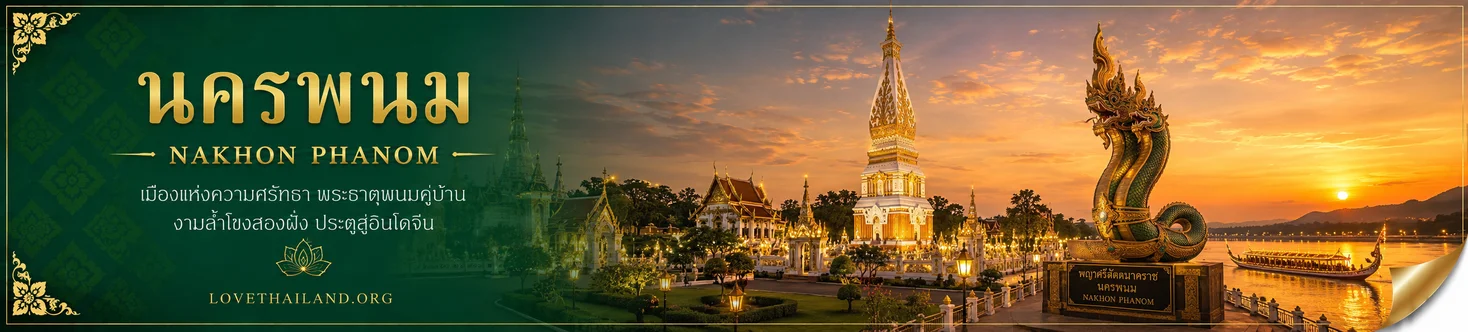
Phra That Prasit
Open Days: Daily
Opening Hours: 08:00–18:00
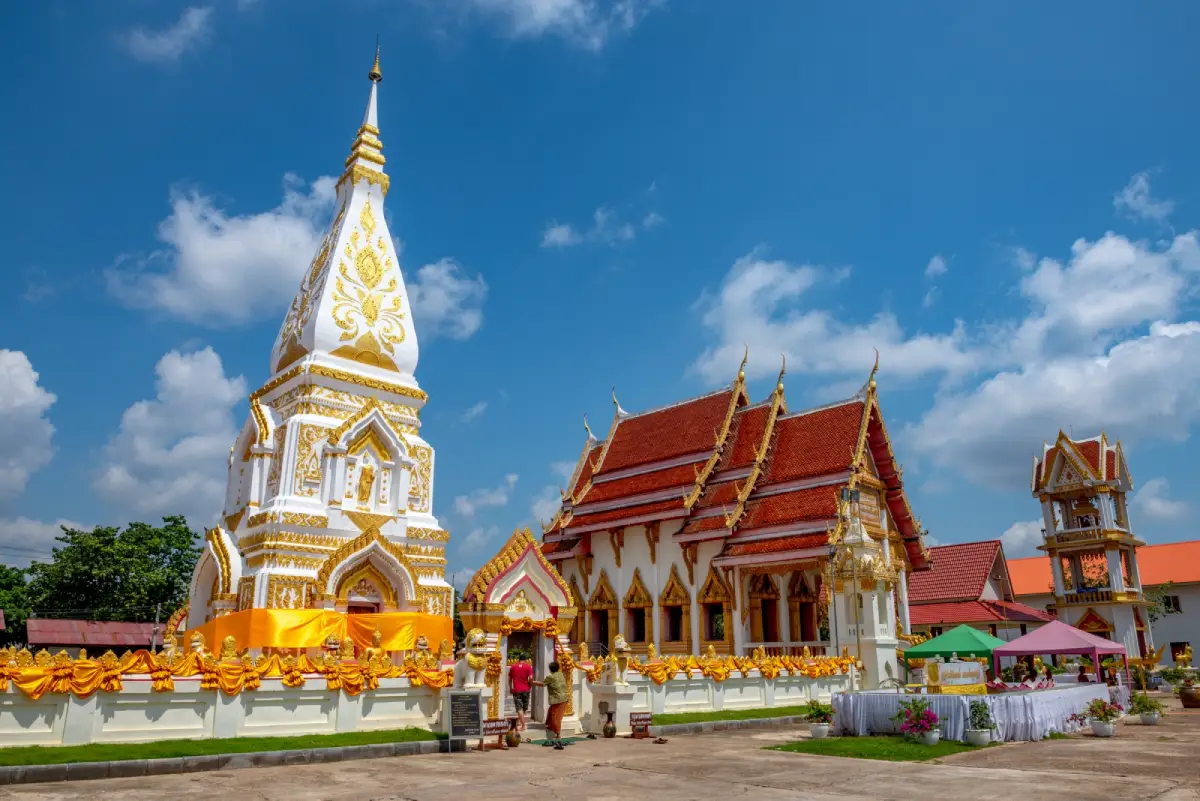
Phra That Prasit in Nakhon Phanom Province is enshrined within Wat That Prasit, a royal monastery located at 187 Moo 2, Rom Pho Road, Na Wa Subdistrict, Na Wa District. It is the principal sacred monument of the Na Wa community and the birthday stupa associated with people born on Thursday. The white square stupa is decorated with gold ornamentation and displays a strong architectural relationship with Phra That Phanom. It enshrines Buddha relics locally revered within the tradition of the Urangadhatu, relics of arahants, and sacred soil from the Four Great Buddhist Pilgrimage Sites. The temple is consequently a major place of worship, a centre for studying Tai Yo history, a community handicraft centre, and an essential destination on the Birthday Stupas of Nakhon Phanom route.
Wat That Prasit stands within Na Wa Municipality, approximately 98 kilometres from Nakhon Phanom city. The temple is close to the district’s commercial centre, market, restaurants, and small accommodation properties, making it convenient for visitors travelling by private vehicle. Despite its distance from the provincial capital, the stupa attracts a steady flow of devotees, particularly Thursday-born visitors, teachers, students, civil servants, and people seeking moral encouragement in education, examinations, professional advancement, leadership, and the responsible performance of their duties.
The official name is Wat That Prasit, while Wat Phra That Prasit is also widely used by the public because of the importance of the central stupa. The temple was originally called Wat That, meaning the temple of the stupa, because an old religious monument already occupied the site. After Phra Khru Prasit Suksakon led a major reconstruction, the restored monument was named Phra That Prasit in recognition of the senior monk who devoted his energy, leadership, and community support to preserving the sacred structure.
Wat That Prasit has been elevated to the status of a third-class royal monastery of the ordinary category. This status reflects its importance to Buddhist history, art, local culture, and community life. Royal-monastery recognition has strengthened its role as a centre for monastic activities and public ceremonies while also increasing the responsibility to preserve the stupa, the old preaching hall, mural paintings, Buddha images, and the temple landscape according to appropriate heritage standards.
The history of Phra That Prasit is closely associated with the settlement of the Tai Yo, also known locally as the Yo people, in Na Wa District. Their ancestors migrated through the Mekong cultural region during periods of conflict involving Lan Xang Vientiane, Burma, and Chiang Mai. While exploring the area for a permanent settlement, they discovered an ancient stupa in a ruined condition, heavily covered with vines and vegetation. The monument resembled old Lan Xang stupas, and a chamber or tunnel reportedly contained old Buddha images.
The discovery of a ruined stupa in an undeveloped landscape convinced the early settlers that the area possessed sacred importance and was suitable for establishing a community. The monument became a spiritual anchor and helped define the centre of the settlement. Residents cleared vegetation, constructed homes, cultivated fields, and protected the stupa as their community temple. The relationship between settlement and sacred monument remains one of the principal reasons why Na Wa residents regard Phra That Prasit as a guardian landmark rather than merely a tourist attraction.
A restoration took place around 1569, corresponding to Buddhist Era 2112, during the reign of King Setthathirath of Lan Xang. This event demonstrates the long historical connection between Na Wa and the wider Lan Xang cultural world extending across both sides of the Mekong River. Religious practice, language, architecture, kinship, and political organisation in the Nakhon Phanom region were all influenced by this cultural network. Phra That Prasit therefore preserves memories of relationships that existed long before modern national boundaries divided Mekong communities.
In 1740, corresponding to Buddhist Era 2283, the ruler of Si Khotrabun undertook another restoration and raised the upper structure of the stupa. This reconstruction made the monument more prominent within the Na Wa landscape. Weather, moisture, ageing materials, and the absence of modern conservation methods nevertheless continued to affect the building. In 1893, the upper section collapsed, causing deep concern among residents but also motivating the community to organise another major restoration.
The most important modern reconstruction began in 1911 under Phra Khru Prasit Suksakon, then abbot of the temple. Monks, local leaders, and residents cooperated in constructing a new stupa while preserving the sacred core and location of the earlier monument. Architectural features of Phra That Phanom were adapted to local dimensions, materials, and resources. The resulting structure has a tall square form, arched niches, layered sections, and decorative elements representing the shared artistic traditions of northeastern Thailand and the Lan Xang world.
Construction and decoration continued through the contribution of several generations and was completed in 1963. The long process demonstrates that restoring the stupa was a collective mission. Residents donated funds, materials, labour, and food for workers. Upon completion, the monument was named Phra That Prasit after the ecclesiastical title of Phra Khru Prasit Suksakon. The word prasit also conveys the meaning of achievement or successful accomplishment, corresponding with the popular belief that worship at the stupa supports success in work and public responsibility.
The current stupa has a square base measuring approximately 7.20 metres on each side and about 28.80 metres around its perimeter. The body from the base to the supporting section beneath the finial is approximately 24.52 metres high, while the complete height to the top of the umbrella finial is approximately 28.52 metres. The structure rises in clearly defined stages from a stable square base to a slender upper spire. Gold ornamentation on a white surface changes in appearance under morning, midday, and late-afternoon light.
The stupa contains doors associated with its internal structure, but access to the interior is reserved for the monastic community and authorised caretakers. Visitors should worship from the courtyard and designated devotional areas. They must not climb the base, attempt to open doors, or insert offerings into architectural openings. Maintaining an appropriate distance helps reduce impact, direct contact, surface oil, and damage to decorations already exposed to sun, rain, dust, and humidity.
The summit is crowned by a gold umbrella weighing approximately 89 baht-weight of gold. It was ceremonially installed in 2001. The umbrella represents honour, protection, and spiritual distinction. Seen from a distance, the finial catches the light and emphasises the strong vertical line of the monument. Its installation also reflects the continuing faith of monks and residents who completed a major modern contribution while respecting architectural forms inherited from Phra That Phanom and the wider Mekong region.
Phra That Prasit is honoured as a royal child stupa of Phra That Phanom because its reconstruction adopted important elements from the famous provincial monument and because local devotion has long been connected with Phra That Phanom. The expression does not indicate an exact copy. Phra That Prasit has its own proportions, decorative programme, niches, historical development, and Tai Yo community context. It should be understood as an independent sacred monument inspired by a respected prototype while retaining a distinct local identity.
The interior enshrines Buddha relics locally honoured within the Urangadhatu tradition, referring to relics associated with the Buddha’s chest, together with relics of arahants. Current official descriptions record a total of 14 sacred relic pieces. The stupa also contains soil from the Four Great Buddhist Pilgrimage Sites: Lumbini, where the Buddha was born; Bodh Gaya, where he attained enlightenment; Sarnath, where he delivered the first sermon; and Kushinagar, where he entered final nirvana. These sacred deposits connect the local temple symbolically with the principal events of the Buddha’s life.
Buddha relics are physical remains associated with the historical Buddha, while arahant relics are linked with enlightened disciples. Enshrining relics in a stupa is an ancient Buddhist practice because the monument represents the continuing presence of the Buddha and provides a focus for recollecting the Dhamma. Worship need not be limited to requests for supernatural assistance. Visitors may use the occasion to examine their conduct, cultivate mindfulness, and renew their commitment to carrying out responsibilities with honesty and discipline.
The soil from the Four Great Pilgrimage Sites represents the full sequence of the Buddha’s earthly life: birth, enlightenment, the beginning of teaching, and final nirvana. People unable to travel to India or Nepal may worship at Phra That Prasit while contemplating these events. The sacred soil does not make the temple a complete substitute for the original pilgrimage sites, but it creates a meaningful connection between the local community and the international history of Buddhism.
Phra That Prasit is the Thursday birthday stupa within Nakhon Phanom’s system of sacred monuments associated with the days of the week. Thursday in Thai culture is connected with teachers, education, wisdom, ethics, and the transmission of knowledge. Thursday-born devotees often pray for academic progress, success in examinations, professional recognition, support from senior figures, and the wisdom to resolve difficult situations. People born on other days are equally welcome because the Buddha relics are objects of devotion for all Buddhists.
The birthday-stupa tradition helps residents and travellers remember important religious sites throughout Nakhon Phanom. The eight monuments are distributed across several districts, each with a different history, artistic identity, and annual tradition. Phra That Prasit is distinguished by its Tai Yo heritage, handicraft centre, sacred soil from the Four Pilgrimage Sites, and the belief in successful accomplishment. Visitors should therefore explore these layers rather than treating the stupa only as a place for birthday-related prayer.
Traditional offerings may include 19 incense sticks, two candles, red or orange flowers, puffed rice, scented water, a devotional cloth, and grilled sticky rice. These items belong to customs transmitted within the community. Visitors do not need to prepare every item. When incense is restricted to reduce smoke, worshippers may make a wai and offer flowers instead. Respectful concentration and an intention to act ethically are more important than the quantity or price of an offering.
The chant associated with the Thursday stupa is “Bha Sam Sam Wi Sa The Bha.” Worshippers may recite Namo three times before saying the chant calmly. Recitation should be combined with recollection of the Buddha, Dhamma, and Sangha. After prayer, devotees are encouraged to turn aspiration into action through diligent study, honest work, reliability, and non-harm. Achievement then develops from both spiritual encouragement and the practical causes created through personal conduct.
A suitable worship sequence begins at the designated devotional point. Visitors may offer flowers, light incense and candles where permitted, and reflect on the sacred relics. Those wishing to circumambulate may walk clockwise around the stupa three times, remaining quiet and avoiding interference with other worshippers. Each circuit may be dedicated to recollection of the Buddha, the Dhamma, and the Sangha.
The stupa courtyard is open and receives strong sunlight. Morning light brings out the gold patterns against the white surface while temperatures remain relatively comfortable. Late-afternoon light is warm and suitable for walking and photography. Tripods must not obstruct paths, and visitors must remain outside restricted areas. During the hot season, a hat, umbrella, and drinking water are recommended, particularly for children, elderly travellers, and people sensitive to heat.
The old preaching hall, constructed in 1950, is another important religious and artistic feature. It contains 12 mural scenes illustrating the life of the Buddha. Yellow, brown, and black dominate the colour palette, giving the paintings a distinctive appearance compared with more brightly coloured temple murals. The images were created as a visual form of Buddhist education at a time when books and other learning materials were not widely available in rural communities.
The first mural is attributed in Fine Arts records to M.L. Morakot Banchongrat, assisted by Nai Sing Wa Chum. The paintings combine established Buddhist narrative conventions with the work of regional artists during the mid-twentieth century. Images of disciples are also painted on the columns, creating a coherent interior programme for teaching and listening to sermons. Visitors must avoid flash photography, leaning against walls, or touching painted surfaces because light, moisture, dust, and skin oils accelerate deterioration.
The preaching hall is also associated with an important royal visit. On 13 November 1972, King Bhumibol Adulyadej and Queen Sirikit visited the temple in connection with a royal Kathin ceremony and rested in the hall. The event remains a significant part of Na Wa’s collective memory and adds modern historical value to the building. The hall should therefore be appreciated as a place uniting Buddhist practice, mural art, royal history, and community identity.
The ordination hall and monastic ceremony areas remain in active religious use. Visitors should remove shoes, dress modestly, and avoid entering during ordination, recitation of the monastic code, or other restricted ceremonies without permission. Although the architecture is visually attractive, its religious function takes priority over tourism and photography.
Wat That Prasit has played a major role in preserving local handicrafts, particularly silk and traditional textile production. The temple became associated with an early weaving group supported through royal handicraft-development initiatives. Residents developed their knowledge of mulberry cultivation, silkworm raising, silk reeling, dyeing, pattern preparation, and loom weaving into a source of sustainable income. The temple’s role illustrates how a rural monastery can support religion, education, livelihoods, and community organisation simultaneously.
Na Wa textiles are distinguished by detailed production methods and patterns inspired by nature, belief, and Tai Yo life. Visiting a weaving group allows travellers to understand the numerous stages required to create a single cloth. Responsible buyers should choose products with clear information about the maker and place of production, avoid excessive bargaining, and never photograph distinctive patterns for unauthorised commercial copying.
Na Wa handicrafts are recognised as an important element of provincial cultural heritage. The temple provides space for display, transmission, and connection with customers. During the annual festival, silk, cotton cloth, basketry, local food, and One Tambon One Product goods are sold around the temple. Purchasing directly from producers supports household income and encourages younger generations to continue traditional skills.
The annual Phra That Prasit Worship Festival is the most important public tradition in Na Wa District. It is held during the fourth lunar month and is traditionally connected with the waxing moon period leading to the full moon. Gregorian dates therefore change each year. In 2026, the festival took place from 28 February to 3 March and marked the 64th year of the organised event.
Festival activities include worship of the stupa, merit-making, chanting, candlelit circumambulation, Buddhist holy-day ceremonies, displays of ethnic-community life, folk music, cultural dance, government exhibitions, and community markets. Many stalls are constructed in the form of traditional temporary shelters known locally as tup. The festival functions simultaneously as a religious ceremony, a cultural stage, and a local market generating income for residents.
Tai Yo performances communicate the identity of Na Wa through costume, language, music, and dance. They are not merely entertainment. Preparation brings together schools, cultural groups, elders, and local organisations, allowing knowledge of clothing, songs, movement, and ceremony to pass to younger participants.
Festival visitors should plan ahead because roads and parking areas near the temple become busy. Arriving before major ceremonies, carrying sufficient cash for local products, protecting personal belongings, and following pedestrian routes established by organisers will make the visit more convenient. Elderly visitors should travel with assistance and avoid the most crowded areas. Travellers seeking a quiet architectural experience should choose an ordinary weekday outside the festival period.
The temple may be understood through several main zones. The first is the stupa and circumambulation courtyard. The second is the old preaching hall and murals. The third is the ordination hall and monastic ceremony area. The fourth is the handicraft and traditional textile zone. The fifth is the festival courtyard and community-product area. The sixth consists of monastic residences and restricted spaces that should be entered only with permission.
A practical route begins at the designated parking area and continues to the main stupa for worship and circumambulation. Visitors can then explore the old preaching hall and observe the murals from an appropriate distance, continue to the ordination hall when open, and finish at the handicraft or community-product area. Allow approximately 90–120 minutes. Travellers wishing to speak with weavers or study the history in depth should reserve half a day.
The Current Caretaker is Phra Maha Samak Worapunno, Pali Grade 9, Deputy Provincial Ecclesiastical Chief of Nakhon Phanom, who serves as Acting Abbot of Wat That Prasit Royal Monastery. Resident monks assist in caring for the stupa, religious buildings, ceremonies, Buddhist education, and community activities. Groups arranging ceremonies, educational visits, filming, or special access should contact the temple office in advance.
The published temple contact number is +66 89 423 0373, while the office number is +66 42 597 181. Advance contact is useful for school groups, elderly travellers, researchers, photographers, and tour organisers. General public visiting hours are daily from 08:00 to 18:00. Ceremonies on Buddhist holy days and during the annual festival may follow the temple’s event schedule.
There is no admission fee or ticket office. Visitors may make a voluntary donation through official boxes or channels designated by the temple. Donations support maintenance, utilities, monastic education, religious ceremonies, and public-benefit activities. Money must not be placed directly on Buddha images, inserted into architectural joints, or attached to the stupa.
Facilities include parking, toilets, rest areas, devotional points, a circumambulation path, and temporary flower or community-product stalls at certain times. The main courtyard is broad, although some buildings have steps and uneven levels. Wheelchair users and elderly visitors should travel with assistance and ask temple staff about the most accessible route.
Visitors should cover shoulders and knees, avoid tight or inappropriate clothing, remove footwear where instructed, silence mobile phones, and avoid eating inside religious buildings. Feet should not be directed toward the stupa, Buddha images, or monks. Quiet behaviour is especially important when chanting, meditation, or monastic ceremonies are in progress.
Photography is generally possible in public areas, but permission should be obtained before photographing ceremonies, monks, murals at close range, or restricted spaces. Flash should not be used near old paintings. Drone flights require approval from the temple and compliance with Thai aviation regulations because noise may disturb worship and flights over festival crowds create safety risks.
Conservation of the stupa must address sunlight, rain, moisture, dust, vibration, and visitor impact. Travellers can assist by avoiding climbing, scratching, rubbing, unauthorised gilding, or attaching cloth and objects outside designated locations. Damage should be reported to the temple rather than repaired by visitors.
The murals require different conservation measures because powder-based pigments are sensitive to moisture, touch, and temperature change. Ventilation, lighting, cleaning, and repair should follow specialist guidance. Visitors should remain behind any barriers, avoid leaning bags against the walls, and never touch the paintings or decorated columns.
The cool season from November to February provides the most comfortable conditions. The annual festival normally occurs around February or March. During the hot season, morning and late afternoon are preferable. The rainy season brings green scenery but may create slippery surfaces and sudden showers. Weather and road conditions should be checked before leaving Nakhon Phanom city.
Getting There from Nakhon Phanom city, follow Highway 212 toward Tha Uthen District, then join Highway 2032 through the Si Songkhram route toward Na Wa District. The total road distance is approximately 98 kilometres and the journey normally takes 1 hour 40 minutes to 2 hours. After entering Na Wa Municipality, follow signs to Wat That Prasit or navigate to coordinates 17.484139, 104.097389.
From Si Songkhram, follow Highway 2032 toward Na Wa. The paved route passes agricultural land and villages, so drivers should watch for motorcycles, tractors, and farm vehicles. From That Phanom, available connecting roads cover approximately 90 kilometres depending on the selected route. Fuel and road conditions should be considered before departure.
From Sakon Nakhon, travellers can reach Na Wa through routes connecting the Akat Amnuai area and neighbouring districts. A private car or vehicle with a driver is more convenient than public transport because services to attractions around Na Wa are limited. The temple can be combined with Wat Kham Pramong, the Lotus Park, and cultural destinations along the Sakon Nakhon–Na Wa route.
Bus travellers may reach central Na Wa and continue by local hired vehicle. Return transport and fares should be agreed in advance, particularly late in the day. International visitors should save the Thai name “วัดธาตุประสิทธิ์ พระอารามหลวง” and the coordinates because English map listings may use Wat That Prasit, Wat Phra That Prasit, or Phra That Prasit.
Ban Tha Ruea, approximately 7 kilometres away, is known as a major village for producing Isan musical instruments, including the khaen, phin, and wot. Visitors can learn about wood selection, assembly, tuning, and the role of instruments in traditional festivals. Buying directly from craftspeople supports specialised knowledge requiring years of experience.
Phra That Si Ngoen Kham, approximately 12 kilometres away, provides another opportunity to study local stupa traditions. Wat Si Chomphu in Na Ngua is connected with Luang Pu Kham Lai and local Buddhist practice. Travellers combining several temples should maintain appropriate etiquette and avoid rushing through spaces used by monks and meditators.
Wat Kham Pramong in Phanna Nikhom District is approximately 14 kilometres away and is recognised for meditation and community support activities. Visitors must respect privacy, avoid photographing patients or practitioners without consent, and refrain from disturbing volunteers. The site illustrates the social role of Buddhism in supporting people experiencing illness.
Wat Aranya Na Pho and Phra That Si Song are approximately 16 kilometres away toward Si Songkhram, while the Celebration Lotus Park in Sakon Nakhon is approximately 26 kilometres away. A balanced cultural and nature itinerary may begin at Phra That Prasit in the morning and continue to the lotus park in the afternoon.
Most nearby restaurants are within Na Wa Municipality. Ban Rai Farm is approximately 2 kilometres away and serves food and drinks. Kham Hom Come Home is close to Na Wa School, while PunThai Coffee provides a convenient refreshment stop. Rai Pin Kham Watthana and Wanida Farm are located slightly farther from the temple in agricultural settings. Operating hours may change, so groups should call before travelling.
Na Wa food includes northeastern dishes, larb, soups, curries, fish, sticky rice, and seasonal ingredients. The annual festival brings together numerous community food stalls. Visitors should choose clean vendors, reduce disposable packaging, and place waste in designated bins. Purchasing locally prepared food directs tourism income to households around the temple.
Nearby accommodation consists mainly of small resorts, including Newbebe Village Resort, King Thong Resort, Suriyut Resort, Na Khon Resort 2019, and Term Suk Ville. They are approximately 3–6 kilometres from the temple and are most convenient for travellers with private vehicles. Room capacity is limited compared with hotels in Nakhon Phanom city, so advance booking is recommended during the annual festival, long weekends, and New Year holidays.
Travellers seeking larger hotels can stay in Sakon Nakhon, Si Songkhram, or Nakhon Phanom and visit Na Wa as a day trip. Staying in Na Wa, however, reduces travel time and gives visitors greater access to the morning market, local food, and community life. Booking terms, parking, check-in time, and direct contact details should be confirmed before payment.
The temple is suitable for families and educational groups because it offers lessons in stupa symbolism, Tai Yo history, Lan Xang art, Buddhist murals, textile production, and community festivals. Teachers can prepare observation activities that do not disturb worship, such as documenting patterns from a distance, comparing the stupa with Phra That Phanom, or interviewing craftspeople with permission.
International visitors are welcome regardless of religion. Phra That Prasit may be explained as a sacred Buddhist stupa associated with Thursday-born devotees and as a heritage centre of the Tai Yo community. Beliefs concerning professional success should be presented as cultural tradition rather than a guarantee. Non-Buddhist visitors may observe the architecture, sit quietly, or make a wai if comfortable.
Foreign travellers should remove shoes before entering designated buildings, avoid touching the heads of monks or novices, and never sit with feet pointing toward Buddha images. Women should not make direct physical contact with monks. Offerings may be placed on a receiving cloth or passed according to local custom. Explaining these rules in advance allows guests and hosts to interact comfortably.
Responsible tourism protects the peace of the temple and supports local residents. Visitors should not litter, use personal loudspeakers, photograph people without consent, or publish exaggerated miracle claims. Purchasing textiles, musical instruments, and food from genuine producers, using district restaurants and accommodation, and making a voluntary donation are practical ways to support the local economy.
Phra That Prasit is living heritage because it remains part of everyday religious practice. Worship, candlelit processions, merit-making, cultural performance, mural interpretation, and textile production continue around the monument. Conservation must therefore protect both physical materials and social traditions. Preserving the building alone would be incomplete if ceremonies, craftsmen, and community knowledge disappeared.
The connection between the stupa and the Tai Yo demonstrates how a religious monument contributes to community identity. It serves as a festival centre, a local symbol, and a gathering place for descendants returning home. Music, dance, textile production, clothing, and food come together within the temple grounds. Visitors should consequently understand the site as a cultural system involving people, knowledge, ceremony, and architecture.
Architecture enthusiasts can study the layered structure, square proportions, arched niches, stucco patterns, and vertical movement toward the gold finial. Comparison with Phra That Phanom and other Nakhon Phanom stupas reveals both shared influence and local variation. Documentation should rely on photographs and non-contact observation rather than instruments or physical contact capable of damaging the surface.
History-oriented visitors can use Phra That Prasit to explore Tai Yo migration, Lan Xang influence, community-led restoration, and the social role of Buddhist monks. The sequence from the discovery of a vine-covered ruin through restorations in 1569 and 1740, collapse in 1893, and reconstruction between 1911 and 1963 demonstrates that religious heritage is repeatedly repaired and reinterpreted by successive generations.
Before travelling, visitors should check the weather, fill the fuel tank, and save the coordinates. During the annual festival, traffic arrangements and parking announcements should be reviewed. Large groups should contact the temple. Carrying some cash is useful for community vendors, although unnecessary valuables should be left securely elsewhere.
Allow at least 90–120 minutes to worship at the stupa, see the old preaching hall, observe the murals, and visit the handicraft area. During the annual festival, three to four hours are recommended for ceremonies, performances, and shopping. A brief photographic stop may miss the old hall and weaving heritage that provide a deeper understanding of Na Wa.
Phra That Prasit is therefore far more than the Thursday birthday stupa. It records Tai Yo settlement history, represents a royal child stupa inspired by Phra That Phanom, enshrines Buddha and arahant relics with soil from the Four Pilgrimage Sites, hosts the fourth-lunar-month festival, and supports community handicrafts. These overlapping values make the temple an important destination for religious, historical, artistic, cultural, and community-based travel.
A respectful visit, careful study of the history, and appropriate support for residents create more meaning than prayer alone. The concept of successful accomplishment embodied in the name Prasit reflects the effort of monks and residents who rebuilt the monument, continued traditions, protected handicrafts, and passed knowledge to younger generations. Phra That Prasit remains a symbol of faith transformed into sustained action for the benefit of the wider community.
| Name | Phra That Prasit at Wat That Prasit Royal Monastery |
| Common Names | Wat Phra That Prasit and the Thursday Birthday Stupa |
| Type And Status | Third-Class Royal Monastery Of The Ordinary Category, Mahanikaya Order, And Principal Sacred Monument Of Na Wa District |
| Address | 187 Moo 2, Rom Pho Road, Na Wa Subdistrict, Na Wa District, Nakhon Phanom Province 48180, Thailand |
| Coordinates | 17.484139, 104.097389 |
| Distance From Nakhon Phanom City | Approximately 98 km |
| Associated Birthday | Thursday |
| Popular Beliefs | Worship Is Associated With Wisdom, Academic Progress, Professional Achievement, Responsible Leadership, And Support From Senior Figures |
| Early History | Tai Yo Ancestors Discovered An Ancient Vine-Covered Stupa; Restoration Took Place During The Reign Of King Setthathirath Around 1569 |
| Major Restorations | Restored And Extended In 1740, Damaged By Collapse In 1893, And Reconstructed Under Phra Khru Prasit Suksakon From 1911 Until Completion In 1963 |
| Architecture | Square White Stupa With Gold Ornamentation, Influenced By Phra That Phanom, Measuring Approximately 7.20 Metres On Each Side |
| Dimensions | Approximately 28.80 Metres Around The Base, 24.52 Metres To The Finial Support, And 28.52 Metres To The Top |
| Gold Finial | Gold Umbrella Weighing Approximately 89 Baht-Weight, Installed In 2001 |
| Sacred Deposits | Buddha Relics Revered Within The Urangadhatu Tradition, Arahant Relics Totalling 14 Pieces, And Soil From The Four Great Buddhist Pilgrimage Sites |
| Relationship With Phra That Phanom | Honoured As A Royal Child Stupa Of Phra That Phanom And Architecturally Inspired By Important Elements Of The Provincial Monument |
| Old Preaching Hall | Constructed In 1950 And Decorated With 12 Mural Scenes From The Life Of The Buddha And Images Of Disciples On The Columns |
| Important Royal Visit | King Bhumibol Adulyadej And Queen Sirikit Visited And Rested At The Temple On 13 November 1972 |
| Handicraft Role | A Centre Supporting Silk Weaving, Traditional Textiles, And Community Craft Knowledge In Na Wa |
| Annual Festival | Phra That Prasit Worship Festival, Bun Duean Si, And Na Wa Cultural Fair; The 2026 Festival Was Held From 28 February To 3 March |
| Traditional Offerings | 19 Incense Sticks, Two Candles, Red Or Orange Flowers, Puffed Rice, Scented Water, Devotional Cloth, And Grilled Sticky Rice, Subject To Temple Regulations |
| Traditional Chant | Bha Sam Sam Wi Sa The Bha |
| Main Zones | 1. Stupa And Circumambulation Courtyard 2. Old Preaching Hall And Murals 3. Ordination Hall And Monastic Ceremony Area 4. Handicraft And Traditional Textile Centre 5. Festival And Community-Product Courtyard 6. Monastic Residences And Restricted Areas |
| Current Caretaker | Phra Maha Samak Worapunno, Pali Grade 9, Deputy Provincial Ecclesiastical Chief Of Nakhon Phanom And Acting Abbot Of Wat That Prasit Royal Monastery |
| Open Days | Daily |
| Opening Hours | 08:00–18:00 |
| Admission Fee | Free Admission; Voluntary Donations Are Welcome |
| Facilities | Parking, Toilets, Rest Areas, Worship Points, Circumambulation Path, And Temporary Community-Product Stalls |
| Recommended Duration | Approximately 90–120 Minutes, Or 3–4 Hours During The Annual Festival |
| Best Time To Visit | 08:00–10:00, 16:00–18:00, The Cool Season From November To February, And The Fourth-Lunar-Month Festival |
| Getting There | From Nakhon Phanom City, Follow Highway 212 Through Tha Uthen, Then Highway 2032 Via The Si Songkhram Route To Na Wa, Approximately 98 km |
| Temple Contact | +66 89 423 0373 |
| Temple Office | +66 42 597 181 |
| Nearby Tourist Attractions | 1. Ban Tha Ruea Isan Musical Instrument Village, Approximately 7 km, Tel. +66 42 533 504 Or +66 80 740 6563 2. Phra That Si Ngoen Kham, Approximately 12 km 3. Wat Si Chomphu And Luang Pu Kham Lai Heritage Site, Approximately 13 km 4. Wat Kham Pramong, Phanna Nikhom District, Approximately 14 km 5. Wat Aranya Na Pho And Phra That Si Song, Approximately 16 km 6. Celebration Lotus Park, Sakon Nakhon, Approximately 26 km |
| Nearby Restaurants | 1. Ban Rai Farm, Approximately 2 km, Tel. +66 97 331 9022 Or +66 87 006 5285 2. Kham Hom Come Home, Approximately 2 km, Tel. +66 89 999 8771 3. PunThai Coffee Na Wa, Approximately 3 km, Tel. +66 93 323 6747 4. Rai Pin Kham Watthana, Approximately 7 km, Tel. +66 61 414 6808 Or +66 95 646 0863 5. Wanida Farm Na Wa, Approximately 8 km, Tel. +66 63 257 7047 |
| Nearby Accommodations | 1. Newbebe Village Resort, Approximately 3 km, Tel. +66 91 679 9929 2. King Thong Resort, Approximately 4 km, Tel. +66 89 709 5567, +66 88 562 0643, Or +66 42 597 309 3. Suriyut Resort, Approximately 4 km, Tel. +66 98 794 5253 4. Na Khon Resort 2019, Approximately 5 km, Tel. +66 89 187 4510 5. Term Suk Ville, Approximately 6 km, Tel. +66 61 137 3323 |
Frequently Asked Questions (FAQ)
Q: Where Is Phra That Prasit Located?
A: Phra That Prasit is enshrined within Wat That Prasit Royal Monastery at 187 Moo 2, Rom Pho Road, Na Wa Subdistrict, Na Wa District, Nakhon Phanom Province. The coordinates are 17.484139, 104.097389.
Q: Which Birthday Is Associated With Phra That Prasit?
A: It is the birthday stupa for people born on Thursday and is popularly associated with wisdom, education, examinations, professional advancement, and successful performance of responsibilities.
Q: What Are The Opening Hours And Admission Fee?
A: The temple is open daily from 08:00 to 18:00. Admission is free, although voluntary donations to the temple are welcome.
Q: What Is Enshrined Inside Phra That Prasit?
A: The stupa contains Buddha relics revered within the local Urangadhatu tradition, arahant relics totalling 14 pieces, and soil from Lumbini, Bodh Gaya, Sarnath, and Kushinagar.
Q: Who Is The Current Caretaker Of Wat That Prasit?
A: Phra Maha Samak Worapunno, Pali Grade 9, Deputy Provincial Ecclesiastical Chief of Nakhon Phanom, serves as Acting Abbot of Wat That Prasit Royal Monastery.
Q: When Is The Annual Phra That Prasit Festival Held?
A: It is held during the fourth lunar month. In 2026, the festival took place from 28 February to 3 March and included religious ceremonies, cultural performances, handicrafts, and community-product markets.
Q: What Else Can Visitors See Inside The Temple?
A: Important features include the old preaching hall constructed in 1950, 12 Buddhist murals, images of disciples on the columns, the ordination hall, monastic ceremony areas, and the community textile and handicraft centre.
Q: How Do Visitors Travel From Nakhon Phanom City To Phra That Prasit?
A: Follow Highway 212 through Tha Uthen District, then take Highway 2032 via the Si Songkhram route toward Na Wa District. The distance is approximately 98 km and the drive normally takes 1 hour 40 minutes to 2 hours.
 Category: ●Places of Worship
 Group: ●Other Sacred Sites
Last Update : 3 MonthAgo
 Last Update : 3 MonthAgo
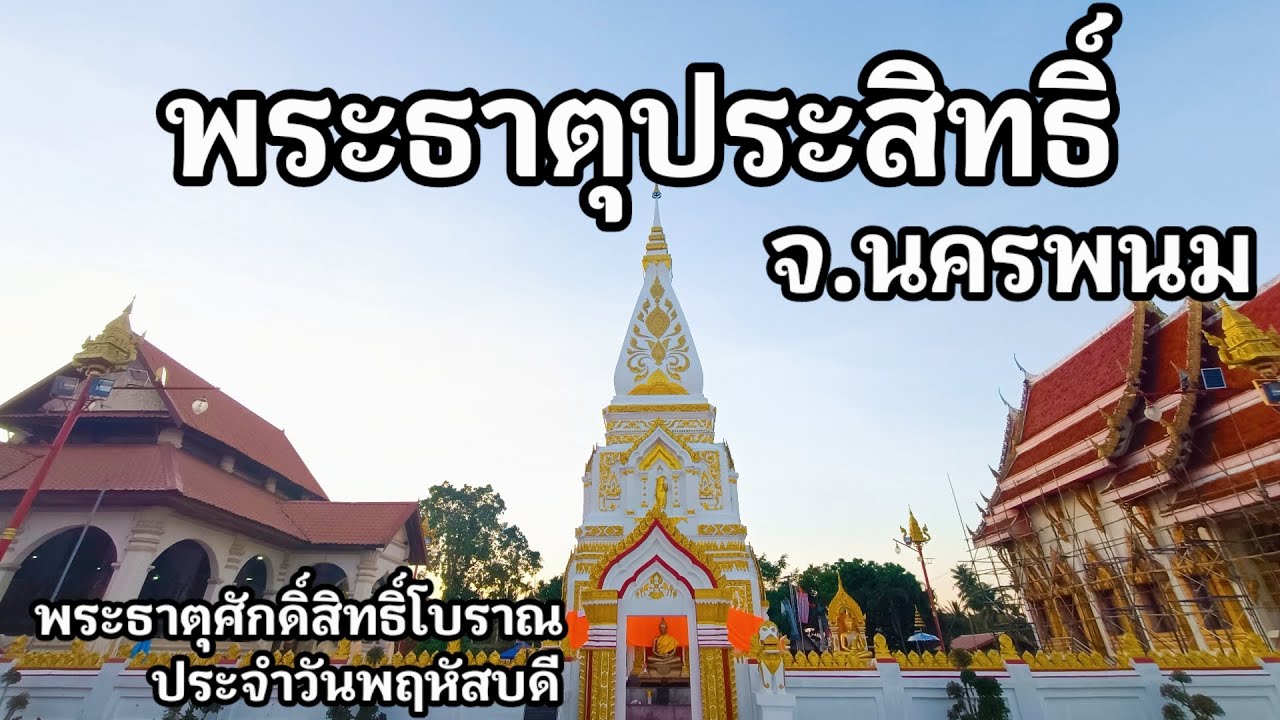
 Click to Access the Navigation Map GPS
Phra That Prasit Map
Recommend

 Art, Culture and Heritage
 Historical Sites and Monuments(3)
 Landmarks and Memorials(2)
 Art, Craft Centres, Tradition(3)
 Museums(3)
 Educational Places
 Library(1)
 Temple(23)
 Church(1)
Other Sacred Sites(11)
 Suburban Living
 Village, Community(5)
 Nature and Wildlife
 National Parks and Marine Reserves(1)
 Dam, Reservoir, Lake(5)
 Waterfalls(2)
 River, Canal(3)
 Bays and Beaches(3)
 Other natural attractions(2)
 Entertainment and Agricultural
 Zoos and Aquariums(1)
 Farms, Parks and Ecotourism(2)
 Shopping
 Shopping and Night Market(1)
 Travel Articles, Recipes
 Travel Review, Food Review(1)


