
lovethailand home >Northeastern Travel Attractions >Nakhon Phanom Travel Attractions >Tha Uthen >Tha Uthen > Phra That Tha Uthen
TL;DR: Phra That Tha Uthen is located at Mekong riverside near Tha Uthen District Office, Tha Uthen Subdistrict, Tha Uthen District, Nakhon Phanom, open Daily, hours 07:00 – 20:00.
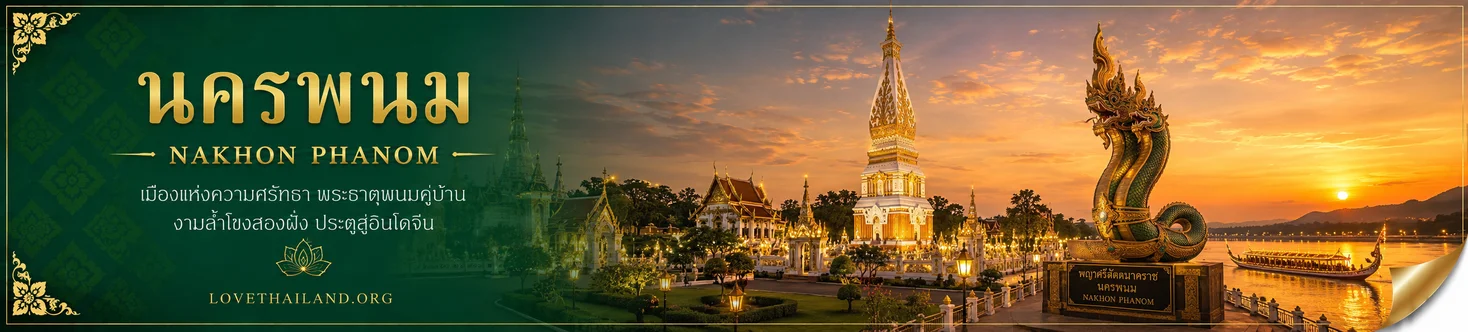
Phra That Tha Uthen
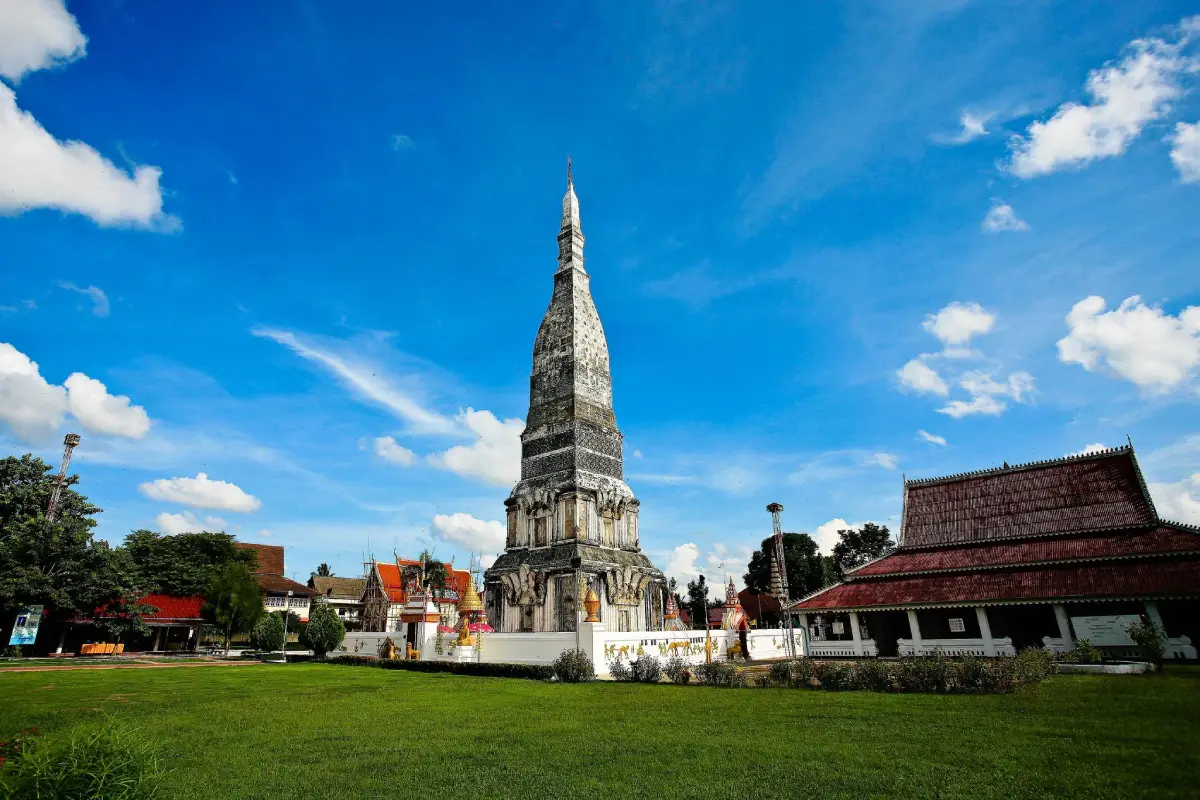
Open Days: Daily
Opening Hours: 07:00 – 20:00
Phra That Tha Uthen in Nakhon Phanom is the sacred birthday stupa traditionally associated with people born on Friday. It stands within Wat Phra That Tha Uthen in the historic Mekong riverside community of Tha Uthen Subdistrict, Tha Uthen District, near the district office and approximately 26 kilometers north of central Nakhon Phanom. The monument was constructed between 1911 and 1916 under the leadership of Phra Ajarn Si Tat Yannasampanno, together with monks and Buddhist communities from both sides of the Mekong. Sacred relics of the Buddha and arahants, Buddha images and valuable devotional objects are enshrined within the structure. Worshippers believe that paying respect here brings a radiant life, personal progress and a hopeful new beginning comparable to the rising sun at dawn.
Phra That Tha Uthen is one of the most important sacred monuments in Nakhon Phanom and forms a major part of the province’s route of birthday stupas associated with the days of the week. Although the shrine has a particularly strong connection with Friday-born visitors, people born on any day are welcome to pray, make merit, meditate, study Buddhist architecture and experience the Mekong riverside community. The temple is open every day from 07:00 to 20:00 and charges no admission fee. Voluntary donations may be made to support temple maintenance and conservation.
The temple occupies an exceptional location beside the Mekong River in the old town of Tha Uthen, a historic Tai Yo community with a long and complex past. From the riverside area in front of the temple, visitors look toward the landscape around Hinboun in Khammouane Province, Laos. This setting has made the temple a center of devotion, a district landmark and a place through which travelers can understand the relationships between communities on the two banks of the Mekong.
The importance of Phra That Tha Uthen extends beyond religious belief. It possesses substantial architectural, historical and community value and represents the craftsmanship and collective memory of Tha Uthen. The square brick-and-plaster stupa was inspired by the original form of Phra That Phanom before later reconstruction. Its elongated proportions and detailed stucco decoration make it an important monument for the study of stupa architecture within the Mekong cultural region.
The temple’s history is closely connected with the development of Tha Uthen as an old riverside settlement shaped by Tai Yo migration from territories on the eastern bank of the Mekong. The community once played important roles in river trade, transportation, administration and cultural exchange between areas now belonging to Thailand and Laos. Local houses, temples, markets and the riverfront continue to reveal the traditional way of life and the gradual transformation of a border town.
Phra Ajarn Si Tat Yannasampanno was the monk principally responsible for creating the stupa. Highly respected among Buddhist communities of the Mekong region, he gathered support from monks, laymen and laywomen living on both the Thai and Lao sides of the river. Construction began in 1911 and required approximately six years, reaching completion in 1916.
Building such a monument at that time required manual labor, specialized local craftsmanship and the organization of construction materials and donations. Modern machinery and transportation were not available, so creating a tall riverside stupa depended upon extraordinary cooperation. Residents helped carry bricks, lime, sand and other materials, while others provided food and accommodation for monks, builders and artisans working at the site.
The central purpose of the project was to establish an appropriate monument for sacred relics of the Buddha and arahants brought by Phra Ajarn Si Tat from Yangon, Myanmar. Yangon was an important center of Theravada Buddhism, with major monasteries, relic traditions and monastic communities. Bringing relics to Tha Uthen created a religious connection between the Mekong region and Buddhist communities in Myanmar.
In addition to the sacred relics, the interior contains Buddha images, devotional objects and valuable items offered by Buddhist worshippers. Such deposits expressed the faith of the people who participated in construction and represented the dedication of merit. Many donors believed that placing valuable possessions within a sacred stupa would contribute to the long-term support of Buddhism and create greater spiritual value than keeping those objects for personal use.
The stupa has a square plan and belongs to the architectural category of a tower-like or prasat-style reliquary monument developed from the historic form of Phra That Phanom. Its body rises through a sequence of diminishing sections with niches, false doorways, corner pillars and stucco ornament. An elongated lotus-shaped upper section draws the eye upward, creating a slender silhouette. The overall design reflects Lan Xang Buddhist art combined with the craftsmanship of local builders in the early twentieth century.
Local government information records a total height of approximately 33 wa, equivalent to about 66 meters, from ground level to the top. The base measures around 6 wa and 3 sok on each side. The often-cited statement that the large stupa on the third level is approximately 15 meters high refers to the upper stupa section rather than the entire monument. Understanding these separate measurements reconciles the historical description with the overall dimensions.
Traditional accounts divide the monument into three principal levels. The first contains an underground chamber within the base where Buddha images, sacred objects, valuables and devotional offerings were deposited. This lower level functions as a reliquary chamber and provides an important structural foundation for the monument above.
The second level was constructed over the lower chamber and developed into the principal tower body with walls, corner pillars, niches and stucco decoration. The superimposed architectural sections create depth and a clear upward rhythm. From the courtyard, lines established by the base, pillars and niches guide the eye toward the summit, making the monument appear exceptionally tall despite its relatively narrow base.
The third level consists of the large upper stupa and its pinnacle. This section rises approximately 15 meters from its own base and develops into a tall, elongated lotus form with a pointed summit. The extended proportions distinguish Phra That Tha Uthen from Phra That Phanom, even though the two share a related design tradition. Its slender pinnacle allows the stupa to rise clearly above temple roofs and remain visible from the riverside.
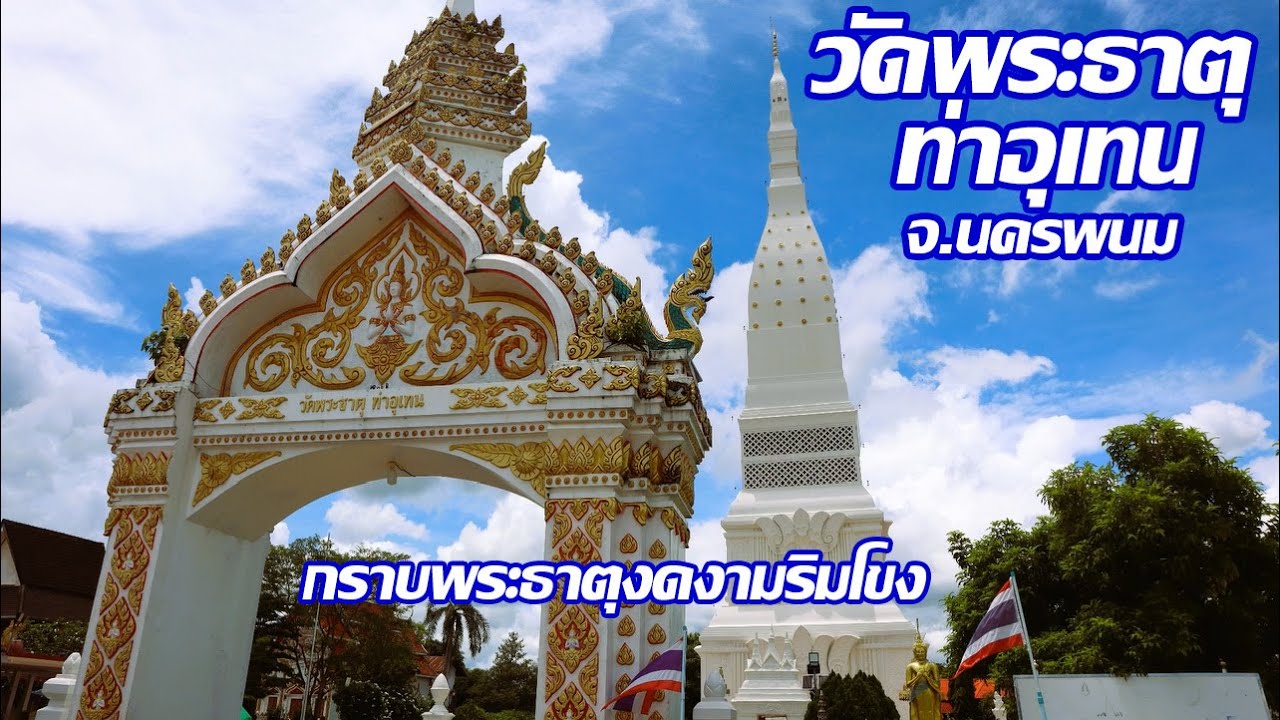
White is the dominant exterior color, emphasizing the shadows of the stucco ornament and the monument’s architectural profile. Selected details are accented with gold and reflective materials. Morning light from the eastern side of the Mekong reveals the textures and fine relief, while late-afternoon shadows increase the sense of depth around niches, pillars and moldings.
The stucco decoration includes scrolling stems, leaves, floral motifs and large curving elements resembling flames or stylized foliage. These ornaments demonstrate the builders’ ability to create delicate forms on a solid brick-and-plaster structure. They also soften the rigidity of the square plan. Corner pillars and niche frames receive particular emphasis, giving all four sides a balanced composition and allowing the monument to be appreciated from every direction.
The relationship with the original Phra That Phanom is important to the study of Thai and Lao art. The historic Phra That Phanom collapsed in 1975 and was subsequently reconstructed. Phra That Tha Uthen had been built more than sixty years earlier and therefore preserves architectural ideas concerning the tower body, decorative niches and proportions associated with the earlier model, while remaining an independent monument with its own elongated profile and decorative vocabulary.
Phra That Tha Uthen is situated north of Phra That Phanom, a direction traditionally associated with Venus in the local birthday-stupa system. In Thai astrology, Venus is linked with beauty, art, creativity, affection, gentleness and refined taste. This directional and symbolic relationship explains why Phra That Tha Uthen became the sacred birthday stupa for Friday-born people.
Friday-born people are traditionally described as creative, independent, appreciative of beauty and talented in art or communication. Worship at Phra That Tha Uthen is believed to encourage a radiant life, progress, personal charm and the kindness of others. The traditional blessing is compared with sunrise, symbolizing a new opportunity, renewed hope and a bright beginning.
Radiance should not be interpreted only as wealth or public reputation. It can also mean intellectual growth, personal development, healthy relationships and the constructive use of individual talent. A visitor praying for love should also commit to honesty and understanding, while someone seeking professional success should connect the aspiration with effort, responsibility and ethical conduct.
Traditional Friday offerings may include 21 incense sticks, two candles, blue flowers, popped rice, perfumed water and grilled sticky rice. These are cultural practices rather than compulsory requirements. Visitors may offer a flower, a garland or simply pray with palms together and a calm mind. Respectful conduct and avoiding unnecessary waste are more important than the quantity of offerings.
Visitors should dress modestly, covering the shoulders and knees, arrange footwear neatly before entering a building and silence mobile phones. A worship sequence may begin by paying respect to the principal Buddha image in the ordination hall before proceeding to the stupa courtyard. Offerings should be placed only at designated points, followed by a mindful recollection of the Buddha, Dhamma and Sangha and a clear personal aspiration.
Those wishing to circumambulate should walk clockwise, keeping the stupa on their right. Three circuits are commonly made in recollection of the Buddha, Dhamma and Sangha. Visitors should walk quietly, avoid passing directly in front of people who are chanting and keep bags or tripods away from the path.
Wrapping the stupa with cloth is an important devotional practice during festivals and special occasions. The cloth and ceremony should be coordinated with the temple. Visitors must not independently attach fabric to architectural details, since this can damage historic stucco and surfaces. Groups wishing to organize a cloth-wrapping ceremony should contact the temple in advance for an appropriate time and method.
Phra That Tha Uthen was registered as a national historic monument in 1998, with a protected area of approximately 2 rai, 2 ngan and 89.48 square wa. Registration provides legal and professional protection for the stupa and its surrounding environment. Repairs, alterations and new structures near the monument must therefore respect conservation standards and the authority of relevant agencies.
Shortly before registration, the lower southern gateway of the monument suffered a structural collapse. Thailand’s Fine Arts Department carried out restoration and installed internal reinforced concrete beams to improve stability. The work was completed in 1998 and prevented further structural damage, enabling the monument to continue serving the community as a sacred shrine and educational site.
Conservation depends upon cooperation among the temple, Fine Arts Department, local authorities and visitors. Travelers should not touch, scratch, lean against or climb the stupa base. Incense must not be inserted into cracks, and perfumed water or heated objects should not be placed directly on historic surfaces. Using only designated worship points reduces moisture, soot and physical deterioration.
The principal zone within the temple is the stupa courtyard, where worship and major ceremonies take place. Visitors can walk around the structure to examine the architecture from every side. The courtyard is also used for candlelit processions, alms-giving and the annual festival. It is relatively exposed, so a hat or umbrella is useful during the daytime, while extra care is needed on wet paving during the rainy season.
The ordination hall is used for monastic ceremonies and contains important Buddha images. Shoes should be removed before entering. Visitors should not stand between worshippers and the principal image or sit with their feet directed toward a Buddha image or monk. Voices should remain low, and flash photography should not be used where prohibited. Spending a few quiet minutes in the hall adds spiritual depth to the visit.
The Phra That Tha Uthen Centenary Celebration Hall represents more than one hundred years of continuing devotion. It accommodates merit-making activities, community meetings and festival events. Access may be limited when the temple is preparing ceremonies or receiving organized groups, so visitors should follow signs and instructions.
The monastic residential area is reserved for monks and their daily religious duties. Visitors should not enter without permission. Those wishing to make a sangha offering, organize a ceremony or request a discussion with a monk should first speak with temple personnel. Respecting private monastic areas helps maintain the regular rhythm of the monastery.
The current abbot is Phra Khru Borihan Borommathat, also known locally as Luang Pu Bunprong. He oversees monastic administration, restoration, annual religious events and public-benefit activities. The temple works with Tha Uthen District, Tha Uthen Municipality, provincial agencies and local residents to organize Buddhist and cultural programs.
The annual Phra That Tha Uthen Worship Festival is held according to tradition from the thirteenth waxing-moon day to the first waning-moon day of the fourth lunar month. Gregorian calendar dates change each year. In 2026, Nakhon Phanom Province and Tha Uthen District organized the festival from February 25 to March 3 at Wat Phra That Tha Uthen.
Festival activities include inviting Phra Upagupta, alms-giving around the stupa, chanting, candlelit processions and devotional offerings. The invitation of Phra Upagupta is a tradition found in large Buddhist festivals throughout northeastern Thailand and the Mekong region. It symbolically asks the revered monk to protect the event and ensure that ceremonies proceed peacefully without obstacles.
The annual program also features a Vessantara procession, cultural displays representing local ethnic groups and traditional performances. The story of Prince Vessantara connects the festival with the Bun Phawet or Great Birth tradition, emphasizing generosity, sacrifice and the cultivation of spiritual perfection. Visitors encounter ritual, performance, food and community knowledge within the same event.
The temple becomes considerably busier during the festival. Parking areas may be occupied by processions, cultural booths and vendors. Visitors should arrive early, wear comfortable footwear and follow official directions. Chairs, equipment and luggage should not block circumambulation routes, and close photographs of participants should not be taken without consent.
Outside the festival season, the temple is calm and suitable for unhurried worship. Morning offers views of sunrise from the Lao side of the river, while late afternoon brings cooler air for photography and walking. The riverfront is also used by residents for exercise and relaxation, allowing visitors to observe everyday community life.
Across the Mekong lies the Hinboun area of Khammouane Province, Laos. Mountains and natural landscapes on the Lao side form a distinctive background to Tha Uthen. On clear days, the view illustrates the physical closeness of the two countries and the long history of shared language, food, family relationships and traditions that existed before modern national boundaries.
Tha Uthen also organizes a riverside cultural route and occasional alms-giving activities extending from Wat Phra That Tha Uthen toward Wat Traiphum. These events transform the river road into a connection between temples, residents and cultural tourism. Visitors attending an alms-giving event should prepare suitable food, dress modestly and avoid obstructing the line of monks.
Wat Traiphum is approximately 2 kilometers from Phra That Tha Uthen and houses Phra Bang, an important standing Buddha image in the gesture of calming the ocean. The image is deeply respected as a guardian of the community. Visitors should request permission from the abbot or caretaker before viewing it, since the shrine is not necessarily open throughout the day.
Phum-Mun-Mang Tha Uthen is a community information center explaining the history of the old town, Tai Yo settlement, urban structure, traditional houses and Mekong culture. History enthusiasts benefit from visiting the center before walking through the community because the information helps identify details in roads, temples, wooden houses and public spaces.
The Tha Uthen Thai–Lao Market reflects the border economy and riverside way of life. Agricultural produce, local food, clothing, household goods and community products are sold on scheduled market days. Visitors should confirm the operating day and time with accommodation providers or the municipality because the schedule depends upon local trading arrangements and border conditions.
Wat Phuttha Nimit at Ban Nong Tao lies approximately 15 kilometers from the temple and is known for elaborate Buddhist art and architecture. It is suitable for travelers extending a temple route beyond the old town. A vehicle is required, and sufficient time should be allowed to appreciate the interior details rather than treating it as a brief roadside stop.
The Ban Phanom Dinosaur Footprint Learning Site is approximately 29 kilometers away by road. Fossil footprints preserved in rock layers make it an educational destination for families, students and natural-history enthusiasts. Combining it with Phra That Tha Uthen creates a varied itinerary connecting spiritual heritage with geology and prehistoric life.
The Woen Pla Buddha Footprint is located at Wat Phra Bat Woen Pla in Woen Phra Bat Subdistrict. The footprint appears on a rocky outcrop in the Mekong, and access depends upon river levels and safety conditions. Visitors should contact the temple or community beforehand and must not attempt to walk onto exposed rocks unless an official route is open.
For photography, approximately 06:30–09:00 offers soft riverside light and a calm atmosphere. The period from 16:00 to 18:00 is suitable for recording stucco details and community life. Flash should be avoided inside buildings, tripods must not obstruct worship and drones require prior authorization from the temple and relevant authorities.
The cool season from November to February is generally the most comfortable period for visiting Tha Uthen. Morning and evening temperatures are pleasant, visibility across the Mekong is often clear and the old town can be explored on foot. The transition from the cool season into early summer frequently coincides with the fourth-lunar-month festival and offers the best opportunity to experience local culture.
March to May can be very hot, and the stupa courtyard receives direct sunlight. Elderly visitors and children should avoid midday and carry water, a hat and an umbrella. During the rainy season, tiled surfaces may become slippery. Rain creates cooler temperatures and greener surroundings, but travelers should monitor Mekong water levels and road conditions.
Visitors should allow at least 45–60 minutes for worship and a basic exploration of the temple. One to two hours is more appropriate for architecture, photography, meditation and a riverside walk. A hurried visit may miss important stucco motifs, the relationship between the architectural levels and the daily atmosphere of the Mekong community.
Facilities include limited parking within the grounds, additional riverside parking, restrooms, flower and offering points, shaded areas and small community shops. During the annual festival, additional parking may be arranged outside the temple. Drivers should follow signs and avoid blocking access to the monks’ area or emergency routes.
Most of the grounds are level, although certain buildings have steps and raised thresholds. Elderly passengers can be dropped near the entrance before the vehicle is parked. Wheelchair users may require assistance, but worship from the open courtyard remains possible even when an interior building is difficult to access. Morning visits reduce heat and generally offer better parking availability.
Families can use the temple as a place to teach children about architecture, religion and community history. Adults may explain the difference between a relic stupa, ordination hall and pavilion, together with the story of residents who cooperated in construction more than a century ago. Children should not run, climb the base, touch stucco or disturb people who are chanting.
International travelers are welcome regardless of religion. Clothing should cover shoulders and knees, shoes must be removed before entering shrine buildings and feet should not point toward Buddha images, the stupa or monks. Visitors should not touch monks. Women offering an item should place it on a receiving cloth or ask local people for guidance rather than handing it directly to a monk.
Responsible travel means avoiding litter, reducing single-use plastic, keeping voices low and not creating content that ridicules community beliefs. Visitors can support Tha Uthen by eating in local restaurants, using small accommodation businesses and purchasing community products. Distributing tourism income locally strengthens the community’s ability to maintain its temples, old town and riverside environment.
Tom Fish Noodle Tha Uthen is located behind the temple, approximately 0.1 kilometer away. It serves fish noodles, yen ta fo and spicy tom yum dishes and can be contacted at 087-946-9123 or 097-302-8564. Small district restaurants may close early when ingredients sell out, so groups should call in advance.
Baan Nam Ka Khanom is approximately 0.8 kilometer away and serves drinks, sweets and light refreshments. The contact number is 081-261-3875. HA-O Cafe x Guesthouse, approximately 1 kilometer away, offers coffee, drinks, cakes and compact accommodation and can be contacted at 086-515-3675. Both are convenient places to rest during a walking tour.
Uthen Tara Resort is approximately 1 kilometer from the stupa and has a Mekong-view breakfast area serving pan-fried eggs, Vietnamese noodle soup, rice porridge and Vietnamese coffee. The contact number is 081-031-4528. Breakfast service operates in the morning and normally closes on Wednesday. Non-guests should confirm service before arrival.
PITI Cafe and other cafés in Tha Uthen provide additional refreshment options. Many local shops are family-run and may adjust opening hours according to holidays or customer demand. Current schedules should be checked before travel, particularly on weekdays outside the peak season.
Nearby accommodation includes guesthouses, small hotels and Mekong riverside resorts. Uthen Tara Resort is approximately 1 kilometer away and can be contacted at 081-031-4528. It is suitable for travelers seeking a peaceful riverside atmosphere and sunrise views. HA-O Cafe x Guesthouse is also around 1 kilometer away and can be contacted at 086-515-3675.
Tha Uthen Rim Khong Hotel is approximately 2 kilometers from the temple and can be contacted at 084-428-9883. It is known for its riverside setting and sunrise views. Rimkhong Tha Uthen Resort is located in the same general district and is convenient for travelers with private vehicles. Room prices, availability and facilities should be confirmed directly before booking.
Macaw Inn Hotel and Sunriver Hotel are additional options within Tha Uthen District, approximately six to seven minutes from the temple by car. They are suitable for travelers seeking hotel-style accommodation and traveling with a vehicle. Telephone numbers that could not be verified have been omitted, so guests should use the hotels’ current booking channels.
Getting There from central Nakhon Phanom is straightforward by following Highway 212, or Chayangkun Road, north toward Tha Uthen District. The distance is approximately 26 kilometers and the drive normally takes 30–40 minutes. Upon entering Tha Uthen Municipality, continue toward Si Mueang Road and the Mekong riverfront. The tall white stupa is visible from a considerable distance and stands close to the district office.
The distance from Nakhon Phanom Airport is approximately 45 kilometers, requiring around 50–60 minutes by car. Travelers can rent a vehicle, take a taxi or arrange a transfer in advance. Public-transport users should normally travel first to Nakhon Phanom town and then connect to Tha Uthen, as services and departure times may be limited.
Drivers arriving from Bueng Kan or Ban Phaeng District can follow Highway 212 south to Tha Uthen. Much of the route runs close to the Mekong and passes through several communities. Extra care is needed in villages and market areas. During the rainy season, road and river conditions should be checked before departure.
A half-day itinerary can begin at Phra That Tha Uthen in the morning, allowing approximately one hour for worship and exploration. Visitors can then continue to Wat Traiphum, Phum-Mun-Mang and the old community, stop at a local market or restaurant and finish with a walk beside the Mekong. This route is practical for travelers leaving Nakhon Phanom town in the morning and returning in the afternoon.
A full-day itinerary can add Wat Phuttha Nimit, the Ban Phanom Dinosaur Footprint Learning Site or the Woen Pla Buddha Footprint. One or two outer attractions should be selected according to weather and distance. Attempting to include too many places creates excessive driving and limits meaningful time at each site.
The published visitor-information number for the temple is 042-581-484. Tha Uthen Municipality can be contacted at 042-581-599. Groups planning cloth-wrapping ceremonies, sangha offerings, professional filming or attendance at the annual festival should make contact beforehand to confirm the schedule, parking and current visitor arrangements.
Phra That Tha Uthen is therefore far more than a shrine for Friday-born worshippers. It is evidence of collective faith among communities on both banks of the Mekong, an architectural monument preserving ideas related to the original Phra That Phanom and the center of a living fourth-lunar-month festival. A visit introduces travelers to history, Buddhist art, Tai Yo culture and the relationship between religion and the river landscape.
Travelers who visit respectfully, study the history, observe architectural details and support local businesses will experience far more than a quick photographic stop. Whether the purpose is to pray for a radiant future, make merit with family, study Buddhist architecture or enjoy the Mekong, Phra That Tha Uthen remains one of the clearest expressions of Nakhon Phanom and the identity of the Tha Uthen community.
| Name | Phra That Tha Uthen at Wat Phra That Tha Uthen |
| Thai Name | พระธาตุท่าอุเทน วัดพระธาตุท่าอุเทน |
| Location | Mekong riverside near Tha Uthen District Office, Tha Uthen Subdistrict, Tha Uthen District, Nakhon Phanom |
| Address | Moo 5, Si Mueang Road, Tha Uthen, Tha Uthen District, Nakhon Phanom 48120, Thailand |
| Location Code | Google Plus Code: HHJR+MCJ |
| Temple Classification | Public Buddhist temple of the Maha Nikaya order with a royal monastic boundary |
| Associated Birth Day | Friday |
| Founder | Phra Ajarn Si Tat Yannasampanno, monks and Buddhist communities from both banks of the Mekong |
| Construction Period | Begun in 1911 and completed in 1916 |
| Architecture | Square brick-and-plaster prasat-style stupa inspired by the original Phra That Phanom, with more elongated proportions |
| Height | Approximately 33 wa or 66 meters overall; the large upper stupa section is approximately 15 meters high |
| Base Dimensions | Approximately 6 wa and 3 sok on each side |
| Three Structural Levels | 1. Underground chamber containing valuables and sacred objects 2. Principal tower body constructed above the chamber 3. Large upper stupa and pinnacle |
| Sacred Contents | Relics of the Buddha and arahants, Buddha images, devotional objects and valuables offered by worshippers |
| Origin of the Relics | Brought by Phra Ajarn Si Tat from Yangon, Myanmar |
| Traditional Blessings | A radiant life, progress, creativity, personal charm and a hopeful new beginning |
| Common Offerings | 21 incense sticks, two candles, blue flowers, popped rice, perfumed water and grilled sticky rice |
| Historic Monument Status | Registered as a national historic monument in 1998 |
| Abbot | Phra Khru Borihan Borommathat, also known locally as Luang Pu Bunprong |
| Main Areas / Zones | 1. Phra That Tha Uthen courtyard 2. Stupa and surrounding sacred enclosure 3. Ordination hall and principal Buddha image 4. Phra That Tha Uthen Centenary Celebration Hall 5. Merit-making and sangha-offering area 6. Monastic residential zone 7. Mekong riverfront |
| Facilities | Limited parking within the temple, riverside parking, restrooms, offering points, shaded areas and nearby community shops |
| Open Days | Daily |
| Opening Hours | 07:00 – 20:00 |
| Admission Fee | Free admission; voluntary donations are welcome |
| Recommended Visiting Time | 07:00–09:00 and 16:00–18:00 |
| Major Annual Festival | Phra That Tha Uthen Worship Festival from the thirteenth waxing-moon day to the first waning-moon day of the fourth lunar month; held February 25–March 3 in 2026 |
| Festival Activities | Invitation of Phra Upagupta, alms-giving, chanting, candlelit processions, Vessantara parade, ethnic-community displays and cultural performances |
| Travel Information | Approximately 26 km or 30–40 minutes from central Nakhon Phanom via Highway 212; approximately 45 km or 50–60 minutes from Nakhon Phanom Airport |
| Contact Numbers | Temple and visitor information: 042-581-484 Tha Uthen Municipality: 042-581-599 |
| Current Status | Open and active, with resident monks, regular Buddhist activities and an annual worship festival |
| Nearby Tourist Attractions | 1. Phum-Mun-Mang Tha Uthen Old Community, about 1 km 2. Tha Uthen Thai–Lao Market and Mekong Riverfront, about 1 km 3. Wat Traiphum and Phra Bang, about 2 km 4. Wat Phuttha Nimit at Ban Nong Tao, about 15 km 5. Ban Phanom Dinosaur Footprint Learning Site, about 29 km 6. Woen Pla Buddha Footprint, about 32 km |
| Nearby Restaurants | 1. Tom Fish Noodle Tha Uthen, about 0.1 km, Tel. 087-946-9123, 097-302-8564 2. PITI Cafe Tha Uthen, about 0.6 km 3. Baan Nam Ka Khanom, about 0.8 km, Tel. 081-261-3875 4. HA-O Cafe x Guesthouse, about 1 km, Tel. 086-515-3675 5. Uthen Tara Resort Breakfast Area, about 1 km, Tel. 081-031-4528 |
| Nearby Accommodations | 1. Uthen Tara Resort, about 1 km, Tel. 081-031-4528 2. HA-O Cafe x Guesthouse, about 1 km, Tel. 086-515-3675 3. Tha Uthen Rim Khong Hotel, about 2 km, Tel. 084-428-9883 4. Rimkhong Tha Uthen Resort, about 2 km 5. Macaw Inn Hotel, about 3 km 6. Sunriver Hotel Tha Uthen, about 3 km |
Frequently Asked Questions (FAQ)
Q: Which day of birth is associated with Phra That Tha Uthen?
A: Phra That Tha Uthen is the sacred birthday stupa for Friday-born people. Worship is believed to encourage a radiant life, creativity, progress and a hopeful new beginning.
Q: What are the opening hours and is there an admission fee?
A: The temple is open daily from 07:00 to 20:00. Admission is free, and voluntary donations for temple maintenance are welcome.
Q: Who built Phra That Tha Uthen?
A: Phra Ajarn Si Tat Yannasampanno led monks and Buddhist communities from both banks of the Mekong in construction, which began in 1911 and was completed in 1916.
Q: What is enshrined inside Phra That Tha Uthen?
A: The monument contains relics of the Buddha and arahants brought from Yangon, together with Buddha images, sacred objects and valuables offered by worshippers.
Q: How tall is Phra That Tha Uthen?
A: The overall height from the ground to the top is approximately 33 wa or 66 meters. The large upper stupa section on the third level is approximately 15 meters high.
Q: When is the annual worship festival held?
A: It is traditionally held from the thirteenth waxing-moon day to the first waning-moon day of the fourth lunar month. In 2026, the festival took place from February 25 to March 3.
Q: How can travelers reach the temple from Nakhon Phanom town?
A: Follow Highway 212 north toward Tha Uthen District for approximately 26 kilometers. The drive normally takes 30–40 minutes.
Q: Which attractions can be combined with the temple?
A: Nearby options include Wat Traiphum and Phra Bang, Phum-Mun-Mang Old Community, the Thai–Lao Market, Wat Phuttha Nimit, the Ban Phanom Dinosaur Footprint Learning Site and the Woen Pla Buddha Footprint.
 Category: ●Places of Worship
 Group: ●Other Sacred Sites
Last Update : 3 MonthAgo
 Last Update : 3 MonthAgo
 Click to Access the Navigation Map GPS
Phra That Tha Uthen Map
Recommend

 Art, Culture and Heritage
 Historical Sites and Monuments(3)
 Landmarks and Memorials(2)
 Art, Craft Centres, Tradition(3)
 Museums(3)
 Educational Places
 Library(1)
 Temple(23)
 Church(1)
Other Sacred Sites(11)
 Suburban Living
 Village, Community(5)
 Nature and Wildlife
 National Parks and Marine Reserves(1)
 Dam, Reservoir, Lake(5)
 Waterfalls(2)
 River, Canal(3)
 Bays and Beaches(3)
 Other natural attractions(2)
 Entertainment and Agricultural
 Zoos and Aquariums(1)
 Farms, Parks and Ecotourism(2)
 Shopping
 Shopping and Night Market(1)
 Travel Articles, Recipes
 Travel Review, Food Review(1)


