
lovethailand home >Northeastern Travel Attractions >Maha Sarakham Travel Attractions >Kanthara Wichai >Kham Riang > Mahasarakham University
TL;DR: Mahasarakham University, open Monday – Friday (General Administrative Offices, Except Public Holidays), hours 08:30 – 16:30 (General Administrative Office Hours).
Mahasarakham University
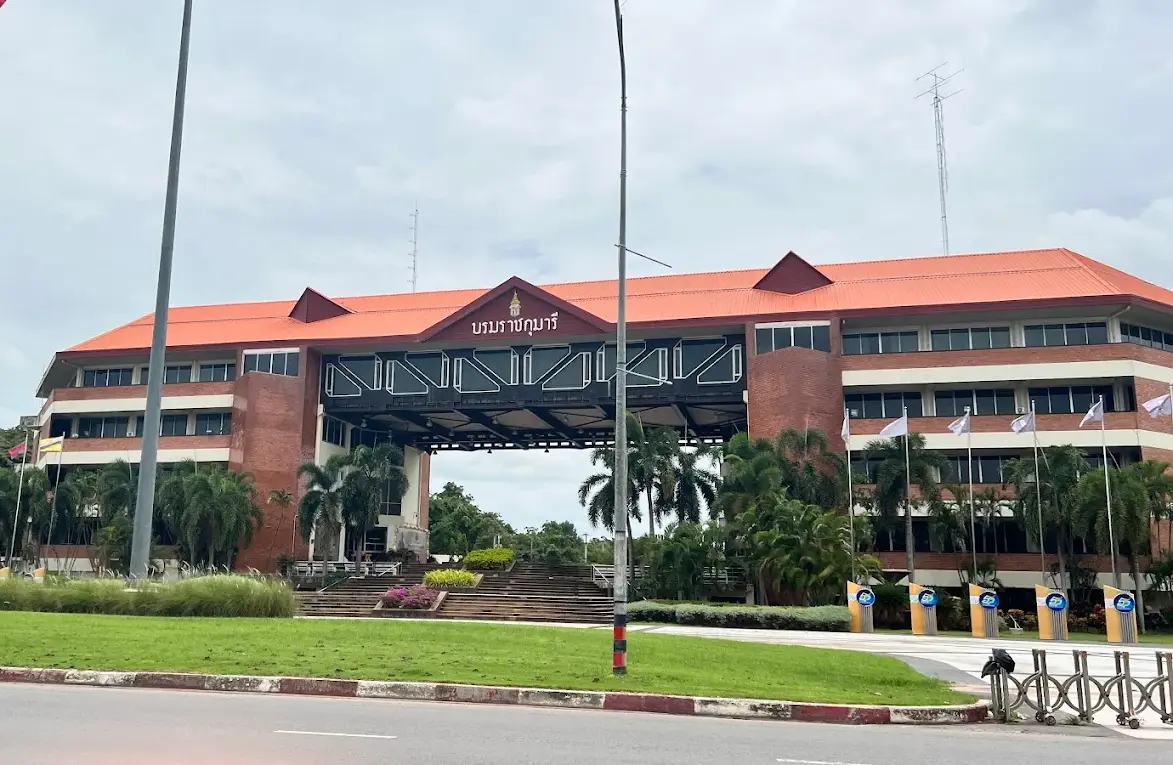
Open Days: Monday – Friday (General Administrative Offices, Except Public Holidays)
Opening Hours: 08:30 – 16:30 (General Administrative Office Hours)
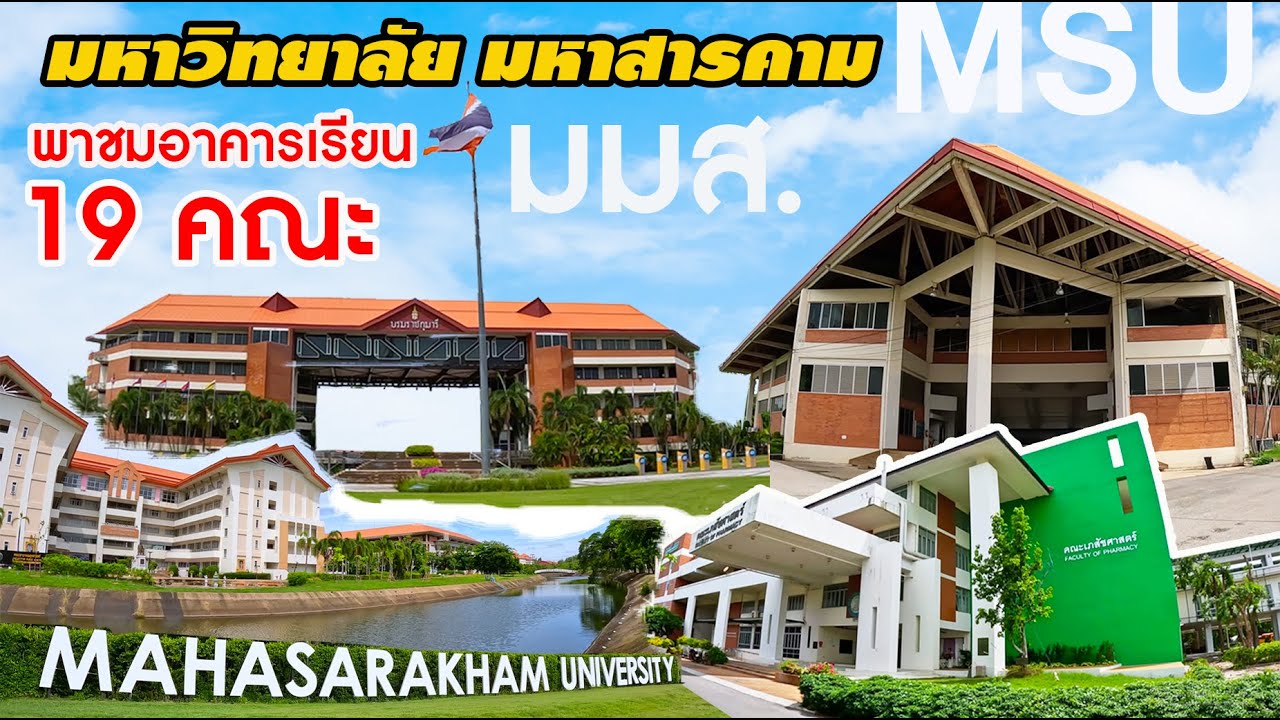
Mahasarakham University (MSU) is a public university in Maha Sarakham Province, northeastern Thailand, with an educational history dating back to March 27, 1968, when it was founded as the College of Education, Mahasarakham. On June 29, 1974, it became Srinakharinwirot University's Mahasarakham Campus, before gaining independent university status as Mahasarakham University on December 9, 1994. Today, its principal educational areas are Kham Riang Campus in Kantharawichai District and the original urban campus in Mueang Maha Sarakham District. The university comprises 19 academic faculties and colleges offering education across health sciences, science and technology, humanities, social sciences, education, engineering, business, law, music, and the arts. Its significance lies in developing qualified professionals, advancing research, preserving northeastern Thai cultural heritage, and applying academic knowledge for the benefit of communities and society.
Mahasarakham University is among the important higher education institutions of northeastern Thailand. Its strength is the diversity of academic disciplines and its ability to connect scholarship with the practical circumstances of the region. The university prepares teachers, scientists, physicians, pharmacists, nurses, veterinarians, engineers, business professionals, lawyers, artists, musicians, and researchers. This broad academic structure allows expertise from different disciplines to be combined when addressing complex challenges involving health, the environment, technology, education, and local development.
Kham Riang Campus is located at 245 Moo 7, Kham Riang Subdistrict, Kantharawichai District, Maha Sarakham Province 44150. It serves as the university's principal administrative centre and accommodates many of its academic faculties and support services. The campus includes academic buildings, laboratories, research facilities, library resources, sports grounds, student residences, recreational spaces, and other facilities essential to university life.
The communities of Kham Riang and Tha Khon Yang have developed close relationships with the university. Student accommodation, restaurants, local businesses, shops, and transportation services form part of the surrounding university environment. The presence of a large academic community also creates opportunities for local employment, entrepreneurship, and cultural exchange.
The original city campus is located at 269/2 Nakhon Sawan Road, Talat Subdistrict, Mueang Maha Sarakham District, Maha Sarakham Province 44000. This site has particular historical importance because it is associated with the institution's earliest years. It remains in academic and public service use, including activities related to education, tourism, cultural research, and health services. Suddhavej Hospital, associated with the Faculty of Medicine, is among the important facilities operating in this urban area.
Understanding the distinction between Kham Riang Campus and the city campus is essential for students, parents, and visitors. They are separate locations, and individual faculties, departments, and services are not necessarily based at the same site. Confirming the destination before traveling helps avoid confusion, particularly when attending examinations, admissions appointments, academic activities, or hospital services.
The foundation of Mahasarakham University is closely connected with the expansion of higher education in Thailand during the 1960s. At that time, the country was seeking to increase educational opportunities beyond Bangkok and strengthen the supply of qualified teachers for a rapidly developing school system. Northeastern Thailand required additional educators, especially in science, languages, and secondary education. The establishment of a higher education institution in Maha Sarakham was part of this wider response to regional educational needs.
On March 27, 1968, the College of Education, Mahasarakham was established as part of the regional expansion of Thailand's College of Education system. Its original location was along Nakhon Sawan Road in central Maha Sarakham. Dr. Saiyut Champathong was an important academic administrator during the institution's early development and contributed to establishing its educational foundations.
During the first stage of its operations, the college cooperated with educational institutions already active in Maha Sarakham Province. One such institution was Maha Sarakham Teachers College, which later developed into Rajabhat Maha Sarakham University. Although the two institutions have historical connections through the development of regional education, Mahasarakham University and Rajabhat Maha Sarakham University are separate universities with different institutional histories and legal identities.
The College of Education, Mahasarakham began with 134 students. The early student body included graduates of advanced education certificate programs who continued their studies toward bachelor's qualifications in education. The initial fields included English and Biology, reflecting the strong demand for teachers with specialized subject knowledge.
Early instruction emphasized both academic understanding and teaching competence. This approach was particularly relevant to a developing national education system that needed teachers capable of explaining their subjects clearly and supporting learning at secondary level. The institution's original identity was therefore built around teacher development and improving educational quality in northeastern communities.
On June 29, 1974, the College of Education, Mahasarakham became Srinakharinwirot University, Mahasarakham Campus. The transition formed part of the development of Srinakharinwirot University and marked a significant change in the institution's academic status. It provided a broader foundation for university-level education and further development of academic disciplines.
During the Srinakharinwirot University period, the Mahasarakham campus expanded its educational activities beyond its original focus on preparing teachers. Programs in science, languages, the humanities, and social sciences became increasingly important. The diversification of teaching helped establish the academic foundations for the faculties that would later form the independent university.
As the campus expanded, the need for administrative independence became more significant. Educational and research requirements in Maha Sarakham differed from those of institutions in Bangkok, particularly in relation to rural communities, local development, agricultural livelihoods, and northeastern cultural heritage. An independently administered university could develop its academic policies and resources more directly in response to these needs.
On December 9, 1994, Srinakharinwirot University's Mahasarakham Campus was formally established as Mahasarakham University, an independent public university. This was a defining milestone in its history. The new status enabled the institution to develop its own administrative structure, academic faculties, research activities, and educational plans in accordance with its regional and national responsibilities.
Three dates are therefore particularly important to the university's institutional history. March 27, 1968, marks the establishment of the original College of Education. June 29, 1974, marks its transition into Srinakharinwirot University, Mahasarakham Campus. December 9, 1994, marks the establishment of Mahasarakham University as an independent institution. Each date represents a distinct phase of the same institution's development.
Following the transition to independent university status, Mahasarakham University continued expanding its physical and academic infrastructure. Kham Riang in Kantharawichai District was developed to accommodate the growing number of faculties, students, and research facilities. In 1998, the university's central administrative operations relocated to Kham Riang, marking a major stage in its expansion beyond the original urban campus.
The development of Kham Riang created opportunities for new academic buildings, laboratories, administrative services, student facilities, and research activities. At the same time, the original city campus continued serving important educational, cultural, and healthcare functions. Maintaining both sites allowed the university to remain connected with central Maha Sarakham while developing a larger university environment outside the city centre.
Academic expansion following 1994 included a growing emphasis on health sciences, engineering, information technology, business, social sciences, and the arts. The development of faculties such as Medicine, Nursing, Pharmacy, Public Health, and Veterinary Medicine strengthened the university's role in educating health professionals. Engineering, Informatics, and Business programs responded to technological and economic change.
The university also developed a distinctive academic profile in the study of northeastern Thai arts and culture. Research and teaching in traditional music, performance, visual arts, cultural studies, and local heritage provided opportunities to preserve knowledge that might otherwise be lost through social change. These activities became a significant part of the university's relationship with the communities of Isan.
By 2026, Mahasarakham University had a history extending more than 58 years from its original establishment in 1968. Associate Professor Dr. Prayuk Srivilai serves as the university's President in 2026. The university continues to develop teaching, research, professional education, and academic cooperation while maintaining its regional responsibilities.
The university's institutional philosophy is closely associated with the Buddhist maxim “Bahūnaṃ paṇḍito jīve,” meaning “One who possesses wisdom should live for the benefit of the multitude.” The principle emphasizes that education and knowledge should produce benefits beyond individual success. It connects scholarship with responsibility toward communities and society.
The university emblem, known as the Rojanakorn emblem, incorporates imagery associated with Phra That Na Dun and northeastern Thai artistic traditions. Phra That Na Dun is an important religious and historical monument in Maha Sarakham Province, associated with the ancient cultural landscape of Champasri. Its inclusion in the university's visual identity reinforces the connection between the institution and the cultural heritage of the province.
The official university colors are yellow and gray. Its symbolic tree is the golden shower tree, known in Thai as Ratchaphruek or Koon. This tree, with its distinctive clusters of yellow blossoms, is familiar in northeastern Thailand and is often associated with the region's seasonal landscape and cultural identity.
Mahasarakham University's academic structure comprises 19 faculties and colleges: the Faculty of Humanities and Social Sciences, Faculty of Science, Faculty of Engineering, Faculty of Nursing, Faculty of Education, Faculty of Pharmacy, Faculty of Technology, Mahasarakham Business School, Faculty of Tourism and Hotel Management, Faculty of Architecture, Urban Design and Creative Arts, Faculty of Informatics, College of Politics and Governance, Faculty of Public Health, Faculty of Medicine, Faculty of Environment and Resource Studies, Faculty of Veterinary Sciences, College of Music, Faculty of Law, and Faculty of Fine and Applied Arts and Cultural Science.
The Faculty of Humanities and Social Sciences examines languages, history, society, religion, geography, community development, and intercultural communication. Academic fields include Thai, English, Chinese, Eastern languages and cultures, French, History, Community and Social Development, Business English, and internationally oriented communication. These subjects are essential to understanding social change, cultural identity, and relationships among individuals and communities.
The Faculty of Science is an important foundation for scientific research and advanced education. Its fields include Chemistry, Biology, Physics, Applied Physics, Mathematics, Statistics, Microbiology, Molecular Genetics, Biochemical Innovation, and Energy and Automation. Research in the basic sciences contributes to the understanding of natural systems and supports applications in industry, agriculture, technology, and healthcare.
The Faculty of Engineering prepares students for professional work involving technical design, manufacturing, transportation systems, energy, and environmental management. Published undergraduate fields include Civil Engineering, Mechanical Engineering, Production Engineering, Mechatronics, Electrical Engineering, Environmental Engineering, High-Speed Rail Engineering, and Electric Vehicle Engineering. Students combine mathematical and scientific foundations with laboratory practice and applied problem-solving.
The Faculty of Nursing provides professional nursing education and postgraduate study in specialized fields. Its academic activities address patient care, nursing science, mental health, adult and older-person care, and midwifery. Nursing education combines scientific understanding with communication, clinical practice, ethical responsibility, and the ability to respond to the needs of individuals and families.
The Faculty of Education carries forward the university's original mission as an institution established to prepare teachers. Undergraduate fields include General Science, Mathematics, Thai, English, Social Studies, Early Childhood Education, Educational Technology, Computer Education, and Physical Education. The faculty also provides education in Psychology, Sports Science, Educational Administration, Curriculum and Instruction, and Educational Research.
The preparation of teachers requires both academic knowledge and teaching competence. Students need to understand educational psychology, curriculum design, classroom management, assessment, and the use of appropriate learning technologies. These skills are developed through coursework and practical experiences that help prepare graduates for educational environments.
The Faculty of Pharmacy develops expertise in pharmaceutical care, clinical pharmacy, medicinal products, herbal studies, and the safe use of medicines. Pharmacy education involves chemistry, biology, pharmacology, health science, and professional ethics. Research related to medicinal plants and traditional knowledge is particularly relevant to the rich biological and cultural resources of northeastern Thailand.
The Faculty of Technology focuses on fields such as Food Technology and Nutrition, Biotechnology, Agriculture, Food Product Development, Animal Science, and Fisheries. These disciplines support the use of scientific knowledge to improve agricultural production, food safety, product quality, and the commercial value of agricultural resources.
Mahasarakham Business School, formally the Faculty of Accountancy and Management, offers education in Accounting, Marketing, Management, Finance, International Business, Business Information Systems, Human Resource Management, and Business Economics. These fields prepare students for organizational management, financial decision-making, entrepreneurship, and the use of business information in a changing economy.
The Faculty of Tourism and Hotel Management prepares students for work in tourism, hospitality, hotels, culinary services, and visitor experience management. Its educational activities address business operations and customer service alongside the responsible use of natural and cultural tourism resources. Such knowledge is relevant to the development of tourism industries throughout Thailand and the Mekong region.
The Faculty of Architecture, Urban Design and Creative Arts provides education associated with Architecture, Urban Design, Interior Architecture, Landscape Architecture, Creative Arts, and Construction Management. These fields connect design, planning, artistic expression, and the built environment. Professional work in these disciplines requires consideration of functionality, aesthetics, safety, and sustainability.
The Faculty of Informatics focuses on digital technology, Computer Science, Data Science, Data Engineering, Information Technology, Geoinformatics, Creative Media, and digital business systems. The development of digital skills is important to organizations that depend on data, networked technologies, software applications, and innovative methods of communication.
The College of Politics and Governance provides academic education in Political Science, public institutions, political processes, governance, and policy-related issues. Studying political systems and public affairs helps students understand the relationships between government and citizens, develop analytical reasoning, and examine challenges affecting democratic societies.
The Faculty of Public Health prepares graduates in health promotion, disease prevention, environmental health, occupational health and safety, nutrition, and community health. Public health education is important because population health depends not only on medical treatment but also on living conditions, preventive services, environmental quality, and informed health decisions.
The Faculty of Medicine provides education in Medicine and related health sciences. Suddhavej Hospital, associated with the faculty, supports healthcare services and clinical learning. Medical education combines basic sciences, clinical knowledge, patient examination, diagnosis, treatment, and professional responsibility.
The Faculty of Environment and Resource Studies addresses Environmental Technology, Natural Resource and Environmental Management, Environmental Education, and Sustainability. Its academic work is connected with pollution management, responsible resource use, energy systems, ecological awareness, and the development of environmental solutions for communities.
The Faculty of Veterinary Sciences provides a six-year Doctor of Veterinary Medicine program, together with undergraduate programs in Veterinary Technology and Veterinary Nursing. Veterinary education is important to animal health, livestock production, disease control, and the prevention of diseases that can affect both animals and humans.
The College of Music contributes to performance, musical education, research, and the preservation of musical traditions. Its activities encompass different forms of Thai, international, and northeastern traditional music. Regional instruments and performance traditions, including the pong lang, khaen, and phin, provide important connections between contemporary university education and Isan cultural heritage.
The Faculty of Law provides legal education focusing on the Thai legal system, legal reasoning, rights and responsibilities, and the administration of justice. Understanding the law is important to professional legal careers and to the wider public's ability to recognize and exercise legal rights.
The Faculty of Fine and Applied Arts and Cultural Science is dedicated to visual arts, performing arts, product design, cultural management, and creative research. Its academic work combines contemporary artistic methods with the study and preservation of traditional cultural knowledge. The faculty contributes to cultural research, creative industries, and the interpretation of regional identity through artistic expression.
The presence of these 19 faculties and colleges makes Mahasarakham University a comprehensive institution capable of combining knowledge from different fields. Collaborative teaching and research can bring together expertise in medicine, science, engineering, social sciences, environmental studies, and the arts to address challenges that cannot be understood through a single discipline.
Graduate education supports the development of advanced specialists and researchers across many academic fields. Master's and doctoral programs cover disciplines such as Science, Engineering, Education, Management, Health Sciences, Cultural Studies, and the Arts. Research-based education develops the ability to analyze information, investigate complex questions, and generate knowledge that contributes to professional and social development.
Research is an important component of the university's mission. Academic institutes and research centres investigate biodiversity, medicinal plants, paleontology, environmental science, health, and northeastern Thai culture. These activities draw upon the distinctive natural resources, historical evidence, and cultural knowledge available in the region.
The university's Paleontological Research and Education Center is an example of scientific education connected with natural history. Research and educational displays related to fossils and prehistoric life allow students and visitors to explore evidence of ancient environments and biological evolution. Such facilities are valuable for school groups and visitors interested in understanding scientific investigation through physical specimens and research findings.
The Medicinal Mushroom Museum is another distinctive educational facility, located within the Faculty of Science's academic environment. Its collections and research information concern fungi associated with medicinal and biological studies. Preserving mushroom specimens supports scientific documentation, the study of biodiversity, and further investigations of potentially useful biological resources.
The Mahasarakham University Museum, or MSU Museum, is located on Kham Riang Campus and serves as a place for communicating institutional history and knowledge associated with the university and its social environment. Museums of this type help preserve documents, objects, and educational material that contribute to the understanding of an institution's development and public role.
The Institute for Northeastern Arts and Culture Research plays an important role in studying and preserving Isan heritage. Its activities include cultural exhibitions, the conservation of palm-leaf manuscripts, knowledge related to local textiles, and research involving traditional artists and artistic expression. These resources support education about the region's languages, beliefs, traditions, and historical communities.
Palm-leaf manuscripts are especially important to the preservation of northeastern Thai cultural knowledge. Such manuscripts may contain Buddhist writings, literature, regional language forms, historical accounts, and customary practices. Conserving them creates opportunities for future research and helps protect cultural evidence that may otherwise be lost.
The Walai Rukhavej Botanical Research Institute is another significant academic resource associated with the university. Its learning area in Na Dun District focuses on medicinal plants, botany, and traditional knowledge. The institute's educational environment includes botanical resources and displays related to northeastern Thai community life, demonstrating the connections between plants, health, livelihoods, and cultural traditions.
The university's research and community engagement activities can also contribute to local economic development. Knowledge from Business, Food Technology, Design, Agriculture, and Cultural Studies may be applied to community products, services, and enterprises. Bringing different disciplines together supports the creation of value from resources and knowledge already present in local communities.
Student traditions form an important part of university life. One of the best-known traditions in northeastern Thailand is the Bai Sri Su Khwan ceremony, in which participants offer symbolic blessings and expressions of welcome. At Mahasarakham University, activities of this kind strengthen relationships between new students, senior students, faculty members, and the broader university community.
On July 9, 2026, the university organized a welcoming Bai Sri Su Khwan ceremony for new students under a theme emphasizing friendship, blessings, and the shared identity of the Leopard 14 student generation. Traditional artistic performances formed part of the event. The ceremony demonstrated how local customs can be incorporated into contemporary university life while retaining their meaning of goodwill, encouragement, and belonging.
Wai Khru, the Thai tradition of honoring teachers, is also important across university disciplines. Individual faculties organize ceremonies appropriate to their educational traditions, especially in Teacher Education, Science, Music, Arts, and Veterinary Medicine. During August 2026, activities honoring teachers were publicized by the Faculty of Science and the Faculty of Veterinary Sciences.
Traditional music helps communicate the university's Isan identity. Instruments such as the pong lang, khaen, and phin, together with regional dance and performance, can be featured in welcoming ceremonies, university events, and cultural presentations. These activities connect younger generations with the artistic knowledge of their communities.
December 9 is an important date in the university's calendar because it marks its establishment as an independent university in 1994. Commemorations of this milestone provide an opportunity to reflect on the institution's development from a college dedicated to education into a university with a broad academic and social mission.
In 2026, Mahasarakham University continued organizing academic activities, research collaborations, and cultural programs. During October, the university publicized initiatives connecting innovation, research, and creative culture. An Open House event was scheduled for November 20–21, 2026, providing prospective students and other visitors with an opportunity to explore the university's faculties, academic programs, and educational environment.
Educational tourism is a distinctive aspect of the university's public role. Places of interest include MSU Museum, the Medicinal Mushroom Museum, the Paleontological Research and Education Center, arts and cultural exhibition areas, and the university's parks and green spaces. Each illustrates a different aspect of the university's teaching and research activities.
Visits to specialist museums and research facilities should be arranged with the responsible university units. Some collections are located within academic buildings or laboratories and may have restrictions concerning visitor numbers, group visits, or teaching activities. Advance arrangements can help visitors obtain appropriate guidance and educational support.
The university's library and learning facilities also support student life and research. They provide access to books, scholarly journals, electronic databases, and areas for independent or collaborative study. Modern library services connect conventional academic resources with digital information and research tools.
Prospective students should examine the academic programs, eligibility requirements, teaching locations, and admission procedures relevant to the 2026 academic year. Mahasarakham University publishes admissions information through its registration and academic services. The range of available disciplines provides options across health sciences, engineering, science, education, law, business, tourism, and creative fields.
Professional programs such as Medicine, Pharmacy, Veterinary Medicine, Nursing, and Teacher Education have specific educational and professional requirements. Applicants should review the duration of study, practical training arrangements, admission criteria, and standards of the relevant professional organizations before selecting a program.
Getting There to Kham Riang Campus is possible by private car, taxi, or available local transportation. The campus address is 245 Moo 7, Kham Riang Subdistrict, Kantharawichai District, Maha Sarakham Province 44150. Travelers arriving from other provinces can first reach Maha Sarakham town and continue toward Kantharawichai District and Kham Riang, using navigation services to locate the relevant faculty or office.
For the city campus, the destination is 269/2 Nakhon Sawan Road, Talat Subdistrict, Mueang Maha Sarakham District, Maha Sarakham Province 44000. This is separate from Kham Riang Campus. Visitors traveling to Suddhavej Hospital, cultural research facilities, or other city-based departments should confirm the correct location before departure.
Interprovincial bus services connect Maha Sarakham with other parts of northeastern Thailand. Travelers can continue from the city using local transport or a taxi. Those arriving from nearby provinces such as Khon Kaen, Roi Et, and Kalasin can use the regional road network. Travel time should be planned according to traffic conditions and the location of the destination department.
For general administrative inquiries, Mahasarakham University can be contacted at +66 43 719800. General administrative offices normally provide service Monday through Friday, from 08:30 to 16:30, excluding public holidays. The Division of Registration and Educational Services can be contacted at +66 43 719888 or +66 43 719889. Some specialized offices maintain different service schedules, and library hours can vary by academic period.
Places of educational interest include MSU Museum, the Medicinal Mushroom Museum, the Paleontological Research and Education Center, campus parks, and arts and cultural exhibitions. Visitors interested in medicinal plants and regional culture may also arrange a separate visit to the Walai Rukhavej Botanical Research Institute in Na Dun District.
Mahasarakham University has developed from an institution established for teacher education in 1968 into a comprehensive public university offering education and research across numerous disciplines. Its institutional history reflects the expansion of higher education in northeastern Thailand and the growing importance of universities in professional development, public services, and the advancement of knowledge.
The university's distinctive contribution lies in connecting academic progress with regional identity and community needs. Scientific and professional education supports economic and social development, while research in art, music, history, and cultural studies helps preserve the heritage of Isan. Guided by the principle that those possessing wisdom should live for the benefit of others, Mahasarakham University remains an important educational and research institution serving northeastern Thailand and the wider society.
| University Name | Mahasarakham University (MSU) |
| Thai Name | มหาวิทยาลัยมหาสารคาม |
| Institution Type | Public University |
| Kham Riang Campus Address | 245 Moo 7, Kham Riang, Kantharawichai, Maha Sarakham 44150, Thailand |
| City Campus Address | 269/2 Nakhon Sawan Road, Talat, Mueang Maha Sarakham, Maha Sarakham 44000, Thailand |
| Kham Riang Campus Coordinates | 16.244858, 103.249735 |
| City Campus Coordinates | 16.200119, 103.284709 |
| Original Institution Founded | March 27, 1968 |
| Srinakharinwirot University Campus Status | June 29, 1974 |
| Independent University Established | December 9, 1994 |
| Former Names | College of Education, Mahasarakham; Srinakharinwirot University, Mahasarakham Campus |
| Important Early Administrator | Dr. Saiyut Champathong |
| University President in 2026 | Associate Professor Dr. Prayuk Srivilai |
| University Maxim | Bahūnaṃ paṇḍito jīve – Those With Wisdom Should Live for the Benefit of the Multitude |
| University Colors | Yellow and Gray |
| University Tree | Golden Shower Tree (Ratchaphruek / Koon) |
| University Emblem | Rojanakorn Emblem, Featuring Elements Connected With Phra That Na Dun and Isan Cultural Heritage |
| Main Educational Areas | 1. Kham Riang Campus, Kantharawichai District 2. City Campus, Mueang Maha Sarakham District |
| Faculties and Colleges | 1. Faculty of Humanities and Social Sciences 2. Faculty of Science 3. Faculty of Engineering 4. Faculty of Nursing 5. Faculty of Education 6. Faculty of Pharmacy 7. Faculty of Technology 8. Faculty of Accountancy and Management (Mahasarakham Business School) 9. Faculty of Tourism and Hotel Management 10. Faculty of Architecture, Urban Design and Creative Arts 11. Faculty of Informatics 12. College of Politics and Governance 13. Faculty of Public Health 14. Faculty of Medicine 15. Faculty of Environment and Resource Studies 16. Faculty of Veterinary Sciences 17. College of Music 18. Faculty of Law 19. Faculty of Fine and Applied Arts and Cultural Science |
| Levels of Study | Bachelor's Degrees, Master's Degrees, Doctoral Degrees, and Professional Degree Programs |
| Academic Strengths | Science and Technology, Health Sciences, Teacher Education, Engineering, Business, Music, Arts, Isan Cultural Studies, and Community-Oriented Research |
| Important Campus Places | MSU Museum, Medicinal Mushroom Museum, Paleontological Research and Education Center, Library, and Campus Parks |
| Cultural and Botanical Research Units | Institute for Northeastern Arts and Culture Research; Walai Rukhavej Botanical Research Institute |
| Traditions and Activities | University Foundation Day on December 9, Bai Sri Su Khwan Welcoming Ceremonies, Wai Khru, and Isan Cultural Activities |
| General Administrative Open Days | Monday – Friday, Except Public Holidays |
| General Administrative Hours | 08:30 – 16:30 |
| Visiting Arrangements | Advance Arrangements Recommended for Museum Groups and Specialist Research Facilities; Academic Buildings and Laboratories May Have Access Restrictions |
| Facilities | Academic Buildings, Laboratories, Libraries, Student Residences, Sports Grounds, Green Spaces, Digital Services, and Student Support Facilities |
| Getting There | Kham Riang Campus Is in Kantharawichai District, While City Campus Is on Nakhon Sawan Road in Mueang Maha Sarakham; Confirm the Destination Before Traveling |
| Campus Attractions and Learning Places | 1. Mahasarakham University Museum (MSU Museum) 2. Medicinal Mushroom Museum 3. Paleontological Research and Education Center 4. Mahasarakham University Art Park 5. Mahasarakham University Health Park |
| Restaurants and Cafes Around Kham Riang and Tha Khon Yang | 1. Som Tum Doctor 2. Momai Kaiyang 3. Mena Mesa Cafe 4. Maha Mala Branch 2 5. 19th Chong Mao Tai Mala |
| Accommodations Around Kham Riang and Tha Khon Yang | 1. THE BOSS GREEN HOTEL 2. Ming Mueng Place 3. Bhag Bhumi Apartment 4. Tara Grand Residence 5. Logan Dormitory |
| General University Telephone | +66 43 719800 |
| Registration Office Telephone | +66 43 719888, +66 43 719889 |
| Official Website | https://www.msu.ac.th/ |
| Current Status | Active Public University With Academic Programs and University Activities in Academic Year 2026 |
Academic Programs and Fields of Study at Mahasarakham University: Academic Year 2026
| Faculty / College | Academic Programs and Fields Published by the University |
| Faculty of Humanities and Social Sciences | Undergraduate Fields 1. Thai Language 2. Languages for Creative Media 3. English 4. Chinese 5. Eastern Languages and Cultures 6. French 7. History 8. Community and Social Development 9. English for International Communication 10. Business English 11. ASEAN Languages and Cultures 12. Geography Graduate Fields1. Thai Language 2. Religion and Indigenous Wisdom for Development 3. English and English Language Teaching 4. Thai Language Teaching |
| Faculty of Science | Bachelor's Degrees 1. Chemistry 2. Biology 3. Physics 4. Applied Physics 5. Mathematics 6. Statistics 7. Microbiology 8. Molecular Genetics 9. Biochemical Innovation 10. Energy and Automation 11. Bachelor of Education in Physics Master's Degrees1. Biology 2. Chemistry 3. Mathematics Education 4. Physics 5. Mathematics 6. Interdisciplinary Statistical Management 7. Energy 8. Science Education Doctoral Degrees1. Chemistry 2. Paleontology (International Program) 3. Physics 4. Statistical Management Science 5. Science and Business Innovation 6. Biological Sciences |
| Faculty of Engineering | Undergraduate Fields 1. Bioengineering 2. Civil Engineering 3. Mechanical Engineering 4. Production Engineering 5. Mechatronics Engineering 6. Electrical Engineering 7. Environmental Engineering 8. Practical Engineering 9. High-Speed Rail Engineering 10. Electric Vehicle Engineering Graduate Fields1. Mechanical Engineering 2. Civil Engineering 3. Electrical and Computer Engineering |
| Faculty of Nursing | Bachelor's Degree 1. Bachelor of Nursing Science Master's Degrees1. Psychiatric and Mental Health Nursing 2. Adult and Gerontological Nursing 3. Midwifery |
| Faculty of Education | Undergraduate Fields 1. General Science 2. Mathematics 3. Social Studies 4. English 5. Thai Language 6. Early Childhood Education 7. Educational Technology and Computer Education 8. Physical Education and Sports 9. Psychology 10. Sports Science Master's Degrees1. Educational Administration and Development 2. Curriculum and Instruction 3. Educational Technology and Communication 4. Educational Research and Evaluation 5. Psychology 6. Science and Mathematics Teaching 7. Early Childhood Education 8. Exercise and Sports Science Doctoral Fields1. Educational Administration and Development 2. Educational Research and Development |
| Faculty of Pharmacy | Professional Undergraduate Degree 1. Doctor of Pharmacy in Pharmaceutical Care Master's Degrees1. Clinical Pharmacy 2. Primary Care Pharmacy 3. Herbal and Traditional Thai Medicine Doctoral Degree1. Pharmaceutical Sciences |
| Faculty of Technology | Undergraduate Fields 1. Food Technology and Nutrition 2. Biotechnology 3. Agriculture 4. Food Product Development 5. Animal Science 6. Fisheries Master's Degrees1. Biotechnology and Biobusiness 2. Agriculture 3. Food Technology 4. Animal Science 5. Innovation and Technology Entrepreneurship |
| Faculty of Accountancy and Management (Mahasarakham Business School) | Undergraduate Fields 1. Accountancy 2. Marketing 3. Management 4. Business Computing 5. International Business 6. Financial Management 7. Business Information Technology 8. Human Resource Management 9. Business Economics Master's Degrees1. Master of Accountancy 2. Strategic Management 3. Modern Marketing Management Innovation 4. Digital Business and Information Systems 5. Business Administration and Digital Innovation 6. Smart City Management and Digital Innovation 7. Modern Management 8. Business Economics and Business Innovation Doctoral Fields1. Business Administration and Management |
| Faculty of Tourism and Hotel Management | Undergraduate Fields 1. Tourism and Service Management 2. Hotel and Service Management 3. International Tourism and Hospitality (English Program) 4. Culinary Arts and Hospitality Management Graduate Field1. Tourism and Hotel Management |
| Faculty of Architecture, Urban Design and Creative Arts | Undergraduate Fields 1. Architecture 2. Urban Architecture and Design 3. Interior Architecture 4. Landscape Architecture 5. Creative Arts 6. Construction Management Master's Degree1. Urban Planning and Smart Communities |
| Faculty of Informatics | Undergraduate Fields 1. Data Science and Data Engineering 2. Computer Science and Technology (International Program) 3. Computer Science 4. Information Technology 5. Digital Innovation for Modern Business 6. Creative Media 7. Geoinformatics 8. Information Science 9. Communication Arts 10. Cybersecurity Graduate Fields1. Computer Science 2. Information Technology 3. Creative Media 4. Information and Digital Innovation 5. Digital Creative Communication |
| College of Politics and Governance | Bachelor's Degree 1. Bachelor of Political Science Master's Degree1. Master of Political Science Doctoral Degree1. Doctor of Political Science |
| Faculty of Public Health | Undergraduate Fields 1. Public Health 2. Nutritional Science and Dietetics 3. Environmental Health 4. Occupational Health and Safety Master's Degrees1. Public Health 2. Health and Safety Technology Doctoral Degree1. Public Health |
| Faculty of Medicine | Undergraduate and Professional Fields 1. Doctor of Medicine 2. Applied Thai Traditional Medicine 3. Emergency Medical Care Graduate Fields1. Health Sciences 2. Tropical Health Innovation |
| Faculty of Environment and Resource Studies | Undergraduate Fields 1. Environmental Technology 2. Natural Resource and Environmental Management 3. Environmental Education Graduate Fields1. Environmental Education 2. Sustainable Environmental Management 3. Environmental Technology 4. Environmental and Energy Technology Management Innovation |
| Faculty of Veterinary Sciences | Undergraduate and Professional Degrees 1. Doctor of Veterinary Medicine (6-Year Program) 2. Bachelor of Science in Veterinary Technology 3. Bachelor of Science in Veterinary Nursing |
| College of Music | Bachelor's Degrees 1. Bachelor of Music 2. Bachelor of Education in Music Education Master's Degree1. Master of Music Doctoral Degree1. Doctor of Philosophy in Music |
| Faculty of Law | Bachelor's Degree 1. Bachelor of Laws |
| Faculty of Fine and Applied Arts and Cultural Science | Undergraduate Fields 1. Visual Arts 2. Performing Arts 3. Product Design and Development 4. Cultural Management Master's Degrees1. Visual Arts 2. Performing Arts 3. International Interdisciplinary Product Design (International Program) 4. Fine Arts Creative Research 5. Cultural Studies Doctoral Degrees1. Fine Arts Creative Research 2. Cultural Studies 3. Performing Arts (International Program) 4. Visual Arts (International Program) 5. International Interdisciplinary Product Design (International Program) |
Frequently Asked Questions (FAQ)
Q: Where is Mahasarakham University located?
A: The university has two principal educational areas: Kham Riang Campus at 245 Moo 7, Kham Riang, Kantharawichai District, and City Campus at 269/2 Nakhon Sawan Road, Talat Subdistrict, Mueang Maha Sarakham District, Maha Sarakham Province, Thailand.
Q: What are the opening days and hours of Mahasarakham University?
A: General administrative offices operate Monday through Friday, from 08:30 to 16:30, excluding public holidays. Registration services, libraries, and other university units may maintain different service hours.
Q: When was Mahasarakham University established?
A: It originated as the College of Education, Mahasarakham, on March 27, 1968. It became Srinakharinwirot University, Mahasarakham Campus, on June 29, 1974, and was established as an independent university on December 9, 1994.
Q: How many faculties and colleges does Mahasarakham University have?
A: The university has 19 academic faculties and colleges covering health sciences, science, engineering, humanities, social sciences, education, business, law, music, and the arts.
Q: Are Mahasarakham University and Rajabhat Maha Sarakham University the same institution?
A: No. They are separate public universities with different institutional histories. Mahasarakham University originated from the College of Education, Mahasarakham, while Rajabhat Maha Sarakham University developed from its own teacher-training institution.
Q: Does Mahasarakham University have medical and veterinary faculties?
A: Yes. It has both a Faculty of Medicine and a Faculty of Veterinary Sciences. The veterinary faculty offers a six-year Doctor of Veterinary Medicine program, together with Veterinary Technology and Veterinary Nursing programs.
Q: What educational attractions can visitors explore on campus?
A: Places of interest include MSU Museum, the Medicinal Mushroom Museum, the Paleontological Research and Education Center, arts and cultural research facilities, and campus parks. Advance arrangements may be required for specialist collections and group visits.
Q: What is the university's guiding maxim?
A: Its Buddhist maxim is “Bahūnaṃ paṇḍito jīve,” meaning that people who possess wisdom should live for the benefit of others.
Q: What university traditions are important at Mahasarakham University?
A: University traditions include Bai Sri Su Khwan welcoming ceremonies, Wai Khru ceremonies, Isan cultural activities, and events commemorating the university's foundation. A welcoming Bai Sri Su Khwan ceremony was held on July 9, 2026.
Q: How can I contact Mahasarakham University?
A: Call the general university office at +66 43 719800 or visit https://www.msu.ac.th/. The registration division can be contacted at +66 43 719888 or +66 43 719889.
 Category: ●University
 Group: ●Public university
Last Update : 6 DayAgo
 Last Update : 6 DayAgo
 Click to Access the Navigation Map GPS
Mahasarakham University Map

 Art, Culture and Heritage
 Historical Sites and Monuments(4)
 Art, Craft Centres, Tradition(5)
 Museums(3)
Public university(2)
 Rajabhat University(1)
 Places of Worship
 Temple(17)
 Other Sacred Sites(7)
 Research and Development
 Royal Project(2)
 Suburban Living
 Village, Community(5)
 Nature and Wildlife
 National Parks and Marine Reserves(3)
 Dam, Reservoir, Lake(10)
 River, Canal(2)
 Bays and Beaches(2)
 Other natural attractions(2)
 Entertainment and Agricultural
 Farms, Parks and Ecotourism(3)
 Travel Articles, Recipes
 Travel Review, Food Review(1)
 Food Menu, Northeastern Recipes(1)


