
lovethailand home >Northeastern Travel Attractions >Loei Travel Attractions >Muang Loei >Muang > Loei Rajabhat University
TL;DR: Loei Rajabhat University is located at 234 Loei–Chiang Khan Road, Mueang, Mueang Loei, Loei 42000, Thailand, open Monday – Sunday (Academic Resource Center, Except Public Holidays), hours 08:30 – 16:30 (Academic Resource Center Service Hours).
Loei Rajabhat University
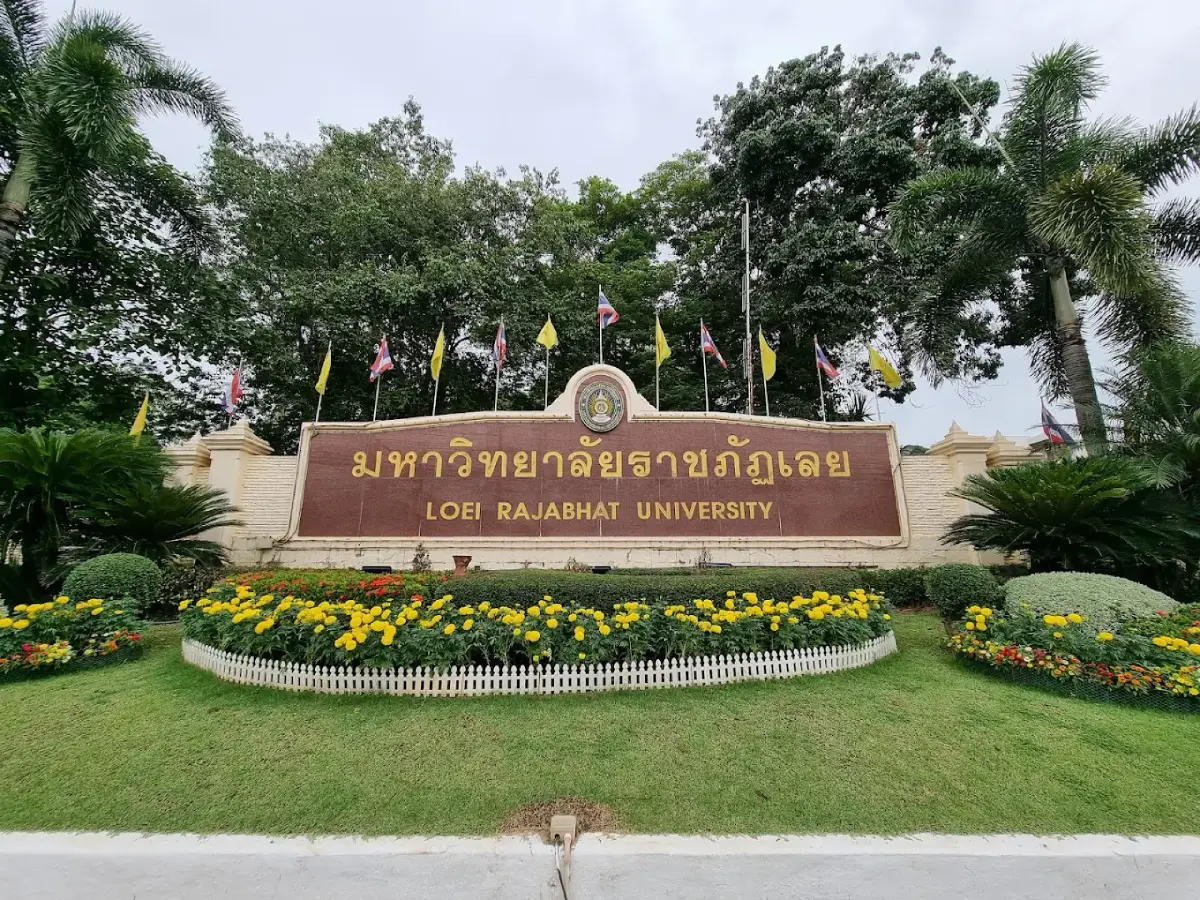
Open Days: Monday – Sunday (Academic Resource Center, Except Public Holidays)
Opening Hours: 08:30 – 16:30 (Academic Resource Center Service Hours)
Loei Rajabhat University (LRU) is a public university located at 234 Loei–Chiang Khan Road, Mueang Subdistrict, Mueang Loei District, Loei Province 42000, Thailand. Established on September 29, 1973, it began as Loei Teachers College, became Loei Rajabhat Institute in 1995, and acquired university status on June 15, 2004. Today, the university comprises five principal faculties: Education, Humanities and Social Sciences, Science and Technology, Engineering and Industrial Technology, and Management Science. It also operates the Loei Rajabhat University Education Center in Khon Kaen Province. Its principal strengths lie in teacher education, applied research for local development, the preservation of Tai Loei cultural heritage, and expanding educational opportunities for communities in northeastern Thailand.
Loei Rajabhat University plays an important role in connecting higher education with community development and the regional economy. Its responsibilities extend beyond awarding academic degrees to include research, technology transfer, academic services, lifelong learning, cultural preservation, and the improvement of local quality of life. The university places particular value on knowledge associated with Tai Loei culture, local traditions, mountain environments, rural communities, and the broader cultural landscape of the Mekong region.
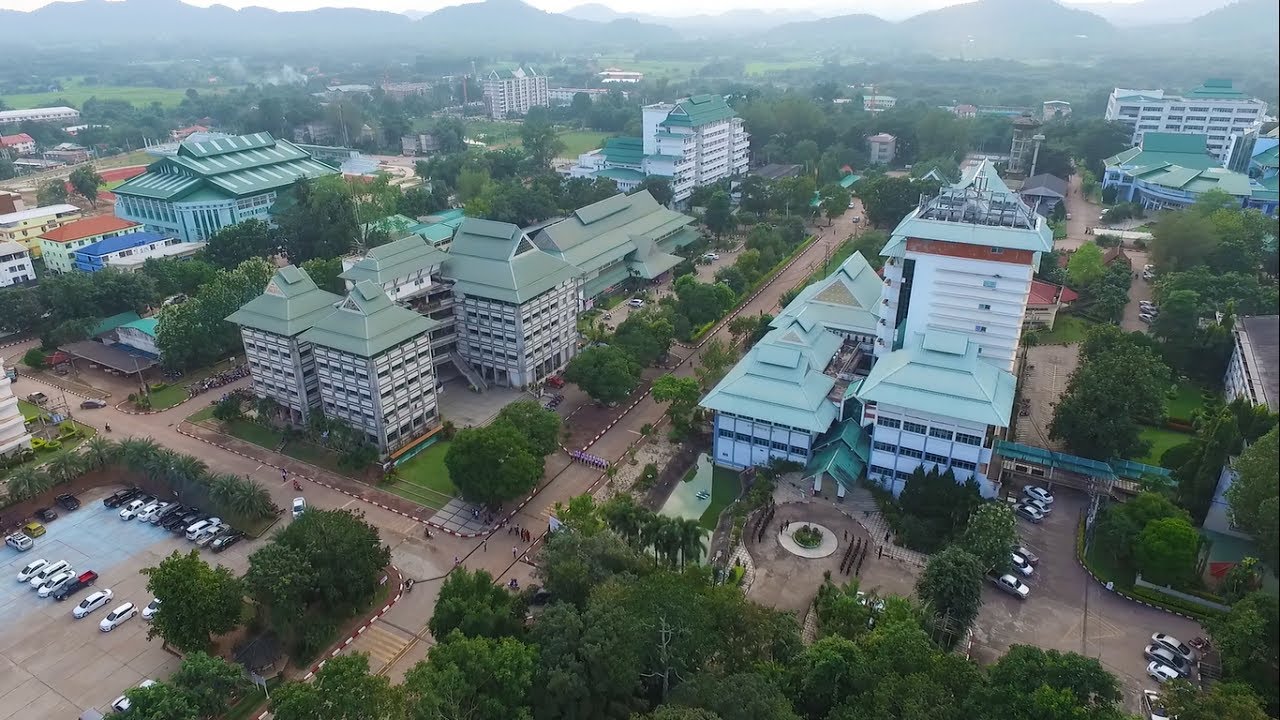
The university occupies a site in the Thung Khum Thong area along Highway 201, the Loei–Chiang Khan Road, approximately five kilometres from central Loei. The original campus covered about 323 rai, developed from land belonging to the Loei Provincial Administrative Organization and adjoining local landowners. This relatively extensive site provided room for academic buildings, sports grounds, research facilities, student activity areas, and future campus development.
The university's surroundings reflect the distinctive geography of Loei Province, where hills, mountains, and natural landscapes are important characteristics of the environment. Academic buildings and green spaces create a setting for formal education alongside recreation and outdoor activities. As an educational institution in the provincial capital, the university also maintains close connections with schools, local government offices, businesses, and surrounding communities.
Before the university was founded, northeastern Thailand required greater access to teacher training and professional educational development. Schools in provincial and rural areas needed qualified teachers who could support local children and contribute to the development of their communities. Establishing a teachers college in Loei was therefore part of a wider national effort to extend higher education and teacher preparation beyond major urban centres.
On September 29, 1973, Loei Teachers College was formally established under the Ministry of Education. Initial campus development was supported through funding associated with a World Bank loan project, reflecting public investment in Thailand's educational infrastructure. The early priorities included preparing land, constructing academic buildings, and recruiting qualified personnel for the institution's teaching and administrative operations.
Between 1973 and 1975, the new college concentrated on establishing the facilities and systems needed before admitting its first students. Work included developing classrooms, accommodation, administrative structures, teaching arrangements, and educational services. Cooperation from government agencies, private organizations, and the people of Loei Province contributed to the development of the new institution.
In the 1976 academic year, Loei Teachers College admitted its first cohort of 640 students to the Certificate in Education program. Forty-seven lecturers and academic staff members were assembled through transfers from Udon Thani Teachers College, Pibulsongkram Teachers College, and Nakhon Sawan Teachers College, together with newly recruited instructors. Teaching officially began on June 10, 1976, marking a decisive milestone in the institution's history.
The admission of the first cohort established the college's role in preparing professional teachers for Loei and neighboring provinces. Graduates went on to work in schools and communities, carrying their knowledge and teaching skills into different parts of the region. Teacher education consequently became a lasting element of the institution's identity even as its academic responsibilities later expanded into many other disciplines.
In 1977, the college introduced higher-level education certificates and extended its academic provision across Education, Liberal Arts, and Science. These developments created more choices for students with different interests and career objectives. They also laid the academic foundations for faculties and disciplines that would become important components of the modern university.
During the 1980 academic year, Loei Teachers College introduced its first regular Bachelor of Education program. This represented an important advance in the academic qualifications available to future teachers. In 1982, the college also began offering a two-year bachelor's completion pathway for students who already possessed relevant educational qualifications.
Amendments to the Teachers College Act in 1984 further expanded the role of teachers colleges throughout Thailand by allowing broader education in disciplines beyond teacher preparation. Loei Teachers College consequently developed programs across Education, Science, and Liberal Arts, marking its gradual transformation from a specialist teacher-training institution into a more diversified higher education provider.
During 1987 and 1988, the college updated its curricula in response to national educational frameworks and changing academic requirements. These revisions affected teacher education, science, and liberal arts while strengthening cooperation with local communities. The institution increasingly developed the characteristics of a regional higher education centre rather than a college devoted exclusively to teacher training.
The transition from Loei Teachers College to Loei Rajabhat Institute was another major historical milestone. King Bhumibol Adulyadej, Rama IX, bestowed the name Rajabhat upon Thailand's teachers college institutions. Following the introduction of the Rajabhat Institute Act of 1995, Loei Teachers College became Loei Rajabhat Institute, with the legal change taking effect on January 25, 1995.
The Thai term “Rajabhat” conveys the meaning of a person serving the King. In the educational context, the name is closely associated with an institutional commitment to public service and community development. It represents the responsibility of Rajabhat institutions to use education, research, and professional knowledge for the benefit of society, especially local communities.
Following its new status as a Rajabhat Institute, the institution broadened its academic mission. Teaching, professional education, research, community service, and cultural preservation all became increasingly important. More undergraduate programs and flexible educational arrangements were developed during the late 1990s and early 2000s, helping expand access to higher education for different groups of learners.
On June 15, 2004, the Rajabhat University Act of 2004 came into effect, formally upgrading Loei Rajabhat Institute to Loei Rajabhat University. This transition established its status as a public university and strengthened its ability to pursue university-level teaching, research, academic services, and regional development under a more comprehensive academic and administrative structure.
The institution's history therefore includes several distinct dates. September 29, 1973, marks the establishment of Loei Teachers College. June 10, 1976, marks the beginning of formal teaching. January 25, 1995, marks the legal transition to Loei Rajabhat Institute, and June 15, 2004, marks the beginning of its present university status. These dates represent different stages of one institution's development.
By 2026, Loei Rajabhat University had reached its 53rd year since its establishment in 1973 and had held university status for more than 22 years. Its long history has contributed to the development of extensive networks of alumni, teachers, school administrators, public officials, and professionals who continue to contribute to communities in Loei and surrounding provinces.
Assistant Professor Dr. Panumas Promthet serves as President of Loei Rajabhat University in 2026. A formal ceremony acknowledging his royal appointment was held at the university on January 9, 2026. University administration operates through the University Council, President, Vice Presidents, faculties, offices, institutes, and supporting academic units responsible for education and community development.
The university's guiding maxim is expressed in Pali as “Paññā hi seṭṭhā kusalā vadanti,” meaning “Wisdom is regarded by the wise as the most excellent.” This principle reflects the value placed on knowledge, understanding, and the responsible application of learning. The university's educational mission emphasizes intellectual development alongside professional competence and a commitment to public service.
The university's official colors are light blue and pink, while its symbolic tree is Chan Pha, a distinctive ornamental tree associated with the landscape and identity of Loei. Its emblem incorporates the royal insignia of King Bhumibol Adulyadej, Rama IX, within an oval design carrying the university's Thai and English names. The emblem reflects the royal origins of the Rajabhat name and is a recognizable symbol shared across Thailand's Rajabhat university system.
The emblem contains five significant colors: blue, green, gold, orange, and white. Blue represents the monarchy, green reflects nature and the environment, gold symbolizes intellectual prosperity, orange signifies the development of local arts and culture, and white represents purity of thought and scholarship. Together, these meanings connect education, culture, society, and the natural environment.
Academic education at Loei Rajabhat University is organized through five faculties, each specializing in different professional and academic disciplines. Their shared objective is to prepare graduates with the capacity to contribute to sustainable regional development. The university offers undergraduate and postgraduate education, including regular and special study arrangements according to individual programs, and also operates an education centre in Khon Kaen Province.
The Faculty of Education is one of the clearest expressions of the university's historical identity as a teachers college. Its academic fields include Early Childhood Education, Elementary Education, Mathematics, Thai Language, English Language, Social Studies, General Science, Computer Education, Art Education, Music Education, Dance, Physical Education, and Industrial Arts. Postgraduate education includes Educational Administration and educational research-related disciplines.
Modern teacher education requires more than expertise in an academic subject. Student teachers must also understand learning psychology, curriculum design, classroom management, assessment techniques, and the effective use of technology. Professional teaching placements in schools are therefore a vital part of preparing graduates to apply their knowledge and develop practical teaching competence.
The Faculty of Education also contributes to the professional development of existing teachers and educational personnel through training, knowledge exchange, and postgraduate study. These activities support efforts to improve educational quality in Loei and neighboring provinces, consistent with the wider Rajabhat mission of serving regional communities.
The Faculty of Humanities and Social Sciences provides education associated with languages, culture, law, public administration, arts, and community development. Published fields include Thai, English, Business English, Chinese and English for Communication, Community Development, Public Administration, Law, Visual Arts, Digital Art, and Music.
Language and communication programs help students prepare for professional work, further education, and interaction across cultures. Community Development and Public Administration are relevant to local government, public organizations, and community-based initiatives, while Law develops understanding of legal systems and structured reasoning within the justice process.
Fine arts and music also contribute to the university's academic identity and its relationship with the cultural heritage of Loei. Students can develop creative skills in visual arts, digital media, and musical performance while exploring how artistic knowledge can support the interpretation, preservation, and communication of local culture.
The Faculty of Science and Technology provides education in fundamental and applied sciences, digital technology, agriculture, food and nutrition, environmental studies, and sports science. Teaching combines theoretical knowledge with laboratory work, data analysis, experiments, and practical training, enabling students to apply scientific understanding to challenges affecting communities, industries, and the environment.
Digital Technology covers fields such as Data Science, Computer Science, and Information Technology, which are important to data processing, software systems, information management, and digital organizational development. Biological Sciences, Applied Chemistry, and Physics contribute essential foundations for scientific investigation and technological innovation.
Agriculture, Animal Science, and Food Science are particularly relevant to northeastern communities where agricultural production remains an important economic activity. These disciplines can contribute to better production systems, resource management, food quality, and product development. Environmental studies support the responsible use of natural resources and the understanding of environmental challenges.
The Faculty of Engineering and Industrial Technology develops technical and professional knowledge relevant to engineering design, manufacturing, construction, and industrial management. Undergraduate fields promoted for 2026 include Electrical and Electronics Engineering, Production Engineering, Industrial Management Engineering, and Civil Engineering. Industrial Arts teacher education is also associated with the faculty's practical training activities.
Engineering education emphasizes applied problem-solving, technical design, appropriate materials, quality management, and safety. Students must combine scientific and mathematical understanding with practical judgment. Industrial Arts education connects technical and craft-related skills with teaching methods for learners preparing for vocational and technical occupations.
The Faculty of Management Science provides education in business administration, accounting, marketing, tourism, hospitality, logistics, economics, and digital communication. These disciplines support the development of employees and entrepreneurs capable of working in private enterprises, public organizations, and service industries, including businesses associated with tourism in Loei Province.
Digital Marketing and Digital Business Computing help students understand consumer behavior, online communication, and the use of business information. Logistics and Supply Chain Management examines transportation, inventory, purchasing, and operational coordination. Tourism and Hotel Management is relevant to visitor services, hospitality operations, and the regional tourism economy.
In addition to its main campus in Loei, the university operates the Loei Rajabhat University Education Center in Khon Kaen Province. The centre provides special-program education intended to support students who need to combine higher education with employment. Its 2026 admissions information lists six fields: Management, Accounting, Public Administration, Law, English, and Business English.
The Khon Kaen Education Center expands access to Loei Rajabhat University programs beyond the main campus. Prospective students should distinguish clearly between courses delivered in Loei and those available in Khon Kaen, because teaching locations, schedules, and admissions arrangements can differ.
At postgraduate level, the university has published programs in Educational Administration, Educational Research Innovation, Thai Language, English Language, Social Development, Business Administration, and Accounting. Doctoral programs are also associated with Educational Administration, Social Development, and Regional Development Strategy. These fields contribute to the development of researchers, teachers, administrators, and professionals who require advanced academic skills.
Graduate education offers opportunities to investigate complex issues using systematic research methods. It is particularly valuable for school administrators, teachers, public officials, business professionals, and researchers working with community-related challenges. Postgraduate studies can support the development of new knowledge, improved educational practice, and more effective institutional management.
Research and innovation form an important component of the university's local development mission. The Research and Development Institute supports academic investigations and the publication of scholarly work. Research areas relevant to Rajabhat universities include community enterprises, agricultural production, education, environmental management, and the improvement of local livelihoods.
Working with communities helps ensure that research responds to practical challenges rather than remaining only an academic exercise. Effective regional development requires fieldwork, understanding local priorities, and applying research findings in cooperation with community organizations, entrepreneurs, and public agencies. Loei Rajabhat University consequently serves as a bridge between academic knowledge and community needs.
Academic services provide another means of sharing university resources with society. Training programs, professional development activities, educational projects, and technical support allow community members, teachers, local leaders, and entrepreneurs to benefit from knowledge generated within the university.
Scientific and technological development also receives attention through academic events, exhibitions, and student activities. Such initiatives help learners understand the role of science and technology in everyday life and professional work while encouraging an interest in research and innovation.
On August 18, 2026, Loei Rajabhat University held National Science Week activities, with University President Assistant Professor Dr. Panumas Promthet presiding over the opening ceremony. The event gave schoolchildren and university students opportunities to explore scientific knowledge through exhibitions and educational presentations.
University traditions and cultural activities are another important expression of institutional identity. They include events shared across the Rajabhat university system, teacher-honoring ceremonies, student orientation, professional traditions, and programs preserving local arts and culture. These activities strengthen relationships among students, faculty members, staff, and alumni.
February 14 is recognized as Rajabhat Day, commemorating the royal name bestowed upon the Rajabhat institutions and the ideals of public service associated with them. Activities marking the occasion may include Buddhist merit-making, exhibitions, academic discussions, and recognition of individuals who have made valuable contributions to the university and society.
The Wai Khru ceremony, in which students pay respect to teachers, is especially meaningful at a university with a history rooted in teacher education. On July 2, 2026, the university organized its annual teacher-honoring ceremony under a theme expressing the gratitude and devotion of Loei Rajabhat students. Held at Khum Thong Wilai Auditorium, the ceremony involved university administrators, lecturers, students, and alumni.
Activities during the 2026 Wai Khru ceremony included Buddhist chanting, tributes to teachers, floral offerings, and a student pledge. The university also honored distinguished alumni and students whose achievements had brought recognition to the institution. These elements connected traditional expressions of gratitude with the modern academic community.
On July 16, 2026, the Faculty of Engineering and Industrial Technology organized a Wai Khru Chang ceremony, a tradition associated with technical and engineering education. The ceremony expressed respect for teachers who pass on practical skills and technical expertise while emphasizing responsibility, discipline, and safe professional practice.
Preserving Tai Loei cultural heritage is another important mission. The university's Office of Arts and Culture supports the documentation and transmission of local knowledge, traditional practices, artistic expression, and community history. These activities help preserve the province's cultural identity while connecting students with the knowledge and experiences of older generations.
One initiative highlighting these connections is the cultural program celebrating Tai Loei arts and traditions. On September 25, 2026, university personnel participated in a Buddhist almsgiving ceremony involving nine monks at the activity area of the university's Professional Development and Lifelong Education Center for Older Persons.
Cultural activities of this kind allow students and staff to learn through direct participation. Buddhist traditions, local performances, and the sharing of traditional knowledge contribute to cultural continuity and create opportunities for communication among different generations within the university community.
One of the university's most distinctive places of educational interest is the Museum of Art and Culture of Loei, widely known as MALOEI. Managed by the Office of Arts and Culture, the museum developed from the provincial cultural centre established in 1987 and subsequently evolved into a local museum devoted to the history, heritage, and identity of Loei Province.
MALOEI presents knowledge about the province from natural history and archaeology to the lives of contemporary communities. Exhibits address fossils, dinosaur footprints, ancient stone tools, local minerals, ethnic groups, traditional clothing, Bun Luang and Phi Ta Khon traditions, and historical connections with the Lan Xang kingdom.
The museum helps visitors appreciate the diversity of Loei's landscapes, history, and cultural traditions. Its displays explain the Tai Loei identity and the connections between communities in the province and the wider Mekong region. The collections are particularly valuable for school groups, university students, researchers, and visitors interested in regional heritage.
The museum has welcomed educational visits from schools, academic institutions, and other organizations. Groups wishing to arrange a visit should contact the university's Office of Arts and Culture in advance so that suitable arrangements and educational support can be provided.
Another important facility is the Academic Resource Center, the university's central library and learning resource service. It provides printed materials, journals, digital databases, and spaces for reading, independent study, and collaborative work. Its information systems support university teaching, research, and academic development.
The Academic Resource Center developed from the library of the original teachers college and expanded as the institution grew. Its facilities have evolved from conventional book collections into a more comprehensive learning environment, including collaborative study and Co-Working Space facilities developed in 2025.
The university also has Khum Thong Wilai Auditorium, an important venue for ceremonies and major academic activities. Ruam Jai Stadium supports sports and physical recreation, while academic buildings such as the Wichayakan Building and the main classroom complexes provide teaching space and administrative services for students from different faculties.
Information technology services are supported by the Computer Center, online student registration, digital learning resources, and campus networking systems. These facilities enable students and staff to access information, complete academic procedures, and develop digital skills relevant to modern education and professional work.
Prospective students should consult the Office of Academic Promotion and Registration for current admission announcements. The university published undergraduate regular-program and special-program admissions information for the 2026 academic year. Study arrangements differ by faculty, qualification level, and teaching location, so applicants should verify their selected program's schedule and eligibility conditions.
Choosing a program involves consideration of academic interests, professional goals, and university admission requirements. Those interested in teaching should examine the Bachelor of Education curricula and teacher professional standards. Students interested in technology may explore science and engineering programs, while careers in government, business, culture, and tourism can be supported by programs within Humanities and Social Sciences or Management Science.
For educational tourism, Loei Rajabhat University offers a combination of teacher-training heritage, a local cultural museum, arts and cultural activities, and research units that work with communities. Visiting the university can help visitors understand the relationship between education and regional development, particularly the institution's role in preserving and communicating Loei's cultural heritage.
Visitors should recognize that the campus is an active higher education institution. Classrooms, laboratories, and certain offices are intended for students and authorized personnel. Group visits to the museum, academic departments, or specialized facilities should be arranged with the relevant university office in advance.
Getting There is straightforward from Loei town. The university is located at 234 Loei–Chiang Khan Road, Mueang Subdistrict, Mueang Loei District, Loei 42000. Travelers using a private vehicle can follow Highway 201 from central Loei toward Chiang Khan and continue to the university entrance, using road signs and navigation services as necessary.
Visitors arriving by interprovincial bus can continue from Loei Bus Terminal using local transportation or a taxi. Those traveling by air can arrive at Loei Airport and then take a local transport service to the campus. Travel plans should allow sufficient time for appointments, examinations, admission procedures, or scheduled university activities.
For general inquiries, the university can be contacted at +66 42 835224 to +66 42 835228 or through its official website, https://lru.ac.th/. Students seeking information about admission, course registration, credit transfer, or academic documents can contact the Office of Academic Promotion and Registration through https://academic.lru.ac.th/th/.
The Academic Resource Center publishes service hours from Monday through Sunday, 08:30 to 16:30, except on public holidays. Registration, finance, and other administrative offices may maintain different schedules. Visitors should therefore confirm the relevant office's service hours before traveling for a specific appointment.
University visits can also be combined with sightseeing in the surrounding Loei area. Places of interest include the Museum of Art and Culture of Loei on campus, Wat Tham Pha Pu, Loei City Pillar Shrine and Chao Pho Kut Pong Shrine, Kut Pong Public Park, and Phu Bo Bit Forest Park. These sites offer opportunities to explore local history, religion, culture, and nature.
Loei Rajabhat University holds an important place in the educational history of Loei Province. From its establishment as a teachers college in 1973, it has developed through several institutional stages and broadened its responsibilities across professional education, research, public services, and cultural preservation while maintaining its commitment to local development.
The university's significance is measured not only by its academic faculties and degree programs, but also by its relationships with local people and cultural traditions. Preparing teachers and professionals, preserving Tai Loei heritage, encouraging lifelong learning, and applying knowledge for public benefit all contribute to the continuing importance of Loei Rajabhat University within the regional development of northeastern Thailand.
| University Name | Loei Rajabhat University (LRU) |
| Thai Name | มหาวิทยาลัยราชภัฏเลย |
| University Type | Public University, Rajabhat University System |
| Address | 234 Loei–Chiang Khan Road, Mueang, Mueang Loei, Loei 42000, Thailand |
| Institution Established | September 29, 1973 |
| Teaching First Began | June 10, 1976 |
| Rajabhat Institute Status | January 25, 1995 |
| University Status | June 15, 2004 |
| Former Names | Loei Teachers College; Loei Rajabhat Institute |
| Historical Significance | Established for Teacher Education and Developed Into a Public University Dedicated to Education, Research, Community Services, and Local Development |
| University President in 2026 | Assistant Professor Dr. Panumas Promthet |
| University Maxim | Paññā hi seṭṭhā kusalā vadanti – Wisdom Is Regarded as the Most Excellent |
| University Colors | Light Blue and Pink |
| University Tree | Chan Pha Tree |
| University Emblem | Royal Insignia of King Bhumibol Adulyadej, Rama IX, Within an Oval Bearing the University Name in Thai and English |
| Faculties | 1. Faculty of Education 2. Faculty of Humanities and Social Sciences 3. Faculty of Science and Technology 4. Faculty of Engineering and Industrial Technology 5. Faculty of Management Science |
| Education Center | Loei Rajabhat University Education Center, Khon Kaen Province |
| Levels of Study | Bachelor's Degrees, Master's Degrees, Doctoral Degrees, and Selected Graduate Diploma Programs |
| Academic Strengths | Teacher Education, Science and Technology, Engineering, Community Development, Tai Loei Cultural Heritage, Tourism, and Management |
| Important Campus Places | MALOEI Museum, Khum Thong Wilai Auditorium, Academic Resource Center, Ruam Jai Stadium, Wichayakan Building, and Academic Buildings |
| Traditions and Activities | Rajabhat Day on February 14, Wai Khru Ceremony, Wai Khru Chang Ceremony, National Science Week, and Tai Loei Cultural Heritage Activities |
| Academic Resource Center Open Days | Monday – Sunday, Except Public Holidays |
| Academic Resource Center Hours | 08:30 – 16:30 |
| Educational Visits | Advance Arrangements Recommended for Group Museum Visits, Laboratories, Academic Departments, and Other Specialized Facilities |
| Facilities | Academic Buildings, Library, Science and Computer Laboratories, Sports Facilities, Activity Spaces, and Student Information Systems |
| Getting There | Via Highway 201, Loei–Chiang Khan Road, From Central Loei |
| Nearby Attractions | 1. Museum of Art and Culture of Loei (MALOEI), On Campus 2. Wat Tham Pha Pu 3. Loei City Pillar Shrine and Chao Pho Kut Pong Shrine 4. Kut Pong Public Park 5. Phu Bo Bit Forest Park |
| Restaurants and Cafes in the Campus Area and Loei Town | 1. BaBoo Cafe 2. COFFMAN COFFEE @LRU 3. Kham Luang 2 (Campus Center) 4. Pa Thong Kham Restaurant 5. Ban Pang Yen |
| Nearby Accommodations | 1. Around Loei 2. Sukh Jai Grand Luxury Boutique Hotel 3. AU Place Hotel 4. Pilatus Apartment 5. Kirimathani Hotel |
| University Telephone | +66 42 835224 to +66 42 835228 |
| Official Website | https://lru.ac.th/ |
| Current Status | Active Public University With Academic Programs and Events in 2026 |
Academic Programs and Fields of Study at Loei Rajabhat University: Academic Year 2026
| Faculty / Education Center | Academic Programs and Fields Published by the University |
| Faculty of Education | Bachelor's Degree – Bachelor of Education Fields 1. Early Childhood Education 2. Elementary Education 3. Mathematics 4. Thai Language 5. English Language 6. Social Studies 7. Computer Education 8. General Science 9. Chemistry 10. Biology 11. Physics 12. Physical Education 13. Music Education 14. Dance 15. Art Education 16. Industrial Arts 17. Library Science and English Graduate Diploma1. Graduate Diploma in Teaching Profession Master's Degrees1. Master of Education in Educational Administration 2. Master of Education in Educational Research Innovation Doctoral Degree1. Doctor of Philosophy in Educational Administration |
| Faculty of Humanities and Social Sciences | Bachelor's Degrees 1. Bachelor of Arts in Community Development 2. Bachelor of Arts in English 3. Bachelor of Arts in Business English 4. Bachelor of Arts in Chinese and English for Communication 5. Bachelor of Arts in Thai Language 6. Bachelor of Fine Arts in Visual Arts 7. Bachelor of Fine Arts in Digital Art 8. Bachelor of Fine Arts in Music 9. Bachelor of Public Administration 10. Bachelor of Laws Master's Degrees1. Master of Arts in Thai Language 2. Master of Arts in English 3. Master of Arts in Social Development Doctoral Degrees1. Doctor of Philosophy in Social Development 2. Doctor of Philosophy in Regional Development Strategy |
| Faculty of Science and Technology | Bachelor's Degrees 1. Bachelor of Science in Digital Technology (Majors Include Data Science, Computer Science, and Information Technology) 2. Bachelor of Science in Physics 3. Bachelor of Science in Applied Chemistry 4. Bachelor of Science in Biological Sciences 5. Bachelor of Science in Agriculture 6. Bachelor of Science in Food and Nutrition 7. Bachelor of Science in Food Technology 8. Bachelor of Science in Environmental Science and Technology 9. Bachelor of Science in Animal Science 10. Bachelor of Science in Sports and Exercise Science |
| Faculty of Engineering and Industrial Technology | Bachelor's Degrees 1. Bachelor of Engineering in Electrical and Electronics Engineering 2. Bachelor of Engineering in Production Engineering 3. Bachelor of Engineering in Industrial Management Engineering 4. Bachelor of Engineering in Civil Engineering and Construction Management 5. Bachelor of Education in Industrial Arts (Delivered in Association With Teacher Education) |
| Faculty of Management Science | Bachelor's Degrees 1. Bachelor of Arts in Hotel and Tourism Management 2. Bachelor of Accountancy 3. Bachelor of Business Administration, Digital Marketing Major 4. Bachelor of Business Administration, Management Major 5. Bachelor of Business Administration in Digital Business Computing 6. Bachelor of Business Administration in Logistics and Supply Chain Management 7. Bachelor of Economics in Digital Economy 8. Bachelor of Communication Arts in Digital Communication Arts Master's Degrees1. Master of Business Administration in Management 2. Master of Business Administration in Accounting |
| Loei Rajabhat University Education Center, Khon Kaen Province | Special-Program Undergraduate Fields in the 2026 Admissions Announcement 1. Management 2. Accounting 3. Public Administration 4. Law 5. English 6. Business English |
Frequently Asked Questions (FAQ)
Q: Where is Loei Rajabhat University located?
A: The university is located at 234 Loei–Chiang Khan Road, Mueang Subdistrict, Mueang Loei District, Loei Province 42000, Thailand.
Q: What are the opening days and hours of Loei Rajabhat University?
A: The Academic Resource Center is open Monday through Sunday, from 08:30 to 16:30, except public holidays. Administrative and registration offices may follow different schedules.
Q: When was Loei Rajabhat University founded?
A: It was established on September 29, 1973, as Loei Teachers College. It became Loei Rajabhat Institute in 1995 and acquired university status on June 15, 2004.
Q: What faculties does Loei Rajabhat University have?
A: The university has five faculties: Education, Humanities and Social Sciences, Science and Technology, Engineering and Industrial Technology, and Management Science.
Q: Does Loei Rajabhat University operate an education center outside Loei?
A: Yes. The university operates an education center in Khon Kaen Province, where special-program undergraduate admissions were announced for the 2026 academic year.
Q: Is Loei Rajabhat University a public or private university?
A: It is a public university within Thailand's Rajabhat university system, with missions in education, research, academic services, and local development.
Q: What is the MALOEI Museum, and where is it located?
A: The Museum of Art and Culture of Loei, known as MALOEI, is located on the university campus. It presents exhibitions about Loei's history, arts, cultural heritage, ethnic communities, lifestyles, and local traditions.
Q: What important university traditions are observed?
A: Activities include Rajabhat Day, Wai Khru, Wai Khru Chang, and Tai Loei cultural heritage programs. The university held its 2026 Wai Khru ceremony at Khum Thong Wilai Auditorium on July 2, 2026.
Q: How do I travel to Loei Rajabhat University?
A: Follow Highway 201, the Loei–Chiang Khan Road, from central Loei to the university. Visitors can travel by private car, taxi, or available local transport.
Q: How can I contact Loei Rajabhat University?
A: Call +66 42 835224 to +66 42 835228 or visit the official website at https://lru.ac.th/.
 Category: ●University
 Group: ●Rajabhat University
Last Update : 6 DayAgo
 Last Update : 6 DayAgo
 Click to Access the Navigation Map GPS
Loei Rajabhat University Map
Recommend

 Art, Culture and Heritage
 Historical Sites and Monuments(2)
 Landmarks and Memorials(3)
 Art, Craft Centres, Tradition(2)
 Museums(4)
 Art Gallery(1)
 Educational Places
 Educational Gardens, Farm(2)
 Autonomous Universities(1)
Rajabhat University(1)
 Places of Worship
 Temple(16)
 Other Sacred Sites(8)
 Research and Development
 Royal Project(3)
 Suburban Living
 Village, Community(3)
 Local Market(1)
 Nature and Wildlife
 National Parks and Marine Reserves(5)
 Mountain (Doi)(10)
 Dam, Reservoir, Lake(7)
 Waterfalls(21)
 Caves(3)
 River, Canal(5)
 Bays and Beaches(1)
 Other natural attractions(1)
 Entertainment and Agricultural
 Farms, Parks and Ecotourism(8)
 Waterpark(1)
 Outdoor and Adventure Activities(2)
 Travel Articles, Recipes
 Travel Review, Food Review(1)


