
lovethailand home >Northeastern Travel Attractions >Loei Travel Attractions >Muang Loei >Na O > Wat Si Chan Folk Museum
TL;DR: Wat Si Chan Folk Museum, Loei attractions : Art, Culture and Heritage, Museums.

Wat Si Chan Folk Museum
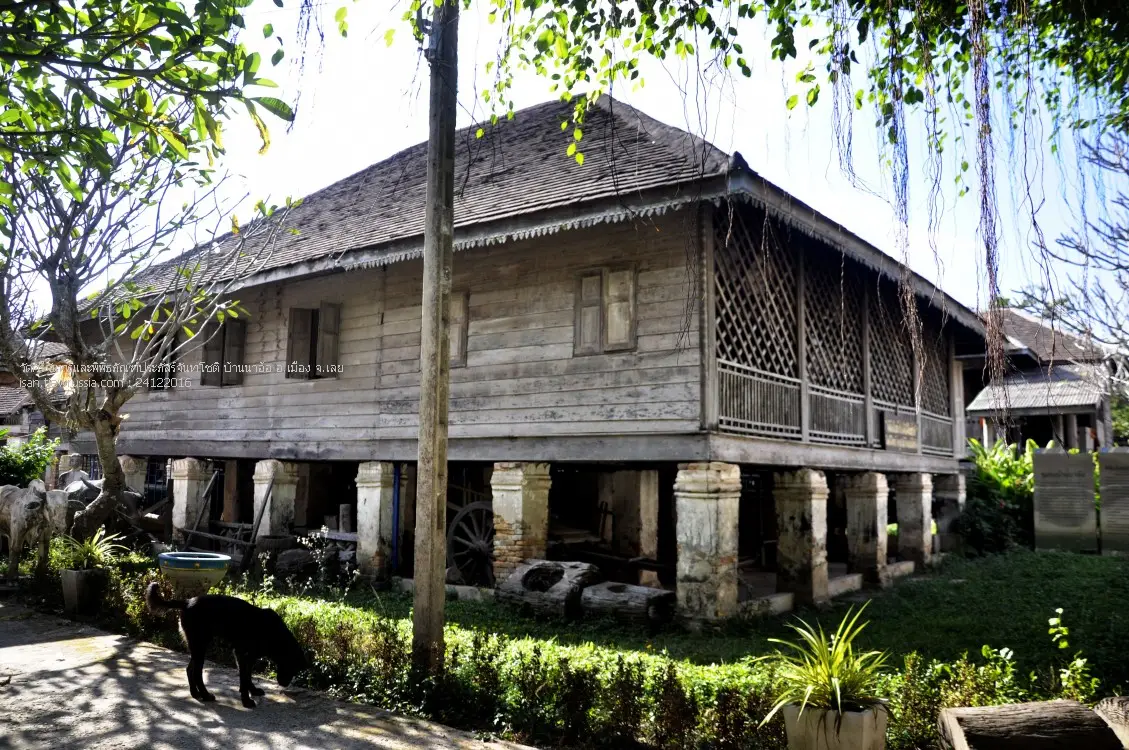
Open Days: Daily, advance contact is recommended before visiting
Opening Hours: Please contact the temple or museum caretaker in advance before visiting
Wat Si Chan Folk Museum in Loei Province, also known as Wichan Sangkha Kit Folk Museum at Wat Si Chan or Praphat Chanthachot Museum, Wat Si Chan, Memorial of Wichan Sangkha Kit, is a small but highly meaningful local museum in Ban Na O, Na O Subdistrict, Mueang Loei District, Loei Province. Located inside Wat Si Chan on the Loei–Chiang Khan road, the museum preserves old tools, household objects, occupational equipment, religious objects, textiles, basketry, manuscripts, and local cultural memories of the Na O community. For foreign travelers who want to understand rural Thai life, Tai Loei culture, Buddhist community life, and the everyday wisdom of older generations, this museum offers a sincere and grounded introduction to local heritage.
The museum is important because it does not present heritage as something distant or decorative. Most objects displayed here were once used by ordinary people in real life. They belonged to farmers, weavers, households, temple communities, musicians, craftsmen, and families in Ban Na O. Together, these objects show how people worked, cooked, worshipped, dressed, traded, celebrated, and lived before modern consumer goods became common. The museum therefore helps visitors understand that local culture is built not only from temples and festivals, but also from the tools and routines of daily life.
Ban Na O is one of the old communities of Loei Province. Local history tells that people in this area had cultural connections with Vientiane and Luang Prabang. The old settlement was once known as Nong Wang Khon because of a large pond and a wooden log in the middle of it. Later, people moved to a fertile area around Nong O, and the village came to be known as Ban Na O. Wat Si Chan became the first and most important temple of the community, serving as a religious, educational, social, and cultural center. This deep relationship between temple and village is the reason the museum feels closely connected to real community life.
Wat Si Chan itself is an old temple of Ban Na O. It was established in 1890 and received its consecrated boundary in 1900. The temple belongs to the Mahanikaya order and has long been known locally as Wat Ban Na O or the main temple of the village. Within the temple compound are religious buildings and objects such as the ordination hall, wooden preaching hall, chanting hall, monks’ dwellings, principal Buddha image, old Buddha images, and a stupa. These elements show that Wat Si Chan has been a spiritual and social anchor for the community for more than a century.
The name Wichan Sangkha Kit is connected to Phra Khru Wichan Sangkha Kit, also known locally as Phra Khru Pha, a former abbot of Wat Si Chan who played an important role in the development of Ban Na O. He was born in Ban Pak Mak, Na O Subdistrict, Mueang Loei District, and was known for his knowledge of Khmer, Lao, and central Thai scripts. He was also skilled in drawing animals and traditional arts. He became abbot of Wat Si Chan in 1914 and served the temple and community for many decades. The museum was named in his memory because local people wished to honor his contribution to religion, education, culture, and community development.
Phra Khru Wichan Sangkha Kit was more than a temple administrator. He helped build and restore temple structures, encouraged education, maintained monastic discipline, and guided local customs. After the Primary Education Act of 1921, many temples became important places for teaching standard Thai. Wat Si Chan also played such a role in Ban Na O. This means the temple was not only a place of worship but also a learning center. The museum preserves this memory by displaying objects connected with religion, literacy, manuscripts, and community knowledge.
The museum building uses the former residence of Phra Khru Wichan Sangkha Kit. Architecturally, it is a traditional wooden local house of Loei Province, a single-storey raised wooden structure with an open space underneath. This is important because the building itself is part of the exhibition. It reflects local building wisdom, climate adaptation, and the way people once lived in rural northeastern Thailand. Raised wooden houses allowed air to circulate, protected living areas from moisture, and provided useful space under the house for work, storage, or rest.
The exhibition inside the museum is organized into 2 main parts. The first part is a room dedicated to Phra Khru Wichan Sangkha Kit. It contains his statue, monastic requisites, photographs, biography, old Buddha images, palm-leaf manuscripts, and Thai traditional books. This area connects visitors with the former abbot whose life and work shaped the community. Near this room are religious and artistic objects such as a scripture cabinet and a naga-shaped water trough, reflecting the role of the temple as a place where Buddhist texts, sacred objects, and local craftsmanship were preserved.
The second part is the central hall of folk-life objects. At the center is a life-like display of an elderly couple sitting on a wooden platform while preparing bamboo strips for basketry. This scene gives life to the objects around it. Instead of seeing old tools as lifeless antiques, visitors can imagine how people once worked with their hands, used natural materials, and created everyday objects for their own households. Around the hall are wooden cabinets containing items donated by local people, including old money, fishing tools, weaving tools, local woven textiles, Tai Loei mor lam musical instruments, baskets, irons, scales, oil lamps, pottery, enamel trays, and rooster-pattern bowls.
The museum can also be understood through several learning zones. The first zone focuses on religion and important local figures, including the statue of Phra Khru Wichan Sangkha Kit, his biography, photographs, monastic requisites, old Buddha images, palm-leaf manuscripts, Thai books, and scripture cabinets. This zone shows how Buddhism shaped the intellectual and moral life of Ban Na O. The second zone focuses on language and literature, especially palm-leaf manuscripts and traditional Thai books. These objects remind visitors that temples were once important libraries and schools for local communities.
The third zone focuses on folk art and local craftsmanship. It includes basketry, woodcarving, a naga-shaped water trough, and elements related to Tai Loei traditional architecture. This zone shows that art was not separated from everyday life. Beauty appeared in objects that were used, carried, stored, or placed within homes and temples. The fourth zone focuses on customs, performance, and community gatherings, including musical instruments used in Tai Loei mor lam and folk entertainment. Festivals and performances were more than entertainment; they helped bind people together and transmit cultural memory.
The fifth zone focuses on livelihood and local wisdom. It includes agricultural tools, fishing tools, weaving equipment, woven textiles, baskets, household utensils, old irons, scales, oil lamps, pottery, enamel trays, and rooster-pattern bowls. This is one of the easiest areas for visitors to understand because the objects speak directly about everyday life. They show how people depended on local materials, manual skill, and household knowledge. In the past, many objects were produced, repaired, and reused within the community. The museum helps preserve this knowledge before it disappears completely from modern life.
Another important part of the museum is the section on the local heroism of Ban Na O. It tells a story from the colonial era during the reign of King Rama V, when Ban Na O was said to have been used as a temporary base by French forces heading toward Mueang Loei. The French reportedly used the preaching hall of Wat Si Chan as a command base and tried to persuade villagers to cooperate. Local people refused. When Thai forces advanced, villagers joined the resistance and helped fight against the French until they retreated. Objects connected with this memory, including a brass French ashtray and the remains known locally as the French toilets inside the temple compound, make the museum significant not only as a folk museum but also as a place of local historical memory.
The objects in the museum reveal a major transition in rural society. In the past, people made many of their own tools from bamboo, rattan, wood, clay, metal, and other materials found nearby. Basketry, fishing equipment, weaving tools, and household containers reflected self-reliance and local skill. As plastic goods and factory-made products spread into rural areas, many traditional tools became less common. Skills that were once passed down within families gradually faded. Wat Si Chan Folk Museum therefore serves as a reminder that old objects are not only functional items. They are evidence of local craftsmanship, household economy, social relationships, and community independence.
The museum is also connected to living traditions at Wat Si Chan, especially Tak Bat Thewo, the Buddhist almsgiving tradition after the end of Buddhist Lent. In Thai Buddhist belief, Tak Bat Thewo recalls the Buddha’s descent from Tavatimsa Heaven after teaching the Abhidhamma to his mother. The tradition is usually held on the first waning-moon day of the 11th lunar month. At Wat Si Chan and in the Ban Na O community, this tradition remains an important opportunity for villagers to gather at the temple, offer food to monks, make merit, teach younger generations about Buddhist practice, and strengthen community ties.
Tak Bat Thewo gives the museum a living cultural context. The objects displayed inside the museum show how earlier generations lived, while the annual merit-making tradition shows how community values continue in the present. Visitors who come during the Buddhist Lent season can see that culture is not frozen in a display case. It is still practiced through food offerings, temple gatherings, respectful behavior, family participation, and shared faith. This makes Wat Si Chan a meaningful place for understanding both material culture and living ritual.
Wat Si Chan Folk Museum is best visited slowly. It is not a large museum with advanced technology or dramatic multimedia displays. Its strength lies in authenticity, community memory, and the intimacy of real objects. Visitors should allow at least 45 minutes to 1 hour to walk through the wooden building, observe the displays, read the information, and connect the objects with the story of Ban Na O. If a caretaker or local guide is available, the visit becomes even more valuable because many objects have stories that are not fully explained by labels alone.
Advance contact is recommended before visiting because the museum is a community museum inside a temple, not a commercial museum with staff permanently stationed throughout the day. The museum is listed as open daily with advance notice required, while exact visiting hours should be confirmed before arrival. There is no admission fee. Visitors may make a donation to support the temple or museum according to their faith and willingness.
Getting There is convenient from Mueang Loei. Travelers can take the Loei–Chiang Khan road toward Ban Na O in Na O Subdistrict. The distance from central Loei is about 10 to 12 kilometers, and the museum can be reached by private car, rental car, motorcycle, or local transport. The location is suitable for combining with nearby cultural and spiritual sites such as Wat Tham Pha Pu, Luang Pu Khamdee Pabhaso Museum, the Tai Loei weaving group at Ban Kang Pla, Phu Bo Bit Forest Park, and Loei Walking Street.
On arrival, visitors may begin by paying respect inside Wat Si Chan and observing the temple compound before entering the museum. The ordination hall, wooden structures, monks’ dwellings, stupa, and local architectural details help provide context for the museum. Seeing the museum together with the temple makes the experience more complete, because the objects inside the museum once belonged to a living world in which temple, home, occupation, faith, and community life were closely connected.
Visitors should dress politely, speak softly, avoid touching exhibits without permission, and respect the sacred atmosphere of the temple. Photography should be done with care, especially near Buddha images, manuscripts, sacred objects, and old artifacts. These simple forms of etiquette help preserve the museum and maintain its role as a learning space for future generations.
For families and students, Wat Si Chan Folk Museum is an excellent informal classroom. Children can see real tools from older generations, such as weaving equipment, fishing tools, baskets, irons, lamps, scales, trays, and pottery. These objects invite questions: how did people work in the past, what materials did they use, how did they make things by hand, and why should these objects be preserved? Learning from actual objects often makes local history more memorable than reading from a textbook alone.
For cultural travelers, the museum adds an important dimension to a trip in Loei Province. Loei is often associated with mountains, cool weather, Chiang Khan, Phu Kradueng, and Phu Ruea. Wat Si Chan Folk Museum reveals another side of the province: old communities, Buddhist temples, local wisdom, rural tools, folk music, weaving traditions, Buddhist festivals, and community memory. A visit here helps travelers see Loei not only as a scenic destination but also as a province with deep cultural layers.
For foreign visitors, the museum provides a clear introduction to rural Thai life and local Buddhist community culture. Even when some descriptions are in Thai, the displayed objects communicate strongly. Basketry, weaving tools, fishing equipment, musical instruments, manuscripts, old household objects, and the traditional wooden building all help explain how people once lived. The museum is therefore suitable for travelers interested in anthropology, Buddhism, local craftsmanship, folk life, and community-based tourism.
In summary, Wat Si Chan Folk Museum in Loei Province is a valuable local museum for understanding Ban Na O and Tai Loei culture. It preserves old occupational tools, household items, religious manuscripts, traditional books, Buddha images, textiles, basketry, folk musical instruments, and local historical memories inside a traditional wooden building within Wat Si Chan. The museum also connects to living traditions such as Tak Bat Thewo after Buddhist Lent. Though small in scale, it offers a rich and sincere view of community heritage, making it a worthwhile stop for anyone who wants to understand Loei beyond its mountains and rivers.
| Name | Wat Si Chan Folk Museum / Wichan Sangkha Kit Folk Museum at Wat Si Chan / Praphat Chanthachot Museum, Wat Si Chan, Memorial of Wichan Sangkha Kit |
| Location | Wat Si Chan, Loei–Chiang Khan Road, Ban Na O, Na O Subdistrict, Mueang Loei District, Loei Province 42000, Thailand |
| Address | No. 83, Moo 1, Ban Na O, Na O Subdistrict, Mueang Loei District, Loei Province, Thailand |
| Highlights | A community folk museum inside an old temple, displaying occupational tools, household objects, palm-leaf manuscripts, traditional Thai books, basketry, local textiles, Tai Loei musical instruments, and the Tak Bat Thewo tradition |
| History | Wat Si Chan was established in 1890 and received its consecrated boundary in 1900. The folk museum was established in 1999 and uses the former residence of Phra Khru Wichan Sangkha Kit as its exhibition building. |
| Distinctive Features | A raised single-storey wooden building in the local architectural style of Loei Province, preserving real objects once used by villagers in daily life, occupations, and religious activities |
| Key Exhibits | Statue of Phra Khru Wichan Sangkha Kit, monastic requisites, photographs, biography, old Buddha images, palm-leaf manuscripts, traditional Thai books, scripture cabinet, naga-shaped water trough, old money, fishing tools, weaving tools, local textiles, Tai Loei mor lam instruments, baskets, irons, scales, oil lamps, pottery, enamel trays, rooster-pattern bowls, and objects related to the local heroism of Ban Na O |
| Main Areas / Zones | 1. Phra Khru Wichan Sangkha Kit history zone with statue, monastic requisites, photographs, and biography 2. Religion and manuscript zone with old Buddha images, palm-leaf manuscripts, traditional Thai books, and scripture cabinet 3. Folk art zone with naga-shaped water trough, carved objects, and Tai Loei architectural elements 4. Local life and wisdom zone with occupational tools, fishing tools, weaving tools, basketry, and household objects 5. Textile and traditional clothing zone with local woven textiles and sin mi cloth 6. Folk music and performance zone with Tai Loei mor lam instruments and local musical instruments 7. Local history and Ban Na O heroism zone 8. Wat Si Chan temple area and Tak Bat Thewo tradition |
| Abbot / Caretaker | Managed by the temple and community; the abbot of Wat Si Chan is Phra Khru Praphat Chanthachot |
| Travel Information | From central Loei, take the Loei–Chiang Khan road toward Ban Na O, Na O Subdistrict. The museum is about 10 to 12 km from the city center and can be reached by private car, rental car, motorcycle, or local transport. |
| Current Status | Open |
| Open Days | Daily, advance contact is recommended before visiting |
| Opening Hours | Please contact the temple or museum caretaker in advance before visiting |
| Fees | Free admission |
| Facilities | Museum building inside the temple, worship area, temple grounds, parking area within the temple compound, and the surrounding Ban Na O community area |
| Main Contact Number | 08 7229 1021, 042-834-930 |
| Official Website / Official Page | Wat Si Chan Ban Na O Facebook page and the Museum Database of Thailand |
| Nearby Tourist Attractions | 1. Wat Tham Pha Pu, about 3 km 2. Luang Pu Khamdee Pabhaso Museum at Wat Tham Pha Pu, about 3 km 3. Tai Loei Weaving Group at Ban Kang Pla, about 5 km 4. Phu Bo Bit Forest Park, about 10 km 5. Loei Walking Street, about 11 km |
| Nearby Restaurants | 1. Je Tum Som Tam Ban Na O, about 1 km, Tel. 042-834-896 2. Mae Ying Local Food, Ban Na O, about 1 km, Tel. 093-559-6367 3. Chom Bua Cafe & Restaurant, Na O, about 4 km, Tel. 082-945-5796 4. Phu Loei Restaurant, about 11 km, Tel. 093-486-8585 5. Ban Tha Pae Restaurant, about 13 km, Tel. 095-604-5544 |
| Nearby Accommodations | 1. AU Place Hotel Loei, about 7 km, Tel. 065-237-7115, 042-813-441 2. Loei Palace Hotel, about 12 km, Tel. 042-815-668, 062-196-3889 3. Indiego Space, about 12 km, Tel. 090-974-2926 4. Loei Village Hotel, about 13 km, Tel. 042-811-599 5. HOP INN Loei, about 13 km, Tel. 02-080-2222 6. Fortune D Hotel Loei, about 14 km, Tel. 042-036-630, 064-226-2726 |
Frequently Asked Questions (FAQ)
Q: Where is Wat Si Chan Folk Museum located?
A: Wat Si Chan Folk Museum is located inside Wat Si Chan on the Loei–Chiang Khan road in Ban Na O, Na O Subdistrict, Mueang Loei District, Loei Province.
Q: When is Wat Si Chan Folk Museum open?
A: The museum is listed as open daily, but visitors should contact the temple or caretaker in advance before visiting because it is a community museum inside a temple.
Q: Is there an admission fee for Wat Si Chan Folk Museum?
A: No. Admission is free. Visitors may make a donation to support the temple or museum according to their faith.
Q: What can visitors see inside Wat Si Chan Folk Museum?
A: Visitors can see the statue of Phra Khru Wichan Sangkha Kit, monastic requisites, photographs, old Buddha images, palm-leaf manuscripts, traditional Thai books, scripture cabinet, basketry, textiles, fishing tools, weaving tools, Tai Loei musical instruments, and old household objects.
Q: How is the museum connected to Phra Khru Wichan Sangkha Kit?
A: The museum uses the former residence of Phra Khru Wichan Sangkha Kit as its exhibition building and was named in memory of the former abbot who played an important role in developing Wat Si Chan and Ban Na O.
Q: Why is Tak Bat Thewo important at Wat Si Chan?
A: Tak Bat Thewo is an important Buddhist almsgiving tradition after the end of Buddhist Lent. It connects the temple and community and helps younger generations learn Buddhist faith, ritual practice, and local culture.
Q: How long should visitors spend at Wat Si Chan Folk Museum?
A: Visitors should allow about 45 minutes to 1 hour to see the wooden building, exhibition objects, and the story of Wat Si Chan and Ban Na O.
Q: What nearby places can be visited after Wat Si Chan Folk Museum?
A: Nearby places include Wat Tham Pha Pu, Luang Pu Khamdee Pabhaso Museum, the Tai Loei weaving group at Ban Kang Pla, Phu Bo Bit Forest Park, and Loei Walking Street.
 Category: ●Art, Culture and Heritage
 Group: ●Museums
Last Update : 3 MonthAgo
 Last Update : 3 MonthAgo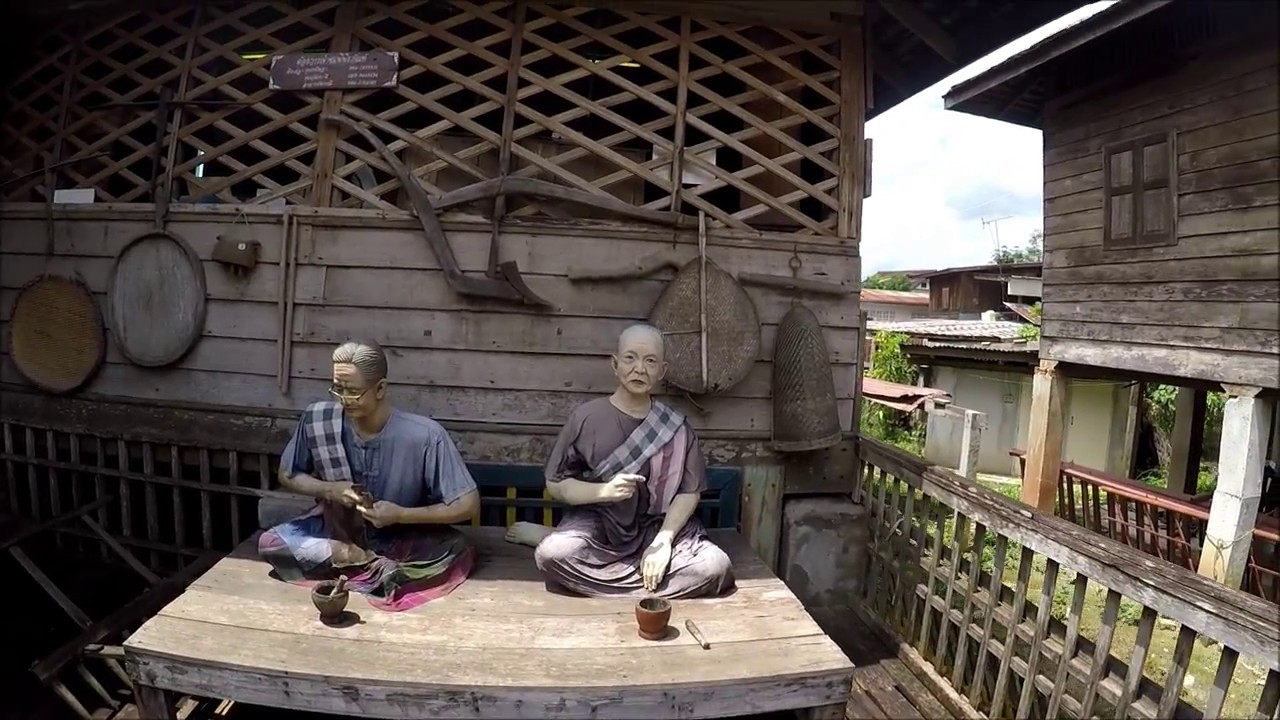
 Click to Access the Navigation Map GPS
Wat Si Chan Folk Museum Map
Recommend

 Historical Sites and Monuments(2)
 Landmarks and Memorials(3)
 Art, Craft Centres, Tradition(2)
Museums(4)
Art, Craft Centres, Tradition(2)
Museums(4)
 Art Gallery(1)
 Educational Places
 Educational Gardens, Farm(2)
 Places of Worship
 Temple(16)
 Other Sacred Sites(8)
 Research and Development
 Royal Project(3)
 Suburban Living
 Village, Community(3)
 Local Market(1)
 Nature and Wildlife
 National Parks and Marine Reserves(5)
 Mountain (Doi)(10)
 Dam, Reservoir, Lake(7)
 Waterfalls(21)
 Caves(3)
 River, Canal(5)
 Bays and Beaches(1)
 Other natural attractions(1)
 Entertainment and Agricultural
 Farms, Parks and Ecotourism(8)
 Waterpark(1)
 Outdoor and Adventure Activities(2)
 Travel Articles, Recipes
 Travel Review, Food Review(1)


