
lovethailand home >Northeastern Travel Attractions >Loei Travel Attractions >Chiang Khan >Bu Hom > Wat Phra Phutthabat Phu Khwai Ngoen
TL;DR: Wat Phra Phutthabat Phu Khwai Ngoen is located at Ban Pha Baen, Bu Hom Subdistrict, Chiang Khan District, Loei Province 42110, Thailand, open Daily, hours 06.00 – 18.00.

Wat Phra Phutthabat Phu Khwai Ngoen
Open Days: Daily
Opening Hours: 06.00 – 18.00
Wat Phra Phutthabat Phu Khwai Ngoen in Loei Province is an important Buddhist footprint shrine in Ban Pha Baen, Bu Hom Subdistrict, Chiang Khan District, Loei Province. Located on a hill not far from Chiang Khan town, the temple preserves a sacred Buddha footprint that has long been respected by local people and Buddhist visitors. The footprint is about 120 centimeters long and 65 centimeters wide. It is enshrined on a whetstone-like rock known locally as hin lap mit or hin lap phra, and it was officially registered as a historic site in 1935. For foreign travelers, this temple offers a meaningful introduction to Buddhist footprint worship, Mekong cultural heritage, Lan Xang-related religious tradition, and the quieter spiritual side of Chiang Khan.
Phu Khwai Ngoen is a name with strong local character. Phu means hill or mountain, while Khwai Ngoen means silver buffalo. The name is connected with local memory and with the silver buffalo statue that visitors usually see around the temple entrance area. This makes the temple memorable even before visitors reach the sacred footprint. The name, the hill, the statue, and the footprint all work together to create a local identity that belongs specifically to Chiang Khan. The temple is also easy to combine with nearby attractions such as Kaeng Khut Khu, Wat Tha Khaek, Chiang Khan Walking Street, Phu Thok Chiang Khan, and Chiang Khan Skywalk.
The central importance of the temple is the Buddha footprint. In Thai Buddhist culture, a Buddha footprint is not treated merely as a mark on stone. It is a sacred symbol of the Buddha’s presence, teaching, and path. Paying respect to a Buddha footprint is a way of remembering the Buddha and reflecting on the path of Dhamma. At Wat Phra Phutthabat Phu Khwai Ngoen, the footprint is especially meaningful because it is an ancient local object of worship and a registered historic site. This gives it both religious and cultural value.
According to local and heritage information, the footprint was originally a natural mark on a stone slab. It was later repaired and decorated with plaster and gilded details to preserve and present it for worship. Its artistic form is associated with the Lan Xang cultural period, roughly around the 17th to 19th Buddhist centuries of local interpretation. The present form includes a raised border, decorative details, and symbolic patterns that make the footprint suitable for veneration. Visitors should understand that the object has passed through layers of natural formation, religious interpretation, repair, and community devotion.
The official registration of the footprint as a historic site in 1935 confirms its importance beyond the local level. Historic-site status means that the footprint is not only a place of devotion but also part of the country’s cultural heritage. It helps explain the long presence of Buddhism in Chiang Khan and the wider Mekong region. The temple is therefore valuable not only for worshippers but also for travelers interested in history, archaeology, art, and cultural continuity.
There is also a long-standing local belief that, in the past, only people with strong merit and determination could reach this sacred place. The road was once difficult, and the hill route was not as convenient as it is today. This gave rise to the idea that a person who succeeded in reaching the Buddha footprint must have enough merit or spiritual readiness. Today, access is much easier, but the story remains important. It gives the temple an atmosphere of pilgrimage rather than ordinary sightseeing.
Every year on the full moon day of the third lunar month, the temple holds an annual ceremony for worshipping the Buddha footprint. This event allows local people and visitors to make merit, pay respect, listen to Dhamma, and continue a religious tradition that has been passed down through the community. The annual ceremony shows that the footprint is not a silent artifact. It remains a living sacred center connected to local Buddhist life.
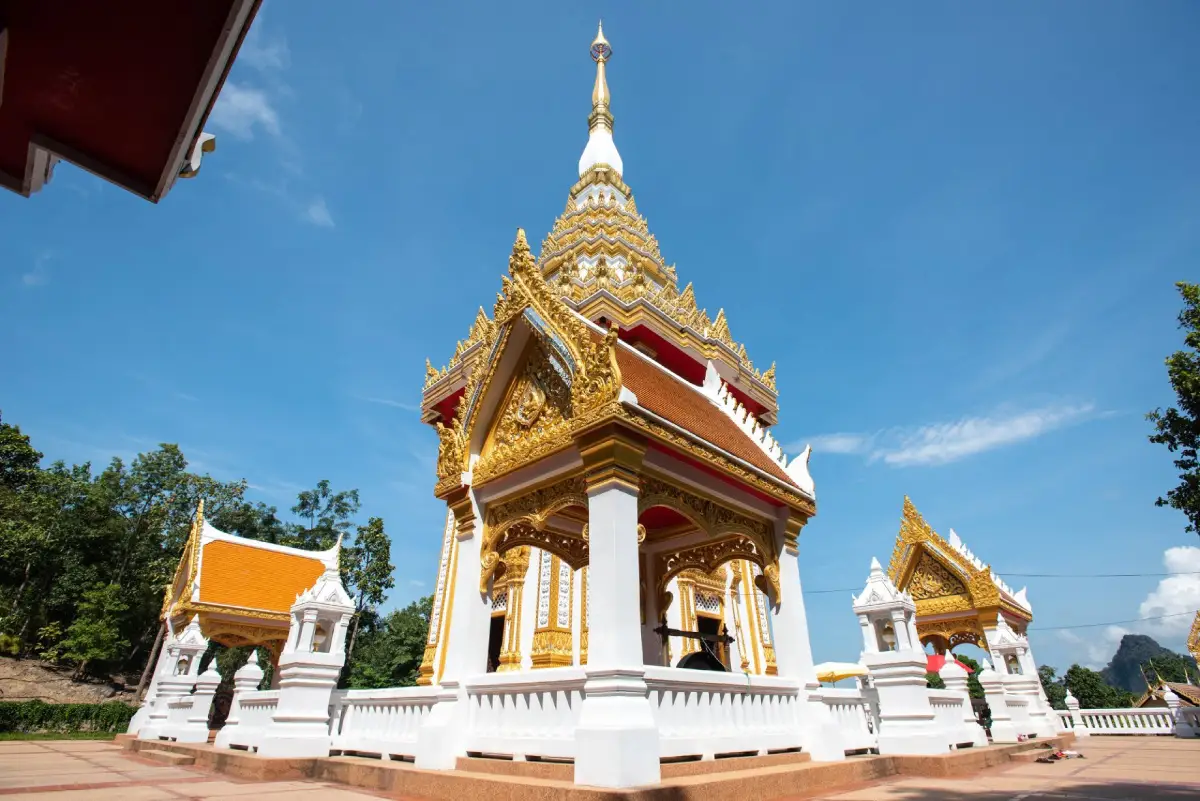
The most important area of the temple is the mondop that enshrines the Buddha footprint. Visitors climb up to the sacred hall, remove their shoes, and enter respectfully. Inside, the footprint is protected and presented for worship. Visitors should speak quietly, dress modestly, avoid touching the footprint unnecessarily, and allow space for others who are praying. The atmosphere inside the mondop is meant for reverence and reflection, not hurried photography.
Another important feature is Phra Chao Yai Phuttha Chapphanrangsi, a large white Buddha image decorated with small mirror pieces. The image creates a striking visual impression, especially when natural light reflects from the mirrored surface. Many visitors pay respect here before or after visiting the Buddha footprint. The white Buddha image adds another layer of devotion to the temple and gives the site a strong visual identity beyond the footprint itself.
The silver buffalo statue near the entrance area is one of the most recognizable symbols of the temple. It connects directly with the name Phu Khwai Ngoen and helps make the local legend visible. Although the statue is a modern symbol rather than an ancient artifact, it is important for visitors because it gives the place a memorable point of arrival. It also helps explain why the temple is associated with the image of a silver buffalo.
The temple is also known among many modern travelers for its rabbit area. Families and children often enjoy seeing and feeding rabbits at the temple, which has made the place informally known by some visitors as the rabbit temple. This area adds a gentle and family-friendly element to the visit. However, visitors should feed the rabbits only with suitable food provided or allowed by the temple, avoid chasing or touching them roughly, and keep children supervised. A temple visit should teach kindness and responsibility toward animals, not only provide entertainment.
Because the temple sits on a hill, it has a different atmosphere from the riverside temples in Chiang Khan town. Visitors can experience open air, temple steps, sacred halls, and views of the surrounding countryside. The hilltop setting makes the temple feel like a small pilgrimage site. Morning and late afternoon are especially pleasant times to visit because the light is softer and the weather is usually more comfortable for walking.
The first main zone is the Buddha Footprint Mondop. This is the spiritual heart of the temple. Visitors should treat the area as a sacred shrine and a protected historic site. Shoes should be removed before entering, voices should be kept low, and touching the footprint should be avoided unless temple guidance allows it. This area deserves a slow and respectful visit.
The second zone is the Phra Chao Yai Phuttha Chapphanrangsi area. This large white Buddha image is another major point of worship. It is suitable for prayer, merit-making, and photography in a respectful manner. The image also helps visitors understand that the temple is not only a single-object historic site but an active Buddhist place with multiple devotional spaces.
The third zone is the silver buffalo statue and entrance courtyard. This is the symbolic entrance to the temple experience. The buffalo statue connects visitors with the name of the hill and local storytelling. Visitors may take photographs here, but they should avoid climbing on the statue or using the temple space carelessly.
The fourth zone is the rabbit area. This is popular with families and children, but it should be used responsibly. Animals in a temple environment depend on good visitor behavior. Visitors should not bring unsuitable food, frighten the rabbits, or treat the area as a playground without rules. Kindness to animals is part of the visit’s moral meaning.
The fifth zone is the hill-view and resting area. After paying respect at the footprint and Buddha image, visitors can pause and enjoy the quiet surroundings of Phu Khwai Ngoen. This area provides a good contrast to the more crowded parts of Chiang Khan such as the walking street. The calm atmosphere helps visitors experience the temple as a place for reflection.
The sixth zone is the monastic and religious area. Wat Phra Phutthabat Phu Khwai Ngoen is still an active temple, so visitors should avoid entering monks’ residences or restricted spaces without permission. Modest clothing, quiet behavior, and respect for temple rules are important. The site should be approached as a sacred place, not only as a tourist attraction.
Getting There is straightforward from Chiang Khan town. Take the Chiang Khan–Pak Chom route or Highway 211 toward Ban Pha Baen for about 6 kilometers. At Ban Pha Baen, turn toward Ban Umung for about 3 kilometers, then continue up the paved hill road for about 1 kilometer to reach the temple. The road is much easier today than in the past, but drivers should still be careful on the uphill section. A private car, rental car, motorcycle, or local transport from Chiang Khan can be used.
From Chiang Khan Walking Street or riverside accommodation, visitors should allow about 20 to 30 minutes depending on traffic and travel style. The temple can be combined easily with Kaeng Khut Khu, Wat Tha Khaek, and Ban Noi Tourist Service Center. A good route is to visit the temple in the morning, continue to Kaeng Khut Khu, and then return to Chiang Khan town for the evening walking street.
The temple is open daily from 06.00 to 18.00 and does not charge an admission fee. Visitors may make merit according to their faith. Morning visits are cooler and quieter, while late afternoon visits offer softer light. Visitors should avoid arriving near closing time and should be considerate if religious activities are taking place.
Although entry is free, visitors should remember that the temple is both a sacred place and a historic site. They should help keep the area clean, avoid touching sacred or fragile objects, avoid writing or scratching surfaces, and behave respectfully around monks, worshippers, and animals. Responsible behavior helps preserve the temple for both local people and future travelers.
The best time to visit depends on the purpose. Those who want a quiet worship experience should come in the morning on a weekday. Families who want to see the rabbits should avoid the hottest part of the day. Photographers may prefer morning or late afternoon light. Those interested in the annual worship event should follow the date of the full moon day of the third lunar month and plan ahead because the temple may be busier than usual.
Good manners are essential. Visitors should dress politely, remove shoes before entering sacred halls, keep noise low, avoid touching the Buddha footprint, avoid climbing on religious structures, feed animals only with suitable food, and supervise children carefully. These actions protect both the sacred site and the visitor experience.
For families, Wat Phra Phutthabat Phu Khwai Ngoen is a good place to teach children about Buddhist heritage, sacred symbols, local belief, historic-site protection, and kindness to animals. Children can learn that history is not only found in books but also in stones, hills, temples, stories, and community traditions.
For visitors interested in history and culture, the temple helps explain the relationship between Chiang Khan, the Lan Xang cultural sphere, and sacred hill sites. The Buddha footprint reflects a long tradition of Buddhist worship in the Mekong region. Observing the footprint, the mondop, the hill setting, and the local symbols helps visitors understand the place more deeply than a quick photo stop would allow.
For international travelers, Wat Phra Phutthabat Phu Khwai Ngoen is a clear example of a Buddhist footprint shrine in Thailand. A Buddha footprint should be understood as a sacred symbol of the Buddha and the path of Dhamma, not merely as a physical footprint. The site is also connected with Mekong culture, Lan Xang Buddhist heritage, local pilgrimage, and contemporary community faith in Chiang Khan.
A well-planned itinerary can begin at Wat Phra Phutthabat Phu Khwai Ngoen in the morning, continue to Kaeng Khut Khu for Mekong scenery and local products, stop at Wat Tha Khaek for its ancient sandstone Buddha images, and return to Chiang Khan town for Wat Si Khun Mueang, the old wooden houses, and the evening walking street. With more time, visitors can add Phu Thok Chiang Khan or Chiang Khan Skywalk.
In summary, Wat Phra Phutthabat Phu Khwai Ngoen in Loei Province is one of Chiang Khan’s most important sacred places. It preserves a Buddha footprint about 120 centimeters long and 65 centimeters wide, enshrined on a whetstone-like rock and registered as a historic site in 1935. The temple also features the Buddha Footprint Mondop, Phra Chao Yai Phuttha Chapphanrangsi, the silver buffalo statue, a rabbit area, and a peaceful hilltop atmosphere. Open daily from 06.00 to 18.00 with free admission, it is a meaningful destination for worshippers, families, cultural travelers, and international visitors who want to understand Chiang Khan beyond the walking street.
| Name | Wat Phra Phutthabat Phu Khwai Ngoen, Loei Province |
| Location | Ban Pha Baen, Bu Hom Subdistrict, Chiang Khan District, Loei Province 42110, Thailand |
| Address | Wat Phra Phutthabat Phu Khwai Ngoen, Ban Pha Baen, Bu Hom Subdistrict, Chiang Khan District, Loei Province 42110, Thailand |
| Coordinates | 17.897775 N, 101.750105 E |
| Highlights | A sacred Buddha footprint shrine on a hill near Chiang Khan, featuring an ancient footprint on a whetstone-like rock, Buddha Footprint Mondop, Phra Chao Yai Phuttha Chapphanrangsi, silver buffalo statue, rabbit area, and peaceful hilltop atmosphere |
| History | The Buddha footprint was originally a natural mark on a stone slab and was later decorated and repaired for worship. It is associated with Lan Xang Buddhist culture around the 17th to 19th Buddhist centuries and was registered as a historic site on 8 March 1935. |
| Distinctive Features | A hilltop Buddhist shrine near Chiang Khan, centered on a sacred footprint that functions as a symbol of the Buddha and a local pilgrimage site for the people of Ban Pha Baen, Bu Hom, and Chiang Khan |
| Key Things To See | The Buddha footprint measuring about 120 x 65 cm, Buddha Footprint Mondop, Phra Chao Yai Phuttha Chapphanrangsi, silver buffalo statue, hilltop temple courtyard, rabbit area, and peaceful worship atmosphere |
| Annual Tradition | The annual Buddha footprint worship ceremony is held on the full moon day of the third lunar month, when local people and visitors come to make merit and pay respect to the sacred footprint. |
| Main Areas / Zones | 1. Buddha Footprint Mondop And Ancient Footprint Area 2. Phra Chao Yai Phuttha Chapphanrangsi Area 3. Silver Buffalo Statue And Entrance Courtyard 4. Rabbit Area And Temple Animal Zone 5. Hill View And Resting Area 6. Monastic And Religious Activity Area 7. Route Connection To Ban Pha Baen, Ban Umung, Kaeng Khut Khu, And Chiang Khan Town |
| Abbot / Caretaker | Managed by Wat Phra Phutthabat Phu Khwai Ngoen; the acting abbot is Phra Maha Santichai Santikaro |
| Travel Information | From Chiang Khan town, take the Chiang Khan–Pak Chom route or Highway 211 toward Ban Pha Baen for about 6 km. At Ban Pha Baen, turn toward Ban Umung for about 3 km, then continue up the paved hill road for about 1 km to reach the temple. A private car, rental car, motorcycle, or local transport is recommended. |
| Current Status | Open as an active Buddhist temple and historic Buddhist footprint site in Chiang Khan District |
| Open Days | Daily |
| Opening Hours | 06.00 – 18.00 |
| Fees | Free Admission |
| Facilities | Buddha Footprint Mondop, worship area, temple courtyard, hill-view resting area, parking area, rabbit area, and route connections to nearby Chiang Khan attractions |
| Tourism Contact Number | Tourism Authority of Thailand, Loei Office, Tel. 042-812-812, 042-811-405 |
| Official Website / Official Page | Wat Phra Phutthabat Phu Khwai Ngoen Facebook Page, CBT Thailand, GotoLoei, And Amazing Thailand |
| Nearby Tourist Attractions | 1. Rabbit Area At Wat Phra Phutthabat Phu Khwai Ngoen, same compound 2. Kaeng Khut Khu, about 8 km 3. Wat Tha Khaek, about 9 km 4. Ban Noi Tourist Service Center, about 9 km 5. Chiang Khan Walking Street, about 12 km 6. Wat Si Khun Mueang, about 12 km 7. Phu Thok Chiang Khan, about 13 km 8. Chiang Khan Skywalk, about 24 km |
| Nearby Restaurants | 1. Cafe De River / Chiang Khan River Mountain Resort, about 8 km, Tel. 042-822-191, 083-616-4961 2. Khrua Nu Cha, Chiang Khan Hill Resort, about 8 km, Tel. 081-860-8810 3. Joom Nua Yai Pat Chiang Khan, about 12 km, Tel. 042-822-079, 087-762-9228 4. Pa Bua Wan Khao Pun Nam Jaew, about 12 km, Tel. 083-418-9809 5. Baan Tid Din Chiang Khan, about 12 km, Tel. 088-022-2999 6. Baan Supichaya / Toffee Coffee By Baan Supichaya, about 12 km, Tel. 085-608-7557 |
| Nearby Accommodations | 1. Chiang Khan River Mountain Resort, about 8 km, Tel. 042-822-191, 083-616-4961 2. Chiang Khan Hill Resort, about 8 km, Tel. 094-591-5251 3. Baan Tid Din Resort Chiang Khan, about 12 km, Tel. 088-022-2999 4. Baansupichaya Hotel, about 12 km, Tel. 085-608-7557 5. Ban Kong Rim Khong Chiang Khan, about 12 km, Tel. 094-262-9798 6. Riverside Chiang Khan Resort, about 14 km, Tel. 084-336-7525, 042-821-477 |
Frequently Asked Questions (FAQ)
Q: Where is Wat Phra Phutthabat Phu Khwai Ngoen located?
A: It is located in Ban Pha Baen, Bu Hom Subdistrict, Chiang Khan District, Loei Province 42110, Thailand, not far from Chiang Khan town.
Q: What are the opening days and hours?
A: The temple is open daily from 06.00 to 18.00.
Q: Is there an admission fee?
A: No. Admission is free. Visitors may make merit according to their faith in designated areas.
Q: How large is the Buddha footprint?
A: The Buddha footprint is about 120 centimeters long and 65 centimeters wide. It is enshrined on a whetstone-like rock.
Q: When was the Buddha footprint registered as a historic site?
A: The Buddha footprint was registered as a historic site on 8 March 1935.
Q: What can visitors see inside the temple?
A: Visitors can see the Buddha Footprint Mondop, the ancient Buddha footprint, Phra Chao Yai Phuttha Chapphanrangsi, the silver buffalo statue, the rabbit area, the hilltop temple courtyard, and peaceful worship spaces.
Q: Who manages Wat Phra Phutthabat Phu Khwai Ngoen?
A: The temple is managed by Wat Phra Phutthabat Phu Khwai Ngoen, and the acting abbot is Phra Maha Santichai Santikaro.
Q: What nearby places can be visited after the temple?
A: Nearby places include Kaeng Khut Khu, Wat Tha Khaek, Ban Noi Tourist Service Center, Chiang Khan Walking Street, Wat Si Khun Mueang, Phu Thok Chiang Khan, and Chiang Khan Skywalk.
 Category: ●Places of Worship
 Group: ●Temple
Last Update : 3 MonthAgo
 Last Update : 3 MonthAgo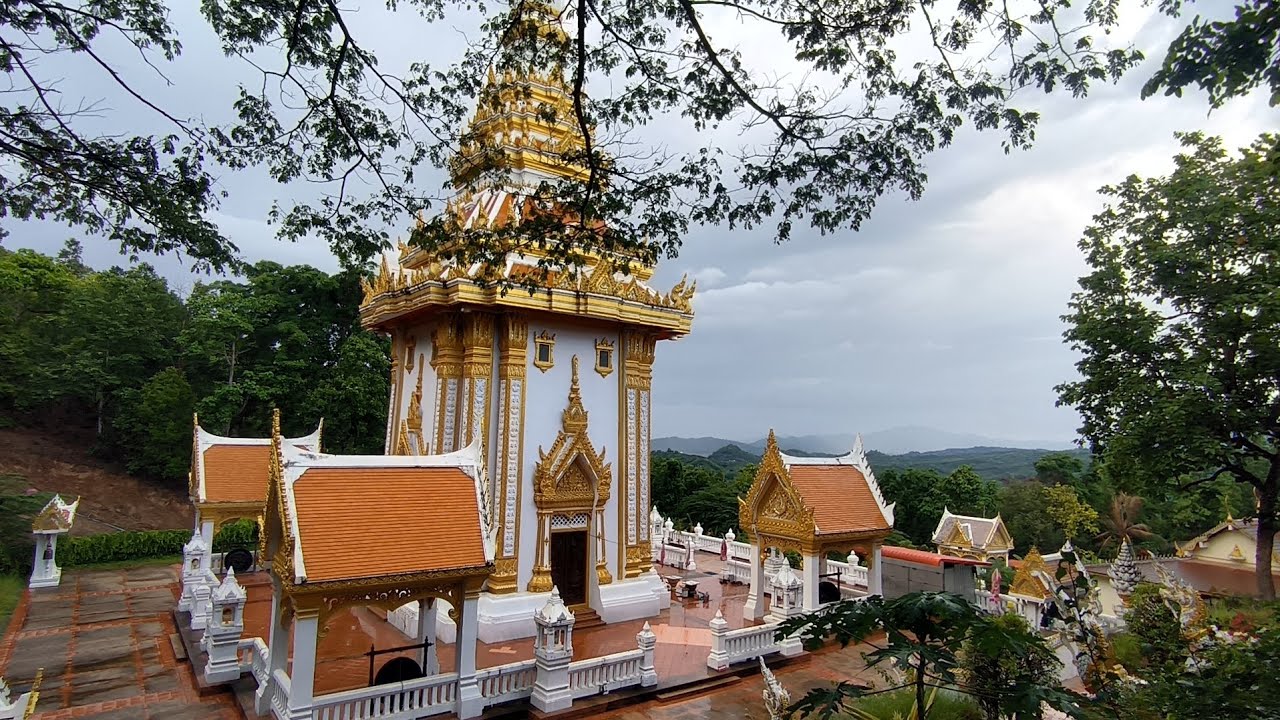
 Click to Access the Navigation Map GPS
Wat Phra Phutthabat Phu Khwai Ngoen Map
Recommend

 Art, Culture and Heritage
 Historical Sites and Monuments(2)
 Landmarks and Memorials(3)
 Art, Craft Centres, Tradition(2)
 Museums(4)
 Art Gallery(1)
 Educational Places
 Educational Gardens, Farm(2)
Temple(16)
Educational Gardens, Farm(2)
Temple(16)
 Other Sacred Sites(8)
 Research and Development
 Royal Project(3)
 Suburban Living
 Village, Community(3)
 Local Market(1)
 Nature and Wildlife
 National Parks and Marine Reserves(5)
 Mountain (Doi)(10)
 Dam, Reservoir, Lake(7)
 Waterfalls(21)
 Caves(3)
 River, Canal(5)
 Bays and Beaches(1)
 Other natural attractions(1)
 Entertainment and Agricultural
 Farms, Parks and Ecotourism(8)
 Waterpark(1)
 Outdoor and Adventure Activities(2)
 Travel Articles, Recipes
 Travel Review, Food Review(1)


