
lovethailand home >Northeastern Travel Attractions >Loei Travel Attractions >Chiang Khan >Pak Tom > Phra Yai Phu Khok Ngio
TL;DR: Phra Yai Phu Khok Ngio is located at Phu Khok Ngio Hill, Ban Tha Di Mi, Pak Tom Subdistrict, Chiang Khan District, Loei Province, open Daily, hours 06.30 – 18.00.
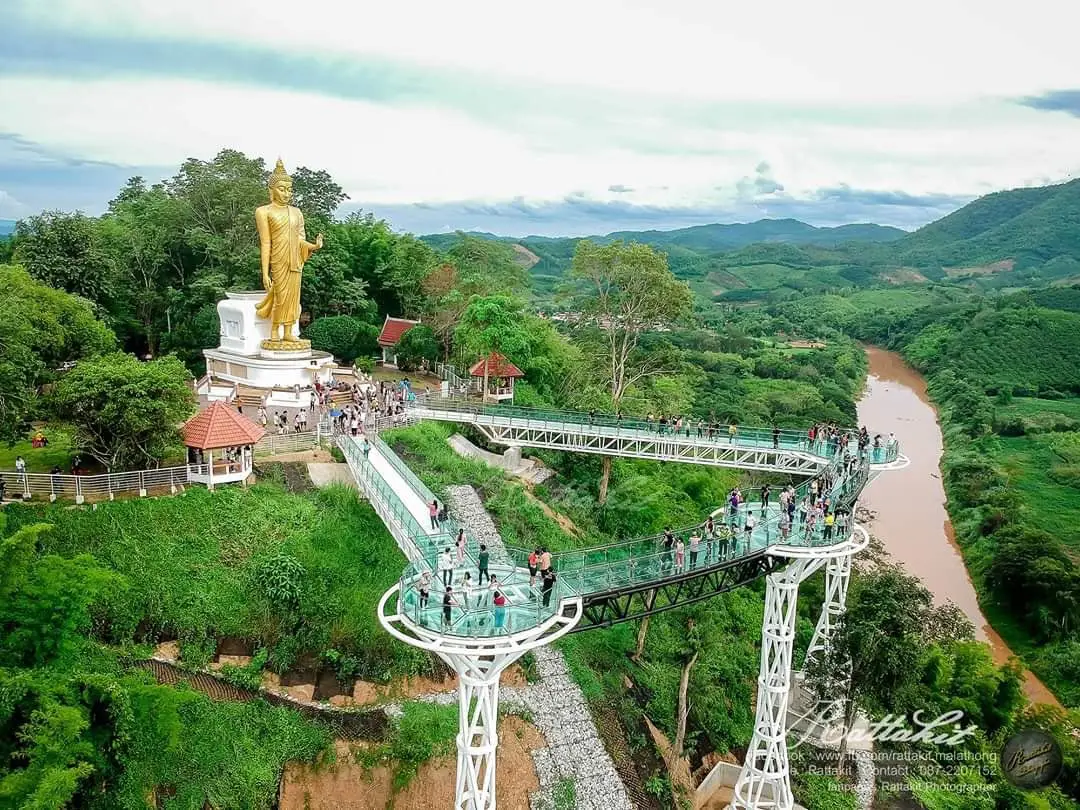
Phra Yai Phu Khok Ngio
Open Days: Daily
Opening Hours: 06.30 – 18.00
Phra Yai Phu Khok Ngio in Loei Province, officially known as Phra Phuttha Nawaminthara Mongkhon Leela Dwinakhara Phirak, is a large golden Walking Buddha statue located on Phu Khok Ngio Hill at Ban Tha Di Mi, Pak Tom Subdistrict, Chiang Khan District. The statue stands on a hill near the point where the Hueang River meets the Mekong River, creating one of the most impressive river-view landscapes in Chiang Khan. This site is widely known together with the Chiang Khan Skywalk, or Phu Khok Ngio Skywalk, a glass walkway that allows visitors to look down over the forested slope, the river junction, and the natural border between Thailand and Laos. For international travelers, this destination combines Buddhist worship, panoramic scenery, a dramatic glass bridge experience, and a rare view of two rivers meeting at the edge of the Mekong.
The location of Phra Yai Phu Khok Ngio is one of the main reasons the site is so memorable. The Hueang River flows into the Mekong River at Pak Tom, creating a landscape where water, mountains, forest, and international borderland meet. From the viewpoint, visitors can see the river junction, the flowing line of the Mekong, and the terrain on both the Thai and Lao sides. During certain seasons and light conditions, the difference between the two rivers can be seen clearly, creating the famous “two-colored river” view. This gives the site a deeper meaning than a normal viewpoint, because it allows visitors to see geography, culture, and borderland life in one sweeping panorama.
The Buddha image is a golden Walking Buddha in a blessing posture. It is more than 19 meters high and is made of fiberglass mixed with golden resin. The statue stands on a white base, making it highly visible from the skywalk and surrounding viewpoint area. The walking posture gives the image a graceful and gentle sense of movement, while the raised hand in a blessing gesture expresses compassion, protection, and auspiciousness. Many visitors come to pay respect before walking onto the glass skywalk, making the experience both spiritual and scenic.
The full name, Phra Phuttha Nawaminthara Mongkhon Leela Dwinakhara Phirak, carries an auspicious meaning connected with blessing and protection. The statue’s position above the meeting point of the Hueang and Mekong rivers makes this meaning especially powerful. It overlooks the Thai side, the Lao side, the river boundary, and the surrounding communities. In this sense, the statue is not only a landmark for photographs. It also symbolizes peace, guardianship, and goodwill for people living along both sides of the borderland.
The worship area around the statue is the first place many visitors pause after arriving at the top. Thai travelers often begin by paying respect to the Buddha image, making a wish, and asking for safe travel, good fortune, success, or peace of mind. This simple act of worship helps shape the visit. The skywalk may be exciting and modern, but the Buddha image gives the site a calm spiritual center. It reminds visitors that the place is both a tourist landmark and a Buddhist sacred space.
The Phu Khok Ngio Skywalk is located in front of and below the large Buddha image. It is a glass walkway extending out from the hillside above the forested valley and river landscape below. The skywalk stands more than 80 meters above the Mekong River. Its walkway is about 2 meters wide and more than 100 meters long, with a transparent glass floor supported by a strong steel structure. Walking on the glass surface creates a thrilling feeling because visitors can see the ground and trees far below their feet.
The value of the skywalk is not only the excitement of height. It is also the openness of the view. From the walkway and viewing decks, visitors can see the Mekong River flowing along the border, the Hueang River joining it, green hills, forested slopes, and nearby communities. On a clear day, the view across the Lao side is also visible. This makes the site one of the best places to understand Chiang Khan’s river geography and its relationship with the Mekong border landscape.
Visitors who walk on the glass skywalk must wear the special cloth shoes provided at the site. This protects the glass floor from scratches and helps maintain safety. Private vehicles are not taken directly to the upper Buddha and skywalk area. Visitors park at the lower parking area, buy tickets, receive the appropriate shoes, and use the local shuttle service to reach the upper area. This system helps control traffic on the hill, reduce congestion, and manage visitor flow more safely.
For those who are afraid of heights, the first step onto the glass floor may feel intimidating. The best approach is to take time near the Buddha courtyard first, then move slowly toward the glass walkway. Visitors can begin by standing near the safer central sections before walking farther out. After a few moments, many travelers become more comfortable and can enjoy the view fully. Families and friends often make the experience more relaxed and enjoyable.
Phra Yai Phu Khok Ngio can be visited at different times of day. Morning offers cooler air, gentler light, and a calmer atmosphere for worship. During the cool season or after the rainy season, visitors may see mist or soft cloud layers over the rivers and hills. Late afternoon is excellent for photography because warm light falls on the golden Buddha image and river landscape. Sunset can be beautiful when the sky is clear, although visitors should allow enough time to return by shuttle before closing time.
Travel to the site is most convenient by private car, rental car, motorcycle, or hired local transport from Chiang Khan. The site is located at Ban Tha Di Mi, Pak Tom Subdistrict, about 20 kilometers from Chiang Khan town. Travelers can reach it from Chiang Khan by driving toward Pak Tom, or from the Pak Chom side when traveling along the Mekong route. Once visitors arrive at the lower parking area, they use the shuttle service to go up to the Buddha and skywalk area.
Getting There from Chiang Khan town is straightforward. Drive toward Pak Tom Subdistrict and Ban Tha Di Mi. Online maps can be searched using “Phra Yai Phu Khok Ngio”, “Chiang Khan Skywalk”, or “Phu Khok Ngio Skywalk.” After arriving at the lower parking area, buy a ticket and use the shuttle vehicle to reach the upper worship and viewpoint area. Visitors should not attempt to drive private vehicles to the top unless permitted by local staff. During long weekends and holidays, it is best to arrive early and allow extra time for ticketing, shuttle service, and photographs.
The site has several important zones: the lower parking area, ticket counter, skywalk shoe collection point, shuttle pickup area, Buddha courtyard, the large golden Buddha image, the glass skywalk, the two-colored river viewpoint, rest pavilions, community shops, and photo points. This layout makes the visit easy to follow. Visitors park below, buy tickets, take the shuttle, worship the Buddha, walk on the skywalk, enjoy the view, and return to the lower market and parking area.
The Buddha courtyard deserves time and respect. It is the best place to see the golden Walking Buddha from the front and to photograph the statue with the surrounding hills. At the same time, it is a worship area. Visitors should dress modestly, speak quietly, avoid climbing onto the base, and wait politely if others are praying. Respectful behavior makes the experience better for both worshippers and travelers.
On the skywalk, visitors should follow all staff instructions. Do not run, jump, knock on the glass, drop objects, crowd the walkway, or cross into restricted areas. Children should be supervised closely. Elderly visitors or people with balance problems should walk slowly and rest when needed. The skywalk is designed for viewing, photography, and a thrilling experience, but safety remains the most important part of the visit.
The site also expands the way travelers understand Chiang Khan. Many people know Chiang Khan for its wooden houses, walking street, alms-giving tradition, river cafés, and slow-life atmosphere. Phu Khok Ngio adds another side of Chiang Khan: high viewpoints, border rivers, Buddhist landmarks, and community-based tourism at Pak Tom. Together, these places show that Chiang Khan is more than a riverside old town. It is a district where mountains, rivers, faith, and local communities are closely connected.
For photography, Phra Yai Phu Khok Ngio offers many strong compositions. Visitors can photograph the golden Buddha from the front, the Buddha with the glass skywalk, the circular viewpoint platforms, the transparent walkway over the trees, the meeting of the Hueang and Mekong rivers, and the Thai-Lao border landscape. Photography should be done safely. Do not climb railings, block the walkway, fly drones without permission, or risk personal safety for a photograph.
The site can be combined with several nearby attractions. A half-day route can include Phra Yai Phu Khok Ngio and the skywalk, followed by Kaeng Khut Khu or a riverside café. A full-day Chiang Khan route can continue to Chiang Khan Walking Street, Wat Si Khun Mueang, Phu Thok, or Phra Phutthabat Phu Kwai Ngoen. Travelers who want a longer river route can continue along the Mekong toward Pak Chom, enjoying rural scenery and borderland views along the way.
Families can enjoy the site, but children should be watched carefully on the glass walkway and viewpoint platforms. Some children may become excited by the transparent floor or the sense of height, so adults should explain the rules before entering. Elderly visitors can still enjoy the Buddha courtyard and the view without walking far onto the glass walkway. The visit can be adapted to each person’s comfort level.
For foreign visitors, Phra Yai Phu Khok Ngio is a valuable introduction to several parts of Thai culture at once. The site shows a large Buddhist statue in a blessing posture, local respect for sacred landmarks, community-operated shuttle and tourism services, and the Mekong as a natural border and cultural corridor. Observing how Thai visitors pay respect before enjoying the viewpoint helps international travelers understand how religion and everyday travel often blend naturally in Thailand.
Visitors should observe both temple etiquette and public attraction rules. Dress respectfully, avoid loud behavior near the Buddha image, do not touch or climb on sacred structures, keep the area clean, follow skywalk instructions, and avoid actions that could damage the glass floor or public facilities. Responsible travel keeps the site safe, beautiful, and welcoming for future visitors.
The cool season is the most popular time to visit because the weather is comfortable and the river views are clear. The rainy season offers lush green scenery, but roads may be slippery and visibility can change quickly. Those who want to see the two-colored river most clearly should choose a day with good weather and enough light, because the appearance of the water depends on season, water level, and weather conditions.
What makes Phra Yai Phu Khok Ngio memorable is the combination of three experiences: worshipping the large golden Buddha, walking on the high glass skywalk, and viewing the meeting point of the Hueang and Mekong rivers. Each element is impressive on its own, but together they create a destination that is spiritual, exciting, scenic, and deeply connected with the border landscape of Loei Province.
Phra Yai Phu Khok Ngio is therefore an essential stop for visitors to Chiang Khan and Loei Province. It offers a golden Walking Buddha statue, a dramatic glass skywalk, views of the two-colored rivers, community shops, Thai-Lao border scenery, and a peaceful hilltop atmosphere. With respectful behavior, proper use of the shuttle system, and enough time to enjoy both the sacred and scenic parts of the site, visitors will find this landmark one of the most memorable highlights of a Chiang Khan journey.
| Name | Phra Yai Phu Khok Ngio / Phra Phuttha Nawaminthara Mongkhon Leela Dwinakhara Phirak / Chiang Khan Skywalk |
| Location | Phu Khok Ngio Hill, Ban Tha Di Mi, Pak Tom Subdistrict, Chiang Khan District, Loei Province |
| Address | Chiang Khan Skywalk, Phra Yai Phu Khok Ngio, Ban Tha Di Mi, Pak Tom Subdistrict, Chiang Khan District, Loei Province 42110, Thailand |
| Highlights | Large golden Walking Buddha statue over 19 meters high, glass skywalk, viewpoint over the Hueang and Mekong river junction, Thai-Lao border scenery, and the two-colored river view |
| Buddha Image Features | Golden Walking Buddha in a blessing posture, made of fiberglass mixed with golden resin, standing on a white base on Phu Khok Ngio Hill |
| Skywalk Features | Transparent glass walkway more than 80 meters above the Mekong River, about 2 meters wide and more than 100 meters long, supported by a steel structure with multiple viewing points |
| Main Viewpoint | Meeting point of the Hueang River and Mekong River, two-colored river view, Thai-Lao border, mountains, forest, and riverside communities |
| Travel Information | From Chiang Khan town, drive toward Pak Tom Subdistrict and Ban Tha Di Mi. Park at the lower parking area, buy a ticket, and use the shuttle service to reach the upper Buddha and skywalk area. |
| Current Status | Open as a Buddhist landmark, scenic viewpoint, glass skywalk attraction, and major travel landmark of Chiang Khan, Loei Province |
| Open Days | Daily |
| Opening Hours | 06.30 – 18.00 |
| Fees | The general skywalk service fee, including shuttle transfer and special glass-walk shoes, is 60 Baht per person |
| Facilities | Lower parking area, ticket counter, shuttle service, special shoes for walking on glass, toilets, community shops, worship courtyard, viewpoint, and rest pavilions |
| Main Areas / Zones | Lower parking area, ticket counter, shuttle pickup point, Buddha courtyard, Phra Phuttha Nawaminthara Mongkhon Leela Dwinakhara Phirak statue, glass skywalk, two-colored river viewpoint, rest pavilions, photo points, and community shop area |
| Caretaker | Chiang Khan Skywalk Phra Yai Phu Khok Ngio, together with local authorities in Pak Tom Subdistrict and Loei Province |
| Main Contact Number | Pak Tom Subdistrict Administrative Organization, Tel. 042-870-026 / Chiang Khan Skywalk Phra Yai Phu Khok Ngio, Tel. 065-619-9192 |
| Nearby Tourist Attractions | 1. Two-Colored River Viewpoint / Hueang River Mouth, about 200 m 2. Ban Tha Di Mi, Pak Tom Subdistrict, about 1 km 3. Kaeng Khut Khu, about 18 km 4. Phra Phutthabat Phu Kwai Ngoen, about 20 km 5. Chiang Khan Walking Street, about 22 km 6. Wat Si Khun Mueang, about 23 km 7. Phu Thok Chiang Khan, about 28 km, Tel. 042-821-664 8. Pak Chom District / Mekong Riverside Route, about 40 km |
| Nearby Restaurants | 1. ChillCoffeeBar By PN Chiang Khan Skywalk, about 500 m, Tel. 095-964-5628 2. Community Food Stalls At The Skywalk Lower Parking Area, about 500 m 3. Bcamp Chiangkhan, about 15 km, Tel. 086-857-6633 4. Krua Nucha Chiang Khan Hill Resort, about 18 km, Tel. 081-860-8810 5. Soi Saw Chiang Khan, about 22 km, Tel. 042-821-314 6. Pa Bua Wan Khao Pun Nam Jaew, about 22 km, Tel. 083-418-9809 7. With A View @ ChiangKhan, about 22 km, Tel. 042-810-696 |
| Nearby Accommodations | 1. The Camp Chiangkhan, about 15 km, Tel. 095-727-4555, 080-343-1111 2. Chiang Khan Hill Resort, about 18 km, Tel. 094-591-5251, 081-860-8810 3. Chiangkhan River Mountain Resort, about 20 km, Tel. 042-822-191, 083-616-4961 4. With A View Hotel @ Chiangkhan, about 22 km, Tel. 091-058-0185, 042-810-696 5. The White House Chiangkhan Villa, about 22 km, Tel. 089-529-2698 6. Riverside Chiangkhan Resort, about 23 km, Tel. 084-336-7525, 042-821-477 |
Frequently Asked Questions (FAQ)
Q: Where is Phra Yai Phu Khok Ngio located?
A: Phra Yai Phu Khok Ngio is located on Phu Khok Ngio Hill at Ban Tha Di Mi, Pak Tom Subdistrict, Chiang Khan District, Loei Province, near the point where the Hueang River meets the Mekong River.
Q: What is the official name of Phra Yai Phu Khok Ngio?
A: Its official name is Phra Phuttha Nawaminthara Mongkhon Leela Dwinakhara Phirak, a large golden Walking Buddha statue over 19 meters high.
Q: What are the opening hours of Phra Yai Phu Khok Ngio and Chiang Khan Skywalk?
A: The site is open daily from 06.30 to 18.00. Morning and late afternoon are the best times for worship, photography, and river views.
Q: How much is the Chiang Khan Skywalk service fee?
A: The general service fee for the skywalk, including shuttle transfer and special shoes for walking on the glass floor, is 60 Baht per person.
Q: What is the main highlight of Phra Yai Phu Khok Ngio?
A: The main highlights are the large golden Walking Buddha statue, the glass skywalk, the view of the Hueang River meeting the Mekong River, and the Thai-Lao border scenery.
Q: How can travelers get to Phra Yai Phu Khok Ngio?
A: From Chiang Khan town, drive toward Pak Tom Subdistrict and Ban Tha Di Mi. Park at the lower parking area, buy a ticket, and use the shuttle service to reach the upper Buddha and skywalk area.
Q: Can private cars drive directly up to the Buddha courtyard?
A: Visitors should use the shuttle service from the lower parking area. Private vehicles are not normally taken directly to the upper Buddha and skywalk area.
Q: What nearby attractions can be visited after Phra Yai Phu Khok Ngio?
A: Nearby attractions include Kaeng Khut Khu, Phra Phutthabat Phu Kwai Ngoen, Chiang Khan Walking Street, Wat Si Khun Mueang, Phu Thok, and the Mekong riverside route toward Pak Chom.
 Category: ●Places of Worship
 Group: ●Other Sacred Sites
Last Update : 3 MonthAgo
 Last Update : 3 MonthAgo
 Click to Access the Navigation Map GPS
Phra Yai Phu Khok Ngio Map
Recommend

 Art, Culture and Heritage
 Historical Sites and Monuments(2)
 Landmarks and Memorials(3)
 Art, Craft Centres, Tradition(2)
 Museums(4)
 Art Gallery(1)
 Educational Places
 Educational Gardens, Farm(2)
 Temple(16)
Other Sacred Sites(8)
Temple(16)
Other Sacred Sites(8)
 Research and Development
 Royal Project(3)
 Suburban Living
 Village, Community(3)
 Local Market(1)
 Nature and Wildlife
 National Parks and Marine Reserves(5)
 Mountain (Doi)(10)
 Dam, Reservoir, Lake(7)
 Waterfalls(21)
 Caves(3)
 River, Canal(5)
 Bays and Beaches(1)
 Other natural attractions(1)
 Entertainment and Agricultural
 Farms, Parks and Ecotourism(8)
 Waterpark(1)
 Outdoor and Adventure Activities(2)
 Travel Articles, Recipes
 Travel Review, Food Review(1)


