
lovethailand home >Northeastern Travel Attractions >Chaiyaphum Travel Attractions >Khon San >Non Khun > Wat Phra That Kaeng Koi
TL;DR: Wat Phra That Kaeng Koi is located at Village No. 1, Ban Non Khun, Non Khun Subdistrict, Khon San District, Chaiyaphum Province, open Daily, hours 08.00 – 17.00.
Wat Phra That Kaeng Koi
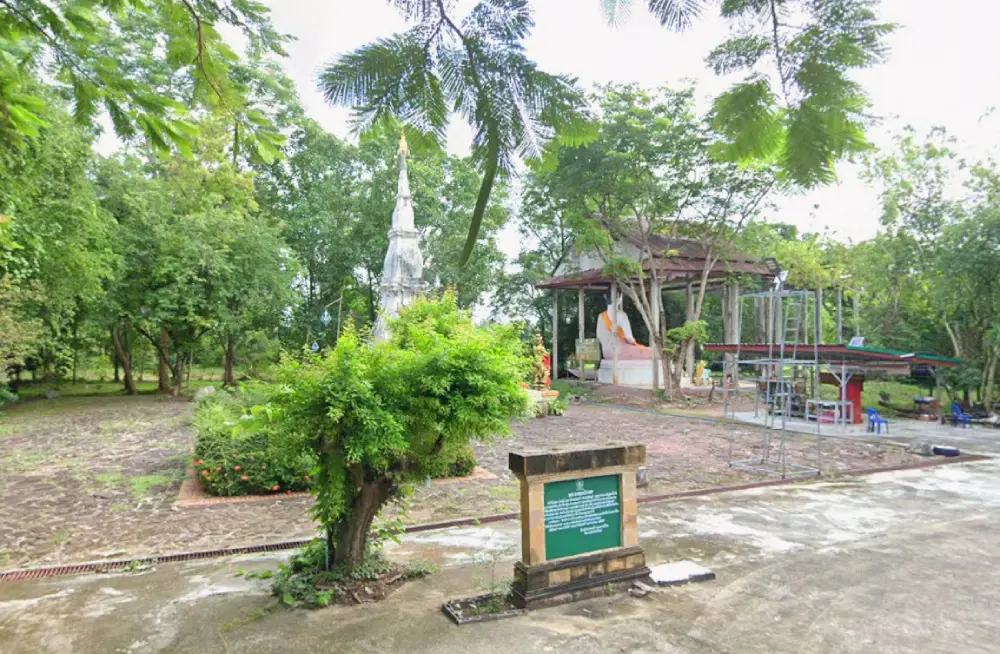
Open Days: Daily
Opening Hours: 08.00 – 17.00
Wat Phra That Kaeng Koi is located at Village No. 1, Ban Non Khun, Non Khun Subdistrict, Khon San District, Chaiyaphum Province. It is a community Buddhist temple and an important local sacred site centered on the ancient Phra That Kaeng Koi stupa. The stupa has long been worshipped by local people and visitors, and it remains the spiritual heart of Ban Non Khun. Every year during the Songkran period, the community holds the annual Phra That Kaeng Koi bathing ceremony, a tradition that brings villagers, elders, monks, local leaders, and visitors together to pay respect to the sacred stupa and preserve local cultural heritage.
Phra That Kaeng Koi is an ancient stupa influenced by Lan Xang art. It is dated to around the 22nd–23rd Buddhist centuries and has the form of a three-tiered square lotus-shaped stupa with indented corners. The structure is made of brick and plaster, measuring approximately 9.50 meters high and 5.40 meters wide. Its form reflects the cultural connection between Khon San, northeastern Thailand, and the wider Mekong region, where Lan Xang Buddhist art played an important role in shaping sacred architecture.
The stupa stands within Wat Phra That Kaeng Koi in Ban Non Khun, Non Khun Subdistrict. The surrounding area preserves traces of a wider sacred landscape. To the east of the stupa are remains associated with an old vihara, while to the south stands a smaller stupa. These elements show that Phra That Kaeng Koi was not an isolated monument, but part of a Buddhist sacred area that once included supporting religious structures and ritual space.
The age and sanctity of Phra That Kaeng Koi have been remembered in local oral tradition for generations. Elderly villagers often describe the stupa as something that existed before the time of their parents and grandparents. Some local stories connect it with the building of Phra That Phanom, saying that people once intended to contribute valuables to that great stupa but later built Phra That Kaeng Koi in this area instead. Such stories should be understood as local memory and faith, showing how the community explains the origin of the monument through devotion and inherited narrative.
The name “Kaeng Koi” is closely connected with local landscape and way of life. The word “kaeng” often refers to rocky rapids or stone flats in a stream, while “koi” is associated with a local plant used in daily life. Local accounts mention a stream and stone area northeast of the stupa where villagers once soaked and dried koi plants. The name of the stupa therefore connects geography, water, local plants, and community memory in a meaningful way.
The surrounding Ban Non Khun area also carries important local historical stories. Nearby places such as Ban Non Tao Hai are associated with accounts of ancient kilns, jars, and pottery, while Ban Non Wan Phlai is connected with stories of ancient human remains and pottery discoveries. These local accounts suggest that the area around Wat Phra That Kaeng Koi was part of a historical and archaeological landscape with signs of settlement, ritual life, and cultural memory over many generations.
Local legend also mentions an ancient town called Nakhon Thamma Wat and a ruler named Thao Phraya Chaiyachetthathirat. One version says that the stupa was built to enshrine the relics of the ruler and sacred relics of the Buddha. Although such narratives belong to local tradition rather than formal historical documentation, they add deep spiritual meaning to the monument. For the community, the stupa is not merely a brick-and-plaster structure, but a symbol of ancestors, protection, sacred presence, and continuity.
What remains clear across both historical data and local memory is that Phra That Kaeng Koi has long been an object of devotion. People come to pay respect for blessing, protection, and merit. The act of worship connects visitors with the religious roots of the area and with the living faith of the Non Khun community. The temple preserves the atmosphere of a local sacred site where simplicity, devotion, and community life remain strongly visible.
Phra That Kaeng Koi underwent archaeological clearing, restoration, and landscape improvement in 2002. This work was important for preserving the ancient stupa and helping the surrounding area remain suitable for worship and community ceremonies. As an old brick-and-plaster monument, the stupa requires continued care. Conservation is therefore not only the responsibility of the temple or official agencies; it also depends on the behavior of visitors and the attention of the local community.
Visitors should treat the stupa with respect. They should not climb on the structure, touch or scrape the surface, place objects on ancient remains, or move any fragments. Old brick-and-plaster monuments can be affected by rain, sunlight, moisture, cracking, and human contact. Respectful behavior helps protect the site and shows sensitivity toward the community that has cared for it over many generations.
Wat Phra That Kaeng Koi remains an active community temple. Recent Kathin-related information lists 5 resident monks and names Phra Khru Amon Sila Wisut as the abbot. The presence of resident monks allows the temple to continue daily and annual Buddhist activities. Local people come for merit-making, Dhamma listening, Buddhist holy day observances, Kathin ceremonies, robe offerings, and the annual stupa bathing ceremony during Songkran.
The annual Phra That Kaeng Koi bathing ceremony is the most important tradition associated with the temple. Held during the Songkran period, it brings villagers, elders, monks, local officials, and visitors together. People pay respect to the stupa, bathe it ritually with scented water, make merit, honor elders, and participate in activities that express gratitude, respect, and unity. The ceremony shows how Buddhism, Songkran culture, and community relationships come together in one living tradition.
The ritual of bathing the stupa symbolizes purification, blessing, and renewal at the Thai New Year. Participants often bring scented water, flowers, candles, incense, and offerings. The act of bathing the stupa is not merely symbolic; it is also a way for people to reconnect with their community, ancestors, sacred memory, and Buddhist faith. For many villagers, this annual event is one of the most meaningful occasions of the year.
As the spiritual center of Ban Non Khun, Wat Phra That Kaeng Koi is more than the location of an ancient monument. It is a place where villagers make merit, hold ceremonies, practice Dhamma, meet relatives, and pass traditions to younger generations. Children and youth who join temple activities learn how to pay respect to Buddha images, honor monks, respect elders, and participate in community work. These lessons are passed on through real experience rather than formal instruction alone.
The temple grounds can be understood through several important zones: the Phra That Kaeng Koi stupa zone, the smaller stupa zone, the remains of the old vihara area, worship space, temple courtyard, ceremony area, monks’ residence area, Songkran and stupa bathing area, and quiet space for meditation. Each zone supports a different aspect of temple life. The main stupa is the heart of devotion, while the temple courtyard supports community gatherings and annual ceremonies.
Visitors should explore the temple slowly and respectfully. They can begin by paying respect to the stupa, then walk around it to observe its form, brickwork, plaster surface, and surrounding elements. They should avoid touching the structure unnecessarily and maintain silence because the site is both an active temple and an ancient monument respected by local people.
Getting There is most convenient by private car. Travelers should first reach Khon San District in Chaiyaphum Province, then continue to Non Khun Subdistrict and Ban Non Khun, Village No. 1. The temple is connected with local roads leading to Khon San town and nearby natural attractions such as Nam Phut Thap Lao, Chulabhorn Dam, and routes toward Phu Pha Man. Visitors using public transportation should first travel to Khon San town and then arrange local transport or a hired vehicle to Ban Non Khun.
A half-day visit can focus on paying respect at Wat Phra That Kaeng Koi, studying the stupa, and stopping for food or coffee in Khon San town. A full-day route can add Nam Phut Thap Lao, Chulabhorn Dam, and other natural attractions in Khon San District. This creates a balanced journey combining religion, local history, community tradition, nature, and local food.
Visitors who come during the annual Songkran stupa bathing ceremony should plan ahead because many people may attend. They should dress modestly, prepare drinking water, allow enough travel time, and participate respectfully. The ceremony is a living local tradition, so visitors should avoid pushing, disturbing rituals, or treating the event merely as a photo opportunity. Respect for elders, monks, and villagers is essential.
Historically, Wat Phra That Kaeng Koi helps visitors understand the connection between Chaiyaphum and Lan Xang Buddhist culture. The stupa’s artistic form reflects a wider cultural network linking northeastern Thailand with the Mekong region. Studying the monument gives travelers a deeper view of Chaiyaphum as a province with important local heritage, not only natural attractions.
Culturally, Wat Phra That Kaeng Koi keeps tradition connected with real life. The stupa bathing ceremony, temple merit-making, and Buddhist holy day activities are practiced by local people each year. Tradition is therefore not separated from daily life; it remains active through community participation, annual rituals, and shared care for the sacred site.
Spiritually, Wat Phra That Kaeng Koi is a place where people return for calm, blessing, and inner stability. Paying respect to the stupa, making merit, listening to Dhamma, or joining the Songkran ceremony allows visitors to connect with sacred memory and community faith. The temple continues to serve as a spiritual anchor for Ban Non Khun and Non Khun Subdistrict.
Overall, Wat Phra That Kaeng Koi is an important temple and ancient monument in Khon San District, Chaiyaphum Province. Its Lan Xang-influenced stupa dates to around the 22nd–23rd Buddhist centuries and remains a sacred object of worship for local people and visitors. The annual Songkran stupa bathing ceremony, the surrounding local historical stories, and the temple’s continuing role in community life make this site a meaningful destination for travelers who want to understand Chaiyaphum through faith, heritage, and living tradition.
| Name | Wat Phra That Kaeng Koi |
| Location | Village No. 1, Ban Non Khun, Non Khun Subdistrict, Khon San District, Chaiyaphum Province |
| Address | Wat Phra That Kaeng Koi, Ban Non Khun, Village No. 1, Non Khun Subdistrict, Khon San District, Chaiyaphum Province 36180, Thailand |
| Coordinates | 16.4960508401, 102.049471295 |
| Place Type | Community Buddhist temple, ancient monument, and local sacred site |
| Highlights | An ancient Lan Xang-influenced stupa worshipped by local people, with an annual stupa bathing ceremony during Songkran |
| History / Period | Phra That Kaeng Koi dates to around the 22nd–23rd Buddhist centuries and reflects Lan Xang Buddhist artistic influence |
| Architectural Features | A three-tiered square lotus-shaped stupa with indented corners, built of brick and plaster, approximately 9.50 meters high and 5.40 meters wide |
| Key Evidence | Phra That Kaeng Koi stupa, traces of an old vihara to the east, a smaller stupa to the south, and local historical narratives around Ban Non Khun |
| Restoration | The stupa area was archaeologically cleared, restored, and landscaped in 2002 |
| Main Tradition | Annual Phra That Kaeng Koi bathing ceremony during Songkran, a major local tradition of the Non Khun community |
| Name Origin | The name is connected with local streams, rocky rapids, and the use of koi plants in the traditional way of life of Ban Non Khun villagers |
| Travel Information | Travel to Khon San District in Chaiyaphum Province, then continue to Non Khun Subdistrict and Ban Non Khun, Village No. 1. A private car is the most convenient option, or visitors can reach Khon San town and arrange local transport |
| Current Status | An active community Buddhist temple open for merit-making, worship, respectful visits to the stupa, and local annual traditions |
| Open Days | Daily |
| Opening Hours | 08.00 – 17.00 |
| Facilities | Worship area, temple courtyard, ceremony area, stupa bathing area, monks’ residence area, and quiet space for meditation |
| Main Areas / Zones | Phra That Kaeng Koi stupa zone, smaller stupa zone, old vihara trace area, worship area, activity courtyard, Songkran and stupa bathing area, and quiet mindfulness space |
| Abbot / Caretaker | Phra Khru Amon Sila Wisut |
| Resident Monks | 5 Monks |
| Nearby Tourist Attractions | 1. Phra That Kaeng Koi Stupa, within the temple grounds 2. Kaeng Koi stream and local rocky area in Ban Non Khun, about 1 km 3. Ban Non Tao Hai local historical area, about 2 km 4. Ban Non Wan Phlai local ancient community narrative area, about 3 km 5. Wat Chedi, Khon San District, about 12 km 6. Nam Phut Thap Lao, Khon San District, about 22 km 7. Chulabhorn Dam, Khon San District, about 42 km 8. Nam Phong National Park, Chaiyaphum–Khon Kaen connected area, about 55 km |
| Nearby Restaurants | 1. Tiao Nuea Tun Khon San, about 12 km, Tel. 089-924-1452 2. Krua Khun Jaew 1 Khon San, about 13 km, Tel. 094-675-9898 3. Ban Aree Khon San, about 14 km, Tel. 087-457-7556 4. Celeb Cafe Khonsan, about 14 km, Tel. 091-886-7702 5. Montra House Bar & Restaurant, about 16 km, Tel. 082-854-1830 6. Meta Cafe Cake Khon San, about 22 km, Tel. 061-112-4949 |
| Nearby Accommodations | 1. Khon San Homestay, about 12 km, Tel. 087-996-7275 2. Saeng Chan Resort Khon San, about 18 km, Tel. 082-393-0544 3. Modern Home Resort Khon San, about 20 km, Tel. 094-984-4255 4. Ruean Kluaimai Resort Khon San, about 20 km, Tel. 087-877-8072 5. Manorom Resort Khon San, about 22 km, Tel. 085-208-5628 6. Chulabhorn Dam Guesthouse, about 42 km, Tel. 043-384-969, 085-419-4464, 087-951-8308 |
Frequently Asked Questions (FAQ)
Q: Where is Wat Phra That Kaeng Koi located?
A: Wat Phra That Kaeng Koi is located at Village No. 1, Ban Non Khun, Non Khun Subdistrict, Khon San District, Chaiyaphum Province.
Q: Why is Phra That Kaeng Koi important?
A: Phra That Kaeng Koi is an ancient Lan Xang-influenced stupa dating to around the 22nd–23rd Buddhist centuries. It is worshipped by local people and serves as a spiritual center of Ban Non Khun.
Q: What are the architectural features of Phra That Kaeng Koi?
A: It is a three-tiered square lotus-shaped stupa with indented corners, built of brick and plaster, approximately 9.50 meters high and 5.40 meters wide.
Q: What important annual tradition is held at Wat Phra That Kaeng Koi?
A: The annual Phra That Kaeng Koi bathing ceremony is held during Songkran. It is an important local tradition that preserves Buddhist faith and community culture.
Q: Who is the abbot or caretaker of Wat Phra That Kaeng Koi?
A: Phra Khru Amon Sila Wisut is listed as the abbot of Wat Phra That Kaeng Koi, with 5 resident monks at the temple.
Q: What are the opening hours of Wat Phra That Kaeng Koi?
A: Wat Phra That Kaeng Koi is open daily from 08.00 to 17.00 for merit-making, worship, and respectful visits to the stupa.
Q: How should visitors behave at Wat Phra That Kaeng Koi?
A: Visitors should dress modestly, keep quiet, avoid climbing on or touching the stupa, avoid moving ancient fragments, and avoid disturbing monks or worshippers.
Q: What nearby places can be combined with a visit to Wat Phra That Kaeng Koi?
A: Visitors can combine the temple with Wat Chedi, Nam Phut Thap Lao, Chulabhorn Dam, and natural attractions in Khon San District.
 Category: ●Places of Worship
 Group: ●Temple
Last Update : 4 MonthAgo
 Last Update : 4 MonthAgo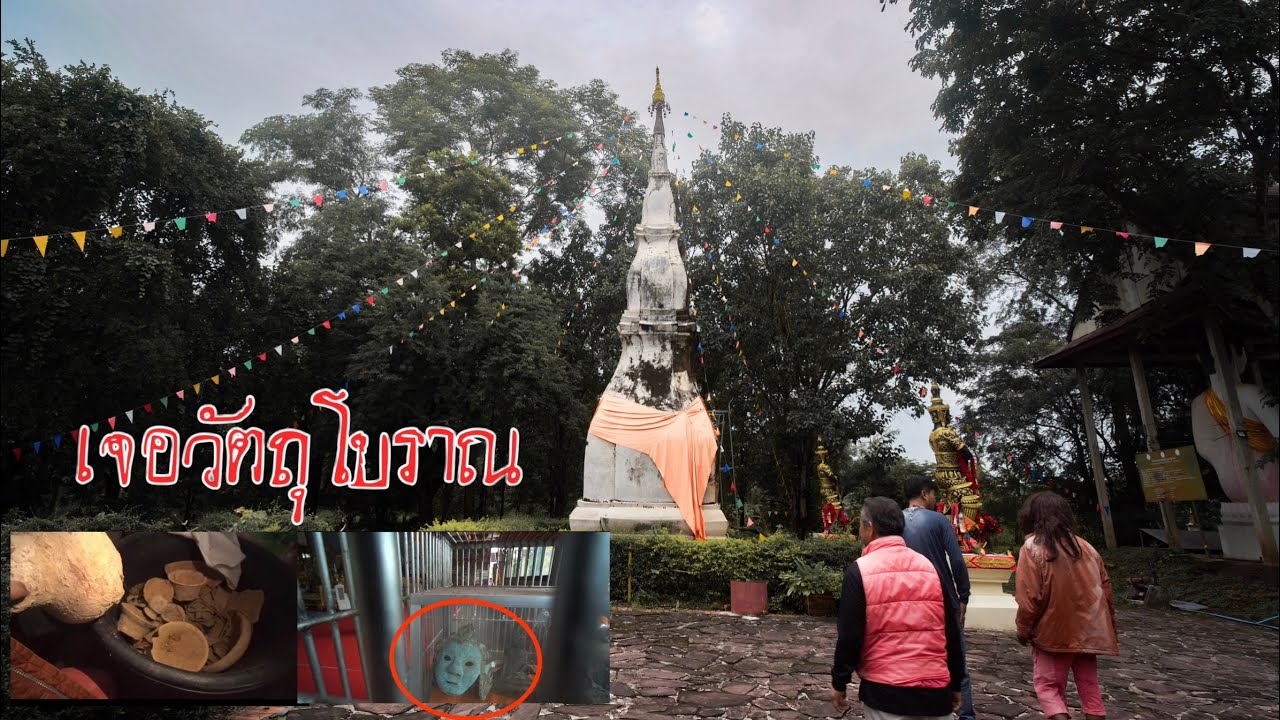
 Click to Access the Navigation Map GPS
Wat Phra That Kaeng Koi Map
Recommend

 Art, Culture and Heritage
 Historical Sites and Monuments(1)
 Landmarks and Memorials(3)
 Royal Palace(1)
 Art, Craft Centres, Tradition(3)
 Educational Places
 Educational Gardens, Farm(1)
Temple(141)
Educational Gardens, Farm(1)
Temple(141)
 Other Sacred Sites(8)
 Suburban Living
 Village, Community(4)
 Nature and Wildlife
 National Parks and Marine Reserves(7)
 Mountain (Doi)(5)
 Dam, Reservoir, Lake(10)
 Waterfalls(15)
 Caves(5)
 River, Canal(4)
 Other natural attractions(1)
 Entertainment and Agricultural
 Farms, Parks and Ecotourism(2)
 Waterpark(2)
 Travel Articles, Recipes
 Travel Review, Food Review(1)


