
lovethailand home >Northeastern Travel Attractions >Chaiyaphum Travel Attractions >Muang Chaiyaphum >Nai Muang > Sacrifice Shrine and Peang Ta Shrine
TL;DR: Sacrifice Shrine and Peang Ta Shrine is located at Within the Chao Pho Phaya Lae Shrine area beside Nong Pla Thao, Nai Mueang Subdistrict, Mueang Chaiyaphum District, Chaiyaphum Province, open Daily, hours 06.00 – 18.00.
Sacrifice Shrine and Peang Ta Shrine
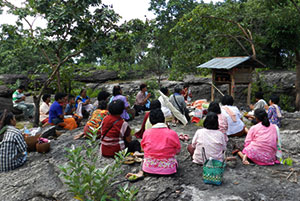
Open Days: Daily
Opening Hours: 06.00 – 18.00
The Ritual Offering Shrine and San Phiang Ta at the Chao Pho Phaya Lae Shrine area beside Nong Pla Thao in Mueang Chaiyaphum District, Chaiyaphum Province, form an important sacred ritual space for local worship, ceremonial offerings, vow fulfillment, and the annual Bun Duean Hok festival. These shrines are closely connected with the faith that Chaiyaphum people have toward Phraya Phakdi Chumphon (Lae), also known as Chao Pho Phaya Lae, the first governor and founder of Chaiyaphum. For local people, this area represents history, folk belief, public ritual, and a shared spiritual identity that continues to shape the cultural life of the province.
The Ritual Offering Shrine and San Phiang Ta should not be seen only as small structures within the larger Chao Pho Phaya Lae Shrine complex. They have specific ritual roles. The ritual shrine is used for placing offerings, performing ceremonial worship, offering auspicious rites, presenting vow-fulfillment items, and organizing key activities during the Bun Duean Hok festival. San Phiang Ta, a simple local spirit shrine, represents a traditional form of sacred presence in Thai and Isan folk belief. Together, these spaces support worship, dance offerings, Bai Si processions, vow fulfillment, and the annual honoring of Chao Pho Phaya Lae.
Nong Pla Thao is a deeply respected place in Chaiyaphum because it is associated with the final moments of Phraya Phakdi Chumphon (Lae). According to local memory, the original San Phiang Ta was a small wooden shrine built at the place where he was believed to have been executed. In this sense, San Phiang Ta is not merely a small shrine. It is a marker of collective memory, a place where later generations remember a local hero, and an origin point of the faith that developed into the present Chao Pho Phaya Lae worship tradition.
San Phiang Ta is a form of shrine found in Thai and Isan folk belief. It is often used to honor a local sacred spirit, guardian of a place, or a person whom a community deeply respects. The San Phiang Ta of Chao Pho Phaya Lae is especially meaningful because it is linked with a historical figure. When villagers built a shrine to honor the spirit of Phraya Phakdi Chumphon (Lae), the place became a bridge between history and faith. It allowed the story of Chaiyaphum’s founder to remain alive in community practice.
The Ritual Offering Shrine plays a central role during the Bun Duean Hok festival, the major annual festival held to honor Chao Pho Phaya Lae. The ritual area is used for spirit-honoring ceremonies, offerings, Bai Si processions, dance offerings, and other cultural activities. It provides an organized space for ritual leaders, participants, offerings, and worshippers. Without such a ritual space, the large public ceremony would not have the same structure, order, and symbolic focus.
The Bun Duean Hok festival is one of the most important traditions of Chaiyaphum Province. It is held every year during the sixth lunar month before Visakha Bucha Day to express gratitude and remembrance toward Phraya Phakdi Chumphon (Lae). The festival is not only a religious or folk ceremony. It is a major act of civic memory, bringing together local communities, government agencies, cultural groups, students, youth, and residents from across the province.
The act of making offerings to Chao Pho Phaya Lae has several layers of meaning. First, it expresses respect for the spirit of the city founder. Second, it seeks auspiciousness for the province, families, work, travel, and daily life. Third, it helps younger generations learn local history through direct participation. The Ritual Offering Shrine therefore functions as a living cultural classroom. Visitors can see offerings, ritual procedures, and the way local people express reverence through public ceremony.
Offerings brought to the shrine may include flowers, incense, candles, Bai Si, savory and sweet foods, fruit, a pig’s head, ducks, chickens, or other items according to personal faith. Those who have made vows and later had their wishes fulfilled often return to make votive offerings or arrange dance offerings. The sight of many offerings placed in an orderly manner around the shrine shows that devotion to Chao Pho Phaya Lae remains a living practice, not only a memory from the past.
Dance offerings are an important cultural expression at the shrine. The dance is not performed only for visual beauty. It is an act of respect offered through movement, rhythm, music, and collective intention. During the Bun Duean Hok festival, many participants join the dance, often wearing modest or local-style clothing. The image of large groups dancing in front of Chao Pho Phaya Lae has become one of the most recognizable cultural symbols of Chaiyaphum.
Ram Phi Fa, a ritual dance offered to Chao Pho Phaya Lae, adds another distinctive layer to the site. This folk ritual is connected with local belief, sacred worship, healing traditions, and communication with protective spiritual power. In the context of Chao Pho Phaya Lae worship, it expresses the relationship between older spiritual traditions and gratitude toward a local hero. For travelers, it offers a rare chance to observe a living Isan ritual that remains meaningful to the community.
The Ritual Offering Shrine and San Phiang Ta help visitors understand the structure of worship in the Chao Pho Phaya Lae Shrine complex. Many worshippers begin by paying respect at the main shrine, then make offerings or fulfill vows at the designated ritual space. When offerings or dances are involved, the ceremonial ground allows activities to proceed in an organized and respectful way. The presence of clearly defined ritual areas helps protect the sacred atmosphere of the shrine.
San Phiang Ta also reminds visitors of the humble origin of the Chao Pho Phaya Lae tradition. Before the larger shrine and public space developed, local faith began with a small wooden shrine under a tamarind tree beside Nong Pla Thao. This simple beginning is important. It shows that the strength of the tradition did not begin with grand architecture, but with gratitude, remembrance, and the sincere faith of local people.
From a historical perspective, the Ritual Offering Shrine and San Phiang Ta should be understood together with the story of Phraya Phakdi Chumphon (Lae). He is respected as the first governor and founder of Chaiyaphum. The continued worship of his spirit shows that local history is not preserved only in books, monuments, or museums. It is also preserved through rituals, offerings, dance, vows, and the annual gathering of people during Bun Duean Hok.
From a social perspective, the ritual area is a place where many groups work together. The shrine committee, local authorities, community leaders, women’s groups, dance groups, youth groups, vendors, and worshippers all take part in preparing and maintaining the annual festival. Organizing Bun Duean Hok requires space preparation, ritual planning, procession management, public safety, and hospitality for visitors. The ritual shrine therefore reflects the cooperative power of Chaiyaphum’s community.
For cultural travelers, the Ritual Offering Shrine and San Phiang Ta deserve careful attention. They should not be treated only as photo spots or secondary structures near the main shrine. These spaces explain how the larger shrine functions as a ritual system. Visitors can observe where offerings are placed, where ceremonies are held, how the small shrine relates to the main shrine, and how public ritual becomes part of the cultural identity of Chaiyaphum.
Outside the festival period, the area is quieter and easier to observe slowly. Nong Pla Thao provides a calm lakeside setting where people come to worship, walk, rest, feed turtles, and spend time with family. In normal periods, the Ritual Offering Shrine and San Phiang Ta have a more peaceful atmosphere, suitable for visitors who want to understand the place without the crowds of a major ceremony.
During the Bun Duean Hok festival, the same area becomes lively and powerful. Worshippers, offerings, Bai Si processions, music, dance, and cultural activities fill the shrine complex. Travelers who visit during this time should allow extra time, respect the order of ceremonies, and avoid disturbing ritual leaders or dancers. The festival atmosphere is one of the best ways to experience Chaiyaphum’s living cultural identity.
Visitors should dress respectfully when entering the shrine area. Although the Ritual Offering Shrine and San Phiang Ta are not Buddhist temple buildings, they are sacred spaces. Clothing should be neat, voices should be kept low, and visitors should avoid placing personal belongings in ceremonial areas. Photography should be done respectfully, from an appropriate distance, without blocking worshippers or photographing private rituals without permission.
Getting There is convenient from Chaiyaphum city. The shrine area is located beside Nong Pla Thao within the Chao Pho Phaya Lae Shrine complex. From the city center, take Highway 225 on the Chaiyaphum-Ban Khwao route and turn toward Nong Pla Thao. The distance from the city center is about 3-4 kilometers. Travelers can search for “Chao Pho Phaya Lae Shrine” or use the coordinates 15.7973712, 102.0114024.
The recommended visiting hours are from 06.00 to 18.00. This period is suitable for worship, making offerings, walking around Nong Pla Thao, and resting in the public lakeside area. Morning and late afternoon are more comfortable for visitors who want to take photos and observe the atmosphere quietly. During the Bun Duean Hok festival, travelers should check the schedule in advance because ceremonies, processions, and cultural activities may take place throughout the festival period.
The area around the shrine connects easily with other attractions in Chaiyaphum city. After visiting the Ritual Offering Shrine and San Phiang Ta, travelers can walk around Nong Pla Thao Public Park, visit the giant turtle sculpture and turtle pond, continue to the Phraya Phakdi Chumphon Monument in the city center, explore Chaiyaphum Ancient Textile Museum or Huen Kham Mu, visit Night Bazaar Walking Street, or see Chaiyaphum Street Art. This makes the site suitable for a half-day or full-day cultural route.
Restaurants near the shrine are varied and convenient. Around Nong Pla Thao and the nearby city area, visitors can find Thai restaurants, Isan food, som tam shops, cafés, and local dining places. Nearby options include Ban Bai Toei Restaurant, Song Lok Suai Cafe & Lunch, Somtum Zab 125, Coffee Tree and Bar, and other small local restaurants. This makes it easy to combine worship with a meal in Chaiyaphum city.
Accommodation near the shrine is available in Mueang Chaiyaphum. Visitors who want to stay close to Nong Pla Thao and the shrine can choose city hotels or residences such as Napa Ville Residence, Grand Prueksasiri Chaiyaphum, Deeprom Hotel, Pocket Park Chaiyaphum, Siam River Resort, and other nearby options. Staying in the city makes it convenient to visit the shrine, restaurants, night markets, and nearby cultural attractions.
The Ritual Offering Shrine and San Phiang Ta are suitable for travelers interested in sacred places, local history, Chao Pho Phaya Lae, Bun Duean Hok, folk rituals, ritual dance, and cultural travel in Chaiyaphum. A normal visit may not take long, but the site offers a deeper understanding of how local history, faith, and public ritual continue to shape the identity of the province.
Overall, the Ritual Offering Shrine and San Phiang Ta help explain the spiritual heart of the Chao Pho Phaya Lae Shrine. The main shrine honors the spirit of Chao Pho Phaya Lae, while the ritual shrine and San Phiang Ta make the ceremonies, offerings, dance traditions, and local beliefs visible. Visitors who understand the role of these spaces will see that faith in Chaiyaphum is not limited to the main shrine building. It lives in the ritual ground, offerings, processions, music, dance, and community cooperation.
For travelers seeking a deeper side of Chaiyaphum, these shrines are worth visiting carefully. They show how local history, traditional belief, gratitude toward Chao Pho Phaya Lae, and the Bun Duean Hok festival meet in one sacred landscape. A visit here is not only about paying respect. It is also about learning local ritual, observing living culture, and understanding how shared faith can preserve community tradition across generations.
| Name | Ritual Offering Shrine And San Phiang Ta |
| Location | Within the Chao Pho Phaya Lae Shrine area beside Nong Pla Thao, Nai Mueang Subdistrict, Mueang Chaiyaphum District, Chaiyaphum Province |
| Address | Moo 2, Nai Mueang Subdistrict, Mueang Chaiyaphum District, Chaiyaphum 36000, Thailand |
| Coordinates | 15.7973712, 102.0114024 |
| Highlights | A sacred ritual area for ceremonial offerings, worship, vow fulfillment, dance offerings, and the annual Bun Duean Hok festival honoring Chao Pho Phaya Lae |
| History | The original San Phiang Ta is associated with the Nong Pla Thao worship area after the death of Phraya Phakdi Chumphon (Lae) in 1826, forming the early foundation of the Chao Pho Phaya Lae worship tradition |
| Important Figure | Phraya Phakdi Chumphon (Lae), also known as Chao Pho Phaya Lae, the first governor and founder of Chaiyaphum |
| Name Origin | The ritual shrine refers to the area for ceremonial offerings, while San Phiang Ta refers to a simple local spirit shrine used as a sacred point of worship in community belief |
| Distinctive Features | Ceremonial offering ground, sacred local shrine, offering area, dance offering space, and a strong connection with the history and faith of Chaiyaphum people |
| Main Areas / Zones | San Phiang Ta zone, ritual offering zone, offering area, dance offering zone, main Chao Pho Phaya Lae Shrine zone, Nong Pla Thao lakeside zone, giant turtle zone, and public park zone |
| Facilities | Worship area, ceremonial ground, lakeside public space, parking area, local shops, and nearby restaurants |
| Traditions / Main Activities | Bun Duean Hok festival, ceremonial offerings, auspicious rites, Bai Si procession, dance offerings, Ram Phi Fa, prayer, and vow fulfillment |
| Caretaker | Chao Pho Phaya Lae Shrine Committee Office and local authorities in Chaiyaphum Province |
| Contact Number | 044-835-030 |
| Open Days | Daily |
| Opening Hours | 06.00 – 18.00 |
| Entrance Fee | No entrance fee; visitors may make donations or offerings according to their faith |
| Travel Information | From Chaiyaphum city, take Highway 225 toward Ban Khwao and turn toward Nong Pla Thao. The site is about 3-4 km from the city center. Use coordinates 15.7973712, 102.0114024 for navigation |
| Current Status | An important ritual area of the Chao Pho Phaya Lae Shrine, used for offerings, worship, vow fulfillment, and the annual Bun Duean Hok festival of Chaiyaphum people |
| Nearby Tourist Attractions | 1. Main Chao Pho Phaya Lae Shrine, about 0.1 km 2. Giant Turtle Sculpture And Turtle Pond, about 0.1 km 3. Nong Pla Thao Public Park, about 0.4 km 4. Chaiyaphum Night Bazaar Walking Street, about 1.9 km 5. Chaiyaphum Ancient Textile Museum / Huen Kham Mu, about 2.4 km, Tel. 081-725-5215 6. Phraya Phakdi Chumphon Monument in the city center, about 2.5 km 7. Chaiyaphum Street Art, about 2.8 km 8. Chaiyaphum Kanchanaphisek Park, about 2.8 km |
| Nearby Restaurants | 1. Mai Coffee, about 0.04 km 2. Som Tam Kai Thot Chao Pho Phaya Lae, about 0.1 km 3. Somtum Zab 125, about 0.2 km, Tel. 082-447-3552 4. Ban Bai Toei Restaurant, about 0.3 km, Tel. 081-483-1616, 089-722-3040 5. Song Lok Suai Cafe & Lunch, about 0.4 km, Tel. 081-661-3862 6. Coffee Tree and Bar Chaiyaphum, about 1.5 km, Tel. 093-529-9193 7. Part Cafe & Bar, about 2.0 km, Tel. 080-565-6416 |
| Nearby Accommodations | 1. Napa Ville Residence, about 0.6 km, Tel. 044-100-721 2. Grand Prueksasiri Chaiyaphum, about 0.6 km 3. Deeprom Hotel Chaiyaphum, about 2.0 km, Tel. 088-591-0210 4. Tonkhoon Hotel, about 2.0 km, Tel. 044-816881 5. Pocket Park Chaiyaphum, about 2.4 km, Tel. 089-519-0179, 098-104-1734 6. Sirichai Hotel, about 2.4 km 7. Siam River Resort, about 2.9 km, Tel. 044-811999 |
Frequently Asked Questions (FAQ)
Q: Where are the Ritual Offering Shrine and San Phiang Ta located?
A: They are located within the Chao Pho Phaya Lae Shrine area beside Nong Pla Thao in Nai Mueang Subdistrict, Mueang Chaiyaphum District, Chaiyaphum Province.
Q: What is the Ritual Offering Shrine used for?
A: It is used for ceremonial offerings, auspicious rites, prayer, vow fulfillment, dance offerings, and important ceremonies during the Bun Duean Hok festival of Chaiyaphum.
Q: How is San Phiang Ta connected with Chao Pho Phaya Lae?
A: San Phiang Ta is a traditional local spirit shrine associated with the early worship of Chao Pho Phaya Lae at Nong Pla Thao, reflecting the original community faith toward Phraya Phakdi Chumphon (Lae).
Q: When is the Bun Duean Hok festival held?
A: The Bun Duean Hok festival honoring Chao Pho Phaya Lae is held every year during the sixth lunar month before Visakha Bucha Day, with offerings, Bai Si processions, dance offerings, Ram Phi Fa, and local cultural activities.
Q: What are the opening hours?
A: The Chao Pho Phaya Lae Shrine area is open daily from 06.00 to 18.00, suitable for worship, offerings, and walking around Nong Pla Thao.
Q: Is there an entrance fee?
A: There is no entrance fee. Visitors may worship freely and make donations or offerings according to their faith.
Q: How can travelers get there?
A: From Chaiyaphum city, take Highway 225 toward Ban Khwao and turn toward Nong Pla Thao, or use coordinates 15.7973712, 102.0114024 for navigation.
Q: What nearby attractions can be combined with a visit?
A: Nearby places include the main Chao Pho Phaya Lae Shrine, Nong Pla Thao Public Park, the giant turtle sculpture, Chaiyaphum Ancient Textile Museum, Huen Kham Mu, Night Bazaar Walking Street, Phraya Phakdi Chumphon Monument, and Chaiyaphum Street Art.
 Category: ●Places of Worship
 Group: ●Other Sacred Sites
Last Update : 3 MonthAgo
 Last Update : 3 MonthAgo
Recommend

 Art, Culture and Heritage
 Historical Sites and Monuments(1)
 Landmarks and Memorials(3)
 Royal Palace(1)
 Art, Craft Centres, Tradition(3)
 Educational Places
 Educational Gardens, Farm(1)
 Temple(141)
Other Sacred Sites(7)
Temple(141)
Other Sacred Sites(7)
 Suburban Living
 Village, Community(4)
 Nature and Wildlife
 National Parks and Marine Reserves(7)
 Mountain (Doi)(5)
 Dam, Reservoir, Lake(10)
 Waterfalls(15)
 Caves(5)
 River, Canal(4)
 Other natural attractions(1)
 Entertainment and Agricultural
 Farms, Parks and Ecotourism(2)


