
lovethailand home >Northeastern Travel Attractions >Chaiyaphum Travel Attractions >Phu Khieo >Ban Kaeng > Phra That Nong Sam Muen
TL;DR: Phra That Nong Sam Muen is located at Ban Kaeng, Moo 1, Ban Kaeng Subdistrict, Phu Khieo District, Chaiyaphum Province, open Daily, hours 08.00 – 17.00.
Phra That Nong Sam Muen
Open Days: Daily
Opening Hours: 08.00 – 17.00
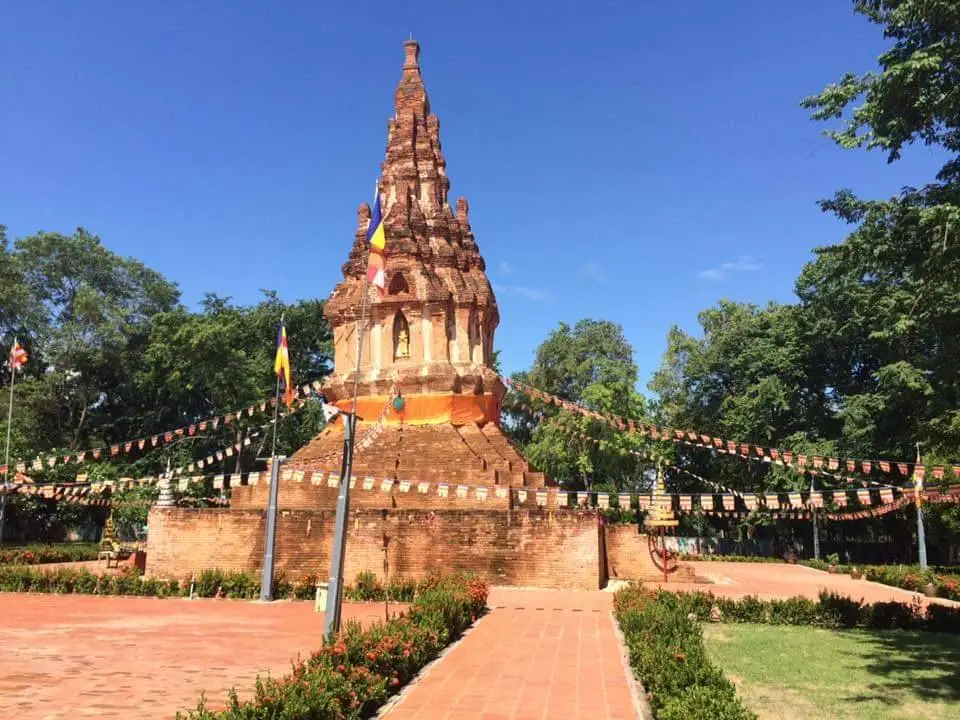
Phra That Nong Sam Muen is located at Wat Phra That Nong Sam Muen in Ban Kaeng, Moo 1, Ban Kaeng Subdistrict, Phu Khieo District, Chaiyaphum Province. It is one of the most important and visually impressive ancient monuments in Chaiyaphum. The stupa is named after Nong Sam Muen, a large pond located to the northwest of the temple. The site combines a sacred Buddhist relic stupa, architecture influenced by Lanna, Lan Xang, and Ayutthaya styles, Dvaravati-period archaeological remains, sandstone sema stones, ancient inscriptions, and the living faith of the Ban Kaeng community.
For international travelers who want to understand Chaiyaphum beyond natural attractions, Phra That Nong Sam Muen is an essential cultural destination. It is not only a beautiful stupa for worship, but also a historical landscape where several cultural periods overlap. The site preserves traces of an ancient Dvaravati settlement, later Khmer-period influence, Lan Xang Buddhist architecture, and present-day temple life. A visit here allows travelers to experience faith, archaeology, art history, and local community memory in one place.
The stupa is a large indented-corner chedi standing on a square base. It rises to about 45.30 meters in height and has stairways on all four sides. Above the base is a lotus-style architectural section supporting the main body of the stupa. The stupa has niches on all four directions, where Buddha images in the reflective posture and walking posture are enshrined. The overall form is balanced, elegant, and monumental, making it one of the most complete and graceful ancient stupas in Chaiyaphum.
Although there is no clear inscription stating exactly when Phra That Nong Sam Muen was built, its architectural and artistic features suggest that it was constructed around the 21st-22nd Buddhist centuries, during the period of King Chaiyachetthathirat of the Lao kingdom. The monument reflects a mixture of Lanna, Lan Xang, and Ayutthaya artistic influences. This combination gives the stupa a distinctive identity, showing that Phu Khieo was connected to wider cultural and religious networks across the upper Northeast and the Mekong region.
The Lan Xang influence can be seen in the role of the stupa as a major Buddhist relic monument, the vertical emphasis of the form, and the sacred importance attached to the chedi. Lanna and Ayutthaya influences appear in the architectural rhythm of the base, niches, and decorative proportions. The result is not a monument belonging to only one artistic tradition, but a carefully blended structure that reflects cultural movement, religious exchange, and regional craftsmanship.
The stupa enshrines relics of the Buddha, which gives it high religious significance. In Buddhist belief, a relic stupa is not merely an architectural structure. It is a sacred focus of devotion where worshippers come to pay respect to the Buddha, make merit, pray, and circumambulate the monument. For local people, Phra That Nong Sam Muen is therefore both an ancient monument and a living center of faith.
The form of Phra That Nong Sam Muen can be compared with other important stupas in Vientiane and northeastern Thailand, such as Phra That Wat Thep Phon in Wiang Khuk, Nong Khai Province, and Phra That Si Mueang in Vientiane. These comparisons help visitors understand that Phra That Nong Sam Muen belongs to a broader Buddhist stupa tradition in the Mekong cultural world. It is part of a shared religious and artistic landscape that crossed present-day provincial and national borders.
The monument’s height, square base, stairways, lotus base, and four directional niches create a strong sacred axis. From the lower platform to the upper structure, the stupa leads the eye upward. The four stairways suggest accessibility from multiple directions, while the niches with Buddha images create sacred focal points around the monument. Visitors who walk around the stupa slowly can appreciate both the architecture and the devotional function of the space.
The Buddha images in the niches add spiritual meaning to the monument. The reflective posture suggests contemplation and inner awareness, while the walking posture expresses graceful movement and the active presence of the Buddha’s teaching. Together, the images introduce both stillness and movement into the sacred architecture. They make the stupa more than a vertical structure; they turn it into a visual teaching space.
The name “Nong Sam Muen” is important because it connects the stupa with a local water source. In ancient communities, water was central to settlement, agriculture, ritual life, and community identity. The fact that the stupa was named after a nearby pond shows the relationship between sacred architecture, landscape, and memory. Phra That Nong Sam Muen should therefore be understood together with the surrounding environment of Ban Kaeng.
The area around the temple was once a large Dvaravati-period ancient town, dated roughly to the 12th-16th Buddhist centuries. Archaeological evidence includes moats, earthworks, ancient mounds, and sacred remains. These traces show that Ban Kaeng and Phu Khieo were important long before the present stupa was built. The site therefore contains several historical layers, making it one of the richest cultural landscapes in northern Chaiyaphum.
Important objects found both inside and outside the ancient town area have been preserved at the temple, especially groups of sandstone sema stones. Sema stones are important markers of sacred Buddhist space in the Dvaravati period. Some stones bear Pallava-script Sanskrit inscriptions dated around the 12th-14th Buddhist centuries. These inscriptions show that the area was linked to early Buddhist literacy, Indian cultural influence, and the spread of sacred knowledge in Southeast Asia.
The Pallava-script inscriptions are especially valuable because they show that the community around Phu Khieo was not isolated. It was connected to a wider cultural world in which scripts, religious ideas, and sacred language moved across regions. The presence of Sanskrit inscriptions on sema stones helps confirm the importance of the site as a center of early Buddhist culture in the upper Chi River region.
One sema stone from the area was later used as the city pillar of Phu Khieo District. This shows how ancient objects continued to gain meaning in the modern community. The stone was not seen only as an archaeological object, but as a symbol of local identity and continuity. It connects the ancient settlement with the present district and demonstrates how heritage can remain meaningful in public life.
Other important finds include two damaged sculptural objects. One resembles the head of a Buddha sheltered by a naga, associated with Bayon-style Khmer art and dated around the 18th Buddhist century. This suggests that after the Dvaravati period, the area also received Khmer artistic influence. The site therefore reflects Dvaravati, Khmer, Lan Xang, Lanna, and Ayutthaya cultural layers in one landscape.
Phra That Nong Sam Muen is valuable because it brings these layers together. The Dvaravati layer is represented by moats, earthworks, sema stones, and inscriptions. The Khmer layer appears through Bayon-style sculptural remains. The Lan Xang-Lanna-Ayutthaya layer is represented by the monumental stupa itself. The present layer is represented by the temple, museum, monks, local committee, and worshippers who continue to use the site today.
The temple also houses the Local Museum of Wat Phra That Nong Sam Muen. The museum preserves objects related to Isan daily life, traditional tools, fishing equipment, local heritage, and community memory. Visiting the museum helps travelers understand the human side of the site. Phra That Nong Sam Muen is not only about ancient architecture; it is also about the people who have lived, worked, worshipped, and preserved memory in this area.
Wat Phra That Nong Sam Muen is a community Buddhist temple under the Mahanikaya order. It remains a living temple where monks reside, villagers make merit, and Buddhist activities continue. Public contemporary temple information identifies Phra Khru Palat Somphot Kawissaro as the abbot associated with the temple. The temple committee, lay caretakers, local community, and Ban Kaeng Municipality also support the care of the site, museum, and religious activities.
Because the site contains sacred relics, ancient architecture, sema stones, inscriptions, and museum objects, visitors should behave respectfully. Modest dress is recommended. Visitors should not climb on the stupa, touch fragile archaeological objects, write on surfaces, move fragments, or place personal items on sema stones or inscriptions. Responsible behavior helps protect the site for both worshippers and future generations.
A meaningful visit should begin by viewing the stupa as a whole. Visitors can first notice the square base, the four stairways, the lotus base, the indented corners, the four directional niches, and the height of the monument. After that, they can look more closely at the Buddha images in the niches and the relationship between the stupa and the surrounding temple grounds. This slow approach helps reveal the structure’s architectural beauty.
Visitors interested in archaeology should also spend time with the sandstone sema stones preserved at the temple. Each stone has its own shape, surface, and historical meaning. Some are plain, while others are associated with inscriptions or sacred marks. These stones should not be viewed as simple decorations. They are key evidence of Dvaravati-period sacred space and help explain the deep history of Ban Kaeng.
The local museum adds another important dimension to the visit. Travelers can begin with worship at the stupa, then continue to the museum to see local objects and community heritage. This route is especially suitable for students, families, cultural travelers, and anyone who wants to understand how ancient sacred places remain connected with daily life and local memory.
The temple remains active through Buddhist merit-making, worship, candlelight processions, Kathin, robe-offering ceremonies, and major Buddhist observances. During temple events, the stupa becomes a gathering point for local people and worshippers. These activities show that Phra That Nong Sam Muen is not merely an old monument preserved in silence. It is still a living spiritual center for Ban Kaeng and Phu Khieo.
The site can also be combined with nearby attractions in Phu Khieo and the surrounding area. Visitors may include Wat Ta Khaek, Phak Pang Municipal Public Park, Non Mueang Ancient Town in Chum Phae, Chum Phae City Pillar Shrine, Sok Nam Sai Health Park, or Pha Hua Nak Viewpoint in Phu Laen Kha National Park. This allows travelers to connect sacred heritage, ancient town landscapes, urban community spaces, and natural viewpoints in one broader route.
Getting There from Chaiyaphum city is most convenient by private car. Take Highway 201 through Phu Khieo District toward Ban Nong Song Hong, about 80 kilometers from the city. Turn left onto Highway 2055 and continue for about 9 kilometers to Ban Kaeng. From Ban Kaeng, turn left toward Wat Phra That Nong Sam Muen for about 5 kilometers. Travelers may also use coordinates 16.378318, 102.042558 for navigation.
The recommended visiting hours are 08.00 to 17.00. This period is suitable for worship, walking around the stupa, visiting the local museum, and studying the sema stones. Morning and late afternoon are especially good for photography because the light helps reveal the form of the base, niches, and vertical structure of the stupa. During hot months, visitors should bring water, a hat, or an umbrella because parts of the temple grounds are open-air.
Restaurants near the temple can be found in Ban Kaeng and Phu Khieo town. Options include Phor Boonrod in Ban Kaeng, Saeng Arun Phochanakan, Rabiang Na Cafe’@Phukhieo, Chachak40 Phu Khieo, Jungle Cafe Phu Khieo, and local noodle shops. Travelers can plan a meal before or after visiting the temple, especially if continuing toward Phu Khieo town or Chum Phae.
Accommodation near Phra That Nong Sam Muen is available in Ban Kaeng and Phu Khieo. Options include Jamsai Resort, Ban Suan Amara Resort, Bander Hotel, Phusuay Namsai Resort, Muang Thong Resort Phu Khiao, and other local lodging in Phu Khieo town. Staying in Phu Khieo is convenient for travelers who want to explore the stupa slowly or continue to northern Chaiyaphum, Chum Phae, Khon San, or Phu Laen Kha routes.
Phra That Nong Sam Muen is suitable for many types of travelers: those who wish to worship a Buddhist relic stupa, those interested in Lan Xang and Lanna-style architecture, those studying Dvaravati archaeology, those interested in sema stones and inscriptions, and those who want to experience a quiet community temple with deep historical meaning. The site offers both spiritual and educational value.
Overall, Phra That Nong Sam Muen is one of the most significant heritage sites in Chaiyaphum. The stupa reflects Lan Xang, Lanna, and Ayutthaya artistic interaction. The sema stones and inscriptions reflect the Dvaravati past. The sculptural remains reflect later Khmer influence. The temple and museum reflect the continued care of the local community. Together, these elements make the site far more than a beautiful stupa; it is a cultural archive of Phu Khieo.
For travelers seeking the ancient cultural side of Chaiyaphum, Phra That Nong Sam Muen should not be overlooked. A visit here means paying respect to relics of the Buddha, observing one of the province’s most complete ancient stupas, learning about Dvaravati and Lan Xang heritage, viewing sema stones and local museum objects, and understanding how local faith continues to preserve historical memory in Ban Kaeng today.
| Name | Phra That Nong Sam Muen / Wat Phra That Nong Sam Muen |
| Location | Ban Kaeng, Moo 1, Ban Kaeng Subdistrict, Phu Khieo District, Chaiyaphum Province |
| Address | Wat Phra That Nong Sam Muen, Moo 1, Ban That Sam Muen, Ban Kaeng Subdistrict, Phu Khieo District, Chaiyaphum 36110, Thailand |
| Coordinates | 16.378318, 102.042558 |
| Highlights | A 45.30-meter indented-corner relic stupa, four directional niches, Buddha images, Dvaravati sema stones, Pallava-script Sanskrit inscriptions, ancient sculptures, and a local museum inside the temple |
| History / Period | Believed to have been built around the 21st-22nd Buddhist centuries during the period of King Chaiyachetthathirat of the Lao kingdom, with artistic influences from Lanna, Lan Xang, and Ayutthaya |
| Stupa Features | An indented-corner chedi on a square base, with stairways on all four sides, lotus base, four directional niches, Buddha images in reflective and walking postures, and a height of about 45.30 meters |
| Sacred Objects / Important Features | Relics of the Buddha, Buddha images in reflective and walking postures, sandstone sema stones, Pallava-script Sanskrit inscriptions, and ancient sculptural remains |
| Name Origin | Named after Nong Sam Muen, a large pond northwest of the temple, reflecting the relationship between the stupa, the local landscape, and community memory |
| Architectural Style | A blend of Lanna, Lan Xang, and Ayutthaya styles, with a square base, lotus base, indented corners, directional niches, and a stupa form related to Mekong Buddhist architecture |
| Archaeological Evidence | Located within an ancient Dvaravati settlement area with traces of moats, earthworks, mounds, sandstone sema stones, Pallava-script Sanskrit inscriptions, and sculptural remains related to Bayon-style Khmer art |
| Main Areas / Zones | Main stupa zone, four stairway zone, four Buddha-niche zone, circumambulation area, sandstone sema stone zone, local museum zone, temple courtyard, resting area, and merit-making area |
| Local Museum | The Local Museum of Wat Phra That Nong Sam Muen preserves Isan daily-life objects, fishing tools, local heritage, and community stories. It is open daily from 08.00 to 17.00 and has no entrance fee |
| Facilities | Temple courtyard, stupa worship area, local museum, resting area or temple hall, parking area inside the temple, and nearby restaurants in Ban Kaeng and Phu Khieo |
| Traditions / Main Activities | Worship of the Buddha relics, circumambulation, merit-making, Kathin, robe-offering ceremonies, major Buddhist observances, and local museum learning activities |
| Caretaker | Wat Phra That Nong Sam Muen, the temple committee, lay caretakers, Ban Kaeng community, and Ban Kaeng Municipality |
| Abbot Of Wat Phra That Nong Sam Muen | Phra Khru Palat Somphot Kawissaro |
| Temple / Museum Contact Number | 095-838-0517, 087-248-7049, 096-291-5971 |
| Open Days | Daily |
| Opening Hours | 08.00 – 17.00 |
| Entrance Fee | No entrance fee; visitors may make donations inside the temple according to their faith |
| Travel Information | From Chaiyaphum city, take Highway 201 through Phu Khieo District to Ban Nong Song Hong, about 80 km. Turn left onto Highway 2055 for about 9 km to Ban Kaeng, then turn left toward Wat Phra That Nong Sam Muen for about 5 km. Use coordinates 16.378318, 102.042558 |
| Current Status | A community Buddhist temple and important ancient monument of Phu Khieo District, open for worship, local museum visits, and cultural learning |
| Local Administrative Contact | Ban Kaeng Municipality, Tel. 044-100-197, 044-100-198 |
| Nearby Tourist Attractions | 1. Local Museum of Wat Phra That Nong Sam Muen, about 0.1 km, Tel. 095-838-0517, 087-248-7049 2. Nong Sam Muen, Ban Kaeng, about 1 km 3. Wat Ta Khaek, Nong Tum Subdistrict, about 4 km 4. Phak Pang Municipal Public Park, about 10 km 5. Non Mueang Ancient Town, Chum Phae District, about 16 km 6. Chum Phae City Pillar Shrine, about 19 km 7. Sok Nam Sai Health Park, Phu Khieo District, about 20 km 8. Pha Hua Nak Viewpoint, Phu Laen Kha National Park, about 45 km, Tel. 093-0939193 |
| Nearby Restaurants | 1. Phor Boonrod, Ban Kaeng, about 3 km, Tel. 094-361-3350 2. Saeng Arun Phochanakan (Ko Tee), Phu Khieo, about 10 km, Tel. 044-861-015 3. Rabiang Na Cafe’@Phukhieo, about 11 km, Tel. 084-227-2252 4. Chachak40 Phu Khieo, about 11 km, Tel. 092-270-6040 5. Jungle Cafe Phu Khieo-Chaiyaphum Branch, about 12 km, Tel. 093-071-7544 6. Kuai Tiao Kai Mara Buffet Phu Khieo, about 12 km, Tel. 095-180-0281 |
| Nearby Accommodations | 1. Jamsai Resort, Ban Kaeng, about 5 km, Tel. 092-250-7650 2. Ban Suan Amara Resort, Phu Khieo District, about 8 km, Tel. 081-546-9909, 082-755-3908 3. Bander Hotel, Phu Khieo, about 10 km, Tel. 044-862-332, 081-068-3563 4. Phusuay Namsai Resort, about 11 km, Tel. 083-222-7744 5. Muang Thong Resort Phu Khiao, about 13 km 6. Local Guesthouses And Resorts In Phu Khieo Town, about 10-15 km |
Frequently Asked Questions (FAQ)
Q: Where is Phra That Nong Sam Muen located?
A: Phra That Nong Sam Muen is located at Wat Phra That Nong Sam Muen in Ban Kaeng, Moo 1, Ban Kaeng Subdistrict, Phu Khieo District, Chaiyaphum Province.
Q: When was Phra That Nong Sam Muen built?
A: There is no definite construction record, but its architectural and artistic features suggest that it was built around the 21st-22nd Buddhist centuries during the period of King Chaiyachetthathirat of the Lao kingdom.
Q: What are the main highlights of Phra That Nong Sam Muen?
A: The highlights include a 45.30-meter indented-corner relic stupa, four stairways, four directional niches with Buddha images, relics of the Buddha, sandstone sema stones, inscriptions, and a local museum inside the temple.
Q: What ancient objects are preserved at the temple?
A: The temple preserves sandstone sema stones, Pallava-script Sanskrit inscriptions, ancient sculptural remains related to Bayon-style Khmer art, and museum objects connected with local Isan life and community heritage.
Q: What are the opening hours?
A: The site is open daily from 08.00 to 17.00, suitable for worship, visiting the stupa, viewing sema stones, and exploring the local museum.
Q: Is there an entrance fee?
A: There is no entrance fee. Visitors may worship freely, visit the local museum, and make donations inside the temple according to their faith.
Q: How can travelers get to Phra That Nong Sam Muen?
A: From Chaiyaphum city, take Highway 201 through Phu Khieo District to Ban Nong Song Hong, then turn left onto Highway 2055 for about 9 km to Ban Kaeng and continue about 5 km to the temple. Travelers may also use coordinates 16.378318, 102.042558.
Q: What nearby attractions can be combined with a visit?
A: Nearby places include the Local Museum of Wat Phra That Nong Sam Muen, Nong Sam Muen, Wat Ta Khaek, Phak Pang Municipal Public Park, Non Mueang Ancient Town, Chum Phae City Pillar Shrine, and Pha Hua Nak Viewpoint in Phu Laen Kha National Park.
 Category: ●Places of Worship
 Group: ●Other Sacred Sites
Last Update : 3 MonthAgo
 Last Update : 3 MonthAgo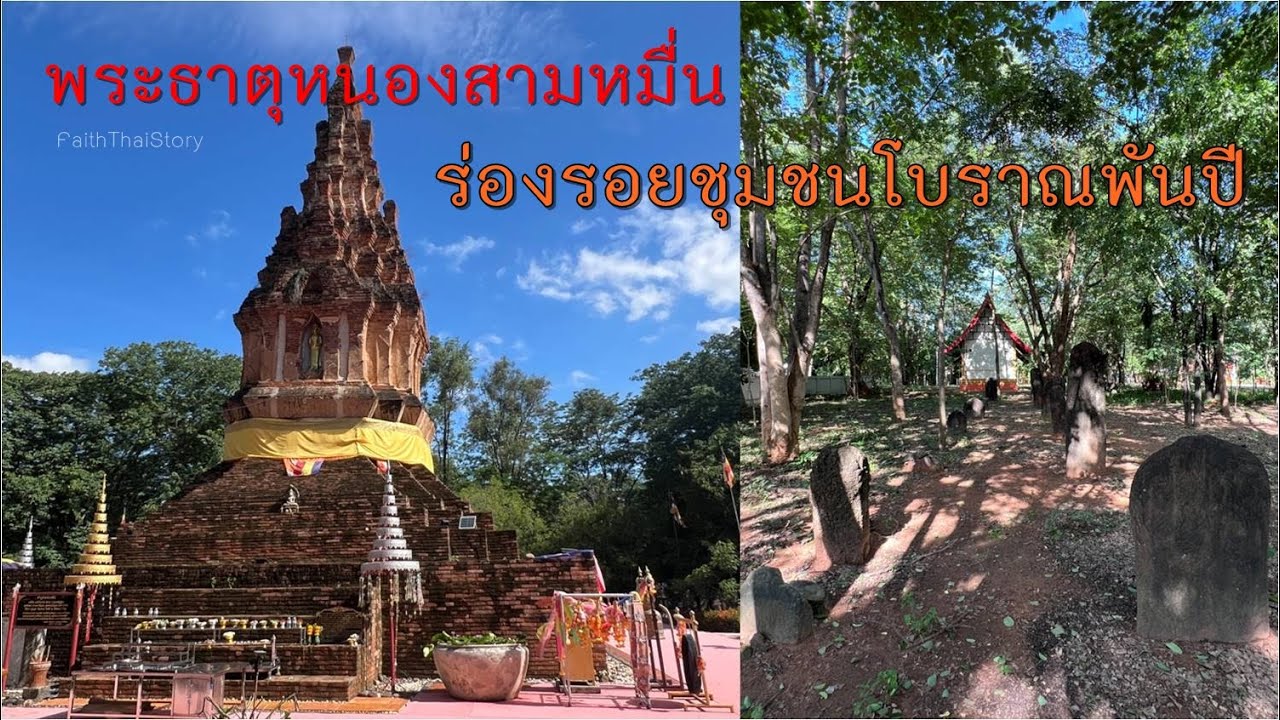
 Click to Access the Navigation Map GPS
Phra That Nong Sam Muen Map
Recommend

 Art, Culture and Heritage
 Historical Sites and Monuments(1)
 Landmarks and Memorials(3)
 Royal Palace(1)
 Art, Craft Centres, Tradition(3)
 Educational Places
 Educational Gardens, Farm(1)
 Temple(141)
Other Sacred Sites(7)
Temple(141)
Other Sacred Sites(7)
 Suburban Living
 Village, Community(4)
 Nature and Wildlife
 National Parks and Marine Reserves(7)
 Mountain (Doi)(5)
 Dam, Reservoir, Lake(10)
 Waterfalls(15)
 Caves(5)
 River, Canal(4)
 Other natural attractions(1)
 Entertainment and Agricultural
 Farms, Parks and Ecotourism(2)


