
lovethailand home >Northeastern Travel Attractions >Chaiyaphum Travel Attractions >Phu Khieo >Ban Kaeng > Wat Phra That Nong Sam Muen
TL;DR: Wat Phra That Nong Sam Muen is located at Village No. 1, Ban That Sam Muen / Ban Kaeng, Ban Kaeng Subdistrict, Phu Khiao District, Chaiyaphum Province, open Daily, hours 08.00 – 17.00.
Wat Phra That Nong Sam Muen
Open Days: Daily
Opening Hours: 08.00 – 17.00
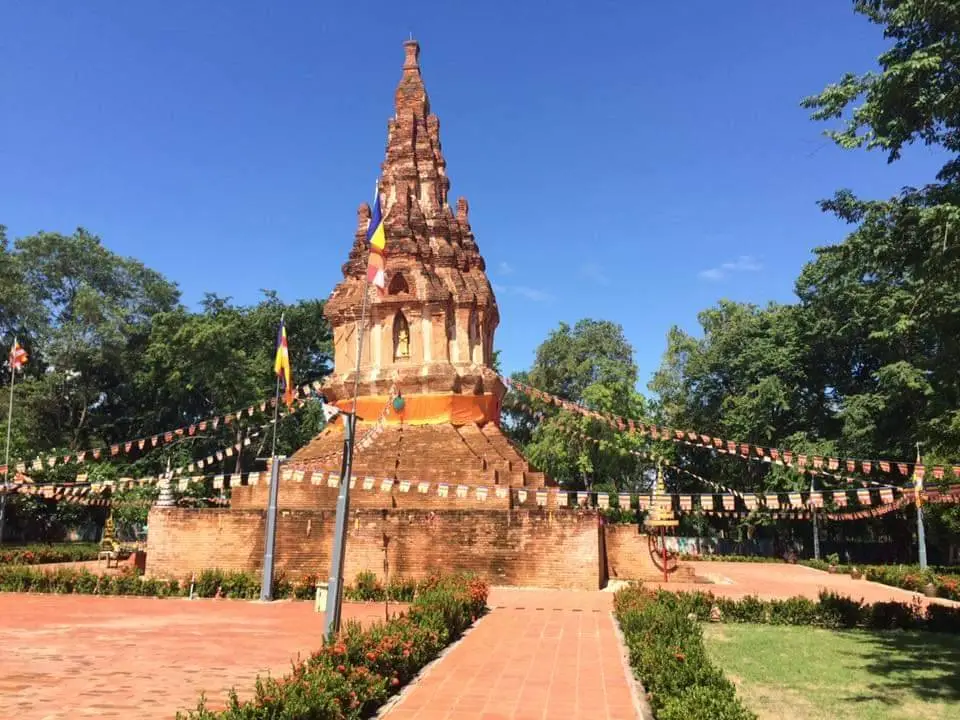
Wat Phra That Nong Sam Muen is located at Village No. 1, Ban That Sam Muen / Ban Kaeng, Ban Kaeng Subdistrict, Phu Khiao District, Chaiyaphum Province. It is a community Buddhist temple and one of the most important ancient monuments in Chaiyaphum. The temple is significant for its religion, history, archaeology, architecture, local culture, and living community faith. The main stupa, Phra That Nong Sam Muen, is one of the most beautiful and well-preserved stupas in the province. Its architectural form combines Lanna, Lan Xang, and Ayutthaya artistic influences, while the surrounding area preserves traces of an ancient Dvaravati-period settlement, including moats, earthen ramparts, ancient mounds, sandstone sema stones, inscriptions, and archaeological objects.
Phra That Nong Sam Muen takes its name from Nong Sam Muen, a large water source located to the northwest of the temple. The name connects the temple, the stupa, the water source, and the local community into one cultural landscape. In local life, water nourishes the village, while the stupa nourishes faith. Visiting Wat Phra That Nong Sam Muen is therefore not only a visit to a sacred Buddhist monument, but also a journey into a place where nature, religion, and local history are deeply connected.
The main feature of Wat Phra That Nong Sam Muen is the large stupa with twelve indented corners. It stands on a square base and rises to approximately 45 meters. Stairways lead up on all four sides. Above the base are lotus-moulded layers supporting the body of the stupa, with niches on the four sides enshrining Buddha images in contemplation and walking postures. This architectural composition reflects the skill of ancient craftsmen and the blending of multiple artistic traditions that once influenced northeastern Thailand and the Mekong region.
The stupa is traditionally believed to enshrine relics of the Buddha. This belief gives Phra That Nong Sam Muen the status of a sacred Buddhist monument and makes it a major focus of devotion for villagers and pilgrims. Paying respect to the stupa is considered an act of merit and a way to connect with a long-standing Buddhist tradition. Local people continue to visit the temple for merit-making, worship, Dhamma listening, meditation practice, and annual religious ceremonies.
No clear written evidence has been found to confirm the exact construction date of Phra That Nong Sam Muen. However, based on its architecture and artistic style, the stupa is generally believed to have been built around the 21st to 22nd Buddhist centuries, during the reign of King Chaiyachetthathirat of the Lao kingdom. Its form can be compared with important stupas in Vientiane and along the Mekong region, such as Phra That Si Mueang in Vientiane and Phra That Wat Thep Phon in Wiang Khuk, Nong Khai Province. These comparisons show the artistic and religious connections among Lan Xang, northeastern Thailand, and Ayutthaya.
The importance of the temple site goes beyond the stupa itself. The area around Wat Phra That Nong Sam Muen was once a large ancient settlement dating to the Dvaravati period, approximately the 12th to 16th Buddhist centuries. Traces of moats, earthen ramparts, ancient mounds, and religious remains show that Ban Kaeng and the Phu Khiao area were inhabited and ritually important long before the Lan Xang-style stupa was built. This layering of history makes Wat Phra That Nong Sam Muen significant at both local and regional levels.
Important archaeological objects found inside and around the ancient city area have been preserved at the temple. Among the most important are sandstone sema stones, which are closely associated with Dvaravati Buddhist culture in northeastern Thailand. Some sema stones bear Pallava-script Sanskrit inscriptions dated around the 12th to 14th Buddhist centuries. One inscribed stone was later moved and used as the city pillar of Phu Khiao District. These discoveries indicate that the area was once an important sacred Buddhist zone during the Dvaravati period.
Other important finds include two damaged religious sculptures. One of them resembles the head of a Buddha image protected by a naga, associated with Bayon-style Khmer art dating to around the 18th Buddhist century. This evidence shows that the area was not influenced only by Dvaravati and Lan Xang cultures. It also received Khmer artistic influence at a certain period. Wat Phra That Nong Sam Muen therefore preserves traces of several historical layers within one site.
The ancient settlement around Ban Kaeng is also connected with the Urangkhathat legend, which mentions an ancient city west of Nong Han known as Ayodhya or Kuruntha Nakhon. Although interpretations of the legend vary, the Phu Khiao and Ban Kaeng area is often discussed because of its large ancient settlement, moats, ramparts, sema stones, and archaeological remains. Walking through the temple therefore feels like walking through a living historical landscape, not only a temple compound.
The temple also houses the Wat Phra That Nong Sam Muen Local Museum. The museum preserves and presents objects related to Isan ways of life, local tools, fishing and hunting equipment, archaeological finds, and information about the history of the area. This museum helps visitors understand the temple in a broader context. It shows that the stupa, local life, archaeology, and community memory are connected rather than separate subjects.
Wat Phra That Nong Sam Muen continues to function as an active Buddhist temple. Monks and local Buddhist devotees use the temple for daily and annual religious activities. Villagers come to make merit, offer food to monks, listen to Dhamma, observe precepts, practice meditation, and take part in ceremonies on Buddhist holy days. The temple therefore remains a living religious space, not only a historical monument.
The temple is also a spiritual center for Ban Kaeng and nearby communities. During merit-making events and annual ceremonies, villagers work together to prepare the grounds, food, offerings, and ritual items. This shared work strengthens community bonds and allows older generations, adults, youth, and children to participate in the same cultural and religious life. The temple is a place where local faith becomes visible through real community action.
Wat Phra That Nong Sam Muen is also connected with the Phi Fa dance tradition at Phu Phra, where villagers perform ritual dances to honor Phra Chao Ong Tue, a sacred sandstone Buddha image about 2 meters high. Local people hold great reverence for this Buddha image. The ritual dance is held during the waxing 13th to 15th days of the fifth lunar month, around April, as well as during Buddhist Lent and the end of Buddhist Lent, when many people come to make merit. This tradition reveals the relationship between Buddhism, local belief, ritual performance, and community gathering in the Phu Khiao area.
Understanding the Phi Fa tradition alongside Wat Phra That Nong Sam Muen helps visitors see that the temple is part of a wider cultural landscape. The stupa, sacred Buddha images, ritual dances, Buddhist festivals, and village merit-making all form a living system of faith. This is an important feature of northeastern Thai culture, where Theravada Buddhism and local belief often coexist in a balanced and meaningful way.
The atmosphere of Wat Phra That Nong Sam Muen is peaceful, shaded, and suitable for respectful visits. The stupa stands prominently at the center of the temple grounds. Visitors can walk around the monument, observe the twelve-indented-corner form, the base, the Buddha niches, and the architectural details that still remain. A slow walk around the stupa allows visitors to appreciate the craftsmanship, historical depth, and spiritual atmosphere of the site.
The temple grounds can be understood in several important zones: the stupa area, worship area, local museum, sema stones and archaeological object area, community activity ground, monks’ residence area, and meditation space. Visitors can spend time paying respect, learning about history, viewing local heritage, and resting quietly in a sacred environment.
When viewing ancient objects and the stupa, visitors should behave carefully and respectfully. They should not climb on the stupa, touch or move archaeological objects, write on any surface, or place belongings on ancient structures. These rules help protect heritage that has survived for many centuries and belongs to the local community as well as the wider cultural history of Thailand.
Wat Phra That Nong Sam Muen is suitable for many types of visitors. Buddhist devotees can come to pay respect and make merit. History lovers can study Dvaravati, Khmer, Lan Xang, and Ayutthaya-related evidence. Families can introduce children to temple etiquette and local history. Foreign travelers can learn how a Thai temple can be at once a sacred site, a community center, a museum, and an archaeological landscape.
Getting There from Chaiyaphum city is most convenient by private car. Drive along Highway 201 through Phu Khiao District toward Ban Nong Song Hong, a distance of about 80 kilometers. Turn left onto Highway 2055 and continue for about 9 kilometers to Ban Kaeng. From there, turn left again and continue for about 5 kilometers to Wat Phra That Nong Sam Muen. This route is convenient for travelers who want to combine the temple with other attractions in Phu Khiao District.
Travelers coming from Phu Khiao town can take local roads to Ban Kaeng and Ban That Sam Muen. Those coming from Chum Phae District in Khon Kaen Province can also include the temple in a cultural route around Phu Khiao and nearby areas. A private car or hired local vehicle is the most practical option because village-level public transport may not operate frequently throughout the day.
Upon arrival, visitors should park carefully without blocking temple access or community activities. They should dress modestly, speak quietly, and respect monks’ areas. If they wish to photograph monks, ceremonies, or local people, they should ask permission first. Photography of the stupa and ancient objects should be done from an appropriate distance and should not disturb worshippers.
A half-day visit can focus on paying respect to the stupa, visiting the local museum, and studying the sema stones and archaeological objects inside the temple. A full-day itinerary can include Wat Non Thatu Ngam, Wat Pa Phu Khiao, Non Mueang Ancient Town, or other attractions in Phu Khiao and Chum Phae. This creates a well-rounded trip that combines sacred monuments, archaeology, local history, food, and community life.
Historically, Wat Phra That Nong Sam Muen is important because it shows the development of religious and cultural life in Phu Khiao across many periods. Dvaravati-period sema stones and ancient settlement traces, Khmer-influenced religious sculpture, Lan Xang-style stupa architecture, and Ayutthaya-related artistic elements all appear within the same cultural area. This makes the temple a rich learning site for anyone interested in the deep history of northeastern Thailand.
Culturally, the temple keeps traditions alive through real participation. Buddhist holy days, Kathin ceremonies, robe offerings, meditation events, and local ritual traditions allow villagers to gather and pass on cultural knowledge. These practices are not merely historical memories; they continue through the actions of local people each year.
Spiritually, Wat Phra That Nong Sam Muen is a place where people return for calm, merit, and inner stability. The stupa serves as a spiritual landmark for the community. Paying respect, listening to Dhamma, walking around the monument, or sitting quietly in the temple grounds allows visitors to pause and connect with a tradition that has been carried through many generations.
Overall, Wat Phra That Nong Sam Muen is one of the most important temples and ancient monuments in Chaiyaphum Province. Its stupa is beautiful, well-preserved, and architecturally significant, combining Lanna, Lan Xang, and Ayutthaya influences. The surrounding area contains Dvaravati-period settlement evidence, Pallava-script inscriptions, sema stones, Khmer-influenced sculptures, a local museum, and living community traditions. A visit to this temple is therefore not only a Buddhist pilgrimage, but also a meaningful encounter with the historical and cultural depth of Phu Khiao and Chaiyaphum.
| Name | Wat Phra That Nong Sam Muen |
| Location | Village No. 1, Ban That Sam Muen / Ban Kaeng, Ban Kaeng Subdistrict, Phu Khiao District, Chaiyaphum Province |
| Address | Wat Phra That Nong Sam Muen, Village No. 1, Ban That Sam Muen, Ban Kaeng Subdistrict, Phu Khiao District, Chaiyaphum Province 36110, Thailand |
| Coordinates | 16.378318, 102.042558 |
| Place Type | Community Buddhist temple, important ancient monument, and local historical learning site |
| Highlights | A 45-meter stupa with twelve indented corners, combining Lanna, Lan Xang, and Ayutthaya artistic influences, with a local museum, Dvaravati sema stones, inscriptions, and archaeological objects |
| History / Period | The stupa is believed to date to the 21st–22nd Buddhist centuries during the reign of King Chaiyachetthathirat of the Lao kingdom. The surrounding ancient settlement dates to the Dvaravati period, around the 12th–16th Buddhist centuries |
| Key Evidence | Phra That Nong Sam Muen stupa, sandstone sema stones, Pallava-script Sanskrit inscriptions, Dvaravati-period archaeological remains, Bayon-style Khmer-influenced sculpture, and traces of an ancient moat-and-rampart settlement |
| Architectural Features | A twelve-indented-corner brick-and-plaster stupa on a square base, with stairways on four sides, lotus-moulded layers, four Buddha niches, and Buddha images in contemplation and walking postures |
| Sacred Objects | Phra That Nong Sam Muen, traditionally believed to enshrine relics of the Buddha, Buddha images in the stupa niches, and important ancient objects preserved within the temple |
| Name Origin | The name comes from Nong Sam Muen, a water source located to the northwest of the temple and closely connected with the local community |
| Traditions / Rituals | The Phi Fa ritual dance at Phu Phra to honor Phra Chao Ong Tue, held during the waxing 13th–15th days of the fifth lunar month, around April, as well as during Buddhist Lent and the end of Buddhist Lent. The temple also holds Buddhist holy day activities, Kathin, robe offerings, and merit-making events |
| Travel Information | From Chaiyaphum city, take Highway 201 through Phu Khiao District to Ban Nong Song Hong, about 80 km, turn left onto Highway 2055 for about 9 km to Ban Kaeng, then turn left for about 5 km to the temple |
| Current Status | An active community Buddhist temple, important ancient monument, and local museum site open for merit-making, respectful visits, and historical learning |
| Open Days | Daily |
| Opening Hours | 08.00 – 17.00 |
| Admission Fee | Free Admission |
| Facilities | Worship area, temple grounds, local museum, archaeological object area, religious activity space, and meditation area |
| Main Areas / Zones | Main stupa zone, worship area, circumambulation space, local museum, sema stone and archaeological object area, community activity ground, and quiet meditation area |
| Abbot / Caretaker | Phra Khru Palat Somphot Kawissaro |
| Museum / Local Caretaker Contact | Mr. Nikhom Chamrat Naeo, Tel. 095-838-0517 Ms. Kanha Inrin, Tel. 087-248-7049 |
| Nearby Tourist Attractions | 1. Wat Phra That Nong Sam Muen Local Museum, within the temple grounds 2. Nong Sam Muen, Ban Kaeng, about 1 km 3. Ban Kaeng Ancient Settlement / Moat And Rampart Traces, about 2 km 4. Wat Non Thatu Ngam, Pak Pang Subdistrict, about 20 km 5. Wat Pa Phu Khiao, Pak Pang Subdistrict, about 21 km 6. Non Mueang Ancient Town, Chum Phae District, Khon Kaen Province, about 28 km 7. Sok Nam Sai Health Park, Chum Phae District, Khon Kaen Province, about 30 km |
| Nearby Restaurants | 1. Rabiang Na Cafe’ @ Phu Khiao, about 21 km, Tel. 084-227-2252 2. Jungle Cafe Phu Khiao Branch, about 22 km, Tel. 093-320-9302 3. Saeng Arun Phochana (Ko Tee), Phu Khiao, about 22 km, Tel. 044-861-015 4. Cha Chak Phu Khiao Chaiyaphum, about 22 km, Tel. 092-270-6040 5. Mam Yai Kham Chao Kao, Phu Khiao District, about 22 km, Tel. 091-862-2316, 089-423-5141, 094-284-8594 6. PunThai Coffee Phu Khiao Chalermprakiet Hospital, about 21 km, Tel. 061-393-7173 |
| Nearby Accommodations | 1. Bander Hotel Phu Khiao, about 21 km, Tel. 044-862-332, 081-068-3563 2. Phu Suai Nam Sai Resort, about 21 km, Tel. 044-844-212, 083-222-7744 3. P. Suwan Resort, about 22 km, Tel. 086-879-4509, 044-861-396 4. Sabai Jai Garden Home Resort, about 24 km, Tel. 086-874-3229, 087-446-2572 5. Ban Suan Amra Resort, about 24 km, Tel. 082-755-3908, 081-546-9909 6. Sanongchai Resort Phu Khiao, about 27 km, Tel. 081-471-9191, 088-375-1199 |
Frequently Asked Questions (FAQ)
Q: Where is Wat Phra That Nong Sam Muen located?
A: Wat Phra That Nong Sam Muen is located at Village No. 1, Ban That Sam Muen / Ban Kaeng, Ban Kaeng Subdistrict, Phu Khiao District, Chaiyaphum Province.
Q: Why is Phra That Nong Sam Muen important?
A: It is one of Chaiyaphum’s most important ancient monuments, with a stupa combining Lanna, Lan Xang, and Ayutthaya artistic influences. It is traditionally believed to enshrine relics of the Buddha and stands on an ancient Dvaravati-period settlement.
Q: When was Phra That Nong Sam Muen built?
A: No exact construction date has been confirmed, but its architecture and art suggest that it was built around the 21st–22nd Buddhist centuries during the reign of King Chaiyachetthathirat of the Lao kingdom.
Q: What can visitors see inside Wat Phra That Nong Sam Muen?
A: Visitors can see the main stupa, the local museum, sandstone sema stones, Pallava-script inscriptions, Dvaravati-period archaeological objects, and sculptures showing Khmer artistic influence.
Q: What are the opening hours of Wat Phra That Nong Sam Muen?
A: The temple and local museum are open daily from 08.00 to 17.00, and admission is free.
Q: What important tradition is associated with the area?
A: The Phi Fa ritual dance at Phu Phra honors Phra Chao Ong Tue, a sacred sandstone Buddha image. It is held during the waxing 13th–15th days of the fifth lunar month, around April, as well as during Buddhist Lent and the end of Buddhist Lent.
Q: How do visitors get to Wat Phra That Nong Sam Muen?
A: From Chaiyaphum city, take Highway 201 through Phu Khiao District to Ban Nong Song Hong, about 80 km, then turn left onto Highway 2055 for about 9 km to Ban Kaeng and continue another 5 km to the temple.
Q: How should visitors behave at Wat Phra That Nong Sam Muen?
A: Visitors should dress modestly, keep quiet, avoid climbing on the stupa, avoid touching or moving ancient objects, and ask permission before photographing monks or community ceremonies.
 Category: ●Places of Worship
 Group: ●Temple
Last Update : 4 MonthAgo
 Last Update : 4 MonthAgo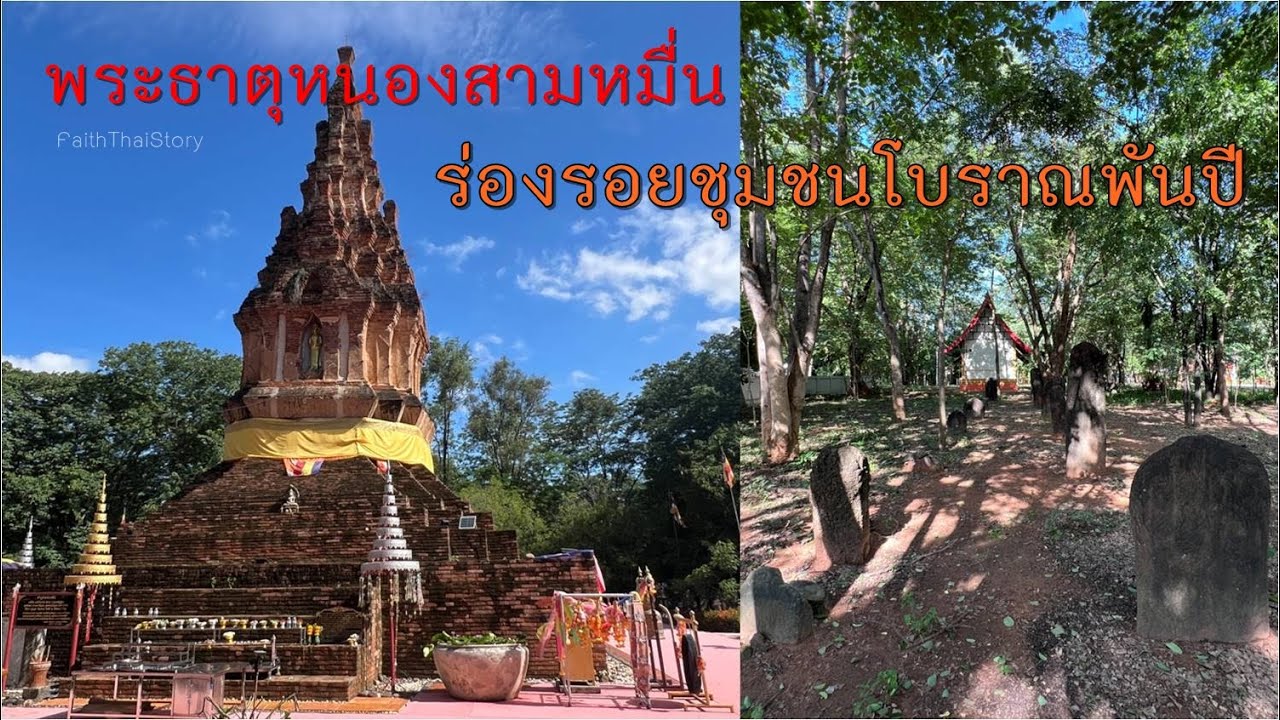
 Click to Access the Navigation Map GPS
Wat Phra That Nong Sam Muen Map
Recommend

 Art, Culture and Heritage
 Historical Sites and Monuments(1)
 Landmarks and Memorials(3)
 Royal Palace(1)
 Art, Craft Centres, Tradition(3)
 Educational Places
 Educational Gardens, Farm(1)
Temple(141)
Educational Gardens, Farm(1)
Temple(141)
 Other Sacred Sites(8)
 Suburban Living
 Village, Community(4)
 Nature and Wildlife
 National Parks and Marine Reserves(7)
 Mountain (Doi)(5)
 Dam, Reservoir, Lake(10)
 Waterfalls(15)
 Caves(5)
 River, Canal(4)
 Other natural attractions(1)
 Entertainment and Agricultural
 Farms, Parks and Ecotourism(2)
 Waterpark(2)
 Travel Articles, Recipes
 Travel Review, Food Review(1)


