
lovethailand home >North Travel Attractions >Uthai Thani Travel Attractions >Muang Uthai Thani >Nam Suem > Wat Sangkat Rattana Khiri
TL;DR: Wat Sangkat Rattana Khiri is located at At The Foot Of Khao Sakae Krang, Tha Chang Road, Nam Suem Subdistrict, Mueang Uthai Thani District, Uthai Thani Province, open Daily, hours 08.00 – 16.30.
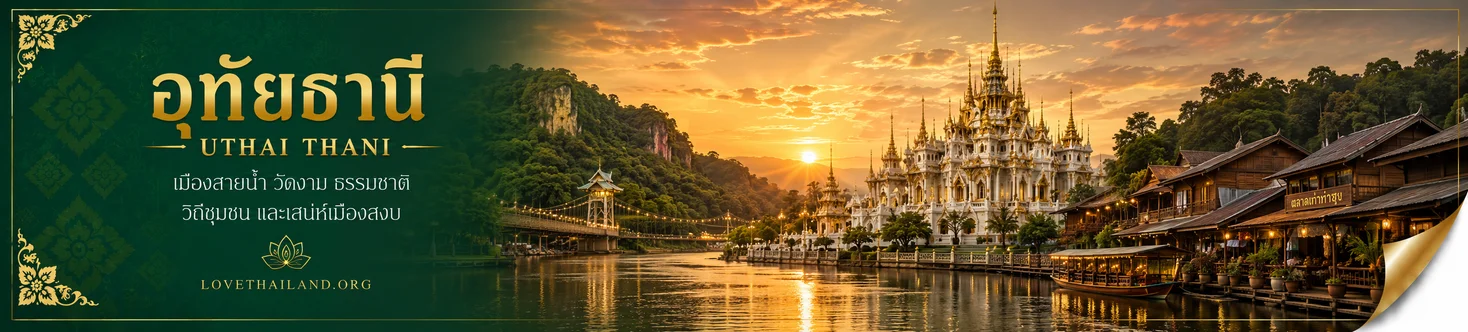
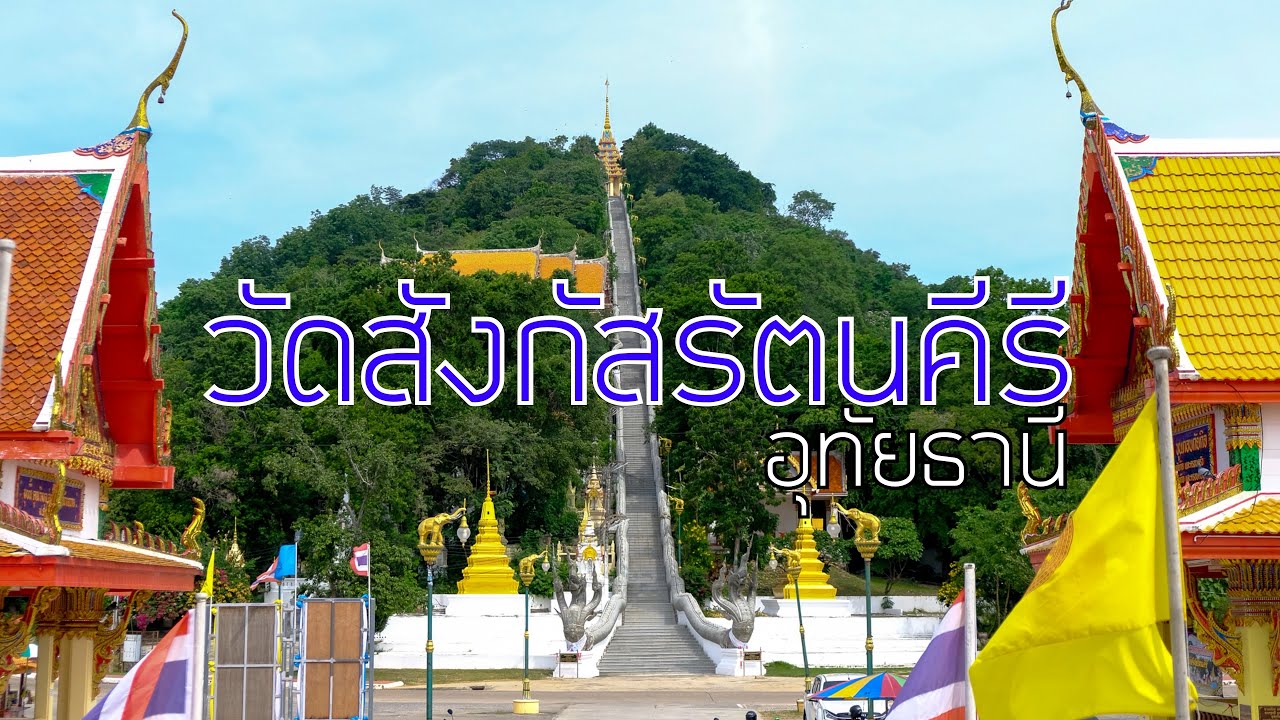
Wat Sangkat Rattana Khiri

Open Days: Daily
Opening Hours: 08.00 – 16.30
Wat Sangkat Rattana Khiri is one of the most important temples in Uthai Thani Province. Located at the foot of Khao Sakae Krang in Nam Suem Subdistrict, Mueang Uthai Thani District, the temple is closely connected with the spiritual identity of the province. It is best known as the home of Phra Phuttha Mongkhon Saksit, the revered Buddha image regarded as the guardian Buddha of Uthai Thani. The temple is also linked with the hilltop sacred area of Khao Sakae Krang, where visitors can walk up 449 steps, pay respect at the mondop housing the Buddha footprint replica, and enjoy panoramic views over Uthai Thani town and the Sakae Krang River landscape.
For international travelers, Wat Sangkat Rattana Khiri offers more than a typical temple visit. It combines Buddhist faith, local history, architecture, annual religious tradition, and natural scenery in one place. The temple compound includes the viharn of Phra Phuttha Mongkhon Saksit at the lower level, the sermon hall, the Phuttha Rattana Muni viharn, the stairway leading up Khao Sakae Krang, the hilltop mondop, a large bronze bell, the monument of Somdet Phra Pathom Borom Maha Chanok of King Rama 1, and viewpoints overlooking the town. This combination makes the temple one of the most complete cultural stops in Uthai Thani.
The history of the temple is closely related to Khao Sakae Krang, also known as Khao Kaeo. Unlike many urban temples located entirely on flat land, Wat Sangkat Rattana Khiri has both a lower temple area and a sacred hilltop zone. The former name of the temple was Wat Sangkat Rattana Khiri Mongkhon Praphai Uthai Khet. Its development is associated with Phra Khru Praphai Khunachan, also known as Luang Pho Chai, a respected monk who helped develop the religious site on Khao Sakae Krang. The creation of paths, stairways, religious buildings, and the hilltop mondop reflected the shared devotion of monks and local Buddhist communities.
The spiritual heart of the temple is Phra Phuttha Mongkhon Saksit. This bronze Buddha image in the subduing Mara posture is deeply revered by the people of Uthai Thani. Its history is linked with the early Rattanakosin period during the reign of King Rama 1, when damaged smaller Buddha images from the central region were distributed to provincial towns to bring auspiciousness to local communities. Uthai Thani received 3 Buddha images, which were brought by raft and landed at Tha Phra before being enshrined at Wat Khwit.
One of those Buddha images was a large bronze image later known as Phra Phuttha Mongkhon Saksit. The image is associated with Sukhothai craftsmanship and is traditionally linked to the period of King Lithai. It is also notable because the head and body are believed to have originally belonged to different images before being joined together. This makes the image historically and artistically significant. It is not only an object of devotion, but also an example of how sacred images were preserved, restored, moved, and re-enshrined through time.
When Wat Khwit was later merged with Wat Thung Kaeo, the Buddha image was transferred to Wat Sangkat Rattana Khiri. A ceremony was held to enshrine Buddha relics in the head of the image, and it was given the name Phra Phuttha Mongkhon Saksit. The name expresses auspiciousness and sacred protection, which explains why the image became a major spiritual symbol of Uthai Thani. Local people continue to visit the temple to pay respect, make merit, and seek blessings for stability, success, and peace of mind.
The viharn of Phra Phuttha Mongkhon Saksit is located at the foot of the hill and is usually the first place visitors enter. The building was reconstructed in 1977. Its front and side stairways are decorated with Thai ornamental motifs, while the carved doors depict scenes from the life of the Buddha. The viharn functions as a sacred gateway to the wider temple experience. Visitors first pay respect to the guardian Buddha of the province before continuing upward toward the hilltop sacred area.
Khao Sakae Krang is one of the defining features of the temple. Visitors can either climb the 449-step stairway from the lower temple area or drive up to the top of the hill. Walking up the stairway is a symbolic experience as well as a physical one. Each step gradually leads visitors away from the movement of the town below and toward a calmer sacred space above. Once at the top, the view opens across Uthai Thani town, the Sakae Krang River, nearby communities, and the surrounding landscape. It is one of the best viewpoints in the province.
On the summit of Khao Sakae Krang stands the mondop housing a replica of the Buddha footprint. The current mondop replaced an earlier structure that was destroyed by a forest fire. Construction of the present building began in 1954 and was completed in 1968. Its form was inspired by the Buddha Footprint Mondop in Saraburi. Near the mondop is a large bronze bell measuring about 141 centimeters in height and 120 centimeters in diameter, weighing around 2 tons. Cast in 1900, the bell adds both historical and symbolic value to the sacred hilltop area.
The summit also contains the monument of Somdet Phra Pathom Borom Maha Chanok of King Rama 1, giving Khao Sakae Krang an additional layer of royal historical significance. Visitors who reach the summit therefore encounter Buddhist devotion, royal memory, local landscape, and the broad view of Uthai Thani at the same time. The hilltop area is suitable for quiet reflection, photography, and a deeper appreciation of how temples in Thailand often connect sacred space with natural geography.
The sermon hall of Wat Sangkat Rattana Khiri is another important structure. Built in 1922 by Khun Kopkai Kit and Buddhist supporters, it is a one-story hall with a blend of Chinese and Thai artistic elements. The roof structure uses timber and cement tiles, while decorative details combine Chinese-style ridge ornaments with Thai motifs, including elements inspired by the Ramakien. The hall has served as a place for merit-making, Buddhist observance days, religious festivals, and community gatherings, showing how temple buildings function as both sacred and social spaces.
The Phuttha Rattana Muni viharn was built in 1903 by Khun Kopkai Kit. It reflects a Chinese-influenced architectural style with stucco patterns of vines and dragons around the doors and windows. Inside, Phra Phuttha Rattana Muni is enshrined as the principal Buddha image. The image is made of stucco and is associated with a sacred emerald Buddha image brought from China. The viharn also contains other Buddha images and brass chedis enshrining Buddha relics. This building demonstrates the blending of Thai, Chinese, and Buddhist artistic traditions in Uthai Thani’s religious culture.
The most famous annual event at Wat Sangkat Rattana Khiri is the Tak Bat Thewo tradition, held on the first waning day of the 11th lunar month after the end of Buddhist Lent. The tradition commemorates the Buddha’s descent from Tavatimsa Heaven after preaching to his mother. At this temple, monks walk down the 449-step stairway from Khao Sakae Krang to receive alms from devotees waiting at the temple courtyard below. The sight of monks descending the hill in a long line is one of the most iconic cultural scenes in Uthai Thani.
Tak Bat Thewo at Wat Sangkat Rattana Khiri is not just a religious event. It is a collective expression of community faith. Families, local residents, government agencies, and visitors gather to prepare offerings and participate in a tradition that has become a defining identity of the province. For travelers interested in Thai culture, this event is especially meaningful because the physical geography of Khao Sakae Krang becomes part of the ritual. The descent from the hill symbolically echoes the Buddha’s descent from heaven.
Outside the festival period, the temple is still worth visiting on ordinary days. The atmosphere is quieter, and visitors can spend more time appreciating the details of the viharn, the sermon hall, the Phuttha Rattana Muni viharn, the stairway, the hilltop mondop, and the views. Those with enough energy should consider walking up the stairs, while elderly visitors or those who prefer a more comfortable route can use the vehicle road to the top.
Visitors should dress modestly when visiting the temple. Shoulders and knees should be covered, and behavior inside the viharn and sacred areas should remain respectful. Those climbing the stairs should bring drinking water, a hat, or an umbrella, especially in the middle of the day. The hilltop area can be sunny, and the climb requires some physical effort. Photography is welcome in many areas, but visitors should avoid disturbing worshippers or religious ceremonies.
Getting There is convenient from Uthai Thani town. Take Tha Chang Road to the end of the road. The viharn of Phra Phuttha Mongkhon Saksit is located on the left side at the foot of the hill, while the stairway to Khao Sakae Krang is on the right. Visitors traveling by private car can park near the temple area and choose either to walk up the 449 steps or drive to the hilltop. Those staying in town can use local transport or motorcycle taxis, as the temple is close to the old-town area and several other attractions.
Wat Sangkat Rattana Khiri fits perfectly into a cultural itinerary around Uthai Thani town. Visitors can combine it with the Sakae Krang riverside morning market, Trok Rong Ya Walking Street, Baan Jongrak, Wat Thammakhosok, Wat Mani Sathit Kapittharam, and Wat Uposatharam. A good route can begin in the morning at the riverside market, continue through the old town, and end at Khao Sakae Krang in the afternoon or late afternoon for a panoramic view of the city.
For photographers, the temple offers several strong visual points: the viharn of Phra Phuttha Mongkhon Saksit, the long 449-step stairway, the hilltop mondop, the large bronze bell, the royal monument, and the view across Uthai Thani. Morning light is suitable for capturing the temple atmosphere and local devotion, while late afternoon is ideal for warm light over the town. Photography should always be done respectfully, especially during worship or festival ceremonies.
Wat Sangkat Rattana Khiri is meaningful on many levels. Religiously, it enshrines the guardian Buddha image of Uthai Thani and a replica of the Buddha footprint. Historically, it is connected with the development of sacred structures on Khao Sakae Krang and the visit of King Rama 6 to the hilltop Buddha footprint mondop. Culturally, it is the center of the province’s Tak Bat Thewo tradition. Geographically, it offers one of the most important viewpoints over Uthai Thani town.
In summary, Wat Sangkat Rattana Khiri is a must-visit destination in Uthai Thani. It brings together Phra Phuttha Mongkhon Saksit, the 449-step stairway, Khao Sakae Krang, the hilltop mondop, the Buddha footprint replica, the large bronze bell, the Tak Bat Thewo tradition, Thai-Chinese architectural details, and panoramic views of the province. A visit here is not only an act of worship, but also a way to understand the spiritual heart of Uthai Thani through faith, landscape, community, and living tradition.
| Name | Wat Sangkat Rattana Khiri |
| Location | At The Foot Of Khao Sakae Krang, Tha Chang Road, Nam Suem Subdistrict, Mueang Uthai Thani District, Uthai Thani Province |
| Address | Moo 3, Nam Suem Subdistrict, Mueang Uthai Thani District, Uthai Thani 61000, Thailand |
| Coordinates | 15.378751, 100.016927 |
| Highlights | Phra Phuttha Mongkhon Saksit, The Guardian Buddha Image Of Uthai Thani, 449-Step Stairway, Khao Sakae Krang, Buddha Footprint Mondop, Large Bronze Bell, City Viewpoint, And Tak Bat Thewo Tradition |
| History | The temple developed from a sacred site around Khao Sakae Krang and was established as a temple around 1890. Religious buildings, the hilltop mondop, the sermon hall, and stairway were developed over time from the late Rattanakosin period onward |
| Name Origin | The name is associated with the Buddhist concept of Sankassa, the place connected with the Buddha’s descent from Tavatimsa Heaven, which also relates to the Tak Bat Thewo tradition held at the temple |
| Distinctive Features | A temple with both lower and hilltop sacred areas, allowing visitors to worship the province’s guardian Buddha image and continue up to the hilltop mondop, Buddha footprint replica, large bell, and panoramic viewpoint |
| Travel Information | From Uthai Thani town, take Tha Chang Road to the end. The viharn of Phra Phuttha Mongkhon Saksit is on the left at the foot of the hill, while the stairway to Khao Sakae Krang is on the right. Visitors can walk up 449 steps or drive to the hilltop |
| Current Status | Open To Visitors, Worshippers, And Viewpoint Visitors |
| Open Days | Daily |
| Opening Hours | 08.00 – 16.30 |
| Fees | No Admission Fee |
| Facilities | Temple Courtyard, Worship Areas, Stairway To The Hilltop, Vehicle Road To The Summit, Viewpoint, Parking Areas Nearby, And Local Shops In Uthai Thani Town |
| Main Areas / Zones | 1. Viharn Of Phra Phuttha Mongkhon Saksit 2. Sermon Hall 3. Phuttha Rattana Muni Viharn 4. 449-Step Stairway To Khao Sakae Krang 5. Hilltop Buddha Footprint Mondop 6. Large Bronze Bell 7. Monument Of Somdet Phra Pathom Borom Maha Chanok Of King Rama 1 8. Uthai Thani City Viewpoint |
| Abbot / Caretaker | Phra Athikan Singchai Thitadhammo |
| Nearby Tourist Attractions | 1. Khao Sakae Krang Viewpoint, About 1 km 2. Trok Rong Ya Walking Street, About 2 km 3. Baan Jongrak, About 2 km 4. Sakae Krang Riverside Morning Market, About 2 km 5. Wat Uposatharam, About 3 km 6. Wat Mani Sathit Kapittharam, About 3 km |
| Nearby Restaurants | 1. Hua Mum Uthai Thani, About 2 km, Tel. 082-164-6603 2. Lek Som Tam Na Praisanee Uthai Thani, About 2 km, Tel. 081-046-9950 3. Baan Bua Luang Restaurant, About 3 km, Tel. 056-525-047, 062-252-9445 4. Krua Rim Suan Uthai Thani, About 3 km, Tel. 089-008-3062 5. Pa Samran Restaurant, About 7 km, Tel. 056-980-085, 083-874-0376 |
| Nearby Accommodations | 1. Baan Rao Uthai Thani Homestay, About 2 km, Tel. 082-595-3344 2. Baan Na Non, About 2 km, Tel. 085-874-2846, 083-018-8866 3. Comeneetee Uthai, About 2 km, Tel. 089-907-2098, 086-652-7749 4. Payamai Resort, About 3 km, Tel. 081-674-1992 5. Klang Mueang Villa, About 3 km, Tel. 056-049-713, 098-781-4564, 096-675-5466 |
Frequently Asked Questions (FAQ)
Q: Where Is Wat Sangkat Rattana Khiri Located?
A: Wat Sangkat Rattana Khiri is located at the foot of Khao Sakae Krang on Tha Chang Road, Nam Suem Subdistrict, Mueang Uthai Thani District, Uthai Thani Province.
Q: What Is Wat Sangkat Rattana Khiri Famous For?
A: It is famous for Phra Phuttha Mongkhon Saksit, the guardian Buddha image of Uthai Thani, and for the hilltop sacred area on Khao Sakae Krang.
Q: What Is Phra Phuttha Mongkhon Saksit?
A: Phra Phuttha Mongkhon Saksit is a revered bronze Buddha image in the subduing Mara posture and is regarded as the guardian Buddha image of Uthai Thani Province.
Q: How Many Steps Lead Up Khao Sakae Krang?
A: The stairway from the lower temple area to Khao Sakae Krang has 449 steps, but visitors can also drive up to the hilltop.
Q: Is There An Admission Fee?
A: No. There is no admission fee for visiting the temple and the viewpoint.
Q: When Is The Tak Bat Thewo Tradition Held?
A: It is held on the first waning day of the 11th lunar month after the end of Buddhist Lent, when monks descend from Khao Sakae Krang to receive alms.
Q: How Long Should Visitors Spend At Wat Sangkat Rattana Khiri?
A: Visitors should allow at least 1 to 2 hours to pay respect, climb or drive up the hill, visit the mondop, and enjoy the city viewpoint.
Q: What Nearby Places Can Visitors Combine With Wat Sangkat Rattana Khiri?
A: Nearby places include Trok Rong Ya Walking Street, Baan Jongrak, the Sakae Krang riverside morning market, Wat Uposatharam, and Wat Mani Sathit Kapittharam.
 Category: ●Places of Worship
 Group: ●Temple
Last Update : 5 MonthAgo
 Last Update : 5 MonthAgo
 Click to Access the Navigation Map GPS
Wat Sangkat Rattana Khiri Map
Recommend

 Art, Culture and Heritage
 Historical Sites and Monuments(3)
 Landmarks and Memorials(1)
 Art, Craft Centres, Tradition(5)
 Museums(1)
Temple(31)
 Other Sacred Sites(3)
 Suburban Living
 Village, Community(4)
 Local Market(1)
 Nature and Wildlife
 National Parks and Marine Reserves(2)
 Mountain (Doi)(7)
 Dam, Reservoir, Lake(5)
 Waterfalls(5)
 Hot Springs(1)
 Caves(9)
 Flower Field(2)
 River, Canal(2)
 Islands(1)
 Other natural attractions(1)
 Entertainment and Agricultural
 Farms, Parks and Ecotourism(2)
 Shopping
 Shopping and Night Market(1)
 Travel Articles, Recipes
 Travel Review, Food Review(1)


