
lovethailand home >Central Travel Attractions >Suphan Buri Travel Attractions >U Thong >Don Kha > Wat Khao Di Salak
TL;DR: Wat Khao Di Salak is located at Village No. 5, Don Kha Subdistrict, U Thong District, Suphan Buri Province, open Daily, hours Daytime hours are recommended for driving uphill and paying respect to the.
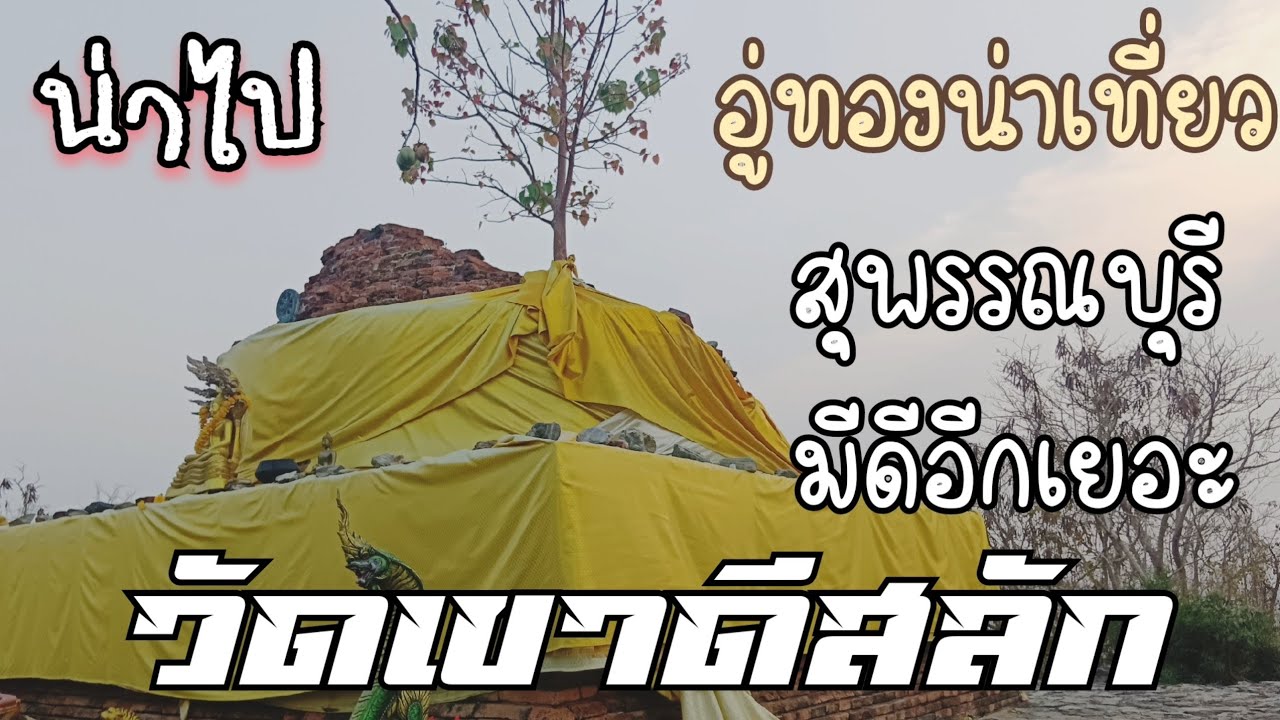
Wat Khao Di Salak

Open Days: Daily
Opening Hours: Daytime hours are recommended for driving uphill and paying respect to the Buddha’s Footprint
Wat Khao Di Salak in Suphan Buri Province is an important Buddhist temple and archaeological site in Don Kha Subdistrict, U Thong District. The temple is best known for its beautifully carved replica of the Buddha’s Footprint on a red sandstone slab, decorated with 108 auspicious symbols, a Dharma Wheel, lotus-petal patterns, spiral motifs, and plant-scroll designs. Located about 8 km from U Thong District and about 14 km from Suphan Buri town, Wat Khao Di Salak is a meaningful destination for travelers interested in Buddhist art, ancient history, sacred mountain landscapes, and panoramic views of the U Thong area.
The importance of Wat Khao Di Salak lies not only in its peaceful mountain setting, but also in its role as a cultural and religious landmark connected with the ancient city of U Thong. The Buddha’s Footprint on the hill is one of the site’s most valuable features. It reflects a long-standing Buddhist tradition in which a footprint is created as a sacred symbol of the Buddha’s presence, allowing devotees to pay respect, contemplate the Buddha’s virtues, and connect with Buddhist teachings through art and symbolism.
The Buddha’s Footprint at Wat Khao Di Salak is carved on a rectangular red sandstone slab. It measures approximately 65.5 centimeters in width and 141.5 centimeters in length. Unlike a natural footprint or a deeply incised mark, this footprint is carved in low relief with carefully raised details. Around the foot are lotus-petal patterns, while the sole contains a small Dharma Wheel with 16 spokes and a series of auspicious symbols arranged within circular frames. These details make the footprint both a sacred object of worship and an outstanding example of Buddhist craftsmanship.
One distinctive feature of the footprint is the treatment of the toes. The tips of the toes are not equal in length, and each toe has 2 joints. The first joint is decorated with a spiral motif resembling a conch-like curl, associated with the traditional concept of the marks of a Great Man in Buddhist texts. The second joint is decorated with curled-leaf or plant-scroll motifs, similar to decorative designs found in Dvaravati art. Such motifs are commonly seen in stucco decorations on ancient religious structures and Buddhist sculptures from early periods in central Thailand.
At the center of the sole is a small Dharma Wheel with 16 spokes. The Dharma Wheel is one of the most important symbols in Buddhism, representing the Buddha’s teaching and the turning of the Wheel of Dharma. Its placement at the center of the footprint gives the sculpture a deeper religious meaning. It suggests that the footprint is not merely a devotional image, but a complete symbolic field combining the Buddha, the Dhamma, and Buddhist cosmology in a single carved surface.
Surrounding the Dharma Wheel are the 108 auspicious symbols, a traditional set of sacred emblems associated with the Buddha’s excellence and spiritual perfection. These symbols are carefully organized across the sole of the footprint. Their arrangement demonstrates the skill of ancient craftsmen and the religious knowledge behind the work. For Buddhist visitors, the footprint is a sacred object for prayer and contemplation. For art and history enthusiasts, it is an important piece of evidence showing how Buddhist ideas were expressed through stone carving.
Archaeologists have associated the Buddha’s Footprint at Wat Khao Di Salak with Dvaravati art, dating it roughly to the 14th–16th Buddhist centuries. The combination of plant motifs, spiral patterns, the Dharma Wheel, and auspicious symbols reflects the artistic culture of the U Thong region, one of the important ancient cultural centers in western central Thailand. The site therefore provides valuable insight into the spread of Buddhism, the development of sacred imagery, and the role of U Thong as a historical and religious landscape.
Khao Di Salak itself is more than a hilltop temple. It is part of an ancient cultural route and sacred landscape. Stone cavities in the area have yielded Buddha images and various ancient objects, indicating that this mountain may once have served as a religious site or a place of worship for ancient communities. In many traditional societies, mountains were viewed as sacred spaces closer to the spiritual realm. The placement of a Buddha’s Footprint on a hill therefore carries both religious and landscape significance.
Visitors who travel up the hill will experience a gradual transition from the lowland community to the sacred space above. The journey upward is part of the experience. At the top, travelers can pay respect to the Buddha’s Footprint, view the shrine area, observe the surrounding religious structures, and enjoy the open scenery of U Thong District. The temple offers both the quietness of a sacred place and the visual beauty of a natural viewpoint.
The temple has improved the landscape around the hilltop area to make it more convenient for visitors. A road leads uphill for about 2 km to the area where the Buddha’s Footprint is enshrined. This makes the site more accessible than many other hilltop religious places. However, visitors should drive carefully, especially during rainy weather or when the road surface is slippery. Daytime visits are strongly recommended because the hill road and viewpoint are safer and more enjoyable in daylight.
The atmosphere of Wat Khao Di Salak is calm and suitable for unhurried travel. Visitors can spend time paying respect, observing the details of the footprint, studying the carved motifs, and enjoying the view from the hill. The surrounding landscape of U Thong and rural Suphan Buri adds to the temple’s charm. Unlike crowded city temples, this site offers a quieter experience that combines worship, historical learning, and nature.
For travelers interested in history, Wat Khao Di Salak can be included in a cultural route around ancient U Thong. The district contains many important archaeological and historical sites, including U Thong National Museum, ancient settlement areas, Khao Tham Thiam, and other religious landmarks. Visiting Wat Khao Di Salak helps travelers understand the wider historical context of Suphan Buri, especially the region’s role in early Buddhist culture and ancient settlement networks.
For Buddhist pilgrims, Wat Khao Di Salak is a meaningful place for worship and reflection. Paying respect to the Buddha’s Footprint on a hill creates a strong sense of devotion. Visitors should dress respectfully, remove shoes where required, avoid touching or climbing on sacred objects, and maintain a quiet attitude within the worship area. These simple practices help preserve both the sanctity of the place and the ancient artwork for future generations.
From an archaeological perspective, the Buddha’s Footprint at Wat Khao Di Salak is an excellent example of Buddhist art with rich symbolic detail. The red sandstone gives the sculpture a distinctive color and texture. Under natural light, the lotus petals, Dharma Wheel, toe designs, and auspicious symbols become clearer, making the site especially interesting for those who appreciate ancient art and photography. It is a place where art, faith, and landscape come together naturally.
Wat Khao Di Salak is also suitable for families and students who want to learn Thai history outside the classroom. The site shows that ancient art is not confined to museums; it remains part of real landscapes and living religious traditions. By understanding the meaning of the 108 auspicious symbols, the Dharma Wheel, and the Buddha’s Footprint, visitors can gain a deeper appreciation of Thai Buddhist culture and the historical importance of U Thong.
Getting There is most convenient by private car. From U Thong District, drive toward Don Kha Subdistrict for about 8 km. From Suphan Buri town, the distance is about 14 km. Once at the temple area, a road leads uphill for about 2 km to the Buddha’s Footprint. Drivers should check their vehicle condition before going uphill, use low gear when ascending or descending, and avoid visiting late in the evening.
A one-day itinerary can combine Wat Khao Di Salak with nearby attractions in U Thong and Suphan Buri town. Recommended places include U Thong National Museum, Khao Tham Thiam, the ancient city area of U Thong, Wat Pa Lelai Worawihan, and the Dragon Descendants Museum. This route is ideal for travelers who want to explore Suphan Buri through history, Buddhism, archaeology, and local culture.
Overall, Wat Khao Di Salak is one of the most meaningful cultural destinations in Suphan Buri. Its red sandstone Buddha’s Footprint, 108 auspicious symbols, 16-spoked Dharma Wheel, lotus patterns, spiral motifs, stone cavities, Buddha images, ancient objects, and hilltop scenery all combine to create a rich travel experience. The temple is suitable for worship, cultural learning, photography, and historical exploration, making it an essential stop for anyone interested in the deeper heritage of U Thong and Suphan Buri Province.
| Name | Wat Khao Di Salak |
| Location | Village No. 5, Don Kha Subdistrict, U Thong District, Suphan Buri Province |
| Address | Don Kha Subdistrict, U Thong District, Suphan Buri Province |
| Highlights | Red sandstone Buddha’s Footprint, 108 auspicious symbols, 16-spoked Dharma Wheel, and panoramic views of U Thong |
| History | The footprint is associated with Dvaravati art, dating roughly to the 14th–16th Buddhist centuries, and is located within an important archaeological landscape of U Thong |
| Distinctive Features | Low-relief Buddha’s Footprint on red sandstone, about 65.5 cm wide and 141.5 cm long, decorated with lotus petals, spiral motifs, plant-scroll patterns, the Dharma Wheel, and 108 auspicious symbols |
| Importance | A Buddhist sacred site and learning destination for Buddhist art, archaeology, and the sacred landscape of ancient U Thong |
| Travel Information | About 8 km from U Thong District and about 14 km from Suphan Buri town. A road leads uphill for about 2 km to the Buddha’s Footprint area |
| Current Status | A Buddhist temple, religious attraction, archaeological site, and viewpoint in U Thong District |
| Open Days | Daily |
| Opening Hours | Daytime hours are recommended for driving uphill and paying respect to the Buddha’s Footprint |
| Fees | No admission fee |
| Facilities | Uphill access road, Buddha’s Footprint shrine, worship area, viewpoint, and parking area depending on site conditions |
| Main Areas / Zones | Buddha’s Footprint shrine on the hill U Thong viewpoint Hilltop religious area Stone cavity area with Buddha images and ancient objects Uphill road of about 2 km |
| Caretaker | Wat Khao Di Salak and the Don Kha local community |
| Nearby Tourist Attractions | 1. U Thong National Museum, about 8 km 2. Wat Khao Tham Thiam, about 10 km 3. Ancient City of U Thong, about 8 km 4. Wat Pa Lelai Worawihan, about 18 km 5. Dragon Descendants Museum, about 20 km |
| Nearby Restaurants | 1. Local restaurants in U Thong District, about 8 km 2. Local restaurants around Don Kha Subdistrict, about 3–5 km 3. Restaurants near U Thong National Museum, about 8 km 4. Roadside restaurants along the U Thong–Suphan Buri route, about 8–14 km 5. Restaurants in Suphan Buri town, about 14–20 km |
| Nearby Accommodations | 1. Accommodations in U Thong District, about 8 km 2. Resorts and homestays in the U Thong area, about 8–12 km 3. Accommodations near U Thong National Museum, about 8 km 4. Hotels in Suphan Buri town, about 14–20 km 5. Hotels and resorts along the Suphan Buri–U Thong route, about 15–25 km |
Frequently Asked Questions (FAQ)
Q: Where is Wat Khao Di Salak located?
A: Wat Khao Di Salak is located in Village No. 5, Don Kha Subdistrict, U Thong District, Suphan Buri Province, about 8 km from U Thong District and about 14 km from Suphan Buri town.
Q: What is Wat Khao Di Salak famous for?
A: The temple is famous for its red sandstone Buddha’s Footprint carved with 108 auspicious symbols, a 16-spoked Dharma Wheel, lotus-petal patterns, and Dvaravati-style motifs.
Q: How large is the Buddha’s Footprint at Wat Khao Di Salak?
A: The footprint measures approximately 65.5 centimeters in width and 141.5 centimeters in length. It is carved in low relief on a red sandstone slab.
Q: Is there an admission fee at Wat Khao Di Salak?
A: No admission fee is collected. Visitors can pay respect to the Buddha’s Footprint and enjoy the hilltop view while following site guidelines.
Q: Can visitors drive up to the Buddha’s Footprint?
A: Yes. There is an uphill road of about 2 km leading to the Buddha’s Footprint area. Visitors should drive carefully, especially during rain or when the road is slippery.
Q: When is the best time to visit Wat Khao Di Salak?
A: Daytime visits are recommended, especially in the morning or late afternoon when the weather is more comfortable for worship, sightseeing, and photography.
Q: What nearby attractions can be visited with Wat Khao Di Salak?
A: Nearby attractions include U Thong National Museum, Wat Khao Tham Thiam, the Ancient City of U Thong, Wat Pa Lelai Worawihan, and the Dragon Descendants Museum.
 Category: ●Places of Worship
 Group: ●Temple
Last Update : 5 MonthAgo
 Last Update : 5 MonthAgo
 Click to Access the Navigation Map GPS
Wat Khao Di Salak Map
Recommend

 Art, Culture and Heritage
 Historical Sites and Monuments(2)
 Landmarks and Memorials(4)
 Art, Craft Centres, Tradition(2)
 Museums(5)
 Educational Places
 Educational Gardens, Farm(4)
 Training Center(2)
Temple(36)
 Other Sacred Sites(4)
 Suburban Living
 Village, Community(6)
 Local Market(7)
 Floating Market(1)
 Nature and Wildlife
 National Parks and Marine Reserves(4)
 Mountain (Doi)(2)
 Dam, Reservoir, Lake(3)
 Caves(1)
 Bays and Beaches(1)
 Entertainment and Agricultural
 Farms, Parks and Ecotourism(6)
 Theater(1)
 Travel Articles, Recipes
 Travel Review, Food Review(1)


