
lovethailand home >Central Travel Attractions >Sing Buri Travel Attractions >Tha Chang >Pho Prachak > Wat Champa Thong
TL;DR: Wat Champa Thong is located at Moo 5, Pho Prachak Subdistrict, Tha Chang District, Sing Buri Province, open Daily, hours 08.00 – 16.30. Highlights include The Champa Thong boat, a covered wooden boat, and a large reclining Buddha image.
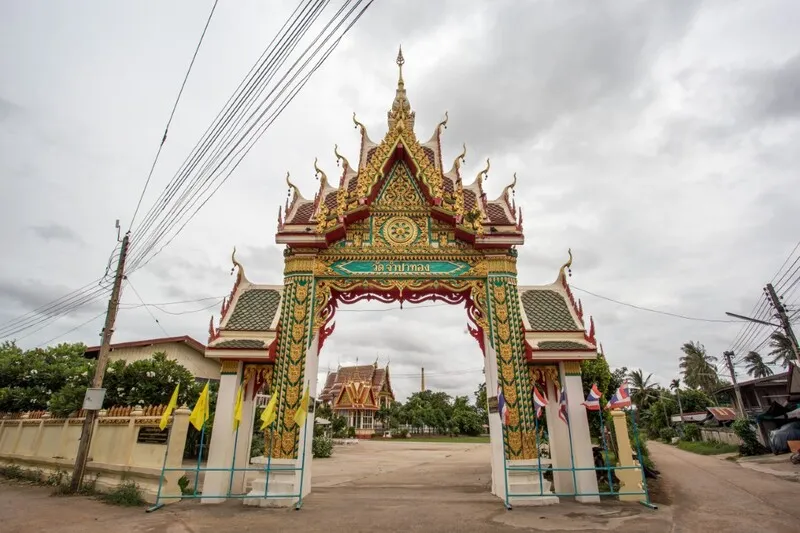
Wat Champa Thong
Open Days: Daily
Opening Hours: 08.00 – 16.30
Wat Champa Thong is located in Moo 5, Pho Prachak Subdistrict, Tha Chang District, Sing Buri Province. This old community temple is an important cultural and spiritual landmark connected with the Noi River, local Buddhist devotion, and the memory of royal travel by water. Its main highlights are the preserved Champa Thong boat, associated with the royal river journey of Her Royal Highness Princess Maha Chakri Sirindhorn along the Noi River, and a large reclining Buddha image that remains an important object of worship for local residents and visitors. For foreign travelers looking for a quiet temple in Sing Buri with history, local identity, and a meaningful riverside story, Wat Champa Thong is a worthwhile stop.
Set in the peaceful surroundings of Pho Prachak Subdistrict, Wat Champa Thong represents the close relationship between a Thai temple, a rural community, a historic waterway, and local memory. It is not only a place for religious ceremonies, but also a living cultural space where villagers have gathered for merit-making, Buddhist rituals, community activities, and spiritual support for generations. Visitors arriving at the temple will find a calm atmosphere rather than a crowded tourist site, making it suitable for slow cultural travel and quiet reflection.
The history of Wat Champa Thong is linked with local accounts dating from the late Ayutthaya period into the early Rattanakosin period. The temple is generally connected with an earlier deserted temple known as “Wat Mae Thong,” located around the area of Khok Phra Non. Around 1794, a wandering monk came to stay in the area and helped revive the abandoned religious site. As the temple was restored and gradually became a spiritual center for the local community, its name was changed from Wat Mae Thong to Wat Champa Thong, reflecting the name of Ban Champa Thong in the surrounding area.
In 1839, Wat Champa Thong received its official consecrated boundary for the ordination hall, known in Thai as wisungkhamasima. This marked the temple’s recognized status as a proper Buddhist monastic site. For Thai temples, this boundary is highly significant because it defines the sacred area where ordination and major monastic ceremonies can be performed. The temple has therefore played a long-standing role as a religious center for Pho Prachak and nearby communities.
The most distinctive object at Wat Champa Thong is the Champa Thong boat. This wooden boat is described as a covered traditional craft, reflecting both local boat-building knowledge and the refined practicality of Thai river culture. Its importance comes from its association with the royal river journey of Her Royal Highness Princess Maha Chakri Sirindhorn along the Noi River. Because of this connection, the boat is not merely an old wooden vessel; it is a cultural object that links the temple, the community, the river, and modern Thai royal history.
The Champa Thong boat also helps visitors understand the importance of the Noi River in the past. Rivers and canals were once essential routes for travel, trade, agriculture, communication, and religious life in Central Thailand. Communities along the Noi River grew around this water-based way of life, and temples often stood near important settlement areas. Seeing the boat at Wat Champa Thong is therefore a way to imagine how people once moved, traded, and connected with one another through river routes before modern roads became dominant.
Another important feature of the temple is its large reclining Buddha image, created in the artistic style of the Rattanakosin period. The image is a major object of faith for villagers and visitors who come to pay respect, make merit, and seek blessings. In Buddhist symbolism, the reclining Buddha is closely associated with peace, detachment, and the final serenity of the Buddha. The presence of this image gives the temple a calm and contemplative character, making it suitable for visitors who want to experience a more reflective side of Thai temple culture.
For travelers interested in local art and community heritage, Wat Champa Thong offers a different experience from large and heavily visited temples. Its charm lies in its continuity as a living village temple. The temple buildings, sacred spaces, preserved boat, and reclining Buddha all show how local people have cared for the site over time. This kind of quiet temple gives travelers a closer view of everyday Buddhist life in Central Thailand and helps them understand how religion, community, and local history remain connected.
Recommended activities at Wat Champa Thong include paying respect to the reclining Buddha, making merit, viewing the Champa Thong boat, learning about the temple’s local history, and taking respectful photographs of the temple atmosphere. Visitors should dress modestly, speak quietly within the temple grounds, and avoid disturbing monks or worshippers. As with all Buddhist temples in Thailand, shoes should be removed before entering certain sacred buildings, and photography should be done with care and respect.
Wat Champa Thong can be included in a cultural route around Sing Buri Province. Nearby places that fit well into the same itinerary include Wat Phikun Thong, Mae Nam Noi Kiln Site, Wat Phra Prang Muni, Wat Phra Non Chaksi Worawihan, and Bang Rachan Heroes Park. This route is suitable for travelers who want to combine Buddhist temples, local history, archaeological remains, and provincial heritage in one easy trip.
Getting There is most convenient by private car. Travelers can enter Sing Buri Province and continue toward Tha Chang District and Pho Prachak Subdistrict. The local road network connects the temple with the province’s main routes. Visitors coming from Bangkok can use the Asian Highway or other major roads toward Sing Buri, then continue to Tha Chang District. Those traveling by public transport can arrive in Sing Buri town first and then continue by local transport or hired vehicle to the temple. The visit is suitable for a half-day trip or as part of a wider cultural itinerary in Sing Buri.
The best time to visit is in the morning or late afternoon when the weather is more comfortable. Visitors will have enough time to pay respect to the Buddha image, view the Champa Thong boat, and walk around the temple calmly. During weekends or Buddhist merit-making periods, it is useful to allow extra time for parking and temple activities. Wat Champa Thong is suitable for families, senior travelers, cultural travelers, and anyone interested in old temples with strong local identity.
Wat Champa Thong is valuable because it brings together local history, Buddhist faith, river culture, and community memory in one place. It shows that Sing Buri is not only a province of famous historical monuments, but also a province of quieter local temples with meaningful stories. For travelers who want to go beyond the most common tourist stops, Wat Champa Thong offers a deeper and more personal way to understand the cultural landscape of Central Thailand.
| Name | Wat Champa Thong |
| Location | Moo 5, Pho Prachak Subdistrict, Tha Chang District, Sing Buri Province |
| Address | Wat Champa Thong, Moo 5, Pho Prachak Subdistrict, Tha Chang District, Sing Buri 16140, Thailand |
| Highlights | The Champa Thong boat, a covered wooden boat, and a large reclining Buddha image |
| History | The temple is linked with the former Wat Mae Thong and the revival of an abandoned temple site in the early Rattanakosin period. It was founded around 1794 and received its official consecrated boundary in 1839. |
| Name Origin | The temple was renamed from Wat Mae Thong to Wat Champa Thong to match the name of Ban Champa Thong in the local area. |
| Distinctive Features | An old community temple in Pho Prachak with a historically significant boat connected to the Noi River and a large reclining Buddha as a center of faith |
| Important Objects | Champa Thong boat, reclining Buddha image, and community religious spaces |
| Travel Information | The temple is easiest to reach by private car through Tha Chang District and Pho Prachak Subdistrict. Public transport travelers can first reach Sing Buri town and continue by local transport or hired vehicle. |
| Current Status | Open as a Buddhist temple and cultural attraction in Pho Prachak Subdistrict |
| Open Days | Daily |
| Opening Hours | 08.00 – 16.30 |
| Main Areas / Zones | Reclining Buddha worship area, Champa Thong boat display area, Buddhist temple grounds, and community activity spaces |
| Abbot / Caretaker | Phra Khru Wiwith Thammakon |
| Main Contact Number | 061-460-8278 |
| Official Website / Official Page | Facebook: Wat Champa Thong (@WatJampaThong16140) |
| Nearby Tourist Attractions | 1. Wat Phikun Thong, about 9 km 2. Mae Nam Noi Kiln Site, about 14 km 3. Wat Phra Prang Muni, about 18 km 4. Wat Phra Non Chaksi Worawihan, about 24 km 5. Bang Rachan Heroes Park, about 26 km |
| Nearby Restaurants | 1. Ta Chin Garden & Cafe, about 4 km, Tel. 084-264-6391 2. De'champ Cafe, about 8 km 3. Ban Suan Mae La Ka Rong Restaurant, about 17 km, Tel. 036-501047, 092-8024928 4. Mae La Pla Pao, about 24 km, Tel. 036-813701, 080-9108563 5. Je t'aime Cafe & Villa, about 25 km |
| Nearby Accommodations | 1. Ing Mae La Resort, about 17 km 2. Golden Dragon Resort, about 24 km 3. Central Park Hotel, about 25 km 4. Chaisaeng Villa Hotel, about 26 km, Tel. 095-254-3174 5. Chaisaeng Palace Hotel, about 27 km |
Frequently Asked Questions (FAQ)
Q: Where is Wat Champa Thong located?
A: Wat Champa Thong is located in Moo 5, Pho Prachak Subdistrict, Tha Chang District, Sing Buri Province, Thailand.
Q: What is Wat Champa Thong famous for?
A: The temple is known for the Champa Thong boat, associated with the royal river journey of Her Royal Highness Princess Maha Chakri Sirindhorn along the Noi River, and for its large reclining Buddha image.
Q: What are the opening hours of Wat Champa Thong?
A: The temple is open daily from 08.00 to 16.30.
Q: Why is the Champa Thong boat important?
A: The Champa Thong boat is an important covered wooden boat that reflects Thai craftsmanship, Noi River culture, and a memorable royal river journey connected with the temple and local community.
Q: What kind of travelers should visit Wat Champa Thong?
A: The temple is suitable for cultural travelers, Buddhist temple visitors, families, senior travelers, and anyone interested in quiet local temples with historical and community significance.
Q: How can travelers get to Wat Champa Thong?
A: The easiest way is by private car through Tha Chang District and Pho Prachak Subdistrict. Public transport travelers can first reach Sing Buri town and then continue by local transport or hired vehicle.
Q: What attractions can be visited near Wat Champa Thong?
A: Nearby attractions include Wat Phikun Thong, Mae Nam Noi Kiln Site, Wat Phra Prang Muni, Wat Phra Non Chaksi Worawihan, and Bang Rachan Heroes Park.
Tel : 036507208
 Tel : 036507208
 Category: ●Places of Worship
 Group: ●Temple
Last Update : 5 MonthAgo
 Last Update : 5 MonthAgo

 Click to Access the Navigation Map GPS

 Art, Culture and Heritage
 Historical Sites and Monuments(4)
 Landmarks and Memorials(3)
 Art, Craft Centres, Tradition(3)
 Museums(1)
 Educational Places
 Library(1)
Temple(42)
 Church(1)
 Other Sacred Sites(2)
 Research and Development
 Royal Project(3)
 Suburban Living
 Village, Community(1)
 Local Market(1)
 Nature and Wildlife
 National Parks and Marine Reserves(1)
 River, Canal(7)
 Bays and Beaches(1)
 Other natural attractions(2)
 Entertainment and Agricultural
 Animal camps and shows(1)
 Farms, Parks and Ecotourism(1)
 Travel Articles, Recipes
 Travel Review, Food Review(1)


