
lovethailand home >North Travel Attractions >Sukhothai Travel Attractions >Si Sat Chana Lai >Nong O > Sangkhalok Kiln Study and Conservation Centre
TL;DR: Sangkhalok Kiln Study and Conservation Centre is located at Ban Ko Noi, Nong O Subdistrict, Si Satchanalai District, Sukhothai Province, open Daily, hours 09.00 – 16.00.

Sangkhalok Kiln Study and Conservation Centre
Open Days: Daily
Opening Hours: 09.00 – 16.00
The Sangkhalok Kiln Study and Conservation Centre, also known as the Thuriang Kilns at Ban Ko Noi, is one of the most important archaeological and cultural learning sites in Si Satchanalai District, Sukhothai Province. Located in Ban Ko Noi, Nong O Subdistrict, near the Yom River, the centre preserves the remains of ancient kilns used for producing Sangkhalok ceramics, one of the most distinctive craft traditions of the Sukhothai and Ayutthaya periods. For international travelers, this site offers a rare opportunity to understand Thai heritage through technology, craftsmanship, trade, and everyday material culture, not only through temples and monuments.
If Sukhothai Historical Park and Si Satchanalai Historical Park explain the religious, architectural, and political greatness of the Sukhothai world, the Sangkhalok Kiln Study and Conservation Centre explains its economic and technological strength. Sangkhalok ceramics were not simple household objects. They were products of advanced knowledge: clay selection, shaping, glazing, firing, temperature control, kiln design, and artistic decoration. Each ceramic fragment found at Ban Ko Noi is evidence of a sophisticated production system that supported local life and regional trade.
The centre lies about 6.5 kilometers north of the old town area of Si Satchanalai, along the Yom River. This riverside location was essential in the past because it allowed raw materials, fuel, and finished ceramic products to be transported more efficiently. The Yom River was therefore not merely a scenic feature. It was an economic route that helped connect the kilns of Si Satchanalai with wider markets. The location of Ban Ko Noi helps visitors understand why this area developed into one of the major ceramic-production zones of ancient Thailand.
Sangkhalok ceramics are known for their elegant forms, refined glaze, and distinctive decoration. Many pieces feature greenish-blue, olive, brown, or celadon-like glazes, depending on raw materials and firing conditions. Common decorative motifs include fish, floral patterns, plant forms, geometric designs, and symbolic imagery reflecting the beliefs and artistic taste of the period. The beauty of Sangkhalok ware lies in its balance of simplicity and refinement. It is practical, graceful, and unmistakably connected to the artistic identity of Sukhothai and Si Satchanalai.
The Ban Ko Noi kiln area is highly significant because hundreds of ancient kilns have been found in the surrounding landscape. These kiln remains show that the area once functioned as a large ancient ceramic-production settlement. Producing ceramics on such a scale required organization, skilled labor, technical knowledge, and access to resources. The process included selecting clay, preparing the material, shaping vessels, decorating surfaces, applying glaze, arranging pieces inside kilns, firing them at high temperatures, and distributing the finished products.
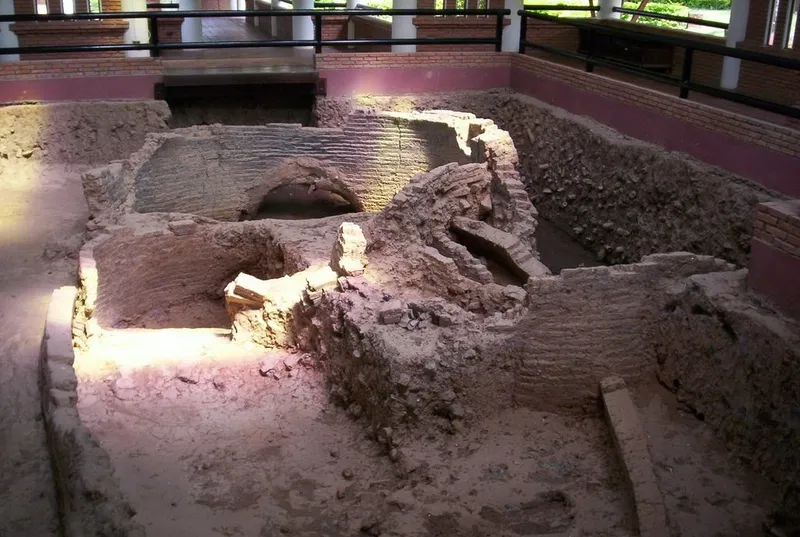
The kilns at Ban Ko Noi include both above-ground and underground kiln types, showing technological variation and development over time. The centre preserves and displays important kiln examples inside protective buildings, especially Kiln No. 42 and Kiln No. 61. These structures allow visitors to see the layout and engineering of ancient firing systems directly. The protective buildings also help conserve the fragile archaeological remains while making them accessible for study and tourism.
Kiln No. 42 is an example of an above-ground kiln, while Kiln No. 61 represents an underground kiln. Comparing these two types helps visitors understand how ancient potters managed heat, airflow, fuel, and firing conditions. Firing ceramics successfully required far more than placing clay objects into a fire. The potters had to control temperature, timing, oxygen flow, placement inside the kiln, and the chemical reaction of glaze. The survival of these kilns demonstrates the technical skill of Sangkhalok craftsmen and their deep understanding of natural materials.
Inside the centre, visitors can see archaeological objects, ceramic fragments, examples of forms and glazes, academic information, and displays explaining the production process. The exhibition introduces the journey from clay preparation to shaping, decorating, glazing, firing, and distribution. This makes the visit much more meaningful than simply viewing ruins. Travelers can understand the entire ceramic-making system and how it connected craft, economy, technology, and community life.
One of the strengths of the centre is that it brings silent archaeological remains back to life through interpretation. Standing beside an ancient kiln, visitors can imagine the working environment of the past: craftsmen preparing clay, shaping vessels, stacking wares, controlling fire, and waiting for the results of a successful firing. The process required patience, technical judgment, and teamwork. This human dimension makes the site especially powerful for travelers interested in cultural history.
The Sangkhalok Kiln Study and Conservation Centre also helps explain the relationship between Si Satchanalai and Sukhothai. Si Satchanalai was one of the most important cities in the Sukhothai cultural network, and its role as a ceramic-production centre made it economically significant. Sangkhalok wares from this area were used locally and distributed more widely across regional trade networks. The presence of these kilns shows that Si Satchanalai was not only a religious and political city, but also a productive craft and trade center.
Walking around Ban Ko Noi reveals that kiln remains are not limited to the exhibition buildings. The broader area contains traces of ancient production activity, reminding visitors that this was once a large working landscape. In the past, Ban Ko Noi was not simply a quiet riverside village. It was a ceramic-production community with workers, workshops, kilns, fuel supplies, storage areas, and transport routes. This makes the site important for understanding the social and economic organization of ancient Si Satchanalai.
Sangkhalok ceramics are valuable both as works of art and as historical evidence. A complete vessel may show beauty and design, but a broken fragment can reveal firing problems, clay composition, glaze techniques, and production methods. Archaeologists learn from both finished objects and discarded fragments. At the centre, visitors can appreciate not only the final beauty of Sangkhalok ware, but also the trial, error, and skill behind its creation.
For students, researchers, and culturally curious travelers, the centre connects many fields of knowledge: history, archaeology, art history, craft technology, geography, economy, and heritage conservation. It shows that a single ceramic bowl is not merely an object. It is the result of clay, water, fire, labor, design, knowledge, and social organization. This makes the site especially useful for educational trips and in-depth cultural travel.
The centre can be visited together with Si Satchanalai Historical Park, Wat Chom Chuen, Wat Chang Lom, Wat Chedi Chet Thaeo, Wat Nang Phaya, and Wat Phra Si Rattana Mahathat Chaliang. Together, these places provide a complete picture of Si Satchanalai culture. The historical park shows temples, city planning, and Buddhist architecture, while the kiln centre explains how ceramic technology and craft production supported the wider cultural world of the city.
A normal visit to the Sangkhalok Kiln Study and Conservation Centre may take around 45 minutes to 1 hour if visitors focus on the main buildings and kiln displays. Those who want to read the information panels, examine ceramic fragments, study the kiln structures carefully, and walk around the surrounding area should allow 1 to 2 hours. A slower visit is recommended because the value of the site lies in observation and understanding rather than quick sightseeing.
Getting There is straightforward by private car, rental car, or local hired vehicle. From Si Satchanalai Historical Park, travel north along the Yom River for about 6.5 kilometers toward Ban Ko Noi. From Si Satchanalai District, Highway No. 1201 can be used for about 7 kilometers. The centre is located in the Ban Ko Noi area. Travelers planning to visit several cultural sites should arrange the route in advance, combining the kiln centre with the historical park and nearby temples.
The best time to visit is in the morning or early afternoon. The centre has indoor exhibition areas, making it a useful stop during hotter parts of the day, especially if combined with open-air monuments at Si Satchanalai Historical Park. A practical itinerary is to visit the outdoor temples in the morning, then continue to the kiln centre later in the day to study the exhibitions in a more shaded environment.
Visitors should dress comfortably and wear suitable walking shoes. Although much of the site is inside exhibition buildings, some areas require walking around archaeological remains. Visitors should not climb on the kilns, touch fragile objects, move ceramic fragments, or damage any part of the site. Ancient kilns are irreplaceable evidence of technological and cultural history, and they must be preserved carefully.
For foreign travelers, the centre is especially valuable because it introduces a side of Sukhothai heritage that is often overlooked. Many visitors know Sukhothai through temples, Buddha images, and lotus-bud stupas, but the kiln centre reveals another foundation of the civilization: production, trade, materials, and craftsmanship. It helps travelers understand that ancient Thai culture was not only spiritual and artistic, but also highly technical and economically connected.
The centre also supports the local community by encouraging cultural tourism in Si Satchanalai. Visitors who come to learn about Sangkhalok ceramics often continue to local restaurants, accommodations, craft shops, and nearby historical sites. Heritage tourism therefore helps create local income while also strengthening awareness of cultural preservation. The centre is not only a place where the past is protected; it is also a place where local identity continues to gain value in the present.
Overall, the Sangkhalok Kiln Study and Conservation Centre completes the story of Si Satchanalai. It shows that Sukhothai and Si Satchanalai were not only centers of temples and royal power, but also centers of production, technology, trade, and skilled craftsmanship. Sangkhalok ware is tangible evidence of the intelligence, patience, and artistic sensitivity of ancient potters. Visiting the centre is therefore not simply looking at old kilns; it is learning about the economic and cultural foundations of one of Thailand’s most important historical regions.
The Sangkhalok Kiln Study and Conservation Centre, or Thuriang Kilns at Ban Ko Noi, is a destination worth visiting for anyone interested in Thai history, ceramics, archaeology, craft heritage, and cultural travel. It allows visitors to see real ancient kilns, learn about the production of Sangkhalok ware, understand the role of Si Satchanalai as a major ceramic-production center, and appreciate the importance of preserving cultural heritage for future generations. For travelers exploring Si Satchanalai, this centre should not be missed.
| Name | Sangkhalok Kiln Study and Conservation Centre / Thuriang Kilns at Ban Ko Noi |
| Location | Ban Ko Noi, Nong O Subdistrict, Si Satchanalai District, Sukhothai Province |
| Address | Ban Ko Noi, Nong O Subdistrict, Si Satchanalai District, Sukhothai 64130 |
| Coordinates | 17.4761, 99.7841 |
| Highlights | Ancient Sangkhalok ceramic kiln learning site displaying Kiln No. 42 and Kiln No. 61, ceramic-production processes, archaeological objects, and evidence of Si Satchanalai’s ceramic industry |
| History | Associated with Sangkhalok ceramic production from the Sukhothai to Ayutthaya periods; Ban Ko Noi was one of the major ancient kiln areas of Si Satchanalai |
| Name Origin | The name reflects its role in studying and conserving Sangkhalok kilns, while Thuriang Kilns is a traditional name used for the ancient kiln sites in the area |
| Distinctive Features | Protective exhibition buildings covering ancient kilns, with above-ground and underground kiln structures, ceramic fragments, glazed wares, and production-process interpretation |
| Key Evidence | Ancient kiln remains, Kiln No. 42, Kiln No. 61, ceramic fragments, glazed wares, and production evidence from the Ban Ko Noi kiln area |
| Travel Information | About 6.5 km north of Si Satchanalai Historical Park along the Yom River, or about 7 km from Si Satchanalai District via Highway No. 1201; best reached by private car, rental car, or hired local vehicle |
| Current Status | Open as a learning and conservation site for ancient Sangkhalok kilns under Si Satchanalai Historical Park, Fine Arts Department |
| Open Days | Daily |
| Opening Hours | 09.00 – 16.00 |
| Fees | Thai nationals: 20 THB per area or 40 THB combined ticket for Si Satchanalai Historical Park, Wat Chom Chuen, and Sangkhalok Kiln Conservation Sites; other nationalities: 120–200 THB per area or 220 THB combined ticket |
| Facilities | Exhibition buildings, academic information panels, ancient kiln viewing areas, walking routes, and parking area |
| Main Areas / Zones | Sangkhalok kiln exhibition buildings, Kiln No. 42, Kiln No. 61, archaeological-object display area, and Ban Ko Noi ancient kiln remains |
| Caretaker | Si Satchanalai Historical Park, The 6th Regional Office of Fine Arts, Sukhothai, Fine Arts Department |
| Main Contact Number | Si Satchanalai Historical Park Office Tel. 055-950-714 |
| Official Website / Official Page | finearts.go.th/sisatchanalaihistoricalpark |
| Nearby Tourist Attractions | 1. Si Satchanalai Historical Park, about 7 km 2. Wat Chom Chuen, about 7 km 3. Wat Chang Lom Si Satchanalai, about 8 km 4. Wat Chedi Chet Thaeo, about 8 km 5. Wat Nang Phaya Si Satchanalai, about 8 km 6. Wat Phra Si Rattana Mahathat Chaliang, about 10 km |
| Nearby Restaurants | 1. Local restaurants in Ban Ko Noi, about 1 km 2. Restaurants and cafes around Si Satchanalai Historical Park, about 7 km 3. Restaurants in Hat Siao area, about 18 km 4. Local restaurants along Highway No. 1201, about 7 km 5. Restaurants in Si Satchanalai District town, about 20 km |
| Nearby Accommodations | 1. Sisatchanalai Heritage Resort, about 8 km, Tel. 086-443-2799 2. Navy Sisatchanalai, about 8 km, Tel. 091-028-3253 3. Smile Loft Resort Hat Siao, about 18 km, Tel. 055-672-456, 086-449-7500 4. Downhill Resort, about 20 km 5. Accommodations in Si Satchanalai District town, about 20 km |
Frequently Asked Questions (FAQ)
Q: Where is the Sangkhalok Kiln Study and Conservation Centre located?
A: It is located in Ban Ko Noi, Nong O Subdistrict, Si Satchanalai District, Sukhothai Province, near the Yom River and not far from Si Satchanalai Historical Park.
Q: What are the opening hours of the Sangkhalok Kiln Study and Conservation Centre?
A: The centre is open daily from 09.00 to 16.00. Morning and early afternoon are good times to visit, especially when combined with Si Satchanalai Historical Park.
Q: What are Sangkhalok kilns or Thuriang Kilns?
A: They are ancient kilns used to produce Sangkhalok ceramics, a major glazed ceramic tradition of Sukhothai and Si Satchanalai, including both above-ground and underground kiln types.
Q: What is the main highlight of the centre?
A: The main highlight is the display of real ancient kilns, especially Kiln No. 42 and Kiln No. 61, along with ceramic fragments, glazed wares, and information on the Sangkhalok production process.
Q: Is there an entrance fee?
A: Yes. Thai nationals pay 20 THB per area or 40 THB for a combined ticket, while other nationalities pay 120–200 THB per area or 220 THB for a combined ticket.
Q: Who manages the Sangkhalok Kiln Study and Conservation Centre?
A: The centre is managed by Si Satchanalai Historical Park under the Fine Arts Department. The contact number is 055-950-714.
Q: How long should visitors spend at the centre?
A: A basic visit takes about 45 minutes to 1 hour, while visitors who want to study the exhibitions and surrounding kiln remains in detail should allow 1 to 2 hours.
Q: What nearby places can be visited with the centre?
A: Visitors can combine the trip with Si Satchanalai Historical Park, Wat Chom Chuen, Wat Chang Lom, Wat Chedi Chet Thaeo, Wat Nang Phaya, and Wat Phra Si Rattana Mahathat Chaliang.
 Category: ●Art, Culture and Heritage
 Group: ●Historical Sites and Monuments
Last Update : 5 MonthAgo
 Last Update : 5 MonthAgo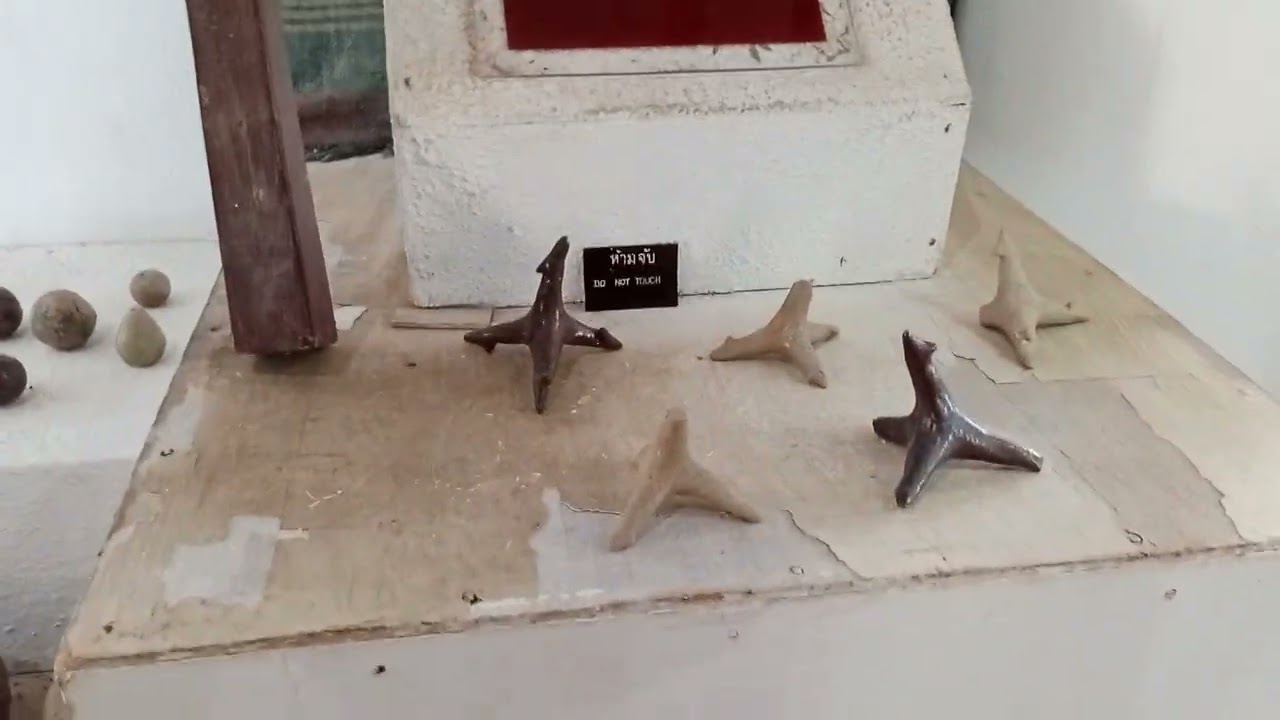
 Click to Access the Navigation Map GPS
Sangkhalok Kiln Study and Conservation Centre Map
Recommend
 Historical Sites and Monuments(4)
 Landmarks and Memorials(5)
 Art, Craft Centres, Tradition(11)
 Museums(5)
 Places of Worship
 Temple(40)
 Other Sacred Sites(10)
 Suburban Living
 Village, Community(3)
 Nature and Wildlife
 National Parks and Marine Reserves(3)
 Mountain (Doi)(2)
 Dam, Reservoir, Lake(4)
 Waterfalls(8)
 Caves(4)
 River, Canal(2)
 Entertainment and Agricultural
 Farms, Parks and Ecotourism(3)
 Travel Articles, Recipes
 Travel Review, Food Review(1)


