
lovethailand home >North Travel Attractions >Sukhothai Travel Attractions >Si Samrong >Ban San > Wat Pa Daeng
TL;DR: Wat Pa Daeng is located at Aranyik Area, Mueang Kao, Mueang Sukhothai District, Sukhothai Province, Thailand, open Daily, hours 06.30 – 19.30 For Visits Within The Sukhothai Historical Park Area.

Wat Pa Daeng
Open Days: Daily
Opening Hours: 06.30 – 19.30 For Visits Within The Sukhothai Historical Park Area
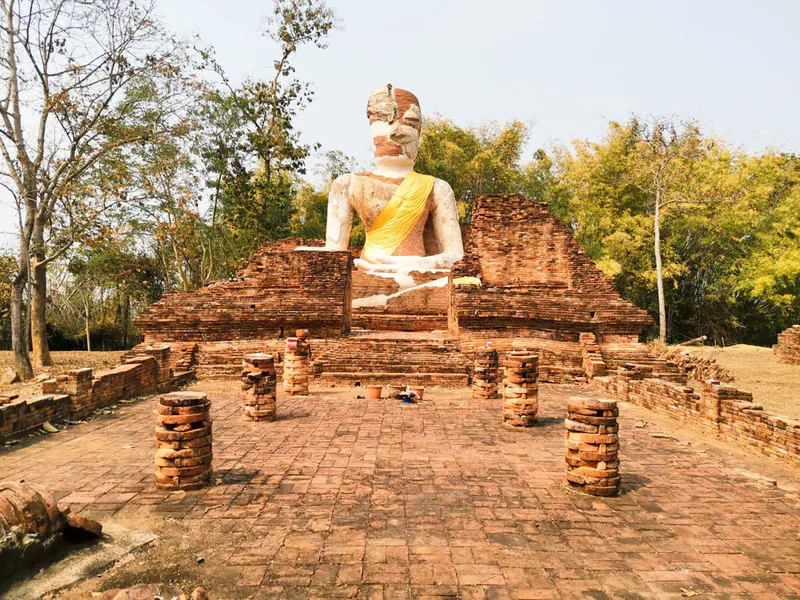
Wat Pa Daeng in Sukhothai Province is a small archaeological site located within the forest-temple zone, or aranyik area, of ancient Sukhothai. Although only ruins remain today, the site still preserves important traces of late Sukhothai religious architecture, including the stone base of a small open hall and the brick base of the principal chedi. For travelers interested in archaeology, Buddhist art, and the quieter side of Sukhothai’s heritage landscape, Wat Pa Daeng offers a meaningful glimpse into how smaller temples functioned within the spiritual geography of the ancient city.
The importance of Wat Pa Daeng lies not in its size, but in what it reveals. Sukhothai was not made up only of large ceremonial temples such as Wat Mahathat, Wat Si Chum, or Wat Phra Phai Luang. It also contained many smaller temples located inside the city, outside the city walls, and within forested monastic zones. These smaller sites help explain the diversity of Buddhist life in Sukhothai. Wat Pa Daeng is one of those places where visitors can study the basic structure of a late Sukhothai temple without the distraction of large-scale reconstruction or heavy tourist crowds.
Wat Pa Daeng is described as a small temple in the aranyik area of Sukhothai. In the historical context of Thai Buddhism, an aranyik area was associated with forest-dwelling monks, meditation, religious discipline, and a quieter way of monastic life. Temples in such areas were often located away from the busy center of the city, allowing monks to live and practice in a calmer environment. This setting gives Wat Pa Daeng special value as evidence of Buddhist practice beyond the royal and urban temples of ancient Sukhothai.
Based on archaeological excavation and architectural evidence, Wat Pa Daeng is generally understood as a late Sukhothai-period temple. The visible remains include the base of a small stone-built vihara and, behind it, the base of the principal brick chedi. This arrangement follows an important pattern in Sukhothai temple planning, where the vihara served as a worship or assembly space and the chedi formed the sacred focal point behind it. Even in its ruined state, the site allows visitors to understand the spatial order of Buddhist architecture.
The small vihara base at Wat Pa Daeng is especially interesting because it was built of stone and appears to have been an open hall. The absence of collapsed wall lines suggests that the original structure was not a fully enclosed building. This type of open hall would have allowed light, air, and the surrounding natural atmosphere to become part of the worship space. It also reflects the simplicity and practicality often associated with smaller forest-zone temples, where the emphasis was not on monumental display but on religious function and meditative atmosphere.
Behind the vihara stands the base of the principal chedi, built of brick. Although the upper part has collapsed and the structure is now damaged, the remaining base still shows traces of the central shrine body with niches or decorative elements on all 4 directions. This 4-directional treatment suggests an awareness of symmetry, sacred orientation, and the symbolic organization of Buddhist space. The chedi was the spiritual core of the temple, and its relationship with the vihara helps define the entire layout of Wat Pa Daeng.
The placement of the vihara in front and the chedi behind it is a common feature in many Sukhothai temples. It creates a clear religious sequence. A visitor first approaches the worship or assembly space, then visually connects with the principal chedi, which represents the sacred heart of the temple. This architectural order is simple but powerful. At Wat Pa Daeng, the reduced scale of the ruins makes this relationship easy to observe, making the site valuable for understanding the logic of Sukhothai temple planning.
Although the temple is small, the surviving remains reveal the skill and intention of Sukhothai builders. The use of stone for the vihara base and brick for the chedi base shows a practical understanding of materials. Stone provided stability for the open hall, while brick allowed builders to shape the chedi and its shrine-like body. These choices provide useful evidence for students of architecture and archaeology who want to understand how construction techniques varied across different parts of a temple.
Wat Pa Daeng also helps visitors understand the religious geography of ancient Sukhothai. The aranyik zone was not an empty forest outside the city. It was a meaningful religious landscape where monks could practice meditation and maintain a disciplined monastic life. Small temples such as Wat Pa Daeng were part of this broader spiritual system. They show that Sukhothai Buddhism included both public ceremonial spaces and quieter contemplative spaces.
Compared with larger and more famous monuments in Sukhothai, Wat Pa Daeng may appear modest. However, this modest character is precisely what makes it valuable. Large temples show the grandeur of the ancient capital, while smaller sites like Wat Pa Daeng show the everyday structure of Buddhist life and the variety of temple functions. A complete understanding of Sukhothai requires attention to both types of sites.
Visitors should begin by observing the vihara base. Even though the roof, columns, and upper structures no longer survive, the base still marks the outline of the original hall. From there, visitors can look toward the rear of the site to see the brick chedi base. The distance and alignment between the 2 structures reveal the architectural relationship that once organized the temple. Reading the site in this way helps transform what may first appear to be a simple ruin into a meaningful historical plan.
Exploring Wat Pa Daeng requires a different kind of attention from visiting a complete temple. The beauty of the site is not found in intact decoration or large standing monuments. Instead, it is found in traces: stone foundations, brick courses, spatial alignment, and the remains of the chedi’s shrine body. These traces are the language of archaeology. They allow visitors to reconstruct the past through careful observation and imagination.
The atmosphere around Wat Pa Daeng is quiet and suitable for cultural photography, slow travel, and historical study. Morning and late afternoon are especially good times to visit, when the light is softer and the texture of stone and brick becomes easier to see. The open setting of the ruins allows travelers to photograph the relationship between the vihara base, the chedi base, and the surrounding landscape. Respectful photography should avoid standing on the ancient structures or placing objects on the ruins.
Getting There is easiest by private car, rental car, or bicycle as part of a visit to Sukhothai Historical Park and the surrounding archaeological zones. Travelers can enter the Mueang Kao area of Sukhothai and continue toward the forest-temple zone. Because smaller archaeological sites may not be as clearly signposted as major temples, visitors should prepare a map or use navigation assistance. Wat Pa Daeng can be combined with nearby forest-zone and outer-city sites such as Wat Saphan Hin, Wat Chang Rop, Wat Phra Bat Noi, Wat Phra Phai Luang, and Wat Si Chum.
Those traveling from Sukhothai town can follow the main route toward the old city and Sukhothai Historical Park. Once in the Mueang Kao area, visitors can explore the surrounding monuments by car or bicycle. A bicycle is a good option for travelers who want a slower and more immersive experience, while a car is more practical during hot weather or when visiting several scattered sites in one day.
Because Wat Pa Daeng is an archaeological site, visitors should follow conservation rules. Do not climb on the ancient foundations, do not move bricks or stones, do not scratch or write on any surface, and stay on appropriate walking areas. Even ruins that appear solid can be fragile after centuries of exposure. Respectful behavior helps protect the site for future generations.
For students, historians, and travelers with a strong interest in Sukhothai, Wat Pa Daeng is a useful field-study site. It demonstrates temple planning, material use, the relationship between vihara and chedi, and the character of a small forest-zone temple. It also helps explain the difference between urban temples and aranyik temples, a distinction that is important for understanding the religious landscape of Sukhothai.
Wat Pa Daeng is also connected with the wider historical importance of the name through the Wat Pa Daeng inscription, known as an important inscription from Sukhothai. While casual visitors may not study the inscription in detail during a site visit, knowing that the name Wat Pa Daeng is associated with epigraphic evidence adds another layer of historical depth. Inscriptions are primary sources that help scholars understand language, society, religion, and political life in the past.
For general travelers, Wat Pa Daeng adds depth to a Sukhothai itinerary. Visiting only the major temples gives an impression of royal scale and monumental beauty. Adding a small site like Wat Pa Daeng reveals the wider network of religious places that once shaped the ancient city. It shows that Sukhothai was a complex cultural landscape, not just a collection of famous monuments.
The best way to appreciate Wat Pa Daeng is to visit slowly. Look at the alignment of the vihara and chedi, the contrast between stone and brick, the remaining shrine body, and the quietness of the surrounding area. These details help visitors understand how architecture, Buddhism, and landscape were connected in the late Sukhothai period. The site rewards observation rather than speed.
In summary, Wat Pa Daeng is a small but historically valuable archaeological site in Sukhothai’s forest-temple zone. Its remains include a stone-built open vihara base and a brick principal chedi base with traces of shrine decoration on 4 sides. Although the structures are damaged, the site remains important for understanding late Sukhothai architecture, Buddhist monastic geography, and the role of small temples in the ancient city. For travelers seeking a deeper understanding of Sukhothai, Wat Pa Daeng is a quiet and meaningful stop.
| Name | Wat Pa Daeng |
| Location | Aranyik Area, Mueang Kao, Mueang Sukhothai District, Sukhothai Province, Thailand |
| Highlights | Small stone-built open vihara base and brick principal chedi base with shrine elements on 4 directions |
| History | Believed to have been built in the late Sukhothai period based on archaeological excavation and architectural evidence |
| Distinctive Features | A small archaeological temple in the forest-temple zone, showing the Sukhothai layout of vihara in front and principal chedi behind |
| Key Evidence | Stone vihara base, brick chedi base, 4-directional shrine body, and the Wat Pa Daeng inscription in the wider historical context of Sukhothai |
| Travel Information | Travel to the Mueang Kao area of Sukhothai and continue to the aranyik archaeological zone. Best visited by private car, rental car, or bicycle as part of a Sukhothai Historical Park route. |
| Current Status | An archaeological ruin with remaining vihara and chedi foundations, used as a historical and archaeological learning site |
| Open Days | Daily |
| Opening Hours | 06.30 – 19.30 For Visits Within The Sukhothai Historical Park Area |
| Main Areas / Zones | Open vihara base, principal chedi base, shrine body remains, and surrounding archaeological area |
| Caretaker | Archaeological-site authorities responsible for the Mueang Kao and Sukhothai Historical Park area |
| Main Contact Number | Sukhothai Historical Park, Tel. 055-697-310 |
| Nearby Tourist Attractions | 1. Wat Saphan Hin, about 2 km 2. Wat Chang Rop, about 3 km 3. Wat Phra Bat Noi, about 3 km 4. Wat Phra Phai Luang, about 4 km 5. Wat Si Chum, about 5 km 6. Sukhothai Historical Park, about 6 km 7. Wat Mahathat, Sukhothai, about 6 km 8. Ramkhamhaeng National Museum, about 7 km |
| Nearby Restaurants | 1. Janthong Restaurant, about 5 km 2. Maeboonmee Cafe & Bistro, about 6 km 3. Sinvana Restaurant, about 6 km 4. Mai Klang Krung Restaurant, about 7 km 5. Long Cafe by A Long Ban San, about 28 km, Tel. 093-945-9896 6. Kor Kai Si Samrong, Rim Yom Branch, about 30 km, Tel. 081-589-9849, 096-687-5874 |
| Nearby Accommodations | 1. Legendha Sukhothai Resort, about 6 km 2. Sriwilai Sukhothai, about 6 km 3. Thai Thai Sukhothai Resort, about 7 km 4. Scent of Sukhothai Resort, about 7 km 5. San Rak Resort Sukhothai, about 29 km, Tel. 081-971-9709 6. Sukruthai Resort, about 31 km, Tel. 081-020-3111 |
Frequently Asked Questions (FAQ)
Q: Where is Wat Pa Daeng located?
A: Wat Pa Daeng is located in the aranyik, or forest-temple, area of ancient Sukhothai in Mueang Kao, Mueang Sukhothai District, Sukhothai Province.
Q: When was Wat Pa Daeng built?
A: Based on excavation and architectural evidence, Wat Pa Daeng is believed to have been built in the late Sukhothai period.
Q: What are the main remains at Wat Pa Daeng?
A: The main remains include a small stone-built open vihara base and a brick principal chedi base with traces of shrine decoration on 4 directions.
Q: Is Wat Pa Daeng still an active monastery?
A: No. Wat Pa Daeng is an archaeological site rather than an active monastery, so it does not have a resident abbot like a functioning temple.
Q: What type of travelers should visit Wat Pa Daeng?
A: It is suitable for travelers interested in Sukhothai history, archaeology, Buddhist architecture, cultural photography, and quieter heritage sites.
Q: How can travelers get to Wat Pa Daeng?
A: Travelers can enter the Mueang Kao area of Sukhothai and continue to the aranyik archaeological zone by private car, rental car, or bicycle.
Q: What nearby attractions can be visited with Wat Pa Daeng?
A: Nearby attractions include Wat Saphan Hin, Wat Chang Rop, Wat Phra Bat Noi, Wat Phra Phai Luang, Wat Si Chum, Wat Mahathat, and Ramkhamhaeng National Museum.
 Category: ●Places of Worship
 Group: ●Temple
Last Update : 5 MonthAgo
 Last Update : 5 MonthAgo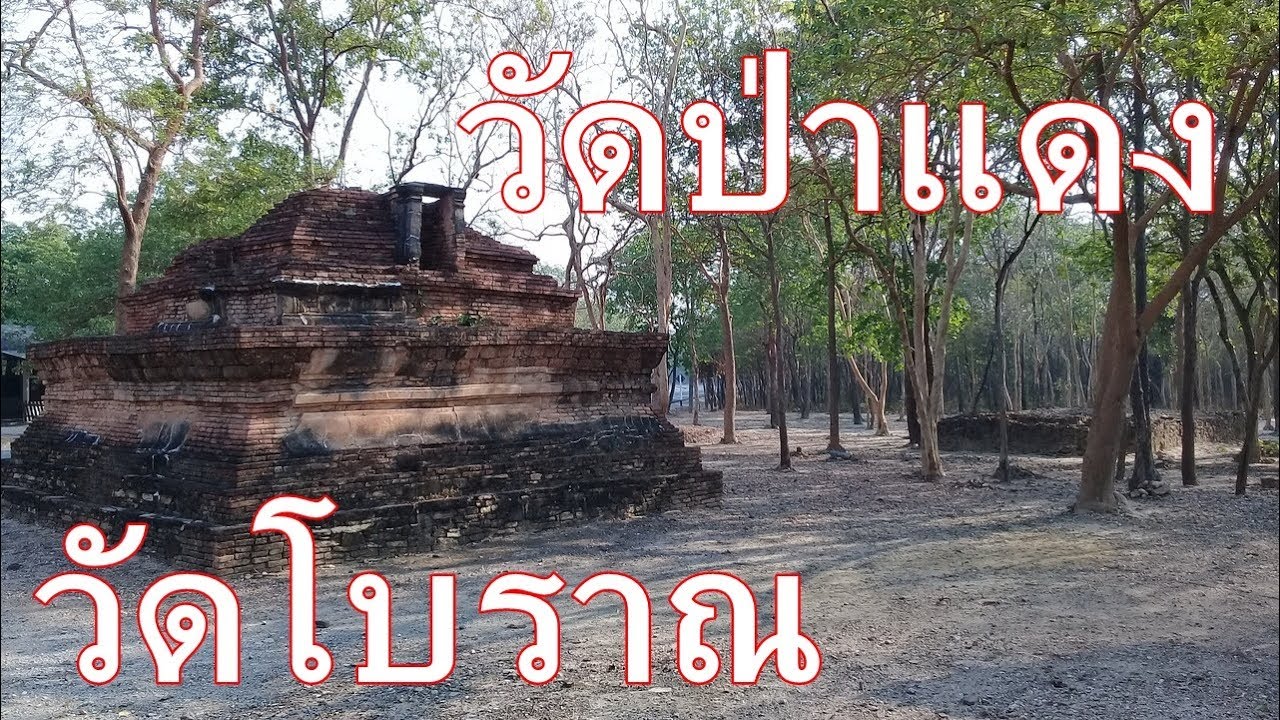
 Click to Access the Navigation Map GPS
Wat Pa Daeng Map
Recommend

 Art, Culture and Heritage
 Historical Sites and Monuments(4)
 Landmarks and Memorials(5)
 Art, Craft Centres, Tradition(11)
 Museums(5)
Temple(40)
Museums(5)
Temple(40)
 Other Sacred Sites(10)
 Suburban Living
 Village, Community(3)
 Nature and Wildlife
 National Parks and Marine Reserves(3)
 Mountain (Doi)(2)
 Dam, Reservoir, Lake(4)
 Waterfalls(8)
 Caves(4)
 River, Canal(2)
 Entertainment and Agricultural
 Farms, Parks and Ecotourism(3)
 Travel Articles, Recipes
 Travel Review, Food Review(1)


