
lovethailand home >North Travel Attractions >Sukhothai Travel Attractions >Muang Sukhothai >Muang Kao > Wat Si Sawai
TL;DR: Wat Si Sawai is located at Central Zone, Sukhothai Historical Park, Mueang Kao Subdistrict, Mueang Sukhothai District, Sukhothai Province, open Daily, hours Monday – Friday and Sunday 06.30 – 19.30 / Saturday 06.30 – 21.00.
Wat Si Sawai
Open Days: Daily
Opening Hours: Monday – Friday and Sunday 06.30 – 19.30 / Saturday 06.30 – 21.00
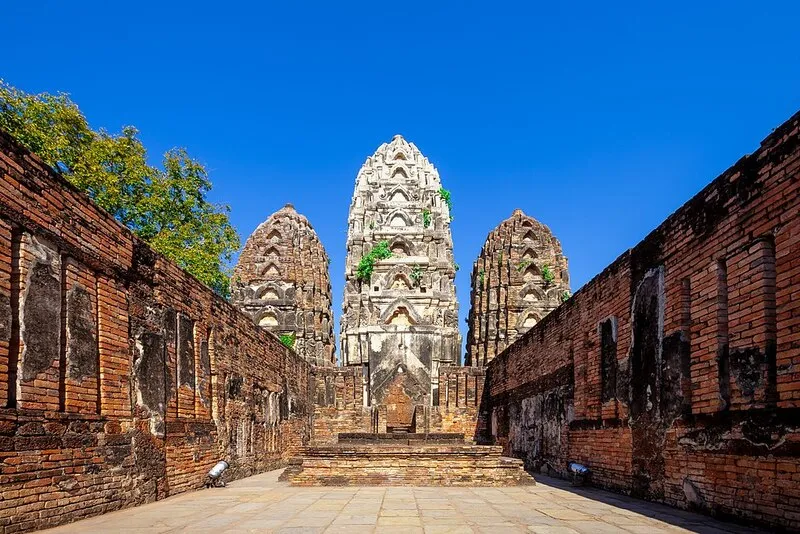
Wat Si Sawai in Sukhothai Province is one of the most historically significant monuments inside Sukhothai Historical Park. Located in the central zone of the old city, about 350 meters south of Wat Mahathat, the temple is best known for its three Khmer-influenced prangs standing within a laterite enclosure. Wat Si Sawai is more than a beautiful ancient monument. It is one of the clearest places in Sukhothai where visitors can understand the transition from Brahman-Hindu worship to Theravada Buddhist use, and the way different religious and artistic traditions were adapted over time.
The most distinctive feature of Wat Si Sawai is the group of three prangs arranged within a laterite boundary wall. These towers reflect Lopburi art with strong Khmer influence, but they were adapted in a local Sukhothai context. Their forms are relatively slender and stand on low bases, creating a different impression from many earlier Khmer-style monuments. This makes Wat Si Sawai an important example of how Sukhothai received outside artistic influences and transformed them into a local architectural language.
The remaining stucco decoration on the prangs is highly valuable for the study of ancient art. Some decorative details resemble patterns found on Chinese ceramics from the Yuan dynasty, suggesting cultural contact and artistic exchange between Sukhothai and wider regional trade networks. These details show that Sukhothai was not an isolated kingdom, but a cultural center open to artistic influences from different directions.
Archaeological evidence found at Wat Si Sawai strongly suggests that the site was originally connected with Brahman-Hindu worship. Important finds include a lintel showing Vishnu reclining on the cosmic ocean, fragments of divine images, a four-armed Vishnu image, a Shiva image, and lingas made of stone and bronze. These objects indicate that the site once functioned as a sacred Hindu shrine before it was later adapted for Buddhist use.
Over time, as Theravada Buddhism became increasingly important in Sukhothai, the former Brahman-Hindu sanctuary was converted into a Buddhist temple. Two vihara structures were built in front of the prangs, allowing the space to serve Buddhist religious functions. This transformation did not erase the older sacred landscape. Instead, it reinterpreted the site within a new religious framework, preserving older architectural forms while giving them new meaning.
Wat Si Sawai is also associated with an important historical interpretation made by King Rama VI. In 1907, when he visited Sukhothai as Crown Prince, he found significant ancient objects at the site, including a Shiva image, a Vishnu reclining image, and fragments of a linga. He suggested that the place may once have been a Brahmanical shrine used for the Triyampawai ceremony, also known as the swing ceremony. This interpretation has made Wat Si Sawai especially important for understanding pre-Buddhist ritual traditions in Sukhothai.
The Triyampawai ceremony was connected with Brahmanical cosmology, divine power, and the symbolic balance between the human world and the gods. The possibility that Wat Si Sawai was associated with this ritual gives the site deep historical importance. It means that the monument was not only an architectural structure, but also a ceremonial space where religious ideas were expressed through ritual, landscape, and sacred architecture.
Another important feature near the outer area of the enclosure is a pond traditionally known as Sa Loi Bap, or the pond of washing away sins. This name is connected with Hindu concepts of purification and ritual cleansing. The pond helps visitors understand that the sacred landscape of Wat Si Sawai extended beyond the prangs themselves. Water, ritual movement, architecture, and sacred images all formed part of the religious experience of the site.
The Buddhist viharas built in front of the prangs are evidence of the temple’s later Buddhist phase. They show how the site was adapted from a Hindu sanctuary into a Buddhist place of worship. This change is significant because it reflects the wider religious transformation of Sukhothai society, where Theravada Buddhism gradually became the central spiritual force while earlier sacred spaces were absorbed into Buddhist practice.
Compared with other monuments in Sukhothai Historical Park, Wat Si Sawai has a very distinctive identity. Wat Mahathat represents the spiritual and political center of the old city. Wat Si Chum is famous for Phra Achana and its monumental mondop. Wat Si Sawai, by contrast, tells the story of religious transition, Khmer and Lopburi artistic influence, and the adaptation of a Hindu sanctuary into a Buddhist temple. Visiting all these sites together gives a much fuller understanding of ancient Sukhothai.
For travelers interested in art history, Wat Si Sawai is an excellent place to study the blending of Khmer, Lopburi, and Sukhothai traditions. The prangs, stucco decoration, laterite wall, vihara remains, and archaeological finds all show how artistic forms moved across regions and were reinterpreted by local craftsmen. The temple demonstrates that Sukhothai art was not created in isolation, but through a process of selection, adaptation, and transformation.
Visitors should take time to walk slowly around the three prangs and observe the relationship between the towers, the enclosure, the vihara remains, and the surrounding landscape. Wat Si Sawai is not a monument to be understood from a single photograph. Its meaning becomes clearer when visitors notice how the site is arranged and how different religious layers remain visible in the architecture.
Wat Si Sawai is located in the central zone of Sukhothai Historical Park and is managed by Sukhothai Historical Park under the Fine Arts Department, Ministry of Culture. It is not an active community temple with a resident abbot. The monument is maintained as part of Thailand’s national cultural heritage and as part of the Historic Town of Sukhothai and Associated Historic Towns.
Visitors should dress respectfully, avoid climbing on the ancient structures, avoid touching stucco decoration, and refrain from writing or marking any part of the monument. Since Wat Si Sawai is more than 700 years old, respectful behavior is essential for preserving the site for future generations. The temple is both a cultural treasure and a place connected with sacred history.
Getting There is convenient from Sukhothai town by private car, rental car, local transport, or bicycle. From modern Sukhothai town, travel to Mueang Kao Subdistrict, about 12 kilometers away, and enter the central zone of Sukhothai Historical Park. Wat Si Sawai is located just south of Wat Mahathat, making it easy to visit on foot, by bicycle, or by the park tram.
Travelers staying in the old city area often rent bicycles to explore the historical park. A practical route is to begin at Wat Mahathat, continue to Wat Si Sawai, then visit Wat Traphang Ngoen, Wat Sa Si, and Ramkhamhaeng National Museum. Early morning and late afternoon are especially pleasant times to visit because the light brings out the texture of the laterite and the shape of the prangs beautifully.
Wat Si Sawai is suitable for travelers interested in history, art, archaeology, religion, photography, and Southeast Asian culture. The temple shows that Sukhothai was not only a Buddhist kingdom, but also a place where earlier Hindu and Khmer-influenced traditions were absorbed and transformed. This makes the site valuable for anyone who wants to understand the cultural depth of Sukhothai beyond its most famous Buddhist monuments.
For students of Thai art, Wat Si Sawai provides an important case study in the transition from Khmer-influenced architecture into a Sukhothai context. The transformation of the prang form, the addition of Buddhist viharas, and the adaptation of older sacred space all reveal how artistic and religious meanings changed over time. This makes Wat Si Sawai one of the most educational monuments in the historical park.
In terms of travel experience, Wat Si Sawai should not be missed when visiting Sukhothai Historical Park. The three prangs create a powerful visual impression, while the history of Hindu worship, the Triyampawai ceremony, and the later Buddhist transformation give the site intellectual and cultural depth. It is a place where beauty and historical meaning are closely connected.
Wat Si Sawai is therefore both a historical learning site and a major cultural attraction. It has witnessed religious transformation, artistic exchange, and social change for many centuries. Today, it continues to tell the story of Sukhothai through architecture, sacred space, and the traces of belief left by earlier generations.
| Name | Wat Si Sawai |
| Location | Central Zone, Sukhothai Historical Park, Mueang Kao Subdistrict, Mueang Sukhothai District, Sukhothai Province |
| Address | Mueang Kao Subdistrict, Mueang Sukhothai District, Sukhothai 64210, Thailand |
| Coordinates | Approximately 17.0167, 99.7048 |
| Highlights | Three Lopburi-style prangs with Khmer influence and evidence of transition from a Brahman-Hindu sanctuary to a Buddhist temple |
| History | Built around the 18th Buddhist century, with later adaptation and restoration during the Sukhothai and Ayutthaya periods |
| Name Origin | The name may be connected with “Sri Sivaya,” a term associated with Shiva in Brahman-Hindu belief |
| Distinctive Features | Three prangs within a laterite enclosure, vihara remains in front, stucco decoration, and Brahman-Hindu archaeological evidence |
| Travel Information | About 12 km from modern Sukhothai town to Mueang Kao. The temple is about 350 meters south of Wat Mahathat and can be reached on foot, by bicycle, or by park tram within the central zone |
| Current Status | Open to visitors as an important ancient monument within Sukhothai Historical Park |
| Open Days | Daily |
| Opening Hours | Monday – Friday and Sunday 06.30 – 19.30 / Saturday 06.30 – 21.00 |
| Fees | Central Zone: Thai visitors 20 THB, foreign visitors 120 THB; all-zone ticket: Thai visitors 40 THB, foreign visitors 400 THB |
| Facilities | Ticketing point, walking paths, bicycle route, park tram, parking areas, and tourist information services |
| Main Areas / Zones | Three prangs, laterite enclosure, vihara remains, pond area, and surrounding archaeological zone |
| Caretaker | Sukhothai Historical Park, Fine Arts Department, Ministry of Culture |
| Main Contact Number | 055-697-527 |
| Official Website / Official Page | Sukhothai Historical Park, Fine Arts Department |
| Nearby Tourist Attractions | 1. Wat Mahathat, about 0.4 km 2. Wat Traphang Ngoen, about 0.7 km 3. Wat Sa Si, about 1 km 4. Ramkhamhaeng National Museum, about 1 km 5. King Ramkhamhaeng Monument, about 1 km 6. Wat Si Chum, about 3 km 7. Wat Saphan Hin, about 4 km |
| Nearby Restaurants | 1. Chanda’s Historical Garden Restaurant, about 1 km, Tel. 092-993-3408 2. Chorphaka Sukhothai, about 2 km, Tel. 088-885-5188 3. Phum Phor Coffee Restaurant, about 2 km, Tel. 064-626-3639, 055-010-356 4. Sinvana Restaurant, about 2 km, Tel. 091-840-4546 5. Krua Krung Kao Sukhothai, about 2 km, Tel. 087-732-1669 |
| Nearby Accommodations | 1. Sukhothai Garden, about 1 km, Tel. 084-751-1533 2. Thai Thai Sukhothai Resort, about 2 km, Tel. 084-932-1006 3. Scent of Sukhothai Resort, about 2 km, Tel. 083-211-8898 4. Legendha Sukhothai Resort, about 2 km, Tel. 055-697-214, 082-450-0177 5. Sawasdee Sukhothai Resort, about 3 km, Tel. 088-559-9089 |
Frequently Asked Questions (FAQ)
Q: Where is Wat Si Sawai located?
A: Wat Si Sawai is located in the central zone of Sukhothai Historical Park, Mueang Kao Subdistrict, Mueang Sukhothai District, Sukhothai Province, about 350 meters south of Wat Mahathat.
Q: What is Wat Si Sawai famous for?
A: Wat Si Sawai is famous for its three Lopburi-style prangs with Khmer influence and for its evidence of transformation from a Brahman-Hindu sanctuary into a Buddhist temple.
Q: Was Wat Si Sawai originally a Hindu sanctuary?
A: Archaeological evidence such as a Shiva image, Vishnu-related objects, deity fragments, and lingas shows that the site was once connected with Brahman-Hindu worship before becoming a Buddhist temple.
Q: How is Wat Si Sawai related to the Triyampawai ceremony?
A: King Rama VI suggested that the site may once have been a Brahmanical shrine used for the Triyampawai, or swing ceremony, based on important ancient objects found there.
Q: What are the opening hours of Wat Si Sawai?
A: Wat Si Sawai is open daily as part of the central zone of Sukhothai Historical Park. It opens from 06.30 to 19.30 on Monday to Friday and Sunday, and from 06.30 to 21.00 on Saturday.
Q: How much is the entrance fee for Wat Si Sawai?
A: The central zone entrance fee is 20 THB for Thai visitors and 120 THB for foreign visitors. All-zone tickets are also available.
Q: Does Wat Si Sawai have an abbot?
A: Wat Si Sawai is an ancient monument within Sukhothai Historical Park, not an active community temple with a resident abbot. It is managed by Sukhothai Historical Park under the Fine Arts Department.
Q: What nearby attractions can be visited with Wat Si Sawai?
A: Nearby attractions include Wat Mahathat, Wat Traphang Ngoen, Wat Sa Si, Ramkhamhaeng National Museum, Wat Si Chum, and Wat Saphan Hin.
 Category: ●Places of Worship
 Group: ●Temple
Last Update : 5 MonthAgo
 Last Update : 5 MonthAgo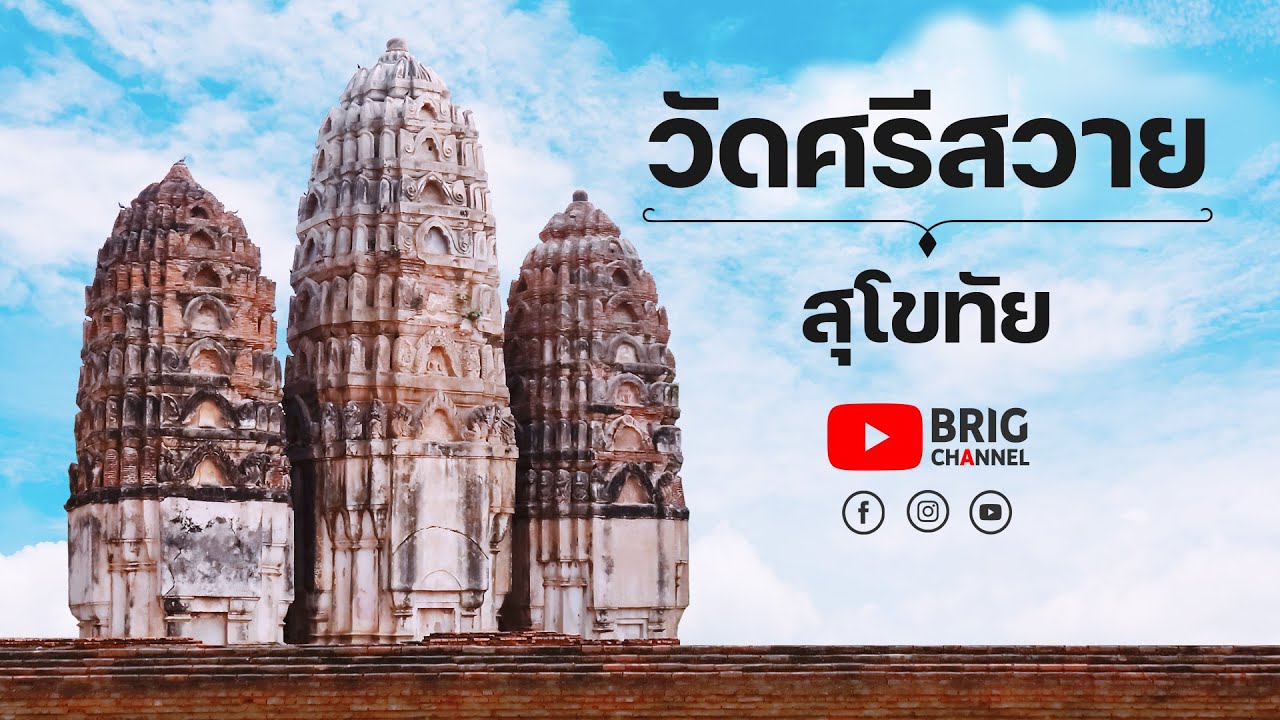
 Click to Access the Navigation Map GPS
Wat Si Sawai Map
Recommend

 Art, Culture and Heritage
 Historical Sites and Monuments(4)
 Landmarks and Memorials(5)
 Art, Craft Centres, Tradition(11)
 Museums(5)
Temple(40)
Museums(5)
Temple(40)
 Other Sacred Sites(10)
 Suburban Living
 Village, Community(3)
 Nature and Wildlife
 National Parks and Marine Reserves(3)
 Mountain (Doi)(2)
 Dam, Reservoir, Lake(4)
 Waterfalls(8)
 Caves(4)
 River, Canal(2)
 Entertainment and Agricultural
 Farms, Parks and Ecotourism(3)
 Travel Articles, Recipes
 Travel Review, Food Review(1)


