
lovethailand home >North Travel Attractions >Phetchabun Travel Attractions >Muang Phetchabun >Sa Diang > Phetchabun Rajabhat University
TL;DR: Phetchabun Rajabhat University, Phetchabun attractions : University, Rajabhat University.

Phetchabun Rajabhat University
Open Days: Monday – Friday (University Administrative Offices, excluding public holidays)
Opening Hours: 08:30 – 16:30
Central Library Hours: Monday – Sunday, 08:00 – 17:00 (closed on public holidays)
Phetchabun Rajabhat University is a public university located at 83 Moo 11, Saraburi–Lom Sak Road, Sadiang Subdistrict, Mueang Phetchabun District, Phetchabun Province 67000, Thailand. Its origins date back to 1971, when provincial leaders and local residents initiated efforts to establish a teacher-training institution. The institution was officially established as Phetchabun Teachers College on September 29, 1973, admitted its first students in the 1976 academic year, and became Phetchabun Rajabhat University on June 15, 2004. Today, the university plays an important role in higher education, teacher preparation, research, academic services, cultural preservation, and regional development. Its academic disciplines encompass education, humanities, social sciences, science, technology, business, agriculture, industrial technology, and nursing.
The importance of Phetchabun Rajabhat University extends beyond its role as a higher education institution. Its establishment marked a significant chapter in the expansion of educational opportunities in Phetchabun and neighboring provinces. Before the development of local higher education, many young people needed to travel to other provinces to continue their studies. Establishing a teacher-training college in Phetchabun improved access to education and created opportunities for graduates to develop professional careers while contributing to their home communities.
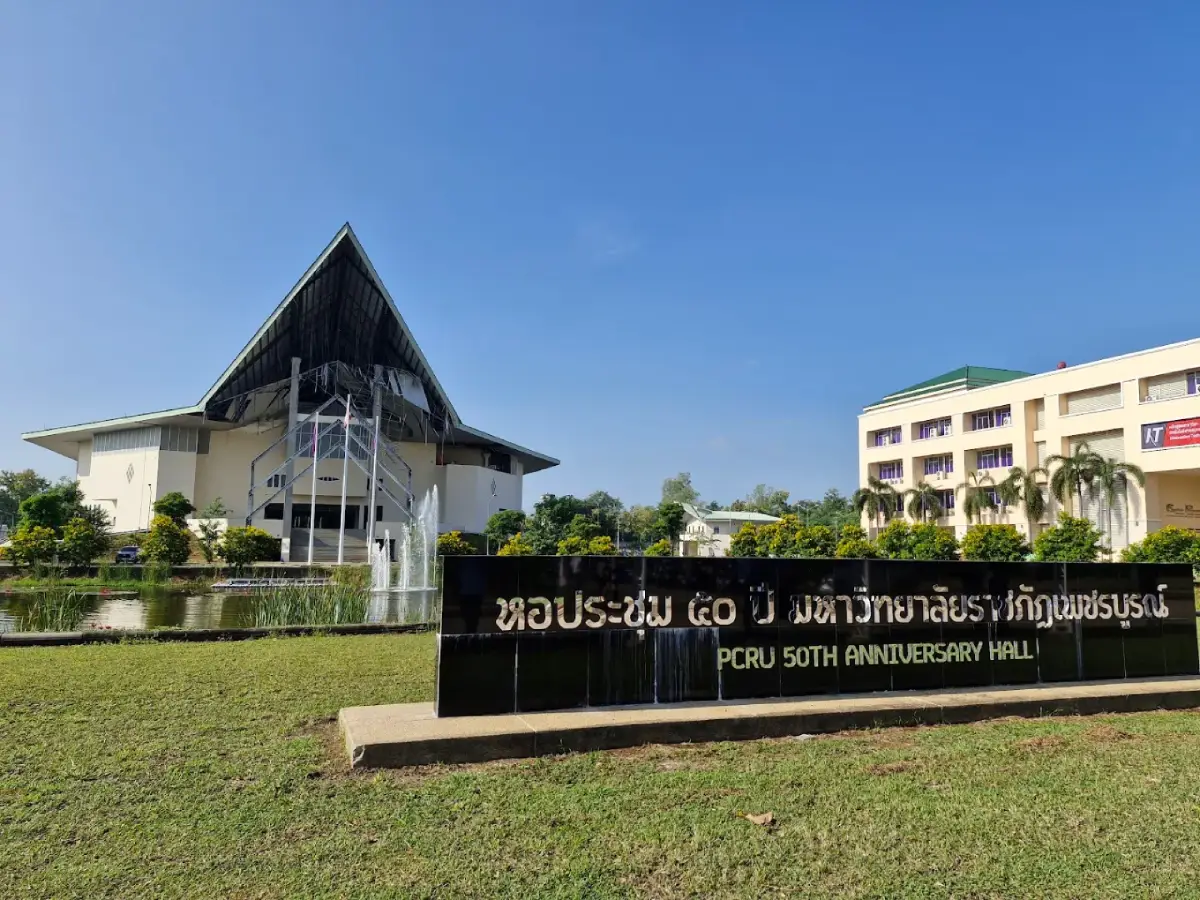
The university occupies a large campus along Saraburi–Lom Sak Road, one of the province's important transport routes. Its grounds contain academic buildings, administrative offices, assembly halls, a central library, student activity areas, and facilities supporting teaching and research. The campus reflects its relationship with Phetchabun's geographical setting, a province characterized by plains, valleys, mountain ranges, agricultural landscapes, and diverse natural resources.
The university's history began in 1971 when Chamroon Piyamputra, then Governor of Phetchabun Province, worked with local businesspeople, residents, and members of parliament to propose the establishment of a teachers college to the Ministry of Education. The province was undergoing substantial development, and its schools faced a shortage of qualified teachers. Creating a teacher-training institution within the province was therefore considered essential for improving educational quality and developing the local workforce.
Another factor supporting the proposal was Phetchabun's geographical position, with connections to Phitsanulok, Phichit, Lopburi, Nakhon Sawan, Chaiyaphum, Khon Kaen, and Loei. Provincial leaders recognized that a higher education institution in Phetchabun could serve students from several surrounding areas. The province also had sufficient land available for an educational campus. The Department of Teacher Education surveyed land along Saraburi–Lom Sak Road, approximately three kilometers north of the town center. The proposed site covered approximately 856 rai, 3 ngan, and 57 square wa.
Following consideration by the Ministry of Education, Phetchabun Teachers College was officially established on September 29, 1973. This milestone transformed the ambitions of local residents and provincial leaders into an educational institution with a formal administrative structure. Noi Sipo, an educator formerly associated with Pibulsongkram Teachers College in Phitsanulok, was appointed acting principal effective October 1, 1973. His responsibilities included establishing the institution's administration and preparing for teaching activities.
The college admitted its first students in the 1976 academic year, initially serving educational needs in Phetchabun and Phichit provinces. Its primary mission was to prepare teachers and improve the qualifications of educational personnel. This work responded directly to the expansion of schools and the increasing demand for trained teachers in the region. It also reflected a wider national effort to strengthen higher education outside Thailand's major urban centers.
On August 19, 1975, the Teachers College Act B.E. 2518 (1975) established a new legal framework for teachers colleges, recognizing them as higher education institutions under the Ministry of Education. This legislation strengthened the foundation for academic management, degree-level education, and the continuing development of teacher-training institutions throughout Thailand, including Phetchabun Teachers College.
Another important transition took place in 1984 with the amendment of the Teachers College Act. The revised legislation allowed teachers colleges to provide degree programs in professional disciplines beyond teacher education. For Phetchabun Teachers College, this created opportunities to expand academic offerings and respond to emerging needs in business, science, technology, and other professional fields. The institution gradually developed beyond its original teacher-training mission.
In 1985, Phetchabun Teachers College became part of the Buddhachinaraj United Colleges network, together with Pibulsongkram Teachers College, Nakhon Sawan Teachers College, and Kamphaeng Phet Teachers College. The network's administrative office was located at Pibulsongkram Teachers College. This arrangement supported cooperation among teacher-training institutions in the region and encouraged the sharing of academic and administrative resources.
A defining moment occurred in 1992 when His Majesty King Bhumibol Adulyadej graciously bestowed the name Rajabhat upon Thailand's teachers colleges. Phetchabun Teachers College subsequently became Phetchabun Rajabhat Institute. The name Rajabhat is closely associated with service to the monarchy and the nation, expressing an institutional commitment to public service, education, and the development of local communities.
On January 25, 1995, the Rajabhat Institute Act B.E. 2538 (1995) came into effect. The legislation clarified the roles of Rajabhat institutes in higher education, academic research, professional training, social services, cultural preservation, and the development of local communities. This strengthened Phetchabun Rajabhat Institute's position as a regional center of learning rather than an institution dedicated exclusively to teacher preparation.
The most significant institutional transformation occurred in 2004. The Rajabhat University Act B.E. 2547 (2004) came into force on June 15, 2004, granting Phetchabun Rajabhat Institute full university status under the name Phetchabun Rajabhat University. The transition represented more than a change of name. It reflected the development of academic programs, administrative structures, research capacity, and community engagement associated with a public university.
In 2019, changes to Thailand's higher education administration placed Phetchabun Rajabhat University under the Ministry of Higher Education, Science, Research and Innovation. This development aligned the university with national structures for higher education, scientific research, and innovation, while maintaining its historic commitment to regional development.
Over more than five decades, the institution has passed through three principal stages: Phetchabun Teachers College, Phetchabun Rajabhat Institute, and Phetchabun Rajabhat University. Each stage represents an expansion of academic responsibility in response to changing educational, economic, and social needs. Nevertheless, teacher education and the development of local communities have remained central elements of the university's identity.
Two individuals are especially important in the university's early history. Chamroon Piyamputra, Governor of Phetchabun at the time, helped initiate the establishment of a teachers college through cooperation with local residents, businesspeople, and political representatives. Noi Sipo subsequently played an important administrative role as the first acting principal, contributing to the institution's organizational foundations and preparation for its initial teaching operations.
The university experienced an administrative transition in October 2026 following the completion of Assistant Professor Dr. Preecha Sri Rueangrit's four-year term as president on October 21, 2026. The university's official website identifies Assistant Professor Dr. Kamonvit Loyma as Acting President of Phetchabun Rajabhat University. Its administration continues through the University Council, university executive bodies, academic faculties, and supporting offices.
The university's identity is closely connected with the history and philosophy of Thailand's Rajabhat universities. On June 10, 2004, His Majesty King Bhumibol Adulyadej graciously granted the university its official emblem. The emblem incorporates colors representing the monarchy, the natural environment, intellectual development, local culture, and purity of thought. These symbolic elements reflect the university's relationship with national institutions and the communities it serves.
The blue in the university emblem represents the monarchy, while green symbolizes natural surroundings and environmental beauty. Gold reflects intellectual prosperity, orange represents the flourishing of local arts and culture, and white symbolizes purity of thought. The university's official color is purple, and its representative flower is the Inthanin flower. These symbols are associated with the identity and pride of students, faculty members, staff, and alumni.
The university's philosophy is expressed in the Thai phrase “Panya Settha,” meaning that wisdom is the most precious or excellent quality. Its institutional aspiration emphasizes becoming a source of enlightenment for local communities and enriching people's lives. The university identifies itself as a source of knowledge for local development, while its graduate identity emphasizes morality, knowledge, and determination in work. These principles guide its educational and social missions.
Academically, Phetchabun Rajabhat University consists of the Faculty of Education, Faculty of Humanities and Social Sciences, Faculty of Management Sciences, Faculty of Science and Technology, Faculty of Agricultural and Industrial Technology, and Faculty of Nursing. The institution also includes an International College and organizational units supporting graduate education. Together, these academic units provide educational opportunities across a broad range of professional disciplines.
The Faculty of Education reflects the university's original mission as a teacher-training institution. Its academic fields include Early Childhood Education, Thai Language Education, English Language Education, Mathematics Education, General Science Education, and Physical Education. The university's academic records also include a Graduate Diploma in the Teaching Profession. The faculty plays an important role in preparing future teachers and supporting the development of Thailand's school education system.
The Faculty of Humanities and Social Sciences offers disciplines related to languages, law, politics, public administration, social development, and cultural studies. Academic records include English, Business English, Chinese, Law, Public Administration, Politics and Government, Social Development, Fine Arts, Dance and Performing Arts, and Justice Process Administration. These fields connect classroom learning with social, cultural, administrative, and legal issues affecting communities and organizations.
The Faculty of Management Sciences concentrates on business administration, organizational management, accounting, economics, communication, and tourism. Its academic fields include Management, Marketing, Human Resource Management, Digital Business Computing, Business Economics, Tourism and Hospitality, and related disciplines. Such programs are relevant to entrepreneurship, regional business development, and the adaptation of local enterprises to changing economic and technological conditions.
The Faculty of Science and Technology covers fundamental and applied sciences, computer science, information technology, public health, traditional Thai medicine, food technology, and environmental studies. The faculty contributes to the development of scientific knowledge and practical skills relevant to health, information systems, natural resources, and industrial applications. Its academic activities also create opportunities for students to undertake fieldwork and learn from local communities.
The Faculty of Agricultural and Industrial Technology is particularly relevant to Phetchabun's agricultural economy and industrial development. Academic fields documented by the university include Agriculture, Home Economics, Computer Engineering, Civil Engineering Technology, Electrical Technology, Computer Technology, Product Design, and Production Technology. These disciplines can support improvements in production processes, resource management, agricultural innovation, and the development of products based on local materials.
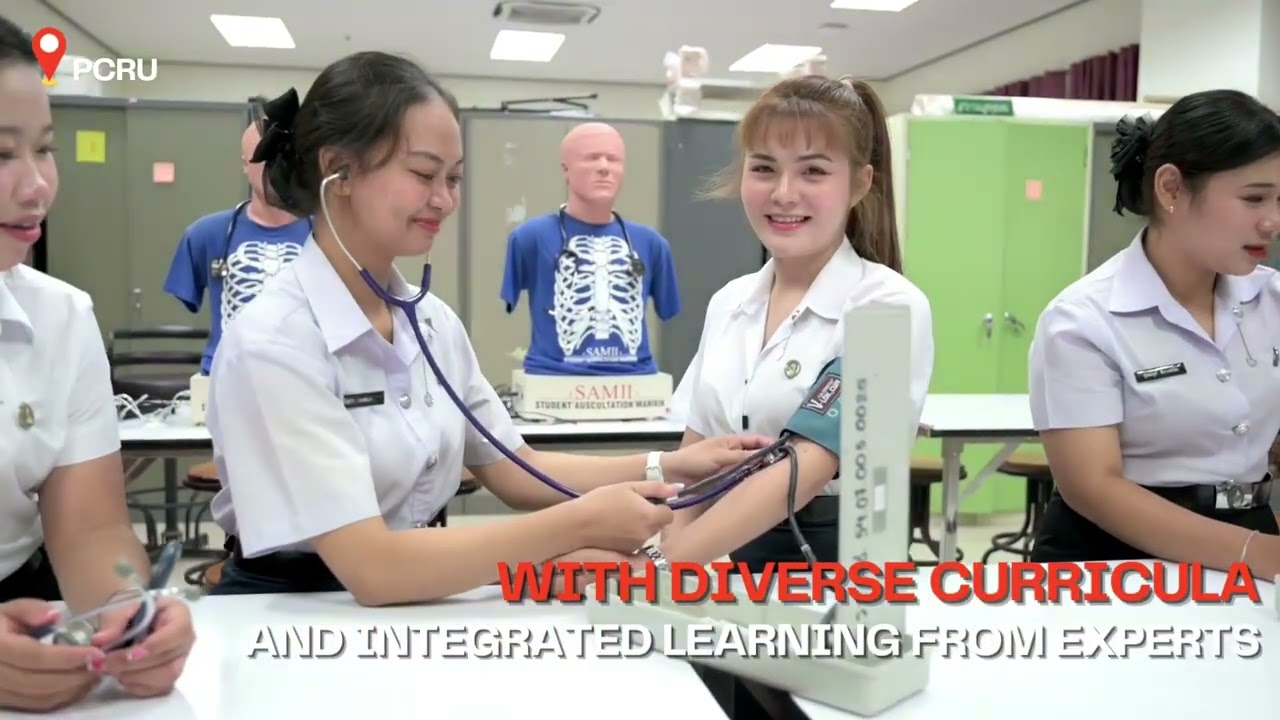
The Faculty of Nursing expands the university's academic role into healthcare education. Its principal undergraduate degree is the Bachelor of Nursing Science. The faculty also announced admissions to its Practical Nursing Certificate program for the 2026 academic year. Nursing education combines professional knowledge, clinical skills, ethical responsibilities, and patient-centered care. The faculty contributes to the development of healthcare personnel who can serve communities and the wider public health system.
The International College provides an additional dimension to the university's academic development by connecting education with international learning and professional cooperation. University records include an international undergraduate program in Business Innovation Management, together with selected postgraduate programs. Internationally oriented education offers opportunities to strengthen language skills, academic exchange, and professional understanding in a global context.
The university's academic structure is supported by several important administrative and educational units, including the Office of Academic Promotion and Registration, Office of Academic Resources and Information Technology, Office of Arts and Culture, Research and Development Institute, Language Institute, and Office of the President. Their responsibilities include academic administration, student records, library and digital services, research coordination, cultural preservation, and institutional management.
The Central Library is one of the university's most useful facilities for students, lecturers, researchers, and members of the public. It provides access to printed learning resources, academic materials, and areas for individual or group study. The Office of Academic Resources and Information Technology also supports digital databases, computer networks, and information technology services. The library welcomes students and members of the public under its service regulations and operates from 08:00 to 17:00, Monday through Sunday, except on public holidays.
The Office of Arts and Culture plays an important role in preserving and communicating Phetchabun's cultural heritage. Its activities and collections are associated with local traditions, historical knowledge, agricultural practices, traditional tools, textiles, and performing arts. These cultural resources help younger generations understand how local ways of life have developed over time and how historical knowledge can contribute to community identity.
Lan Pho Khun Pha Mueang, a commemorative plaza within the university grounds, is another meaningful campus landmark. Pho Khun Pha Mueang is a historical figure associated with the early establishment of the Sukhothai Kingdom and the history of Phetchabun. The commemorative area connects university identity with regional history and provides a setting associated with remembrance, respect, and ceremonial occasions.
Prakai Phet Auditorium is an important venue for university ceremonies, academic events, meetings, and student activities. In 2026, the auditorium hosted significant university traditions, including the annual Wai Khru ceremony and the ceremony for receiving the university emblem. These occasions strengthen relationships among students, teachers, and the institution while expressing continuity with the values of Rajabhat education.
The Wai Khru ceremony is a deeply rooted Thai educational tradition through which students express respect and gratitude toward their teachers. It has particular significance at Phetchabun Rajabhat University because of the university's origins as a teachers college. The 2026 university Wai Khru ceremony took place on July 9 at Prakai Phet Auditorium. It demonstrated the continued importance of respect, responsibility, and the teacher-student relationship within university life.
Another important university tradition is the ceremony in which students receive the official university emblem. On August 13, 2026, Phetchabun Rajabhat University held this ceremony at Prakai Phet Auditorium. Activities included a ceremonial procession carrying the university emblem, student performances, expressions of royal respect, student pledges, and guidance from the university president. The ceremony is intended to strengthen institutional pride, unity, personal responsibility, and a commitment to applying knowledge for the benefit of local communities.
The university also participates in the preservation of wider Thai traditions and Phetchabun's religious heritage. During the 2026 Songkran period, university staff and students took part in a ceremonial bathing of Phra Phuttha Maha Thammaracha, an important Buddha image associated with the province. Participation in such events connects the academic community with local religious traditions and contributes to the continuation of cultural practices across generations.
Research and innovation at Phetchabun Rajabhat University are closely connected to practical challenges in local communities. Examples of activities conducted in 2026 include product development using agricultural waste materials, community-based projects involving social engineering approaches, and biodiversity studies in Phetchabun. These initiatives allow students to apply academic knowledge to real situations while developing critical thinking, teamwork, and problem-solving skills.
One community development example involved the Faculty of Science and Technology working with residents of Ban Pa Lao to explore ways of transforming agricultural by-products into creative products. The project used community engagement and social engineering processes to identify available resources, exchange ideas, and consider opportunities for increasing the value of agricultural materials. Such activities demonstrate how scientific and technological knowledge can support local economic and environmental objectives.
In environmental science, university researchers and students have undertaken activities related to biodiversity studies in the Ban Phot area. These activities involved surveying and identifying organisms and examining components of the local ecosystem. Field-based research provides valuable opportunities to develop ecological knowledge and supports environmental awareness, conservation, and science communication among students and local youth.
In traditional Thai medicine and community health, students also participate in practical learning outside the classroom. An example occurred in September 2026, when third-year traditional Thai medicine students visited Bung Khla Subdistrict in Lom Sak District to study community conditions and collect information relevant to health development. This form of experiential learning helps students understand the relationship between professional healthcare knowledge and the real needs of communities.
The university also contributes to youth education through Phetchabun Rajabhat University Demonstration School. The school connects primary and secondary education with the educational resources of a university environment. Its activities include student development, academic learning, and opportunities to make use of university facilities according to school arrangements. This relationship supports educational innovation and creates connections between school-level learning and higher education.
For visitors interested in educational tourism, Phetchabun Rajabhat University offers an opportunity to explore the history of higher education in Phetchabun and observe the relationship between academic institutions and regional development. Its campus brings together educational facilities, cultural activities, commemorative spaces, and departments involved in community learning. Visitors seeking access to academic buildings, laboratories, or specialized facilities should arrange permission with the responsible university unit in advance.
Visitors interested in the history and culture of Phetchabun can combine an educational visit to the university with other attractions in Mueang Phetchabun District. Notable sites include Phetbura Buddhist Park, Wat Mahathat, Wat Trai Phum, Phetchabun City Pillar Shrine, and Phetchabun Intrachai Archaeological Hall. Together, these places introduce different aspects of the province's religious traditions, archaeological heritage, local beliefs, and historical identity.
Getting There Phetchabun Rajabhat University is located at 83 Moo 11, Saraburi–Lom Sak Road, Sadiang Subdistrict, Mueang Phetchabun District, Phetchabun Province. Visitors traveling by private vehicle can use Highway 21, the principal route connecting Phetchabun with surrounding areas. From central Phetchabun, follow Saraburi–Lom Sak Road toward the university and use the campus entrance indicated by local signs. Travelers arriving by public transport can reach Phetchabun town and continue by local hired transport. Those attending meetings or academic events should check the university's campus map to identify their destination building before arrival.
Prospective students and parents can contact the Office of Academic Promotion and Registration for information about available programs, admission requirements, application schedules, and registration procedures. The university publishes admission announcements through its official website and online application system. Entry requirements, application dates, and the availability of individual programs vary according to the academic year and admission category.
From its beginnings as Phetchabun Teachers College to its present role as Phetchabun Rajabhat University, the institution demonstrates how education can expand opportunities and support regional transformation. What began as an effort to address a local teacher shortage has grown into a multidisciplinary university connected with community development, business, science, technology, culture, health, and environmental education. Its lasting importance lies in educating graduates and creating knowledge that can contribute to the development of Phetchabun Province and Thai society.
Phetchabun Rajabhat University Summary Table
| University Name | Phetchabun Rajabhat University (มหาวิทยาลัยราชภัฏเพชรบูรณ์) |
| Institution Type | Public University under the Ministry of Higher Education, Science, Research and Innovation |
| Address | 83 Moo 11, Saraburi–Lom Sak Road, Sadiang Subdistrict, Mueang Phetchabun District, Phetchabun Province 67000, Thailand |
| Founding Initiative | 1971 |
| Teachers College Established | September 29, 1973 |
| First Student Intake | 1976 Academic Year |
| University Status Granted | June 15, 2004 |
| Institutional Age in 2026 | 53 years since the college's official establishment and 22 years as a university |
| Key Founding Figure | Chamroon Piyamputra, former Governor of Phetchabun, together with local residents, businesspeople, and provincial representatives |
| Early Administrator | Noi Sipo, appointed Acting Principal effective October 1, 1973 |
| Acting President | Assistant Professor Dr. Kamonvit Loyma (university website, October 2026) |
| Former Institution Names | Phetchabun Teachers College; Phetchabun Rajabhat Institute |
| Philosophy | Panya Settha – Wisdom Is the Most Precious Quality |
| Institutional Aspiration | A source of enlightenment for local communities and enrichment for the people |
| University Color | Purple |
| University Flower | Inthanin Flower |
| Graduate Identity | Morality, Knowledge, and Determination in Work |
| Faculties and Colleges | 1. Faculty of Education 2. Faculty of Humanities and Social Sciences 3. Faculty of Management Sciences 4. Faculty of Science and Technology 5. Faculty of Agricultural and Industrial Technology 6. Faculty of Nursing 7. International College 8. Graduate Education Supporting Units |
| Academic Strengths | Teacher Education, Local Development, Science, Technology, Management, Agriculture, Industrial Technology, Healthcare, and Cultural Preservation |
| Important Campus Locations | 1. Office of the President 2. Prakai Phet Auditorium 3. Central Library 4. Office of Arts and Culture 5. Lan Pho Khun Pha Mueang 6. Faculty Buildings and Laboratories 7. Phetchabun Rajabhat University Demonstration School |
| Traditions and Activities | Wai Khru Ceremony, University Emblem Ceremony, Songkran Cultural Activities, Student Development Activities, and Local Cultural Preservation |
| Administrative Office Days | Monday – Friday, excluding public holidays |
| Administrative Office Hours | 08:30 – 16:30 |
| Central Library Hours | Monday – Sunday, 08:00 – 17:00, excluding public holidays |
| Campus Visits | Advance coordination is recommended for academic facilities, laboratories, and organized study visits. Public library use is subject to library regulations. |
| Facilities | Central Library, Academic Buildings, Computer Laboratories, Auditoriums, Student Activity Areas, Campus Dining Facilities, and Parking Areas |
| Getting There | Follow Highway 21 (Saraburi–Lom Sak Road) toward the university in Sadiang Subdistrict, Mueang Phetchabun District. |
| Attractions in Mueang Phetchabun | 1. Phetbura Buddhist Park 2. Wat Mahathat 3. Wat Trai Phum 4. Phetchabun City Pillar Shrine 5. Phetchabun Intrachai Archaeological Hall |
| Restaurants in Mueang Phetchabun | 1. Heng House Food Coffee & Studio, Tel. +66 95 336 6658 2. Ruean Soi Raya, Tel. +66 81 751 5251 3. Som Tam Na SR, Tel. +66 91 030 7158 4. Daebak Korean Restaurant, Tel. +66 83 516 1695 5. Nadia's Kitchen Phetchabun, Tel. +66 62 459 7119 |
| Accommodations in Mueang Phetchabun | 1. Livist Resort Phetchabun, Tel. +66 98 792 2035 2. Feungfah Litz, Tel. +66 56 786 434 3. HOP INN Phetchabun, Tel. +66 2 080 2222 4. Blossom Hotel, Tel. +66 56 722 999 5. SR Residence Hotel, Tel. +66 56 743 999 |
| University Telephone | +66 56 717 100 |
| Admissions Telephone | +66 56 717 119 |
| saraban@pcru.ac.th | |
| Official Website | https://www.pcru.ac.th/ |
| Current Status | Operating Public University |
Phetchabun Rajabhat University Academic Programs The following program list is based on the university's academic registry for Semester 1 of the 2025 academic year and selected official announcements for the 2026 academic year. Inclusion in the registry does not necessarily indicate that a program admitted new students in 2026. English program titles are descriptive translations unless the university has separately published an official English title.
| Faculty / College | Academic Programs and Fields of Study |
| Faculty of Education | Bachelor's Degree Programs 1. Physical Education (B.Ed.) 2. Thai Language Education (B.Ed.) 3. Mathematics Education (B.Ed.) 4. English Language Education (B.Ed.) 5. Early Childhood Education (B.Ed.) 6. General Science Education (B.Ed.) Graduate Diploma 1. Teaching Profession |
| Faculty of Humanities and Social Sciences | Bachelor's Degree Programs 1. Law (LL.B.) 2. English (B.A.) 3. Business English (B.A.) 4. Public Administration (B.P.A.) 5. Social Development (B.A.) 6. Dance and Performing Arts (B.F.A.) 7. Chinese (B.A.) 8. Fine Arts (B.F.A.) 9. Library and Information Science Education (B.Ed.) 10. Justice Process Administration (B.A.) 11. Politics and Government (B.Pol.Sc.) 12. Politics for Local Development (B.A.) Master's Degree Programs 1. English (M.A.) 2. Public Administration (M.P.A.) 3. Political Science (M.Pol.Sc.) 4. English Studies (M.A.) Doctoral Programs 1. Political Science (Ph.D.) 2. Public Administration (Ph.D.) 3. English Studies (Ph.D.) |
| Faculty of Science and Technology | Bachelor's Degree Programs 1. Chemistry (B.Sc.) 2. Information Technology (B.Sc.) 3. Computer Science (B.Sc.) 4. Biology (B.Sc.) 5. Information and Communication Technology (B.Sc.) 6. Traditional Thai Medicine (B.TM.) 7. Food Technology and Product Development (B.Sc.) 8. Natural Resource and Environmental Management (B.Sc.) 9. Mathematics and Computational Science Education (B.Ed.) 10. Public Health (B.P.H.) 11. Mathematics and Applied Statistics (B.Sc.) Master's Degree Programs 1. Science Education (M.Sc.) Doctoral Programs 1. Science Education (Ph.D.) |
| Faculty of Management Sciences | Bachelor's Degree Programs 1. Communication Arts (B.Com.Arts) 2. Economics (B.Econ.) 3. Accounting (B.Acc.) 4. Management (B.B.A.) 5. Marketing (B.B.A.) 6. Human Resource Management (B.B.A.) 7. Tourism and Hospitality (B.A.) 8. Business Computing (B.B.A.) 9. Modern Trade Business Management (B.B.A.) 10. Investment Economics (B.Econ.) 11. Digital Business Computing (B.B.A.) 12. Business Economics (B.Econ.) Master's Degree Programs 1. Business Administration (M.B.A.) |
| Faculty of Agricultural and Industrial Technology | Bachelor's Degree Programs 1. Home Economics (B.Sc.) 2. Career and Technology Education (B.Ed.) 3. Industrial Product Design (B.Tech.) 4. Computer Engineering (B.Eng.) 5. Production Engineering and Management (B.Eng.) 6. Production Technology (B.Tech.) 7. Industrial Technology, Computer Technology Field (B.Tech.) 8. Civil Engineering Technology (B.Tech.) 9. Industrial Electrical Technology (B.Tech.) 10. Computer Technology (B.Tech.) 11. Agriculture (B.Sc.), with fields recorded in the university registry including Crop Production Technology, Animal Production Technology, Modern Agricultural Management, Fisheries, Plant Science, and Animal Science under different curriculum versions 12. Electronics Engineering and Automation (B.Ind.Tech.Ed.) 13. Electrical Engineering Technology (B.Tech.), with fields in Electrical Power Engineering Technology and Renewable Energy Engineering Technology and Innovation 14. Industrial Engineering Technology and Logistics (B.Tech.) 15. Product and Graphic Design (B.Tech.) 16. Computer Technology, Digital Technology Field (B.Tech.) |
| Faculty of Nursing | Bachelor's Degree Programs 1. Nursing Science (B.N.S.) Professional Certificate Program 1. Practical Nursing Certificate (PN), included in the university's 2026 admission announcements |
| International College | Bachelor's Degree Programs 1. Business Innovation Management (International Program, B.B.A.) Master's Degree Programs 1. Business Administration (M.B.A.) 2. Education (M.Ed.) Doctoral Programs 1. Education (Ph.D.) 2. Business Administration (Ph.D.) |
| Graduate School | Master's Degree Programs 1. Environmental Education (M.Sc.) Doctoral Programs 1. Educational Administration (Ph.D.) 2. Environmental Education (Ph.D.) |
Frequently Asked Questions (FAQ)
Q: Where is Phetchabun Rajabhat University located?
A: The university is located at 83 Moo 11, Saraburi–Lom Sak Road, Sadiang Subdistrict, Mueang Phetchabun District, Phetchabun Province 67000, Thailand.
Q: What are the opening days and hours of Phetchabun Rajabhat University?
A: The university's administrative offices operate Monday through Friday from 08:30 to 16:30, excluding public holidays. The Central Library operates daily from 08:00 to 17:00, except on public holidays.
Q: When was Phetchabun Rajabhat University established?
A: The founding initiative began in 1971. The institution was officially established as Phetchabun Teachers College on September 29, 1973, and became Phetchabun Rajabhat University on June 15, 2004.
Q: Who played an important role in founding the university?
A: Chamroon Piyamputra, then Governor of Phetchabun Province, helped initiate the college's establishment with support from local residents, businesspeople, and provincial representatives. Noi Sipo served as an important early administrator.
Q: What faculties does Phetchabun Rajabhat University have?
A: The university has faculties covering Education, Humanities and Social Sciences, Management Sciences, Science and Technology, Agricultural and Industrial Technology, and Nursing. It also has an International College and graduate education supporting units.
Q: What are the university's official color and flower?
A: The university's official color is purple, and its representative flower is the Inthanin flower.
Q: Can members of the public use the university's Central Library?
A: Yes. The Central Library welcomes students and members of the public, subject to its registration procedures and library regulations.
Q: How can prospective students contact Phetchabun Rajabhat University?
A: Prospective students can contact the Office of Academic Promotion and Registration at +66 56 717 119 or visit www.pcru.ac.th for current admission announcements and academic program information.
 Category: ●University
 Group: ●Rajabhat University
Last Update : 1 WeekAgo
 Last Update : 1 WeekAgo
 Click to Access the Navigation Map GPS
Phetchabun Rajabhat University Map
Recommend

 Art, Culture and Heritage
 Historical Sites and Monuments(4)
 Landmarks and Memorials(3)
 Art, Craft Centres, Tradition(4)
 Art Gallery(1)
 Educational Places
 Library(1)
 Educational Gardens, Farm(3)
 Public university(2)
Rajabhat University(1)
 Places of Worship
 Temple(31)
 Other Sacred Sites(8)
 Suburban Living
 Village, Community(4)
 Nature and Wildlife
 National Parks and Marine Reserves(5)
 Mountain (Doi)(11)
 Dam, Reservoir, Lake(14)
 Waterfalls(21)
 Hot Springs(1)
 Caves(11)
 Flower Field(1)
 River, Canal(12)
 Other natural attractions(13)
 Entertainment and Agricultural
 Zoos and Aquariums(1)
 Farms, Parks and Ecotourism(4)
 Outdoor and Adventure Activities(2)
 Travel Articles, Recipes
 Travel Review, Food Review(1)


