
lovethailand home >South Travel Attractions >Chumphon Travel Attractions >Muang Chumphon >Tha Taphao > Chumphon City Pillar Shrine
TL;DR: Chumphon City Pillar Shrine is located at Municipal Courtyard on the Site of the Former Chumphon Provincial Government Headquarters, open Daily, hours 06:00 – 18:00.
Chumphon City Pillar Shrine
Open Days: Daily
Opening Hours: 06:00 – 18:00
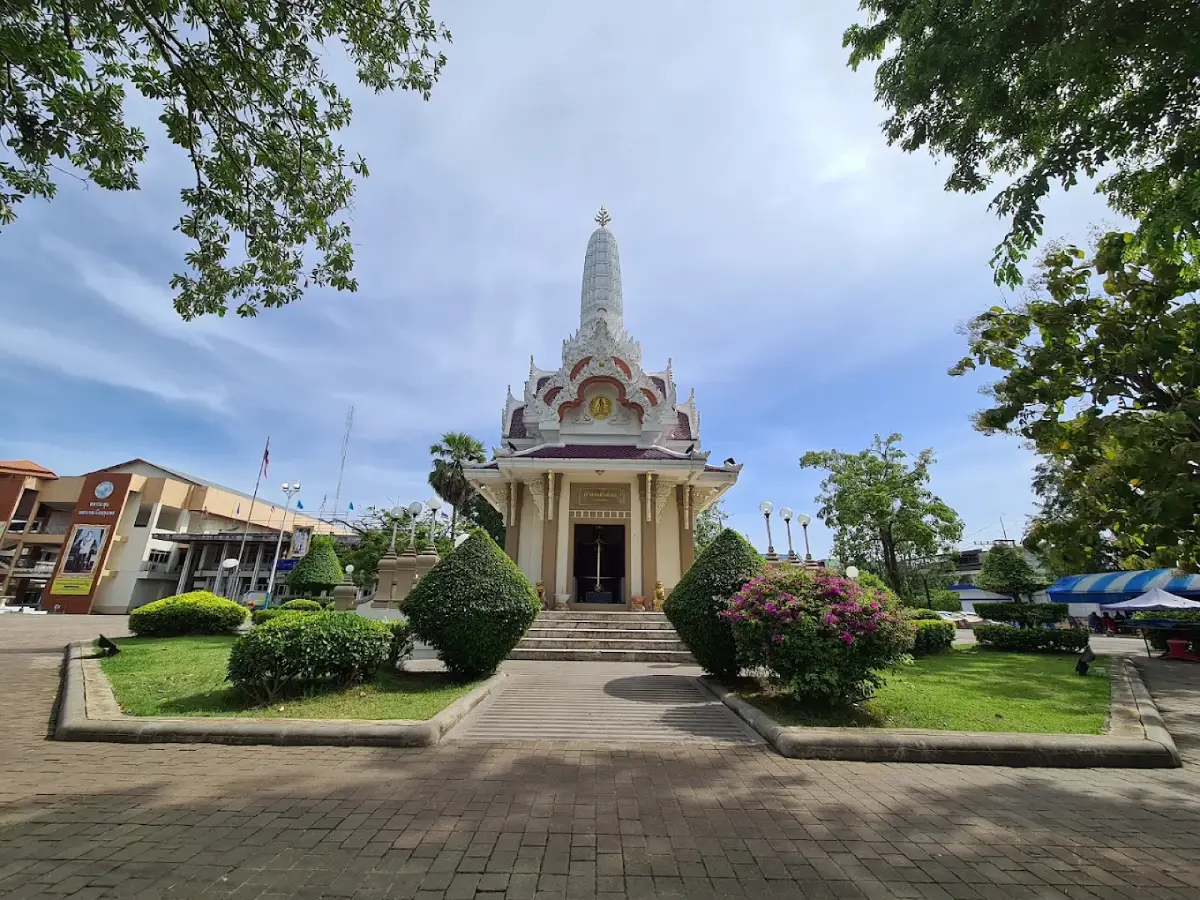
Chumphon City Pillar Shrine is one of the province's most important sacred landmarks and a spiritual center for local residents. The shrine stands in front of Chumphon Municipality Office on Poraminmankha Road, Tha Taphao Subdistrict, Mueang Chumphon District, Chumphon Province 86000, southern Thailand. Its striking Thai-style architecture features a four-sided pavilion designed in the form of a miniature palace, crowned by an elaborate prang-style spire and decorated with white-and-gold ornamental details. Inside is a sacred city pillar made from a Ratchaphruek, or golden shower tree, more than 100 years old. The timber was obtained from the grounds of Wat Thep Charoen, also known as Wat Tham Rap Ro, in Tha Sae District. The wood was carved with traditional Thai motifs and finished with lacquer and gold leaf. The shrine was constructed in 1992 as part of celebrations marking the traditional 600th anniversary of Chumphon and the 60th birthday of Queen Sirikit. It was officially opened on July 31, 1992. The shrine continues to host annual worship and celebration ceremonies, with its most recent major observance held on June 29, 2026, followed by public celebrations through July 8, 2026.
The importance of Chumphon City Pillar Shrine lies in its connection between the province's historical identity and the Thai tradition of honoring the spiritual guardians of a settlement. A city pillar symbolizes the stability of the community, the well-being of its people, and the sense of unity shared by those who live within the same town. Although Chumphon's settlement and administrative history began long before the present shrine was built, the establishment of the city pillar in 1992 provided an official ceremonial landmark where residents could express their devotion according to traditional practices. The project also represented gratitude toward the land and the community's historical heritage.
The shrine occupies a central location within Chumphon Municipality. It stands on the open grounds in front of the municipal office, on land formerly occupied by the provincial government headquarters. This distinction is important because the present provincial administrative complex is situated elsewhere, in Na Cha-ang Subdistrict. The shrine therefore belongs to the historical civic center of Chumphon rather than the newer government complex. Its location maintains a visible relationship with the commercial streets, public buildings, and neighborhoods that developed around the old town center.
Poraminmankha Road is an important street in central Chumphon, lined with shops, commercial buildings, hotels, and public services. The shrine stands within this active urban setting, with an open courtyard providing space for public ceremonies and community events. Walkways and landscaped areas around the building contribute to its prominence, while the ornate spire makes it immediately recognizable among the surrounding town structures.
Chumphon's historical importance is closely related to its geographical position on the southern peninsula of Thailand. The province lies along an important corridor connecting central Thailand with the lower southern provinces, while its coastline opens onto the Gulf of Thailand. Mountainous landscapes to the west, river valleys, agricultural land, and coastal communities have shaped settlement and economic activity across the region. Farming, fishing, commerce, and transportation have all contributed to the development of Chumphon.
Historical communities and significant religious sites are found throughout the province. Local traditions concerning the former town of Uthumphon form part of the cultural memory connecting present-day Chumphon with earlier settlements. Wat Thep Charoen, or Wat Tham Rap Ro, in Tha Sae District is especially significant to the story of the city pillar because the Ratchaphruek tree selected for the sacred column grew near the temple. The site's association with the remembered old town gave the timber additional historical and cultural meaning.
The project to construct Chumphon City Pillar Shrine began with a shared belief among residents and provincial representatives that Chumphon should possess a city pillar established according to traditional Thai ceremonial practices. The year 1992 was considered particularly auspicious because it coincided with celebrations of the town's traditional 600th anniversary and Queen Sirikit's 60th birthday. Selecting this occasion expressed loyalty to the monarchy, respect for provincial history, and the community's intention to establish an enduring sacred landmark.
The 600th-anniversary celebration represented the historical age attributed to Chumphon during the commemorative program. It does not mean that the present shrine is itself six centuries old. The existing city pillar shrine was constructed in 1992, and its preparation, carving, ceremonial establishment, and opening are documented through a sequence of identifiable events. Distinguishing the older history of the town from the construction of the present building provides a clearer understanding of the shrine's background.
The first major stage in creating the city pillar was the selection of suitable timber. Considerations included the species, physical proportions, and auspicious meaning of the tree. The chosen timber came from a Ratchaphruek tree more than 100 years old near Tham Rap Ro at Wat Thep Charoen in Tha Kham Subdistrict, Tha Sae District. The location was significant both because Ratchaphruek is regarded as an auspicious tree in Thai culture and because the temple area is associated with traditions concerning old Uthumphon.
Ratchaphruek, also known locally as khun or the golden shower tree, is widely recognized in Thailand for its beautiful clusters of yellow blossoms. In Thai cultural symbolism, the tree is associated with auspiciousness and prosperity. Choosing its wood for the city pillar therefore carried a meaning beyond the material's suitability for carving. The timber represented hopes for stability, progress, and the continuing well-being of Chumphon.
On January 9, 1992, Chumphon Province performed traditional offerings and a ceremonial cutting of the selected Ratchaphruek tree. The ceremony marked the beginning of the physical creation of the sacred pillar. Performing a ritual before cutting the timber expressed respect for the tree and reflected established beliefs concerning the appropriate preparation of auspicious materials intended for important civic ceremonies.
Following the cutting ceremony, the timber entered the design and carving process. The Fine Arts Department was involved in determining the appropriate traditional form, and the wood was sent to Bang Kwang Central Prison for carving and decorative work. Craftsmen created Thai ornamental motifs on the pillar before applying lacquer and gold leaf. This process combined ceremonial traditions with the practical skills of Thai decorative craftsmanship.
January 23, 1992, was another important date in the process, associated with the transfer of the wood for carving at Bang Kwang Central Prison. Converting a large tree trunk into a sacred pillar required attention to structural proportions, the balance of the carved ornaments, and the symbolic significance of the finished object. The city pillar was therefore created as a carefully designed work of ceremonial art rather than as an ordinary wooden post.
Lacquer-and-gold-leaf decoration has long been used in traditional Thai art, particularly for Buddha images, sacred objects, and religious furnishings. A lacquered surface provides a base for the application of gold leaf, giving the object a luminous appearance and emphasizing carved patterns. On Chumphon's city pillar, the gold finish highlights the ornamental details and expresses the importance attached to the sacred object.
The city pillar has a particularly meaningful relationship with Wat Tham Rap Ro because the Ratchaphruek tree came from land associated with the temple. Wat Thep Charoen, also known as Wat Tham Rap Ro, is situated in a natural landscape containing caves and historical traditions concerning the former town of Uthumphon. Using timber from this location established a symbolic connection between the modern provincial capital and a place remembered as part of Chumphon's earlier history.
This connection does not mean that Chumphon City Pillar Shrine itself is located within Wat Tham Rap Ro. The shrine stands in central Chumphon Municipality, while the temple is in Tha Sae District. Their relationship comes from the origin of the sacred timber and the historical traditions associated with the location where the tree grew.
Selecting the site for the shrine was another essential part of the project. Residents and organizers favored a central location that would be familiar and accessible to the public. The open ground in front of Chumphon Municipality Office was consequently chosen. Because the land had previously served as the provincial government center, it already possessed significance within the administrative and social geography of the town.
Choosing a site in the town center reflected the ceremonial purpose of the city pillar as a common spiritual focus. Rather than placing it in a remote area, the shrine was established close to roads, commercial activities, and public services. Residents could therefore visit throughout the year, and the surrounding open ground could accommodate large ceremonies and public celebrations.
On July 7, 1992, King Bhumibol Adulyadej, King Rama IX, graciously received senior provincial officials at Klai Kangwon Palace in Hua Hin, Prachuap Khiri Khan Province. During the ceremony, he performed the ritual sprinkling, anointing, and placement of sacred inscriptions associated with the upper section of the city pillar. The event became an important milestone in the documented history of the shrine's establishment.
On July 19, 1992, Somdet Phra Nyanasamvara, the Supreme Patriarch of Thailand, performed the foundation-stone ceremony associated with Chumphon City Pillar Shrine. This was another significant event in the ceremonial establishment of the site. The participation of the Supreme Patriarch and the royal ceremonies surrounding the city pillar demonstrated the importance attributed to the project as a provincial spiritual landmark.
The shrine was formally opened on July 31, 1992, by Princess Maha Chakri Sirindhorn, who later received the royal title Princess Sirindhorn. The opening marked the completion of the project and provided Chumphon with a sacred city pillar established according to traditional ceremonial practices. From that time onward, the shrine became an important place for communal worship and annual celebrations.
The sequence of events in 1992 provides a detailed record of the shrine's construction. It began with selecting the Ratchaphruek tree and performing the ceremonial cutting, followed by carving and gilding the timber, royal ceremonies, the foundation-stone ceremony, and the official opening. This documented history contributes to the shrine's significance as a modern historical landmark as well as a place of worship.
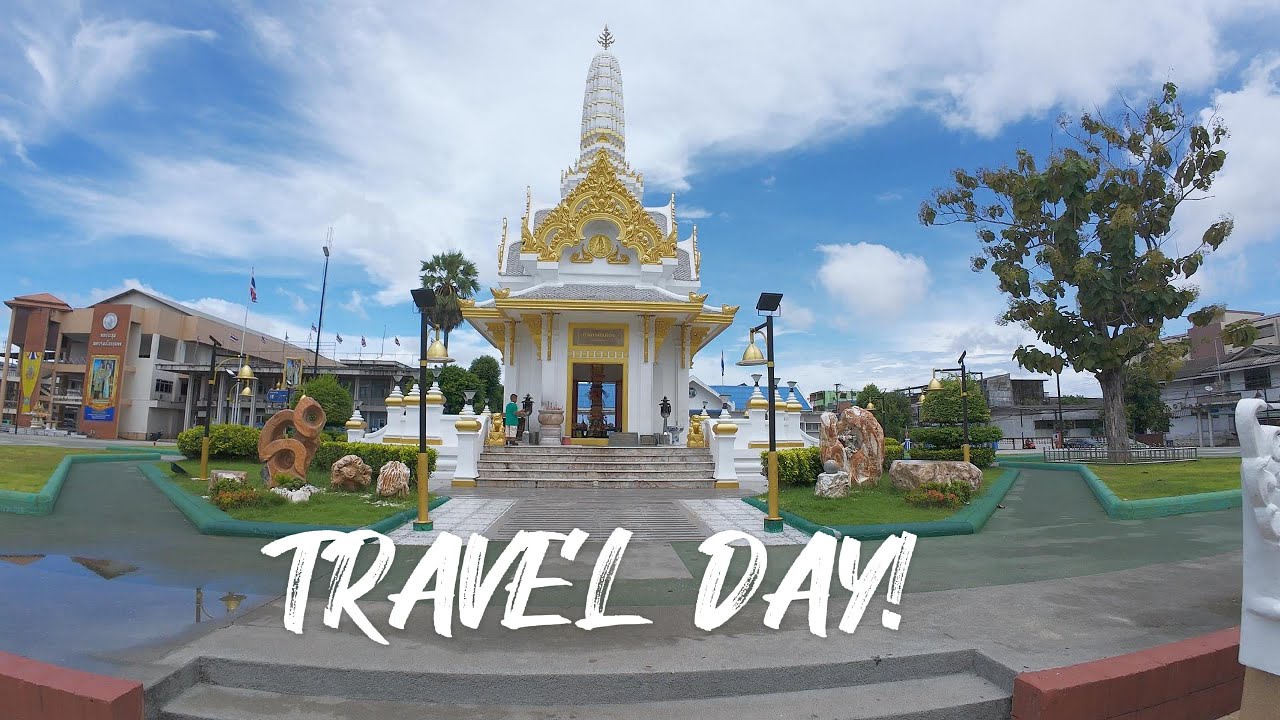
Architecturally, Chumphon City Pillar Shrine is a traditional Thai castle-like pavilion with a four-sided chatumuk roof and a central prang-style spire. The building was designed to appear dignified and to provide an appropriate enclosure for the sacred pillar. White exterior surfaces are complemented by gold-colored ornamental details, while the roof and decorative features give the shrine a distinctive silhouette in the town center.
The chatumuk form emphasizes the central interior space through a balanced arrangement of projecting roof sections. Its symmetrical design is well suited to a sacred building where the main object of worship occupies the center. The city pillar is consequently emphasized not only by its ceremonial meaning but also by the architectural organization of the pavilion.
The tall prang-style spire is one of the shrine's most recognizable features. Its vertical form and layered ornamentation draw upon traditional Thai sacred architecture. Rising above the lower roof, the spire gives the compact building a striking presence and allows it to stand out from the surrounding urban landscape.
Traditional motifs decorate the shrine's gables and upper sections. The roof projects outward to form a balanced composition, while the relationship between the platform, pavilion walls, and spire creates an orderly structure. These elements give the building the visual dignity associated with important ceremonial landmarks.
The dominant white-and-gold color scheme emphasizes the shrine's ornamental features. Red roof and doorway details provide contrast and introduce additional visual richness. Such combinations are found in Thai ceremonial and religious buildings where decorative colors contribute to an impression of sacredness and dignity.
At the front of the shrine is a name sign identifying Chumphon City Pillar Shrine. The entrance and steps connect the building with the surrounding open courtyard. The shrine is clearly visible from the front of the municipal office, making it a recognizable landmark for residents and visitors moving through central Chumphon.
Inside the shrine stands the Ratchaphruek city pillar, carved with traditional Thai ornaments and finished with lacquer and gold leaf. Garlands, flowers, and brightly colored ceremonial cloth are often placed around the pillar. The arrangement of offerings and the attention given to the sacred column create an atmosphere of continuing devotion.
Colored cloth is commonly used as an offering at city pillar shrines and other sacred places throughout Thailand. The fabric and flowers surrounding the pillar demonstrate the participation of worshippers over time. Housing the sacred timber inside a pavilion also protects it from direct exposure to the weather and creates a defined place for ceremonial observances.
For devotees, the city pillar symbolizes stability, protection, and prosperity. Visitors may pray for safe travel, career development, family well-being, and success in important undertakings. These wishes are personal expressions of faith, while the shared act of respecting the city pillar also reinforces the shrine's role as a symbol of belonging to the province.
For many Chumphon families, a visit to the city pillar shrine may form part of a holiday, a new beginning, or an important personal occasion. Some residents come before setting out on a journey, while others visit when beginning new work or during annual celebrations. Such practices demonstrate the continuing relationship between local sacred traditions and everyday life.
The city pillar shrine is not a Buddhist monastery and therefore has no abbot. Activities involving the grounds and important ceremonies are associated with Chumphon Municipality and participating provincial agencies. Annual ceremonies incorporate both Buddhist observances and Brahmanical rites, illustrating the coexistence of different ceremonial traditions within Thai cultural life.
The annual city pillar worship and celebration ceremony expresses respect for the city's sacred guardian and commemorates the community's cooperation in establishing the shrine. The event may include offerings, Buddhist chanting, Brahmanical ceremonies, traditional dance, and cultural performances. It provides an occasion for residents to gather, maintain provincial customs, and pass knowledge to younger generations.
In 2022, Chumphon marked the 30th anniversary of the shrine's opening with a major worship and celebration ceremony. Buddhist and Brahmanical rituals were accompanied by cultural entertainment, including Thai music, khon masked dance-drama, and southern Thai Manora performances. Large groups of dancers also participated, reflecting the community's continuing respect for the city pillar.
Manora is a distinctive traditional performing art of southern Thailand, recognized for its expressive movements, elaborate costume, music, and vocal elements. Its inclusion in the city pillar celebration connected the shrine with southern cultural heritage. Khon and traditional Thai music added further artistic traditions, creating a program that represented different forms of performance valued by the community.
In 2025, the annual worship ceremony took place on June 27 and was presided over by Chumphon Governor Thianchai Chukittiwibun. Provincial officials, municipal representatives, and residents participated in Buddhist and Brahmanical ceremonies. The program included traditional dance performed by the Chumphon Municipality women's development group and music presented by students from Saard Phaderm Wittaya School.
The 2025 celebration also included public activities at the municipal grounds from June 27 to July 6. The program brought together sacred observances, performances, and festive activities. Its use of the open area in front of Chumphon Municipality Office demonstrated how the shrine functions as a center for both ceremonial worship and community gatherings.
More recently, on June 29, 2026, Chumphon Municipality organized the annual city pillar worship and celebration ceremony. Governor Thianchai Chukittiwibun presided over the event, with Mayor Sichai Weeranorapanich, provincial officials, municipal representatives, and members of the public in attendance. The ceremony confirmed the shrine's continued active role in the cultural and ceremonial life of the province.
The 2026 program included Buddhist ceremonies, Brahmanical offerings, Thai traditional music by the Angsusing ensemble of Saard Phaderm Wittaya School, and ceremonial dance involving the Chumphon Municipality women's group and participants from the Thailand National Sports University, Chumphon Campus. Contributions from students, local women, and public organizations made the occasion a community cultural event as well as an official ceremony.
The public celebration continued from June 29 through July 8, 2026, extending over ten days and nights. The multipurpose grounds in front of the municipal office served as the principal venue for evening activities and performances. The festival combined devotion to the sacred city pillar with the atmosphere of a local fair where residents could gather and take part in cultural entertainment.
The continuation of these ceremonies demonstrates that Chumphon City Pillar Shrine remains an active cultural institution. Although constructed in modern times, it has become part of the province's annual calendar. The ceremonies continue to communicate the original meanings of the project: gratitude to the land, hopes for civic stability, and unity among residents.
The multipurpose courtyard in front of the municipality is closely connected with the shrine's function. During major events, the open space accommodates ceremonial tents, performances, and large numbers of attendees. The shrine building remains the sacred focal point, while the surrounding grounds allow its ceremonial activities to expand into the public life of the town.
The shrine is also a recognizable landmark in the everyday streetscape of Chumphon. People traveling along Poraminmankha Road can easily distinguish its ornate prang-style spire from the commercial and government buildings nearby. The architecture gives the area a distinct identity and makes the shrine a familiar point of reference for residents.
Near the shrine stands a monument to King Chulalongkorn, King Rama V, another important civic landmark. The proximity of the monument and city pillar shrine gives this part of town historical and ceremonial significance. Together, they reflect the area's former importance as the provincial administrative center and its continuing place in local public memory.
Chumphon Town is an important transport center linking the Phetkasem highway, the Southern Railway, and roads leading toward the Gulf of Thailand coast. Markets, restaurants, hotels, and religious institutions are located throughout the municipal area. Visiting the city pillar shrine provides an introduction to the town's historical and cultural identity before continuing to other local attractions.
Wat Chumphon Rangsan, a royal Buddhist temple in Mueang Chumphon District, is an important religious institution associated with the province's Buddhist community. The temple is used for merit-making, almsgiving, and important religious observances. Visiting it alongside the city pillar shrine highlights the distinction between a Buddhist monastery with resident monks and a civic shrine dedicated to the sacred city pillar.
Wat Pradoem, in Tak Daet Subdistrict, is another important religious and historical site in Mueang Chumphon District. Local traditions connect the temple with the history of older settlements in the Chumphon area. A visit provides an opportunity to explore aspects of the province's historical memory that extend further into the past than the construction of the modern city pillar shrine in 1992.
Suan Aphakon Kiattiwong is a public park within Chumphon Town. It contains green space, walking routes, and recreational facilities used by residents for exercise and leisure. The park illustrates the importance of public spaces within the urban community and can be visited alongside the shrine and other central landmarks.
Chumphon Night Market is a popular evening food destination around Krom Luang Chumphon Road in Tha Taphao. Vendors sell cooked meals, snacks, seafood dishes, and local specialties. Its evening atmosphere gives visitors an impression of everyday social life in the provincial capital, where residents gather to purchase food and spend time outside their homes.
Chumphon Railway Station is another significant landmark. As a stop on the Southern Railway, it has long connected the province with destinations to the north and south. The station and nearby streets reflect the importance of rail transport to regional movement and commerce, complementing the town's broader role as a transport hub.
Travelers interested in Chumphon's maritime history can visit the Prince of Chumphon Shrine at Hat Sai Ri. The site commemorates Admiral Prince Abhakara Kiartivongse, Prince of Chumphon, an important figure in the development of the Royal Thai Navy. He is widely revered by coastal communities, sailors, fishermen, and other people whose livelihoods are closely connected with the sea.
The Prince of Chumphon Shrine has a different historical purpose from the city pillar shrine. It commemorates a notable figure in Thai naval history, while the city pillar shrine symbolizes the ceremonial foundation and spiritual protection of a town. Both are sacred landmarks respected by local residents, but their origins and meanings should be understood separately.
Hat Sai Ri is one of the best-known coastal destinations in Mueang Chumphon District. Its Gulf of Thailand scenery, beaches, and connections with the Prince of Chumphon make it important for both recreation and cultural sightseeing. Traveling from the city pillar shrine to Hat Sai Ri provides a route linking the provincial town with the maritime heritage of its coastal communities.
Chumphon is also known for agricultural products, especially coffee and fruit. Robusta coffee is an important regional crop, while the small, sweet bananas known as kluai lep mue nang are a popular local specialty. The province's food culture reflects its farming areas, coastal fisheries, and the commercial traditions of its town communities.
Local cuisine combines southern Thai flavors with fresh seafood and agricultural ingredients. Common dishes include spicy yellow curry, khua kling, fish curry, nam phrik served with vegetables, seafood stir-fries, and fish rice soup. Breakfast culture also reflects Thai-Chinese influences through dim sum, congee, and other warm morning dishes.
Central Chumphon offers many kinds of dining, including breakfast restaurants, local Thai kitchens, riverside establishments, and family restaurants. Rang Mot Ban Mai Roi Pi on Poraminmankha Road is known for its old wooden-house atmosphere and breakfast dishes. The Thanam Restaurant on Rat Withi Klang Road offers Thai food and drinks in a riverside setting.
Krua Song Phi Nong is a local Thai restaurant in the Tha Taphao area, serving a selection of Thai dishes and seafood. Khao Tom Pla Je Koi on Krom Luang Chumphon Road specializes in fish rice soup and freshly prepared seafood dishes. These restaurants serve local residents as well as travelers passing through the province.
Breakfast restaurants and dim sum shops are another recognizable aspect of the town. They reflect a southern Thai morning dining culture in which families and friends gather for hot food, tea, and coffee. Hor Jiah Dim Sum is one example of an establishment where visitors can experience this local breakfast tradition.
Accommodation options in central Chumphon range from small hotels to larger town properties close to commercial streets, markets, and transport connections. These include Loft Mania Boutique Hotel, Nana Buri Hotel, A-TÉ Chumphon Hotel, Euro Boutique Hotel, Morakot Hotel, and Chumphon Gardens Hotel. Staying in the town provides convenient access to the shrine and other attractions while serving as a practical overnight stop for journeys farther south.
Loft Mania Boutique Hotel is located in Tha Taphao near the town's commercial district and important roads. Nana Buri Hotel and Morakot Hotel are centrally located options with access to markets and restaurants. A-TÉ Chumphon Hotel offers another choice for travelers who wish to stay in town before continuing their journeys through the province or to other destinations.
Chumphon is often described as a gateway to southern Thailand because of its position along the principal overland routes connecting central Thailand with the lower peninsula. The city pillar shrine, located near the commercial and transport center, therefore serves as an accessible cultural stop for travelers. For local residents, however, it remains primarily a place of worship closely connected with everyday community life.
Getting There: Chumphon City Pillar Shrine stands in front of Chumphon Municipality Office on Poraminmankha Road, Tha Taphao Subdistrict, Mueang Chumphon District, Chumphon Province 86000, Thailand. Drivers approaching from Highway 4, also known as Phetkasem Road, can enter central Chumphon and follow the town roads toward the municipal office. The shrine occupies the open grounds immediately in front of the building and can be used as a destination in digital mapping services.
Travelers arriving by train can leave Chumphon Railway Station and use locally available transport to reach the shrine. Those arriving by intercity bus can continue from the bus terminal or town transport stops toward Poraminmankha Road. Routes and journey times depend on the starting point and local traffic conditions.
A town-center cultural route can begin at the city pillar shrine and the municipal grounds before continuing to the King Rama V Monument, Wat Chumphon Rangsan, Suan Aphakon Kiattiwong, and Chumphon Night Market. These locations introduce different aspects of the town, including sacred ceremonies, Buddhist religious life, public recreation, and local commerce.
Travelers interested in the province's deeper historical traditions can extend the route to Wat Pradoem in Tak Daet and Wat Thep Charoen, or Wat Tham Rap Ro, in Tha Sae District. The latter is especially important to the story of the city pillar because it was the source of the sacred Ratchaphruek timber. Those interested in maritime history can continue to the Prince of Chumphon Shrine and Hat Sai Ri.
Combining these destinations provides a broader understanding of Chumphon. The city pillar shrine represents civic stability and traditional guardian beliefs. Wat Tham Rap Ro and Wat Pradoem connect with memories of earlier communities. The coastal landmarks reflect maritime history, while the markets and railway station demonstrate the province's importance in trade and transportation.
From an artistic perspective, Chumphon City Pillar Shrine demonstrates the use of traditional Thai architecture in a modern provincial sacred landmark. The four-sided pavilion and prang-style spire give the building its distinctive form, while the gilded Ratchaphruek city pillar provides its principal ceremonial focus. Together, these elements create architectural and symbolic value.
The significance of the sacred pillar also lies in its documented creation. Its history can be traced from the Ratchaphruek tree near Wat Tham Rap Ro through the carving work at Bang Kwang Central Prison and the ceremonies held in 1992. The pillar therefore brings together craftsmanship, local beliefs, historical memory, and important provincial events.
The continued celebration of the city pillar through 2026 shows that the shrine is more than a memorial to a past project. Traditional music, ceremonial dancing, Buddhist chanting, and Brahmanical offerings remain part of its annual activities. Participation by students, community groups, municipal organizations, and residents provides opportunities for cultural knowledge to be shared across generations.
The shrine also reflects the relationship between public administration and community devotion. Its position in front of the municipal office preserves the memory of the former administrative center and provides a familiar civic landmark. Residents encounter the shrine when attending ceremonies, traveling through town, or participating in activities on the municipal grounds.
For those studying Chumphon's history, the shrine connects the province's past with its present identity. The traditional 600th-anniversary celebration provided the historical context for constructing the shrine, while the sacred timber was selected from a site linked with traditions about the earlier town. Establishing the shrine in the modern urban center brought these historical memories together in a common provincial symbol.
The shrine's beauty is found not only in its external appearance but also in the craftsmanship of the pillar, the selection of auspicious timber, and the collective intention behind the project. The white-and-gold pavilion provides a recognizable architectural symbol, while the city pillar inside continues to serve as the focus of worship and annual ceremonies.
Chumphon City Pillar Shrine is therefore an important landmark for understanding the identity of a historic southern province often described as the gateway to southern Thailand. The selection of the Ratchaphruek tree, the creation of the pillar in 1992, the official opening on July 31, and the annual worship celebrations illustrate the relationships among history, civic life, craftsmanship, and spiritual traditions.
With its ornate four-sided pavilion, tall prang-style spire, gilded city pillar made from a Ratchaphruek tree more than a century old, and central urban location, Chumphon City Pillar Shrine remains an active spiritual and cultural landmark. Its continuing ceremonies allow present-day residents to maintain a connection with the intentions of those who established the shrine, while expressing shared hopes for peace, prosperity, and unity throughout Chumphon Province.
| Place Name | Chumphon City Pillar Shrine |
| Address | In Front of Chumphon Municipality Office, Poraminmankha Road, Tha Taphao Subdistrict, Mueang Chumphon District, Chumphon Province 86000, Thailand |
| Coordinates | 10.493398, 99.179691 |
| Location | Municipal Courtyard on the Site of the Former Chumphon Provincial Government Headquarters |
| Type of Attraction | City Pillar Shrine, Provincial Sacred Landmark, Historical and Cultural Attraction |
| Year of Construction | 1992, Commemorating the Traditional 600th Anniversary of Chumphon and Queen Sirikit's 60th Birthday |
| Historical Timeline | 1. January 9, 1992: Ceremonial Cutting of the Ratchaphruek Tree 2. January 23, 1992: Timber Sent for Carving 3. July 7, 1992: Royal Ceremony at Klai Kangwon Palace 4. July 19, 1992: Foundation-Stone Ceremony 5. July 31, 1992: Official Opening of the Shrine |
| Architecture | Traditional Thai Castle-Style Pavilion with a Four-Sided Chatumuk Roof, Prang-Style Spire, White Exterior, and Gold-Colored Ornamentation |
| Sacred City Pillar | Made from a Ratchaphruek Tree More Than 100 Years Old, Originally Growing Near Wat Thep Charoen (Wat Tham Rap Ro) in Tha Sae District; Decorated with Traditional Thai Carvings, Lacquer, and Gold Leaf |
| Design and Carving | Traditional Design Involving the Fine Arts Department, with Carving Work Undertaken at Bang Kwang Central Prison |
| Main Areas and Features | 1. Main Shrine Pavilion 2. Sacred City Pillar Area 3. Traditional Offering Area 4. Main Entrance and Steps 5. City Pillar Name Sign 6. Municipal Ceremonial Courtyard 7. Surrounding Walkways and Landscaping |
| Management and Ceremonial Organizations | Chumphon Municipality and Participating Provincial Government Agencies. Sichai Weeranorapanich Was Mayor of Chumphon During the 2026 Annual Ceremony. The Shrine Is Not a Buddhist Monastery and Has No Abbot. |
| Annual Festival | City Pillar Worship and Celebration Ceremonies, Including Buddhist and Brahmanical Rituals, Traditional Dance, and Cultural Performances |
| 2026 Annual Celebration | Main Worship Ceremony on June 29, 2026; Public Celebrations from June 29 to July 8, 2026 |
| Open Days | Daily |
| Opening Hours | 06:00 – 18:00 |
| Admission Fee | Free Admission |
| Facilities | Parking and Wheelchair-Accessible Entrance Listed in Visitor Information; Public Courtyard Near the Shrine |
| Getting There | Enter Central Chumphon from Phetkasem Road and Continue to Poraminmankha Road, in Front of Chumphon Municipality Office. |
| Shrine Contact | +66 80 719 1913 |
| Municipal Contact | Chumphon Municipality: +66 77 511 024 |
| Nearby Attractions and Connected Destinations | 1. King Rama V Monument – Opposite the City Pillar Shrine 2. Suan Aphakon Kiattiwong Park – Central Chumphon 3. Wat Chumphon Rangsan Royal Temple – Mueang Chumphon District 4. Chumphon Night Market – Krom Luang Chumphon Road 5. Chumphon Railway Station – Chumphon Town Center 6. Wat Pradoem – Tak Daet Subdistrict 7. Prince of Chumphon Shrine – Hat Sai Ri, Mueang Chumphon District 8. Wat Thep Charoen (Wat Tham Rap Ro) – Tha Sae District |
| Restaurants and Cafés in Central Chumphon | 1. Rang Mot Ban Mai Roi Pi – Poraminmankha Road, Tel. +66 96 092 3676 2. The Thanam Restaurant – Rat Withi Klang Road, Tel. +66 61 178 9822 3. Krua Song Phi Nong – Taweesinka Alley, Tel. +66 64 979 8922 4. Hor Jiah Dim Sum – Tha Taphao Area, Tel. +66 62 936 8888 5. Khao Tom Pla Je Koi – Krom Luang Chumphon Road, Tel. +66 80 534 8921 6. Home Suksamur – Suksamur 2 Alley, Tel. +66 82 742 8942 7. PunThai Coffee, Chumphon City Pillar Branch – Poraminmankha Road, Tel. +66 61 020 1162 |
| Accommodations in Central Chumphon | 1. Loft Mania Boutique Hotel – Approx. 0.4 km from the Shrine, Tel. +66 77 501 789 2. Nana Buri Hotel – Approx. 0.6 km from the Shrine, Tel. +66 77 503 888 3. Morakot Hotel – Approx. 0.8 km from the Shrine, Tel. +66 77 502 999 4. Euro Boutique Hotel – Approx. 0.9 km from the Shrine, Tel. +66 77 502 300 5. A-TÉ Chumphon Hotel – Tha Taphao Area, Tel. +66 77 503 222 6. Chumphon Gardens Hotel – Central Chumphon, Tel. +66 77 506 888 7. Calamint Residence – Approx. 1.7 km from the Shrine, Tel. +66 80 983 1001 8. Panatara Hotel – Poraminmankha Road, Tel. +66 77 511 702 |
| Current Status | An Active Sacred Landmark and Venue for Major Provincial Ceremonies, Including the Annual Worship and Celebration Held on June 29, 2026 |
Frequently Asked Questions (FAQ)
Q: Where is Chumphon City Pillar Shrine located?
A: The shrine stands in front of Chumphon Municipality Office on Poraminmankha Road, Tha Taphao Subdistrict, Mueang Chumphon District, Chumphon Province 86000, Thailand. The site was formerly part of the provincial government center.
Q: What are the opening hours of Chumphon City Pillar Shrine?
A: Published visitor information lists daily opening hours from 06:00 to 18:00.
Q: Is there an admission fee?
A: No. General admission to Chumphon City Pillar Shrine is free.
Q: When was Chumphon City Pillar Shrine built?
A: The shrine was constructed in 1992 to commemorate the traditional 600th anniversary of Chumphon and Queen Sirikit's 60th birthday. The official opening ceremony took place on July 31, 1992.
Q: What kind of wood was used to make the city pillar?
A: The sacred pillar was made from a Ratchaphruek, or golden shower tree, more than 100 years old. The tree originally grew near Wat Thep Charoen, also known as Wat Tham Rap Ro, in Tha Sae District. Its wood was carved with traditional Thai motifs and finished with lacquer and gold leaf.
Q: What is distinctive about the shrine's architecture?
A: The building is a castle-like Thai pavilion with a four-sided chatumuk roof, a tall prang-style spire, and elaborate white-and-gold decorations. The gilded wooden city pillar stands inside.
Q: When was the 2026 annual city pillar festival held?
A: The main worship ceremony was held on June 29, 2026, followed by public celebrations continuing through July 8, 2026, at the municipal courtyard in front of Chumphon Municipality Office.
Q: Does Chumphon City Pillar Shrine have an abbot?
A: No. The shrine is not a Buddhist monastery. Its major ceremonies are associated with Chumphon Municipality and participating provincial government agencies.
 Category: ●Places of Worship
 Group: ●Other Sacred Sites
Last Update : 5 DayAgo
 Last Update : 5 DayAgo
 Click to Access the Navigation Map GPS
Chumphon City Pillar Shrine Map
Recommend

 Art, Culture and Heritage
 Historical Sites and Monuments(1)
 Landmarks and Memorials(2)
 Art, Craft Centres, Tradition(3)
 Museums(2)
 Educational Places
 Educational Gardens, Farm(1)
 Temple(31)
Other Sacred Sites(10)
 Research and Development
 Royal Project(1)
 Suburban Living
 Village, Community(5)
 Local Market(1)
 Nature and Wildlife
 National Parks and Marine Reserves(7)
 Mountain (Doi)(5)
 Dam, Reservoir, Lake(1)
 Waterfalls(26)
 Hot Springs(1)
 Caves(21)
 River, Canal(7)
 Bays and Beaches(30)
 Islands(13)
 Other natural attractions(7)
 Entertainment and Agricultural
 Farms, Parks and Ecotourism(3)
 Outdoor and Adventure Activities(4)
 Shopping
 Shopping and Night Market(1)
 Travel Articles, Recipes
 Travel Review, Food Review(1)


