
lovethailand home >North Travel Attractions >Mae Hong Son Travel Attractions >Pang Mapha >Pang Mapha > Ban Jabo
TL;DR: Ban Jabo is located at Moo 4, Pang Mapha Subdistrict, Pang Mapha District, Mae Hong Son, open Open Daily, hours Can Be Visited Throughout The Day.
Ban Jabo
Open Days: Open Daily
Opening Hours: Can Be Visited Throughout The Day
Ban Jabo is one of the most memorable travel destinations in Mae Hong Son, not only because of its sea of mist and dramatic mountain scenery, but also because it is a living Lahu community that still preserves its language, clothing, lifestyle, and close-knit social identity. Located in Moo 4, Pang Mapha Subdistrict, Pang Mapha District, Mae Hong Son, Ban Jabo offers travelers a deeper experience than a simple scenic stop. It is a place where landscape, culture, and community life remain closely connected.
The village has a clear and meaningful history. The people living here today are Lahu who migrated from Huai Yao under the leadership of Mr. Jabo Prainetitham after an epidemic affected their former settlement. The community was established as Jabo in 1978, and in 1989 it was officially recognized as a formal village. This story is important because it explains not only the origin of the village name, but also the strength of the community and its ability to preserve its identity through change.
One of Ban Jabo’s strongest appeals is that it is not a destination built only for tourism. It is a real mountain village where everyday life continues naturally. Visitors can see wooden houses lining the hillside roads, experience the quiet rhythm of village life, and appreciate how the community remains closely tied to agriculture, animal raising, forest resources, and traditional ways of living. This authenticity is one of the reasons why Ban Jabo leaves such a lasting impression on travelers.
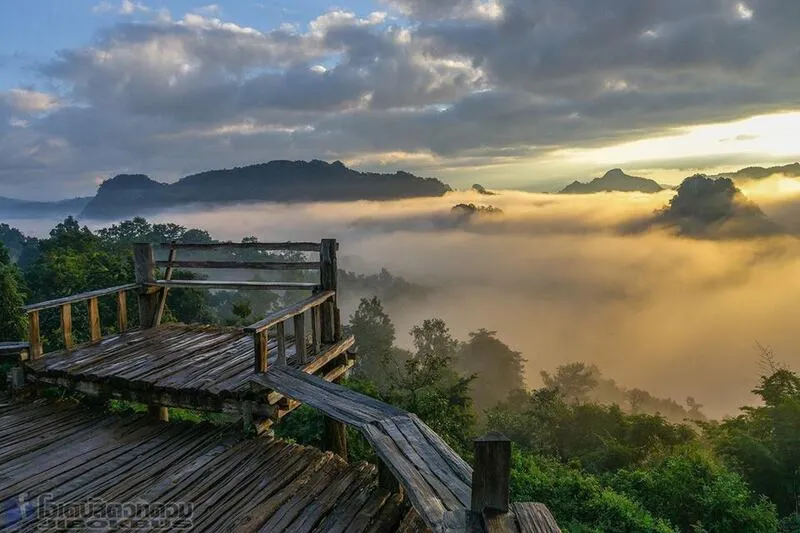
The village is best known for its sea of mist, especially during the cool season and the transition from the rainy season into winter. Early in the morning, white mist often drifts across the valleys below, framed by layers of limestone mountains that make Pang Mapha so distinctive. This has made Ban Jabo one of the most popular viewpoints in the district. Many visitors choose to stay overnight because the most magical atmosphere appears at dawn, when the mountains, clouds, and village all come together in one unforgettable scene.
Ban Jabo is also widely known for its Lahu cultural identity. The villagers have continued to use their Lahu language and traditional clothing, and the atmosphere of the village still reflects this heritage clearly. For travelers interested in ethnic culture, Ban Jabo is far more than a scenic viewpoint. It is a place where culture is still lived rather than staged. That makes every walk through the village, every meal, and every conversation feel more meaningful.
Food is another major part of the Ban Jabo experience. The village is famous for the Hanging-Leg Noodle Shop, a simple but iconic local restaurant where visitors can enjoy a bowl of noodles while looking out over the mountains. The experience is memorable because it combines village hospitality, modest local prices, and panoramic scenery. In addition, Ban Jabo has several small cafés and local food spots where travelers can sit, drink coffee, and absorb the slow mountain atmosphere.
For those who want to spend more time here, homestays and small accommodations are part of the charm. Staying overnight allows visitors to see Ban Jabo in different moods: the cool evening light, the silence of night in the mountains, and the extraordinary dawn mist that has made the village famous. Homestays, tented stays, and simple community lodgings make it possible to enjoy the village in a way that feels intimate and grounded.
Ban Jabo is also an excellent base for wider exploration around Pang Mapha. Travelers can combine it with nearby attractions such as Ban Bo Krai, Kiko Kho Viewpoint, Tham Nam Lod, and Pang Mapha town. This makes the village suitable both as a destination in its own right and as part of a longer mountain itinerary through Mae Hong Son.
The atmosphere of Ban Jabo is especially suitable for travelers who enjoy slow travel. Rather than rushing from spot to spot, visitors can simply walk through the village, stop for coffee, enjoy the view, and observe everyday life. That is where the real beauty of Ban Jabo lies. It is a place that encourages people to pause, breathe, and appreciate simple mountain life without hurry.
Getting There Ban Jabo is easiest to reach by private car or rental vehicle via Highway 1095, the scenic Pai–Mae Hong Son route. It is about 55 km from Pai and around 60 km from Mae Hong Son town. Because the road follows mountain terrain, careful driving is recommended, especially in rainy or foggy conditions. The location also makes it easy to combine Ban Jabo with several nearby attractions in Pang Mapha in a one-day or overnight itinerary.
In summary, Ban Jabo is one of the most rewarding places to visit in Mae Hong Son for travelers who want more than a beautiful view. It offers mountain scenery, sea of mist, Lahu cultural identity, local food, community stays, and a strong sense of place. For anyone visiting Pang Mapha, Ban Jabo deserves a clear place on the travel plan.
| Name | Ban Jabo |
| Summary | A Lahu community in Pang Mapha known for sea of mist views, mountain scenery, village culture, hanging-leg noodles, and homestay stays |
| Location | Moo 4, Pang Mapha Subdistrict, Pang Mapha District, Mae Hong Son |
| Coordinates | 19.5844572, 98.2066031 |
| Highlights | Sea of mist, limestone mountain views, Lahu community life, hanging-leg noodle shop, cafés, and mountain homestays |
| History | Established as a community in 1978 by Lahu migrants from Huai Yao under Mr. Jabo Prainetitham and officially recognized as a village in 1989 |
| Name Origin | The village was named after Mr. Jabo Prainetitham, the leader of the community’s migration and settlement |
| Distinctive Features | A real Lahu village that continues to preserve its language, traditional dress, and mountain way of life |
| Travel Information | Accessible by Highway 1095, about 55 km from Pai and around 60 km from Mae Hong Son town |
| Current Status | An active community-based tourism village that remains open to visitors |
| Open Days | Open Daily |
| Opening Hours | Can Be Visited Throughout The Day |
| Facilities | Restaurants, cafés, homestays, camping stays, and scenic village viewpoints |
| Caretaker | Ban Jabo Community-Based Conservation Tourism |
| Main Contact Number | 080-677-5794 |
| Nearby Tourist Attractions | 1. Ban Jabo Viewpoint 300 m 2. Ban Bo Krai 12 km 3. Kiko Kho Viewpoint, Ban Huai Hia 12 km 4. Tham Nam Lod 24 km 5. Pang Mapha Town Area 13 km |
| Nearby Restaurants | 1. Dek Doi Coffee 100 m. Tel. 097-948-8346 2. Sao Lahu Coffee 200 m. Tel. 099-240-4859 3. Hanging-Leg Noodle Ban Jabo 300 m. Tel. 096-195-2685 4. Ban Kaew Mora 9 km. Tel. 081-765-2144 5. Ban Suan Nam Lang & Doi Coff 417 Cafe & Restaurant 9 km. Tel. 081-714-7186 |
| Nearby Accommodations | 1. Ban Ja Kaisae Homestay 200 m. Tel. 095-257-9949 2. Ban Phak Jai Jabo 300 m. Tel. 083-487-3223 3. Ban Phu Yai Homestay 300 m. Tel. 099-894-6196, 099-894-6256 4. Fah Sai Homestay 300 m. Tel. 099-240-4859 5. Jatho Camping & Homestay 500 m. Tel. 086-420-7357 |
Frequently Asked Questions (FAQ)
Q: What is Ban Jabo famous for?
A: Ban Jabo is famous for its sea of mist, mountain scenery, Lahu village atmosphere, and the well-known hanging-leg noodle restaurant.
Q: Is Ban Jabo worth staying overnight?
A: Yes. Staying overnight is the best way to experience the early-morning mist and the quiet mountain atmosphere of the village.
Q: What ethnic community lives in Ban Jabo?
A: Ban Jabo is a Lahu community that continues to preserve its language and traditional clothing.
Q: Is Ban Jabo easy to reach?
A: Yes. It can be reached by road via Highway 1095 from either Pai or Mae Hong Son, although careful driving is recommended on mountain roads.
Q: When is the best time to visit Ban Jabo?
A: The most popular time is from late rainy season into winter, when the weather is cool and sea of mist conditions are at their best.
Q: Are there other attractions near Ban Jabo?
A: Yes. Nearby places include Ban Bo Krai, Kiko Kho Viewpoint, Tham Nam Lod, and other attractions in the Pang Mapha area.
 Category: ●Suburban Living
 Group: ●Village, Community
Last Update : 6 MonthAgo
 Last Update : 6 MonthAgo
 Click to Access the Navigation Map GPS
 Art, Culture and Heritage
 Historical Sites and Monuments(1)
 Landmarks and Memorials(1)
 Art, Craft Centres, Tradition(10)
 Museums(3)
 Educational Places
 Educational Gardens, Farm(1)
 Places of Worship
 Temple(81)
 Other Sacred Sites(3)
 Research and Development
 Royal Project(4)
Village, Community(19)
Royal Project(4)
Village, Community(19)
 Local Market(4)
 Nature and Wildlife
 National Parks and Marine Reserves(7)
 Mountain (Doi)(5)
 Dam, Reservoir, Lake(2)
 Waterfalls(12)
 Hot Springs(6)
 Caves(13)
 Flower Field(2)
 River, Canal(3)
 Other natural attractions(1)
 Entertainment and Agricultural
 Farms, Parks and Ecotourism(2)
 Shopping
 Shopping and Night Market(1)
 Travel Articles, Recipes
 Travel Review, Food Review(2)


