
lovethailand home >North Travel Attractions >Mae Hong Son Travel Attractions >Pai >Wiang Tai > Pai District City Pillar
TL;DR: Pai District City Pillar is located at Near Pai District Office, Wiang Tai, Pai District, Mae Hong Son 58130, Thailand, open Daily, hours 06:00 – 18:00.
Pai District City Pillar
Open Days: Daily
Opening Hours: 06:00 – 18:00
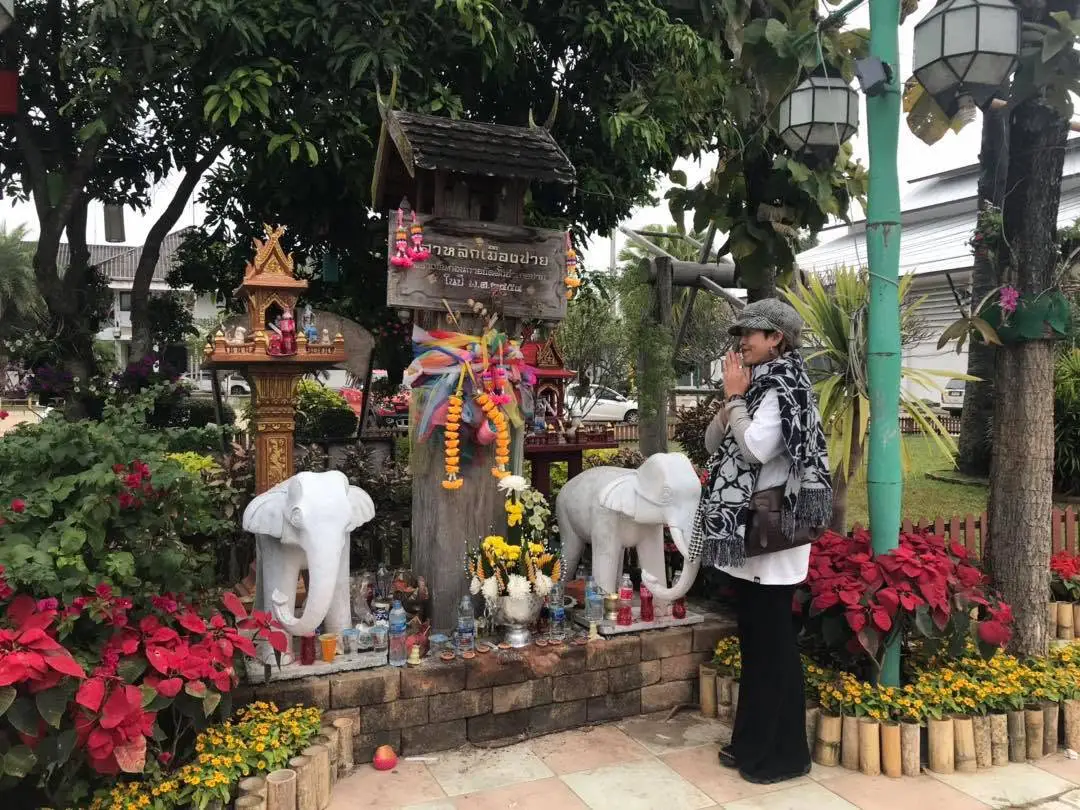
Pai District City Pillar, also known as San Lak Mueang Amphoe Pai, is a historic sacred landmark situated in front of the Pai District Office in Pai town, Mae Hong Son Province, northern Thailand. The site features a wooden city pillar revered by local residents and is closely associated with traditional beliefs about the founding, stability, and spiritual protection of a town. It is also an important cultural landmark connected to Pai's development from a historic settlement in the Lanna region into a modern administrative district.
Today, Pai is best known for its mountain scenery, misty valleys, lively walking street, and relaxed atmosphere. Yet the town possesses a much deeper historical identity than its reputation as a popular travel destination might suggest. The City Pillar is one of the landmarks that connects modern visitors with Pai's earlier communities, its diverse ethnic heritage, and the evolution of local administration over several centuries.
The significance of Pai District City Pillar lies primarily in its cultural symbolism rather than the scale of its architecture. Located within the administrative and commercial heart of town, the pillar represents the relationship between civic identity and traditional spiritual beliefs. For local residents, it is a respected landmark associated with the town's historical foundations. For travelers, it provides an opportunity to discover Pai beyond its cafés, natural attractions, and contemporary tourism scene.
Pai District lies in a mountain basin in Mae Hong Son Province. The surrounding landscape is characterized by forested mountains, river valleys, and fertile lowlands. The Pai River has played an important role in settlement patterns and agricultural development, while routes through the mountains historically connected local communities with Chiang Mai and territories farther west. These geographical characteristics shaped the formation and development of the town.
The Pai River is one of the defining features of the region. Flowing through the valley, it has supported agriculture, transportation, and community life for generations. Settlement along the river provided access to cultivable land and water resources. The importance of the river is reflected in the cultural and historical identity of Pai itself, whose development has remained closely connected with the surrounding landscape.
Pai's early history includes accounts of several ethnic communities settling in the area. Local historical narratives refer to the Phai or Prai people, described as an early population group speaking a language associated with the Austroasiatic family. Archaeological remains, including ruined stupas and religious structures found in parts of Pai District, indicate that organized settlements and religious activity existed here long before the creation of the modern district.
During the period of the Lanna Kingdom, Pai was linked to the political and administrative network of northern towns. These settlements were governed through traditional arrangements that differed substantially from Thailand's present-day provincial and district system. Local leaders maintained relationships with the rulers of Chiang Mai, while mountain routes provided connections between communities and neighboring territories.
Historical accounts identify Khun Sang Pai as an important figure in the town's early development. Local narratives also describe events during the reign of King Mahotraprathet of Chiang Mai, when an investigation of the surrounding territory contributed to the relocation of the town toward more suitable land west of the Pai River. The move was associated with the availability of a broader valley floor that could better support settlement and agriculture.
The names Wiang Nuea and Wiang Tai remain important to the historical geography of Pai. Wiang Nuea is associated with the older settlement area, while Wiang Tai developed into the later center of town. Their continued use preserves the memory of changes in settlement location and demonstrates how Pai's geographical and administrative identity developed over time.
Wiang Tai became an important area for local administration and everyday community activities. Government offices, temples, markets, and roads developed within the surrounding urban district. The position of the City Pillar near the district office therefore has particular cultural meaning, connecting the administrative center of Pai with a traditional symbol of civic stability and spiritual protection.
The year 1911, corresponding to Buddhist Era 2454, is an important milestone in Pai's administrative history. During that year, the traditional town was reorganized as Pai District under the Ministry of Interior. Luang Charoen Khet Khelang Nakhon, also known as Son Sukhumint, was appointed the district's first chief officer. This development formed part of the broader modernization of administrative structures in Thailand during the Rattanakosin period.
The transition from a traditional town to a modern district affected government administration, territorial organization, public services, and the relationship between local communities and the central state. Pai's development during this period was therefore part of wider social and political transformations taking place throughout northern Thailand.
Pai District City Pillar is associated with the historical memory of town establishment and administrative development. Local accounts connect the wooden pillar with the early twentieth century, particularly the period around 1911. The pillar continues to be recognized as a respected civic and spiritual landmark. Its significance is found in its symbolic association with the town's foundations and the traditions preserved by local people.
In Thai culture, establishing a city pillar is connected with the traditional concept of founding and organizing a settlement. The pillar represents a symbolic center for the community and expresses ideas of security, stability, continuity, and prosperity. The tradition also reflects spiritual beliefs concerning sacred guardians responsible for protecting the town and its residents.
The meaning of a city pillar goes beyond the physical object. It also represents a community's attachment to its homeland and shared history. Sacred civic landmarks provide a connection between generations by preserving customs, collective memories, and cultural values. Even as a town changes economically and socially, its city pillar can remain an enduring symbol of local identity.
For people in Pai, traditional beliefs surrounding the City Pillar are connected with respect for the sacred protection of the community. Worshippers may pay their respects and offer prayers for blessings according to personal beliefs. The practice expresses both individual devotion and a wider sense of belonging to the town.
Respect for city pillars forms part of a wider tradition of guardian-spirit beliefs found across northern Thailand. Lanna cultural practices include reverence for protective spirits associated with houses, villages, towns, and territories. These beliefs have historically expressed ideas of communal well-being and harmony with the surrounding environment. Such traditions provide important cultural context for understanding the meaning of Pai's City Pillar.
Traditional spiritual beliefs in northern Thailand have also developed alongside Theravada Buddhism. Many communities maintain Buddhist temples as well as other sacred places associated with local protective spirits. Worship at a city pillar therefore differs from Buddhist merit-making at a temple, although both may form part of the wider religious life of the same community.
Pai District City Pillar is not a Buddhist temple. Unlike a temple complex containing an ordination hall, viharn, or stupa, this landmark centers on the city pillar itself and the space used for paying respect. Visitors interested in Buddhist architecture can explore nearby historic temples in Wiang Tai and Wiang Nuea as part of the same cultural itinerary.
The City Pillar stands near the Pai District Office in the urban center. Its location makes the relationship between traditional spiritual symbolism and public administration particularly visible. Unlike large city pillar shrines in some Thai provincial capitals, Pai's landmark is relatively modest. The importance of the site is therefore cultural and historical rather than architectural grandeur.
The wooden construction of the City Pillar is one of its distinctive features. Timber has long played an important role in northern Thai building traditions, including houses, temples, administrative structures, and ceremonial objects. This use of wood reflects the region's historical relationship with forest resources and traditional construction methods.
When studying historical places, the physical object, location, and community narratives all contribute to an understanding of their significance. Sacred structures may be maintained or repaired over successive generations. Pai's City Pillar is important as an enduring cultural landmark associated with community memory, not simply as an object whose value depends on its physical age or size.
Pai has a diverse ethnic heritage reflected in its languages, food, architecture, festivals, and religious traditions. Northern Thai or Tai Yuan, Shan, Karen, and other communities have contributed to the settlement and development of the valley. This diversity is an essential part of the cultural landscape surrounding the town.
Lanna cultural influences can be seen in local Buddhist temples, religious artwork, Buddha images, and traditional festivals. Shan communities have also contributed distinctive architectural styles and ceremonial customs connected with the cultural world extending westward toward Myanmar. These influences remain visible in various settlements and temples throughout Pai District.
The City Pillar therefore offers a starting point for exploring several dimensions of Pai's history, including geography, settlement patterns, political administration, ethnic diversity, and the development of tourism. Guardian-spirit beliefs provide one of the cultural links connecting these historical experiences with the town's present-day identity.
Pai became increasingly prominent as a travel destination during the late twentieth century. Improved road connections and growing interest in mountain landscapes brought more visitors into the valley. What had previously been a small agricultural and administrative town gradually developed into a destination with guesthouses, restaurants, cafés, and tourism-related businesses.
Despite the expansion of tourism, Wiang Tai continues to contain important landmarks associated with the town's earlier community life. Government offices, temples, markets, and traditional streets remain part of the local landscape. The City Pillar is one of the reminders that central Pai had administrative and spiritual significance before tourism became a major economic activity.
The atmosphere of Pai changes noticeably throughout the day. During daylight hours, local businesses and public offices serve the daily needs of residents. In the evening, the walking-street area becomes a lively center of tourism, food, shopping, and entertainment. The City Pillar exists within this changing urban environment, where traditional community life and contemporary tourism operate side by side.
Visiting the City Pillar can be meaningful for travelers interested in local culture. It demonstrates that spiritual heritage is preserved not only in famous temples or monumental buildings but also in smaller places that hold significance for residents. Understanding the cultural role of such landmarks offers a more complete perspective on the history and character of Pai.
Visitors should approach the City Pillar respectfully. A quiet greeting or prayer is appropriate for those who wish to observe local traditions. The surrounding area should be kept clean, and visitors should avoid blocking access or touching the pillar unnecessarily. Respectful behavior is especially important because the site remains associated with local spiritual beliefs.
As the landmark is near a government office, visitors should distinguish between the publicly accessible surroundings and administrative buildings that may have separate access requirements. Following signs and respecting the activities of local officials helps ensure that a visit does not disrupt the operation of the district office.
Pai District City Pillar is especially suitable for travelers who enjoy exploring a town on foot and discovering landmarks beyond the most familiar tourist attractions. Its location makes it possible to combine a cultural visit with the exploration of nearby temples, markets, and historic streets.
Wat Klang is one of the important temples in central Pai. Located close to the walking-street area, it forms part of the town's active Buddhist community. Its traditional religious setting and northern architectural influences provide a valuable contrast with the civic and guardian-spirit significance of the City Pillar.
Wat Luang is another important Buddhist temple in Wiang Tai. It is closely connected with the religious life of the town and lies within the broader central Pai area. Visiting the temple together with the City Pillar offers an opportunity to appreciate the different roles of Buddhist institutions and sacred civic landmarks.
Pai Walking Street is located along Chai Songkhram Road in Wiang Tai and is one of the best-known evening attractions in the district. The area offers food stalls, cafés, handicrafts, souvenirs, and a lively atmosphere that attracts Thai and international visitors. A daytime visit to the City Pillar can easily be combined with an evening walk through the market.
The Walking Street is interesting not only as a shopping destination but also as an expression of the town's changing economy. Northern Thai food, international cuisine, local crafts, and seasonal entertainment coexist in the same area. The lively setting brings together residents and travelers from different cultural backgrounds.
Wat Nam Hu is another important religious destination for visitors interested in Pai's history and Buddhist traditions. The temple is renowned for its revered Buddha image, Luang Pho Un Mueang, and has long been associated with local religious narratives. Visiting Wat Nam Hu offers a deeper perspective on the spiritual heritage of Pai.
The temple is located outside the immediate center of town. Luang Pho Un Mueang is the principal object of devotion and is closely connected with local religious memory. The temple illustrates how Pai's cultural identity includes a variety of sacred places with distinct historical associations.
Wat Phra That Mae Yen is an important hilltop Buddhist landmark to the east of central Pai. The site is particularly well known for its large white Buddha image and panoramic views over the valley. It combines Buddhist worship with an opportunity to appreciate Pai's geographical setting.
From the elevated temple area, visitors can see settlements, fields, and mountains surrounding the town. The landscape helps explain why the fertile river valley was suitable for settlement. When viewed alongside the history of Wiang Nuea and Wiang Tai, it offers insight into the relationship between geography and urban development.
Santichon Village is another distinctive cultural attraction in Pai District. Associated with a Yunnanese Chinese community, the village features cultural activities and food reflecting its heritage. Visiting Santichon reveals another dimension of ethnic diversity and migration within the Pai Valley.
Yun Lai Viewpoint is situated on higher ground above Santichon Village. It is particularly popular for sunrise views and the sea of mist that appears during favorable weather conditions. The viewpoint provides a broad perspective over the valley and surrounding mountains, making it useful for understanding Pai's natural landscape.
Another major natural attraction is Pai Canyon, locally known as Kong Lan. The area features narrow earthen ridges and gullies formed by erosion. Walking paths and viewpoints provide panoramic views of the surrounding countryside, especially during the late afternoon and sunset hours.
Pai Memorial Bridge is associated with the district's history during World War II. The location relates to transportation routes used by Japanese military forces during the war. Today, it is a popular historical attraction and offers another perspective on Pai's role in events beyond its traditional Lanna heritage.
Viewed together, the City Pillar, historic temples, and Memorial Bridge illustrate different stages in Pai's development. These range from early settlements and Lanna-era administration through nineteenth- and twentieth-century political changes to wartime history and the growth of modern tourism. Each landmark contributes a different part of the town's historical narrative.
Food is another important aspect of Pai's cultural life. Restaurants in Wiang Tai serve northern Thai dishes, khao soi, noodles, familiar Thai meals, and international cuisine. The diversity of food reflects the coexistence of traditional local communities and tourism-related businesses.
Popular dining options in central Pai include Nong Beer Restaurant, Charlie & Lek, Na's Kitchen, and Sapah Muang Pai. The town also offers vegetarian restaurants, cafés, and informal eateries that cater to travelers from different countries. These establishments are concentrated within and around the town center.
Accommodation in Pai includes guesthouses, small hotels, boutique resorts, and riverside properties. Many travelers stay overnight so they can explore Walking Street in the evening before visiting temples and natural attractions outside town the following day.
Examples of accommodation in Pai include Pai Village Boutique Resort, Rim Pai Cottage, Baan Pai Nai Wieng, and other properties along the Pai River. These options cater to different preferences, from centrally located rooms within walking distance of shops and restaurants to quieter riverside retreats.
Exploring the central area on foot allows visitors to experience Pai more closely. Traditional streets, local markets, temples, and government buildings reveal different layers of town life. The City Pillar can serve as one of the stops on a cultural walk through Wiang Tai.
During the cool season, Pai attracts many travelers seeking pleasant mountain weather and scenic viewpoints. The rainy season brings lush green landscapes, while the hotter months create a different atmosphere across the valley. The City Pillar can be incorporated into a town visit during different seasons, with consideration for local conditions and access to the surrounding government area.
Preserving smaller historic landmarks is important because cultural value is not determined by size or international recognition. Places such as Pai District City Pillar contribute to local memory and identity. Respecting these landmarks helps maintain an understanding of the community's past and the beliefs that remain meaningful to its residents.
For students and travelers interested in local history, the City Pillar provides a starting point for examining the town's establishment, administration, and spiritual traditions. Its significance becomes clearer when studied alongside the history of Wiang Nuea, Wiang Tai, and Pai's reorganization as a district in 1911.
The City Pillar also illustrates the contrast between Pai's historical foundations and its modern identity as a tourist destination. Restaurants, guesthouses, and contemporary activities have transformed the town, yet older landmarks continue to provide evidence of its administrative and cultural past.
Getting There Pai District City Pillar is situated near the Pai District Office in Wiang Tai, Pai District, Mae Hong Son Province. Travelers driving from Chiang Mai can take Highway 107 through Mae Rim and Mae Taeng before joining Highway 1095, which crosses the mountainous terrain toward Pai. After reaching the town center, follow directions to the district office and the City Pillar.
The road from Chiang Mai to Pai features numerous mountain curves, requiring careful driving, especially during rain or periods of reduced visibility. Travelers using public transportation can take a bus or minivan service to Pai and continue from the town's transport area to the City Pillar.
Visitors staying near Pai Walking Street can reach the general City Pillar area through the streets of Wiang Tai. The surrounding district includes shops, community facilities, and historical landmarks. Searching for San Lak Mueang Amphoe Pai on a navigation service provides a direct location reference.
Several sightseeing routes can be organized from the City Pillar. Cultural travelers can visit Wat Klang, Wat Luang, and Wat Nam Hu, while those interested in landscapes can continue to Wat Phra That Mae Yen, Yun Lai Viewpoint, and Pai Canyon. The day can conclude with a visit to Pai Walking Street.
For families, combining the City Pillar with temples and historical places offers an educational introduction to local community life. Younger visitors can learn about the meaning of a city pillar, the historical relationship between Wiang Nuea and Wiang Tai, and the role of Buddhism in northern Thai society.
Travelers interested in Lanna culture can use the City Pillar as a starting point for understanding the relationship between guardian-spirit beliefs and Buddhist religious traditions. Northern Thai culture includes both temple-based ceremonies and community practices associated with local protective spirits, each contributing to the region's cultural diversity.
The importance of Pai District City Pillar lies in the connection it creates between the town and its people. Its meaning embraces settlement history, administrative development, and the belief in sacred protection. Although physically modest, the landmark contributes to the cultural heritage of Pai and demonstrates that local history is preserved through symbols as well as buildings and written records.
Pai District City Pillar is therefore a meaningful destination for travelers who wish to understand Pai beyond its mountain scenery and leisure attractions. The wooden pillar, its location near the district's administrative center, and its connection with the history of Wiang Nuea and Wiang Tai all provide insight into the historical and cultural foundations of Pai District, Mae Hong Son Province.
| Name | Pai District City Pillar (San Lak Mueang Amphoe Pai) |
| Type | Sacred Civic Landmark and Local Historical Site |
| Location | Near Pai District Office, Wiang Tai, Pai District, Mae Hong Son 58130, Thailand |
| Map Reference | Plus Code 9C5Q+FV8, Pai, Mae Hong Son |
| Distinctive Features | Traditional Wooden City Pillar Located Near the District's Administrative Center |
| Cultural Significance | A Respected Symbol of the Town's Foundations, Civic Stability and Community Identity |
| Historical Context | History of Wiang Nuea and Wiang Tai and the Reorganization of Pai as a District in 1911 |
| Main Features | Wooden City Pillar and Worship Area |
| Main Areas | 1. City Pillar Area 2. Worship Space 3. Surroundings Near Pai District Office |
| Getting There | Take Highways 107 and 1095 from Chiang Mai to Central Pai, Then Continue to the District Office Area |
| Attractions in Pai and Surrounding Areas | 1. Wat Klang, Central Pai 2. Wat Luang, Central Pai 3. Pai Walking Street, Chai Songkhram Road 4. Wat Nam Hu, Outside Central Pai 5. Wat Phra That Mae Yen, Mae Hi 6. Santichon Village 7. Yun Lai Viewpoint 8. Pai Canyon (Kong Lan) |
| Restaurants in Pai Town | 1. Nong Beer Restaurant, Tel. +66 53 699 103 2. Charlie & Lek, Tel. +66 81 733 9055 3. Na's Kitchen, Tel. +66 81 387 0234 4. Joy's Place, Tel. +66 63 106 3895 5. Sapah Muang Pai, Tel. +66 98 947 1948 6. Ganita Cafe, Tel. +66 65 010 7581 |
| Accommodations in Pai Town | 1. Pai Village Boutique Resort, Tel. +66 53 698 152 2. Rim Pai Cottage, Tel. +66 53 699 133 3. Baan Pai Nai Wieng, Tel. +66 61 623 4693 4. The Riverfront Reserve Pai, Tel. +66 88 404 9211 |
Frequently Asked Questions (FAQ)
Q: Where is Pai District City Pillar located?
A: It is located near the Pai District Office in Wiang Tai, Pai District, Mae Hong Son Province 58130, northern Thailand.
Q: Why is Pai District City Pillar important?
A: It is a sacred civic landmark associated with traditional beliefs about the founding, stability, and spiritual protection of Pai.
Q: What material is Pai District City Pillar made from?
A: The city pillar is made of wood, one of its distinctive characteristics.
Q: When was Pai District City Pillar established?
A: Local historical accounts associate the pillar with the early twentieth century. The year 1911 is an important date in Pai's administrative history because the town was reorganized as a modern district and its first district officer was appointed.
Q: How is the City Pillar connected with Wiang Tai?
A: The pillar stands in Wiang Tai, the area that developed into Pai's modern administrative and commercial center following the earlier settlement period associated with Wiang Nuea.
Q: What attractions can visitors combine with a trip to Pai District City Pillar?
A: Popular nearby and surrounding attractions include Wat Klang, Wat Luang, Pai Walking Street, Wat Nam Hu, Wat Phra That Mae Yen, Yun Lai Viewpoint, and Pai Canyon.
Q: How can travelers reach Pai District City Pillar from Chiang Mai?
A: Travel via Highway 107 and Highway 1095 to Pai town, then continue to the area near Pai District Office.
Q: What type of travelers would enjoy visiting Pai District City Pillar?
A: The landmark is particularly suitable for visitors interested in local history, traditional spiritual beliefs, Lanna culture, and exploring the historic center of Pai.
 Category: ●Places of Worship
 Group: ●Other Sacred Sites
Last Update : 5 DayAgo
 Last Update : 5 DayAgo
 Click to Access the Navigation Map GPS
Pai District City Pillar Map
Recommend

 Art, Culture and Heritage
 Historical Sites and Monuments(1)
 Landmarks and Memorials(1)
 Art, Craft Centres, Tradition(10)
 Museums(3)
 Educational Places
 Educational Gardens, Farm(1)
 Temple(81)
Other Sacred Sites(3)
 Research and Development
 Royal Project(4)
 Suburban Living
 Village, Community(19)
 Local Market(4)
 Nature and Wildlife
 National Parks and Marine Reserves(7)
 Mountain (Doi)(5)
 Dam, Reservoir, Lake(2)
 Waterfalls(12)
 Hot Springs(6)
 Caves(13)
 Flower Field(2)
 River, Canal(3)
 Other natural attractions(1)
 Entertainment and Agricultural
 Farms, Parks and Ecotourism(2)
 Shopping
 Shopping and Night Market(1)
 Travel Articles, Recipes
 Travel Review, Food Review(2)


