
lovethailand home >North Travel Attractions >Lamphun Travel Attractions >Muang Lamphun >Nai Muang > Hariphunchai Relic Water-Pouring Festival
TL;DR: Hariphunchai Relic Water-Pouring Festival, Lamphun attractions : Art, Culture and Heritage, Art, Craft Centres, Tradition.
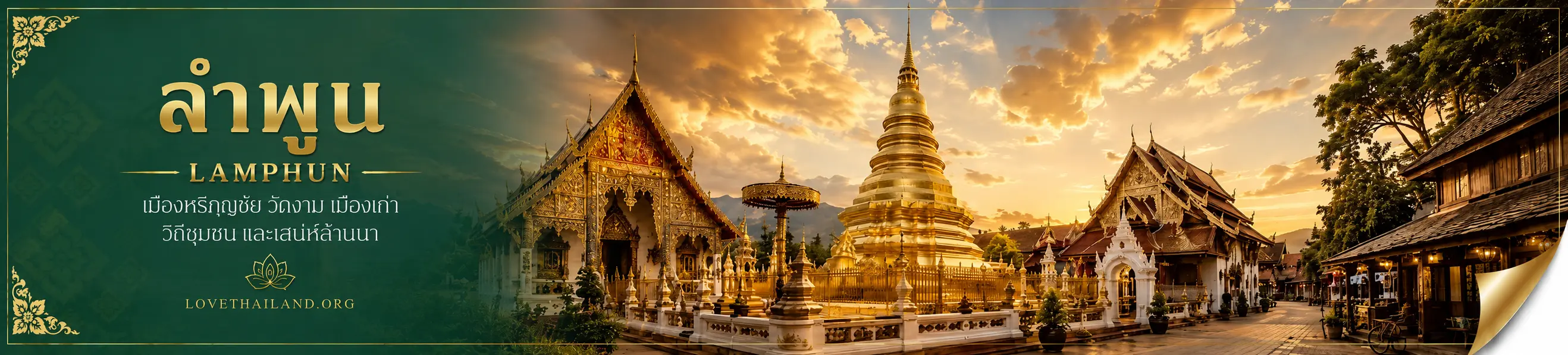
Hariphunchai Relic Water-Pouring Festival

Open Days: Held Annually On The Full Moon Day Of The Northern Eighth Lunar Month
Opening Hours: The Main Water-Pouring Ceremony Begins In The Afternoon
The Hariphunchai Relic Water-Pouring Festival, locally known as Paet Peng, is one of Lamphun’s most important Buddhist and cultural traditions. The festival takes place at Wat Phra That Hariphunchai Woramahawihan in Mueang Lamphun District on the full moon day of the northern eighth lunar month, which corresponds to the full moon day of the sixth lunar month in the central Thai calendar. It is a deeply meaningful ceremony dedicated to paying homage to Phra That Hariphunchai, the sacred relic pagoda that has long stood at the spiritual heart of Lamphun.
Phra That Hariphunchai is one of the most revered Buddhist monuments in northern Thailand and a major symbol of the ancient Hariphunchai kingdom. For local people, the pagoda is not only a sacred Buddhist site but also a spiritual pillar of the city. The annual water-pouring ceremony is therefore both an act of devotion to the Buddha’s relics and a collective merit-making ritual for the wellbeing of Lamphun and its people.
The sacred water used in the ceremony carries special meaning. It includes royal ceremonial water, sacred water from Doi Khamo, water offered by devotees, and, in the present-day festival, sacred water from districts across Lamphun Province. This combination symbolizes the unity of the monastic community, government agencies, local residents, and pilgrims who come together to honor the relic pagoda.
An important ritual begins on the thirteenth waxing moon day, when wooden posts are set up for the rope system used to pull the water vessel upward toward the pagoda. Local people call these posts “sao kang nam.” According to local belief, rain often falls around this ritual, and many people interpret it as a sign that celestial beings have come to bathe the relic pagoda before humans. After the festival, the posts are removed and kept for future ceremonies.
On the full moon day, the main ceremony begins in the afternoon with a procession carrying royal ceremonial water, offerings, sacred water from Doi Khamo, and sacred water from Lamphun’s districts to Wat Phra That Hariphunchai Woramahawihan. The procession includes provincial officials, students, local people, devotees, and cultural groups. Once the procession reaches the temple, senior monks lead the religious chanting before the formal water-pouring ceremony begins.
The royal ceremonial water is offered first, followed by water from the public. When the vessel is filled, devotees help pull the rope so that the water vessel rises toward the pagoda. Men dressed in white receive the water near the pagoda and use it to bathe the sacred structure. The ceremony continues steadily until late afternoon, creating a powerful atmosphere of devotion and collective participation.
Paet Peng is not only a religious ceremony. It is also a living expression of Lanna culture. Visitors can see traditional drum performances, local dances, offering processions, Lanna-style clothing, and the gathering of families and communities from different areas. The festival reflects faith, gratitude, unity, and the continued preservation of Lamphun’s Buddhist and cultural identity.
Getting There is convenient because Wat Phra That Hariphunchai Woramahawihan is located in Mueang Lamphun District. Travelers from Chiang Mai can follow the Chiang Mai–Lamphun route into Lamphun city. Those traveling by train can get off at Lamphun Railway Station and continue to the temple by local transport. During the festival period, visitors should allow extra travel time because the area around the temple and city center can be crowded.
Visitors should dress respectfully, keep quiet within the temple grounds, and follow instructions from temple staff and local authorities. Traditional Lanna clothing is welcome when appropriate. It is also important not to block the procession route or ceremonial areas so that the ritual can proceed smoothly and respectfully.
| Festival Name | Hariphunchai Relic Water-Pouring Festival / Paet Peng Festival |
| Location | Wat Phra That Hariphunchai Woramahawihan, Mueang Lamphun District, Lamphun Province |
| Period | Full moon day of the northern eighth lunar month, corresponding to the full moon day of the sixth lunar month in the central Thai calendar |
| Highlights | Royal ceremonial water procession, sacred water from Doi Khamo, rope-pulled water vessel ritual, traditional drum performances, Lanna dances, and offering processions |
| Significance | A major Buddhist merit-making ceremony honoring Phra That Hariphunchai, the sacred relic pagoda and spiritual landmark of Lamphun |
| Sacred Water Used In The Ceremony | Royal ceremonial water, sacred water from Doi Khamo, sacred water from Lamphun districts, and water offered by devotees |
| Main Rituals | Setting up the sao kang nam posts, ceremonial water procession, Buddhist chanting, and the water-pouring ritual for the sacred relic pagoda |
| Travel Information | Travel to Lamphun city and continue to Wat Phra That Hariphunchai Woramahawihan. By train, get off at Lamphun Railway Station and take local transport to the temple. |
| Visitor Etiquette | Dress respectfully, keep quiet in the temple area, follow official guidance, and avoid blocking the procession route or ceremonial space |
| Nearby Tourist Attractions | 1. Hariphunchai National Museum, about 300 m 2. Wat Chamthewi, about 2 km 3. Queen Chamthewi Monument, about 2 km 4. Wat Mahawan, about 1 km 5. Ku Chang Ku Ma, about 3 km |
| Nearby Restaurants | 1. Khao Soi Ban Yong, about 1 km 2. Larb Kai Ban Hong, about 2 km 3. The Wooden House Lamphun, about 1 km 4. Lamphun Braised Pork Noodle Shop, about 1 km 5. Local Northern Thai Restaurants In Lamphun City, about 1 km |
| Nearby Accommodations | 1. Easy Hotel Lamphun, about 2 km 2. Jamadevi Hotel, about 2 km 3. Look At Home Lamphun, about 5 km 4. Thai Thani Loft & Life Lamphun, about 5 km 5. Grand Pa Hotel & Resort Lamphun, about 4 km |
Frequently Asked Questions (FAQ)
Q: When is the Hariphunchai Relic Water-Pouring Festival held?
A: It is held on the full moon day of the northern eighth lunar month, corresponding to the full moon day of the sixth lunar month in the central Thai calendar.
Q: Where does the Paet Peng Festival take place?
A: It takes place at Wat Phra That Hariphunchai Woramahawihan in Mueang Lamphun District, Lamphun Province.
Q: What water is used in the ceremony?
A: The ceremony uses royal ceremonial water, sacred water from Doi Khamo, sacred water from Lamphun districts, and water offered by devotees.
Q: What is sao kang nam?
A: Sao kang nam refers to the posts used for the rope system that pulls the ceremonial water vessel upward toward the sacred pagoda.
Q: Can travelers join the festival?
A: Yes. Travelers can join respectfully, watch the procession, and take part in the atmosphere of devotion while following temple and official guidance.
Q: What does this festival represent for Lamphun?
A: It represents Buddhist faith, respect for the Buddha’s relics, communal unity, and the preservation of Lanna cultural identity.
 Category: ●Art, Culture and Heritage
 Group: ●Art, Craft Centres, Tradition
Last Update : 6 MonthAgo
 Last Update : 6 MonthAgo
 Click to Access the Navigation Map GPS
Hariphunchai Relic Water-Pouring Festival Map
Recommend

 Historical Sites and Monuments(2)
 Landmarks and Memorials(8)
Art, Craft Centres, Tradition(9)
 Museums(3)
 Historic Homes and Cities(1)
 Places of Worship
 Temple(91)
 Mosque(1)
 Other Sacred Sites(7)
 Research and Development
 Royal Project(1)
 Suburban Living
 Village, Community(13)
 Local Market(3)
 Nature and Wildlife
 National Parks and Marine Reserves(2)
 Mountain (Doi)(1)
 Dam, Reservoir, Lake(13)
 Waterfalls(3)
 Caves(4)
 River, Canal(1)
 Other natural attractions(1)
 Entertainment and Agricultural
 Farms, Parks and Ecotourism(2)
 Waterpark(1)
 Travel Articles, Recipes
 Travel Review, Food Review(1)


