
lovethailand home >North Travel Attractions >Nakhon Sawan Travel Attractions >Muang Nakhon Sawan >Pak Nam Pho > Nakhon Sawan City Pillar Shrine
TL;DR: Nakhon Sawan City Pillar Shrine is located at Ammarin Withi Road, Foot of Khao Kop, Pak Nam Pho, Mueang Nakhon Sawan District, Nakhon Sawan 60000, Thailand, open Daily, hours 07:00 – 17:00.
Nakhon Sawan City Pillar Shrine
Open Days: Daily
Opening Hours: 07:00 – 17:00
Nakhon Sawan City Pillar Shrine is one of the province's most important sacred civic landmarks. Located at the foot of Khao Kop on Ammarin Withi Road, Pak Nam Pho Subdistrict, Mueang Nakhon Sawan District, Nakhon Sawan Province 60000, the shrine stands opposite Nakhon Sawan School and near the Nakhon Sawan City Municipality Office. It houses a city pillar made from the auspicious Ratchaphruek tree, formally erected on January 4, 1974. The shrine holds significance in local history, spiritual beliefs concerning the protection of the town, Thai architecture, and community traditions, particularly the annual City Pillar Shrine celebration held around the Songkran festival.
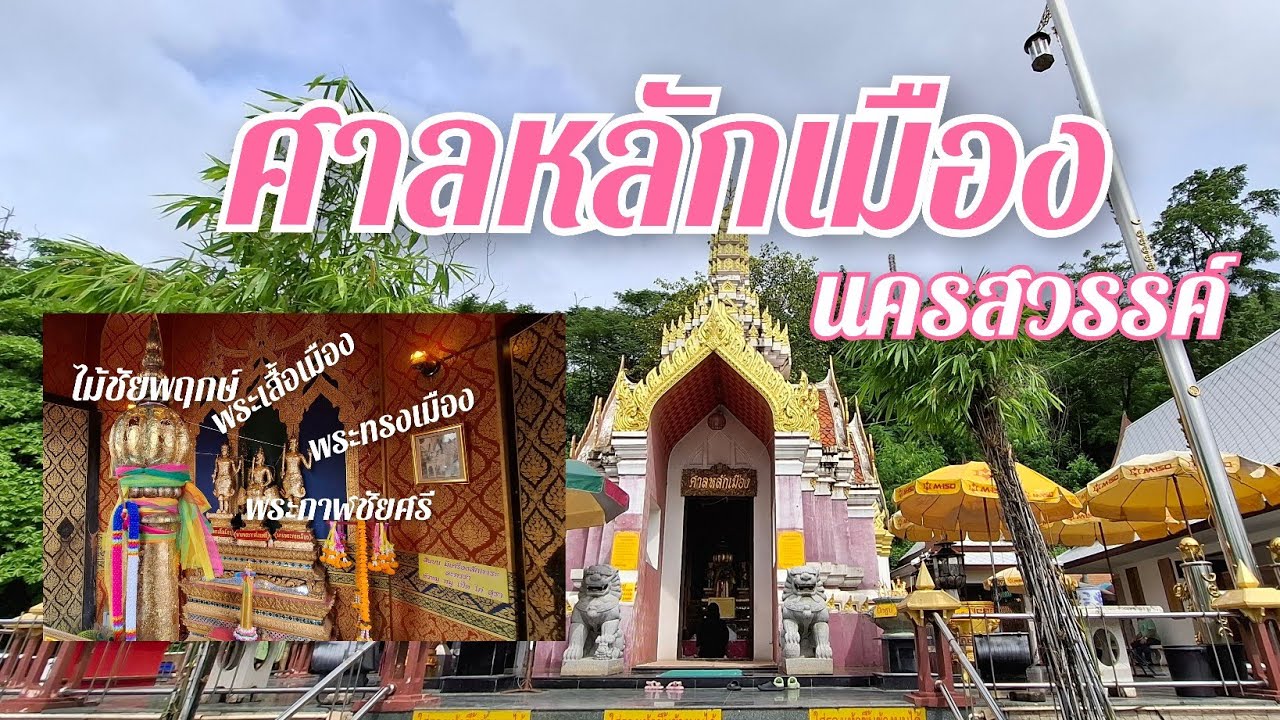
The shrine is distinguished by its Thai-inspired architecture and elevated position at the foot of Khao Kop. Its building features gilded roof ornaments, pinkish-red walls, and decorative Thai motifs. Inside are the city pillar and important guardian deities traditionally associated with the protection of the town, including Phra Suea Mueang, Phra Song Mueang, and Phra Kan Chai Si. Additional shrines and worship spaces are located within the surrounding compound, allowing visitors to discover different expressions of religious and cultural devotion in one location.
The location of Nakhon Sawan City Pillar Shrine is closely connected with the history of the city. Khao Kop is a prominent natural landmark within the urban area, while Pak Nam Pho developed into an important commercial and transportation center near the confluence of the Ping and Nan rivers. The shrine's setting consequently illustrates the relationship between geography, settlement history, and traditional beliefs concerning the spiritual protection and well-being of a community.
Nakhon Sawan is widely known as the City of Four Rivers and as Pak Nam Pho because it is associated with the meeting of major waterways that form the Chao Phraya River. These rivers have played essential roles in settlement, agriculture, trade, and transportation between northern and central Thailand. Nakhon Sawan consequently became an important geographical crossroads, shaped by the movement and settlement of people from different cultural backgrounds.
The historical development of Nakhon Sawan is connected with the system of provincial towns and transport routes between northern territories and the political centers of the Chao Phraya basin. The town functioned as a commercial and transportation point where goods were exchanged and travelers stopped during river journeys. Even after the expansion of road transportation, Nakhon Sawan retained its importance as a regional center. Its city pillar shrine consequently represents a cultural link between the historical town and its modern communities.
The name Pak Nam Pho is associated with the old commercial district near the waterways and markets. In earlier periods, merchants and travelers used the area as a place for exchanging goods, especially when river transportation played a greater role than roads or railways. The resulting cultural diversity contributed to the development of temples, Chinese shrines, traditional markets, and other significant landmarks within the urban area.
Another distinctive aspect of Nakhon Sawan is the close relationship between Thai and Thai-Chinese communities. Chinese merchants and their descendants made important contributions to the local economy and cultural traditions. Their heritage is particularly visible in the famous Pak Nam Pho Chinese New Year celebrations and processions honoring guardian deities. The town's cultural diversity is also reflected in the concentration of Buddhist temples and traditional shrines around the commercial district.
The history of Nakhon Sawan City Pillar Shrine can be traced clearly to the period between 1973 and 1974. The project was initiated during the governorship of Witthaya Kesonsaowaphak, who requested authorization from the Ministry of Interior to construct a provincial city pillar shrine. The initiative was connected with the traditional belief that a city pillar provides a symbolic center for civic stability, good fortune, and communal well-being.
Construction began on March 16, 1973. The project included the careful consideration of architectural form and location. The Fine Arts Department participated in the building's design, while urban planning authorities were involved in the selection of an appropriate site. These arrangements demonstrate that the shrine was developed as an important provincial landmark through a formal planning process rather than simply being established as an informal place of worship.
The selection of a site at the foot of Khao Kop was significant because the hill is a well-known natural feature within Nakhon Sawan. The foothill setting offered a distinctive landscape while remaining accessible from local roads and surrounding communities. It provided an appropriate setting for a sacred civic building intended to represent the province and serve the spiritual needs of its residents.
January 4, 1974, became one of the most important dates in the shrine's history when the city pillar was formally raised and installed. The pillar was made from Ratchaphruek wood, regarded as auspicious in Thai cultural traditions. The ceremony marked the beginning of the shrine's enduring role as a provincial sacred landmark and formed the historical basis for the anniversary celebrations that continue today.
Ratchaphruek, commonly known as the golden shower tree, is associated in Thai culture with prosperity and auspiciousness. Its long clusters of bright yellow flowers are among its most recognizable characteristics. Choosing its wood for the city pillar therefore reflected a cultural understanding of trees as bearers of symbolic meaning. The pillar represents more than a structural wooden post; it is associated with civic identity and the traditional hope for peace and prosperity.
In Thai tradition, a city pillar is connected with the establishment of a settlement and the recognition of its symbolic center. Such pillars are associated with beliefs in sacred guardians who protect the town and its inhabitants. City pillar shrines exist in many provinces, but their histories, materials, designs, and ceremonial traditions differ. Nakhon Sawan's shrine is a comparatively modern foundation with well-documented construction and installation dates.
The shrine's importance extends beyond its physical building or construction materials. It also contributes to the collective memory of the people of Nakhon Sawan. Having a common place where residents can pay their respects on significant occasions helps maintain cultural continuity across generations. The city pillar functions as a sacred object, a social symbol, and a reminder of the community's shared attachment to its home.
Within the shrine, Phra Suea Mueang, Phra Song Mueang, and Phra Kan Chai Si are enshrined alongside the city pillar. These sacred figures are associated with the protection of the town according to traditional Thai beliefs. Phra Suea Mueang and Phra Song Mueang represent aspects of guardianship and civic security, while Phra Kan Chai Si is associated with the maintenance of order and protection within the community.
Phra Suea Mueang is traditionally connected with the protection of residents and their property. The belief in a guardian who watches over the town expresses the community's desire for a peaceful environment free from danger and disruption. This concept belongs to a broader system of guardian-spirit beliefs that have coexisted with Buddhist practices in Thai society for centuries.
Phra Song Mueang is associated with the stability and orderly condition of the town. In cultural terms, the presence of a civic guardian emphasizes social unity and the importance of respecting the community and its surroundings. Devotion to Phra Song Mueang thus reflects a relationship between spiritual security and a sense of belonging.
Phra Kan Chai Si is another important guardian figure represented within the shrine. The presence of several sacred figures does not mean that there are multiple city pillars. Instead, different deities are brought together in a common worship space. Visitors can therefore distinguish between the city pillar as a civic symbol and the guardian figures with their particular ceremonial meanings.
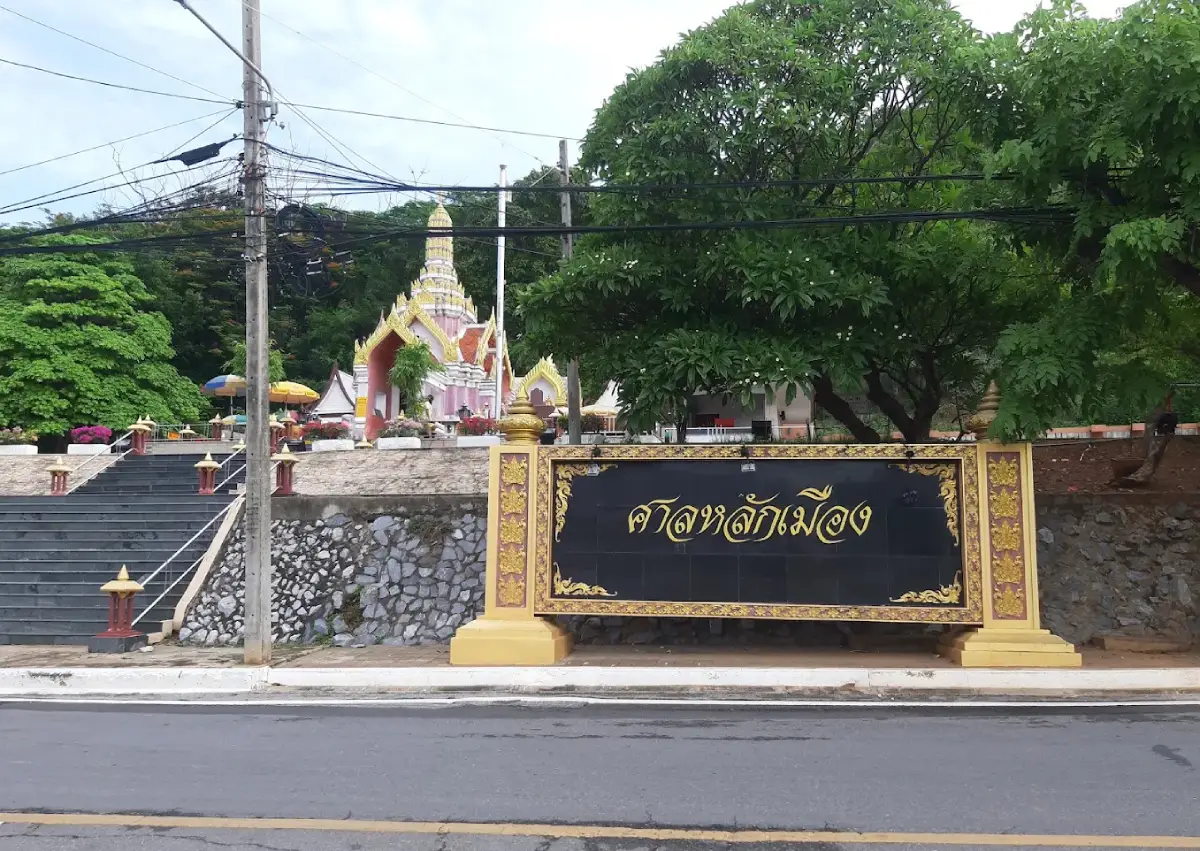
The shrine's architecture draws upon traditional Thai forms adapted for a modern civic sacred building. It stands on a raised platform approached by steps, with gilded ornamental details and a tall central roof structure. Viewed from the front, the building is framed by vegetation and the natural hillside, creating a setting that differs from city pillar shrines located among densely packed commercial buildings.
The pinkish-red walls contrast with the gold-colored roof decorations, emphasizing the shrine's Thai-inspired architectural appearance. The ornamentation communicates dignity and respect appropriate to a sacred building. The elevated forecourt and approach steps also help separate the worship area from the street and surrounding urban movement.
Inside the main building, red and gold decorative patterns create a richly ornamented atmosphere. The central area houses the city pillar and other revered sacred objects. Worshippers commonly approach the shrine with a wai, offer prayers, and present appropriate offerings. The interior is therefore designed primarily as an active devotional setting rather than as a conventional exhibition space.
The entrance area features a prominent sign identifying the City Pillar Shrine, together with steps and an open forecourt. The sign establishes the shrine's identity, while the forecourt provides room for visitors and ceremonial activities. The position of the building on the foothill gives the site a dignified appearance and creates a sense of separation from the nearby roads.
Behind the main shrine are several buildings dedicated to sacred figures associated with the beliefs of local communities. One of these is the hall of Ksitigarbha Bodhisattva, a revered figure in Mahayana Buddhist traditions known for a compassionate vow to assist sentient beings. The presence of this hall reflects the religious diversity of Nakhon Sawan, particularly the cultural contributions of Thai-Chinese communities in Pak Nam Pho.
Another devotional space is dedicated to Phra Achan Ophasi, a religious figure respected by particular groups of Buddhist devotees. Its presence alongside the City Pillar Shrine illustrates how a sacred compound may bring together devotion to spiritual guardians and reverence for religious teachers. This combination contributes to the distinctive character of the site.
The Phra Chao Ngam Fa Phutthasathit Hall is also listed among the important buildings in the shrine compound. Other devotional areas include halls associated with Maha Thep and various divine guardians, as well as the Phum Thewaphithak Udomkhet Hall, connected with beliefs in protective spirits of the land. Together, these spaces reflect the range of traditions represented within the complex.
The addition of different worship spaces does not diminish the significance of the city pillar. Rather, it demonstrates how a sacred site can develop over time as residents contribute to its religious and cultural life. The compound reveals that communal faith is not confined to a single tradition, but may include different Buddhist and guardian-deity beliefs within the same cultural environment.
The principal areas of Nakhon Sawan City Pillar Shrine include the main city pillar building, the front ceremonial court, the entrance steps, the secondary devotional halls, and the surrounding grounds at the foot of Khao Kop. Each serves a different purpose, from private worship to communal ceremonies and the accommodation of visitors during significant festivals.
The relationship between the shrine and Khao Kop is one of its defining geographical features. Khao Kop is a prominent hill within Nakhon Sawan and contains historic Buddhist religious sites. Views from elevated locations reveal parts of the surrounding city. The presence of the City Pillar Shrine at its base creates a visible relationship between the natural landscape and the religious heritage of the urban area.
Wat Woranat Banphot, also known as Wat Khao Kop, is an important royal Buddhist monastery situated on the hill. It contains a revered chedi and other sacred features. Combining a visit to the temple with the City Pillar Shrine provides an opportunity to understand the difference between Buddhist monastic institutions and a shrine dedicated to the traditional spiritual protection of the town.
Wat Khiriwong is another important destination associated with Khao Kop. The temple is known for its Chulamani Chedi and viewpoints overlooking Nakhon Sawan. From elevated vantage points, visitors can appreciate the relationship between buildings, roads, rivers, and the surrounding landscape. These views provide a geographical perspective on the shrine's foothill location.
Nakhon Sawan Observation Tower is another attraction within the city and forms part of a wider route around Khao Kop. The tower is approximately 32 meters high and contains ten floors, with an upper-level viewpoint overlooking the urban area. The views offer a broad introduction to the city's combination of mountains, rivers, bridges, and neighborhoods.
Observing Nakhon Sawan from above helps explain why the area became such an important transportation center. The city developed close to the meeting point of major rivers and is connected by roads leading toward both northern and central Thailand. These geographical features influenced the growth of commerce and settlement throughout the region.
For visitors interested in the relationship between spiritual beliefs and modern urban development, the City Pillar Shrine provides a clear example of a sacred landmark established during a period of economic and social modernization. Its construction in 1973 and installation ceremony in 1974 took place when Nakhon Sawan was already an important regional center. The project demonstrates that traditional civic symbols continued to have a meaningful role in a changing society.
Today, local residents visit Nakhon Sawan City Pillar Shrine on a variety of occasions, especially around the New Year, public celebrations, and significant personal events. Prayers are traditionally associated with good fortune, protection, progress, and family well-being. At the same time, the deeper cultural meaning of the visit lies in respecting a place regarded as a symbol of the community and its shared identity.
Worship commonly begins with a calm approach to the shrine, followed by a respectful wai or a quiet prayer before the city pillar and guardian figures. Flowers, incense, candles, or other offerings may be used according to the arrangements provided at the site. Visitors should follow any instructions displayed by the shrine or provided by its attendants. Respectful behavior is more important than the quantity or cost of ceremonial offerings.
In Thai cultural traditions, city pillar worship is often associated with important beginnings. Some visitors pay their respects before starting a business, moving to a new home, beginning a journey, or undertaking a major personal commitment. These customs express a wish for auspiciousness and provide a sense of spiritual reassurance. Individual practices may vary according to personal belief and family traditions.
The City Pillar Shrine also plays an important role in community ceremonies, particularly its annual anniversary celebration. The event commemorates the establishment of the shrine and allows residents to participate in traditional acts of worship. It also keeps the memory of the 1974 installation ceremony alive within the cultural life of Pak Nam Pho.
The annual shrine celebration is usually associated with the Songkran period. Specific programs vary from year to year, but activities may include ceremonial bathing of sacred figures, merit-making, sand pagoda construction, cultural performances, and other community gatherings. The event illustrates the close relationship between traditional civic worship and the festive customs of the Thai New Year.
In 2026, the 52nd anniversary celebration of Nakhon Sawan City Pillar Shrine was organized from April 12 to 14. Publicized activities included bathing ceremonies for revered guardian figures, worship at the shrine, sand pagoda construction, Thai traditional clothing, colorful festive attire, local food, and entertainment. These activities demonstrate that the annual celebration functions as both a religious event and a community cultural festival.
The anniversary celebration is significant beyond the number of years since the shrine's founding. It provides opportunities for different generations to participate in customs associated with their hometown. Younger residents can learn the meanings of the city pillar through ceremonies, while older generations maintain practices that have become part of communal memory. The festival therefore helps sustain a shared sense of belonging.
Nakhon Sawan is well known for its diverse cultural celebrations. The Pak Nam Pho Chinese New Year festival reflects the distinctive heritage of the Thai-Chinese community, while the City Pillar Shrine celebration highlights traditional beliefs surrounding the protection of the town. The presence of both festivals demonstrates how different cultural practices can coexist and contribute to the identity of the same city.
Several Chinese shrines are located within Pak Nam Pho and remain important places of worship. One notable example is the Chao Pho Thepharak and Chao Mae Thapthim Shrine, associated with the spiritual traditions of local Thai-Chinese residents. Visiting these places alongside the City Pillar Shrine provides insight into the diversity of the town's religious and cultural landscape.
The Chao Pho Thepharak and Chao Mae Thapthim Shrine has close connections with the historic riverside community. Its traditions are associated with merchant families and people whose livelihoods depended on commerce and river transportation. The relationship between worship, trade, and the waterfront is an important part of Pak Nam Pho's history and remains visible through its local shrines.
The confluence of the Ping and Nan rivers is a defining geographical feature of Nakhon Sawan. These two rivers join to form the Chao Phraya River, which flows southward through central Thailand. Their meeting point has long contributed to the town's importance as a transportation and commercial center. Visiting the confluence provides an opportunity to understand the historical relationship between Nakhon Sawan and Thailand's principal river system.
Pasaan, a modern architectural landmark marking the beginning of the Chao Phraya River, is a popular destination near the confluence. Its contemporary design represents the coming together of water and cultural traditions. Visiting Pasaan adds a geographical and architectural dimension to a cultural journey that begins at the City Pillar Shrine.
Dechatiwong Bridge is another significant landmark associated with transportation across the Chao Phraya River. The bridge reflects the development of road connections and the changing ways in which people move through Nakhon Sawan. Views of the river and bridges illustrate the transformation from predominantly water-based travel toward modern transport networks.
Sawan Park is a major public recreation area in Nakhon Sawan. Its open spaces and landscaped grounds support exercise, leisure activities, and everyday recreation for residents. The park provides a different perspective on the city, demonstrating how modern public spaces coexist with traditional cultural landmarks. A visit to both the shrine and the park offers an introduction to spiritual and recreational aspects of local life.
Bueng Boraphet is an extensive freshwater wetland and one of Nakhon Sawan Province's most important natural attractions. The area has significance for aquatic ecology, water resources, and environmental learning. Its visitor attractions provide opportunities to discover the relationship between the province's urban development and surrounding wetland ecosystems.
For visitors interested in Buddhist history, Wat Khiriwong and Wat Woranat Banphot are particularly suitable destinations to combine with the City Pillar Shrine. Their association with Khao Kop creates a coherent local cultural route. Although the City Pillar Shrine is not a Buddhist monastery and does not have the same religious organization as a temple, visiting these sites together reveals the connections between civic guardian beliefs and Buddhist devotion in Nakhon Sawan.
The shrine's urban location makes it convenient for a short cultural visit. It is close to significant roads and the Pak Nam Pho community, with vehicle access and parking arrangements in the surrounding area. The hillside vegetation provides a degree of shade and creates a more peaceful atmosphere than some of the densely developed commercial streets nearby.
Morning is a pleasant time to visit the shrine, particularly for those wishing to pay their respects in a quieter setting. Temperatures are generally more comfortable than during the middle of the day, while natural light reveals the building's architectural details. Visiting early also allows time to continue toward nearby temples and city attractions.
The afternoon can be used to explore Nakhon Sawan Observation Tower, Sawan Park, or the waterfront. Visitors can begin with the City Pillar Shrine and continue to cultural and scenic destinations throughout the city. Those with additional time can include Pasaan and the Chao Phraya River confluence for a fuller appreciation of Nakhon Sawan's geography.
General admission to Nakhon Sawan City Pillar Shrine is free. Visitors may make voluntary donations or obtain appropriate ceremonial offerings according to their preferences. The shrine is ordinarily open daily from 07:00 to 17:00. During major celebrations, special activities and arrangements may be introduced according to the requirements of the event.
Traditional offerings at sacred places of this kind commonly include flowers, incense, candles, and other devotional items. These should be used only in designated areas and in accordance with the shrine's rules. Particular care is appropriate when using flames or incense near other worshippers and decorative structures.
Visitors should dress respectfully, avoid disruptive noise, and be considerate of other worshippers. Blocking pathways or touching the city pillar and sacred objects without permission should be avoided. Keeping the area clean helps preserve its atmosphere and protects the structures maintained for the community.
Photography can capture the shrine's architecture and the setting at the foot of Khao Kop, but should not interrupt religious activities. Exterior views offer a clear impression of the building's form, while interior photography should be approached with particular consideration for worshippers and any posted restrictions.
Nakhon Sawan City Pillar Shrine is suitable for families, older visitors, and travelers interested in religion, traditional beliefs, and local history. Its accessible urban location makes it convenient for a cultural stop. For younger visitors, the shrine also provides an introduction to the history of a civic landmark, the symbolic use of auspicious wood, and Thai traditions concerning protective guardians.
Learning about the shrine also helps visitors distinguish between different types of sacred places in Thai society. City pillar shrines are associated with the symbolic protection of towns, Buddhist monasteries serve religious and monastic functions, and Chinese shrines preserve traditions associated with Thai-Chinese communities. Although their histories and ceremonies differ, all contribute to the cultural heritage of Nakhon Sawan.
Nakhon Sawan's role as a commercial center helps explain the wide range of food available in Pak Nam Pho. Local restaurants include Thai eateries, Chinese-influenced establishments, fish-ball noodle shops, and restaurants serving northern Thai dishes. This variety reflects both historical trade connections and the movement of people through the region.
Fish balls made from clown knifefish are particularly associated with Nakhon Sawan's food culture. Local restaurants prepare them for noodle soups, fried fish cakes, and other dishes. The use of freshwater fish connects the city's cuisine with its river environment. Sampling these dishes offers another way to experience the identity of Pak Nam Pho beyond its temples and historical landmarks.
Restaurants in the urban area include Na Pha Pla Tod Mun, Lap Ban Kik Kam Kin Mueang, Hia Chai Fish Ball Noodles, Sue Long Chive Dumplings, and E-Tan Riverside. Their menus and settings vary from regional cooking and casual noodles to riverside Thai dining, providing a range of options for visitors exploring the city.
Nakhon Sawan is also an important stopping point for travelers between Bangkok and northern Thailand. The city offers hotels and accommodation in several categories, including business hotels, medium-sized properties, and establishments convenient for travelers using private vehicles. A visit to the City Pillar Shrine can therefore be incorporated into an overnight stay or a longer road journey.
Accommodation options include Aramis Hotel, P.A. Place Hotel, The Paradiso JK Design Hotel, 42C The Chic Hotel, and smaller establishments in the Pak Nam Pho area. These properties are located within the wider urban district and provide access to restaurants, main roads, and the city's attractions.
For travelers spending one day in Nakhon Sawan, a useful cultural route begins at the City Pillar Shrine before continuing to Wat Khiriwong and Nakhon Sawan Observation Tower. The journey can then include Sawan Park and the Chao Phraya River confluence. This combination introduces local beliefs, Buddhist heritage, urban public spaces, and the province's distinctive geography.
Travelers with more time can extend the itinerary to Bueng Boraphet or the Chinese shrines of Pak Nam Pho. These destinations add dimensions of environmental learning, community history, and traditional commerce. Nakhon Sawan thus offers a varied combination of sacred landmarks, cultural heritage, natural attractions, and local cuisine.
Getting There Nakhon Sawan City Pillar Shrine is located on Ammarin Withi Road at the foot of Khao Kop, Pak Nam Pho Subdistrict, Mueang Nakhon Sawan District, Nakhon Sawan Province 60000. It stands opposite Nakhon Sawan School and near the Nakhon Sawan City Municipality Office. Visitors can reach the location by private car, local taxi, or other transportation available within the city. Navigation services can identify the destination by its Thai or English name.
Travelers driving from Bangkok can take Highway 1, also known as Phahonyothin Road, toward Nakhon Sawan. After entering the city, continue toward Pak Nam Pho and Ammarin Withi Road. Private vehicles are convenient for combining the shrine with Khao Kop, Sawan Park, and Pasaan during the same journey.
Visitors arriving by intercity bus can continue from Nakhon Sawan's transport facilities using local transportation. Rail travelers can arrive at Nakhon Sawan Railway Station in the Pak Nam Pho area before continuing toward the city pillar shrine. Although the building stands at the foot of Khao Kop, it remains an urban destination rather than a remote mountain attraction.
Nakhon Sawan City Pillar Shrine represents a civic sacred landmark established through a formal provincial initiative during the 1970s. Construction began in 1973, and the pillar was installed in 1974. Its well-documented history is complemented by annual ceremonies that demonstrate the continued role of the shrine as a place of living faith rather than simply a monument from the past.
The combination of a Ratchaphruek wooden pillar and Thai-inspired architecture illustrates the adaptation of traditional cultural symbols to a modern provincial landmark. The shrine is important not only as a place of worship but also as a record of the ideas and community initiatives that shaped the establishment of sacred civic architecture in Nakhon Sawan.
Although the surrounding city has experienced continuous economic and social development, the shrine remains a meaningful part of local spiritual life. Worship and annual celebrations preserve customs associated with the founding of the shrine and demonstrate how living cultural heritage continues through the participation of residents.
Nakhon Sawan City Pillar Shrine is therefore an important destination for travelers wishing to understand Pak Nam Pho beyond its natural scenery and role as a transportation crossroads. The shrine connects the history of its foundation, Thai-inspired architecture, guardian-deity beliefs, Songkran traditions, and the cultural diversity of Nakhon Sawan. Visiting the site provides insight into the enduring importance of faith and collective memory in the identity of the local community.
| Place Name | Nakhon Sawan City Pillar Shrine |
| Address | Ammarin Withi Road, Foot of Khao Kop, Pak Nam Pho, Mueang Nakhon Sawan District, Nakhon Sawan 60000, Thailand |
| Coordinates | Latitude 15.712971, Longitude 100.132929 |
| Type | Provincial City Pillar Shrine, Sacred Civic Landmark and Cultural Attraction |
| Construction Began | March 16, 1973 |
| City Pillar Installation | January 4, 1974 |
| Project Initiator | Witthaya Kesonsaowaphak, Governor of Nakhon Sawan During the Construction Period |
| City Pillar Material | Ratchaphruek Wood (Golden Shower Tree) |
| Principal Sacred Figures | City Pillar, Phra Suea Mueang, Phra Song Mueang and Phra Kan Chai Si |
| Architecture | Thai-Inspired Shrine Building on a Raised Platform with Gilded Roof Ornaments and a Prominent Central Spire |
| Main Areas and Sacred Features | 1. Main City Pillar Shrine 2. Entrance Steps and Ceremonial Forecourt 3. Ksitigarbha Bodhisattva Hall 4. Phra Achan Ophasi Hall 5. Phra Chao Ngam Fa Phutthasathit Hall 6. Maha Thep and Divine Guardian Worship Halls 7. Phum Thewaphithak Udomkhet Hall |
| Annual Festival | Nakhon Sawan City Pillar Shrine Anniversary Celebration during Songkran; the 52nd Anniversary Was Held April 12–14, 2026 |
| Open Days | Daily |
| Opening Hours | 07:00 – 17:00 |
| Admission Fee | Free Admission |
| Getting There | Follow Ammarin Withi Road to the Foot of Khao Kop, Near the City Municipality Office and Opposite Nakhon Sawan School |
| Nearby Attractions in Nakhon Sawan | 1. Wat Woranat Banphot (Wat Khao Kop), Khao Kop Area 2. Wat Khiriwong and Chulamani Chedi, Khao Kop Area 3. Nakhon Sawan Observation Tower, Central Nakhon Sawan 4. Sawan Park, Central Nakhon Sawan 5. Pasaan, the Chao Phraya River Origin Landmark 6. Dechatiwong Bridge 7. Chao Pho Thepharak and Chao Mae Thapthim Shrine 8. Bueng Boraphet, Mueang Nakhon Sawan District |
| Restaurants in Nakhon Sawan | 1. Na Pha Pla Tod Mun, Kosi Road, Tel. +66 56 214 629 2. Lap Ban Kik Kam Kin Mueang, South Kosi Area, Tel. +66 99 639 9019 3. Hia Chai Fish Ball Noodles, Daowadung Road, Tel. +66 64 416 6664 4. Sue Long Chive Dumplings, Suchada Road, Tel. +66 97 462 4249 5. E-Tan Riverside, Ko Yom Road, Tel. +66 56 000 281 6. Khamnueang Restaurant, Pak Nam Pho, Tel. +66 85 272 5864 7. Pang Lung Chueai, Kosi Road, Tel. +66 92 317 0542 |
| Hotels in Nakhon Sawan | 1. Aramis Hotel, Sawanvitee Road, Tel. +66 56 222 699 2. P.A. Place Hotel, Sawanvitee Road, Tel. +66 56 009 895 3. The Paradiso JK Design Hotel, Nakhon Sawan–Phitsanulok Road, Tel. +66 56 313 555 4. 42C The Chic Hotel, Nakhon Sawan–Phitsanulok Road, Tel. +66 56 225 000 5. GO Hotel Nakhon Sawan, Phahonyothin Road, Tel. +66 56 006 188 6. 24Rooms Nakhonsawan, Sawanvitee Road, Tel. +66 99 239 3941 |
Frequently Asked Questions (FAQ)
Q: Where is Nakhon Sawan City Pillar Shrine located?
A: It is located on Ammarin Withi Road at the foot of Khao Kop, Pak Nam Pho Subdistrict, Mueang Nakhon Sawan District, Nakhon Sawan Province 60000, opposite Nakhon Sawan School and near the City Municipality Office.
Q: What are the opening hours of Nakhon Sawan City Pillar Shrine?
A: The shrine is open daily from 07:00 to 17:00.
Q: Is there an admission fee?
A: No. General admission is free. Donations and ceremonial offerings are voluntary.
Q: When was Nakhon Sawan City Pillar Shrine established?
A: Construction began on March 16, 1973, during the governorship of Witthaya Kesonsaowaphak. The city pillar was formally installed on January 4, 1974.
Q: What kind of wood was used to make the city pillar?
A: The pillar was made from Ratchaphruek wood, also known as the golden shower tree, traditionally associated with prosperity and auspiciousness in Thai culture.
Q: What sacred figures are enshrined at Nakhon Sawan City Pillar Shrine?
A: The main shrine houses the city pillar, Phra Suea Mueang, Phra Song Mueang, and Phra Kan Chai Si. Additional worship spaces include halls dedicated to Ksitigarbha Bodhisattva and Phra Achan Ophasi.
Q: When is the annual City Pillar Shrine festival held?
A: The anniversary celebration is associated with the Songkran period. In 2026, the 52nd anniversary event was held from April 12 to 14, featuring worship ceremonies, bathing rituals, sand pagoda construction, and cultural activities.
Q: What attractions are located near Nakhon Sawan City Pillar Shrine?
A: Nearby attractions within the city and surrounding area include Wat Woranat Banphot, Wat Khiriwong, Nakhon Sawan Observation Tower, Sawan Park, Pasaan, Dechatiwong Bridge, and the cultural landmarks of Pak Nam Pho.
 Category: ●Places of Worship
 Group: ●Other Sacred Sites
Last Update : 5 DayAgo
 Last Update : 5 DayAgo
 Click to Access the Navigation Map GPS
Nakhon Sawan City Pillar Shrine Map
Recommend

 Art, Culture and Heritage
 Historical Sites and Monuments(3)
 Landmarks and Memorials(4)
 Art, Craft Centres, Tradition(9)
 Museums(3)
 Educational Places
 Museum for Study(1)
 Temple(34)
Other Sacred Sites(5)
 Research and Development
 Royal Project(1)
 Suburban Living
 Village, Community(4)
 Local Market(2)
 Floating Market(1)
 Nature and Wildlife
 National Parks and Marine Reserves(3)
 Mountain (Doi)(3)
 Dam, Reservoir, Lake(6)
 Waterfalls(3)
 Caves(8)
 River, Canal(6)
 Other natural attractions(3)
 Entertainment and Agricultural
 Zoos and Aquariums(2)
 Animal camps and shows(1)
 Farms, Parks and Ecotourism(6)
 Accommodation
 Hotel(1)
 Travel Articles, Recipes
 Travel Review, Food Review(3)


