
lovethailand home >South Travel Attractions >Satun Travel Attractions >Muang Satun >Phi Man > Satun National Museum Kuden Mansion
TL;DR: Satun National Museum Kuden Mansion is located at Satun Thani Soi 5, Phiman Subdistrict, Mueang Satun District, Satun Province, open Wednesday - Sunday; Closed On Monday, Tuesday, And Public Holidays, hours 09.00 - 16.00.

Satun National Museum Kuden Mansion
Open Days: Wednesday - Sunday; Closed On Monday, Tuesday, And Public Holidays
Opening Hours: 09.00 - 16.00
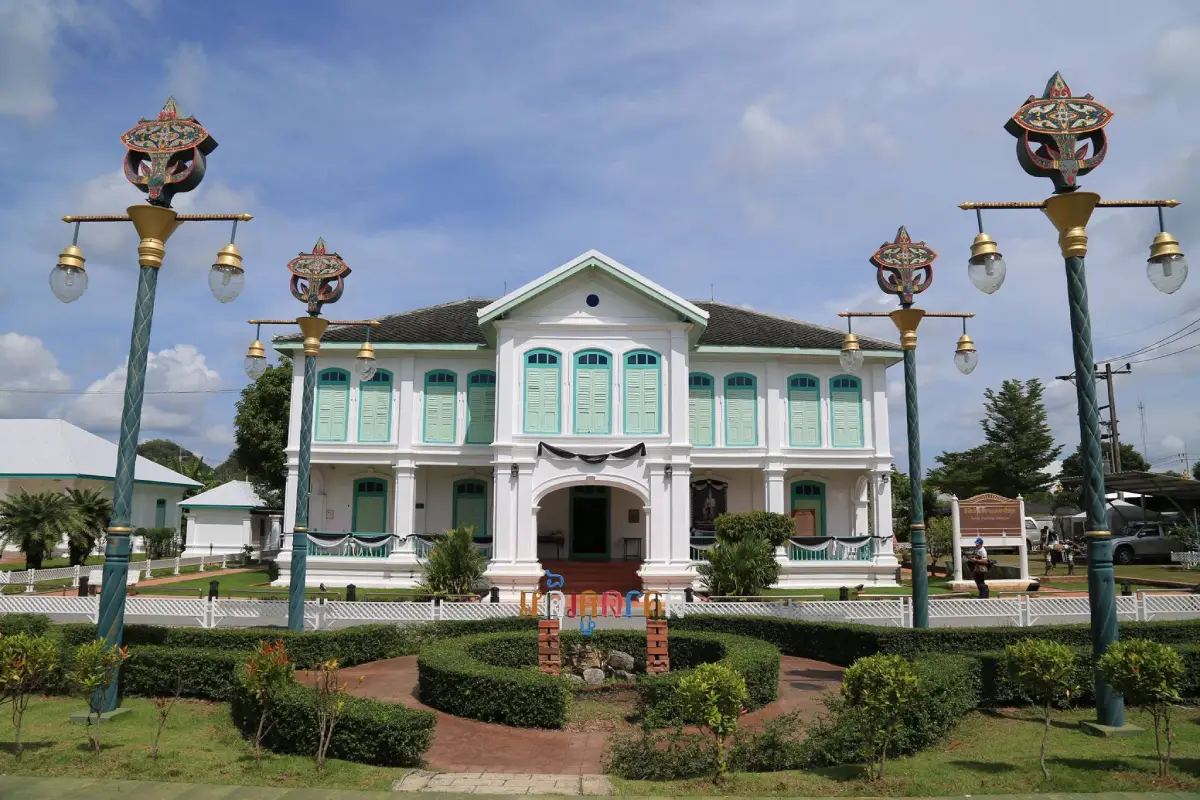
Satun National Museum, Kuden Mansion, is one of the most important cultural landmarks in Satun Town. Located on Satun Thani Soi 5 in Phiman Subdistrict, Mueang Satun District, the museum is open from Wednesday to Sunday between 09.00 and 16.00. This elegant two-storey mansion is not only a beautiful historic building but also a major learning center for Satun’s history, architecture, local traditions, Thai-Muslim culture, coastal communities, and the daily life of people in Thailand’s southern Andaman region.
Kuden Mansion is one of the best places to begin a cultural trip in Satun. The museum helps visitors understand the province beyond its famous islands and beaches. Satun is often associated with Ko Lipe, Tarutao, Pak Bara Pier, and Andaman Sea trips, but the story of the province is much deeper. It includes old administrative history, Malay cultural influence, Islamic art, coastal livelihoods, sea gypsy communities, pottery, traditional tools, and the long relationship between local people, land, mountains, and the sea. A visit to this museum gives travelers a clear foundation before exploring the wider province.
The museum is located in the town center, making it easy to combine with nearby attractions such as Satun Clock Tower, Buriwanich Road, Satun Walking Street, Satun Night Market, Wat Chanathip Chaloem, and Khao To Phaya Wang Park. For travelers who want to explore Satun without immediately heading to the islands, this area offers a compact route with history, architecture, local food, markets, and everyday town life. It is also a practical stop before continuing to Tammalang Pier, Thale Ban National Park, or the Thai-Malaysian border route.
Kuden Mansion was built by Phraya Phuminat Phakdi, also known as Tuanku Baharuddin bin Tamma-ngong, whose original name was Kuden bin Kumeh. He was the ruler of Satun during the reign of King Chulalongkorn, King Rama V. Construction began in 1898 and was completed in 1916. The mansion was originally intended to serve as a royal residence for King Rama V during his journey to southern Thailand, although the King did not stay overnight there. The building later became the ruler’s residence and an important government building for Satun.
The long history of Kuden Mansion mirrors the changing roles of Satun itself. Over time, the building served as the ruler’s residence, Satun’s city hall, a Japanese military command post during World War II, the provincial hall, the Mueang Satun district office, a school building, and an office for security-related administration. These layers of use make the mansion more than an architectural monument. It is a physical record of local governance, wartime memory, education, public administration, and cultural preservation within a single historic site.
The Fine Arts Department registered Kuden Mansion as a national historic site on 14 February 1989. The building was later restored and adapted into Satun National Museum. Restoration and exhibition development took place through the 1990s, including structural conservation, landscape improvement, utilities, air-conditioning systems, and permanent exhibitions. The museum officially opened on 9 June 2000. On 12 October 2001, the mansion received recognition as an outstanding conserved building from the Association of Siamese Architects under Royal Patronage, confirming its architectural and heritage value.
The architectural character of Kuden Mansion is one of its strongest attractions. The structure is a two-storey brick-and-mortar building with clear European colonial influence. Its arched doors and windows, formal proportions, front portico, balcony, and columns create an elegant appearance. The roof, however, follows the Thai hipped-roof style and is covered with terracotta tiles. Islamic influence appears in the star-shaped ventilation details, while the horizontal wooden louvered windows reflect practical design for airflow in a tropical climate. The result is a rare blend of European, Thai, and Islamic architectural elements.
From the front, visitors see a white mansion with pale green wooden shutters, arched openings, a raised entrance, and a calm old-town atmosphere. The building feels stately without being severe. Its beauty comes from proportion, rhythm, and cultural balance. Architecture enthusiasts can observe how past builders adapted imported styles to local climate and cultural values. The mansion’s appearance also reflects Satun’s position as a southern border province where Thai, Malay, Islamic, and coastal influences meet naturally.
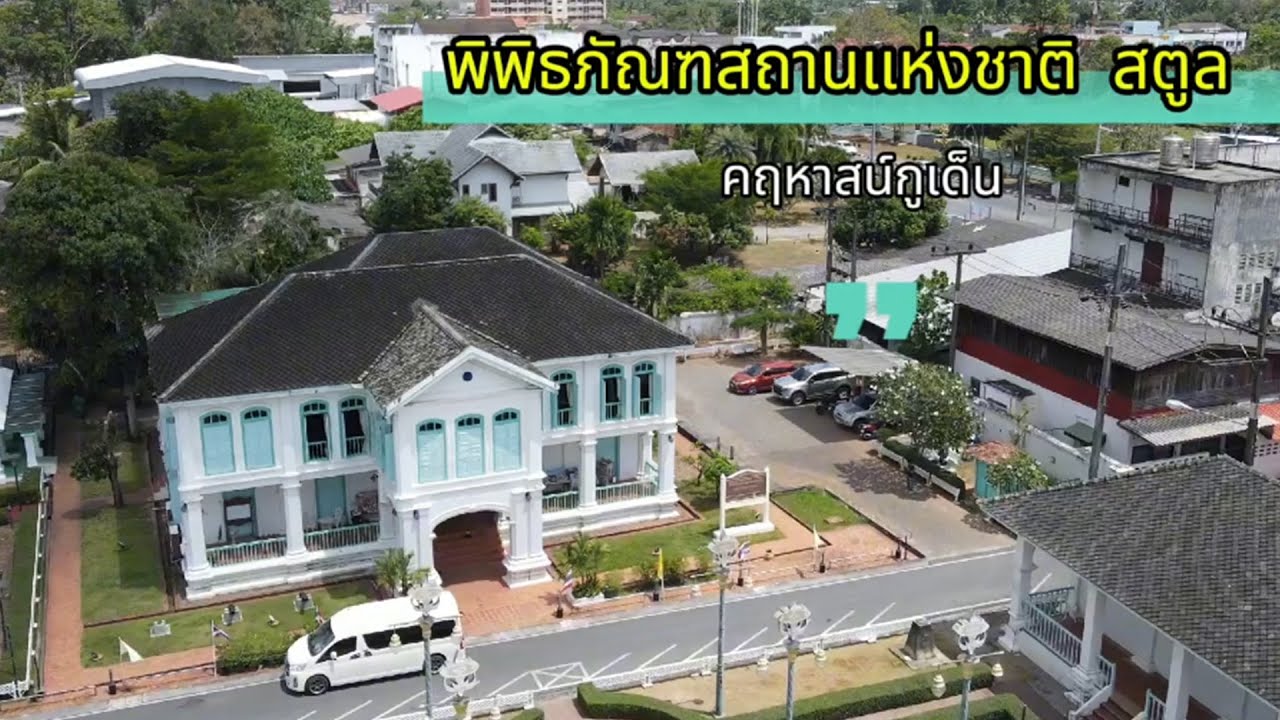
The museum grounds cover 1 rai, 3 ngan, and 15 square wah, with an exhibition area of 689.363 square meters. The building has a square plan. The ground floor includes a verandah, central hall, two side wings, and a rear hall, with staircases leading upstairs from both the central and rear halls. The upper floor includes the front projection, central hall, side wings, rear rooms, and rooftop area. This layout allows visitors to move through the museum in a clear sequence, gradually connecting the mansion’s architecture with the historical content displayed inside.
The permanent exhibitions focus on the history of Satun and the lives of local people. The displays include antiquities, household objects, traditional tools, models, photographs, and interpretive materials. Rather than presenting only political history, the museum covers the wider cultural life of the province. Key themes include Satun’s historical background, local livelihoods, the life of sea communities around Ko Lipe, pottery, the ruler’s residence, Thai-Muslim culture, and objects connected with everyday life in southern Thailand.
The section on Satun’s historical background helps visitors see the province as a place with a long and complex past. Satun is not only a gateway to islands. It is a province shaped by limestone mountains, forests, caves, waterways, coastal trade, fishing communities, and cross-cultural contact. Exhibits related to settlement, movement, trade, tools, and material culture help visitors understand how local people built their lives in a landscape connected to both land and sea.
Objects such as pottery fragments, traditional household tools, and daily-use items make the museum especially useful for travelers who want to understand real local life. Culture here is not shown only through ceremonies or old buildings. It appears in cooking tools, water containers, boats, craftwork, clothing, household objects, and ways of adapting to the environment. These details reveal the intelligence of local communities and the practical knowledge that sustained life in Satun for generations.
The exhibits related to coastal life and sea communities are particularly meaningful for travelers heading to the islands of Satun. Through stories of boats, fishing tools, and the life of sea communities around Ko Lipe, visitors can better understand the human background of the Andaman Sea. This makes a later island trip more meaningful. Instead of seeing the sea only as scenery, travelers begin to recognize it as a living cultural landscape shaped by people, movement, belief, work, and memory.
The ruler’s residence room connects the museum directly with the story of Phraya Phuminat Phakdi, the builder of the mansion. This section helps visitors understand the local ruling class and Satun’s administrative position during the reign of King Rama V. It also shows why Kuden Mansion was designed with such care. The building was intended to be suitable for royal reception and high-level administration, yet it later became a public heritage site that now serves education and cultural preservation.
The Thai-Muslim culture room is one of the most important parts of the museum. Satun has a strong Malay-Muslim cultural identity, living alongside Buddhist and other communities. The exhibits introduce visitors to faith, family life, education, dress, ceremony, and local traditions. This section helps foreign travelers understand Satun’s cultural diversity in a respectful and concrete way. It also shows that the province’s value lies not only in natural scenery but also in people, language, religion, and long-standing ways of life.
Pottery and household-craft displays add another layer to the museum experience. Clay vessels, kitchen tools, and everyday equipment reflect local production, resource use, and manual skill. These objects show that history is not only made by rulers and wars. It is also made by households, craftspeople, fishers, cooks, farmers, and families who passed down practical knowledge through daily life. This is one reason the museum feels grounded and accessible even for visitors who are not specialists in history.
Kuden Mansion is also rewarding for photography, especially from the front lawn, balcony area, arched doorways, louvered windows, star-shaped vents, and side angles of the building. Visitors should remember that this is both a national museum and a historic monument. Touching display objects, leaning against old walls, or using the space in a way that may damage the building is not appropriate. The best way to enjoy the museum is to follow the visitor route, read the exhibit information carefully, and respect the conservation guidelines.
Getting there is straightforward. From Satun Town, visitors can travel by private car, motorcycle, local hired transport, or on foot from the clock tower and Buriwanich Road area. The museum is located on Satun Thani Soi 5, opposite the Satun Provincial Land Office. Travelers coming from Hat Yai or Songkhla can follow the main road to Mueang Satun District, enter the town area, and continue toward Satun Thani Road. Those planning to go onward to Tammalang Pier or coastal attractions can visit the museum before leaving the town center.
The best time to visit is in the morning after the museum opens or in the early afternoon, when there is enough time to walk through the exhibitions without rushing. Visitors who want good photographs of the exterior should consider morning or late afternoon light. A general visit takes about 1 to 2 hours. Travelers with a strong interest in local history, architecture, Thai-Muslim culture, or southern border heritage should allow more time to read the exhibitions in detail.
Satun National Museum, Kuden Mansion, is suitable for families, students, cultural travelers, architecture lovers, history enthusiasts, and visitors who want to understand Satun before traveling to the islands. Its main strength is that it brings together building, objects, people, and memory in one place. By the end of the visit, travelers gain a fuller picture of Satun as a historic town, a coastal province, a cultural meeting point, and a living community.
After visiting the museum, travelers can continue to Satun Night Market, Satun Clock Tower, Satun Walking Street, Buriwanich Road, Wat Chanathip Chaloem, and Khao To Phaya Wang Park. With more time, it is possible to continue to Masjid Mambang, Tammalang Pier, Thale Ban National Park, or other natural attractions around the province. This makes Kuden Mansion a practical and meaningful anchor point for a one-day cultural route in Satun Town.
| Name | Satun National Museum, Kuden Mansion |
| Location | Satun Thani Soi 5, Phiman Subdistrict, Mueang Satun District, Satun Province |
| Address | Satun Thani Soi 5, Phiman Subdistrict, Mueang Satun District, Satun Province, Thailand 91000 |
| Coordinates | 6.61757, 100.06618 |
| Highlights | A colonial-style historic mansion combining European, Thai, and Islamic architectural elements, with exhibitions on Satun’s history, local culture, and traditional ways of life |
| History | Built from 1898 to 1916 during the reign of King Rama V; registered as a national historic site on 14 February 1989; officially opened as Satun National Museum on 9 June 2000 |
| Name Origin | The name Kuden is linked to Kuden bin Kumeh, the original name of Phraya Phuminat Phakdi, the Satun ruler who built the mansion |
| Distinctive Features | Two-storey brick-and-mortar mansion with arched doors and windows, Thai hipped roof, terracotta tiles, wooden louvered shutters, and Islamic-style star-shaped ventilation details |
| Main Areas / Zones | Satun Historical Background Room, Local Lifestyle Room, Sea Community And Ko Lipe Exhibits, Pottery Displays, Satun Ruler’s Residence Room, Thai-Muslim Culture Room, Antiquities And Local Tools Displays |
| Facilities | Exhibition areas, central halls, verandah, photo spots, front lawn, and museum contact service |
| Travel Information | Accessible by private car, motorcycle, local hired transport, or on foot from Satun Clock Tower and Buriwanich Road; located on Satun Thani Soi 5 opposite the Satun Provincial Land Office |
| Current Status | Open to visitors during official museum operating days and managed by the Fine Arts Department, Ministry of Culture |
| Open Days | Wednesday - Sunday; Closed On Monday, Tuesday, And Public Holidays |
| Opening Hours | 09.00 - 16.00 |
| Fees | Thai Visitors 10 Baht; Foreign Visitors 50 Baht |
| Caretaker | Fine Arts Department, Ministry Of Culture / Satun National Museum |
| Main Contact Number | 074 723 140 |
| nm_stool@finearts.go.th | |
| Official Website / Official Page | Fine Arts Department Website For Satun National Museum And The Facebook Page “Satun National Museum : พิพิธภัณฑสถานแห่งชาติ สตูล” |
| Nearby Tourist Attractions | 1. Satun Night Market, About 0.1 km 2. Satun Clock Tower, About 0.3 km 3. Satun Walking Street, About 0.3 km 4. Buriwanich Road, About 0.4 km 5. Satun Street Art, About 0.4 km 6. Satun Municipal Fresh Market, About 0.7 km 7. Wat Chanathip Chaloem, About 0.8 km 8. Khao To Phaya Wang Park, About 1.4 km |
| Nearby Restaurants | 1. Prikthai Satun, About 0.4 km, Tel. 091-938-5569 2. @On's Satun Thailand, About 0.4 km, Tel. 074-724-133 3. Che Daeng Restaurant, About 0.5 km, Tel. 074-732-225 4. Blues Cup Coffee, About 0.5 km, Tel. 089-652-2787, 090-991-1291 5. Keith Homemade Bakery Since 2008, About 0.6 km, Tel. 074-832-369 6. Nong Nee Restaurant Satun, About 1.2 km, Tel. 074-723-012, 074-712-277 |
| Nearby Accommodations | 1. Satun Thani Hotel, About 0.3 km, Tel. 074-711-010 2. Sinkiat Thani Hotel, About 0.5 km, Tel. 074-711-336 3. The One Boutique Hotel, About 0.8 km, Tel. 095-536-5622 4. Satun Boutique Resort, About 1.5 km, Tel. 074-740-188 5. V Valley Resort, About 2 km, Tel. 084-241-4159 |
Frequently Asked Questions (FAQ)
Q: Where is Satun National Museum, Kuden Mansion located?
A: It is located on Satun Thani Soi 5, Phiman Subdistrict, Mueang Satun District, Satun Province, opposite the Satun Provincial Land Office.
Q: What are the opening days and hours of Kuden Mansion?
A: The museum is open from Wednesday to Sunday, 09.00 to 16.00. It is closed on Monday, Tuesday, and public holidays.
Q: How much is the admission fee?
A: Admission is 10 baht for Thai visitors and 50 baht for foreign visitors.
Q: Why is Kuden Mansion important?
A: Kuden Mansion is a national historic site, an outstanding conserved building, and a museum that preserves Satun’s history, architecture, cultural diversity, and local ways of life.
Q: What can visitors see inside the museum?
A: Visitors can see exhibitions on Satun’s historical background, local lifestyles, sea communities around Ko Lipe, pottery, the ruler’s residence, Thai-Muslim culture, antiquities, and traditional tools.
Q: How do travelers get to Kuden Mansion?
A: Travelers can reach the museum by private car, motorcycle, local hired transport, or on foot from Satun Clock Tower and Buriwanich Road because it is located in the town center.
Q: How long should visitors spend at the museum?
A: Most visitors should allow about 1 to 2 hours. Travelers interested in architecture, history, and cultural exhibitions may want to spend longer.
Q: What attractions can be visited after Kuden Mansion?
A: Nearby options include Satun Night Market, Satun Clock Tower, Satun Walking Street, Buriwanich Road, Wat Chanathip Chaloem, and Khao To Phaya Wang Park.
 Category: ●Art, Culture and Heritage
 Group: ●Museums
Last Update : 2 MonthAgo
 Last Update : 2 MonthAgo
 Click to Access the Navigation Map GPS
Satun National Museum Kuden Mansion Map
Recommend

 Historical Sites and Monuments(1)
 Landmarks and Memorials(1)
 Art, Craft Centres, Tradition(5)
Museums(3)
 Places of Worship
 Temple(3)
 Mosque(27)
 Other Sacred Sites(1)
 Suburban Living
 Village, Community(1)
 Local Market(2)
 Nature and Wildlife
 National Parks and Marine Reserves(7)
 Mountain (Doi)(1)
 Dam, Reservoir, Lake(2)
 Waterfalls(9)
 Hot Springs(1)
 Caves(9)
 Bays and Beaches(10)
 Islands(16)
 Other natural attractions(5)
 Entertainment and Agricultural
 Zoos and Aquariums(1)
 Farms, Parks and Ecotourism(4)
 Outdoor and Adventure Activities(1)
 Travel Articles, Recipes
 Travel Review, Food Review(1)


