
lovethailand home >South Travel Attractions >Satun Travel Attractions >Muang Satun >Khlong Khut > Satun City Pillar Shrine
TL;DR: Satun City Pillar Shrine is located at Khao Chin Area, Khlong Khut Subdistrict, Mueang Satun District, Satun Province 91000, Thailand, open Open for General Worship Daily, hours Official Daily Opening and Closing Times Have Not Been Published.
Satun City Pillar Shrine
Open Days: Open for General Worship Daily
Opening Hours: Official Daily Opening and Closing Times Have Not Been Published
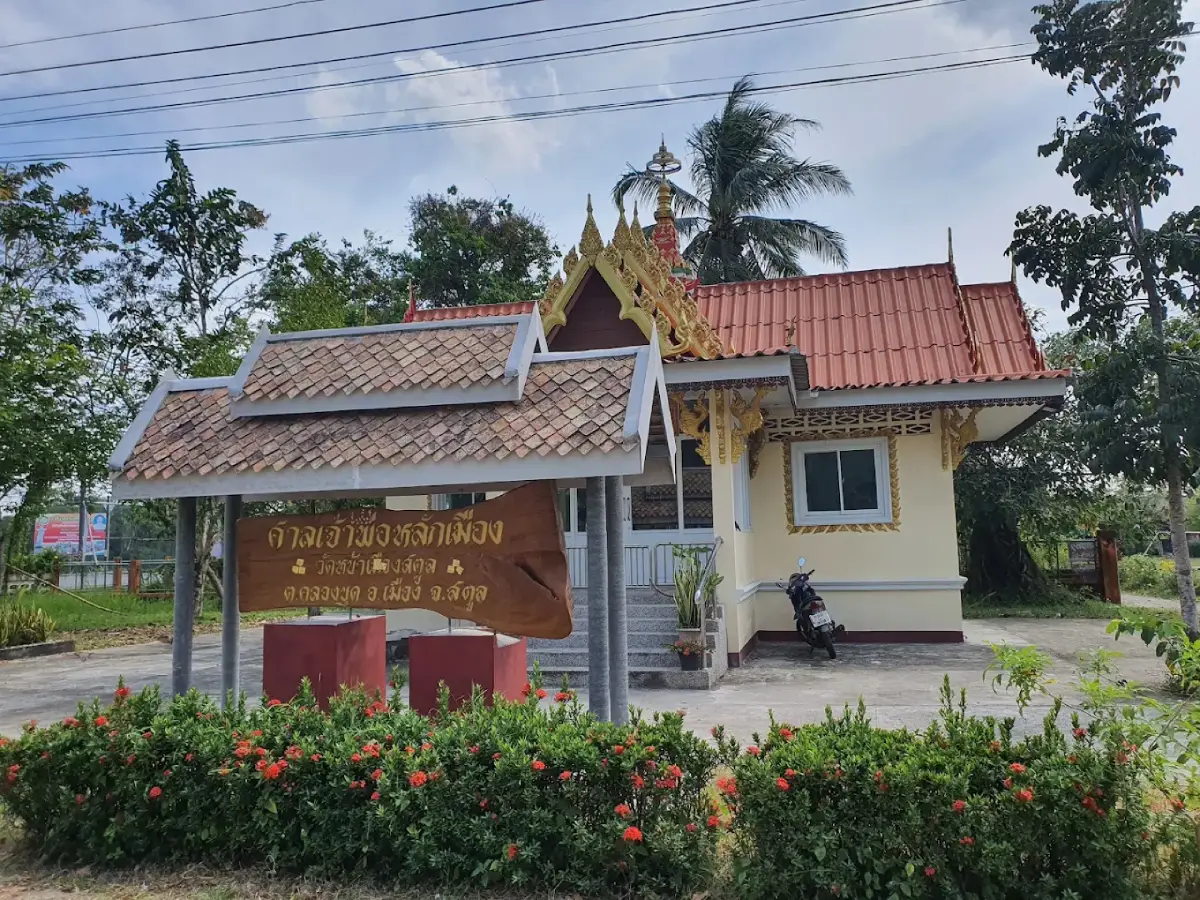
Satun City Pillar Shrine, also known as Chao Pho Lak Mueang Shrine, is a sacred landmark associated with traditional beliefs concerning the protection, stability, and prosperity of Satun Province in southern Thailand. It is located in Khlong Khut Subdistrict, Mueang Satun District, Satun Province 91000, in the Khao Chin area, where limestone formations and local communities form part of the cultural landscape. The shrine is distinguished by a golden city pillar standing on a ceremonial base against a backdrop of limestone cliffs and vegetation. Unlike the elaborate pavilion-style city pillar shrines found in some Thai provincial capitals, the site has a close relationship with its natural surroundings. Its cultural significance lies in its role as a symbolic place of respect for the guardian of the town and as a landmark connected with Satun's efforts to establish a shared civic symbol. This meaning is particularly noteworthy in a province whose history is closely associated with the Malay world and whose population includes diverse religious and cultural communities.
Satun City Pillar Shrine stands within Khlong Khut, a subdistrict connected by road to Satun's administrative and commercial center. The Khao Chin area differs from the busier streets of the city because limestone hills, rock faces, and greenery form a prominent part of its surroundings. Establishing a sacred pillar in such a setting connects ceremonial ideas concerning protection and stability with the natural features of the landscape.
Satun is a southern Thai province bordering Malaysia and the Andaman Sea. Its geography includes mountains, forests, agricultural plains, mangroves, coastal settlements, and numerous islands. These environments have shaped local livelihoods for generations, supporting fishing, agriculture, trade, and transportation. The province's historical development is therefore connected with both maritime routes and the roads linking communities across the Malay Peninsula.
The name Satun is associated with the Malay word for the santol fruit, while Mambang, a name still found in important places within the town, preserves another part of the area's Malay linguistic heritage. Thai and Malay have both influenced local cultural identity in different settings. Historic place names remain valuable evidence of the relationships between communities, geography, and the changing organization of the town.
Historically, Satun was connected with Kedah and the administrative traditions of Malay states. Its system of government changed over time as Siam developed more centralized provincial administration. These transformations involved the appointment of local rulers, the organization of administrative territories, the movement of goods, and the construction of government buildings. Their legacy remains visible through historic architecture and written records relating to Satun.
Phraya Phuminat Phakdi was an important figure in Satun's administrative development. His work was associated with improvements to roads, communication networks, public buildings, and local government. This period illustrates the transition from older forms of regional administration to a more modern provincial system. Kuden Mansion and other historic buildings preserve memories of this transformation.
One of Satun's defining characteristics is the coexistence of several cultural and religious traditions. Muslim communities have played a major role in the province's history and everyday life, while Buddhist and Thai-Chinese communities maintain their own places of worship and customs. Mosques, Buddhist temples, Chinese shrines, historic buildings, and local markets all contribute to Satun's distinctive cultural landscape.
Satun City Pillar Shrine represents the presence of Thai city pillar traditions within this multicultural setting. Worship at the shrine is a matter of individual faith and does not imply that residents of different religions share the same religious practices. Its broader cultural significance lies in its role as a provincial landmark that can also be understood as part of Satun's modern civic identity.
City pillar traditions in Thailand are associated with choosing a suitable location for the establishment of a town and designating a symbolic ceremonial center. A sacred pillar represents stability and auspiciousness and may be accompanied by rituals derived from Brahmanical practices and other local traditions. The appearance of the shrine and the details of its ceremonies differ according to the history and circumstances of individual provinces.
The term city pillar refers to more than a physical post placed in the ground. It also expresses the concept of a shared symbolic center for the community. Worshippers may associate the pillar with peace, safety, and prosperity, while historians and cultural visitors can consider the shrine as evidence of the ways communities express ideas of identity and belonging.
Some Thai city pillar shrines date back to the initial establishment of their towns, while others were developed much later to provide a provincial landmark or ceremonial gathering place. Satun's shrine is associated with modern planning and development initiatives involving provincial organizations. It therefore belongs to a historical context different from that of ancient city pillars established during the founding of older Thai capitals.
Planning documents of the Satun Provincial Administrative Organization refer to a project to design a city pillar shrine as a provincial symbol and a place of worship. The initiative demonstrates an intention to establish a cultural landmark connecting the idea of the town with established Thai traditions of paying respect to a sacred civic pillar.
Reports from around 2016 refer to activities concerning the preparation and production of wood for the city pillar. These records demonstrate that the project involved planning and coordination among different parties. The conceptual design, preparation of materials, ceremonial installation, and subsequent development of a worship area should be understood as distinct stages of the project rather than assumed to have occurred simultaneously.
The creation of a sacred pillar requires attention to its ceremonial meaning as well as its physical form. Matters such as proportions, material, decorative features, and location are considered alongside traditional practices. Once surrounding features have been developed, the site can provide a suitable setting for people wishing to pay their respects.
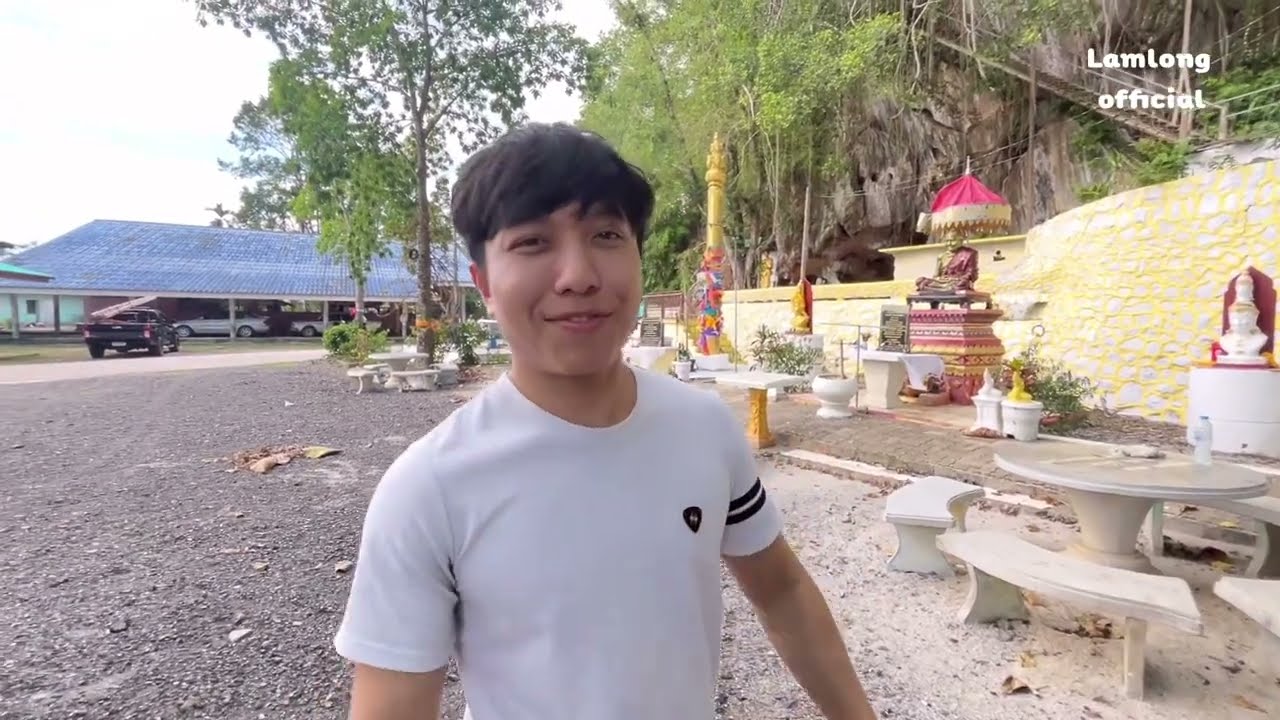
At Satun City Pillar Shrine, the most recognizable feature is the golden pillar rising from a ceremonial base. The upper part is ornamented, and colored fabric may be tied near the base as an expression of devotion. The limestone cliff and green vegetation behind the pillar form a distinctive natural backdrop, setting the shrine apart from city pillars housed within large enclosed buildings.
The limestone rock face is an important visual feature of the setting. Its textured surface and the vegetation growing along the slope create a natural background for the sacred column. The relationship between the golden pillar, open worship area, and limestone landscape gives the shrine a recognizable character.
Khao Chin also has cultural and religious significance because Wat Tham Khao Chin Thirapradit, a Buddhist temple associated with limestone caves, is located in the surrounding area. The proximity of the temple and city pillar shrine brings together two types of sacred places, but their histories and religious functions are different.
Wat Tham Khao Chin Thirapradit developed from activities involving Buddhist monks and local devotees. Records describe its establishment as a Buddhist temple on June 23, 1994, following efforts to acquire land and develop facilities for religious practice. The temple is associated with the Ban Khao Chin community in Khlong Khut Subdistrict.
The temple's history includes monks who came to reside and practice meditation in the area before the formal establishment of the monastery. Community supporters later contributed resources for land acquisition and the development of the religious site. Its origins consequently reflect cooperation between the Buddhist monastic community and local residents.
A notable characteristic of Wat Tham Khao Chin is its association with limestone caves and natural rock formations. Areas for Buddhist worship and religious practice form part of the temple grounds, while the limestone landscape distinguishes it from urban temples built on open plains. The broader Khao Chin area therefore combines spiritual traditions with notable natural scenery.
Limestone caves form through long geological processes in which slightly acidic rainwater and groundwater gradually dissolve the rock, enlarging fractures and underground spaces. Mineral deposits may produce stalactites and stalagmites. These natural processes are part of the wider geological heritage for which Satun is well known.
Satun City Pillar Shrine and Wat Tham Khao Chin have different functions. The shrine is associated with the traditional guardian of the town, while the temple supports Buddhist religious practice. Their management should not be confused, and the abbot of a nearby temple should not automatically be identified as the administrator of the city pillar shrine.
Satun City Pillar Shrine is not a Buddhist monastery and therefore has no resident abbot. Provincial organizations have been associated with its planning and development, while the administration of the shrine itself must be distinguished from the religious administration of Wat Tham Khao Chin. This distinction preserves the accuracy of the histories of both places.
The open worship area around the pillar provides space for flowers and ceremonial offerings. Worshippers may bring garlands, incense, candles, or other traditional items according to their personal beliefs. Offerings should be arranged respectfully, with attention to cleanliness and safety, especially when incense or candles are used close to vegetation.
Colored cloth tied around the base is a familiar feature of Thai sacred-place traditions. Such fabric may symbolize respect and devotion according to the beliefs of the person making the offering. Its presence also demonstrates that the shrine remains associated with acts of worship rather than serving only as a decorative monument.
Flowers and garlands are commonly used to express reverence and auspicious intentions. Incense and candles are associated with ceremonial practices in many contexts. The precise manner of offering may vary, but respect for the sacred area and consideration for other visitors remain important aspects of participation.
People may visit a city pillar shrine when beginning new work, undertaking an important journey, or marking a significant family occasion. Such visits reflect hopes for stability, safety, and a favorable future. The personal reasons for worship differ, showing how longstanding cultural traditions continue to be connected with everyday life.
Praying at a shrine is an expression of cultural tradition and personal faith, rather than a guarantee of a particular outcome. Its importance lies in the intention behind the act and the continuation of community practices. Visitors interested in local culture can also gain insight into traditional ideas of civic guardianship through observing the place respectfully.
The open setting at Khao Chin allows the sacred pillar and the limestone cliff to be viewed together. The surrounding natural light and vegetation create an atmosphere different from that of a shrine in a densely built urban center. This setting forms part of the experience of visiting the area.
Satun is internationally recognized for its geological heritage and the Satun UNESCO Global Geopark, which includes important geological landscapes and evidence of the Earth's past. Although the city pillar shrine is primarily a cultural site and not one of the geopark's principal geological attractions, its limestone surroundings illustrate the close relationship between landscape and settlement in the province.
The wider Khao Chin landscape also offers insight into the role of limestone mountains in local history. Such formations may be associated with water sources, caves, religious spaces, and natural landmarks. In different parts of Satun, limestone environments support religious activity, scientific study, and tourism.
The province's natural heritage extends from inland mountains and caves to mangrove forests, coastal habitats, and islands in the Andaman Sea. While its beaches and islands attract international visitors, inland communities and sacred sites are equally important for understanding the lives of the people who make Satun their home.
One of the most important historical attractions in Satun town is Satun National Museum, housed in Kuden Mansion on Satun Thani Road in Phiman Subdistrict. The building is an important architectural landmark associated with the reign of King Chulalongkorn, King Rama V. Today, it presents exhibitions on the province's history, communities, and cultural traditions.
Kuden Mansion was constructed under the direction of Phraya Phuminat Phakdi. It was originally associated with preparations for a royal visit and was later used for residential and administrative purposes. Its changing functions reflect important stages in the development of Satun's provincial government.
The mansion's architecture displays European colonial influences adapted to a tropical setting. Its masonry construction, openings, covered passageways, and exterior details illustrate the exchange of architectural ideas during the early modern period. The building is therefore valuable both for its historical associations and its design.
As a museum, Kuden Mansion helps visitors understand Satun's settlement history, government, daily life, and Malay cultural connections. These topics provide a broader context for understanding the province's modern city pillar shrine and other local landmarks.
Mambang Mosque, also known as Satun Central Mosque, is another major landmark in the town. It serves the local Muslim community and is associated with an important part of Satun's religious and cultural identity. The name Mambang preserves a historical place name, while the building illustrates Islamic architectural traditions.
Islam has long played an important role in the lives of many Satun residents. Mosques serve as places for prayer, religious learning, and community gatherings. Their presence in historic neighborhoods reflects the province's longstanding connections with Malay society and the continuity of local Muslim traditions.
Wat Chanathip Chaloem, a Royal Buddhist Monastery in Phiman Subdistrict, is an important center of Buddhist religious life in Satun. Formerly associated with the name Wat Mambang, the temple supports Buddhist ceremonies, merit-making, and community activities. Its presence alongside mosques and Chinese shrines demonstrates the cultural diversity of the town.
The temple also contributes to the preservation of Buddhist art and customs. Its buildings and religious activities provide a different perspective on local heritage from the city pillar shrine, which is associated with the ceremonial idea of civic protection rather than monastic worship.
Po Chae Keng Chinese Shrine is an important sacred site for Satun's Thai-Chinese community. Its origins are associated with Chinese settlers who established a religious gathering place in 1890. The shrine has played a role in preserving Chinese ritual traditions and reflects historical commercial connections across the Malay Peninsula.
Chinese settlement in Satun was linked with migration and trade from Penang and other regional ports. Community members established businesses, commercial networks, and religious institutions. Chinese shrines therefore became both spiritual centers and places where social connections could be maintained.
The annual Vegetarian Festival illustrates the continuation of Thai-Chinese religious traditions in Satun. Ceremonies involving the raising of the go teng bamboo pole and other prescribed observances belong to the community's Chinese religious heritage. These celebrations are distinct from the religious activities of Satun City Pillar Shrine.
Khao To Ya Kong is another limestone landmark in the Satun town area. It includes rock formations, cave-like spaces, and a shrine associated with local guardian stories. Although it is a separate place from the city pillar shrine in Khlong Khut, both demonstrate relationships between natural landmarks and cultural beliefs.
Studying local shrines and hills provides insight into the ways communities attach meaning to their surroundings. Cliffs, caves, old trees, and other natural features may serve as landmarks within collective memory, preserving stories that existed before the growth of modern urban infrastructure.
A cultural journey connecting the city pillar shrine with central Satun can include museums, religious buildings, markets, and historic streets. The transition from Khlong Khut into Phiman Subdistrict reveals different aspects of local life, from natural landscapes and residential communities to commercial districts and government institutions.
Satun's food traditions reflect southern Thai and Malay influences. Local cooking includes curries, rice dishes, seafood, roti, noodles, and traditional sweets. Spices and aromatic herbs contribute to the characteristic flavors, while Malay-influenced dishes reflect the historical connections between communities across the border.
Halal food is particularly important in Satun because of its substantial Muslim population. Restaurants offer a variety of Thai meals, seafood, curries, and contemporary dishes suitable for different diners. Exploring local food provides another way to understand the province's multicultural character.
Nong Nee Restaurant on Sathit Yutitham Road in Phiman serves southern Thai and local-style dishes, including seafood. Prik Thai on Satun Thani Road offers halal meals, coffee, and desserts. Both are situated within the urban area and can be combined with visits to historic buildings and religious landmarks.
Nong Beer Satun Restaurant on Satun Thani Road serves Thai food and seafood in a casual local setting. The 178 Cafe and Seafood restaurant on Sulakanukoon Road offers another option for seafood, Thai dishes, and refreshments. These establishments illustrate the variety of dining choices in central Satun.
Madee Satun in Chebilang Subdistrict is associated with a coastal community and seafood sourced from local fishing activities. Visiting restaurants in such settings reveals the connection between the province's food culture and its fishing economy.
Coastal restaurants also contribute to preserving knowledge of regional cooking. Their dishes often depend on seasonal ingredients and techniques passed down within families. Fish, shrimp, squid, fresh herbs, and curry pastes reflect the relationship between food and the natural resources of Satun.
Accommodation in Mueang Satun District includes hotels in the urban center and smaller resorts in surrounding subdistricts. Sinkiat Buri Hotel in Phiman provides accommodation within the town, while Sud Yod Resort in Khlong Khut is a smaller property located in the same subdistrict as the city pillar shrine.
The Gleam Resort and Bandahara Hotel are additional accommodation options associated with Satun town. Some properties emphasize convenient access to shops and urban facilities, while others provide quieter surroundings and more private outdoor spaces.
Navakiri Boutique Resort in Chalung Subdistrict is another option within Mueang Satun District. Its setting differs from hotels in the central town, with a greater connection to residential neighborhoods and the wider provincial road network.
Staying in Mueang Satun District gives travelers access to museums, sacred places, cultural attractions, and routes toward the coast. Visitors mainly interested in island travel may choose accommodation closer to the relevant departure piers, while those exploring Satun's history can use the town as a practical base.
Road access to Satun is available from Hat Yai through the inland southern road network, while routes from Trang connect with the province from the north. Once in Mueang Satun District, local roads lead toward Khlong Khut and the Khao Chin area.
Getting There: Satun City Pillar Shrine, or Chao Pho Lak Mueang Shrine, is located in the Khao Chin area of Khlong Khut Subdistrict, Mueang Satun District, Satun Province 91000, Thailand. From central Satun, follow the local roads leading toward Khlong Khut and Khao Chin. The destination can be located on digital maps under the Thai name for Satun's city pillar shrine. Road access and nearby parking make private cars or hired transport suitable options.
Visitors approaching from elsewhere in the province can first travel toward Mueang Satun District before following the local road network to Khlong Khut. This also allows a visit to be combined with Wat Tham Khao Chin Thirapradit or historical attractions in Satun town.
From the city pillar shrine, a cultural route can continue to Satun National Museum, Mambang Mosque, Wat Chanathip Chaloem, and Po Chae Keng Chinese Shrine. The destinations represent different aspects of provincial history, including government, Islamic religious heritage, Buddhist traditions, and the cultural life of the Thai-Chinese community.
Exploring these places together reveals Satun's multicultural character through actual buildings, community settings, and local customs. Differences in architecture, languages, religious practices, and food demonstrate the varied traditions that have contributed to the province's identity.
The Khao Chin area provides another perspective because the city pillar shrine is set against limestone scenery and stands in the wider vicinity of a Buddhist temple associated with caves. The landscape illustrates how natural features have influenced the location and meaning of sacred places.
Historically, Satun City Pillar Shrine can be understood within the province's development from a town connected with Kedah and the Malay world into a modern Thai province. The initiative to develop a city pillar shrine represents the continuation of Thai civic guardian traditions in a contemporary social setting.
Architecturally, the site is distinguished by its golden sacred pillar set against limestone cliffs. Unlike city pillar shrines centered on large ceremonial pavilions, its visual character comes from the combination of a sacred object, an open worship area, and the natural rock landscape.
Spiritually, the shrine provides a place for people to express respect toward the guardian of the town and seek auspiciousness according to their individual traditions. Its importance lies in the symbolism of stability and the continuing relationship between people and inherited cultural practices.
Socially, the city pillar shrine forms part of efforts to establish cultural landmarks connected with provincial identity. It exists within a wider Satun landscape that also includes mosques, Buddhist temples, and Chinese shrines. Recognizing these distinct traditions allows the city pillar to be understood without overlooking the character of the communities around it.
Satun City Pillar Shrine is therefore significant as a sacred place and a cultural landmark associated with the province's development. Its setting at Khao Chin gives it a distinctive natural character, while the history of the city pillar project reflects the creation of a shared ceremonial symbol in modern Satun.
With its golden city pillar, limestone surroundings, connection to Khlong Khut, and the broader multicultural history of Satun, the shrine provides a meaningful perspective on the province's heritage. It brings together ideas of civic protection, settlement, local memory, and cultural continuity in a landscape shaped by the history of Thailand's Andaman coast.
| Place Name | Satun City Pillar Shrine (Chao Pho Lak Mueang Shrine) |
| Location | Khao Chin Area, Khlong Khut Subdistrict, Mueang Satun District, Satun Province 91000, Thailand |
| Map Plus Code | M38F+WR5 |
| Attraction Type | City Pillar Shrine and Traditional Civic Guardian Worship Site |
| Main Sacred Features | Chao Pho Lak Mueang and the Sacred City Pillar |
| Distinctive Characteristics | Golden City Pillar on a Ceremonial Base with Limestone Cliffs and Vegetation Behind It |
| Project History | Provincial Planning Included a City Pillar Shrine Design Project, with Activities Relating to the Preparation of City Pillar Wood Reported in 2016 |
| Cultural Significance | A Symbolic Place Associated with Civic Stability and Local Guardian Traditions in a Province with Malay Historical Connections |
| Main Areas and Features | 1. Sacred City Pillar 2. Ceremonial Pillar Base 3. Open Worship Area 4. Traditional Offering Space 5. Limestone Cliff Backdrop 6. Shrine Access Area 7. Shaded Surrounding Grounds |
| Organizations Associated with Development | Satun Provincial Organizations, Including the Satun Provincial Administrative Organization in Connection with Shrine Design and Development Planning |
| Religious Status | City Pillar Shrine, Not a Buddhist Monastery; No Abbot |
| Open Days | Open for General Worship Daily |
| Opening Hours | Official Opening and Closing Times Have Not Been Published by the Shrine's Caretaker |
| Admission | General Worship Site; No Admission Ticketing System Identified |
| Facilities | Parking, Access to Worship Area, and Toilets Listed in Local Map Information |
| Getting There | Follow Local Roads from Central Satun toward Khlong Khut and Khao Chin, Using Satun City Pillar Shrine as the Map Destination |
| Nearby and Connected Cultural Attractions | 1. Wat Tham Khao Chin Thirapradit – Khlong Khut Subdistrict 2. Satun National Museum (Kuden Mansion) – Satun Thani Road, Phiman, Tel. +66 74 723 140 3. Mambang Mosque – Central Satun, Phiman 4. Wat Chanathip Chaloem Royal Monastery – Phiman Subdistrict 5. Po Chae Keng Chinese Shrine – Samantapradit Road, Satun Town 6. Khao To Ya Kong – Satun Town 7. Pueng Thao Kong Chinese Shrine – Satun Town |
| Restaurants in Mueang Satun and Connected Areas | 1. Nong Nee Restaurant – Sathit Yutitham Road, Phiman, Tel. +66 74 723 012 2. Prik Thai Foods, Coffee & Desserts – Satun Thani Road, Phiman, Tel. +66 90 224 9926 3. Nong Beer Satun Restaurant – Satun Thani Road, Phiman, Tel. +66 86 963 7186 4. 178 Cafe & Seafood – Sulakanukoon Road, Phiman, Tel. +66 62 262 2945 5. Madee Satun – Chebilang Subdistrict, Tel. +66 93 439 6991 |
| Accommodations in Mueang Satun and Connected Areas | 1. Sud Yod Resort – Khlong Khut, Tel. +66 89 468 9304 2. Sinkiat Buri Hotel – Aphai Nurat Ram Luk Road, Phiman, Tel. +66 74 721 055 3. Navakiri Boutique Resort – Chalung, Tel. +66 97 354 1642 4. The Gleam Resort – Mueang Satun District 5. Bandahara Hotel – Satun Town |
| Current Status | Existing Map-Listed Worship Site; Official Daily Operating Hours Have Not Been Confirmed |
Frequently Asked Questions (FAQ)
Q: Where is Satun City Pillar Shrine located?
A: It is situated in the Khao Chin area of Khlong Khut Subdistrict, Mueang Satun District, Satun Province 91000, Thailand. It appears on maps under the name Chao Pho Lak Mueang Shrine.
Q: What are the opening days and hours of Satun City Pillar Shrine?
A: The shrine is listed as a place for general worship throughout the week. Official daily opening and closing times have not been published by its caretaker.
Q: Is there an admission fee?
A: The site is a general place of worship, and no admission ticketing system has been identified.
Q: What makes Satun City Pillar Shrine distinctive?
A: Its most recognizable feature is the golden sacred pillar standing on a ceremonial base against a limestone cliff backdrop in the Khao Chin area.
Q: What is the history of the shrine's establishment?
A: Provincial planning included a project to design a city pillar shrine, and activities relating to the preparation of city pillar wood were reported in 2016. These were stages of a modern civic cultural initiative.
Q: Is Satun City Pillar Shrine the same as Wat Tham Khao Chin?
A: No. The city pillar shrine is associated with traditional civic guardian beliefs, while Wat Tham Khao Chin Thirapradit is a Buddhist temple in Khlong Khut known for its limestone cave setting.
Q: Does Satun City Pillar Shrine have an abbot?
A: No. It is a city pillar shrine rather than a Buddhist monastery and therefore does not have a resident abbot.
Q: Which cultural attractions can be combined with a visit?
A: Visitors can also explore Wat Tham Khao Chin Thirapradit, Satun National Museum at Kuden Mansion, Mambang Mosque, Wat Chanathip Chaloem, Po Chae Keng Chinese Shrine, and Khao To Ya Kong to learn about Satun's varied history and cultural traditions.
 Category: ●Places of Worship
 Group: ●Other Sacred Sites
Last Update : 5 DayAgo
 Last Update : 5 DayAgo
 Click to Access the Navigation Map GPS
Satun City Pillar Shrine Map
Recommend

 Art, Culture and Heritage
 Historical Sites and Monuments(1)
 Landmarks and Memorials(1)
 Art, Craft Centres, Tradition(5)
 Museums(3)
 Temple(3)
 Mosque(27)
Other Sacred Sites(1)
 Suburban Living
 Village, Community(1)
 Local Market(2)
 Nature and Wildlife
 National Parks and Marine Reserves(7)
 Mountain (Doi)(1)
 Dam, Reservoir, Lake(2)
 Waterfalls(9)
 Hot Springs(1)
 Caves(9)
 Bays and Beaches(10)
 Islands(16)
 Other natural attractions(5)
 Entertainment and Agricultural
 Zoos and Aquariums(1)
 Farms, Parks and Ecotourism(4)
 Outdoor and Adventure Activities(1)
 Travel Articles, Recipes
 Travel Review, Food Review(1)


