
lovethailand home >South Travel Attractions >Phuket Travel Attractions >Thalang >Thep Kra Satri > Mueang Mai City Pillar Shrine (Mae Chuang City Pil..
TL;DR: Mueang Mai City Pillar Shrine (Mae Chuang City Pillar Shrine) is located at Ban Mueang Mai, Thepkasattri Road, Thep Krasattri Subdistrict, Thalang District, Phuket Province 83110, Thailand, open Daily, hours 08:00 – 17:00.
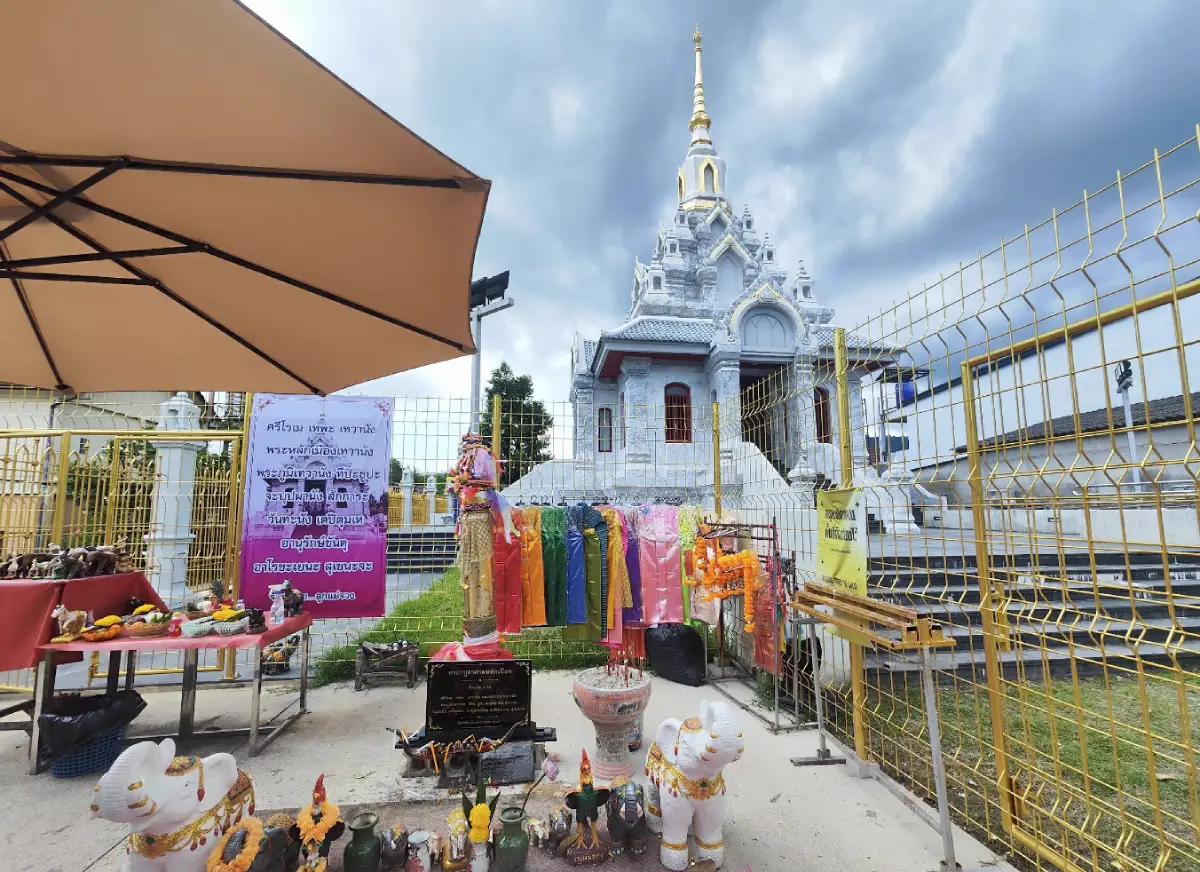
Mueang Mai City Pillar Shrine (Mae Chuang City Pillar Shrine)
Open Days: Daily
Opening Hours: 08:00 – 17:00
Mueang Mai City Pillar Shrine, also known as Mae Chuang City Pillar Shrine, Phuket, is one of the four historic city pillar shrines associated with Thalang and an important spiritual landmark in northern Phuket. It stands at Ban Mueang Mai on Thepkasattri Road, Thep Krasattri Subdistrict, Thalang District, Phuket Province 83110, Thailand. The shrine is particularly significant because of its historical connection with the reestablishment of Thalang during the early Rattanakosin period, following warfare and changes in settlement patterns during the late eighteenth and early nineteenth centuries. Local traditions associate the shrine with Mae Chuang, the female guardian believed to protect the city pillar and the surrounding community. The present shrine has been extensively reconstructed and renovated, with pale marble surfaces, an elaborate Thai-inspired architectural design, a tall ornamental spire, and a sacred city pillar installed through major ceremonies in August 2023. It remains a place where residents and visitors pay their respects and seek blessings for stability, success, and well-being.
Mueang Mai City Pillar Shrine differs from the historic city pillar shrines at Tha Ruea, Pa Sak, and Le Phang because its history is closely associated with the rebuilding of Thalang during the reign of King Rama III. The name Mueang Mai, meaning new town, refers to a period of historical settlement and reconstruction rather than simply describing a recently constructed shrine. A visit provides insight into the development of Thalang before Phuket Town farther south became the island's principal commercial and administrative center.
Ban Mueang Mai is located in Thalang District in the northern part of Phuket Island. Thepkasattri Road, the island's principal north–south highway, passes through the area and connects it with Phuket Town, the airport region, and the mainland. Residential communities, small businesses, agricultural areas, and historic landmarks are found throughout the wider neighborhood. The city pillar shrine stands beside this important transport corridor, linking a traditional sacred site with the present-day road network.
The importance of a city pillar in Thai culture is connected with the ceremonial establishment of a town and the belief that a sacred central pillar represents stability and auspiciousness. Historically, placing a pillar at an appropriate location expressed the intention that the settlement would remain secure and prosperous. The ceremony could also serve as a shared symbol of identity for the people who lived within the town.
Local tradition identifies Mae Chuang as the guardian spirit associated with Mueang Mai City Pillar Shrine. Her name is an important part of the shrine's identity, distinguishing it from other historic city pillar sites in Phuket. Worshippers traditionally pray for career advancement, stable employment, promotion, and success in their undertakings. Such practices reflect the continuing cultural relationship between personal aspirations and the belief in sacred guardianship.
Phuket's historical development was closely connected with maritime commerce and natural resources. Situated along the Andaman Sea, the island maintained links with trading communities across the Malay Peninsula and the wider Indian Ocean region. Fishing, farming, and waterborne transport supported early settlements, while tin mining and later road development transformed the island's economy and patterns of urban growth.
Thalang was once one of Phuket's most important political and commercial centers. Its historical communities were connected with maritime routes and administrative networks along the Andaman coast. Settlement was distributed across several locations rather than concentrated in today's Phuket Town. Over time, changes in security, transport, and government contributed to the movement of administrative centers and the emergence of new towns.
The defense of Thalang in 1785 is a major event in local history, especially the role played by Thao Thep Krasattri and Thao Si Sunthon. Their leadership and the defense of the town became central to Phuket's historical identity, remembered through monuments, museums, ceremonies, and educational activities. The history of Mueang Mai City Pillar Shrine, however, is especially connected with the later period of rebuilding and repopulation rather than the battle itself.
During the reign of King Nangklao, King Rama III, efforts were made to restore settlement and administration in Thalang following earlier warfare and population movements. Local historical accounts describe an initiative around 1827 to encourage people to return, establish households, and develop a new town. The settlement became known as Mueang Mai. Its location was selected for its suitability as a place of habitation and administration.
The establishment of the new town reflected a broader attempt to restore community stability after political and military upheaval. Rebuilding settlement required access to land, food resources, transportation, and an effective administrative structure. Establishing a sacred city pillar provided a ceremonial focus symbolizing the new community's stability and hopes for the future.
Between 1827 and 1848, Mueang Mai City Pillar Shrine formed part of the social and cultural setting of the reestablished Thalang community. Its importance was not limited to the physical pillar; it was connected with the people who settled in the area and the institutions through which the town regained its identity. The shrine helped express the idea that the rebuilt community possessed a shared spiritual center.
In 1848, the administrative center was relocated toward the Ban Bang Rong area, where water transport and access to boat landings were important advantages. This movement demonstrates the influence of trade and communication routes on administrative geography. Although the town's center changed, the shrine at Mueang Mai remained at its earlier location and continued to be respected by local people.
The relationship between Mueang Mai and Bang Rong illustrates how Thalang's centers of administration and settlement changed over time. When waterborne commerce became increasingly important, access to ports and boat routes offered practical benefits. Sacred landmarks in older communities, however, could remain in place and preserve memories of the town's previous stages of development.
Mueang Mai City Pillar Shrine is therefore valuable as a cultural marker of historical relocation. Administrative offices and economic activity may move, but the spiritual importance of an older city pillar can remain attached to its original site. For residents of Ban Mueang Mai, the shrine has continued to represent an enduring connection with the town's history.
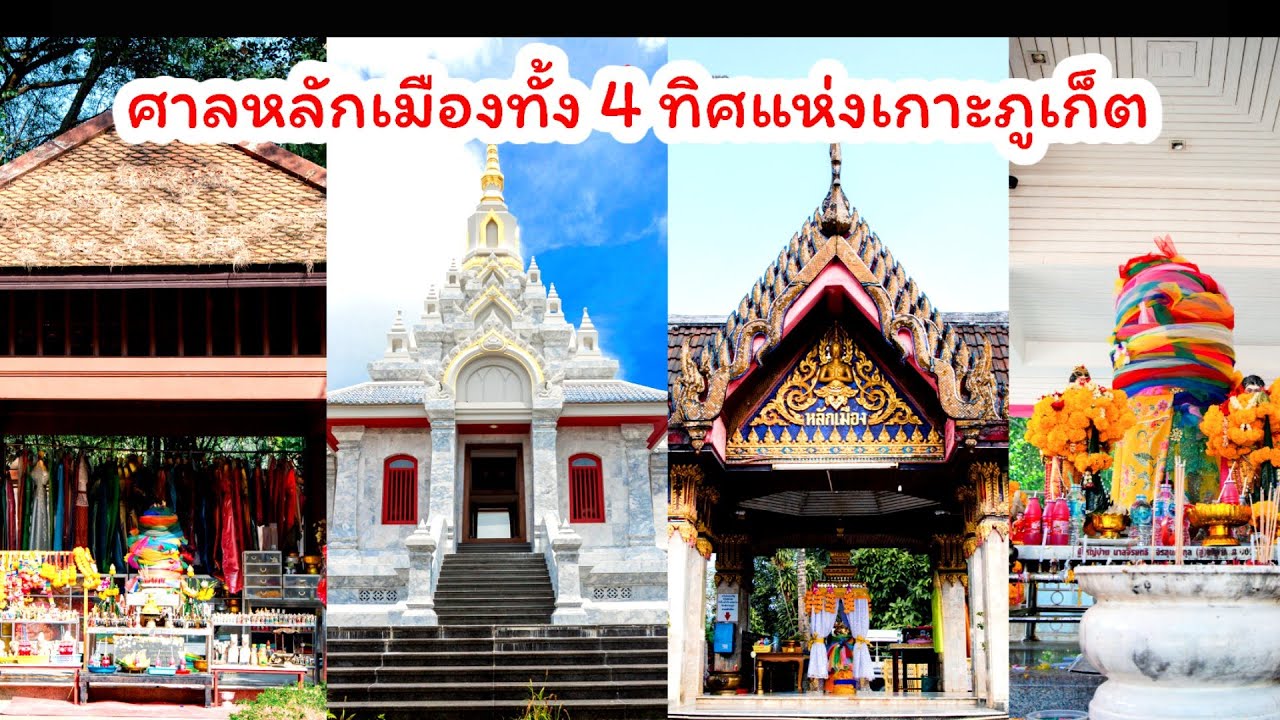
Phuket also has historic city pillar shrines at Tha Ruea, Pa Sak, and Le Phang. Their distribution across Thalang reflects the importance of different settlements and local guardian traditions. Studying these places together reveals a more complex historical geography than the assumption that Phuket has always possessed just one city pillar shrine.
Tha Ruea City Pillar Shrine is associated with Mae Duang and the historic community of Ban Tha Ruea, whose name recalls waterborne transport. Pa Sak City Pillar Shrine is linked with Chao Mae Soi Kaeo, while Le Phang is another historic local sacred site. Each has its own setting and cultural associations, making it important to distinguish their stories from that of Mae Chuang at Mueang Mai.
The shrine at Mueang Mai is closely associated with Mae Chuang, the female guardian remembered by local worshippers. Her traditional role concerns the protection of the town and the spiritual stability of the community. People have long visited the shrine to express respect and seek blessings concerning employment, promotion, authority, and success in important activities.
Offerings at Thai city pillar shrines commonly include incense, candles, flowers, garlands, and ceremonial cloth. Worshippers may also present other objects according to local tradition. These acts represent personal devotion and a symbolic relationship with the spiritual guardians of a place, while keeping community customs alive through repeated observance.
The earlier shrine at Mueang Mai was described as a relatively modest traditional Thai pavilion with a two-tiered roof. Its front gable featured Thai ornamental sculpture, four polished stone columns supported the structure, and marble formed part of the walkway. Historical descriptions record that the pavilion faced west and stood in a setting with shade provided by surrounding trees.
The original pavilion's architectural form emphasized the sacred central pillar while providing shelter for worshippers. Its layered roof created ceremonial dignity without requiring a monumental building. The polished columns and marble walkway organized the approach and separated the sacred area from its surroundings. Its west-facing orientation remains an important distinguishing feature in local historical accounts.
Over time, the shrine underwent repairs and alterations to preserve its sacred function. Local history records the installation of a new pillar in connection with the 1985 bicentenary commemorations of the Two Heroines of Thalang. The new pillar was placed in association with the older one, reflecting an effort to maintain continuity between historic traditions and the needs of contemporary worshippers.
Restoration of a city pillar shrine requires attention to both architecture and religious meaning. The building provides physical protection, but the sacred pillar carries historical and spiritual associations. Changes to the structure or the pillar consequently involve more than ordinary construction work and often include traditional ceremonies and cooperation among local stakeholders.
On November 24, 2016, Phuket Province organized a foundation-pillar ceremony for the reconstructed Mueang Mai City Pillar Shrine. Governor Chokchai Dejamornthan presided over the occasion, attended by deputy governors, provincial officials, and members of the public. The event included Brahmanical offerings and Buddhist ceremonies, marking an important stage in the development of the new building.
The reconstructed shrine was designed to provide a more impressive architectural setting appropriate to an important provincial landmark. Pale stone and marble finishes give the building a distinctive appearance, while its Thai-inspired ornamental features and tall upper structure emphasize its ceremonial importance. The new pavilion is also designed to accommodate the sacred pillar within a clearly defined interior.
The building stands on an elevated platform reached by staircases. This arrangement gives the shrine a prominent presence within the surrounding site and distinguishes the sacred interior from the public ground level. The symmetrical approach also provides clear views of the upper architectural details.
Pale marble surfaces are among the most recognizable features of the modern building. They emphasize carved ornamentation, framed doorways, and the outlines of the spire. Dark red doors and windows create strong visual contrast with the light exterior, giving the shrine a distinctive appearance along the Thepkasattri Road corridor.
The reconstructed design incorporates a tall ornamental spire, contrasting with the smaller scale of the earlier pavilion. From the front courtyard, the spire forms the principal visual focus above the entrance and surrounding architectural elements. It gives the shrine a recognizable silhouette and reinforces the importance of the sacred pillar housed within.
The doors and windows combine Thai ceremonial design with the requirements of a contemporary building. Their deep red finish is particularly striking against the pale marble. The composition differs from open-sided traditional pavilions and shows how historic architectural ideas can be adapted into a modern enclosed sacred structure.
The major reconstruction project also involved producing a new city pillar and supplementary elements associated with the original pillar. Phuket Province coordinated with the Fine Arts Department's Traditional Arts Office to create a new sacred column, subsidiary pillars, wooden cladding to protect the older pillar, and a replica intended for the new Phuket Provincial Hall. This program combined preservation of older sacred material with new ceremonial craftsmanship.
The Traditional Arts Office played a central role because of its expertise in historic Thai craftsmanship. Producing a ceremonial pillar requires careful attention to proportions, shape, ornamental patterns, and religious symbolism. The result needed to be appropriate for the new shrine while respecting established traditions of sacred civic pillars.
The budget for producing the new city pillar was 849,900 baht. A further 428,810 baht, supported by a local development foundation, was allocated to subsidiary pillars, protective wooden cladding, and a replica for the new provincial government complex. These separate components illustrate the complexity of a project involving both historical conservation and ceremonial construction.
The new pillar was designed to stand on a twelve-sided supporting base. Its ceremonial details included a mondop-shaped finial and other traditional decorative features. The base and upper components were carefully coordinated so that the pillar could be installed securely within the reconstructed building.
The wooden covering prepared for the older city pillar was particularly important for preserving continuity with the original sacred site. Rather than simply replacing the old column without regard to its history, the project included measures to protect older material. The replica pillar created for the new provincial hall served a separate symbolic purpose and should not be confused with the principal pillar at Ban Mueang Mai.
From August 2 to August 4, 2023, ceremonial processions carried components and replicas of the city pillar through Phuket's three districts. The route passed through Mueang Phuket on August 2, Kathu on August 3, and Thalang on August 4. These events allowed residents across the island to participate in commemorating the construction and preparation of the sacred pillar.
The procession's movement through all three districts gave the project a province-wide character. Although the principal shrine stands at Ban Mueang Mai, residents from different areas were able to witness and pay respect to the ceremonial objects. The activity connected the island's historical communities with its modern administrative divisions.
From August 5 to August 7, 2023, Phuket Province conducted the consecration and installation ceremonies at Mueang Mai City Pillar Shrine. The program included offerings, the preparation of sacred inscriptions, ceremonial soil associated with the directions, and the installation of the pillar according to traditional practices.
August 7, 2023, was a particularly important day. Phra Udom Watchiramongkhon, the provincial ecclesiastical leader and abbot of Wat Mongkhon Nimit, presided over the Buddhist ceremonies. Phuket Governor Narong Woonciew served as the lay ceremonial president, joined by public officials, private-sector representatives, and residents.
The Brahmanical elements of the ceremony included offerings associated with Ganesha, Shiva, Brahma, Vishnu, Indra, and other sacred beings named in the prescribed ritual. Offerings were also arranged for the eight directions. Participants scattered ceremonial flowers and popped rice while paying respect according to the established proceedings.
The Buddhist portion followed with chanting, auspicious verses, the presentation of the mondop-shaped finial, and a formal declaration of intention by the presiding governor. The monks blessed the pillar with sacred water, while Brahmanical specialists performed additional prescribed rites. This combination reflects the interwoven Buddhist and Brahmanical ceremonial traditions often found in Thai city pillar establishments.
The installation of the pillar in August 2023 represented a major milestone in the shrine's modern history. It brought the architectural reconstruction and the preparation of the ceremonial object together within one completed sacred space. Mueang Mai could now be understood both as a historic shrine associated with early Rattanakosin Thalang and as a recently restored provincial landmark.
Further work continued to improve the shrine's surroundings and support public worship. In 2024, a commemorative Luang Pho Chaem medal was created in connection with fundraising for the shrine's improvement. The program aimed to support additional land acquisition, boundary construction, landscaping, and other facilities appropriate to the site.
A major consecration ceremony for the commemorative medal took place on May 24, 2024, at the ordination hall of Wat Mongkhon Nimit in Mueang Phuket District. This event illustrates cooperation between Buddhist religious institutions and the organizations supporting the city pillar shrine, while emphasizing that the shrine itself is not a monastery.
The reconstruction and ongoing development of Mueang Mai City Pillar Shrine involved government agencies, cultural organizations, the Fine Arts Department, foundations, and local residents. Their cooperation supported improvements to the building, sacred pillar, and surrounding grounds. At the same time, the traditional association with Mae Chuang remained an important part of the shrine's local identity.
The shrine has continued to feature in official and community observances. On October 2, 2025, the newly appointed Phuket Governor paid his respects at Mueang Mai City Pillar Shrine as part of the ceremonies associated with beginning his official duties. The occasion demonstrates the site's continuing role as an important provincial place of worship.
Paying respect to the city pillar when assuming a new public position is connected with beliefs about stability, responsibility, and success. It also corresponds with local traditions of praying to Mae Chuang for career progress. Such practices illustrate why the shrine remains socially relevant rather than serving solely as a historical architectural landmark.
During New Year celebrations, residents also visit the shrine to express wishes for an auspicious beginning. Common offerings include flowers, incense, candles, garlands, and colored cloth. Some worshippers tie ceremonial cloth or apply gold leaf in designated areas. These practices continue to connect the historic shrine with everyday religious life.
Mueang Mai City Pillar Shrine is not a Buddhist monastery and therefore has no resident abbot. Major ceremonies and development projects involve Phuket provincial authorities and participating organizations. Buddhist monks and Brahmanical ritual specialists may be invited to lead specific ceremonies, but their ceremonial involvement is distinct from the shrine's daily administration.
Buddhist influence is nevertheless present through chanting and consecration ceremonies, while Brahmanical offerings express traditional beliefs concerning divine guardianship and auspiciousness. The combination of these forms belongs to the broader history of Thai city pillar rituals and other important civic ceremonies.
The shrine is situated within reach of several important historical attractions in Thalang, including Wat Phra Thong, Wat Phra Nang Sang, the Thalang Victory Memorial, and Thalang National Museum. These destinations preserve different aspects of the district's settlement, religious traditions, and historic events.
Wat Phra Thong, also known as Wat Phra Phut, is a well-known Buddhist temple famous for a sacred Buddha image whose upper portion appears above the ground. Local legends describe the discovery and veneration of the image. The temple also contains a museum with objects relating to everyday life and the island's past. Visiting it alongside Mueang Mai City Pillar Shrine connects civic guardian beliefs with Buddhist religious traditions.
The partially exposed Buddha image has long distinguished Wat Phra Thong from other temples in Phuket. Its history is preserved through local stories and worship practices, making it an important destination for understanding Thalang's Buddhist cultural heritage.
Wat Phra Nang Sang is another historic temple in Thalang, situated near Thepkasattri Road. The temple contains revered Buddha images and traditional religious architecture that reflect Thai craftsmanship and diverse cultural influences. Its history contributes to an understanding of Buddhism's longstanding importance in the area.
The presence of important temples throughout Thalang demonstrates the continuity of Buddhist religious life alongside changes in trade and administration. Comparing these temples with the city pillar shrine reveals distinct ceremonial functions, even though each is respected as an important sacred place by local residents.
The Thalang Victory Memorial is associated with the history of the town's defense and remembrance of its ancestors. Historical and cultural activities held in the area help communicate the events that preceded the nineteenth-century rebuilding of Thalang. It provides historical context for understanding the circumstances in which Mueang Mai later developed.
The Two Heroines Monument, at the Tha Ruea junction, is another major provincial landmark. It honors Thao Thep Krasattri and Thao Si Sunthon, whose actions in defending Thalang are central to Phuket's historical identity. Government agencies and residents continue to take part in commemorative ceremonies there.
Thalang National Museum presents the archaeology, history, and cultural heritage of Phuket and the Andaman coast. Its exhibitions explore settlement, trade, and the diverse traditions of communities throughout the region. Visiting the museum can provide a broader context for the history preserved by the city pillar shrines.
Other historical sites in northern Phuket include Wat Muang Komaraphat, a former temple site associated with local legends and remnants of older Buddhist structures. Such places illustrate changes in the use of religious sites and community landscapes over time.
The shrine can also be combined with natural destinations, including Ton Sai Waterfall in Thalang. Its forested surroundings provide a contrast with the historic communities along Thepkasattri Road and demonstrate the variety of landscapes in northern Phuket.
Nai Yang Beach and Sirinat National Park represent the island's northern coastal environment. The area contains beaches, coastal vegetation, and Andaman Sea scenery. A journey between Mueang Mai City Pillar Shrine and the coast reveals the difference between older inland settlements and present-day coastal recreation areas.
Food culture around Si Sunthon and Thep Krasattri reflects the influence of southern Thai and Hokkien Chinese communities. Phuket specialties include moo hong braised pork, Hokkien noodles, rice vermicelli with pork-bone broth, khanom chin, and seafood dishes prepared with regional herbs and spices. These traditions reflect the island's long history of trade and settlement.
Thalang offers local restaurants, seafood establishments, and contemporary dining options. Krua Baan Platong in Si Sunthon is known for strongly flavored southern Thai dishes. Paknam Seafood Thalang is another establishment serving seafood and Thai food in Thep Krasattri, while So Ngok Pochana provides everyday Thai meals within the local community.
Krua Yaya in Si Sunthon serves Phuket-style and southern Thai cuisine in a setting associated with the Peranakan cultural museum. Laem Thong Seafood in Thep Krasattri offers another seafood dining option. Together, these restaurants illustrate the range of local and regional food available along the main Thalang transport corridor.
Accommodation is available in Thep Krasattri and the wider Phuket Airport area. Options include Lalynn Resort and Villas, NaraRin Phuket Resort, The Wood Terrace, and several airport-area hotels. These properties provide access to the roads leading to Mueang Mai and northern Phuket's historical attractions.
Lalynn Resort and Villas is located on Thepkasattri Road and provides resort-style accommodation. The Wood Terrace is a smaller property in Thep Krasattri, while NaraRin Phuket Resort offers another option in the wider Thalang area. Their locations are suited to travelers exploring the northern part of the island by road.
The Nai Yang and airport areas offer further accommodation, including Nai Yang Beach Resort and Spa, Maya Phuket Airport Hotel, and Panphuree Residence. These properties are useful for travelers who wish to combine northern Phuket's heritage attractions with coastal scenery and convenient airport access.
Staying in Thep Krasattri provides a setting closer to Thalang's older communities and heritage attractions, while accommodation near Nai Yang emphasizes beach access and proximity to the airport. Both areas are connected with Mueang Mai City Pillar Shrine by the island's principal roads.
Getting There: Mueang Mai City Pillar Shrine, also known as Mae Chuang City Pillar Shrine, is situated at Ban Mueang Mai on Thepkasattri Road, Thep Krasattri Subdistrict, Thalang District, Phuket Province 83110, Thailand. From Phuket Town, drive north on Thepkasattri Road toward Thalang and continue to the Ban Mueang Mai area. Travelers arriving from Phuket International Airport can also use the main roads leading toward Thep Krasattri.
Visitors entering Phuket from Phang Nga via Sarasin Bridge can follow Thepkasattri Road south toward Thalang before reaching Ban Mueang Mai. The shrine's roadside setting makes it accessible by car and convenient to combine with Wat Phra Thong, Wat Phra Nang Sang, and other nearby historic sites.
A cultural journey through Thalang can begin at Mueang Mai City Pillar Shrine, continue to Wat Phra Thong and Wat Phra Nang Sang, and then visit the Thalang Victory Memorial, the Two Heroines Monument, and Thalang National Museum. Such a route brings together the restoration of Thalang, Buddhist religious heritage, the remembrance of historic battles, and the wider cultural history of Phuket.
Visitors interested in all four historic city pillar shrines can study Mueang Mai alongside Tha Ruea, Pa Sak, and Le Phang. The history and beliefs of each should be considered independently. Mueang Mai is associated with Mae Chuang and the nineteenth-century rebuilding of Thalang, while the other shrines preserve different local guardian traditions.
Historically, Mueang Mai City Pillar Shrine is important because it preserves the memory of Thalang's rebuilding after a period of major change. The continued presence of the sacred pillar at its historic location connects modern Phuket with the early Rattanakosin period. Although the building has undergone extensive restoration, its central cultural meaning has endured.
Architecturally, the reconstructed shrine demonstrates how traditional Thai forms can be adapted through contemporary materials and construction techniques. Pale marble, decorated entrances, an elevated base, and a tall spire give the building a ceremonial presence. The new city pillar, created through the craftsmanship of the Fine Arts Department, further connects the architecture with traditional sacred art.
In terms of spiritual tradition, the shrine continues to welcome worshippers who pay their respects to Mae Chuang and the city pillar. Their visits express hopes for stability, career advancement, and well-being, while maintaining a connection with the history of Ban Mueang Mai. The shrine is therefore an active sacred place rather than simply a commemorative monument.
For the community, the site also represents cooperation among provincial authorities, Buddhist clergy, ceremonial specialists, foundations, and residents. The installation ceremonies of 2023, fundraising activities of 2024, and continued public worship demonstrate the enduring relationship between the shrine and Phuket society.
Mueang Mai City Pillar Shrine brings together historical, architectural, and spiritual significance. From the rebuilding of Thalang during the reign of King Rama III to the preservation of its older city pillar, the reconstruction of the pavilion beginning in 2016, and the installation of a new sacred pillar in 2023, its history illustrates continuity amid changing circumstances.
With its connection to early Rattanakosin Thalang, the local tradition of Mae Chuang, and an elaborately restored ceremonial building, Mueang Mai City Pillar Shrine remains an important place for understanding Phuket's cultural heritage. It is both a site of worship and a historical landmark connecting Ban Mueang Mai with the story of settlement, administrative relocation, and collective memory in old Thalang.
| Place Name | Mueang Mai City Pillar Shrine (Mae Chuang City Pillar Shrine), Phuket |
| Address | Ban Mueang Mai, Thepkasattri Road, Thep Krasattri Subdistrict, Thalang District, Phuket Province 83110, Thailand |
| Coordinates | 8.080071, 98.343848 |
| Attraction Type | Historic City Pillar Shrine, Local Guardian Worship Site, and Thalang Heritage Attraction |
| Historical Significance | Associated with the Reestablishment of Thalang Around 1827 During the Reign of King Rama III; the Administrative Center Later Moved Toward Bang Rong in 1848 |
| Main Guardian | Mae Chuang, the Female Guardian Associated with the City Pillar in Local Tradition |
| Restoration and Construction Timeline | 1. 1985: A New Pillar Was Created During the Thalang Two Heroines Bicentenary 2. November 24, 2016: Foundation-Pillar Ceremony for the Reconstructed Shrine 3. August 2–4, 2023: Ceremonial Processions Through Phuket's Three Districts 4. August 5–7, 2023: Consecration and Installation Ceremonies 5. August 7, 2023: Official City Pillar Installation Ceremony 6. 2024: Fundraising Activities Supporting Improvements and Expansion |
| Present Architecture | Pale Marble-Finished Ceremonial Pavilion with a Raised Base, Ornamental Entrances, Dark Red Doors and Windows, and a Tall Thai-Inspired Spire |
| Earlier Pavilion | A Traditional Two-Tiered Thai Pavilion with Polished Stone Columns, a Marble Walkway, and a West-Facing Entrance |
| Main Areas and Features | 1. Main City Pillar Pavilion 2. Sacred City Pillar Chamber 3. Preserved Elements of the Earlier Pillar 4. City Pillar Supporting Base 5. Traditional Offering Area 6. Staircases and Building Entrances 7. Courtyard and Surrounding Grounds |
| Craftsmanship and Agencies | Traditional Arts Office of the Fine Arts Department, Phuket Provincial Administration, Phuket Provincial Cultural Office, and Participating Organizations |
| Management and Ceremonial Organizations | Phuket Provincial Authorities and Organizations Involved in Shrine Restoration and Ceremonies; Not a Buddhist Monastery and Has No Abbot |
| Traditional Blessings | Career Advancement, Promotion, Stability, Authority, and Auspiciousness |
| Open Days | Daily |
| Opening Hours | 08:00 – 17:00, as Listed in Visitor Information |
| Admission Fee | Free General Admission |
| Getting There | Follow Thepkasattri Road to Ban Mueang Mai in Thep Krasattri Subdistrict, Thalang District |
| Nearby Historical and Natural Attractions | 1. Wat Phra Thong (Wat Phra Phut) – Thep Krasattri, Thalang 2. Wat Phra Nang Sang – Thep Krasattri, Thalang, Tel. +66 76 311 084 3. Thalang Victory Memorial – Thalang District 4. Two Heroines Monument – Tha Ruea Junction, Thalang 5. Thalang National Museum – Si Sunthon Road, Tel. +66 76 379 895 to +66 76 379 897 6. Ton Sai Waterfall – Thalang District 7. Tha Ruea City Pillar Shrine – Ban Tha Ruea, Si Sunthon 8. Nai Yang Beach – Sakhu Subdistrict |
| Restaurants in Thalang and Surrounding Areas | 1. So Ngok Pochana – Moo 1, Thep Krasattri, Tel. +66 76 313 233 2. Paknam Seafood Thalang – Thep Krasattri, Tel. +66 76 313 388 3. Laem Thong Seafood – Moo 6, Thep Krasattri, Tel. +66 88 169 4780 4. Krua Baan Platong – Si Sunthon, Tel. +66 62 962 2563 5. Krua Yaya – Thepkasattri Road, Si Sunthon, Tel. +66 99 315 8795 6. Chaixi Wonton Noodles, Baan Eua Arthorn Thalang – Thepkasattri Road, Si Sunthon, Tel. +66 61 308 7738 |
| Accommodations in Thalang and Surrounding Areas | 1. Lalynn Resort and Villas – Thep Krasattri, Approx. 2.82 km Listed Distance, Tel. +66 76 311 805 2. Jinda Resort – Phuket Airport Area, Approx. 3.67 km Listed Distance 3. The Bell Airport Phuket Hotel – Airport Area, Approx. 4.23 km Listed Distance 4. Panphuree Residence – Airport Area, Approx. 4.51 km Listed Distance 5. Proud Phuket, Nai Yang Beach – Airport Area, Approx. 4.71 km Listed Distance 6. Maya Phuket Airport Hotel – Airport Area, Approx. 4.90 km Listed Distance 7. Nai Yang Beach Resort and Spa – Nai Yang Beach, Approx. 5.13 km Listed Distance 8. The Wood Terrace – Thep Krasattri, Tel. +66 63 207 9178 9. NaraRin Phuket Resort – Thep Krasattri, Tel. +66 65 748 8555 |
| Current Status | Active Place of Worship, with a Documented Visit by the Phuket Governor on October 2, 2025 |
Frequently Asked Questions (FAQ)
Q: Where is Mueang Mai City Pillar Shrine located?
A: It is located at Ban Mueang Mai on Thepkasattri Road, Thep Krasattri Subdistrict, Thalang District, Phuket Province 83110, Thailand.
Q: What are the opening hours of Mueang Mai City Pillar Shrine?
A: Published visitor information lists daily opening hours from 08:00 to 17:00.
Q: Is there an admission fee?
A: No. General admission to the shrine is free.
Q: Who is Mae Chuang?
A: Mae Chuang is the female guardian associated with Mueang Mai City Pillar Shrine according to local community traditions.
Q: What is the history of Mueang Mai City Pillar Shrine?
A: The shrine is associated with the rebuilding of Thalang around 1827 during the reign of King Rama III. The building was later extensively reconstructed, and a major city pillar installation ceremony took place on August 7, 2023.
Q: Is Mueang Mai City Pillar Shrine the same as Tha Ruea City Pillar Shrine?
A: No. Mueang Mai City Pillar Shrine is in Thep Krasattri and is associated with Mae Chuang. Tha Ruea City Pillar Shrine is in Si Sunthon and is associated with Mae Duang.
Q: What are the shrine's main attractions?
A: The most important features are the sacred city pillar, the newly reconstructed pale marble pavilion with traditional Thai architectural ornamentation, and the historical connection with the restoration of Thalang.
Q: Does Mueang Mai City Pillar Shrine have an abbot?
A: No. It is a city pillar shrine rather than a Buddhist monastery, so it does not have a resident abbot.
 Category: ●Places of Worship
 Group: ●Other Sacred Sites
Last Update : 5 DayAgo
 Last Update : 5 DayAgo
 Click to Access the Navigation Map GPS
Mueang Mai City Pillar Shrine (Mae Chuang City Pillar Shrine) Map
Recommend

 Art, Culture and Heritage
 Landmarks and Memorials(7)
 Art, Craft Centres, Tradition(5)
 Museums(4)
 Historic Homes and Cities(1)
 Art Gallery(1)
 Educational Places
 Educational Gardens, Farm(2)
 Temple(14)
 Mosque(47)
Other Sacred Sites(15)
 Suburban Living
 Village, Community(2)
 Floating Market(1)
 Nature and Wildlife
 National Parks and Marine Reserves(2)
 Mountain (Doi)(2)
 Dam, Reservoir, Lake(1)
 Waterfalls(4)
 Bays and Beaches(30)
 Islands(12)
 Other natural attractions(10)
 Entertainment and Agricultural
 Zoos and Aquariums(2)
 Stadium(2)
 Farms, Parks and Ecotourism(4)
 Amusement Park(2)
 Waterpark(6)
 Theater(1)
 Outdoor and Adventure Activities(1)
 Shopping
 Shopping and Night Market(1)
 Travel Articles, Recipes
 Travel Review, Food Review(1)
 Southern Food Menu, Southern Food Recipes(5)


