
lovethailand home >South Travel Attractions >Narathiwat Travel Attractions >Muang Narathiwat >Khok Khian > Narathiwat City Pillar Shrine
TL;DR: Narathiwat City Pillar Shrine is located at Cultural Courtyard, Narathiwat Provincial Hall Building No. 1, Sun Ratchakan Road, Khok Khian Subdistrict, Mueang Narathiwat District, open Daily, hours 07:00 – 19:00.
Narathiwat City Pillar Shrine
Open Days: Daily
Opening Hours: 07:00 – 19:00
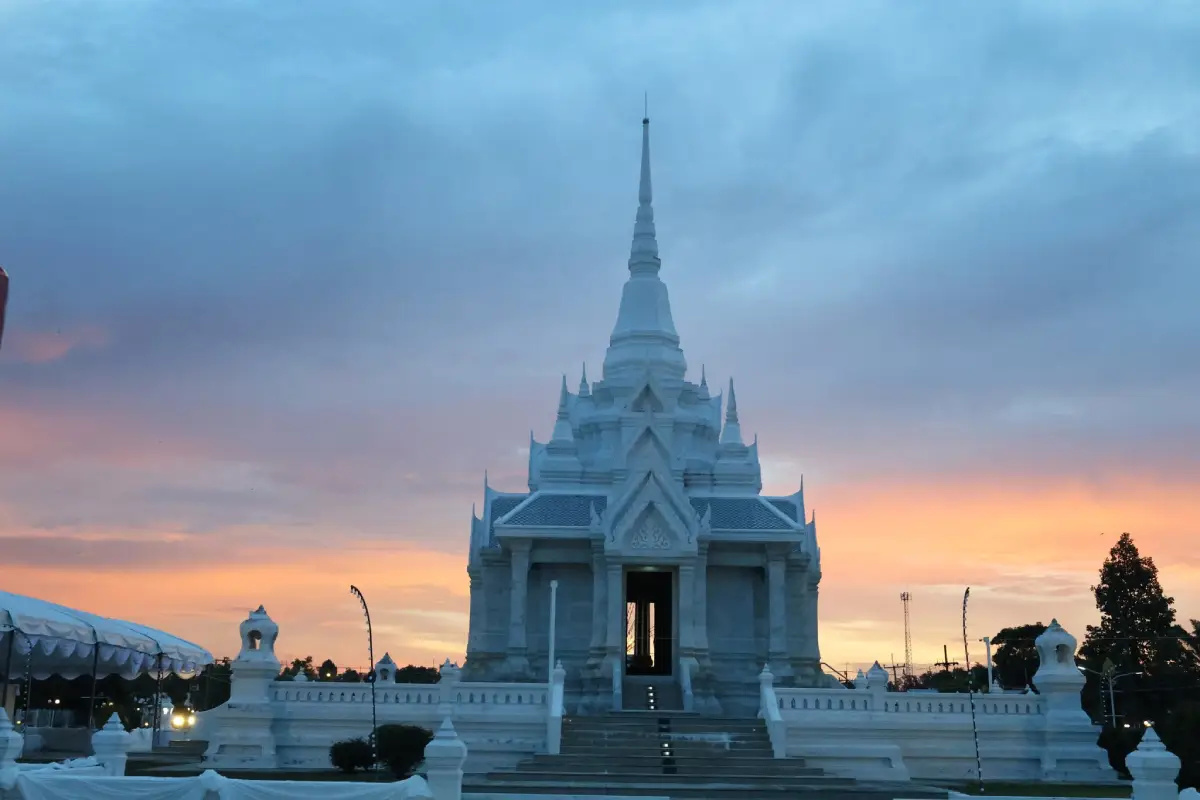
Narathiwat City Pillar Shrine is an important provincial sacred landmark and a spiritual center for the people of Thailand's southern border region. It stands in the Cultural Courtyard of Narathiwat Provincial Hall Building No. 1, Sun Ratchakan Road, Khok Khian Subdistrict, Mueang Narathiwat District, Narathiwat Province 96000, Thailand. The shrine is distinguished by an impressive white-marble pavilion with a four-sided traditional Thai design and nine stupa-like spires. Its architecture incorporates elements inspired by Srivijaya art and the architectural heritage of the lower southern region. Inside the building stands the sacred city pillar, surrounded by a striking painted ceiling featuring the zodiac and eight directional guardian deities. The shrine measures 20.25 meters from its elevated base to the highest point and is 26 meters wide. The project originated in 2015 as part of the commemoration of the centenary of Narathiwat receiving its present name. Important city pillar ceremonies followed in 2022, and the royal opening took place on September 30, 2023. The shrine is now open for public worship daily from 07:00 to 19:00 under the visiting arrangements introduced in February 2026.
The significance of Narathiwat City Pillar Shrine extends beyond personal worship. It represents the historical identity of a province with a rich and diverse cultural background. Narathiwat is home to Thai Buddhist and Thai Muslim communities, and both Thai and local Malay are used in everyday life. Its cultural heritage reflects connections with the history of Pattani, the Bang Nara River, coastal trade, agriculture, and the traditions of the southern border region. Against this background, the city pillar shrine provides a symbolic provincial landmark within a landscape shaped by different religious and cultural communities.
The shrine occupies the former provincial government precinct rather than the newer Narathiwat Provincial Hall Building No. 2 in Lam Phu Subdistrict. This distinction is important when locating the site. The newer government complex was developed to accommodate the expansion of provincial offices, while the city pillar shrine remains in the Cultural Courtyard of Provincial Hall Building No. 1 in Khok Khian. The spacious setting provides open views of the pavilion and its distinctive roofline.
The grounds were landscaped with a broad ceremonial courtyard, walkways, staircases, and ornamental planting. The building rises above the surrounding paved area, with intricately designed white balustrades emphasizing the approach. Viewed from the front, its stupa-like spires rise above the projecting roofs, making the shrine one of the province's most distinctive examples of contemporary ceremonial architecture.
The history of Narathiwat is connected with coastal settlements along the Gulf of Thailand and the Bang Nara River. These environments supported fishing, trade, and transportation long before the development of modern roads. Inland areas provided agricultural land and other natural resources, encouraging the growth of communities with different economic and cultural characteristics.
Historically, Narathiwat was associated with Malay-speaking settlements and the changing administrative organization of the southern border region. Its cultural background reflects a combination of local Malay traditions, Thai administrative development, maritime commerce, and community life along rivers and the coast. Over time, the settlement known as Bang Nara became increasingly important as an administrative center.
The earlier name of the town was Bang Nara, a name associated with local communities and the river landscape. In 1915, during the reign of King Vajiravudh, King Rama VI, the town received the name Narathiwat. The name is commonly understood to mean a great dwelling place of the people. This historical event later became the inspiration for constructing the modern provincial city pillar shrine.
The naming of Narathiwat remains an important part of the province's historical identity. A place name represents more than a geographical location; it also carries memories of administrative change and community development. As the centenary of the royal naming approached on June 10, 2015, provincial authorities developed a project to establish a sacred city pillar and shrine commemorating that milestone.
On April 29, 2015, the provincial administrative committee approved the project. Royal permission to establish the city pillar and shrine was granted on June 10, 2015, marking 100 years since the town received its name. The project was intended to provide an enduring cultural and spiritual landmark associated with an important event in provincial history.
The Cultural Courtyard of Provincial Hall Building No. 1 was selected as the site because of its relationship with provincial administration and its suitability for ceremonial gatherings. The proposed shrine needed an impressive building capable of accommodating traditional observances. The surrounding grounds were also intended to provide space for public ceremonies and cultural activities.
The architectural design involved the Fine Arts Department's Bureau of Architecture and the Narathiwat Provincial Public Works and Town and Country Planning Office. The chosen form was a traditional four-sided Thai pavilion with nine stupa-like spires, incorporating artistic influences associated with Srivijaya and the lower southern region. The design created a distinctive provincial landmark rather than simply reproducing a conventional city pillar shrine found elsewhere in Thailand.
White marble is one of the most striking materials used in the building. The marble surfaces and carved ornamentation give the structure a refined appearance and emphasize its details in natural light. The white exterior allows the projecting roofs, sculpted balustrades, and tall spires to stand out clearly against the surrounding open sky.
The pavilion stands on a raised, indented rectangular circumambulatory platform. The indented corners add architectural complexity and create a more elaborate form than a simple rectangular base. The proportions of the platform are carefully related to the pavilion above, producing a balanced composition that emphasizes the sacred interior.
The building rises 20.25 meters from the elevated base to its highest point and measures 26 meters in width. These proportions give the shrine an impressive vertical presence without sacrificing the stability of its broad foundation. From the front courtyard, the central upper structure forms a visual focus above the lower roof sections.
The nine spires are among the shrine's most recognizable features. Their arrangement creates a distinctive outline unlike that of many city pillar shrines with a single spire or a relatively simple roof. The spires are integrated with the four-sided pavilion, resulting in a complex but symmetrical design that reflects careful architectural planning.
The roof is covered with glazed tiles, and the eaves extend around all four corners of the pavilion. These projecting sections add visual depth and create sheltered transitions around the building. They are also suited to the warm, humid climate of southern Thailand, where sunshine and heavy seasonal rainfall are important considerations in architectural design.
Entrances are provided on all four sides of the shrine. Each is fitted with repoussé metal doors depicting directional guardian deities. The doors are notable examples of decorative metal craftsmanship and express the importance of directional symbolism in the design of a sacred ceremonial building.
The guardian figures on the entrance doors refer to cosmological ideas about the protection of sacred space. Their placement gives ceremonial meaning to each entrance and creates a visual connection with the eight directional guardian deities represented in the interior ceiling paintings.
The entrance platform and staircase are decorated with carved granite featuring a conch-shell motif. The conch is an auspicious symbol associated with Brahmanical and Hindu traditions and with ceremonial practices in Thai culture. Its use at the shrine reinforces the transition from the public courtyard to the sacred interior.
The marble exterior incorporates carved moldings, ornamental patterns, and decorated gables. Mold-cast stucco elements are also used to create repeated decorative details. These techniques support the symmetry of the building and demonstrate the integration of several forms of traditional craftsmanship.
The octagonal bell-shaped architectural element and the three-tiered clustered lotus finial draw upon regional artistic traditions. Their arrangement gives the shrine a coherent ornamental structure, with the upper sections reflecting historic artistic forms while forming part of a newly constructed ceremonial building.
Srivijaya artistic influences are particularly important to the shrine's architectural identity. The term Srivijaya is associated with historic maritime cultures and artistic traditions across parts of Southeast Asia, including the southern peninsula. Incorporating these influences gives the shrine a regional character connected with southern Thai heritage.
One of the most impressive features inside the shrine is its octagonal ceiling, decorated with zodiac paintings arranged around the city pillar. The design conveys cosmological symbolism relating to time, celestial order, and auspiciousness. Its balanced composition places the sacred pillar at the center of the interior artistic program.
The zodiac paintings use symbols associated with the divisions of the year and historic systems of astrological belief. Their placement overhead introduces cosmological imagery into the sacred chamber. This creates a notable contrast between the white stone architecture outside and the colorful symbolic paintings within.
Paintings of the eight directional guardian deities surround the zodiac imagery. They express traditional beliefs about protection from the different directions and reinforce the ceremonial meaning of the pavilion. The relationship between the entrance doors, ceiling paintings, and city pillar reveals the intention to create an integrated architectural and symbolic design.
The city pillar is the most important object within the shrine. It was created and installed through a sequence of traditional ceremonies intended to establish a symbolic foundation for the province. The selection of timber involved the Royal Forest Department and a tree from Phrae Province in northern Thailand.
The construction records identify the source as golden teak from Sai Yoi Subdistrict, Den Chai District, Phrae Province. The tree selected for the project was approximately 133 years old. The use of mature teak reflects both the material requirements of the project and the importance placed on the sacred column as a work of traditional craftsmanship.
Teak is valued for its strength, durability, and suitability for carving. Selecting timber for a city pillar requires attention to physical characteristics as well as ceremonial considerations. The process involved obtaining an appropriate tree, preparing the wood, and shaping it according to the intended design.
Project documentation also indicates that the city pillar design referred to established Thai historical precedents. At the same time, the finished shrine has distinctive features associated with Narathiwat, including its regional architectural inspiration and particular decorative program. The city pillar therefore belongs to a continuing Thai ceremonial tradition while forming part of a modern provincial landmark.
Several agencies participated in developing the sacred pillar and its surroundings. Their responsibilities included ceremonial preparation, craftsmanship, architectural design, and construction. Establishing the shrine involved more than producing a wooden object; it required an entire ceremonial environment capable of supporting worship and official events.
In September 2022, Narathiwat Province organized ceremonies to consecrate and install the city pillar. The ceremonial program was scheduled for September 12–14, with a major event on September 13. Sanan Phongaksorn, the provincial governor at the time, presided over proceedings attended by Buddhist clergy, Brahmanical ritual specialists, government officials, and members of the public.
The 2022 ceremonies included Buddhist chanting and Brahmanical offerings. The rituals expressed auspicious intentions for the city and reflected the traditional ceremonial framework associated with establishing a sacred city pillar in Thailand.
Installing the city pillar was a major milestone because it placed the sacred object within the specially prepared building. From that point, the pavilion and the pillar became connected in both function and meaning: the building served as its protective enclosure, while the pillar remained the principal focus of worship.
Construction and landscaping work continued until April 2023. By then, the marble building, decorative carving, entrance stairs, balustrades, and surrounding courtyard had been completed as an integrated sacred precinct.
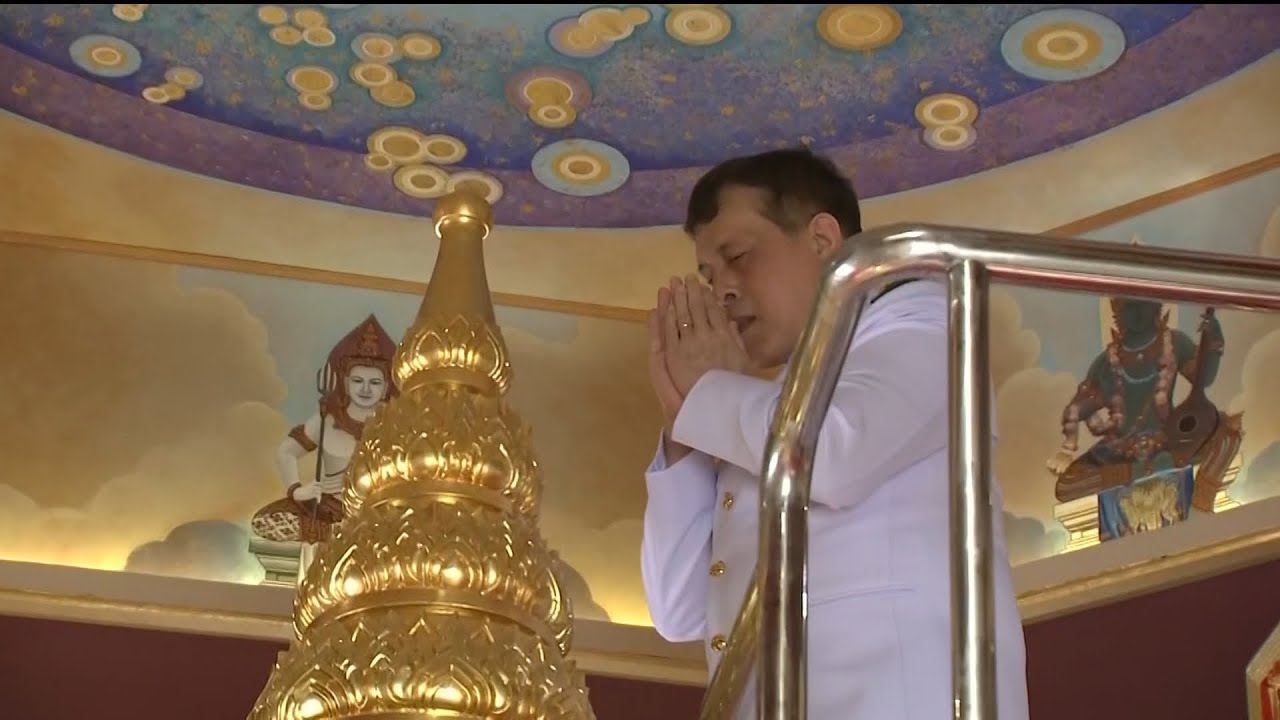
September 30, 2023, was one of the most important dates in the history of Narathiwat City Pillar Shrine. King Maha Vajiralongkorn and Queen Suthida traveled to the Cultural Courtyard of Provincial Hall Building No. 1 and officially opened the shrine. The King also performed important royal ceremonies associated with the sacred city pillar.
During the royal ceremony, sacred inscriptions were sprinkled and anointed before being placed within the city pillar. The King installed the ornamental finial, applied gold leaf, tied pink ceremonial cloth around the pillar, and placed a floral garland upon it. Buddhist monks chanted auspicious verses, accompanied by traditional ceremonial music and instruments.
The shrine's royal opening took place on the same day as the official opening of the new Narathiwat Provincial Hall in Lam Phu Subdistrict. These were separate locations. The city pillar shrine stands in Khok Khian at Provincial Hall Building No. 1, while the newer administrative building stands in Lam Phu. Keeping the two locations distinct is essential to understanding the province's civic landscape.
After the opening, the shrine became the setting for important provincial events. In 2024, the province organized a city pillar celebration from September 29 to October 1, helping introduce the new landmark to residents and visitors.
The celebration was not merely an architectural event. It provided opportunities for public worship, cultural activities, and the sharing of historical knowledge about the shrine. Through such programs, the site began to function as an active center of provincial cultural life.
In 2025, the shrine was included in the province's ceremonial program associated with its annual fair and Red Cross celebrations. Offerings took place at several important provincial landmarks, including the governor's residence, government offices, and the city pillar shrine. This demonstrated the shrine's continued involvement in official provincial ceremonies.
In early 2026, Narathiwat Province introduced regular public visiting arrangements. Access began on February 14, followed by an official worship ceremony on February 16. Governor Bunchuay Homyamyen presided over the ceremony, joined by senior provincial officers, government representatives, and residents.
The new visiting arrangements established daily opening hours from 07:00 to 19:00. This allowed residents and visitors to enter the shrine for worship and to appreciate its architecture during designated hours. The surrounding cultural courtyard continued to provide an appropriate setting for public events.
On May 9, 2026, the province held another city pillar worship ceremony as part of celebrations marking the 111th anniversary of the naming of Narathiwat. Governor Bunchuay Homyamyen presided over the proceedings. The observance was connected with the provincial fair and Red Cross activities held from May 9 to May 19.
The May 2026 ceremony highlighted the continuing relationship between the city pillar shrine and the history of the province's name. The participation of public agencies and residents reflected the shrine's growing role within the province's ceremonial calendar.
The city pillar shrine is a sacred civic landmark rather than a Buddhist monastery. It does not have resident monks or an abbot. Maintenance, visiting arrangements, and major ceremonies are associated with Narathiwat provincial authorities and participating government agencies.
For worshippers, the city pillar symbolizes protection, stability, and auspiciousness. People may visit to express wishes concerning work, personal safety, and family well-being. Others come primarily to admire the building and learn about the province's history. These different purposes make the shrine both a sacred place and a cultural attraction.
The shrine stands within a province characterized by religious diversity. Buddhist temples, mosques, and other religious institutions serve different communities and follow their own traditions. The city pillar shrine adds another element to the province's cultural landscape without replacing the distinct functions of these religious places.
For those interested in architecture, the shrine offers several remarkable features: white marble, four-sided entrances, nine spires, repoussé metal doors, a carved granite conch motif, and the octagonal painted ceiling. Together, these elements make the building an important example of contemporary traditional Thai craftsmanship with regional southern influences.
From the front courtyard, the symmetrical architectural composition becomes especially clear. The tall central structure contrasts with the open sky, while the white balustrades and broad staircase add ceremonial dignity. Trees and ornamental planting help frame the building.
The entrance also reveals the use of different materials. Granite is used in the approach, marble forms much of the architectural body, metal is used for the decorative doors, and stucco provides ornamental detailing. Each material contributes to the overall artistic character of the shrine.
The interior has a distinctive atmosphere created by the placement of the city pillar beneath the octagonal ceiling. The zodiac paintings and directional guardians provide a symbolic framework surrounding the sacred center. This arrangement demonstrates how architecture and painting can work together to express traditional concepts of cosmic order and protection.
The interior paintings are also valuable for understanding Thai artistic traditions. Zodiac imagery and guardian deities appear in many forms of historic religious and ceremonial art. Their inclusion in the new provincial shrine demonstrates the continued use of these visual languages in contemporary cultural projects.
The surrounding Cultural Courtyard serves both as part of the shrine's landscape and as a gathering place for provincial ceremonies. Its openness provides unobstructed views of the building from different angles. On ordinary days, the grounds offer a relatively peaceful setting for visitors to approach the shrine.
A visit can be combined with several important attractions in Mueang Narathiwat District, including Narathiwat Central Mosque, Narathat Beach, the Bang Nara River area, Khao Kong Buddhist Park, the revered Phra Phuttha Thaksin Ming Mongkhon Buddha image, and the Pikun Thong Royal Development Study Centre. Each represents a different aspect of the province's culture, religion, natural environment, or social development.
Narathiwat Central Mosque is an important religious landmark for the Muslim community. Situated near Phichai Bamrung Road, Preeda Bridge, and the coastal area, it provides a place for communal prayer and religious observances. Its Islamic architectural character contributes to the distinctive urban landscape of Narathiwat Town.
The mosque and the city pillar shrine represent different religious and cultural functions. The mosque is a place of Islamic worship, while the city pillar shrine follows traditional Thai ceremonial beliefs associated with the symbolic protection of a town. Both are important landmarks within the same district and illustrate the province's cultural diversity.
Narathat Beach is a well-known coastal attraction in central Narathiwat. The beach extends along the Gulf of Thailand and provides a recreational environment with open sea views and coastal trees. Traveling from the city pillar shrine to the beach introduces a contrast between the ceremonial government precinct and the natural landscape of the coast.
The Bang Nara River area is another historically important part of the town. The river influenced settlement, transportation, and commerce, and its name remains closely connected with the town's earlier identity. Riverside markets and public areas continue to provide places where residents gather and participate in everyday urban life.
Yakang Community Floating Market showcases local food, traditional desserts, and community commerce. Its offerings reflect Thai and Malay cultural influences, making it a place where visitors can experience Narathiwat's culinary traditions and the atmosphere of a local market.
Khao Kong Buddhist Park is an important Buddhist destination in the district. It is home to Phra Phuttha Thaksin Ming Mongkhon, a monumental Buddha image revered by local Buddhists. The site combines religious significance with a natural landscape and is one of the province's important cultural landmarks.
The Buddha image and its surrounding park offer a different religious setting from the city pillar shrine. Visiting both places introduces the distinction between a civic sacred symbol and a Buddhist devotional monument, while illustrating the province's variety of cultural sites.
The Pikun Thong Royal Development Study Centre is an important educational site devoted to research and development relating to natural resources and agriculture. Its work includes the study of highly acidic soils and methods for making land more productive under southern Thai environmental conditions. The center connects Narathiwat's geography with practical efforts to improve local livelihoods.
Ao Manao–Khao Tanyong National Park provides coastal landscapes, beaches, and elevated natural terrain. It is an important destination for enjoying the Gulf of Thailand coast and the natural environment of the lower southern region. A visit can be combined with cultural sightseeing in Narathiwat Town.
Thaksin Ratchaniwet Palace is another significant landmark in Mueang Narathiwat District. Its history is associated with royal visits and public duties in southern Thailand. It forms part of the broader historical landscape of the province, alongside other sites connected with royal development projects and provincial administration.
Narathiwat's cuisine reflects the influence of Malay communities and southern Thai cooking. Popular foods include khao yam, chicken biryani, roti, coconut-based curries, seafood, and noodle dishes prepared with regional herbs and spices. Exploring the local dining scene is therefore another way to appreciate the province's cultural identity.
Halal food is particularly important in central Narathiwat because a substantial part of the population is Muslim. Many restaurants prepare food in accordance with Islamic dietary practices, offering Malay-influenced dishes alongside familiar southern Thai meals.
Akhoo By Nasir on Sopapisai Road is a well-known halal dining establishment offering local and other popular dishes. Proud Halal Cuisine on Chit Patima Road provides a selection of Thai and contemporary meals. Both illustrate the variety of restaurant choices available within the urban area.
Zaab Menara, also on Sopapisai Road, offers flavorful Thai dishes, while Mee Bot Thong Tor on Suriya Pradit Road specializes in noodle meals. Roti De Forest's Narathiwat branch serves roti and breakfast dishes, reflecting the popularity of roti-based meals in the southern border region.
More contemporary dining options include D'lish Gourmet Narathiwat, which offers Thai and Western-influenced dishes, and Ayu Sushi & Shabu, which serves Japanese-style food adapted to local dining preferences. Together with traditional restaurants, these businesses reflect the development of a varied modern food scene.
Travelers staying overnight in Mueang Narathiwat District can choose among larger town hotels and smaller boutique-style properties. Options include The Imperial Narathiwat Hotel, Tanyong Hotel, Pacinn Narathiwat, Nara Pattra Hotel, and Phonphansa Boutique Hotel. These hotels are located in urban neighborhoods connected by road to shops, restaurants, and attractions.
The Imperial Narathiwat Hotel is situated on Phichit Bamrung Road in Bang Nak and is one of the town's larger hotels. Tanyong Hotel stands on Sopapisai Road and is another established accommodation option in the town center. Both are within the broader urban area served by local commercial facilities.
Pacinn Narathiwat on Worakhamphiphit Road, Nara Pattra Hotel on Pracha Phatthana Road, and Phonphansa Boutique Hotel on Ruam Uthit Road provide additional accommodation choices in Bang Nak. Their different styles and facilities offer alternatives for travelers using Narathiwat Town as a base.
Visitors seeking a coastal atmosphere can consider Heartwood Beach Resort in Kaluwo Nuea Subdistrict. This type of accommodation offers a different setting from central town hotels, combining access to the coast with road connections to Mueang Narathiwat's main attractions.
A town sightseeing route can begin at the city pillar shrine before continuing to Narathiwat Central Mosque, Narathat Beach, the Bang Nara River area, and Yakang Community Floating Market. The route brings together ceremonial architecture, religious heritage, coastal scenery, and local community life.
Those interested in Buddhist religious sites and royal development projects can continue to Khao Kong Buddhist Park and the Pikun Thong Royal Development Study Centre. Travelers interested in coastal nature can visit Ao Manao–Khao Tanyong National Park within the same wider district.
Getting There: Narathiwat City Pillar Shrine is located on Sun Ratchakan Road in Khok Khian Subdistrict, Mueang Narathiwat District, Narathiwat Province 96000, Thailand. It stands in the Cultural Courtyard of Narathiwat Provincial Hall Building No. 1. Drivers can follow the principal roads into Mueang Narathiwat and continue toward the older government complex in Khok Khian.
Travelers arriving at Narathiwat Airport can continue by available road transport toward the town and the government center. Those staying in Bang Nak or arriving at the town transport terminal can use the district's main road network to reach the shrine. Journey times depend on the starting point and local traffic conditions.
The shrine's regular visiting hours were introduced in February 2026, with daily public access from 07:00 to 19:00. These arrangements allow visitors to appreciate the marble architecture and interior artwork in daylight and to experience the shrine during the late afternoon and early evening within the designated opening period.
Narathiwat City Pillar Shrine is particularly valuable for understanding how a modern province can commemorate its historical identity through a sacred landmark. Its establishment was inspired by the centenary of the royal naming of Narathiwat, rather than by the original settlement of the area. The shrine therefore connects a documented historical milestone with traditional ceremonial beliefs in a contemporary setting.
The artistic features of the shrine demonstrate the continued importance of traditional Thai craftsmanship. The four-sided pavilion, carved marble, repoussé metalwork, zodiac paintings, and nine spires form a distinctive architectural composition. Their combination reflects cooperation among agencies specializing in architecture, heritage design, and construction.
The sacred pillar is housed in a building whose components reinforce its ceremonial meaning. From the entrance platform and decorated doors to the painted ceiling and spires, the architecture is organized around the significance of the city pillar. The result is a cohesive symbolic design that expresses auspiciousness and civic dignity.
The shrine's continuing role is demonstrated by its regular public opening and the ceremonies held in 2026. The observance on May 9, commemorating 111 years since the naming of Narathiwat, connected the history of the province with public respect for the city pillar and its place in contemporary community life.
Narathiwat City Pillar Shrine is therefore an important destination for understanding the province's history, architecture, and cultural traditions. From the project's beginning in 2015 and the installation ceremonies in 2022 to the royal opening in 2023 and regular public access in 2026, the sequence of events demonstrates the continued development of city pillar traditions in modern Thailand.
With its striking white-marble pavilion, nine stupa-like spires, sacred golden-teak city pillar, and richly painted zodiac and directional guardian imagery, Narathiwat City Pillar Shrine has become an architectural and cultural landmark of the southern border region. Its location within the former government precinct and its role in provincial ceremonies connect administrative history, traditional beliefs, craftsmanship, and the lives of Narathiwat residents in a single meaningful place.
| Place Name | Narathiwat City Pillar Shrine |
| Address | Cultural Courtyard, Narathiwat Provincial Hall Building No. 1, Sun Ratchakan Road, Khok Khian Subdistrict, Mueang Narathiwat District, Narathiwat Province 96000, Thailand |
| Map Location | Plus Code CRH2+JX4, Khok Khian, Mueang Narathiwat |
| Type of Attraction | City Pillar Shrine, Provincial Cultural Landmark, Traditional Thai Architectural Attraction |
| Main Highlights | White Marble Pavilion, Nine Stupa-Like Spires, Sacred City Pillar, Zodiac Ceiling Paintings, Eight Directional Guardian Deities, and Repoussé Metal Doors |
| Historical Background | Project Approved in 2015 to Commemorate 100 Years Since Narathiwat Received Its Name; City Pillar Ceremonies in September 2022; Construction Completed in April 2023; Royal Opening on September 30, 2023 |
| Public Opening | Public Access Began on February 14, 2026; Official Worship Opening Ceremony Held on February 16, 2026 |
| Architecture | Four-Sided Thai Pavilion with Nine Stupa-Like Spires, Inspired by Srivijaya and Lower Southern Thai Artistic Traditions |
| Building Dimensions | 26 m Wide; 20.25 m from the Elevated Base to the Highest Spire |
| Materials and Decoration | Carved Marble, Granite, Repoussé Metalwork, Mold-Cast Stucco, and Glazed Roof Tiles |
| Sacred City Pillar | Constructed from Golden Teak Sourced from Sai Yoi Subdistrict, Den Chai District, Phrae Province; the Selected Tree Was Approximately 133 Years Old |
| Main Areas and Features | 1. Four-Sided City Pillar Pavilion 2. Sacred City Pillar Chamber 3. Octagonal Ceiling with Zodiac and Guardian Paintings 4. Four Entrances with Repoussé Metal Doors 5. Raised Platform and Granite Staircase 6. Front Cultural Courtyard 7. Walkways and Landscaped Grounds |
| Design and Management | Designed by the Fine Arts Department's Bureau of Architecture and Narathiwat Provincial Public Works and Town and Country Planning Office; Provincial Authorities Coordinate Major Ceremonies and Public Visiting Arrangements |
| Abbot | Not Applicable; the Shrine Is Not a Buddhist Monastery |
| Important Traditions | City Pillar Worship Ceremonies, Provincial Celebrations, and the May 9, 2026 Ceremony Commemorating 111 Years Since the Naming of Narathiwat |
| Open Days | Daily |
| Opening Hours | 07:00 – 19:00 |
| Admission Fee | Free General Admission |
| Facilities | Ceremonial Courtyard, Walkways, Public Toilets, and Parking in the Former Provincial Government Complex |
| Getting There | Follow Sun Ratchakan Road to Narathiwat Provincial Hall Building No. 1 in Khok Khian Subdistrict |
| Provincial Office Contact | +66 73 642 616 to +66 73 642 620 |
| Nearby Attractions and Connected Destinations | 1. Narathiwat Provincial Hall Building No. 1 and Cultural Courtyard – Same Grounds 2. Narathiwat Central Mosque – Phichai Bamrung Road, Bang Nak 3. Narathat Beach – Gulf of Thailand Coast, Mueang Narathiwat 4. Yakang Community Floating Market – Bang Nak 5. Khao Kong Buddhist Park and Phra Phuttha Thaksin Ming Mongkhon – Mueang Narathiwat 6. Pikun Thong Royal Development Study Centre – Mueang Narathiwat 7. Ao Manao–Khao Tanyong National Park – Kaluwo Nuea, Tel. +66 73 542 344 8. Thaksin Ratchaniwet Palace – Mueang Narathiwat |
| Restaurants in Narathiwat Town | 1. Akhoo By Nasir – Sopapisai Road, Tel. +66 83 505 1715 2. Proud Halal Cuisine – Chit Patima Road, Tel. +66 80 629 4692 3. Zaab Menara – Sopapisai Road, Tel. +66 90 179 5044 4. Mee Bot Thong Tor – Suriya Pradit Road, Tel. +66 98 955 2898 5. Roti De Forest Narathiwat – Bang Nak, Tel. +66 81 169 7735 6. D'lish Gourmet Narathiwat – Bypass Road, Tel. +66 65 223 5100 7. Ayu Sushi & Shabu – Bang Nak, Tel. +66 83 534 8004 |
| Accommodations in Mueang Narathiwat | 1. The Imperial Narathiwat Hotel – Phichit Bamrung Road, Bang Nak, Tel. +66 73 515 041 2. Tanyong Hotel – Sopapisai Road, Bang Nak, Tel. +66 73 511 477 3. Pacinn Narathiwat – Worakhamphiphit Road, Bang Nak, Tel. +66 82 835 4757 4. Nara Pattra Hotel – Pracha Phatthana Road, Bang Nak, Tel. +66 94 474 2298 5. Phonphansa Boutique Hotel – Ruam Uthit Road, Bang Nak, Tel. +66 63 258 8668 6. Heartwood Beach Resort – Kaluwo Nuea, Tel. +66 89 391 0015 |
| Current Status | Open Daily for Public Worship, with Provincial Ceremonies Held in 2026 |
Frequently Asked Questions (FAQ)
Q: Where is Narathiwat City Pillar Shrine located?
A: The shrine is in the Cultural Courtyard of Narathiwat Provincial Hall Building No. 1, Sun Ratchakan Road, Khok Khian Subdistrict, Mueang Narathiwat District, Narathiwat Province 96000, Thailand.
Q: What are the opening hours?
A: The shrine is open daily from 07:00 to 19:00 under the public visiting schedule introduced in February 2026.
Q: Is there an admission fee?
A: There is no general admission fee for public worship and sightseeing.
Q: When was Narathiwat City Pillar Shrine built?
A: The project began in 2015 to commemorate the centenary of the royal naming of Narathiwat. City pillar ceremonies took place in 2022, and the shrine was officially opened on September 30, 2023.
Q: What is distinctive about the shrine's architecture?
A: The building is a 20.25-meter-high four-sided pavilion with nine stupa-like spires, carved marble, decorative metal doors, and interior paintings of the zodiac and eight directional guardians.
Q: What kind of wood was used for the city pillar?
A: The city pillar was made using golden teak from Sai Yoi Subdistrict, Den Chai District, Phrae Province. The selected tree was approximately 133 years old.
Q: Is the shrine located at the new provincial hall?
A: No. The shrine is at Provincial Hall Building No. 1 in Khok Khian. Provincial Hall Building No. 2 is in Lam Phu Subdistrict.
Q: Does Narathiwat City Pillar Shrine have an abbot?
A: No. It is a city pillar shrine rather than a Buddhist monastery, so there is no resident abbot.
 Category: ●Places of Worship
 Group: ●Other Sacred Sites
Last Update : 5 DayAgo
 Last Update : 5 DayAgo
 Click to Access the Navigation Map GPS
Narathiwat City Pillar Shrine Map

 Art, Culture and Heritage
 Landmarks and Memorials(8)
 Royal Palace(1)
 Art, Craft Centres, Tradition(7)
 Museums(4)
 Art Gallery(1)
 Temple(16)
 Mosque(23)
Other Sacred Sites(5)
 Research and Development
 Royal Project(1)
 Suburban Living
 Village, Community(9)
 Local Market(1)
 Nature and Wildlife
 National Parks and Marine Reserves(5)
 Mountain (Doi)(2)
 Dam, Reservoir, Lake(2)
 Waterfalls(16)
 River, Canal(3)
 Bays and Beaches(5)
 Islands(1)
 Other natural attractions(4)
 Entertainment and Agricultural
 Stadium(1)
 Farms, Parks and Ecotourism(7)
 Shopping
 Shopping and Night Market(1)
 Travel Articles, Recipes
 Travel Review, Food Review(1)


