
lovethailand home >South Travel Attractions >Krabi Travel Attractions >Muang >Pak Nam > Krabi City Pillar Shrine
TL;DR: Krabi City Pillar Shrine is located at Krabi Provincial Hall Grounds, Utarakit Road, Pak Nam Subdistrict, Mueang Krabi District, Krabi Province 81000, Thailand, open Daily, hours 06:00 – 18:00.
Krabi City Pillar Shrine
Open Days: Daily
Opening Hours: 06:00 – 18:00
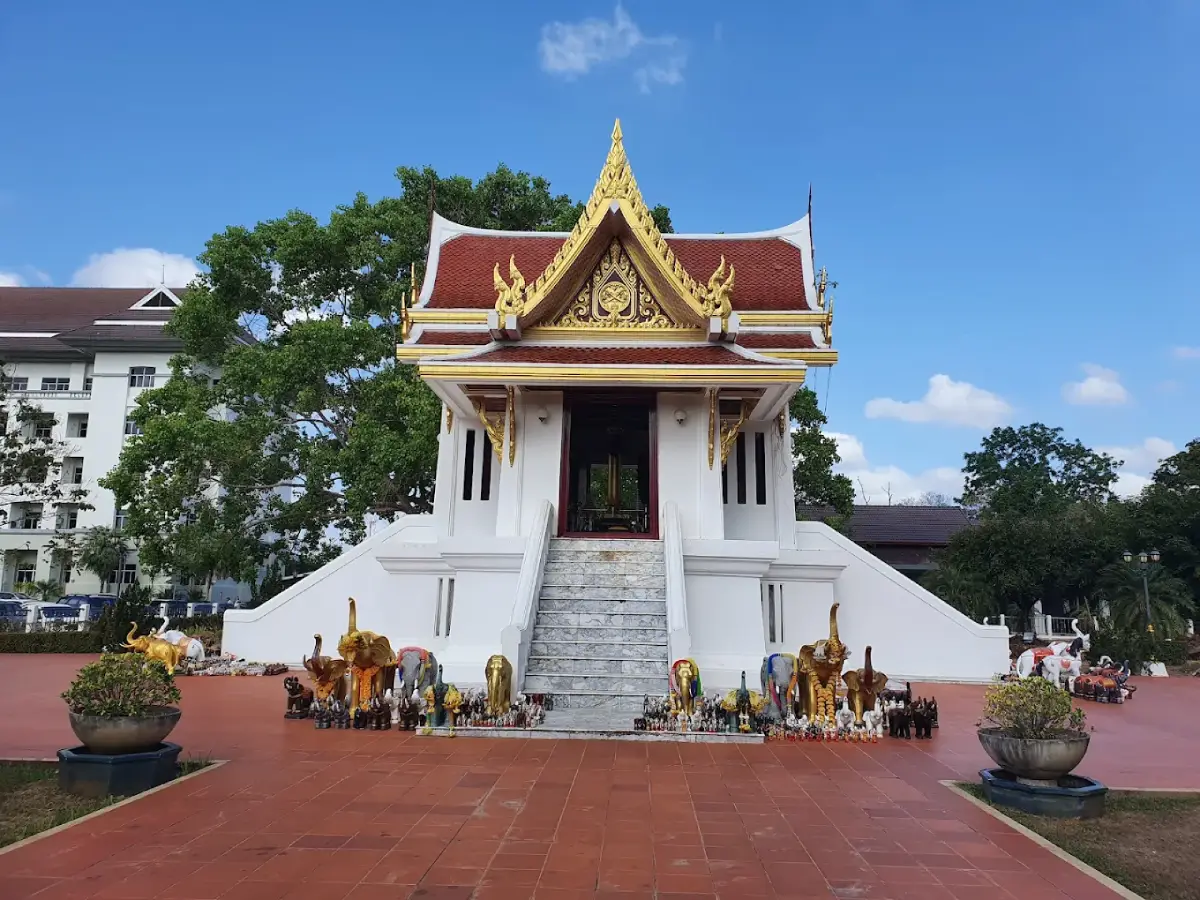
Krabi City Pillar Shrine is an important sacred landmark associated with the history, beliefs, and cultural identity of Krabi Province in southern Thailand. Located within the Krabi Provincial Hall grounds on Utarakit Road, Pak Nam Subdistrict, Mueang Krabi District, Krabi Province 81000, the shrine is distinguished by its traditional Thai architecture. The white pavilion stands on a raised platform beneath an ornate red-tiled roof decorated with golden gables and traditional roof ornaments. Landscaped gardens and neatly arranged ornamental plants surround the building, creating a peaceful setting within Krabi's provincial government district. Inside, the sacred city pillar is the principal object of worship. Residents and visitors come to pay their respects, seek blessings for prosperity and personal stability, and express their connection with the town's guardian traditions. The shrine also serves as an important setting for provincial worship ceremonies and cultural activities that connect established Thai beliefs with the multicultural character of Krabi.
The importance of Krabi City Pillar Shrine lies in its role as a shared spiritual symbol within a province shaped by centuries of settlement, maritime commerce, and cultural interaction. Krabi occupies part of Thailand's Andaman Sea coast and has longstanding connections with fishing communities, trading vessels, the Malay Peninsula, Thai Buddhists, Thai Muslims, and Thai-Chinese merchants. Against this diverse historical background, the city pillar represents a symbolic connection between people of different communities and the town to which they belong.
The shrine stands in the provincial administrative district, close to Krabi Provincial Hall and the monument to King Chulalongkorn, King Rama V. This location has particular historical significance because it forms part of the urban center that developed after the administrative headquarters were moved from Ban Talat Kao to Pak Nam in the early twentieth century. The shrine's position within this civic landscape gives it a relationship with Krabi's administrative history as well as its spiritual traditions.
Visitors approaching the shrine encounter a paved walkway bordered by green lawns and ornamental hedges. The pathway leads directly toward the elevated white pavilion, whose red roof and gilded decorations stand out against the trees. The building's symmetrical appearance creates a dignified impression, while the surrounding garden gives the site a quiet atmosphere despite its location close to government offices and active town roads.
The history of Krabi began long before the construction of the present city pillar shrine. Archaeological evidence from the wider province demonstrates human activity dating back to prehistoric times. The area's limestone mountains, caves, rivers, mangrove forests, and coastal environments provided resources that supported communities over many centuries. Krabi's location beside the Andaman Sea also connected it with maritime travel and commercial exchanges across the region.
In administrative history, Krabi developed from communities associated with Pakasai and other settlements under the influence of larger southern Thai centers, particularly Nakhon Si Thammarat. As transport networks and commercial activities expanded, local settlements became more closely integrated into formal systems of administration. The region's rivers, coastal routes, and agricultural resources shaped where people established homes and how settlements developed.
In 1872, King Chulalongkorn, King Rama V, elevated the Pakasai administrative area to town status and bestowed the name Mueang Krabi. Luang Thep Sena became its first governor, and the administrative headquarters were initially established at Ban Talat Kao in the Krabi Yai area. In 1875, Krabi was reorganized as a fourth-class town directly administered from Bangkok rather than remaining under Nakhon Si Thammarat.
Early Krabi faced considerable challenges relating to transportation and geography. Forests, hills, rivers, and coastal waterways influenced movement between communities. Boats were particularly important for carrying people and goods before modern roads became widespread. An administrative center situated far from convenient deep-water access therefore faced practical limitations, especially as maritime commerce became increasingly important.
A major change occurred around 1900–1901, during the administration of Phraya Ratsadanupradit Mahison Phakdi as commissioner of the Phuket administrative circle and Phraya Utarakit Phichan as governor of Krabi. The town's administrative center was moved from Ban Talat Kao to Pak Nam because the new location was closer to the estuary and provided more convenient access for larger boats. This decision helped establish Pak Nam as the enduring administrative and commercial center of Krabi.
The Pak Nam area occupies elevated ground near the Krabi River and its connection with the Andaman Sea. This geographical position offered advantages for river transportation, maritime trade, and provincial administration. Over time, government buildings, commercial streets, and residential neighborhoods developed around the new center, shaping the Krabi Town familiar to residents and visitors today.
The relocation of the administrative center is an important part of the present shrine's historical context. Krabi City Pillar Shrine stands within the government district that developed after the move to Pak Nam. Its significance therefore includes a connection with the changing urban geography of the province and the establishment of Krabi Town as its principal administrative center.
The origin of the name Krabi is associated with several local legends. One well-known story tells of villagers discovering a large ancient sword and presenting it to the governor. A smaller sword of a similar form was subsequently found and also presented to the town's ruler. Believing the two swords to be auspicious objects, the governor arranged for them to be preserved as symbols of the settlement.
The legend further states that the two swords were placed crosswise inside a cave at Khao Khanab Nam while the town was being established. The crossed swords later became associated with the provincial emblem, while the names Krabi Yai and Krabi Noi were linked in popular tradition with the places where the larger and smaller swords had been discovered. Although the account belongs to local folklore, it remains an important part of Krabi's cultural memory and provincial identity.
Other explanations of the town's name refer to local plants and changes in pronunciation among communities speaking different languages. Traditions concerning Malay and Chinese merchants also form part of these narratives. Such accounts demonstrate the diversity of Krabi's historical cultural influences, although legends explaining the town's name are separate from the documented construction history of the present city pillar shrine.
In Thai tradition, a city pillar represents the ceremonial foundation and symbolic center of a settlement. The establishment of a shrine around the pillar provides a place where residents can express respect for the spiritual guardians of the town and seek blessings for peace, stability, and prosperity. This concept is found throughout Thailand, although individual city pillar shrines differ in architectural design, ritual practices, and the circumstances of their construction.
City pillar traditions are associated with Brahmanical ceremonies and local beliefs concerning the protection of land and communities. The selection of a location, ceremonial timing, and presentation of offerings are important elements of these customs. While practices vary between towns, they share the idea that a city possesses a sacred point representing its collective stability and well-being.
Krabi's establishment as a town in 1872 should not be confused with the construction of the present shrine. The existing structure was developed much later within the provincial government district. Documents concerning subsequent renovation refer to the shrine as having been built in 1992. Its present architectural and ceremonial identity therefore belongs to a later phase of Krabi's urban development rather than the town's original nineteenth-century establishment.
The construction of the shrine formed part of the modern development of civic and public landmarks in Krabi Town. It provided a dedicated place for the worship of the city pillar and contributed a traditional architectural feature to the government precinct. Through the shrine, contemporary residents gained a visible sacred landmark associated with the town's identity and ceremonial life.
As with other buildings exposed to tropical weather, maintenance and renovation became necessary over time. Documents associated with the development of a nearby Jatukam Ramathep sacred site in the late 2000s referred to repairs needed at the city pillar shrine, including work on the roof and interior components. These efforts reflect the continuing importance of maintaining the building as a functioning place of worship.
The present shrine is particularly recognizable for its traditional Thai pavilion design. The white building stands on a raised platform beneath a red-tiled roof decorated with gold-colored ornaments. Its gables, finials, and roof details employ forms associated with traditional Thai religious architecture. The result is a compact but dignified structure within a landscaped public setting.
The entrance is approached by a broad staircase leading to the principal doorway. Pale stone steps contrast with the white walls, and the ornately decorated gable above the entrance creates a visual focus. Columns and projecting roof eaves provide balance, while the building's proportions are well suited to the warm and humid conditions of southern Thailand.
The roof displays traditional Thai craftsmanship through the use of chofa, bairaka, and other ornamental elements. Gold-colored details emphasize the roofline and gables, giving the building a ceremonial character that distinguishes it from the government offices nearby. The decoration conveys the importance of the shrine even though the building occupies a relatively small area.
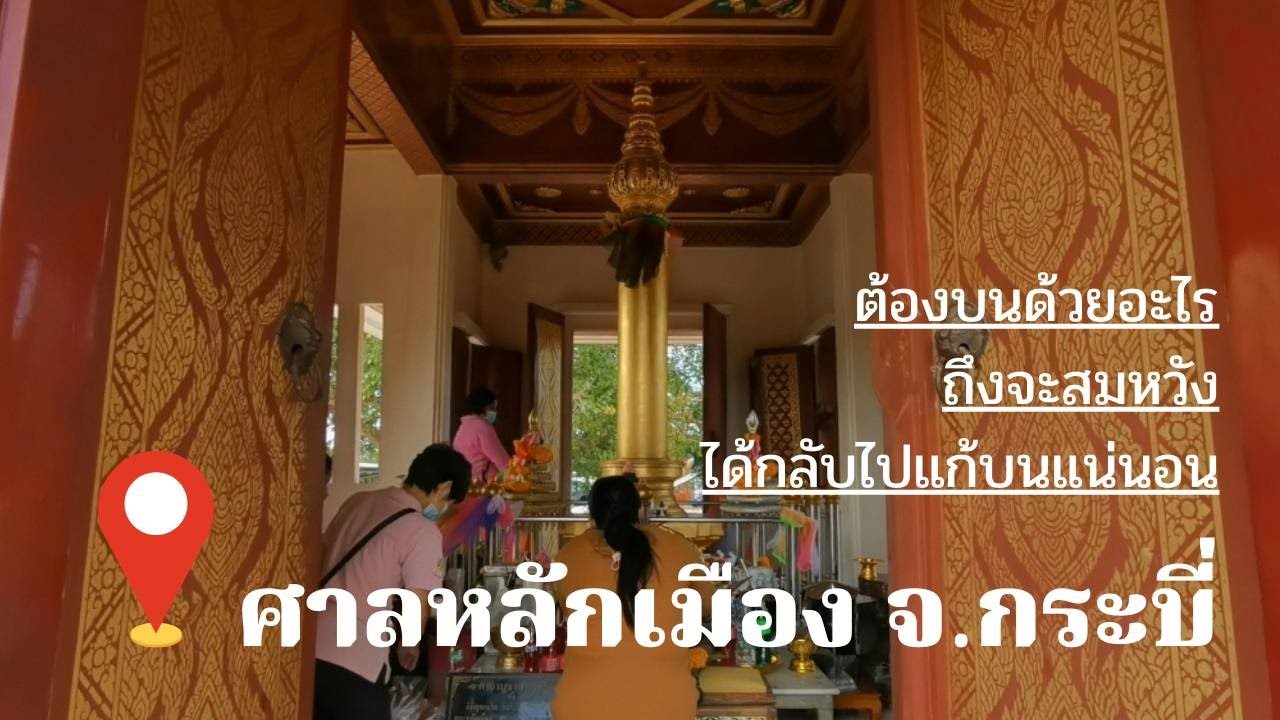
Inside the shrine, the city pillar occupies the central position. Areas around the pillar are arranged for worship and the presentation of offerings. Decorative ceiling panels and other interior features include rich red-and-gold motifs that contribute to the sacred atmosphere. The arrangement of the interior directs attention toward the pillar as the principal object of devotion.
The sacred pillar is revered as a symbol of the city's protection and stability. Its enclosure within the shrine protects it from the weather and provides a defined ceremonial setting. Flowers, garlands, and other offerings may be placed in designated spaces, allowing visitors to express respect according to their personal beliefs and local traditions.
Offerings traditionally include flowers, incense, candles, garlands, colored cloth, and other customary items. Families may approach worship in slightly different ways according to their beliefs. The essential purpose is an expression of reverence toward the city pillar and the auspicious meanings associated with the spiritual guardianship of the town.
Small elephant and animal figurines can also be seen around the base of the building. Such objects are common offerings at sacred places in Thailand. Elephants carry symbolic associations with auspiciousness, strength, and respect, while the placement of these figurines illustrates the variety of material expressions of popular devotion.
Colored ceremonial cloth and floral offerings add a distinctive appearance to the interior. Their significance lies in the beliefs of those presenting them rather than their monetary value. These objects demonstrate that the shrine remains an active place where residents continue to express their personal and communal faith.
The landscaped surroundings are another defining characteristic of the shrine. A terracotta-colored paved path extends toward the staircase, with green lawns and hedges on either side. Mature trees provide shade, softening the appearance of the surrounding government district and creating a pleasant setting for the sacred pavilion.
The symmetrical layout of the approach makes the shrine the visual centerpiece of the grounds. Ornamental planting frames the building and guides the eye toward the gilded gable and elevated entrance. The surrounding open space allows the complete form of the pavilion to be appreciated without the visual obstruction of closely packed buildings.
Krabi City Pillar Shrine is not a Buddhist monastery. It does not have resident monks, an ordination hall, or an abbot. Its principal function is the enshrinement of the city pillar and the performance of ceremonies associated with the town's sacred traditions. Provincial government agencies and relevant organizations participate in important events, while residents and visitors use the shrine for worship during its published visiting hours.
This distinction is important for understanding Krabi's religious landscape. Buddhist temples have monastic communities, Buddha images, and buildings dedicated to religious practice. A city pillar shrine, by contrast, is centered on a symbolic civic guardian. Both kinds of sacred place are part of Thai cultural life and may be visited by people who wish to understand different expressions of local tradition.
Krabi is home to communities with varied ethnic, religious, and cultural backgrounds. Thai Buddhists, Thai Muslims, and Thai-Chinese residents form important parts of the province's population. Buddhist temples, mosques, Chinese shrines, and the city pillar shrine consequently occupy different roles within the cultural landscape. Together, they illustrate the diversity of communities that have contributed to Krabi's development.
Residents visit the city pillar shrine on different occasions. Some come before beginning a new job or undertaking an important personal activity, while families may visit during holidays or provincial celebrations. Visitors from other parts of Thailand may also stop at the shrine when arriving in Krabi Town. These practices reflect the use of sacred landmarks as places of reassurance, respect, and personal connection with a community.
The shrine is also involved in important provincial ceremonies. Government agencies may arrange worship or offerings at the city pillar before major public events, expressing respect for the city's sacred guardian and seeking auspiciousness for the activities ahead. Such ceremonies connect traditional beliefs with the contemporary civic life of the province.
One notable ceremony took place on April 2, 2026, when Krabi Province held a Brahmanical worship ceremony at the shrine ahead of the annual Songkran celebrations. Governor Angkun Silathevakul, along with representatives of provincial agencies and other participants, attended the early-morning event. The ceremony highlighted the shrine's importance as a starting point for major provincial celebrations.
Songkran marks the traditional Thai New Year and is closely associated with renewal and auspiciousness. Holding a city pillar ceremony before the festivities connected the hopes of the new year with established beliefs concerning the protection and prosperity of the town. The participation of provincial officials and community representatives demonstrated the continuing public importance of the shrine.
Another important event occurred on October 14, 2026, when the opening ceremony of the Krabi Vegetarian Festival was held at the city pillar shrine grounds in Pak Nam. The event brought together participating Chinese shrines and devotees from different parts of the province, illustrating the role of the provincial civic precinct as a setting for multicultural public ceremonies.
The 2026 Vegetarian Festival marked its twentieth year and involved 87 participating Chinese shrines. The celebration included processions and cultural activities linked to the province's Thai-Chinese communities. Using the city pillar grounds for the opening ceremony demonstrated how an important civic landmark could accommodate major events associated with different cultural traditions.
The Vegetarian Festival has particular significance in southern Thai-Chinese culture. Its practices involve religious observances, dietary restrictions, and ceremonies organized by participating shrines. The continued celebration in Krabi reflects the history and identity of communities whose ancestors were involved in commerce and settlement along the Andaman coast.
Holding the festival opening near the city pillar does not mean that the city pillar shrine is itself a Chinese shrine. The city pillar and Chinese shrines have different historical and ceremonial purposes. Their relationship in this context comes from the use of a shared public setting for a major provincial cultural event.
The shrine is also connected with an important royal visit to Krabi. On December 9, 2016, King Maha Vajiralongkorn, King Rama X, traveled to the province for the official opening of the new provincial hall. During the visit, he paid his respects at Krabi City Pillar Shrine before continuing with the royal ceremony at the government complex. The event forms part of the modern history of the provincial administrative precinct.
The nearby monument to King Chulalongkorn adds another historical dimension to the site. Krabi was elevated to town status during his reign, and the monument commemorates the monarch associated with an important stage of the province's administrative development. The presence of the monument and the city pillar shrine within the same civic district helps visitors understand the relationship between provincial government history and sacred civic traditions.
Krabi City Pillar Shrine consequently has several overlapping meanings. It is a place of worship, an architectural landmark, a symbol of provincial administration, and a setting for important public events. These roles explain why the shrine remains culturally significant beyond its relatively small physical size.
For visitors interested in architecture, the most distinctive features are the gilded gable, decorative roof finials, raised entrance staircase, and sacred pillar inside. The carefully arranged proportions demonstrate how traditional Thai motifs can be used in a modern ceremonial building to create dignity and a recognizable sense of place.
Viewed from the front, the symmetrical garden walkway provides an especially clear perspective on the pavilion. From the sides, the projecting roof sections and raised foundation become more apparent. The lawns surrounding the shrine allow visitors to observe the building from several angles while appreciating its relationship with the landscape.
Upon reaching the entrance, details of the doorway and interior decorations become visible. The city pillar occupies the central sacred space, framed by the architecture and offerings around it. The arrangement encourages attention to the pillar and reinforces the idea of a symbolic center within the shrine.
The atmosphere inside the shrine is generally quiet and appropriate for worship. Families may come together to pay their respects, while visitors interested in local heritage can observe the architectural craftsmanship. In this way, the site serves both as an active sacred place and as a cultural landmark introducing travelers to the beliefs of Krabi.
The shrine's central location makes it convenient to combine a visit with historic and cultural attractions in Krabi Town. Wat Kaew Korawaram, Maharaj Market, Krabi Walking Street, and several riverfront viewpoints are all located within the wider town center. These places offer contrasting perspectives on religious heritage, trade, everyday community life, and the natural setting of the province.
Wat Kaew Korawaram is one of the most important Buddhist temples in central Krabi. Located on elevated ground near Itsara Road, it is distinguished by striking white religious buildings and a prominent approach staircase. Its history is associated with the growth of the Pak Nam community after the administrative center of Krabi moved to the area.
The temple originated through the efforts of local Buddhist residents who established a place for religious activities in the developing Pak Nam settlement. It was originally known as Wat Pak Nam before undergoing further development and eventually receiving its present name. Its history illustrates how Buddhist religious institutions developed alongside the growth of Krabi Town.
Wat Kaew Korawaram is notable for its white architecture and traditional roof forms. Because it stands above surrounding street level, its staircase and elevated grounds create a distinctive urban landmark. Visitors can appreciate the temple's architecture while experiencing the quieter atmosphere of a Buddhist religious site within the town center.
Visiting Wat Kaew Korawaram alongside the city pillar shrine reveals the different roles of the two sacred places. The temple is a center of Buddhist religious practice, while the city pillar shrine is associated with the symbolic protection of the town. Both are connected with different stages of the urban development of Pak Nam.
The Black Crab Sculpture is another famous landmark of Krabi Town. Situated along the Krabi River near Utarakit Road, the sculpture depicts a mother crab with her young. The artwork symbolizes family relationships and has become a popular riverside viewpoint, with Khao Khanab Nam visible across the river.
Khao Khanab Nam consists of two prominent limestone hills standing near the Krabi River. Their striking appearance makes them one of the natural symbols of Krabi Town. The cliffs rise above a landscape of waterways and mangrove forests, creating a memorable setting that contrasts with the streets and buildings of the urban center.
The hills are also connected with the local sword legend and the imagery of the provincial emblem. Their significance therefore extends beyond natural scenery. They form part of Krabi's cultural memory and are associated with stories about the historical identity of the town.
Boat trips along the river offer another way to appreciate Khao Khanab Nam and the surrounding environment. Depending on the route, travelers may see mangrove forests, limestone formations, and riverside communities. The journey illustrates the importance of estuarine ecosystems and waterways to the historical development of Krabi.
Chao Fah Park is a public green space on the Krabi riverfront. Walking paths and open areas allow residents to relax beside the water, particularly later in the day. Nearby food stalls and markets contribute to the area's lively urban atmosphere, making the park an important part of everyday life in the provincial town.
Krabi Walking Street is a well-known weekend market in the town center, generally held around the Maharaj Road area. Vendors sell local food, snacks, drinks, handicrafts, clothing, and souvenirs. Cultural performances sometimes accompany the evening market, giving visitors a view of contemporary Krabi beyond its beaches and island attractions.
Maharaj Market is an important fresh market where residents shop for vegetables, fruit, meat, seafood, and everyday ingredients. Its stalls reflect the agricultural and maritime economy of the province. A visit provides insight into local shopping habits and the products used in southern Thai cooking.
Krabi's markets are particularly interesting because of the province's varied food traditions. Fresh seafood, herbs, spices, curry ingredients, and locally grown vegetables all play important roles in the regional diet. The presence of Buddhist and Muslim communities contributes further variety to the ingredients and dishes available in the town.
Southern Thai cuisine is an important element of Krabi's cultural identity. Typical dishes include spicy sour curries, khua kling, fish-based curries, nam phrik with fresh vegetables, khao yam, and seafood prepared with herbs and locally blended curry pastes. Chinese and Muslim culinary influences also contribute to the diversity of food available across the province.
Restaurants in Krabi Town range from local family-operated kitchens and seafood restaurants to cafés and contemporary dining establishments. Racha Seafood is one of the Thai restaurants in the Pak Nam area. Lan Lek Lek on Maharaj Soi 10 serves familiar Thai dishes, while Chalita Café and Restaurant and First Restaurant provide additional dining options around the central town and Chao Fah Road.
This range of restaurants reflects Krabi's dual role as a residential town and a major tourism center. Residents use the local dining scene for everyday meals, while visitors can experience southern Thai cuisine alongside dishes prepared for a wider range of tastes. Traditional ingredients remain an important part of the town's culinary identity.
Accommodation in central Krabi includes small boutique hotels, riverside properties, and practical town hotels. Options include Krabi River Hotel, The Brown Hotel, Family Tree Hotel, Into The Town Hotel, and HOP INN Krabi. These establishments differ in atmosphere and facilities, but all are located within the broader town area rather than the beach resort district of Ao Nang.
Riverside accommodation offers convenient access to the promenade and waterfront scenery, while hotels around Maharaj Road are close to markets, shops, and dining establishments. Staying in Pak Nam also provides access to the city pillar shrine and the provincial administrative district through the town's road network.
Although Krabi Province is internationally famous for beaches and islands, the city pillar shrine is located in Krabi Town rather than the beach resort areas. Cultural sightseeing within the town can therefore be planned separately from trips to Ao Nang, Railay, and the offshore islands. The town also serves as a transport and accommodation base for journeys to other parts of the province.
Wat Tham Suea, commonly known as Tiger Cave Temple, is an important Buddhist destination outside the central town in Krabi Noi Subdistrict. The temple complex is known for its limestone landscape, caves, forest surroundings, and a hilltop sacred area reached by a long and demanding staircase. Its natural environment creates a very different experience from the compact city pillar shrine.
Exploring both places highlights the diversity of sacred architecture and religious landscapes in Krabi. The city pillar shrine focuses on civic symbolism and ceremonial traditions, while Wat Tham Suea combines Buddhist monastic activities with an extensive natural setting and dramatic elevated viewpoints.
Beyond the town's sacred landmarks, Krabi contains mangrove forests, waterways, limestone hills, beaches, and islands. These landscapes support activities ranging from fishing and agriculture to maritime transport and tourism. Understanding the city pillar shrine adds an urban cultural perspective to a province more frequently associated with its spectacular natural scenery.
The shrine remains an accessible cultural landmark for residents in their daily lives. People visiting the government district may also stop to pay their respects. This pattern reflects the continuing proximity between civic administration and spiritual traditions in many Thai provincial towns.
The city pillar also carries a wider meaning of community unity. It serves as a shared symbol for residents from different parts of the province. In a culturally diverse destination such as Krabi, a landmark associated with the town's history and spiritual protection helps express the relationship between the population and its common civic identity.
The shrine is equally valuable for understanding Krabi's modern administrative history. Its location recalls the movement of the provincial center to Pak Nam, while the building itself belongs to a later stage of urban development. Separating the town's establishment in 1872, its relocation around 1900–1901, and the construction of the present shrine provides a clearer understanding of the sequence of events.
Architecturally, the shrine demonstrates the continued use of traditional Thai decorative forms in contemporary ceremonial buildings. The gilded gable, ornamental roof elements, and raised platform communicate the building's sacred role. They also show how inherited artistic traditions remain visible in modern public landmarks.
The landscaped approach adds an important visual dimension. Trees, hedges, and open lawns frame the pavilion and distinguish it from the surrounding government offices. These elements create a setting that supports both quiet worship and appreciation of the building's appearance.
The shrine's involvement in the 2026 Songkran and Vegetarian Festival ceremonies demonstrates its continuing public role. Its grounds can serve as the starting point for major events involving large numbers of participants, while the shrine itself remains a place where people come to honor the sacred city pillar.
The ceremonies associated with the shrine do not all belong to an identical religious tradition. Rather, they show how a central civic sacred place can be connected with different kinds of public cultural activity. This interaction between established beliefs and modern provincial events is an important characteristic of the shrine's present-day significance.
For travelers interested in local history, the shrine is a meaningful starting point for exploring Krabi Town. Its location is directly connected with the development of the administrative center at Pak Nam. Nearby temples, markets, and riverfront attractions provide additional perspectives on the community's religious, economic, and geographical history.
Exploring Krabi through its city pillar shrine offers a way to understand the town beyond the familiar images of the Andaman Sea. The shrine introduces the symbolic foundation of the community, while temples, markets, and natural landmarks illustrate the many ways local residents have lived and worked across different periods.
Getting There: Krabi City Pillar Shrine is located within the grounds of Krabi Provincial Hall on Utarakit Road, Pak Nam Subdistrict, Mueang Krabi District, Krabi Province 81000, Thailand. Drivers can enter central Krabi Town and follow Utarakit Road toward the provincial government complex. The monument to King Chulalongkorn and the surrounding government buildings are useful landmarks.
Travelers arriving at Krabi International Airport can reach the town by following the main roads connecting the airport with central Krabi before continuing toward Utarakit Road. Those arriving by intercity bus can use locally available transport to reach the provincial government district. Routes and journey times depend on the starting location and traffic conditions.
From the shrine, visitors can continue to Wat Kaew Korawaram and the Maharaj Road area before exploring the Black Crab Sculpture and Chao Fah Park along the Krabi River. This route brings together a city pillar shrine, a Buddhist temple, local markets, and the natural scenery of the estuary within the wider town center.
Krabi City Pillar Shrine is an important place for understanding the province through its administrative history, sacred traditions, architecture, and multicultural community life. The white Thai pavilion with its red-and-gold roof remains a recognizable landmark within the government district, while ceremonies held in April and October 2026 demonstrate that the site continues to be used in important provincial events.
From the establishment of Krabi as a town in 1872 to the relocation of its administrative center around 1900–1901 and the later construction of the city pillar shrine, the history of this location reflects the transformation of a community shaped by waterways into an important provincial center and tourism destination. The shrine connects these stages of development through a sacred symbol respected by local people.
With its revered city pillar, peaceful landscaped surroundings, traditional Thai architecture, and proximity to historic urban landmarks, Krabi City Pillar Shrine remains a meaningful part of the province's cultural heritage. It reminds visitors that Krabi's identity encompasses more than beaches, islands, and tropical scenery. The province also has an important history of settlement, administrative development, artistic traditions, and shared cultural beliefs that continue to shape life in Krabi Town.
| Place Name | Krabi City Pillar Shrine |
| Address | Krabi Provincial Hall Grounds, Utarakit Road, Pak Nam Subdistrict, Mueang Krabi District, Krabi Province 81000, Thailand |
| Map Location | Plus Code: 3W59+V55, Krabi Town |
| Type of Attraction | City Pillar Shrine, Provincial Sacred Landmark, Historical and Cultural Attraction |
| Town History | 1872: Pakasai Was Elevated to Mueang Krabi 1875: Krabi Became a Fourth-Class Town Administered Directly from Bangkok Around 1900–1901: The Administrative Center Moved from Ban Talat Kao to Pak Nam |
| Shrine History | The Present Shrine Was Constructed Long After the Founding of Krabi. Historical Renovation Documents Refer to Construction Dating from 1992, Followed by Later Restoration Work. |
| Architecture | Traditional Thai Pavilion on a Raised Platform with White Walls, a Red-Tiled Roof, Gilded Gables, and Decorative Thai Roof Ornaments |
| Highlights | Sacred City Pillar, Ornamental Thai Architecture, Formal Entrance Staircase, Landscaped Walkway, Gardens, Elephant Figurines, and Traditional Offerings |
| Main Areas and Features | 1. Main City Pillar Shrine Building 2. Sacred City Pillar Area 3. Offering Area 4. Main Entrance and Staircase 5. Landscaped Walkway and Lawn 6. Ornamental Garden 7. Surrounding Provincial Hall Ceremonial Grounds |
| Organizations Involved in Ceremonies | Krabi Provincial Administration and Participating Government Agencies. The Shrine Is Not a Buddhist Monastery and Has No Abbot. |
| Important Events in 2026 | April 2, 2026: City Pillar Worship Ceremony Ahead of the Krabi Songkran Festival October 14, 2026: Opening Ceremony of the Krabi Vegetarian Festival at the City Pillar Shrine Grounds |
| Open Days | Daily |
| Opening Hours | 06:00 – 18:00 |
| Admission | Open for General Worship; No Ticketed Admission Is Listed |
| Facilities | Nearby Parking, Landscaped Walkways, and Wheelchair-Accessible Entry Listed in Visitor Information |
| Getting There | Travel to Central Krabi Town and Follow Utarakit Road to the Krabi Provincial Hall Grounds in Pak Nam. |
| Provincial Office Contact | Krabi Provincial Office: +66 75 611 381 |
| Attractions in Krabi Town and Surrounding Areas | 1. King Chulalongkorn Monument – Same Provincial Government Precinct 2. Wat Kaew Korawaram – Itsara Road, Pak Nam 3. Black Crab Sculpture – Krabi River Viewpoint, Utarakit Road 4. Chao Fah Park – Khongkha Road, Krabi Riverfront 5. Krabi Walking Street – Maharaj Road, Krabi Town 6. Maharaj Market – Maharaj Soi 7, Pak Nam 7. Khao Khanab Nam – Krabi River, Reached by Boat 8. Wat Tham Suea (Tiger Cave Temple) – Krabi Noi Subdistrict |
| Restaurants in Central Krabi | 1. Racha Seafood – Pak Nam, Tel. +66 90 701 8622 2. Lan Lek Lek – Maharaj Soi 10, Tel. +66 81 891 1958 3. Chalita Café and Restaurant – Chao Fah Alley, Tel. +66 81 206 6299 4. First Restaurant – Chao Fah Road, Tel. +66 91 218 5635 5. Food Stalls and Dining Vendors at Krabi Walking Street – Maharaj Road |
| Accommodations in Central Krabi | 1. Krabi River Hotel – Khongkha Road, Tel. +66 75 612 321 2. The Brown Hotel Krabi – Maharaj Road, Tel. +66 92 554 8778 3. Family Tree Hotel – Maharaj Soi 2, Tel. +66 75 612 562 4. Into The Town Hotel – Maharaj Soi 16, Tel. +66 86 999 8886 5. HOP INN Krabi – Ruamjit Road, Tel. +66 2 080 2222 6. Krabi Orchid Hometel – Maharaj Road, Tel. +66 86 196 8299 7. The 9th House – Chao Fah Road, Tel. +66 86 594 5062 8. Krabi River View Hotel – Utarakit Road, Tel. +66 75 620 288 |
| Current Status | Open for Public Worship and Used for Provincial Cultural Ceremonies in 2026 |
Frequently Asked Questions (FAQ)
Q: Where is Krabi City Pillar Shrine located?
A: It is located within the Krabi Provincial Hall grounds on Utarakit Road, Pak Nam Subdistrict, Mueang Krabi District, Krabi Province 81000, Thailand.
Q: What are the opening hours of Krabi City Pillar Shrine?
A: Published visitor information lists opening hours from 06:00 to 18:00 every day.
Q: Is there an admission fee?
A: The shrine is open for general worship, and no ticketed admission fee is listed.
Q: When was Krabi City Pillar Shrine built?
A: The present shrine was constructed long after Krabi was established as a town. Historical documents associated with later renovation work refer to its construction in 1992.
Q: What makes the shrine's architecture distinctive?
A: The shrine is a traditional Thai pavilion standing on a raised white platform, with a red-tiled roof, gilded gables, ornamental roof finials, and landscaped gardens.
Q: Does Krabi City Pillar Shrine have an abbot?
A: No. It is a city pillar shrine rather than a Buddhist monastery, so it does not have a resident abbot.
Q: What important ceremonies took place at the shrine in 2026?
A: A city pillar worship ceremony was held on April 2, 2026, ahead of the Krabi Songkran Festival. The shrine grounds also hosted the opening of the Krabi Vegetarian Festival on October 14, 2026.
Q: What attractions can visitors explore around Krabi City Pillar Shrine?
A: Attractions in the wider town area include Wat Kaew Korawaram, the Black Crab Sculpture, Chao Fah Park, Krabi Walking Street, Maharaj Market, and Khao Khanab Nam. Wat Tham Suea is another important destination in Krabi Noi Subdistrict.
 Category: ●Places of Worship
 Group: ●Other Sacred Sites
Last Update : 5 DayAgo
 Last Update : 5 DayAgo
 Click to Access the Navigation Map GPS
Krabi City Pillar Shrine Map
Recommend

 Art, Culture and Heritage
 Historical Sites and Monuments(1)
 Landmarks and Memorials(7)
 Art, Craft Centres, Tradition(2)
 Museums(2)
 Educational Places
 Educational Gardens, Farm(1)
 Temple(3)
 Mosque(2)
Other Sacred Sites(2)
 Research and Development
 Royal Project(1)
 Suburban Living
 Village, Community(6)
 Nature and Wildlife
 National Parks and Marine Reserves(5)
 Mountain (Doi)(2)
 Dam, Reservoir, Lake(3)
 Waterfalls(12)
 Hot Springs(3)
 Caves(20)
 River, Canal(2)
 Bays and Beaches(36)
 Islands(23)
 Other natural attractions(7)
 Entertainment and Agricultural
 Farms, Parks and Ecotourism(1)
 Outdoor and Adventure Activities(1)
 Travel Articles, Recipes
 Travel Review, Food Review(2)
 Southern Food Menu, Southern Food Recipes(1)


