
lovethailand home >North Travel Attractions >Nan Travel Attractions >Muang Nan >Pha Sing > Nan City Pillar Shrine
TL;DR: Nan City Pillar Shrine is located at Wat Ming Mueang, Suriyapong Road, Nai Wiang, Mueang Nan District, Nan 55000, Thailand, open Daily, hours 06:00 – 17:00.

Nan City Pillar Shrine
Open Days: Daily
Opening Hours: 06:00 – 17:00
Nan City Pillar Shrine, also known as Sao Ming Mueang, is one of the most historically and spiritually significant landmarks in Nan Province, northern Thailand. Located within Wat Ming Mueang on Suriyapong Road, Nai Wiang Subdistrict, Mueang Nan District, the shrine houses the sacred city pillar known locally as Sao Ming or Sao Ming Mueang. Its history dates back to 1788, during the reign of Chao Fa Atthawarapanyo, the 57th ruler of Nan. Today, the shrine remains an important place of worship, a symbol of civic identity, and a remarkable cultural attraction reflecting the historical traditions and artistic heritage of the former Nan Kingdom.
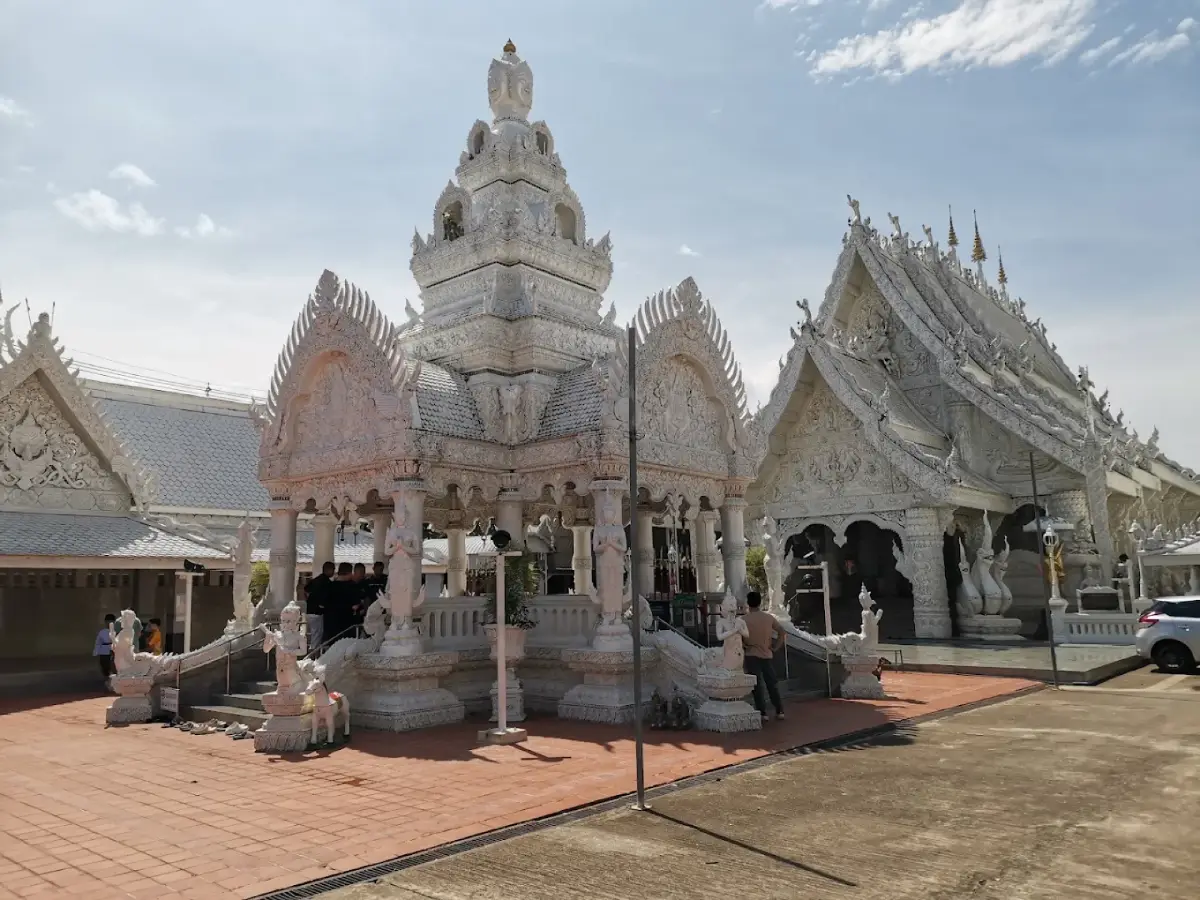
What makes Nan City Pillar Shrine particularly distinctive is the close relationship between its sacred traditions and the architectural beauty of Wat Ming Mueang. The city pillar stands inside a traditional four-sided Thai pavilion, with its upper section carved into four faces of Brahma. Nearby is the temple's magnificent white ordination hall, decorated with elaborate stucco reliefs influenced by the Chiang Saen school of northern Thai craftsmanship. Inside the hall, mural paintings portray aspects of local life and culture. Together, these features allow visitors to experience history, spirituality, architecture, and traditional northern Thai art within one sacred compound.
The shrine is situated in Nan's historic old town, surrounded by temples, museums, traditional neighborhoods, and other important cultural landmarks. Wat Phumin, Nan National Museum, Wat Phra That Chang Kham Worawihan, and Nan Walking Street are all located within the wider historic district. As a result, a visit to the City Pillar Shrine can easily become part of an exploration of Nan's religious heritage and the historic urban landscape that developed around the former royal center.
The historical significance of the shrine is closely connected with the development of Nan as an important settlement in northern Thailand. For centuries, the Nan River basin supported agriculture, transportation, and communication between communities. Its fertile valleys and surrounding mountains shaped patterns of settlement and the political development of the region. Nan eventually emerged as an important center of administration, Buddhist learning, and cultural activity within the northern Thai world.
The Nan River played a central role in the lives of local communities. It supplied water for agriculture and supported movement between settlements along the valley. The geographical setting of Nan, surrounded by mountainous terrain, influenced the location of population centers and the development of important routes. The old town where the City Pillar Shrine stands today is part of this long history of settlement and cultural adaptation.
Nan maintained important political and cultural connections with the Lanna Kingdom and other northern Thai centers. These relationships influenced the development of Buddhism, temple architecture, religious sculpture, and local artistic traditions. Although Nan shares many cultural features with other Lanna cities, it also developed distinctive forms of craftsmanship and local identity, visible in its temples, historical records, and ceremonial practices.
The establishment of a city pillar reflects traditional ideas concerning civic stability and the symbolic center of a settlement. Similar beliefs can be found in other parts of Thailand, but Nan's City Pillar has a particularly distinctive history because of its association with the former rulers of Nan, the changing location of the historic city, and major conservation work following a devastating flood. These developments have made the shrine an important expression of both spiritual continuity and community cooperation.
The most significant early chapter in the history of Nan City Pillar dates to the reign of Chao Fa Atthawarapanyo, the 57th ruler of Nan. He played an important role in rebuilding and strengthening the city during the early Rattanakosin period, following episodes of political instability and population movement. The establishment of the sacred pillar was part of the broader restoration of the city and provided a visible symbol of protection, stability, and prosperity.
According to the historical account preserved in Nan, the city pillar was originally installed on April 15, 1788. Chao Fa Atthawarapanyo selected a site near an abandoned temple, not far from the former royal residence known as Ho Kham. The former palace area is now occupied by Nan National Museum. The location of the pillar therefore reflects the traditional relationship between civic authority, the royal center, and a sacred landmark associated with the well-being of the community.
The original pillar site was associated with an abandoned religious compound, sometimes identified in historical interpretations with Wat Huai Khrai from the Sukhothai period. The area was subsequently restored and developed into Wat Ming Mueang. This connection means that the histories of the city pillar, the temple, and the former royal town overlap across several distinct periods of Nan's development.
The original city pillar was made from a large piece of golden teak. It was cylindrical, approximately three meters tall, and crowned with a carved lotus-bud finial. Unlike the present arrangement, the original pillar stood directly in the ground without a protective pavilion. This simple form emphasized the sacred significance of the wooden pillar itself, while also leaving it exposed to the surrounding environment.
Golden teak was an important material in the traditional architecture and craftsmanship of northern Thailand. Timber was widely used in houses, temples, ceremonial structures, and decorative woodcarving. Its durability and suitability for carving made it an appropriate material for significant objects. The use of golden teak for Nan's city pillar therefore reflects both the practical skills and cultural values of craftsmen in the region.
The lotus-bud finial of the original pillar was associated with symbolic forms commonly found in Thai religious art. The lotus represents purity and spiritual significance in Buddhist-influenced culture and appears in architectural ornaments, sculptures, and ceremonial objects. Carving the top of the city pillar into a lotus bud distinguished it from an ordinary wooden post and emphasized its symbolic role within the town.
For many generations, the original pillar remained exposed to sunlight, rain, humidity, and changes in soil conditions. Although teak is a durable wood, prolonged contact with the environment gradually affects its condition, especially where timber is embedded directly in the ground. Over time, the wooden pillar began to deteriorate, setting the stage for a major turning point in its history.
In 1963, Nan experienced a severe flood. The Nan River overflowed and inundated parts of the town, including the area surrounding the sacred city pillar. The floodwaters, combined with the deteriorated condition of the timber, caused the original pillar to collapse. This event was a defining moment in the history of Nan City Pillar Shrine.
The flood of 1963 illustrates the complex relationship between Nan and its river environment. The same waterways that sustained settlement and agriculture also exposed communities to natural hazards. The collapse of the city pillar made the preservation of this historical and spiritual landmark an important concern for local residents.
After the floodwaters receded, Wat Ming Mueang, local merchants, and residents worked together to restore the pillar. Rather than allowing the fallen wooden structure to disappear, the community preserved the original material and arranged for it to be reshaped and carved. The restoration represented a commitment to maintaining the continuity of Nan's spiritual heritage.
One of the most important changes made during the restoration was the replacement of the original lotus-bud design with four carved faces of Brahma. These faces became the defining artistic feature of the restored pillar and were associated with the Four Sublime States of Mind, known in Buddhism as the Brahmaviharas: loving-kindness, compassion, appreciative joy, and equanimity.
The four-faced Brahma design added a new artistic and philosophical dimension to the city pillar. Each face corresponds to one of the four directions and is connected with a particular auspicious meaning. This arrangement eventually became the foundation of the local tradition of paying respect to the pillar from all four sides.
Following the restoration, local residents helped construct a protective pavilion around the pillar. The building was designed in the traditional Thai chaturamuk style, featuring four projecting sides aligned with the directions represented by the faces of Brahma. The pavilion provided shelter from the weather while creating a more formal setting for worship and ceremonial activities.
January 7, 1973, marks another important date in the history of Nan City Pillar Shrine. A formal ceremony was held to establish the restored pillar, with the Crown Prince of Thailand at the time presiding as the royal representative. The ceremony commemorated the restoration following the 1963 flood and reaffirmed the significance of the pillar to the people of Nan.
The restoration and ceremony of 1973 were made possible through the participation of Wat Ming Mueang, merchants, residents, and other supporters. Their involvement illustrates how the city pillar was regarded as a shared cultural and spiritual inheritance. Its preservation was a community undertaking rather than the responsibility of a single individual.
The shrine continued to receive maintenance and improvements over the following decades. A further renovation of the pavilion took place around 2005 after the earlier structure had deteriorated. These efforts helped ensure that the city pillar could continue serving as an active sacred landmark and remain accessible to future generations.
The pavilion seen today follows the traditional four-sided Thai design. The architectural arrangement allows worshippers to approach the city pillar from different directions and observe the carved faces of Brahma. The relationship between the pavilion's form and the pillar's symbolism is an important feature of the shrine's architectural identity.
The city pillar stands approximately three meters tall and features ornamental woodcarving, lacquer work, and gilded decorative elements around its base. These details emphasize the significance of the pillar as a revered cultural object and demonstrate the craftsmanship involved in its restoration. The artistic treatment also reflects local appreciation for traditional woodwork.
The four faces of Brahma are associated with the Four Sublime States of Mind. Metta means loving-kindness, the sincere wish for others to be happy. Karuna means compassion, the desire to relieve suffering. Mudita means appreciative joy, the ability to rejoice in the happiness and achievements of others. Upekkha means equanimity, maintaining balance, fairness, and clarity of mind in changing circumstances.
In the local worship tradition, the four faces correspond to the four cardinal directions. The north represents loving-kindness, the east compassion, the south appreciative joy, and the west equanimity. Each direction has acquired additional auspicious associations that form part of the customary practice of worship at Nan City Pillar Shrine.
The northern direction is associated with Metta, or loving-kindness. In local ceremonial beliefs, this direction is connected with stability, strength, personal authority, and respect. Worshippers may direct prayers toward this side when expressing hopes for security and progress in life.
The eastern direction represents Karuna, or compassion. Traditional interpretations connect this side with kindness, affectionate relationships, goodwill, and harmonious interaction with others. Its meaning reflects the Buddhist emphasis on understanding suffering and showing concern for the well-being of other people.
The southern direction is linked with Mudita, or appreciative joy. Local beliefs associate this direction with prosperity, abundance, recognition, and success. In Buddhist teaching, appreciative joy means feeling genuine happiness for the achievements and good fortune of others, an important quality for maintaining peaceful social relationships.
The western direction is associated with Upekkha, or equanimity. Its meaning emphasizes balance, calmness, emotional stability, and the ability to respond thoughtfully to changing situations. Within the shrine's symbolic tradition, this direction expresses the importance of mental steadiness and thoughtful judgment.
Worshippers commonly pay their respects to the pillar in a sequence beginning with the north, followed by the east, south, and west. This sequence is part of the local tradition associated with the four faces of Brahma. Visitors may respectfully join the practice by offering a wai, quietly reflecting or praying, and following any instructions provided at the shrine.
Honoring all four directions expresses a wish for well-being across different aspects of life. At a deeper level, the practice also recalls values that contribute to harmonious community life. The shrine therefore connects personal spiritual hopes with ethical ideas that remain meaningful beyond the ritual itself.
Wat Ming Mueang, the temple that houses the city pillar, has a history closely connected with the sacred landmark. The site was originally associated with an abandoned temple before Chao Anantaworaritthidet, a former ruler of Nan, re-established the temple around 1857. The name Wat Ming Mueang was derived from Sao Ming Mueang, the traditional local name for the city pillar.
The re-establishment of Wat Ming Mueang reflected the restoration of Buddhist institutions within the old town of Nan. Temples were important centers of religious life, learning, community gatherings, and cultural continuity. The presence of the city pillar within the temple compound created a distinctive sacred setting where Buddhist worship and traditional civic-spiritual beliefs could coexist.
The temple stands on Suriyapong Road in Nai Wiang, part of Nan's historic center. Several important temples and cultural landmarks are located nearby. The relationship between the temple and the city pillar illustrates how Buddhist institutions and civic sacred traditions can occupy the same cultural landscape while retaining different ceremonial functions.
Wat Ming Mueang's ordination hall is one of the most striking architectural features of the compound. The present hall was constructed in 1984 in a contemporary Lanna-inspired style. Its white exterior is richly decorated with intricate stucco reliefs influenced by the Chiang Saen school of northern Thai art.
The elaborate stucco work is one of the reasons the temple attracts visitors interested in traditional craftsmanship. Floral patterns and ornamental forms cover significant portions of the exterior walls, creating a rhythmic, highly detailed visual composition. The craftsmanship demonstrates the skill of local artisans and their ability to adapt traditional artistic techniques to a relatively modern religious building.
The ordination hall is remarkable not only for its white appearance but also for the relationship between historical artistic traditions and modern construction. Traditional Lanna forms have been incorporated into a newer architectural setting, creating a building that feels connected to regional heritage while belonging to a different historical period from the original city pillar.
Inside the ordination hall, mural paintings depict aspects of life and culture in Nan. These paintings provide a visual record of local customs, traditions, and everyday activities, allowing visitors to encounter the social history of the region through religious art. Their educational value complements the ornamental decoration of the exterior.
The contrast between the exterior stucco reliefs and the interior murals creates two different ways of experiencing the temple's artistic heritage. The outer walls emphasize sculptural patterns and architectural ornamentation, while the interior paintings communicate narratives and cultural memory. Together, they make Wat Ming Mueang an important destination for appreciating Nan's contemporary religious art inspired by northern traditions.
The city pillar pavilion and the ordination hall stand within the same temple compound, allowing visitors to appreciate their different functions in one visit. The pavilion houses the civic sacred pillar, while the ordination hall serves Buddhist religious purposes. Understanding this distinction helps explain the different roles of sacred architecture within Thai cultural life.
Wat Ming Mueang also remains an active Buddhist temple serving local residents. Religious activities, devotional practices, and community ceremonies continue to connect the temple with the people of Nan. Temples in Lanna society have historically served not only as places of worship but also as important institutions for community life and the preservation of local traditions.
Phra Sunthon Muni, also known as Sane Thanasi, serves as the abbot of Wat Ming Mueang and holds the position of Deputy Ecclesiastical Provincial Governor of Nan. He is involved in the temple's religious administration and community activities. On June 13, 2026, a major merit-making ceremony was held at Wat Ming Mueang to mark his seventieth birthday and fiftieth year in the Buddhist monastic order.
The 2026 anniversary ceremony included Buddhist merit-making, dedication of merit to ancestors and former temple supporters, offerings to monks, and a traditional Lanna life-prolonging ceremony. Religious leaders, government representatives, disciples, and local residents participated. The gathering reflected the close relationship between Wat Ming Mueang, the monastic community, and the people who support the temple.
The traditional Suep Chata Luang ceremony is an important element of Lanna cultural heritage. Associated with longevity and auspiciousness, it combines Buddhist religious practices with longstanding regional ceremonial customs. Its continued observance at Wat Ming Mueang demonstrates how traditional northern Thai practices remain relevant within contemporary religious life.
Like other active Buddhist temples in Nan, Wat Ming Mueang participates in the wider cycle of religious observances associated with the Buddhist calendar. These include major holy days, Buddhist Lent, the end of Lent, and annual merit-making traditions. Such practices have helped maintain close relationships between monasteries and lay communities throughout northern Thailand.
Worship at the Nan City Pillar and Buddhist merit-making at Wat Ming Mueang are distinct activities, but visitors can participate respectfully in both. The city pillar represents the sacred guardianship and historical foundations of the town, while the temple's religious buildings are dedicated to Buddhist worship and monastic practices. Their coexistence is one of the defining characteristics of this remarkable cultural site.
The City Pillar Shrine attracts residents and travelers, including people visiting Nan for the first time. Paying respects to the city pillar is traditionally associated with seeking auspiciousness and acknowledging the protective spirit of the town. Its significance therefore remains both personal and communal.
For visitors interested in cultural heritage, the shrine offers more than a devotional experience. Its history reveals how a sacred landmark can become connected with royal authority, urban restoration, environmental disasters, artistic change, and community cooperation. Understanding these different historical layers gives greater meaning to the simple act of approaching the city pillar and paying respect.
The shrine compound offers a peaceful atmosphere for worship and architectural appreciation. Visitors can observe the four-sided pavilion and the carved faces of Brahma while also examining the decorative stucco work of the adjacent ordination hall. The visual relationship between the shrine and the striking white temple building gives Wat Ming Mueang a distinctive appearance.
For architectural photography enthusiasts, the ordination hall provides an opportunity to study elaborate ornamental details, including its decorated walls, entrances, and relief patterns. Observing the craftsmanship at close range reveals how traditional artistic forms have been adapted by local artisans.
Photography within the shrine and temple should be conducted respectfully, without disturbing worshippers or religious activities. Visitors should avoid touching delicate stucco surfaces or historical objects unnecessarily. Such care contributes to the preservation of the site's architectural and cultural heritage.
Nan City Pillar Shrine is particularly rewarding for travelers interested in Lanna history, Buddhist architecture, traditional spiritual beliefs, and the heritage of Nan's old town. Its central location makes it easy to explore several major historical attractions on the same trip.
Wat Phumin is among the most famous attractions in Nan. The temple is celebrated for its unusual four-sided religious building and magnificent murals, especially the image commonly known as the Whisper of Love. This celebrated artwork has become one of the most recognizable cultural images associated with Nan Province.
Nan National Museum is another important destination near the shrine. The museum occupies the former royal residence, or Ho Kham, of Nan's rulers. Its collections of historical artifacts, religious art, and cultural objects provide a broad introduction to the region's development and distinctive heritage.
Visiting Nan National Museum after paying respects at the City Pillar Shrine creates a meaningful historical connection. The original establishment of the city pillar was associated with the period of Nan's former rulers, and the pillar stood near the old royal center. Studying the two places together helps visitors understand the relationship between political authority, sacred traditions, and the historic town.
Wat Phra That Chang Kham Worawihan is another major Buddhist landmark within Nan's old town. Its distinctive chedi features sculpted elephants around the base, reflecting architectural traditions influenced by Lanna and Sukhothai art. The temple is closely connected with the historical religious life of Nan and remains an important place of worship.
Wat Si Phan Ton is another noteworthy temple, distinguished by its richly decorated golden viharn and traditional northern Thai artistic motifs. Its murals and religious architecture contribute to a broader appreciation of Nan's artistic heritage. Including the temple in a cultural itinerary offers a useful contrast with the white stucco decoration of Wat Ming Mueang.
Nan Walking Street, held in the historic town area near Wat Phumin, offers an evening experience of local food, handicrafts, and community life. Visitors can explore the shrine and nearby temples during the day before enjoying regional cuisine and local products at the market when it is operating.
Nan's culinary traditions reflect the wider food culture of northern Thailand while retaining local variations. Regional dishes include khao soi, northern-style noodle dishes, sai ua sausage, traditional larb, and foods prepared with local herbs. Restaurants around the old town offer a convenient opportunity to explore this heritage through everyday dining.
The old town contains a variety of restaurants, cafés, and local eateries. Establishments are found along Suriyapong Road and neighboring streets, making it convenient to combine a visit to the shrine with breakfast, lunch, or refreshments. Travelers can choose between traditional northern Thai cooking and more contemporary dining options.
Accommodation in central Nan ranges from traditional-style boutique hotels to small guesthouses and modern properties. Staying in the historic district offers convenient access to Wat Ming Mueang, Wat Phumin, Nan National Museum, and nearby temples. Some properties also reflect the architectural character of Nan through their use of wood, traditional decorative details, and understated northern Thai design.
For families, Nan City Pillar Shrine provides an accessible way to learn about history and cultural traditions together. Older visitors may appreciate the opportunity to worship at the shrine, while younger visitors can explore the historical story of the pillar, the restoration following the flood, and the ethical meanings associated with the four faces of Brahma.
The shrine is also a valuable example of cultural conservation. The city pillar has survived major changes, including its original establishment in 1788, gradual deterioration, the destructive flood of 1963, and restoration by the community. Its history illustrates the determination of local residents to preserve an object that holds deep spiritual and historical meaning.
The preservation of Nan City Pillar also demonstrates that conserving heritage does not always mean maintaining an object in precisely its original physical form. Restoration may involve adapting a structure to protect it while allowing cultural practices to continue. The reshaping of the original pillar and construction of its protective pavilion illustrate this relationship between physical conservation and living traditions.
Wat Ming Mueang plays an important role in maintaining the sacred setting and supporting the religious life of the community. The presence of the city pillar within an active Buddhist temple has created an enduring relationship between monks, worshippers, and the cultural heritage of Nan. Religious ceremonies and community activities continue to strengthen this connection.
The contrast between the white ordination hall and the four-sided city pillar pavilion makes the site visually distinctive. Beyond its architectural beauty, the historical narrative of the pillar gives the complex exceptional cultural depth. Visitors can therefore appreciate the temple as both an artistic attraction and a living historical landmark.
Morning is a pleasant time to visit Nan City Pillar Shrine, when the temple atmosphere is generally calm and natural light makes it easier to appreciate the carved and stucco details. During the day, visitors can continue exploring the old town and nearby historical sites. Respect for religious activities and temple regulations should remain a priority throughout the visit.
Modest clothing is appropriate when entering the shrine and Wat Ming Mueang. Visitors should avoid disruptive behavior and be considerate of people engaged in worship or meditation. Incense, candles, and other ceremonial offerings should be used only where permitted by the temple.
Maintaining cleanliness is also an important part of respecting the site. Wat Ming Mueang is an active religious institution as well as a cultural attraction, and its buildings contain delicate decorative work. Avoiding litter and unnecessary contact with architectural ornaments helps protect the environment and historical features of the compound.
Getting There Nan City Pillar Shrine is located inside Wat Ming Mueang on Suriyapong Road, Nai Wiang Subdistrict, Mueang Nan District, Nan Province 55000, Thailand. Visitors can reach the temple by private car, rental car, or local transport from central Nan. Wat Ming Mueang is situated in the historic town district, close to Wat Phumin and Nan National Museum.
Travelers arriving from other provinces can reach Nan by road or intercity bus before continuing into the town center. Visitors flying to Nan can arrive at Nan Nakhon Airport and travel onward by taxi, rental vehicle, or other available local transport to Wat Ming Mueang.
Those staying in Nan's historic district can conveniently explore several attractions in succession. A cultural route can begin at Nan City Pillar Shrine before continuing to Wat Phumin, Nan National Museum, Wat Phra That Chang Kham Worawihan, and Wat Si Phan Ton. When Nan Walking Street is operating, it provides a natural evening conclusion to the itinerary.
Nan City Pillar Shrine is a landmark of exceptional significance because it brings together several dimensions of Nan's cultural identity. It is a sacred symbol of the town, a historical link with its former rulers, a reminder of community resilience following the 1963 flood, and a place where the Buddhist ethical values of the Four Sublime States of Mind are expressed through traditional symbolism. The city pillar established in 1788 continues to connect the people of Nan with their collective past.
A visit to Nan City Pillar Shrine is therefore much more than an opportunity to seek traditional blessings. It offers an introduction to the history of Nan through its golden teak pillar, four-sided pavilion, carved faces of Brahma, white ordination hall, and intricate Lanna-inspired craftsmanship. Together, these features make the shrine and Wat Ming Mueang among the most meaningful destinations for understanding the relationship between Buddhism, local spiritual beliefs, architecture, and community life in Nan Province.
| Name | Nan City Pillar Shrine (Sao Ming Mueang) |
| Address | Wat Ming Mueang, Suriyapong Road, Nai Wiang, Mueang Nan District, Nan 55000, Thailand |
| Coordinates | Latitude 18.774632, Longitude 100.769246 |
| Type | Sacred Civic Landmark, Historical Site and Cultural Attraction |
| History | Originally Established on April 15, 1788, During the Reign of Chao Fa Atthawarapanyo. The Original Pillar Collapsed During the 1963 Flood and Was Formally Re-established on January 7, 1973. |
| Distinctive Features | Approximately Three-Meter-High Golden Teak City Pillar with Four Carved Faces of Brahma, Enshrined in a Traditional Four-Sided Thai Pavilion |
| Four Faces of Brahma | Metta (Loving-Kindness), Karuna (Compassion), Mudita (Appreciative Joy) and Upekkha (Equanimity) |
| Important Buildings | City Pillar Pavilion and the White Lanna-Inspired Ordination Hall of Wat Ming Mueang |
| Wat Ming Mueang History | Re-established Around 1857 by Chao Anantaworaritthidet. The Present Ordination Hall Was Constructed in 1984. |
| Abbot | Phra Sunthon Muni (Sane Thanasi), Deputy Ecclesiastical Provincial Governor of Nan |
| Main Areas and Zones | 1. City Pillar Pavilion 2. White Ordination Hall 3. Interior Mural Area 4. Exterior Stucco Relief Area 5. Worship Area and Temple Grounds |
| Open Days | Daily |
| Opening Hours | 06:00 – 17:00 |
| Admission Fee | Free Admission |
| Facilities | Restrooms, Senior-Friendly Restroom and Wi-Fi Service |
| Getting There | Travel to Central Nan and Follow Suriyapong Road to Wat Ming Mueang in the Historic Old Town |
| Tourism Information Contact | Nan Municipality Tourism Coordination Center, Tel. +66 54 751 169, +66 84 617 1542 |
| Nearby Tourist Attractions | 1. Wat Phumin, Approximately 400 m 2. Nan National Museum, Approximately 500 m 3. Wat Phra That Chang Kham Worawihan, Approximately 600 m 4. Nan Walking Street, Approximately 500 m 5. Wat Si Phan Ton, Approximately 1 km |
| Nearby Restaurants | 1. Khao Soi Khun Yai Nan, Suriyapong Road, Tel. +66 98 462 3644 2. Khao Soi Ton Nam, Nan Old Town 3. Hot Bread, Nan Old Town 4. Huean Phukha, Kha Luang Road, Tel. +66 81 942 4364 5. Huen Hom Restaurant, Central Nan |
| Nearby Accommodations | 1. Sawadeelanna Hotel, Approximately 230 m 2. Ponburi Hotel, Approximately 380 m 3. NanNakara Boutique Hotel, Approximately 390 m 4. Pukha Nanfa Hotel, Approximately 500 m, Tel. +66 54 771 111 5. Dhevaraj Hotel, Approximately 300 m |
Frequently Asked Questions (FAQ)
Q: Where is Nan City Pillar Shrine located?
A: The shrine is located inside Wat Ming Mueang on Suriyapong Road, Nai Wiang Subdistrict, Mueang Nan District, Nan Province 55000, Thailand.
Q: What are the opening hours of Nan City Pillar Shrine?
A: The shrine is open daily from 06:00 to 17:00.
Q: Is there an admission fee to visit Nan City Pillar Shrine?
A: No. Admission to the shrine and Wat Ming Mueang is free.
Q: When was Nan City Pillar originally established?
A: The original city pillar was installed on April 15, 1788, during the reign of Chao Fa Atthawarapanyo. It was restored after the 1963 flood and formally re-established on January 7, 1973.
Q: Why does Nan City Pillar have four faces of Brahma?
A: The four carved faces symbolize the Four Sublime States of Mind in Buddhism: loving-kindness, compassion, appreciative joy, and equanimity. They are also associated with traditional worship from the four cardinal directions.
Q: In which direction should visitors begin worship at the city pillar?
A: According to local tradition, worshippers commonly begin at the north, then continue to the east, south, and west, paying respect to all four faces of Brahma.
Q: What else can visitors see at Wat Ming Mueang?
A: The temple is famous for its white Lanna-inspired ordination hall, elaborate Chiang Saen-style stucco reliefs, and mural paintings depicting the life and culture of Nan residents.
Q: What attractions can be visited near Nan City Pillar Shrine?
A: Nearby attractions include Wat Phumin, Nan National Museum, Wat Phra That Chang Kham Worawihan, Wat Si Phan Ton, and Nan Walking Street.
 Category: ●Places of Worship
 Group: ●Other Sacred Sites
Last Update : 5 DayAgo
 Last Update : 5 DayAgo
 Click to Access the Navigation Map GPS
Nan City Pillar Shrine Map
Recommend

 Art, Culture and Heritage
 Landmarks and Memorials(6)
 Art, Craft Centres, Tradition(6)
 Museums(4)
 Historic Homes and Cities(1)
 Art Gallery(1)
 Educational Places
 Educational Gardens, Farm(1)
 Temple(68)
 Church(1)
Other Sacred Sites(19)
 Research and Development
 Royal Project(2)
 Suburban Living
 Village, Community(13)
 Local Market(1)
 Nature and Wildlife
 National Parks and Marine Reserves(9)
 Mountain (Doi)(6)
 Dam, Reservoir, Lake(16)
 Waterfalls(28)
 Hot Springs(1)
 Caves(11)
 River, Canal(5)
 Other natural attractions(10)
 Entertainment and Agricultural
 Farms, Parks and Ecotourism(4)
 Outdoor and Adventure Activities(2)
 Travel Articles, Recipes
 Travel Review, Food Review(1)


