
lovethailand home >Central Travel Attractions >Saraburi Travel Attractions >Muang Saraburi >Pak Phrieow > Saraburi City Pillar Shrine
TL;DR: Saraburi City Pillar Shrine is located at Phichai Ronnarong Songkhram Road, Former Provincial Hall and Mueang Saraburi District Office Grounds, Pak Phriao, Mueang Saraburi District, open Daily, hours 06:00 – 18:00.
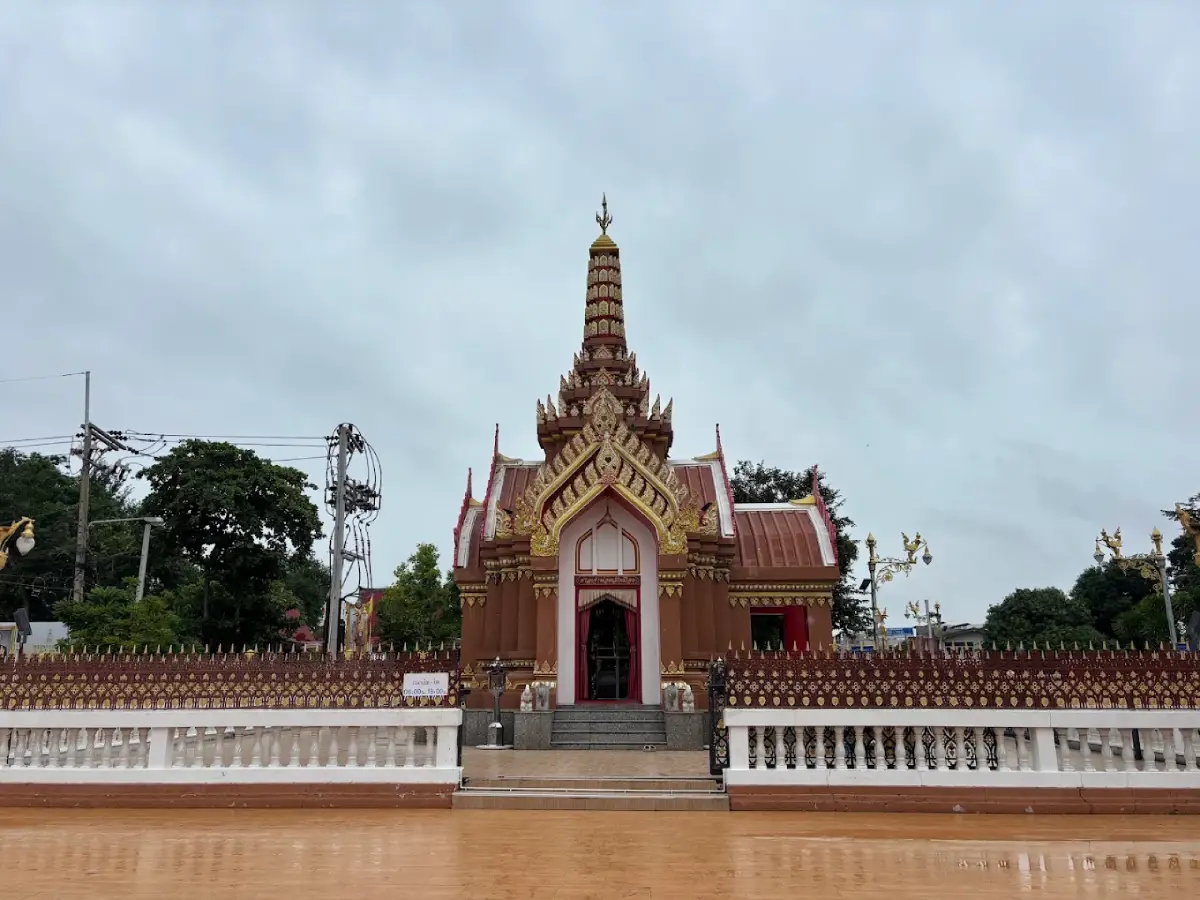
Saraburi City Pillar Shrine
Open Days: Daily
Opening Hours: 06:00 – 18:00
Saraburi City Pillar Shrine is one of the most important sacred civic landmarks in Saraburi Province, central Thailand. Located on Phichai Ronnarong Songkhram Road in the grounds of the former Provincial Hall and the Mueang Saraburi District Office, Pak Phriao Subdistrict, Mueang Saraburi District, Saraburi 18000, the shrine serves as a place of devotion and a symbol of civic identity. Its history is connected with the traditional establishment of Saraburi during the Ayutthaya period and the later relocation of the town's administrative center to Pak Phriao. Inside the shrine are two sacred city pillars: an older pillar made from Takhian wood, preserved behind protective glass, and a newer pillar made from auspicious Chaiyaphruek wood. The building also enshrines three guardian deities, Phra Suea Mueang, Phra Song Mueang, and Phra Kan Chai Si. The shrine was restored in 1976 and formally inaugurated on March 7, 1977. It continues to welcome worshippers and to host important provincial ceremonies.
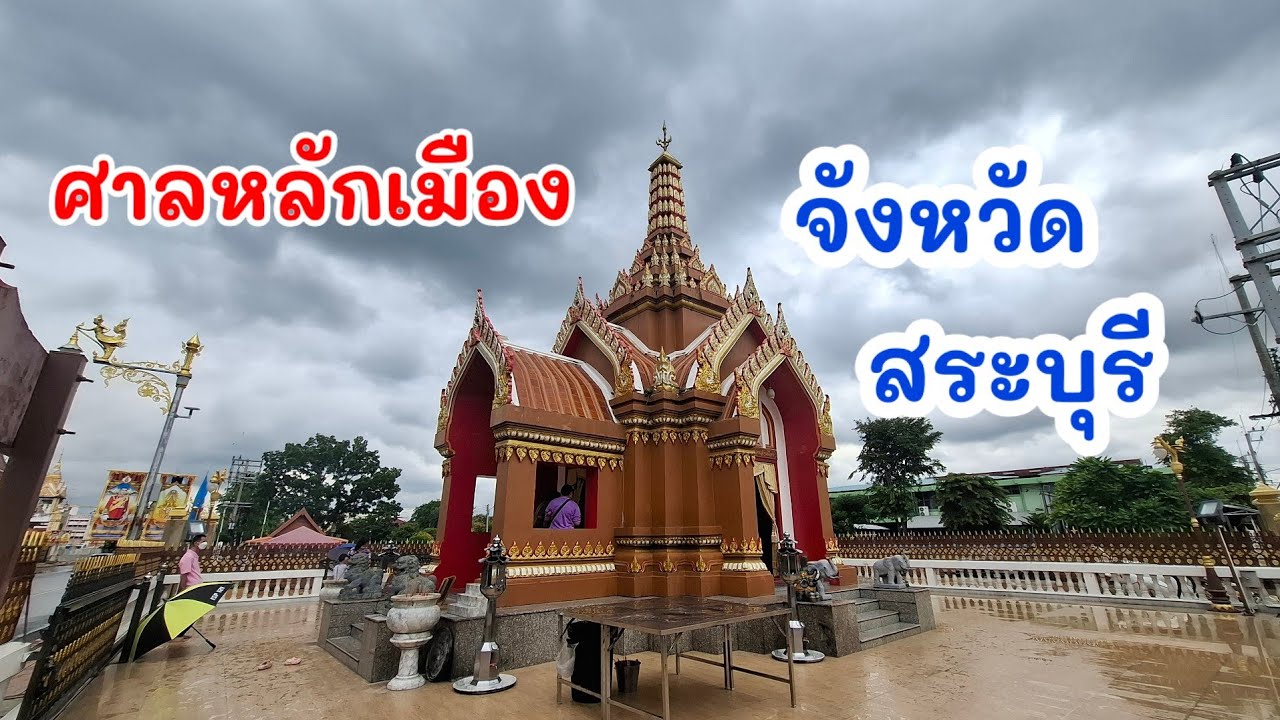
The shrine is distinguished by its Thai-style chaturamuk pavilion, an architectural form with four projecting sides. Its roof is decorated with elaborate red-and-gold ornamentation, while a prominent prang-style spire rises above the center of the building. Although four entrance projections form part of the design, three sides are used for access. The preservation of the original city pillar alongside its newer counterpart makes the shrine particularly significant as a place where traditional beliefs and historical conservation coexist.
Visitors approaching the shrine encounter a building raised above the surrounding courtyard, with steps leading toward the main entrance. Ornamental roof elements and gilded details create a dignified appearance appropriate to a sacred landmark. The forecourt provides space for visitors and for ceremonial activities attended by members of the community during important provincial events.
The shrine occupies a historically significant part of central Saraburi, associated with the development of Pak Phriao during the Rattanakosin period. The surrounding urban area includes government facilities, commercial streets, the railway station, and important Buddhist temples. Its convenient position makes the shrine an accessible cultural stop for residents and travelers passing through Saraburi.
The history of Saraburi is closely associated with the reign of King Maha Chakkraphat of Ayutthaya. Local historical traditions place the establishment of Saraburi at approximately 1549, corresponding to Buddhist Era 2092. The foundation is traditionally explained as the combination of parts of the territories of Lopburi and Nakhon Nayok to create a town important for military mobilization and the defense of the kingdom.
In earlier periods, Saraburi held a strategic position connecting the central plains with routes leading toward northeastern Thailand. Its landscape included fertile river plains and areas of rising terrain farther east. These geographical features influenced transportation, settlement, and the movement of military forces. The town consequently appears in historical accounts relating to warfare and communication during the Ayutthaya period.
The name Saraburi has traditionally been associated with a body of water near the settlement's original location. Local explanations refer to a pond called Bueng Nong Ngong. The Thai word sa means a pond or pool, while buri means a town or city. The combination reflects the significance of water resources in determining the locations of historical settlements.
Water was essential for agricultural communities because it supported farming, livestock, transportation, and everyday life. Towns established near rivers and ponds could develop into centers of trade and settlement. Saraburi's relationship with the Pa Sak River remains a central element of the province's geography and economic history.
The Pa Sak River flows through Saraburi before continuing southward to meet the Chao Phraya River in Phra Nakhon Si Ayutthaya Province. Its basin has long supported agriculture, riverside settlements, and trade between inland communities and the central plains. Saraburi's development is therefore closely connected with the natural geography of the river system.
The tradition of establishing a city pillar forms part of older Thai beliefs concerning the foundation and organization of towns. The ceremonial establishment of a sacred pillar represents the symbolic center of a settlement and expresses hopes for protection, stability, and prosperity. A city pillar shrine is consequently more than a building housing a wooden post; it also represents the relationship between the community and its historical identity.
Saraburi City Pillar Shrine continues this tradition by enshrining sacred pillars and guardian figures respected by local residents. The shrine provides a focal point for communal devotion and maintains the idea of a spiritual center associated with the safety and welfare of the town.
The earlier administrative center of Saraburi was associated with Sao Hai District. During the Rattanakosin period, changes in transportation, particularly the expansion of the railway network, contributed to the growth of a new urban center. Improved rail connections influenced the movement of people and goods, creating new opportunities for economic development and administration.
When the northeastern railway reached Saraburi in 1896, Pak Phriao became increasingly important as a location for administrative and commercial activity. The relocation of the town center from the Sao Hai area was associated with accessibility, economic development, and the need for space suitable for an expanding provincial town.
Pak Phriao subsequently developed into a major urban district containing government buildings, markets, shops, the railway station, Buddhist temples, and residential neighborhoods. Phichai Ronnarong Songkhram Road became one of its important thoroughfares. The present location of Saraburi City Pillar Shrine therefore reflects the historical transition from the old settlement toward the modern provincial capital.
The original city pillar was made from Takhian wood, a durable timber that also holds cultural significance in traditional Thai beliefs concerning sacred trees. Over time, the wooden pillar deteriorated. Rather than being discarded, it was preserved inside the shrine to maintain its historical and spiritual importance.
The original pillar is protected within a glass enclosure, helping reduce direct handling and exposure to conditions that could damage the aged timber. Its preservation provides a tangible connection with the earlier history of the shrine and demonstrates the importance attached to maintaining objects revered by successive generations.
The newer city pillar is made from Chaiyaphruek wood, traditionally considered an auspicious material in Thai culture. Its upper section is carved in the form of a lotus bud, a decorative element associated with purity and reverence. Displaying the old and new pillars together allows visitors to appreciate the continuity of the shrine's sacred traditions.
Chaiyaphruek carries associations with victory and favorable beginnings through its Thai name. In traditional ceremonies, the symbolic meaning of a material may be considered alongside its practical qualities. Selecting auspicious timber for a city pillar expresses hopes for security and prosperity within the community.
The lotus-bud carving at the top of the newer pillar is a distinctive feature. Lotus forms appear frequently in Thai Buddhist art and ceremonial decoration, including the bases of revered images, architectural finials, and sacred objects. Their use at the shrine reflects an artistic tradition in which botanical forms convey respect and spiritual significance.
The shrine underwent a major restoration in 1976. The project included architectural improvements and the establishment of a new city pillar alongside the original. The resulting chaturamuk pavilion provides an appropriate space for ceremonies while preserving the older sacred object within the same complex.
March 7, 1977, is a significant date in the shrine's history. On that day, King Vajiralongkorn, then Crown Prince of Thailand, accompanied by his royal consort, presided over the formal opening of the restored Saraburi City Pillar Shrine. The event marked an important stage in the preservation and renewed public use of the sacred landmark.
The opening ceremony became part of Saraburi's modern historical memory. It connected the restoration of a locally revered site with a formal public event and reinforced the shrine's status as an important provincial landmark. The date remains relevant to accounts of the shrine's development during the Rattanakosin period.
The chaturamuk architectural form gives the shrine a balanced appearance. Its projecting entrance sections emphasize the sacred center of the building while allowing it to be approached from different directions. The arrangement differs from Chinese-style shrines and ordinary modern buildings because it draws upon established Thai ceremonial architectural forms.
The tall central spire is one of the shrine's most recognizable features. Prang-inspired forms are associated with longstanding traditions in Thai religious architecture. Their use in the restored shrine connects a modern building with historical architectural ideas developed over many centuries.
Decorative roof details emphasize elegant curves and gilded ornamentation. Red surfaces contrast with gold-colored patterns, creating a striking appearance against the surrounding trees and urban landscape. The building's architectural character is therefore an important attraction in addition to the sacred pillars housed within.
The raised platform gives the shrine a strong visual presence above the front courtyard. Steps lead from the public ground level toward the sacred interior, creating a gradual transition between ordinary urban space and the devotional setting. The courtyard also accommodates gatherings associated with community ceremonies.
In addition to the two city pillars, the shrine houses representations of Phra Suea Mueang, Phra Song Mueang, and Phra Kan Chai Si. These guardian figures are associated with traditional beliefs concerning the protection and stability of towns. Their presence gives the shrine several related devotional functions within one building.
Phra Suea Mueang is traditionally associated with the protection of residents and communities from danger. The figure represents a belief in guardianship that reflects the desire for safety and peace. Worship of this deity is part of the broader tradition of honoring protective spirits in Thai society.
Phra Song Mueang is connected with the stability and orderly condition of a town. The concept emphasizes the importance of social harmony and the continuity of communal life. Devotion to this guardian expresses a sense of belonging and concern for the well-being of the wider community.
Phra Kan Chai Si is another guardian figure associated with protection and civic order. Its presence alongside Phra Suea Mueang and Phra Song Mueang demonstrates the layered nature of traditional Thai guardian beliefs and their association with the sacred center of a town.
The combination of guardian figures and city pillars reflects the coexistence of Brahmanical ideas, local spirit beliefs, and Thai devotional traditions. Although the figures have different symbolic associations, they share the general purpose of expressing hopes for a safe and peaceful community.
Visitors can therefore understand the shrine as a place containing both a central civic symbol and sacred figures associated with protection. This distinguishes a city pillar shrine from a site dedicated exclusively to a single deity or from a conventional Buddhist monastery.
Traditional offerings at the shrine may include flowers, garlands, incense, candles, fruit, and three-colored cloth. An offering point is provided beside the shrine. Worshippers may tie cloth at the designated area of the newer pillar according to local custom. Visitors should follow the shrine's instructions and respect the practices maintained by the community.
Three-colored cloth is used in a number of Thai traditions involving sacred trees, pillars, and other revered objects. Its use expresses devotion and respect, although interpretations of the individual colors may vary among different local customs. The practice is one of the recognizable forms of worship associated with Saraburi City Pillar Shrine.
People visit the shrine to express personal wishes for family security, success at work, safety during travel, and favorable developments in life. Such aspirations are common in the wider Thai tradition of city pillar worship. Paying respect also has a communal meaning because the city pillar represents a connection with the town and its collective history.
Morning is a pleasant time to visit, when the weather is generally more comfortable and the atmosphere suitable for quiet devotion. During the day, natural light makes the architecture and gold-colored roof decoration clearly visible. The shrine also receives visitors later in the day, including residents returning from work or other activities in the town center.
City pillar celebrations provide important opportunities for the community to gather around its sacred civic landmark. Activities include offerings, ceremonial prayers, acts of respect, and traditional dance performances. These events allow younger generations to encounter local history through ceremonies and collective participation.
On March 19, 2026, Saraburi Province held a major event commemorating the 477th anniversary of the town. The program included Buddhist chanting at Wat Sala Daeng, followed by ceremonies honoring Saraburi City Pillar Shrine. Government officials, students, volunteers, performers, and members of the public took part.
The anniversary event featured traditional dance performances and cultural activities. Approximately 2,000 participants joined the ceremonies, demonstrating the shrine's continuing importance as a gathering place for the community and as a setting for expressions of local historical pride.
The 477th anniversary celebrated in 2026 refers to the traditional historical chronology associated with the establishment of Saraburi around 1549. It does not represent the age of the present shrine building, which was restored in 1976 and opened in 1977. These dates refer to separate developments: the traditional foundation of the town and the modern restoration of the sacred civic landmark.
The combination of ceremonies at Wat Sala Daeng and the City Pillar Shrine illustrates the relationship between Buddhism and civic guardian beliefs in Saraburi. Buddhist chanting and traditional offerings were held as parts of the same provincial cultural event, reflecting the coexistence of different ceremonial traditions within Thai society.
Wat Sala Daeng is an important Buddhist temple in Pak Phriao Subdistrict, close to the City Pillar Shrine. It serves the local community and houses Phra Phuttha Nirarokantarai Chaiwat Chaturathit, a revered Buddha image with a special connection to royal Buddhist traditions and the symbolic protection of different directions.
Phra Phuttha Nirarokantarai Chaiwat Chaturathit is associated with a set of important Buddha images distributed according to the cardinal directions. The image enshrined in Saraburi forms part of this historical tradition. Its presence at Wat Sala Daeng makes the temple a significant place of worship and a natural cultural counterpart to the City Pillar Shrine.
Studying the Buddha image at Wat Sala Daeng alongside the City Pillar Shrine helps distinguish Buddhist devotional traditions from beliefs concerning civic guardian deities. Although both are associated with wishes for peace and protection, their historical origins and religious functions differ.
Wat Sala Daeng is an active Buddhist monastery with resident monks and buildings used for religious ceremonies. Saraburi City Pillar Shrine, by contrast, is a civic sacred site housing the city pillars and guardian figures. Recognizing this distinction helps visitors understand the different religious institutions and traditions present within the town.
Wat Phra Phutthachai is another major religious destination in Saraburi. Located in Nong Pla Lai Subdistrict, Mueang Saraburi District, it is famous for the revered Buddha impression known as Phra Phutthachai on a cliff face. The surrounding mountainous landscape provides a setting quite different from the urban environment of the City Pillar Shrine.
The temple has a longstanding association with pilgrimage and the veneration of Phra Phutthachai. Its hillside setting includes devotional areas and natural scenery, allowing visitors to explore the relationship between Buddhist belief and the landscape. The temple is an important cultural destination within the wider Mueang Saraburi area.
Namtok Sam Lan National Park is a natural attraction in Mueang Saraburi District. Its forests, waterfalls, and mountain terrain provide a contrast with the historical and religious landmarks of the town. A journey from the city to the park illustrates the province's transition from urban settlement to natural habitats.
Wat Phra Phutthabat Ratchaworamahawihan is one of Saraburi's most important royal Buddhist monasteries. Located in Phra Phutthabat District, it is renowned for its sacred Buddha footprint and its historical connections with the Ayutthaya period. The monastery contains an elaborate footprint pavilion and other significant religious structures.
The route from central Saraburi to Wat Phra Phutthabat is closely associated with Thailand's traditions of Buddhist pilgrimage. Worship at the sacred footprint has continued through different historical periods. Visiting the monastery together with the City Pillar Shrine reveals the differences between a provincial civic sacred landmark and a nationally significant Buddhist religious site.
Phu Khae Botanical Garden in Chaloem Phra Kiat District is another important attraction within Saraburi Province. The garden supports the study and conservation of plants and provides a public green space for environmental learning. Including the botanical garden in a wider journey adds a natural-history dimension to the province's cultural attractions.
Wat Pak Khao San Tai is another Buddhist temple in Mueang Saraburi District. It is associated with local community devotion and can be visited as part of a wider journey along the main roads around the provincial town. The temple illustrates the distribution of Buddhist religious sites across the urban and suburban areas of Saraburi.
Saraburi City Pillar Shrine serves as a useful starting point for exploring several categories of sacred landmarks. These include a city pillar shrine, Buddhist temples with revered images, a historic sacred footprint, and community monasteries. Each represents a different aspect of religious and cultural life within the province.
The Pa Sak River also contributes to the cultural landscape of central Saraburi. Restaurants and recreational spaces can be found in areas associated with the river. The river setting offers a geographical perspective on the town's development and the continuing relationship between local communities and waterways.
Saraburi's cuisine reflects its position between central Thailand and the northeastern region. Restaurants serve central Thai dishes, northeastern Thai food, noodles, Chinese-influenced meals, and contemporary cuisine. This variety is associated with the province's longstanding importance as a center of transport and trade.
Restaurants in and around the town include Sirio Thana, Jub Baan Ju, Rad Na Liao Tang Lai, Baan Zayid, Long Tam, and Ban Buri. Their menus range from Thai-Chinese cooking and traditional noodle dishes to halal food, northeastern Thai cuisine, and modern restaurant dining.
Sirio Thana is known for its Thai-Chinese dishes and meals suitable for groups, while Jub Baan Ju and Rad Na Liao Tang Lai are associated with popular local noodle traditions. These restaurants offer opportunities to experience Saraburi's everyday food culture after visiting the City Pillar Shrine.
Baan Zayid serves halal and Thai-Muslim cuisine, reflecting another aspect of the town's culinary diversity. Long Tam specializes in northeastern Thai dishes such as papaya salad, while Ban Buri provides a contemporary dining setting. Together, these establishments demonstrate the range of food traditions represented in the provincial capital.
Accommodation in Mueang Saraburi includes city hotels, resorts, and properties near major highways. Staying in Pak Phriao can be convenient for visiting the City Pillar Shrine, Wat Sala Daeng, and other urban destinations. Hotels near Phahonyothin Road and Mittraphap Road provide practical access for travelers continuing toward other provinces.
Accommodation options include Glai Gan Place Hotel, HOP INN Saraburi, Chuan Chom The High Resort, and Ioon Resort. Their facilities and locations vary, catering to business travelers, families, and people stopping overnight during longer journeys through Saraburi.
An overnight stay allows visitors to divide their time between the City Pillar Shrine, religious landmarks, and natural attractions. Wat Phra Phutthachai, Namtok Sam Lan National Park, Phu Khae Botanical Garden, and Wat Phra Phutthabat are in different parts of the province, making a central base useful for a broader itinerary.
A one-day cultural itinerary can begin with the City Pillar Shrine and continue to Wat Sala Daeng to pay respect to Phra Phuttha Nirarokantarai Chaiwat Chaturathit. Visitors can then explore central Saraburi and enjoy local food before traveling onward to Wat Phra Phutthachai or nearby natural attractions.
Travelers coming from Bangkok can follow Phahonyothin Road, Highway 1, toward Saraburi. After entering the provincial town, continue to Phichai Ronnarong Songkhram Road and the former Provincial Hall area. The historic government complex should be used as the landmark, rather than the newer provincial administrative center in Takut Subdistrict.
Visitors traveling by train can arrive at Saraburi Railway Station and continue to the shrine by local transport. The station's position in the town reflects the historical importance of rail development in the relocation and expansion of Saraburi's administrative center.
Private vehicles are convenient for visitors planning to explore several parts of the province. Major highways connect Saraburi with Bangkok, Phra Nakhon Si Ayutthaya, Lopburi, and northeastern Thailand. The city can therefore serve as either a cultural destination or a stopping point on a longer road journey.
Published visitor information lists the shrine as open daily from 06:00 to 18:00. No general admission ticket is normally required. Visitors may obtain flowers, garlands, and other traditional offerings according to their preferences, and may make voluntary donations as part of their personal devotional practices.
The shrine remains an active ceremonial place, so respectful conduct is important. Visitors should dress appropriately, avoid unnecessary noise, keep entrances clear, and follow instructions regarding incense, candles, and offerings. The original pillar is protected behind glass and should not be touched.
Saraburi City Pillar Shrine is particularly valuable for local-history education because its story connects several historical periods: the traditional foundation of Saraburi during the Ayutthaya era, its strategic role, the relocation of the administrative center from Sao Hai to Pak Phriao, the preservation of the original pillar, and the restoration of the shrine in the 1970s.
The presence of two city pillars within one building is one of the site's most distinctive characteristics. The original pillar represents an older heritage of devotion, while the newer pillar reflects efforts to maintain the shrine's ceremonial use. Preserving them together allows historical continuity to remain visible rather than replacing the older object entirely.
Public ceremonies at the shrine also demonstrate cooperation between provincial authorities and residents. Traditional offerings and commemorative dances provide ways for people to participate directly in remembering the history of their town. The shrine therefore continues to serve both individual devotional needs and broader community events.
Saraburi's cultural identity encompasses guardian-deity beliefs, Buddhist traditions, varied regional cuisines, and a history of trade and transportation. The City Pillar Shrine provides a focal point for understanding this diversity, revealing that Saraburi is more than a transit town on the route toward northeastern Thailand.
Architecture enthusiasts can appreciate the four-sided pavilion, entrance projections, central spire, raised platform, red-and-gold decorative details, and the contrasting forms of the original and newer city pillars. Each element demonstrates the relationship between Thai artistic traditions, sacred symbolism, and the practical needs of a ceremonial building.
The atmosphere differs between ordinary days and major celebrations. On regular days, visitors can worship quietly and examine the building's architectural details. During annual ceremonies, the front courtyard becomes a place of public gathering, traditional dance, and shared cultural expression.
For residents returning to their hometown, the City Pillar Shrine may carry personal significance connected with family visits and memories of community festivals. These associations give the building a role beyond its physical appearance, making it a meaningful part of the province's shared cultural experience.
The shrine is not a Buddhist temple with its own ordination hall, chedi, or resident monks. Its principal purpose is the enshrinement of the city pillars and guardian figures. Visitors interested in Buddhist architecture and monastic traditions can explore nearby Wat Sala Daeng and other temples, whose religious functions differ from those of the City Pillar Shrine.
Devotion to guardian figures expresses traditional wishes for peace, stability, and the protection of the community. For individual worshippers, these beliefs may be connected with family and personal aspirations. For the wider town, the shrine represents a shared symbol of belonging and respect for Saraburi's historical identity.
The significance of the shrine rests on several connected aspects: the history of the town, traditional city-pillar beliefs, the preservation of the older Takhian pillar, the creation of the Chaiyaphruek pillar, the presence of guardian deities, the restored Thai-style architecture, and the continuing role of annual provincial ceremonies.
Getting There Saraburi City Pillar Shrine is located on Phichai Ronnarong Songkhram Road, Pak Phriao Subdistrict, Mueang Saraburi District, Saraburi 18000, Thailand, within the grounds of the former Provincial Hall and Mueang Saraburi District Office. Travelers driving from Bangkok can take Highway 1 into central Saraburi and follow directions toward the former Provincial Hall. Public transport users can reach the town center before continuing by local hired transport.
Rail passengers can arrive at Saraburi Railway Station and take local transport to the shrine. The central urban location makes the destination accessible without mountain travel or a long journey into the countryside. It also allows visits to nearby temples, markets, and restaurants to be combined conveniently.
Saraburi City Pillar Shrine is an important link between the province's historical foundation and its living spiritual traditions. The preservation of the older and newer pillars together demonstrates cultural continuity, while the chaturamuk architecture and continuing public ceremonies confirm the shrine's significance in the contemporary life of Saraburi residents.
Visiting Saraburi City Pillar Shrine offers more than an opportunity to seek blessings. It provides insight into a town with a strategic role since the Ayutthaya period, the historical shift of its administrative center toward the railway, the symbolism of sacred pillars and guardian figures, and the connections between Buddhist temples, civic traditions, and the local community. The shrine remains a meaningful cultural landmark for understanding Saraburi's past and present.
| Place Name | Saraburi City Pillar Shrine (Chao Pho Lak Mueang Saraburi) |
| Address | Phichai Ronnarong Songkhram Road, Former Provincial Hall and Mueang Saraburi District Office Grounds, Pak Phriao, Mueang Saraburi District, Saraburi 18000, Thailand |
| Map Reference | Plus Code GWH5+HJ3, Mueang Saraburi District, Saraburi |
| Type | Provincial City Pillar Shrine, Guardian-Deity Worship Site and Cultural Landmark |
| Historical Significance | Sacred Civic Landmark Associated with the History of Saraburi and the Traditional Protection of the Town |
| Town History | Traditionally Founded around 1549 during the Reign of King Maha Chakkraphat; the Administrative Center Later Moved from the Sao Hai Area to Pak Phriao with the Development of Railway Transport |
| Major Restoration | 1976 |
| Official Opening | March 7, 1977, Presided Over by King Vajiralongkorn, Then Crown Prince of Thailand |
| City Pillars | Two Pillars: Original Takhian Wooden Pillar Preserved behind Glass and a Newer Chaiyaphruek Wooden Pillar with a Lotus-Bud Finial |
| Guardian Deities | Phra Suea Mueang, Phra Song Mueang and Phra Kan Chai Si |
| Architecture | Thai Chaturamuk Pavilion with Four Projecting Sides, Three Accessible Entrances, a Central Prang-Style Spire and Elaborate Red-and-Gold Decoration |
| Main Areas | 1. Main Chaturamuk Pavilion 2. Original City Pillar Enclosure 3. New City Pillar Worship Area 4. Guardian-Deity Altars 5. Floral and Ceremonial Offering Area 6. Front Ceremonial Courtyard |
| Annual Traditions | City Pillar Worship, Ceremonial Offerings, Traditional Dances and Provincial Cultural Activities; the 477th Anniversary Event Was Held on March 19, 2026 |
| Relevant Authorities | Saraburi Provincial Authorities and Participating Public Agencies Organizing Major Ceremonies at the Shrine |
| Open Days | Daily |
| Opening Hours | 06:00 – 18:00 |
| Facilities | Parking, Restrooms, Worship Courtyard and Ceremonial Offering Area |
| Getting There | Take Highway 1 toward Central Saraburi and Continue to Phichai Ronnarong Songkhram Road near the Former Provincial Hall and Mueang Saraburi District Office |
| Nearby and Regional Attractions | 1. Wat Sala Daeng, Pak Phriao, Tel. +66 36 319 378 2. Phra Phuttha Nirarokantarai Chaiwat Chaturathit Pavilion, Wat Sala Daeng 3. Wat Pak Khao San Tai, Pak Khao San 4. Wat Phra Phutthachai, Nong Pla Lai, Tel. +66 36 303 169 5. Namtok Sam Lan National Park, Mueang Saraburi 6. Phu Khae Botanical Garden, Chaloem Phra Kiat, Tel. +66 36 347 457 7. Wat Phra Phutthabat Ratchaworamahawihan, Phra Phutthabat District |
| Restaurants in Central Saraburi | 1. Sirio Thana Restaurant, Mueang Saraburi, Tel. +66 89 518 6422 2. Jub Baan Ju, Mueang Saraburi, Tel. +66 85 934 1345 3. Rad Na Liao Tang Lai, Mueang Saraburi, Tel. +66 65 554 6149 4. Baan Zayid Restaurant, Thetsaban 3 Road, Tel. +66 87 366 9064 5. Long Tam, Thetsaban 2 Road, Tel. +66 62 449 9791 6. Ban Buri, Mueang Saraburi, Tel. +66 92 092 5394 7. Baan Chi, Takut, Tel. +66 80 916 8889 |
| Accommodations in Mueang Saraburi | 1. Glai Gan Place Hotel, Thetsaban 4 Road, Tel. +66 90 249 2497 2. HOP INN Saraburi, Phahonyothin Road, Tel. +66 2 080 2222 3. Chuan Chom The High Resort, Thetsaban 8 Road, Tel. +66 36 222 533 4. Ioon Resort, Takut Subdistrict, Tel. +66 36 340 209 |
Frequently Asked Questions (FAQ)
Q: Where is Saraburi City Pillar Shrine located?
A: The shrine is located on Phichai Ronnarong Songkhram Road, in the former Provincial Hall and Mueang Saraburi District Office grounds, Pak Phriao Subdistrict, Mueang Saraburi District, Saraburi 18000, Thailand.
Q: What are the opening days and hours of Saraburi City Pillar Shrine?
A: Published visitor information lists the shrine as open daily from 06:00 to 18:00.
Q: How many city pillars are housed in Saraburi City Pillar Shrine?
A: The shrine contains two pillars. The older pillar is made from Takhian wood and preserved behind glass, while the newer pillar is made from Chaiyaphruek wood with a lotus-bud finial.
Q: When was the present Saraburi City Pillar Shrine restored and opened?
A: The shrine underwent major restoration in 1976 and was formally opened on March 7, 1977.
Q: Which guardian deities are enshrined at Saraburi City Pillar Shrine?
A: The shrine houses representations of Phra Suea Mueang, Phra Song Mueang and Phra Kan Chai Si, all associated with traditional Thai beliefs concerning the protection of towns.
Q: What is distinctive about the shrine's architecture?
A: It is a Thai chaturamuk pavilion with four projecting sides, three accessible entrances, a tall central prang-style spire, and elaborate red-and-gold ornamentation.
Q: What major traditional events take place at Saraburi City Pillar Shrine?
A: The shrine hosts ceremonial offerings, prayers, and traditional dance performances. On March 19, 2026, Saraburi celebrated its 477th historical anniversary with an event attended by approximately 2,000 participants.
Q: What attractions can visitors explore near Saraburi City Pillar Shrine?
A: Nearby destinations include Wat Sala Daeng and its revered Buddha image. Other attractions in the wider area include Wat Phra Phutthachai, Namtok Sam Lan National Park, Phu Khae Botanical Garden, and Wat Phra Phutthabat Ratchaworamahawihan.
 Category: ●Places of Worship
 Group: ●Other Sacred Sites
Last Update : 5 DayAgo
 Last Update : 5 DayAgo
 Click to Access the Navigation Map GPS
Saraburi City Pillar Shrine Map
Recommend

 Art, Culture and Heritage
 Historical Sites and Monuments(2)
 Landmarks and Memorials(2)
 Royal Palace(4)
 Art, Craft Centres, Tradition(4)
 Museums(1)
 Educational Places
 Museum for Study(1)
 Educational Gardens, Farm(2)
 Temple(8)
Other Sacred Sites(6)
 Research and Development
 Royal Project(1)
 Suburban Living
 Village, Community(3)
 Nature and Wildlife
 National Parks and Marine Reserves(3)
 Mountain (Doi)(3)
 Waterfalls(5)
 Caves(6)
 Flower Field(1)
 River, Canal(1)
 Bays and Beaches(1)
 Other natural attractions(2)
 Entertainment and Agricultural
 Zoos and Aquariums(1)
 Animal camps and shows(1)
 Farms, Parks and Ecotourism(8)
 Outdoor and Adventure Activities(1)
 Travel Articles, Recipes
 Travel Review, Food Review(1)


