
lovethailand home >Central Travel Attractions >Phetchaburi Travel Attractions >Muang Phetchaburi >Khlong Kra Saeng > Phetchaburi City Pillar Shrine
TL;DR: Phetchaburi City Pillar Shrine is located at Near Khao Wang, Khlong Krachaeng Subdistrict, Mueang Phetchaburi District, Phetchaburi 76000, Thailand, open Daily, hours 08:00 – 17:00.
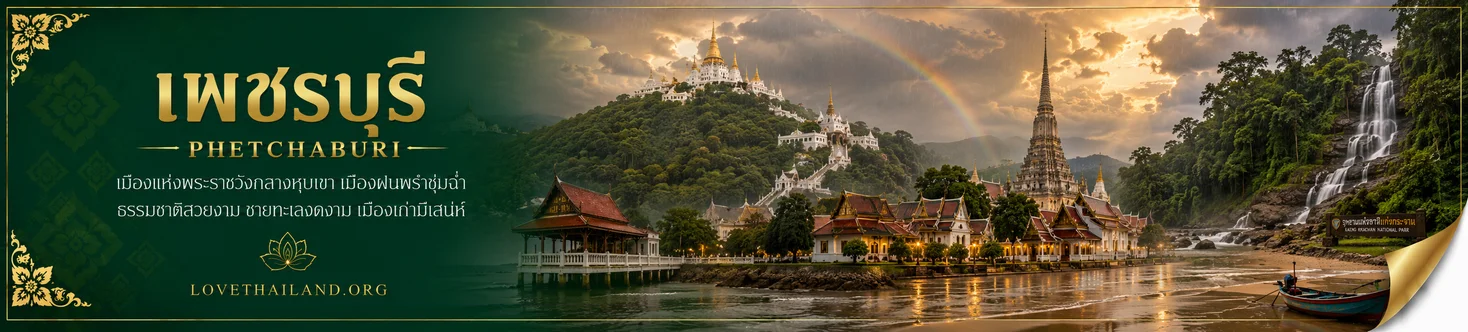
Phetchaburi City Pillar Shrine
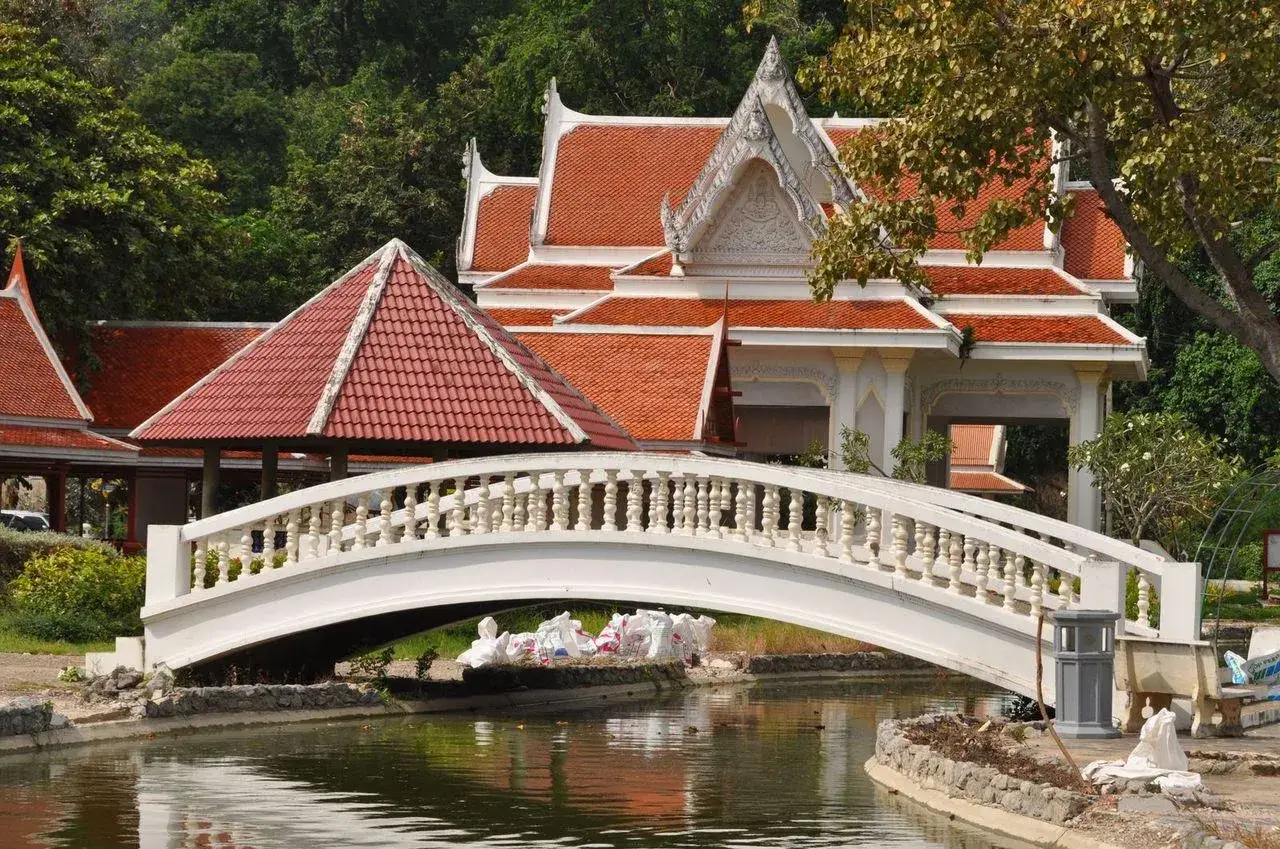
Open Days: Daily
Opening Hours: 08:00 – 17:00
Phetchaburi City Pillar Shrine is one of the most important sacred civic landmarks in Phetchaburi Province, Thailand. Located near the foot of Khao Wang, or Phra Nakhon Khiri, in Khlong Krachaeng Subdistrict, Mueang Phetchaburi District, Phetchaburi 76000, the shrine is a center of local devotion associated with history, traditional beliefs, architecture, and regional culture. The present shrine was established around 1976 and houses a sacred city pillar within a Thai-style building designed by Thailand's Fine Arts Department. Surrounded by landscaped gardens, a pond, and pedestrian bridges, the complex is both a place of worship and a distinctive cultural attraction in the historic town of Phetchaburi.
The shrine is particularly recognizable for its white exterior, red-tiled roof, gilded Thai roof ornaments, and tall decorative white spire rising above the building. Inside stands the revered city pillar, the focus of devotional activity. The shrine occupies a landscaped setting with water and connecting walkways, creating beautiful reflections of its architecture. This arrangement distinguishes it from many other Thai city pillar shrines located directly beside busy roads or government buildings.
The shrine stands close to Khao Wang, one of Phetchaburi's most important geographical and historical landmarks. The hill is home to Phra Nakhon Khiri, a royal palace complex closely associated with King Mongkut and the history of the Rattanakosin period. Its proximity gives the shrine particular cultural significance, connecting traditional civic beliefs with royal history, architecture, and the development of modern Phetchaburi.
The importance of Phetchaburi City Pillar Shrine extends beyond its architectural appearance. It is associated with the longstanding Thai tradition of establishing a sacred city pillar as a symbol of civic stability, a spiritual center, and auspiciousness. Paying respect to the pillar is an expression of devotion and a way for residents to acknowledge their relationship with the town and its shared cultural heritage.
Phetchaburi is an ancient town whose history predates the foundation of the Rattanakosin Kingdom. Its development was shaped by the Phetchaburi River basin and transportation routes connecting central Thailand with the southern peninsula. Archaeological sites and religious architecture reveal connections with ancient Khmer, Sukhothai, and Ayutthaya traditions. This continuity of settlement has produced a city in which historical remains from different periods are visible within the same urban landscape.
The Phetchaburi River was essential to the development of the town, providing water for agriculture, everyday life, and transportation. Communities developed along the river and its tributaries, with temples, markets, and government facilities forming important parts of the settlement. Although roads eventually became the dominant form of transportation, the river continued to shape the town's historical identity and cultural geography.
Evidence from the eighteenth Buddhist century connects Phetchaburi with settlements influenced by ancient Khmer culture. This influence can be seen in religious sites such as Wat Kamphaeng Laeng and in traces of historical urban planning. Between the nineteenth and twenty-third Buddhist centuries, Phetchaburi developed within networks associated with Sukhothai and Ayutthaya. The construction and restoration of numerous Buddhist temples established the town as a major center of religious art and traditional craftsmanship.
Phetchaburi is particularly famous for its distinctive regional school of craftsmanship, known as the Phetchaburi artisan tradition. It encompasses stucco sculpture, woodcarving, mural painting, and architectural ornamentation. Outstanding examples survive at Wat Mahathat Worawihan, Wat Yai Suwannaram, and Wat Ko Kaeo Suttharam. The sophistication of these artistic traditions has made Phetchaburi an important destination for the study of Thai art and cultural history.
The historic town developed around areas now associated with Tha Rab and Khlong Krachaeng subdistricts, with the Phetchaburi River forming a major geographical boundary. Traces of the earlier city walls and moats remain part of historical interpretations of the settlement, although later construction has obscured or replaced many original features. Place names, temple locations, and surviving historical landmarks nevertheless preserve information about the old urban layout.
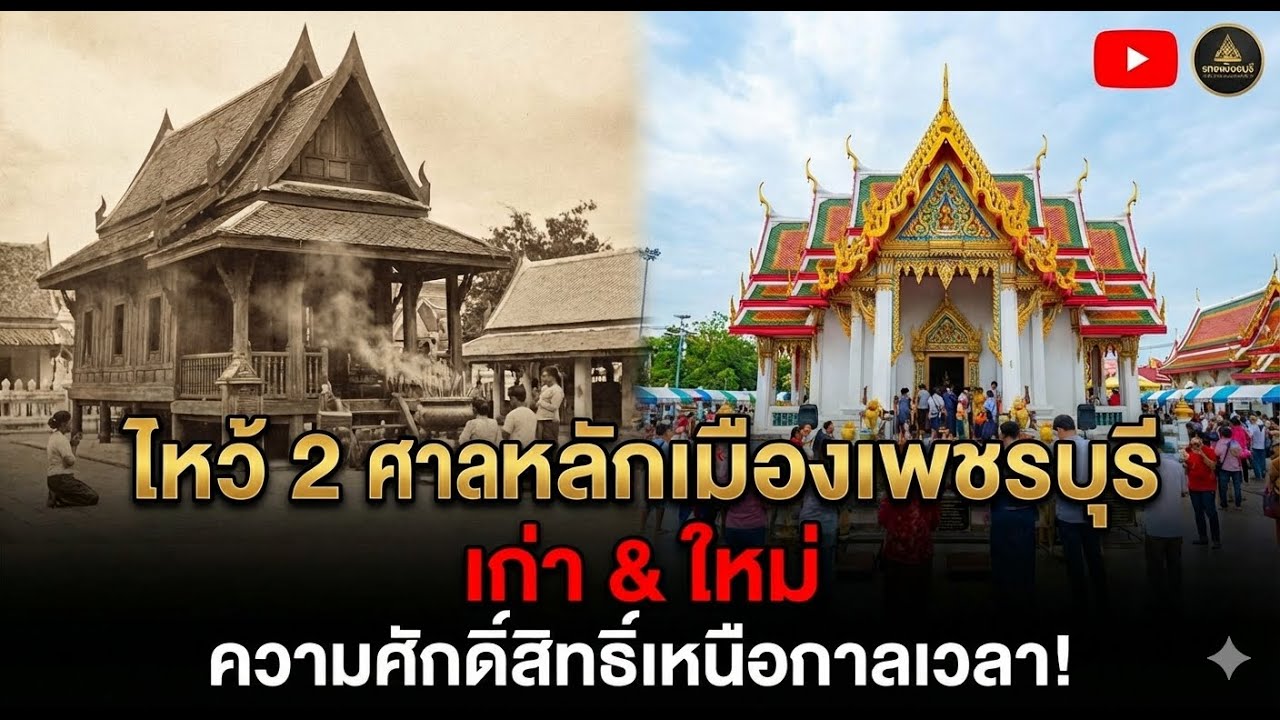
An older city pillar shrine is located in the Tha Rab area, historically associated with the original town center. This site is separate from the present shrine near Khao Wang. The existence of both locations reflects different stages in Phetchaburi's development: the preservation of an earlier sacred urban center and the establishment of a newer city pillar shrine in a prominent setting suited to the town's later development.
The old city pillar shrine in Tha Rab is a traditional masonry building housing a gilded stucco guardian figure dressed in royal-style ornaments. Its architecture and sacred image are important to the historical artistic heritage of the old town. The present shrine near Khao Wang, however, has its own city pillar and distinctive Thai-style architecture. Details belonging to the two shrines should therefore be understood separately.
The construction of the present Phetchaburi City Pillar Shrine was undertaken through provincial initiatives around 1976. The project included choosing the site, designing the building, conducting a foundation ceremony, preparing the sacred city pillar, and formally opening the shrine. These activities reflected the intention to create a provincial landmark representing spiritual protection and the shared identity of Phetchaburi residents.
Thailand's Fine Arts Department participated in designing the shrine, incorporating architectural elements associated with traditional Thai ceremonial buildings. Its white walls, red-tiled roof, gilded decorative details, and tall central spire create a dignified appearance. The design also responds to the surrounding landscape, allowing the shrine to function as both a sacred building and an attractive feature within a public garden.
The project was part of the continuing Thai tradition of establishing city pillars. Although individual provincial shrines were constructed at different times and under different circumstances, they share the broad cultural idea of creating a sacred center associated with stability and good fortune. Phetchaburi City Pillar Shrine illustrates how an older ceremonial tradition could be expressed through architecture and public-space planning during the modern era.
The city pillar was made from Chaiyaphruek wood, traditionally regarded as auspicious. Accounts of its construction refer to timber associated with Ban Lin Chang in Nong Ya Plong District and the Wat Khao Luk Chang area. The selection of Chaiyaphruek wood reflects the ceremonial importance of materials whose names and traditional associations carry favorable meanings. The pillar consequently has significance both as a physical sacred object and as a symbol of hopes for the town's prosperity.
The Thai name Chaiyaphruek is associated with victory and auspiciousness. Selecting wood for a sacred city pillar involves cultural considerations beyond practical strength and durability. Symbolic meaning, ritual tradition, and the perceived appropriateness of the material all contribute to the significance of the object.
In 1977, the Phetchaburi Provincial Office published a 92-page book entitled Phetchaburi Provincial City Pillar Shrine. The publication documented the project's history, site selection, foundation ceremony, building construction, creation of the city pillar, and events leading to the official opening. It also included photographs recording different stages of development. The publication is an important historical record of the establishment of the present shrine.
Such documentary evidence is valuable because it shows that constructing a sacred civic landmark in modern Thailand involved administration, architectural planning, material selection, and ceremonial traditions. The shrine therefore represents not only spiritual beliefs but also the social and cultural approaches to public monuments in Phetchaburi during the 1970s.
The relationship between the old and present city pillar shrines is particularly revealing. The older shrine is associated with the historical center of the town, while the modern shrine stands near Khao Wang, a major landmark of Phetchaburi. The two places illustrate how urban spaces and sacred traditions can develop through different historical periods while retaining their cultural significance.
The architecture of the present shrine emphasizes traditional Thai forms. Layered roof sections, gilded finials, and decorative roof elements give the building a ceremonial appearance. The white structure and red roof are visually prominent against the surrounding garden, making the shrine recognizable from different viewpoints within the grounds.
The tall white spire rising above the roof is one of the building's defining features. Seen from a distance, its vertical form contrasts with the horizontal rooflines and the hill behind it. This combination establishes a visual connection between the sacred building and the wider landscape while emphasizing the importance of the central shrine.
The garden and surrounding pond contribute greatly to the atmosphere of the site. Water, trees, landscaped beds, and walking paths provide a peaceful setting. The shrine's reflection can be seen on the water, and visitors can appreciate the building from several perspectives. These features distinguish the complex from shrines occupying smaller urban plots.
Pedestrian bridges form another distinctive element of the grounds. Their white railings and gently curved forms connect the surrounding pathways with the shrine. Crossing the bridge establishes a transition from the landscaped public area into the more intimate sacred space of the building.
Inside the shrine stands the sacred city pillar, decorated with traditional motifs and devotional offerings. Colored cloths and flower garlands are commonly used to express respect. The interior functions as an active worship space where residents and travelers can offer prayers and participate in traditional devotional practices.
The practice of tying colored cloth around a sacred pillar is associated with Thai beliefs concerning respect for spiritually significant objects. The colors of the cloth and the presence of garlands contribute to the ceremonial appearance of the shrine. They also demonstrate that the site continues to be used as a living place of devotion.
Ceremonial objects and designated offering areas support the religious functions of the building. Visitors can approach the city pillar respectfully while allowing other worshippers sufficient space. The organization of the interior reflects its principal purpose as a sacred place rather than a conventional exhibition hall.
Worship at a city pillar shrine is traditionally associated with wishes for stability, protection, peace, and good fortune. Residents of Phetchaburi and visitors from other provinces may pay their respects upon arriving in town, before important undertakings, or when returning to their hometown. The practice expresses both personal faith and respect for the community's historical identity.
City pillars have cultural connections with the establishment and organization of settlements. Historically, choosing a location for a town involved considerations such as terrain, water access, security, and transportation. Ceremonies establishing a sacred pillar came to symbolize the formal foundation and stability of a community. Although the present Phetchaburi shrine was built relatively recently, it preserves the symbolism of this older tradition.
Traditional Thai beliefs in guardian spirits are connected with local spiritual practices and elements of Brahmanical ceremony, including auspicious timing and the selection of sacred sites. Over time, these traditions have coexisted with Buddhist practices and community rituals. City pillar shrines are consequently places where different layers of belief can be expressed through a shared aspiration for a peaceful and prosperous town.
Visitors can pay their respects by dressing appropriately, entering calmly, and offering a wai before the city pillar. Flowers, garlands, incense, candles, or other offerings may be used in designated areas. Large or elaborate offerings are not essential; maintaining a respectful attitude and showing consideration toward other visitors are equally important.
Prayers may express personal wishes concerning a safe journey, family well-being, progress in life, or professional stability. Their meaning depends on each individual's faith. At the same time, the act of paying respect to the city pillar can represent a wider emotional connection with the history and identity of Phetchaburi.
Phetchaburi has a rich calendar of traditions associated with the monarchy, Buddhism, and local communities. The annual Phra Nakhon Khiri–Mueang Phet Festival is one of its principal cultural events, presenting the province's history and artistic heritage. Because the City Pillar Shrine stands close to the festival area, it has also served as a setting for auspicious ceremonies connected with important provincial events.
In 2025, Phetchaburi Province organized a ceremonial offering at the City Pillar Shrine and paid respect to former Thai monarchs before the 38th Phra Nakhon Khiri–Mueang Phet Festival. This ceremony demonstrated the shrine's continuing public role and its significance as a place where officials and residents participate in traditional acts of respect.
The Phra Nakhon Khiri–Mueang Phet Festival celebrates the province's cultural heritage and its association with the royal palace on Khao Wang. Its activities include cultural performances, regional cuisine, traditional crafts, and presentations of local history. Combining the festival with a visit to the City Pillar Shrine introduces visitors to the relationship between civic spirituality and the broader cultural life of Phetchaburi.
Phra Nakhon Khiri Historical Park, commonly called Khao Wang, is one of the most important attractions near the shrine. King Mongkut commissioned the hilltop royal palace complex, which was completed in 1860. The site contains royal buildings, ceremonial structures, Buddhist monuments, and architectural features distributed across several hilltops. Its appearance reflects the combination of Thai, Chinese, and Western influences characteristic of the reign of King Mongkut.
The landscape of Phra Nakhon Khiri includes several summits with panoramic views over Phetchaburi. From the higher areas, visitors can appreciate the relationship between the old town, the Phetchaburi River, public buildings, and the foothill setting of the City Pillar Shrine. These views help explain the importance of Khao Wang within the geography and historical identity of the town.
Phra That Chom Phet is an important religious monument within the Phra Nakhon Khiri complex. Located on the central hill, its prominent white stupa is visible from different parts of Phetchaburi. The structure forms part of the architectural relationship between Buddhist sacred landmarks and the royal palace landscape.
Wat Khoy is a Buddhist temple in the Khlong Krachaeng area near Phra Nakhon Khiri. It is noted for its distinctive religious architecture and decorative sculpture inspired by Thai artistic traditions and Buddhist symbolism. Visiting the temple alongside the City Pillar Shrine offers an opportunity to compare a civic sacred building with a Buddhist religious complex.
Wat Mahathat Worawihan is one of the most historically significant royal Buddhist temples in Phetchaburi's old town. It is associated with the development of the settlement and the traditions of Buddhist art dating back to the Ayutthaya period. The temple contains important religious architecture, including a prominent prang and beautifully executed stucco decoration by local craftsmen.
Wat Yai Suwannaram is another major example of Phetchaburi craftsmanship. Its ordination hall contains historic mural paintings and traditional decorative work. The temple's large wooden assembly hall illustrates the expertise of earlier generations of Thai carpenters. It is an important destination for understanding Ayutthaya-period artistic traditions and their continuation in the region.
Wat Phra Phuttha Saiyat, also known as Wat Phra Non, is another Buddhist landmark in central Phetchaburi. It houses a revered reclining Buddha image. Visiting this temple, Wat Khoy, and Phra Nakhon Khiri alongside the City Pillar Shrine provides an introduction to different religious and cultural landmarks within the urban area.
Phetchaburi is also celebrated for its local cuisine and traditional desserts, especially those made with palm sugar. Khanom Mo Kaeng, Khanom Tan, and numerous other Thai sweets reflect the community's long experience in using sugar derived from palmyra palms. This culinary tradition is a distinctive part of the province's heritage and can be explored in the old-town markets.
Phetchaburi-style khao chae, rice served in chilled scented water with traditional accompaniments, is another famous regional specialty. It reflects local adaptations of food traditions to a warm climate and the development of distinctive recipes. Restaurants and food stalls in the old market district offer opportunities to experience this culinary heritage.
Phanit Charoen Road and the riverside market area contain many traditional restaurants, dessert shops, and long-established businesses. Their streets preserve aspects of the old commercial community, including shop buildings and everyday market activity. Traveling from the City Pillar Shrine toward the market district introduces a more intimate side of the town beyond its royal palaces and historic temples.
Well-known dining establishments in Phetchaburi include J Nok Beef Noodles, Krua Kun Lek, Rabieng Rimnam, Khao Chae Mae Aon, and Khao Tom Jek A. Their offerings range from regional noodles and Thai home cooking to riverside meals and traditional market cuisine. The variety reflects Phetchaburi's longstanding role as a trading town with a distinctive food culture.
Accommodation in central Phetchaburi includes hotels near Phra Nakhon Khiri, guesthouses in historic neighborhoods, and smaller riverside properties. Staying close to Khao Wang provides convenient access to the palace and City Pillar Shrine, while accommodation in Khlong Krachaeng and Tha Rab offers opportunities to explore traditional streets, temples, and local restaurants.
Options include Sun Hotel, Royal Diamond Hotel, The Cozy Hotel, White Monkey Guest House, Banthai Guest House, and DAAD FAH Home and Cafe. These properties vary in character, from conventional hotels to guesthouses connected with the atmosphere of the old town. Staying in central Phetchaburi makes it easier to explore several cultural attractions during the same journey.
One advantage of visiting Phetchaburi is the concentration of historically important places within Mueang Phetchaburi District. A cultural route can begin at the City Pillar Shrine before continuing to Phra Nakhon Khiri, Wat Khoy, Wat Mahathat Worawihan, and the riverside old-town market. This itinerary introduces royal heritage, Buddhist craftsmanship, civic spiritual traditions, and the everyday cultural life of the local community.
Phetchaburi also preserves contemporary artistic practices rooted in local craft traditions, particularly stucco work and architectural ornamentation. These skills form part of the cultural inheritance maintained by the town's artisans. Studying the Fine Arts Department's design of the City Pillar Shrine alongside older temple architecture reveals how traditional visual forms have been adapted and maintained across different historical periods.
The shrine's surroundings provide a pleasant setting for a short visit. The garden and pond contribute to a peaceful atmosphere, while the building offers numerous architectural details for closer observation. Visitors interested in photography can appreciate the composition of the white bridges, reflected spire, and landscaped grounds.
Photography should be conducted respectfully without disturbing worshippers or blocking pathways. The garden and exterior spaces provide good opportunities to photograph the architectural setting, while particular consideration is appropriate inside the sacred building. Maintaining cleanliness and avoiding unnecessary contact with decorations helps preserve the site.
Visitors can combine worship with learning about the shrine's history, particularly the significance of Chaiyaphruek wood, the establishment of the present building, and the distinction between Phetchaburi's old and new city pillar shrines. These subjects add historical depth to what might otherwise be a brief devotional visit.
The shrine is suitable for a wide variety of visitors, including local worshippers, families, students, and travelers interested in Thai architecture and regional history. Its location near other attractions and its landscaped environment allow religious and educational experiences to be combined during the same excursion.
Phra Nakhon Khiri forms an important part of the shrine's wider landscape. The hilltop royal buildings illustrate the selection of prominent terrain for important architecture during the Rattanakosin period. The City Pillar Shrine at the foot of the hill, by contrast, occupies an accessible public setting connected more directly with everyday urban life.
The relationship between the shrine and the historic town reveals the many dimensions of Phetchaburi's identity. Wat Mahathat represents Buddhist heritage, Wat Yai Suwannaram demonstrates traditional craftsmanship, Phra Nakhon Khiri reflects royal history, and the riverside market preserves commercial traditions. The City Pillar Shrine contributes the civic and spiritual dimension that connects these elements to the community's sense of place.
Maintaining the City Pillar Shrine as a public cultural space is important because it preserves a place associated with local memory and devotion. The surrounding garden also supports recreation and creates a landscape appropriate to the sacred building. Conservation therefore includes architectural maintenance, cleanliness, public safety, and the responsible use of the site for ceremonies.
Sacred civic places have long played a role in bringing communities together on important occasions. Phetchaburi City Pillar Shrine continues to serve this purpose through worship and ceremonial offerings associated with provincial activities. It is therefore more than a symbolic building: it remains a place connected with living cultural practices.
A journey through central Phetchaburi is especially rewarding because its landmarks represent several historical periods. The City Pillar Shrine illustrates a modern expression of traditional beliefs; Phra Nakhon Khiri represents nineteenth-century royal architecture; the historic temples preserve earlier religious art; and the riverside neighborhoods maintain evidence of commercial and community life.
The design of the shrine also deserves attention as an example of landscaped ceremonial architecture. Placing the building within a garden and pond gives it a stronger visual presence than an isolated structure on an open urban plot. Bridges, paths, trees, and water create a sequence of views and connect the shrine with the surrounding cityscape.
Color contributes to the visual character of the shrine. White exterior walls create a dignified appearance, while red roof tiles and gilded details emphasize the building's ceremonial importance. Together with green vegetation and reflected water, these elements form a balanced composition that distinguishes the site from other landmarks in Phetchaburi.
For residents, the City Pillar Shrine can represent a personal connection with their hometown. Returning to pay respect is an expression of belonging and a wish for the community's well-being. The symbolism therefore extends beyond individual prayers to the shared cultural identity of people who regard Phetchaburi as their home.
Devotion to the City Pillar Shrine also reflects cultural continuity. Even as urban life changes, traditional ways of expressing respect for sacred civic places remain meaningful. The survival of the old shrine in Tha Rab and the continuing use of the present shrine near Khao Wang reveal different layers of the town's spiritual and historical development.
Getting There Phetchaburi City Pillar Shrine is located near the foot of Khao Wang in Khlong Krachaeng Subdistrict, Mueang Phetchaburi District, Phetchaburi Province 76000. Visitors can reach the shrine by private car or local hired transport from central Phetchaburi. Follow the route toward Phra Nakhon Khiri or Khao Wang, then continue to the landscaped City Pillar Shrine grounds near the hill.
Travelers arriving from Bangkok can take Rama II Road or Phet Kasem Road toward Phetchaburi and continue into the provincial town. Those traveling by train can arrive at Phetchaburi Railway Station and use local transport to reach the shrine. Its central location provides convenient connections with restaurants, markets, hotels, and other attractions in Khlong Krachaeng and Tha Rab.
From the shrine, visitors can continue toward Phra Nakhon Khiri, Wat Khoy, Wat Mahathat Worawihan, Wat Yai Suwannaram, Wat Phra Phuttha Saiyat, and the old riverside market. Each destination contributes a distinct historical story, from royal architecture and Buddhist art to civic beliefs and traditional community life.
Phetchaburi City Pillar Shrine brings together local history, traditional faith, and Thai architectural heritage. Its establishment in 1976, its architectural design by the Fine Arts Department, and the selection of Chaiyaphruek wood for the city pillar demonstrate the continuation of traditional civic beliefs within modern society. The surrounding gardens, bridges, and pond add an architectural and scenic quality that makes the shrine particularly distinctive near Khao Wang.
A visit to Phetchaburi City Pillar Shrine is therefore more than an opportunity to seek blessings. It also provides an introduction to the relationship between the historic town, the old city pillar shrine in Tha Rab, Phra Nakhon Khiri, and Phetchaburi's renowned artisan heritage. The present shrine is part of a cultural landscape that reflects the town's development across different historical periods and remains an important symbol of civic stability and auspiciousness for the people of Phetchaburi.
| Place Name | Phetchaburi City Pillar Shrine (Present Shrine near Khao Wang) |
| Address | Near Khao Wang, Khlong Krachaeng Subdistrict, Mueang Phetchaburi District, Phetchaburi 76000, Thailand |
| Coordinates | Latitude 13.11183, Longitude 99.93961 |
| Type | Provincial City Pillar Shrine, Sacred Civic Landmark and Cultural Attraction |
| Significance | A Center of Devotion for Phetchaburi Residents and a Symbol of Civic Stability and Auspiciousness |
| Establishment | Around 1976; the Phetchaburi Provincial Office Published a Historical Record of the Construction in 1977 |
| Architectural Design | Fine Arts Department of Thailand |
| City Pillar Material | Chaiyaphruek Wood, Associated in the Construction History with Ban Lin Chang, Nong Ya Plong District, and Wat Khao Luk Chang |
| Architecture | Traditional Thai-Style Building with White Walls, Red-Tiled Roof, Gilded Roof Ornaments and a Tall Decorative Spire, Surrounded by a Garden, Pond and Pedestrian Bridges |
| Principal Sacred Feature | Phetchaburi City Pillar Housed within the Main Shrine Building |
| Main Areas | 1. City Pillar Shrine Building 2. City Pillar Worship Area 3. Pedestrian Entrance Bridges 4. Landscaped Gardens 5. Pond and Surrounding Paths |
| Historic City Pillar Shrine | A Separate Historic Shrine in Tha Rab Subdistrict near Wat Lat, Distinct from the Present Shrine near Khao Wang |
| Cultural Activities | City Pillar Worship and Ceremonial Offerings Associated with Major Provincial Events, Including the Phra Nakhon Khiri–Mueang Phet Festival |
| Open Days | Daily |
| Opening Hours | 08:00 – 17:00 |
| Admission Fee | Free Admission |
| Facilities | Restrooms, Wheelchair-Accessible Entrance and Visitor Parking |
| Getting There | Travel to Central Phetchaburi, Follow Signs for Phra Nakhon Khiri (Khao Wang), and Continue to the City Pillar Shrine Grounds near the Hill |
| Nearby Tourist Attractions | 1. Phra Nakhon Khiri Historical Park, Khao Wang 2. Phra That Chom Phet, Within Phra Nakhon Khiri 3. Wat Khoy, Khlong Krachaeng 4. Wat Phra Phuttha Saiyat, Central Phetchaburi 5. Wat Mahathat Worawihan, Phetchaburi Old Town 6. Wat Yai Suwannaram, Tha Rab 7. Old Riverside Market, Khlong Krachaeng and Tha Rab |
| Restaurants in Central Phetchaburi | 1. Pa Tuk Made-to-Order Restaurant near Khao Wang, Tel. +66 83 250 6869 2. J Nok Beef Noodles, Damnoen Kasem Road, Tel. +66 62 549 2878 3. Krua Kun Lek, Tha Rab, Tel. +66 81 456 4770 4. Rabieng Rimnam, Khlong Krachaeng, Tel. +66 32 425 707 5. Khao Chae Mae Aon, Phanit Charoen Road, Tel. +66 89 410 1969 6. Khao Tom Jek A, Phanit Charoen Road, Tel. +66 63 826 6515 7. Mr. Tong Fish Noodles, Phra Song Road, Tel. +66 61 649 4989 |
| Accommodations in Central Phetchaburi | 1. Sun Hotel, Near Phra Nakhon Khiri 2. Royal Diamond Hotel, Near Phra Nakhon Khiri 3. The Cozy Hotel, Ban Mo, Tel. +66 97 465 2288 4. White Monkey Guest House, Khlong Krachaeng, Tel. +66 90 325 3885 5. Banthai Guest House, Khlong Krachaeng, Tel. +66 86 608 6957 6. DAAD FAH Home and Cafe, Thongchai, Tel. +66 65 919 2845 7. Mintara Phetburi Hotel, Damnoen Kasem Road, Tel. +66 32 890 893 |
Frequently Asked Questions (FAQ)
Q: Where is Phetchaburi City Pillar Shrine located?
A: The present shrine is located near Khao Wang in Khlong Krachaeng Subdistrict, Mueang Phetchaburi District, Phetchaburi Province 76000, close to Phra Nakhon Khiri Historical Park.
Q: What are the opening days and hours?
A: The shrine is open daily from 08:00 to 17:00.
Q: Is there an admission fee?
A: No. General admission is free. Visitors may make voluntary donations or present ceremonial offerings according to their preferences.
Q: When was the present Phetchaburi City Pillar Shrine established?
A: The present shrine near Khao Wang was established around 1976. The Fine Arts Department was involved in its architectural design, and the Phetchaburi Provincial Office published a historical record of the project in 1977.
Q: What kind of wood was used for the city pillar?
A: The pillar was made from Chaiyaphruek wood, traditionally associated with auspiciousness and victory in Thai culture.
Q: Are there two city pillar shrines in Phetchaburi?
A: Yes. The present shrine is near Khao Wang in Khlong Krachaeng, while the older historic shrine is in the Tha Rab area near Wat Lat. They have different histories and architectural features.
Q: What is distinctive about the shrine's architecture?
A: The shrine features white walls, a red-tiled traditional Thai roof, gilded ornaments, and a prominent decorative spire. Its landscaped grounds include a pond and white pedestrian bridges.
Q: What attractions can visitors explore nearby?
A: Nearby attractions include Phra Nakhon Khiri Historical Park, Phra That Chom Phet, Wat Khoy, Wat Phra Phuttha Saiyat, Wat Mahathat Worawihan, Wat Yai Suwannaram, and Phetchaburi's old riverside market.
 Category: ●Places of Worship
 Group: ●Other Sacred Sites
Last Update : 5 DayAgo
 Last Update : 5 DayAgo
 Click to Access the Navigation Map GPS
Phetchaburi City Pillar Shrine Map
Recommend

 Art, Culture and Heritage
 Historical Sites and Monuments(1)
 Landmarks and Memorials(1)
 Royal Palace(2)
 Art, Craft Centres, Tradition(8)
 Museums(1)
 Educational Places
 Educational Gardens, Farm(4)
 Temple(72)
Other Sacred Sites(7)
 Research and Development
 Royal Project(6)
 Suburban Living
 Village, Community(10)
 Floating Market(1)
 Nature and Wildlife
 National Parks and Marine Reserves(4)
 Mountain (Doi)(3)
 Dam, Reservoir, Lake(3)
 Waterfalls(5)
 Hot Springs(1)
 Caves(13)
 River, Canal(1)
 Bays and Beaches(11)
 Islands(1)
 Other natural attractions(10)
 Entertainment and Agricultural
 Farms, Parks and Ecotourism(3)
 Waterpark(1)
 Theater(1)
 Outdoor and Adventure Activities(1)
 Travel Articles, Recipes
 Travel Review, Food Review(3)


