
lovethailand home >North Travel Attractions >Chiang Mai Travel Attractions >Samoeng >Mae Sap > Wat Rung Arun
TL;DR: Wat Rung Arun is located at Moo 8, Ban Ngio Tao Tai, Mae Sap Subdistrict, Samoeng District, Chiang Mai Province, open Daily, hours 08.00 - 17.00.
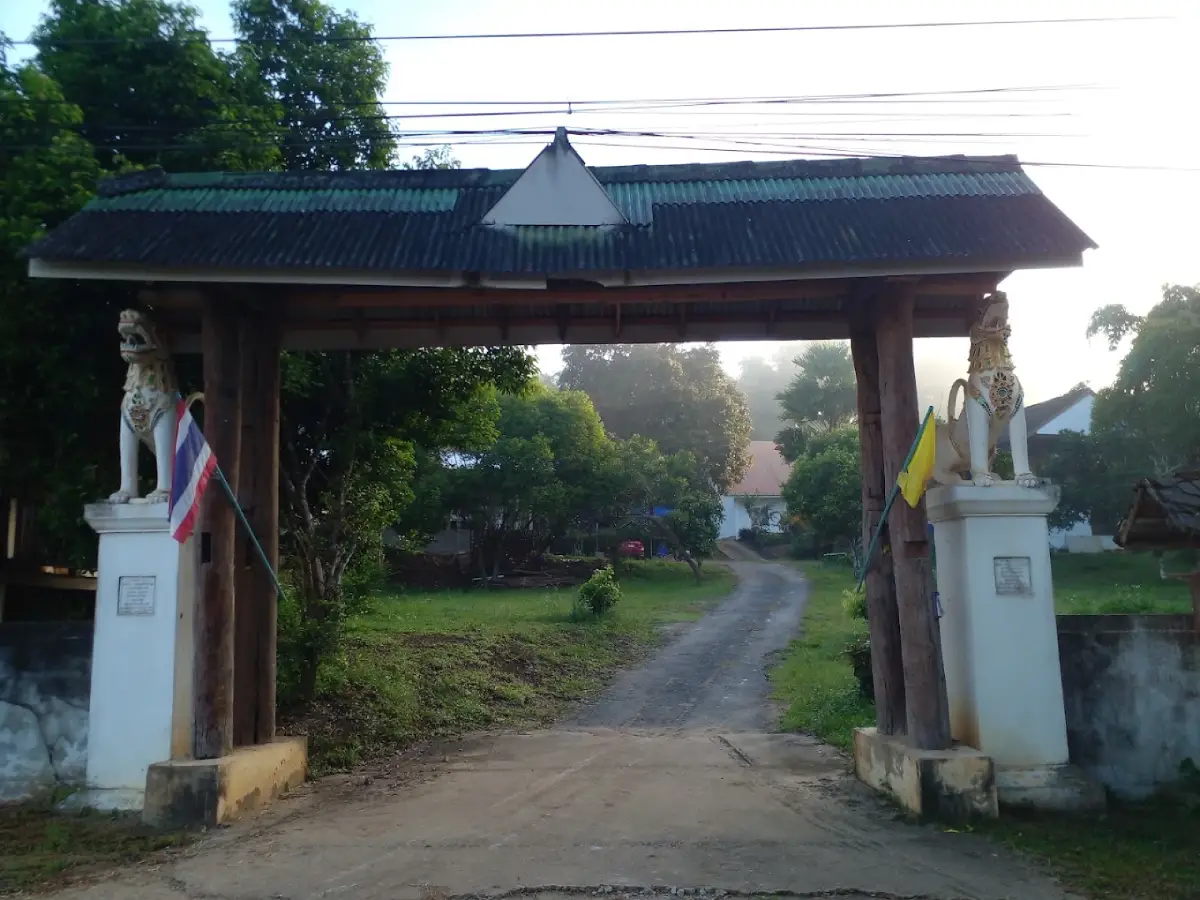
Wat Rung Arun
Open Days: Daily
Opening Hours: 08.00 - 17.00
Wat Rung Arun is a local Buddhist temple under the Maha Nikaya order, located in Moo 8, Ban Ngio Tao Tai, Mae Sap Subdistrict, Samoeng District, Chiang Mai Province. The temple was officially permitted to be established in B.E. 2483 and received its royal consecrated boundary in B.E. 2547. With Phra Athikan Thawi Atharo as the abbot, Wat Rung Arun remains an important spiritual center for Ban Ngio Tao and the Mae Sap area, reflecting the close relationship between Buddhism, Lanna community life, and Tai Lue cultural roots in rural Samoeng.
Wat Rung Arun is best appreciated as a quiet village temple rather than a major tourist attraction. Its significance lies in its role as a community temple where local residents make merit, listen to sermons, join Buddhist ceremonies, and maintain religious traditions throughout the year. For travelers, the temple offers a meaningful way to understand Samoeng beyond mountain scenery, as it reveals the spiritual and cultural life of a local community in Mae Sap.
Ban Ngio Tao, Moo 8 of Mae Sap Subdistrict, is a culturally diverse community with roots connected to the Tai Lue people, whose ancestors migrated from Xishuangbanna in Yunnan, China. The village lies in a valley landscape surrounded by natural resources, streams, and agricultural land. Local livelihoods are strongly connected with farming, and important crops in the area include garlic, edamame, peanuts, and strawberries. This context makes Wat Rung Arun part of a wider cultural landscape of highland agriculture, Tai Lue identity, and Buddhist faith.
The official establishment of Wat Rung Arun in B.E. 2483 reflects the growth and stability of Ban Ngio Tao as a settled community. The temple was created to support merit-making, Buddhist ceremonies, Dhamma learning, and the spiritual needs of villagers. When Wat Rung Arun received its royal consecrated boundary in B.E. 2547, its religious status became more complete, allowing the temple to serve as an officially recognized space for monastic ceremonies according to Buddhist discipline.
The name “Wat Rung Arun” carries an auspicious meaning. “Rung Arun” refers to the light of dawn, suggesting a new beginning, clarity, and spiritual growth. In the context of a mountain village temple, the name connects beautifully with the idea of Buddhist teachings as a guiding light for the community. The temple serves as a moral and spiritual anchor for local residents during ordinary days and important religious occasions.
Publicly available details about the temple’s individual buildings are limited, but its status as a Maha Nikaya village temple with a royal consecrated boundary confirms its role as an active Buddhist place of worship. The temple compound serves the essential functions of a community temple, including worship, merit-making, ceremonies, temple-ground activities, and village gatherings. These functions remain central to Buddhist life in rural communities throughout northern Thailand.
Phra Athikan Thawi Atharo is the abbot of Wat Rung Arun. His role includes caring for the temple, leading Buddhist activities, guiding lay devotees, and maintaining the relationship between the temple and the local community. In a village temple, the abbot is not only a ritual leader but also a spiritual figure who helps preserve community cohesion and Buddhist practice.
The importance of Wat Rung Arun can be understood on several levels. Religiously, it provides a place for worship, merit-making, sermons, and Buddhist holy day observances. Socially, it acts as a gathering place where villagers meet, organize merit-making events, and participate in communal activities. Culturally, the temple helps preserve the identity of Ban Ngio Tao, especially as the village has Tai Lue roots and a way of life shaped by Buddhism, agriculture, and the surrounding mountains.
Religious and community events associated with Wat Rung Arun follow the rhythm of northern Thai village temples. These include Buddhist holy day observances, Kathin ceremonies, forest robe offerings, Buddhist Lent activities, end-of-Lent merit-making, and Northern Thai New Year traditions. During these occasions, villagers gather at the temple to make offerings, listen to Dhamma teachings, prepare communal activities, and strengthen social bonds.
Ban Ngio Tao is also home to the Mae Khae Reservoir, a royal-initiative water resource project created to help solve water shortages for agriculture and household use. The reservoir supports local farming and improves water security for the community. When considered alongside Wat Rung Arun, Ban Ngio Tao shows how a rural community can be sustained by both spiritual institutions and practical infrastructure for daily life.
For travelers, the main attraction of Wat Rung Arun is its peaceful village atmosphere. Visitors can pay respect, make merit, and experience a quieter side of Samoeng that is closely tied to local community life. The temple is suitable for cultural travelers, visitors interested in rural Lanna temples, and those who want to understand Samoeng through its villages rather than only through scenic viewpoints or popular cafés.
Getting There is most convenient by private car or rental car. From Chiang Mai city, travelers can drive toward Samoeng District, continue into Mae Sap Subdistrict, and then proceed to Moo 8, Ban Ngio Tao. The route includes mountain roads and rural village roads, so careful driving is recommended, especially during the rainy season. Travelers should check vehicle condition, prepare enough fuel, and allow extra travel time.
A visit to Wat Rung Arun can be combined with nearby cultural and natural attractions in Mae Sap and Samoeng, including Mae Khae Reservoir, Wat Hat Som Poi, Phra That Mon Pia, Pha Yong, Tham Luang Mae Sap Cave, and Khun Khan National Park. This route is suitable for travelers who want to connect temple visits, community stories, mountain scenery, and local cultural identity in western Chiang Mai.
| Name | Wat Rung Arun |
| Type | Local Buddhist temple under the Maha Nikaya order |
| Location | Moo 8, Ban Ngio Tao Tai, Mae Sap Subdistrict, Samoeng District, Chiang Mai Province |
| Highlights | A community temple of Ban Ngio Tao, connected with Tai Lue cultural roots, village Buddhism, and highland agricultural life in Mae Sap |
| History | Permitted to be established as a temple in B.E. 2483 and granted a royal consecrated boundary in B.E. 2547 |
| Name Origin | The name means “dawn” or “morning light,” symbolizing new beginnings, clarity, and spiritual growth |
| Distinctive Features | A rural Lanna village temple linked with Ban Ngio Tao, Tai Lue community identity, highland agriculture, and local Buddhist faith |
| Main Areas / Zones | Worship area, ceremony area, temple grounds, and community Buddhist activity space |
| Abbot / Caretaker | Phra Athikan Thawi Atharo |
| Traditions / Religious Activities | Kathin ceremonies, forest robe offerings, Buddhist holy day observances, Buddhist Lent activities, end-of-Lent merit-making, and Northern Thai New Year traditions |
| Community Role | A spiritual center for Ban Ngio Tao, supporting merit-making, sermons, religious events, and the continuity of local cultural identity |
| Travel Information | Best reached by private car or rental car from Chiang Mai city to Samoeng District, then onward to Mae Sap Subdistrict and Ban Ngio Tao. The route includes mountain and rural roads. |
| Current Status | Open as a local community temple for worship, merit-making, and Buddhist activities |
| Open Days | Daily |
| Opening Hours | 08.00 - 17.00 |
| Facilities | Worship area, temple grounds, and community Buddhist activity space |
| Nearby Tourist Attractions | 1. Mae Khae Reservoir, about 2 km 2. Wat Hat Som Poi, about 6 km 3. Phra That Mon Pia, about 10 km 4. Pha Yong, about 12 km 5. Tham Luang Mae Sap Cave, about 20 km 6. Khun Khan National Park, about 25 km |
| Nearby Restaurants | 1. Cafe De Mountain, about 18 km, Tel. 098-506-5306 2. Ice Cream Café At Samoeng, about 19 km, Tel. 081-751-2191 3. Baan Coffee Samoeng, about 20 km, Tel. 082-763-3400 4. Coffee By Aitsara, about 21 km, Tel. 084-378-0821 5. Khwamsukh Cafe, about 22 km, Tel. 064-339-2582 |
| Nearby Accommodations | 1. Aomlong Homenon, about 16 km, Tel. 082-569-2292 2. Forest Guesthouse, about 20 km, Tel. 084-371-5055 3. Lhongkhao Samoeng, about 22 km, Tel. 062-789-9444 4. Baansuanviwethung, about 23 km, Tel. 062-605-6556 5. Phupha View Doi, about 25 km, Tel. 092-464-1498 |
Frequently Asked Questions (FAQ)
Q: Where is Wat Rung Arun located?
A: Wat Rung Arun is located in Moo 8, Ban Ngio Tao Tai, Mae Sap Subdistrict, Samoeng District, Chiang Mai Province.
Q: What are the open days and opening hours of Wat Rung Arun?
A: Wat Rung Arun is open daily from 08.00 to 17.00.
Q: What is the history of Wat Rung Arun?
A: Wat Rung Arun was permitted to be established as a temple in B.E. 2483 and received its royal consecrated boundary in B.E. 2547.
Q: Who is the abbot of Wat Rung Arun?
A: The abbot of Wat Rung Arun is Phra Athikan Thawi Atharo.
Q: Why is Wat Rung Arun important to the local community?
A: Wat Rung Arun is a spiritual center for Ban Ngio Tao, supporting merit-making, Buddhist ceremonies, sermons, and the continuity of local cultural identity.
Q: What is special about Ban Ngio Tao?
A: Ban Ngio Tao is a village in Mae Sap Subdistrict with Tai Lue cultural roots, agricultural livelihoods, mountain scenery, and an important local water resource at Mae Khae Reservoir.
Q: What nearby places can travelers visit with Wat Rung Arun?
A: Travelers can combine the visit with Mae Khae Reservoir, Wat Hat Som Poi, Phra That Mon Pia, Pha Yong, Tham Luang Mae Sap Cave, and Khun Khan National Park.
Q: How can travelers get to Wat Rung Arun?
A: The most convenient way is by private car or rental car from Chiang Mai city toward Samoeng District, then onward to Mae Sap Subdistrict and Ban Ngio Tao. The route includes mountain and rural roads.
 Category: ●Places of Worship
 Group: ●Temple
Last Update : 1 MonthAgo
 Last Update : 1 MonthAgo
 Click to Access the Navigation Map GPS
 Muang Chiang Mai(121)Chom Thong(47)Mae Chaem(25)Chiang Dao(33)Doi Saket(68)Mae Taeng(85)Mae Rim(69)Samoeng(29)Fang(71)Mae Ai(59)Phrao(70)San Pa Tong(103)San Kamphaeng(66)San Sai(73)Hang Dong(73)Hot(32)Doi Tao(22)Omkoi(11)Saraphi(74)Wiang Haeng(15)Chai Prakan(28)Mae Wang(32)Mae On(22)Doi Lo(33)Galyani Vadhana(1)


