
lovethailand home >South Travel Attractions >Trang Travel Attractions >Kan Trang >Khuan Thani > Trang City Pillar Shrine
TL;DR: Trang City Pillar Shrine is located at Moo 2, Khuan Thani Subdistrict, Kantang District, Trang Province 92110, Thailand, open Daily.
Trang City Pillar Shrine
Open Days: Daily
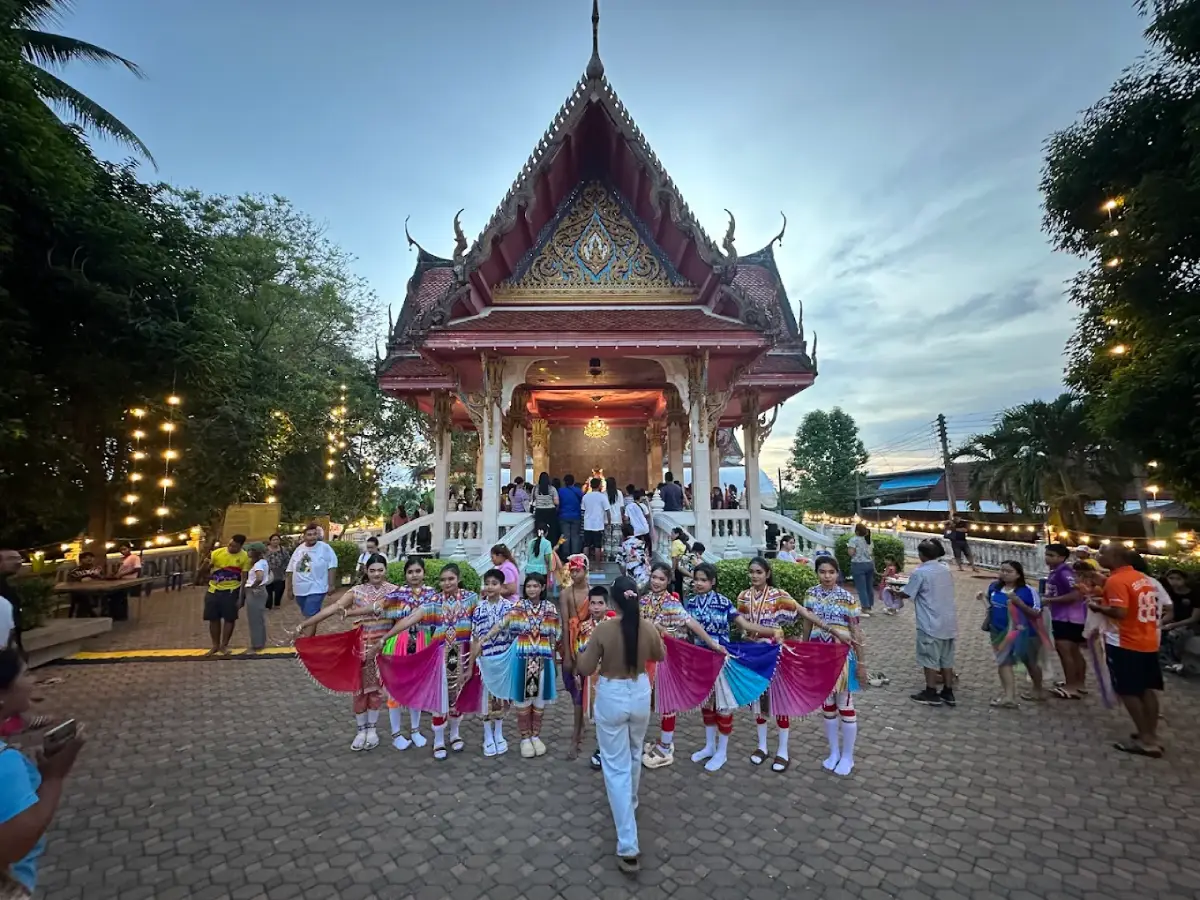
Trang City Pillar Shrine is one of the province's most important sacred landmarks and a spiritual center for the people of Trang. It is located in Moo 2, Khuan Thani Subdistrict, Kantang District, Trang Province 92110, southern Thailand, on the site associated with the former administrative center of Trang. The shrine is particularly significant for its historical connection with the original provincial town before the administrative headquarters moved to Kantang and subsequently to Thap Thiang. The present building is a traditional Thai four-sided pavilion with a red-tiled roof, ornate golden gables, white columns, and a central sacred pillar revered by local residents. Major restoration work began in 1992, and the renovated shrine was officially opened on April 8, 1995. It remains an active place of worship and provincial ceremonies, including the annual city pillar celebration held on May 7, 2026.
The importance of Trang City Pillar Shrine differs from that of many provincial city pillar shrines because it is not located within the present administrative center of Trang Town. Instead, it remains in Khuan Thani, a former seat of provincial administration. This location makes the shrine a historical and geographical landmark that helps explain how Trang's administrative center changed over time. Its continued existence demonstrates that places of spiritual importance can preserve their original locations even after government offices, commercial activity, and urban development have moved elsewhere.
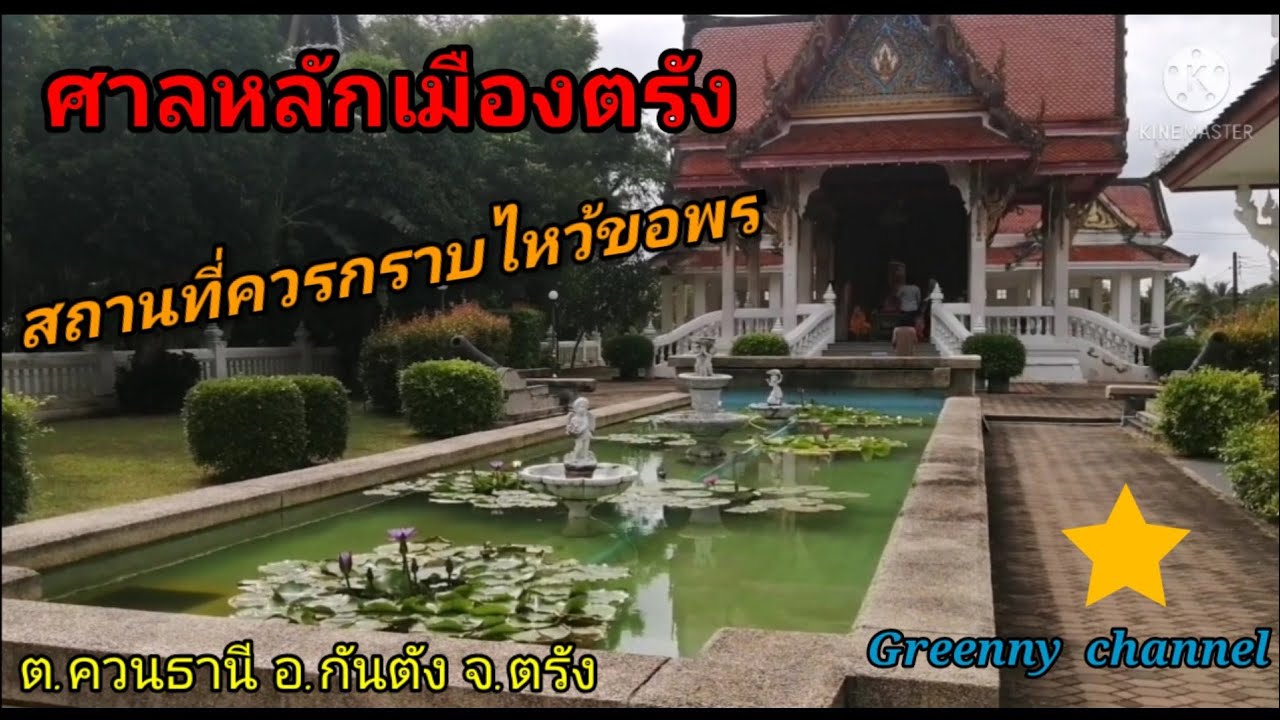
Visitors approaching the shrine encounter a spacious compound with open grounds and a formal walkway leading toward the pavilion. The white building, crowned by its red roof and gold-colored decorations, stands among trees and landscaped green space. Inside is the sacred city pillar, regarded by residents as an important guardian symbol of the province. The site therefore offers opportunities for worship, historical learning, and appreciation of traditional Thai architecture.
Trang Province lies on Thailand's Andaman Sea coast and contains a varied landscape of mountains, river valleys, lowlands, mangrove forests, and coastal environments. Its geography has influenced settlement patterns, transport routes, and economic development for centuries. The Trang River once provided an important means of transporting people and goods, while inland agricultural areas supported villages and communities. The history of Trang consequently reflects the interaction of geographical conditions, natural resources, local government, and regional trade.
Before the provincial government was established at Thap Thiang, the administrative center of Trang had been located at Khuan Thani. The area was associated with local officials and communities living along the river system. The establishment of a city pillar reflected the Thai custom of identifying a spiritual center for a town, with the pillar symbolizing stability, protection, and the shared identity of the settlement.
Local historical accounts identify Luang Uphaithani and Phra Uphaithani as important figures associated with the administration of Trang during the early Rattanakosin period. Local documents connect the establishment of the city pillar at Khuan Thani with this period of provincial governance. As a result, the shrine is linked with Trang's administrative history before the emergence of Kantang as a major port and before wider reforms changed the government of southern towns.
Traditionally, establishing a city pillar meant more than constructing a building. It involved identifying a sacred point where residents could express respect for the spiritual guardians of their community. When a settlement was founded, a central pillar provided a symbol of permanence and auspiciousness. It also represented the idea that different households belonged to a common community protected by shared traditions.
Khuan Thani is an important place for understanding Trang's history because it preserves the location of an earlier provincial center. Although many original buildings have changed or disappeared over time, the city pillar shrine continues to demonstrate the area's former importance. Its preservation protects both a sacred place and the memory of an administrative landscape that preceded the modern province.
During the late nineteenth century, Trang underwent major changes as Siam developed its southern administrative centers and transport networks. River transport and international commerce became increasingly important, prompting consideration of whether Khuan Thani remained suitable as the center of government. These developments occurred alongside wider reforms of provincial administration and the growth of coastal ports in southern Thailand.
Phraya Ratsadanupradit Mahison Phakdi, also known as Khaw Sim Bee na Ranong, was an important figure in Trang's development. During his period as governor, he recognized that Khuan Thani had limitations in terms of transport and economic expansion. He proposed moving the administrative center to Kantang, where access to navigable waterways and suitable port facilities offered greater opportunities for commercial growth.
In 1893, the administrative center of Trang was officially moved from Khuan Thani to Kantang. This was a major turning point in the province's history. Kantang developed into a port town and new government center, while Khuan Thani gradually assumed a different role. Its city pillar shrine remained, preserving an important connection with the former administrative town.
Kantang enjoyed geographical advantages because its location near the river and estuary made it suitable for the movement of commercial vessels. Improvements to port facilities encouraged trade and transport. The decision to relocate the government was therefore an economic and administrative response to changing conditions, rather than an indication that the older sacred traditions of Khuan Thani had lost their importance.
As Kantang developed, wharves, roads, government buildings, and commercial districts emerged. Phraya Ratsadanupradit Mahison Phakdi also played an important role in agricultural development, particularly the expansion of rubber cultivation in southern Thailand. Kantang's history consequently became closely connected with changes in provincial commerce, agriculture, and transport.
Trang's administrative center moved again in 1915, this time from Kantang to Thap Thiang. Thap Thiang gradually became the modern provincial capital and principal commercial center. Kantang retained its significance as a historic port and railway town, while Khuan Thani preserved the original city pillar shrine as a symbol of an earlier phase of provincial history.
The successive movements of Trang's administrative center from Khuan Thani to Kantang and then Thap Thiang are distinctive features of the province's history. They demonstrate how government centers may change location in response to transport, commerce, public health, and administrative needs. Important sacred landmarks, however, may remain in their original settings and continue to preserve the memory of earlier communities.
Trang City Pillar Shrine is therefore an example of cultural continuity amid urban and administrative change. Even though Khuan Thani is no longer the provincial capital, residents continue to return to the shrine for worship and annual celebrations. The site serves as a historical marker that recalls the different stages through which Trang developed into the province known today.
The original shrine was a small, simple structure with a corrugated metal roof. It did not resemble the elaborate four-sided Thai pavilion that stands on the site today. As time passed, the structure deteriorated, and a termite mound grew around the original pillar, eventually obscuring it from view. These circumstances illustrate the effects of age and the natural environment on sacred structures maintained over long periods.
In 1961, provincial authorities replaced the earlier shelter with a more substantial pavilion. Improvements were also made to the surrounding ground, including the construction of a fence and the organization of the shrine area. This restoration was an important effort to preserve the site before the much larger rebuilding project undertaken several decades later.
Although the building changed in 1961, the spiritual meaning of the city pillar remained. Residents continued to regard the shrine as an important place associated with Trang's history and guardian traditions. Respect for the shrine was maintained through personal worship, family stories, and community practices passed from one generation to the next.
In 1992, Trang Province began a major restoration project to commemorate the 60th birthday of Queen Sirikit. The objective was to provide the shrine with a dignified new building appropriate to its standing as a provincial sacred landmark and to emphasize that Khuan Thani had once been the administrative center of Trang. The project was significant for architecture, heritage preservation, and the continuation of local historical memory.
The major renovation transformed the earlier structure into a traditional Thai chatumuk pavilion with projecting sections and an ornate roof. The new building offered more spacious and formal accommodation for worshippers. Its design gave the provincial landmark a recognizable architectural identity and allowed visitors to appreciate the shrine's composition from the open grounds in front.
Conservation records describe the restored shrine as approximately 22.90 meters wide and 59.74 meters long. The structure features a red-tiled Thai roof, gold-colored ornamental gables, white columns, balustrades, and entrance steps connecting the exterior courtyard with the elevated sacred space.
The four-sided chatumuk architectural form emphasizes the central sacred space through a balanced composition. Projecting roof sections guide the eye toward the interior, where the city pillar is enshrined. This approach is commonly associated with important Thai ceremonial buildings and creates a dignified setting through symmetry and traditional roof ornamentation.
The shrine's gables display intricate Thai decorative patterns, while the eaves and roof ornaments contribute to its refined appearance. Seen from the front, the red tiles contrast strongly with the gold details and white columns. This combination makes the building visually prominent without requiring the height of a large stupa or monumental tower.
The entrance staircase and white balustrades define the approach to the pavilion. Visitors move from the paved courtyard toward the raised building and its sacred interior. The change in elevation distinguishes the worship area from the surrounding public space and gives the shrine a clear architectural hierarchy.
Open ground, garden features, and landscaped areas extend in front of the pavilion. A water feature and ornamental planting form part of the wider setting. The layout offers a clear view of the building and contributes to a calm atmosphere suitable for worship and cultural sightseeing.
Inside the shrine stands the city pillar, the principal focus of devotion. Traditional offerings include flower garlands, incense, and candles arranged in designated areas. The pillar represents the spiritual heart of the former town and remains a symbol through which residents express respect for its guardian traditions.
During the major restoration, a new upper section of the city pillar was created from Ratchaphruek wood, also known as the golden shower tree. Conservation records describe the timber as approximately 18 centimeters in diameter and 2.50 meters high. The material was selected for its auspicious associations with prosperity and well-being in Thai culture.
Ratchaphruek is well known for its clusters of yellow blossoms and its cultural associations with good fortune. Using this wood in the city pillar restoration reflected traditional ideas about the stability and prosperity of the town. The natural material also connected the sacred pillar with craftsmanship and ceremonial traditions involving carved and decorated wooden objects.
On August 30, 1993, the new upper section of the city pillar was presented to King Bhumibol Adulyadej, King Rama IX, for a royal sprinkling and anointing ceremony at Chitralada Royal Villa in Bangkok's Dusit Palace grounds. It was subsequently brought back to Trang. The ceremony became an important event in the shrine's modern history and demonstrated the significance attached to its restoration.
Following the royal ceremony, work continued on the building and surrounding grounds in preparation for the official opening. The project brought together architectural design, craftsmanship, landscaping, and ceremonial observances. Its purpose was to restore both the physical dignity of the shrine and its role as an important provincial sacred landmark.
April 8, 1995, was a significant date in the shrine's history. Crown Prince Maha Vajiralongkorn, who later became King Rama X, formally opened the restored city pillar shrine on behalf of King Bhumibol Adulyadej. The event marked the completion of the major restoration and reestablished the shrine as an important place for provincial ceremonies and public worship.
The shrine continued to receive attention after its reopening. In 2006, Trang Province and participating organizations undertook further restoration and held ceremonies commemorating the 60th anniversary of King Bhumibol Adulyadej's accession to the throne. These activities reflected the ongoing commitment to preserving the shrine as a place of spiritual and cultural importance.
Local folklore surrounding Trang City Pillar Shrine includes a story about a woman named Bunma, who became associated with an old tale concerning the establishment of the city pillar. The narrative belongs to traditional beliefs about supernatural protection and the founding of towns. It is part of the region's folklore rather than independently established historical evidence of the event described.
The tale of Bunma is significant because it reveals how earlier communities understood city pillars and the spiritual forces believed to protect settlements. Comparable stories appear in various parts of Thailand and often concern sacrifice, guardian powers, and the relationship between human communities and sacred places.
The folklore should be understood alongside the shrine's documented architectural history. Oral traditions preserve cultural beliefs and community memories, while administrative and conservation records describe the rebuilding of the pavilion and the ceremonial preparation of the city pillar in the modern period. Together, these different forms of heritage contribute to the meaning of the site.
Residents visit Trang City Pillar Shrine to seek blessings and express respect according to personal beliefs. Common wishes concern employment, business activities, safety, family welfare, and favorable conditions for daily life. Offerings may include flowers, incense, candles, garlands, and other customary objects. Some devotees also present firecrackers or food when fulfilling vows made during previous visits.
Trang's famous roasted pork is connected with local food culture and is sometimes used as an offering in traditional ceremonies. As one of the province's best-known culinary specialties, roasted pork appears in both everyday communal life and certain ritual settings. Its use illustrates the relationship between religious devotion, food traditions, and local identity.
Prayers concerning rainfall and the weather also have historical significance. Agricultural communities depend on suitable seasonal conditions, and wishes for favorable weather are part of wider traditions concerning the spiritual protection of land and livelihoods. In this respect, the city pillar shrine reflects both individual concerns and collective hopes for prosperity and abundance.
The shrine also has connections with traditional southern Thai performing arts. Local accounts describe shadow-puppet and Manora troupes paying respect when passing the shrine, sometimes performing a brief musical tribute before continuing their journeys. These customs expressed reverence for the town's guardian and hopes for safe travel and successful performances.
Nang Talung, southern Thailand's traditional shadow-puppet theater, combines carved leather figures, dialogue, storytelling, and regional musical accompaniment. Manora is a highly distinctive dance-drama tradition characterized by expressive movements, ornate costume, and rhythmic music. Their association with the city pillar shrine illustrates the place of guardian beliefs within the lives of traveling performing artists.
Trang's Thai-Chinese communities have also maintained traditions connected with the shrine, especially during the Vegetarian Festival. In the past, processions from Chinese shrines customarily paused to pay their respects when passing the city pillar. This practice reflected an acknowledgment of the local sacred guardian while the procession continued according to its own religious customs.
Residents of Khuan Thani began organizing Vegetarian Festival ceremonies at the city pillar shrine in 1968. The practice continued until 1990, when activities at the site were discontinued in preparation for the major restoration. This history demonstrates that the shrine has served as a place for several kinds of community tradition, not solely official provincial worship ceremonies.
The Vegetarian Festival is associated with religious observance, dietary practices, and ceremonial activities within Thai-Chinese communities. Paying respect to the city pillar during processions illustrates how different religious traditions can recognize a shared sacred landmark within the same town.
Although Trang City Pillar Shrine is not itself a Chinese shrine, it has long been respected by residents of different cultural backgrounds. Trang's communities include Thai Buddhists, Thai Muslims, and people of Chinese descent, each contributing to the province's history and economy. The city pillar consequently represents a shared historical connection with the former town.
The annual city pillar worship and celebration ceremony remains one of the province's significant cultural activities. Government agencies, local authorities, private organizations, and residents participate in preserving the tradition. The ceremony gives people an opportunity to express respect for the city pillar while keeping the history of Khuan Thani visible within provincial cultural life.
On May 7, 2025, Trang Province organized its annual city pillar worship and celebration ceremony. Governor Songklod Sawangwong presided over the event, joined by deputy governors, district officials, government representatives, local authorities, private organizations, and members of the public. Their participation demonstrated the continuing importance of the shrine as a provincial cultural landmark.
The 2025 celebration was also connected with programs promoting cultural tourism and the preservation of local customs. Activities at the shrine encouraged greater awareness of Khuan Thani's historic role and helped introduce younger generations and visitors to the traditions associated with the province's original administrative center.
On May 7, 2026, Trang Province again held its annual city pillar worship and celebration ceremony. Governor Songklod Sawangwong presided, with government agencies, local administrative organizations, visitors, and residents in attendance. The event confirmed the shrine's continued ceremonial role and the strength of local traditions surrounding the site.
The 2026 event formed part of provincial programs promoting cultural tourism and traditional community observances. The city pillar shrine served as the main ceremonial focus, bringing together historical memory, local religious customs, and public cultural activities.
The festival's importance extends beyond the individual acts of worship. It creates opportunities for residents of different ages to gather, prepare ceremonies, and exchange knowledge about their community's history. Through these activities, the shrine continues to function as a place where collective identity is expressed and transmitted.
Trang City Pillar Shrine is not a Buddhist monastery and therefore does not have an abbot. Its upkeep and major public ceremonies involve provincial government agencies and local administrative organizations. Khuan Thani Municipality is the local authority for the surrounding area and publishes historical information about the shrine and community. Provincial events are organized through cooperation among participating public and private organizations.
The presence of the shrine in Khuan Thani gives the local community a particularly meaningful historical landmark. During annual celebrations, people travel from other parts of Trang Province to a place that once served as its administrative center. These gatherings help keep the story of Khuan Thani alive and introduce its history to a broader audience.
The surrounding landscape reflects the character of a community linked by roads between Trang Town and Kantang. This corridor is historically significant because it connects the older site at Khuan Thani with the port town that became Trang's next administrative center. Traveling along it provides a geographical perspective on an important administrative change.
Khuan Thani contains established settlements, residential areas, agricultural connections, and routes leading toward riverside communities. The atmosphere around the shrine differs from the busy commercial center of Thap Thiang. Its relatively open setting gives visitors a quiet environment in which to appreciate the building and its historical significance.
For travelers interested in local history, the shrine provides a direct link between the founding of a town, the relocation of provincial administration, and the survival of traditional guardian beliefs. The building and its restoration history are particularly valuable when considered alongside the changing role of Khuan Thani in the province's wider development.
The principal architectural features include the front courtyard, main walkway, entrance staircase, white balustrades, four-sided pavilion, city pillar chamber, and offering areas. Together, these elements organize movement from the exterior public space toward the sacred center of the shrine.
The courtyard provides a clear view of the symmetrical roof and decorative gables. From the entrance path, visitors can appreciate the white columns and golden roof details. The open-sided arrangement contributes to a spacious atmosphere suited to southern Thailand's tropical climate, while allowing groups of worshippers to enter the ceremonial area.
Inside the pavilion, the city pillar remains the central object of respect. Devotees present offerings according to local customs, and the surrounding interior provides a calm setting for personal worship. Architectural details and ornamental finishes reinforce the dignity of a place preserved as a symbol of the province.
Comparing the present pavilion with accounts of the original corrugated-metal shelter reveals how the management of sacred community landmarks has changed. The original structure was modest and primarily protected the sacred location. As provincial awareness and public support increased, the shrine was developed into a more elaborate building suitable for official ceremonies and large gatherings.
Restoration did not eliminate the shrine's original symbolic meaning. The essential purpose remains the preservation of the site of the city pillar and the local traditions surrounding it. Buildings may be improved and redesigned over time, while the historical memory and reverence associated with their locations continue across generations.
From the shrine, visitors can continue to Kantang Town, where several landmarks illustrate the period after Trang's administrative center was relocated from Khuan Thani. The Phraya Ratsadanupradit Mahison Phakdi Museum is housed in a preserved historic residence and presents the life and achievements of a governor who played an important role in Trang's political and economic development.
Phraya Ratsadanupradit Mahison Phakdi was closely associated with the transformation of Trang from its earlier administrative center into a commercially important port town. His policies encouraged port development, transport improvements, and agricultural expansion, particularly rubber cultivation. Visiting the museum provides a deeper understanding of the historical circumstances that followed the relocation from Khuan Thani.
Kantang Railway Station is another important historical attraction. Known for its distinctive preserved station building, it reflects the development of southern Thailand's transport network and the former importance of Kantang as a commercial center. The arrival of the railway helped connect the town with wider trading routes and contributed to its economic significance.
The station's architectural character and preserved railway setting make it a popular landmark for visitors interested in heritage and transport history. Streets and traditional commercial buildings nearby preserve aspects of the old port-town atmosphere. Visiting the station alongside Trang City Pillar Shrine illustrates how changing transport systems shaped the province's development.
Kantang Old Town contains historic shophouses, older streets, and neighborhoods that reflect its past as a trading port. Street art and cultural activities add contemporary interest to the historic environment. The old town offers a contrasting experience to Khuan Thani, where the original city pillar shrine and memories of the earlier administrative center are the principal historical attractions.
Wat Trangkaphum Phutthawat is an established Buddhist temple in the Kantang area and an important place of worship for the local Buddhist community. The presence of Buddhist temples, city pillar shrines, museums, and historic commercial buildings within the wider area demonstrates the variety of cultural institutions that contributed to the province's development.
Public spaces and riverside areas in Kantang also reflect the town's historical relationship with water transport. The Trang River was an important route for people and goods, and the geography of its lower course helps explain why Kantang was selected as the new provincial center in 1893. Visiting the waterfront provides additional context for the administrative and economic changes of that period.
Visitors interested in nature can continue to Kantang Hot Spring Forest Park, where thermal waters and woodland provide a different recreational setting. The forest park contrasts with the city pillar shrine and historic urban attractions, adding natural scenery to a cultural journey through Kantang District.
Trang City Pillar Shrine is particularly useful as a starting point for exploring the province's administrative history. A journey can begin at Khuan Thani, continue to the former port-centered capital of Kantang, and conclude in Thap Thiang, the present provincial capital. Each location illustrates a different stage of Trang's development.
This route makes the province's history tangible through real places. Khuan Thani preserves the earlier city pillar, Kantang represents the growth of maritime commerce and reforms associated with Phraya Ratsadanupradit, and Thap Thiang reflects the modern concentration of government and urban business. The relationship among these three locations is one of the distinctive historical characteristics of Trang.
Trang has an especially rich food culture shaped by both southern Thai traditions and Thai-Chinese communities. Local specialties include Trang-style roasted pork, dim sum, steamed buns, Chinese-style dumplings, and regional coffee. Breakfast restaurants and traditional coffee shops are a recognizable feature of the province, reflecting the history of merchant communities and urban settlement.
Kantang offers dining establishments representing its port-town food heritage. Lor Khung Restaurant on Ratsada Road serves Thai-Chinese food and noodle dishes. Riverside restaurants such as Sabai Sabai Kitchen and Coffee and other local seafood establishments provide additional opportunities to enjoy cuisine associated with Trang's waterways and coastal resources.
Seafood plays an important role in Kantang's food culture because of the district's connections with the river, estuary, and Andaman Sea. Yai Choei Seafood in Yan Sue is known for its seafood dishes and waterside atmosphere, while Sane Pu in Bang Mak reflects the importance of local marine ingredients and southern Thai cooking.
The district also has contemporary restaurants and cafés, including Lanin Café and Restaurant. Such establishments combine drinks, desserts, and meals with a more modern dining atmosphere. Their presence illustrates how the former trading town continues to evolve while maintaining traditional eateries and historic buildings.
Accommodation in Kantang is convenient for travelers exploring the former provincial centers at Khuan Thani and Kantang. Options include Sirichai Design Hotel, Kantang Park Hotel, Matou Hostel and Café, and Kantang Loftel. These properties are located within the wider town area and provide access to the railway station, historic buildings, restaurants, and riverside attractions.
Those wishing to stay in the present provincial capital can choose from hotels in Trang Town, including Baan Bussaba Hotel, S1 Trang Hotel, Nara Residence Trang, and other properties around Thap Thiang. Staying in the town center is convenient for regional travel, while Kantang offers a closer connection with the atmosphere of the historic port community.
The differences between accommodation in Kantang and Trang Town reflect different travel preferences. Travelers primarily interested in the railway station, local museum, historic streets, and port-town dining may prefer Kantang. Those planning to travel across several districts or continue toward the coast can use Trang Town as a central base before visiting the shrine along the Trang–Kantang route.
Getting There: Trang City Pillar Shrine is situated in Moo 2, Khuan Thani Subdistrict, Kantang District, Trang Province 92110, Thailand. Travelers driving from central Trang can follow the Trang–Kantang road toward Khuan Thani. The shrine is located within the subdistrict before reaching central Kantang. Visitors traveling from Kantang Town can follow the route back toward Trang and turn into Khuan Thani using local road signs or a digital map.
Travelers arriving by train at Kantang Railway Station can continue to Khuan Thani by local transport or private vehicle. Those arriving at Trang Railway Station or Trang's transport terminals can hire a vehicle for the journey along the Trang–Kantang road. Traveling by car is convenient for combining the shrine with the historical attractions of Kantang and Trang Town.
Trang City Pillar Shrine is especially meaningful for understanding history through geography. Its position at Khuan Thani represents an earlier provincial center, while nearby museums and Kantang Railway Station reflect the following period of commercial and administrative development. Exploring these places together provides a coherent picture of how Trang changed over time.
From an architectural perspective, the shrine demonstrates the transformation of a modest shelter into an elaborate Thai chatumuk pavilion. The major restoration that began in 1992 gave the site a building suitable for important provincial ceremonies, while the preparation and royal anointing of the new pillar section in 1993 preserved its spiritual significance.
In terms of belief, the shrine remains a place for prayers, offerings, and important ceremonies. Local stories about its establishment, customs associated with Nang Talung and Manora performers, and connections with Thai-Chinese Vegetarian Festival traditions demonstrate the diverse cultural roles of the site. Its preservation therefore protects a community's shared memory as well as an architectural landmark.
In social terms, the annual celebrations demonstrate cooperation among government agencies, local authorities, private organizations, and residents. Ceremonies held in 2025 and 2026 show that traditions associated with the shrine remain active. They also introduce the history of Khuan Thani to visitors and younger generations who may be more familiar with the present provincial capital at Thap Thiang.
Trang City Pillar Shrine is consequently an important sacred and historical landmark linking the province's earlier administrative center with its later development. From Khuan Thani to the port town of Kantang and the modern center at Thap Thiang, the shrine remains a physical reminder of an important stage in Trang's history. Its four-sided Thai pavilion, Ratchaphruek city pillar, and continuing annual ceremonies give the place a distinctive cultural identity.
With its historical relationship to the original town, the major restoration begun in 1992, the official reopening on April 8, 1995, and provincial worship ceremonies continuing through 2026, Trang City Pillar Shrine remains a spiritual center and an important part of the province's cultural heritage. It demonstrates that the history of a town is preserved not only in government buildings and museums but also in sacred places, local beliefs, ceremonial traditions, and the enduring attachment of communities to their ancestral landscapes.
| Place Name | Trang City Pillar Shrine |
| Address | Moo 2, Khuan Thani Subdistrict, Kantang District, Trang Province 92110, Thailand |
| Coordinates | 7.52404, 99.55773 |
| Type of Attraction | City Pillar Shrine, Sacred Provincial Landmark, Historical and Cultural Attraction |
| Historical Significance | Located at Khuan Thani, the Former Administrative Center of Trang Before the Government Moved to Kantang in 1893 and to Thap Thiang in 1915 |
| Important Historical Figures | Phra Uphaithani, Associated with the Establishment of the Original City Pillar, and Phraya Ratsadanupradit Mahison Phakdi, Who Played a Major Role in Relocating the Administrative Center to Kantang |
| Restoration Timeline | 1. 1961: A Pavilion Replaced the Original Shelter 2. 1992: Major Restoration Began 3. August 30, 1993: Royal Ceremony for the City Pillar's New Upper Section 4. April 8, 1995: Official Opening of the Restored Shrine 5. 2006: Further Restoration and Celebration |
| Architecture | Traditional Four-Sided Thai Chatumuk Pavilion with a Red-Tiled Roof, Ornate Golden Gables, White Columns, Balustrades, and Entrance Steps |
| Building Dimensions | Approximately 22.90 m Wide and 59.74 m Long |
| City Pillar | A New Upper Pillar Section Was Made from Ratchaphruek (Golden Shower Tree) Wood, Approximately 18 cm in Diameter and 2.50 m High, During the Major Restoration |
| Main Areas and Features | 1. Four-Sided Shrine Pavilion 2. Sacred City Pillar Area 3. Traditional Offering Area 4. Entrance Staircase and Veranda 5. Front Courtyard 6. Walkways and Landscaped Garden 7. Water Feature and Surrounding Grounds |
| Management and Ceremonial Organizations | Trang Provincial Agencies and Participating Local Authorities, Including Organizations in Khuan Thani. The Shrine Is Not a Buddhist Monastery and Has No Abbot. |
| Annual Traditions | City Pillar Worship and Celebration Ceremonies, Alongside Local Traditions Associated with Respect for the Town's Sacred Guardian |
| 2026 Annual Ceremony | May 7, 2026 |
| Open Days | Daily |
| Visiting Access | Open for Public Worship; Current Place Listings Show Access to the Grounds Throughout the Day |
| Admission Fee | No General Admission Charge |
| Facilities | Parking, Wheelchair-Accessible Entrance, and Restroom Facilities Listed in Visitor Information |
| Getting There | Follow the Trang–Kantang Road from Central Trang Toward Khuan Thani Subdistrict, Kantang District. |
| Shrine Contact Listed in Business Directory | +66 75 290 267 |
| Khuan Thani Municipality Contact | +66 75 270 260 |
| Nearby Attractions and Historical Destinations | 1. Trang City Pillar Shrine and the Former Khuan Thani Town Site – Same Area 2. Phraya Ratsadanupradit Mahison Phakdi Museum – Khai Phithak Road, Kantang, Tel. +66 75 251 100 3. Kantang Railway Station – Kantang Town 4. Kantang Old Town and Street Art – Kantang Municipality 5. Wat Trangkaphum Phutthawat – Kantang Area 6. Trang Riverfront Public Areas – Kantang 7. Kantang Hot Spring Forest Park – Kantang District |
| Restaurants in Kantang and Connected Areas | 1. Lor Khung Restaurant – Ratsada Road, Kantang, Tel. +66 89 588 1875 2. Sabai Sabai Kitchen and Coffee – Khlong Phasi Road, Kantang, Tel. +66 94 462 2922 3. Yai Choei Seafood – Yan Sue Subdistrict, Tel. +66 87 620 4452 4. Sane Pu Restaurant – Bang Mak Subdistrict, Tel. +66 64 979 6224 5. Lanin Café and Restaurant – Na Kluea Area, Kantang, Tel. +66 65 992 5689 6. Krua Trang – Khok Lo Subdistrict, Mueang Trang District, Tel. +66 75 502 157 |
| Accommodations in Kantang and Trang Town | 1. Sirichai Design Hotel – Sathonsathanphithak Road, Kantang, Tel. +66 83 812 4192 2. Kantang Park Hotel – Rotfai Road, Kantang, Tel. +66 75 820 668 3. Matou Hostel and Café – Ratsada Road, Kantang, Tel. +66 63 246 5954 4. Kantang Loftel – Khue Na Road, Kantang, Tel. +66 62 080 3555 5. Baan Bussaba Hotel – Na Ta Luang, Mueang Trang, Tel. +66 81 370 8997 6. S1 Trang Hotel – Ratsada Road, Mueang Trang, Tel. +66 94 676 8169 7. Nara Residence Trang – Rong Pak Road, Mueang Trang, Tel. +66 65 661 8420 8. Triple J Hotel Trang – Thap Thiang, Mueang Trang, Tel. +66 91 555 6535 |
| Current Status | Active Sacred and Cultural Landmark, with the Most Recent Annual Worship Ceremony Held on May 7, 2026 |
Frequently Asked Questions (FAQ)
Q: Where is Trang City Pillar Shrine located?
A: The shrine is in Moo 2, Khuan Thani Subdistrict, Kantang District, Trang Province 92110, Thailand. Khuan Thani was formerly the administrative center of Trang.
Q: Is Trang City Pillar Shrine in central Trang Town?
A: No. It is located in Khuan Thani, Kantang District, rather than the modern town center at Thap Thiang. Travelers can reach it from Trang Town via the Trang–Kantang road.
Q: Is Trang City Pillar Shrine still open to visitors?
A: Yes. The shrine remains an active place of worship and hosted its annual provincial ceremony on May 7, 2026.
Q: Is there an admission fee?
A: There is no general admission charge for worshippers and visitors.
Q: What is the history of Trang City Pillar Shrine?
A: It is associated with Trang's former administrative center at Khuan Thani. The government moved to Kantang in 1893. Major restoration work began in 1992, and the renovated shrine was officially opened on April 8, 1995.
Q: What is distinctive about the shrine's architecture?
A: It is a traditional Thai four-sided chatumuk pavilion with a red-tiled roof, ornate golden gables, white columns, and an interior housing the sacred city pillar.
Q: When is the annual city pillar worship ceremony held?
A: Trang Province organizes annual worship and celebration ceremonies. In 2026, the event took place on May 7 at the shrine in Khuan Thani.
Q: What attractions can visitors explore near Trang City Pillar Shrine?
A: Important destinations include the Phraya Ratsadanupradit Mahison Phakdi Museum, Kantang Railway Station, Kantang Old Town, Wat Trangkaphum Phutthawat, and Kantang Hot Spring Forest Park.
 Category: ●Places of Worship
 Group: ●Other Sacred Sites
Last Update : 5 DayAgo
 Last Update : 5 DayAgo
 Click to Access the Navigation Map GPS
Trang City Pillar Shrine Map
Recommend

 Art, Culture and Heritage
 Historical Sites and Monuments(1)
 Landmarks and Memorials(2)
 Art, Craft Centres, Tradition(3)
 Museums(2)
 Temple(15)
 Mosque(1)
Other Sacred Sites(7)
 Research and Development
 Royal Project(1)
 Suburban Living
 Village, Community(5)
 Nature and Wildlife
 National Parks and Marine Reserves(6)
 Mountain (Doi)(8)
 Dam, Reservoir, Lake(1)
 Waterfalls(20)
 Hot Springs(1)
 Caves(11)
 Bays and Beaches(11)
 Islands(12)
 Other natural attractions(3)
 Entertainment and Agricultural
 Farms, Parks and Ecotourism(8)
 Outdoor and Adventure Activities(1)
 Travel Articles, Recipes
 Travel Review, Food Review(1)
 Southern Food Menu, Southern Food Recipes(1)


