
lovethailand home >South Travel Attractions >Phuket Travel Attractions >Thalang >Choeng Thale > Le Phang City Pillar Shrine (Chao Mae Kasinee Shri..
TL;DR: Le Phang City Pillar Shrine (Chao Mae Kasinee Shrine) is located at Le Phang Beach, Moo 4, Choeng Thale Subdistrict, Thalang District, Phuket Province 83110, Thailand, near Banyan Tree Phuket, open Open for Public Worship.
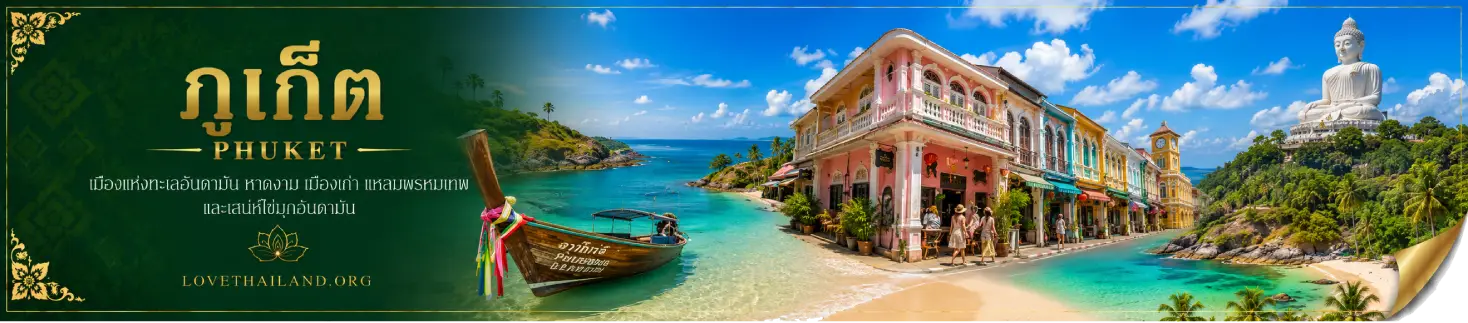
Le Phang City Pillar Shrine (Chao Mae Kasinee Shrine)
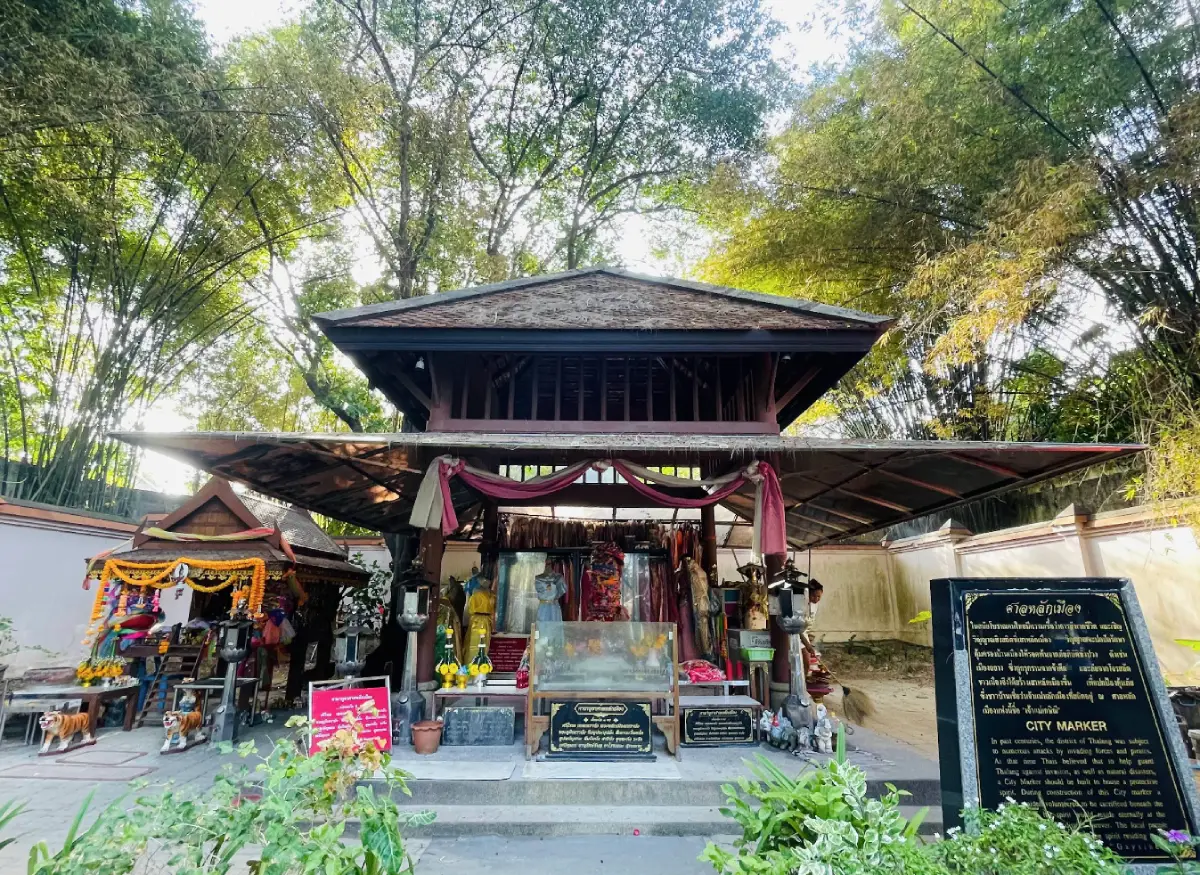
Open Days: Open for Public Worship
Le Phang City Pillar Shrine, also known as Chao Mae Kasinee Shrine, Phuket, is a historic sacred site associated with the cultural heritage and guardian beliefs of communities on the western coast of Phuket Island. It is situated near Le Phang Beach, Moo 4, Choeng Thale Subdistrict, Thalang District, Phuket Province 83110, Thailand, close to Laguna Phuket and Banyan Tree Phuket resort. The shrine is one of four historic city pillar shrines associated with Thalang. Its defining features are its coastal location, its west-facing orientation toward the Andaman Sea, and the local belief that its guardian protects the community against dangers approaching from the sea, including hostile forces and pirates. Residents revere Chao Mae Kasinee as the female guardian of the sacred city pillar. The site consists of a modest wooden pavilion containing the sacred altar, flowers, incense, candles, traditional offerings, and a historical plaque explaining the shrine's beliefs. Its setting near Le Phang Beach gives it significance as both a place of devotion and a cultural landmark reflecting Phuket's maritime history.
Le Phang City Pillar Shrine differs from civic shrines situated beside government offices or in the center of modern towns. Its identity is closely connected with the coastal landscape. The west-facing position, looking toward the Andaman Sea, has symbolic meaning within local traditions concerning the protection of the community from dangers arriving by sea. The belief reflects the history of Thalang, a region whose communities depended on maritime trade and navigation and whose past included periods of conflict and uncertainty along the Andaman coast.
The name Le Phang refers to part of the western coastline of Choeng Thale, toward the northern end of the Bang Tao Beach area. The sandy coastline continues toward Layan Beach farther north. Today, the surrounding landscape forms part of a major tourism district containing hotels, resorts, and recreational facilities. Nevertheless, the city pillar shrine remains an important reminder of the older community traditions that existed before the area's extensive tourism development.
A visit to Chao Mae Kasinee Shrine is therefore connected with more than religious observance. The site provides an opportunity to understand the relationship between the history of Thalang, sacred city pillar traditions, and the economic transformation of Phuket's western coast. Land formerly associated with tin mining and resource extraction gradually developed into a major destination for international tourism, while the shrine continued to preserve the memory of earlier local beliefs.
Phuket has a long history of settlement because of its position along maritime routes in the Andaman Sea. These routes connected the Malay Peninsula with commercial communities in other parts of Asia. Sea transport played a central role in the movement of goods and people before modern road networks became widespread. Coastal settlements and suitable boat landings consequently held considerable economic and administrative importance.
Thalang was once one of Phuket's principal historical centers, associated with maritime commerce, regional administration, and the island's natural resources. The area did not maintain a single settlement center throughout its entire history. Communities and administrative locations changed in response to geography, transportation, economic opportunities, and political events. The existence of several historic city pillar shrines forms part of the cultural geography through which these changes can be understood.
Four historic city pillar shrines are commonly identified in local accounts: Tha Ruea, Mueang Mai, Thalang Pa Sak, and Le Phang. Each has different historical associations and guardian traditions. Tha Ruea is linked with Mae Duang and an older community connected with water transport. Mueang Mai is associated with Mae Chuang and the rebuilding of Thalang. Pa Sak is linked with Mae Soi Kaeo, while Le Phang is associated with Chao Mae Kasinee and protection against dangers approaching from the sea.
The differences among these four shrines demonstrate how individual communities preserved their own sacred landmarks. Although they share the designation of city pillar shrine, their architectural forms, orientations, guardian figures, and geographical settings are not identical. Studying them together reveals Phuket's history as a landscape of several important settlements rather than the history of one permanent urban center.
In Thai tradition, a city pillar is associated with the ceremonial establishment of a settlement and the symbolic protection of the community. It represents stability, auspiciousness, and a shared sense of belonging. Local guardian traditions sometimes incorporate stories of particular protective figures whose names become closely associated with the shrine. These beliefs give individual city pillar sites distinct identities and connect them with the memories of local residents.
At Le Phang, the guardian is known as Chao Mae Kasinee. Her name appears in local accounts and on the shrine's historical signage. The central belief concerns protection from maritime dangers, especially attacks by enemies or pirates. Respect for a guardian facing the sea reflects the way earlier communities expressed their hopes for security through sacred symbols.
The Andaman Sea has always been important to Phuket as a source of food, a transportation corridor, and a route for communication with distant communities. Living with the sea also meant facing uncertain weather, storms, strong waves, and the risks of travel in earlier periods. Beliefs concerning coastal guardian spirits therefore acquired particular meaning among communities whose livelihoods were closely connected with maritime activity.
A defining characteristic of Le Phang City Pillar Shrine is its west-facing orientation. Rather than looking inward toward a town center, the shrine faces the direction of the Andaman Sea. Local tradition interprets this orientation as symbolic protection against threats coming from the water. The location consequently demonstrates how the surrounding geography influenced the placement and meaning of sacred landmarks.
The story of Chao Mae Kasinee also reflects older traditions concerning the invitation of a protective spirit to dwell within a sacred city pillar. A plaque at the shrine describes a belief involving personal sacrifice and a guardian spirit dedicated to protecting the town. This is part of local folklore explaining the sacred significance of the pillar, rather than a historical record establishing that such a sacrifice occurred on a verifiable date.
Stories of protective sacrifice are valuable for understanding community beliefs because they express the importance placed on collective security and devotion to the town. The image of a guardian who offers everything for the community gives the shrine symbolic and moral significance. The story should be appreciated as an inherited cultural tradition, with its historical interpretation kept distinct from documented events.
The name Chao Mae Kasinee provides a way for residents to remember the shrine's guardian and pass its traditions to later generations. Similar beliefs involving named female guardians occur at other historic city pillar shrines in Thalang. These practices show that city pillar traditions have developed not only through official ceremonies but also through the experiences and beliefs of local communities.
The precise date of the original Le Phang City Pillar Shrine has not been established. Local accounts describe a simple wooden post that once stood in the sandy ground near the beach before a more substantial protective pavilion was built. This progression illustrates the transformation of a modest sacred marker into a recognized place of worship with a permanent structure.
The importance placed on the original wooden post is consistent with local forms of city pillar worship, in which the sacred object and its location can matter more than the size of the surrounding building. Some shrines develop from simple markers and ceremonial spaces into permanent structures as their communities acquire the resources to maintain and improve them.
Le Phang was also associated with tin mining, an industry central to Phuket's economic history. Local accounts mention Wiset Nukunkit Company Limited as one of the operators involved in mining activity in the area. This background explains why the surrounding land was not always a leisure destination. It had previously been used for economic activities based on the island's natural resources.
Tin mining played an important part in the development of Phuket for generations, attracting workers, business owners, and investment. The industry influenced settlement patterns, transportation, and the growth of commercial communities. As mining declined, some former mining areas were converted to tourism, hospitality, and other forms of development. This transition became one of the major changes in Phuket's modern economy.
The Le Phang and Laguna areas reflect that transition. Land previously associated with mining was gradually developed into a district known for large resorts, landscaped grounds, and beach tourism. Le Phang City Pillar Shrine survives within this transformed landscape, preserving the significance of a sacred site that predates the modern tourism facilities surrounding it.
After mining ceased in the area, land ownership and development arrangements changed. Local historical accounts associate the Thai Wah Sheraton group with the subsequent development of the property and improvements to the city pillar shrine. A pavilion was constructed to shelter the sacred post and provide a more suitable place for worship. This development helped preserve the shrine while the surrounding land was transformed for tourism.
Constructing a protective pavilion was significant both for conservation and for the practical needs of worshippers. A coastal location is continuously exposed to sunlight, wind, humidity, and seasonal rain. A sheltered structure provides a more comfortable ceremonial space and demonstrates the intention of those responsible to maintain the community's sacred landmark.
Unlike monumental city pillar shrines constructed with extensive marble decoration and towering spires, Le Phang City Pillar Shrine has a modest wooden pavilion. The roof provides shade and protection for the central altar and offerings. Historical information is presented through signage, while the interior retains an intimate, community-oriented atmosphere.
The architecture emphasizes practical use. Wooden posts support the roof above the worship area, and the central altar accommodates traditional offerings. The open and relatively simple layout allows visitors to see the ceremonial objects and the interior arrangement at close range. The atmosphere is different from that of larger civic shrines where visitors and sacred objects may be separated by extensive architectural spaces.
Yellow ceremonial cloth and traditional offerings are important visual elements inside the shrine. The altar may contain bai si arrangements, flowers, garlands, and sacred figures placed according to local devotional practices. The yellow fabric and floral decoration create a distinctive appearance, while the offerings show that the site continues to be used for worship.
Bai si is a traditional Thai ceremonial arrangement made with carefully folded banana leaves, flowers, and other natural materials. It is used in a range of auspicious and spiritual ceremonies. At a city pillar shrine, such offerings express respect for sacred guardians and demonstrate the connection between community belief and traditional craftsmanship.
The shrine's historical plaque is another important feature because it presents beliefs concerning the city pillar and Chao Mae Kasinee. It describes the protection of the community from enemies and danger through the presence of a guardian spirit. The bilingual Thai and English text also helps international visitors understand the cultural meaning of the site.
The coastal setting remains part of the shrine's identity. Sea breezes, humidity, coastal vegetation, and the nearby Andaman landscape contribute to its atmosphere. At the same time, roads, resort buildings, and landscaped grounds reflect the growth of Laguna Phuket. The shrine therefore stands at the intersection of inherited local traditions and contemporary tourism development.
One of the most distinctive traditions associated with Chao Mae Kasinee Shrine is the belief that a visitor should make one wish at a time. Local residents describe a custom in which worshippers focus on a single important request during each visit, whether it concerns employment, finances, business, examinations, or family life. When the desired outcome occurs, devotees may return to express gratitude.
The one-wish tradition distinguishes Le Phang from the other historic city pillar shrines of Phuket. Rather than making several requests at once, worshippers traditionally focus on the matter that is most important to them. This custom has been passed down through local accounts and the experiences of visitors, becoming closely associated with the shrine's guardian.
Some people pray for success in business or stability in employment, while others seek blessings concerning family matters, children, or examinations. These different requests reflect the changing circumstances and hopes of individual worshippers. The emphasis on a single wish provides a specific form to the expression of personal devotion at the shrine.
Worship at the shrine belongs to the realm of cultural tradition and personal belief; it does not guarantee any particular result. Its significance lies in the expression of respect and the continuation of local practices. For many devotees, visiting a sacred place is also an opportunity to reflect on personal intentions and maintain a connection with the community's heritage.
Offerings commonly include flowers, incense, candles, and garlands, along with other objects chosen by individual worshippers. A designated area is used to arrange these items, sometimes with ceremonial objects displayed behind glass. Yellow fabric and floral decorations provide a recognizable setting for the central altar.
The shrine is visited by both local residents and people staying in the surrounding tourism district. Community members may come to make wishes or give thanks, while visitors interested in Phuket's history can examine the plaque and observe the relationship between the shrine and its coastal surroundings. These different purposes contribute to the site's continuing relevance.
Le Phang City Pillar Shrine is not a Buddhist monastery and therefore has no resident abbot. It is a sacred local site associated with guardian beliefs and the city pillar tradition. Its ceremonial function should be distinguished from that of Buddhist temples elsewhere in Thalang.
The shrine's modest size allows visitors to appreciate its features at close range. The altar, ceremonial decorations, and historical plaque are central to the experience. Its significance lies in the sacred meaning assigned to the place rather than in elaborate architecture or a large complex of buildings.
Le Phang Beach is an important geographical reference for locating the shrine. The site lies near the northern part of the Bang Tao coastal area and the Laguna Phuket resorts, with Banyan Tree Phuket serving as a recognizable nearby landmark. The surrounding area has undergone extensive development since the period when tin mining was part of the local economy.
The coastline faces the Andaman Sea and contains sandy beach areas and coastal vegetation. Sea conditions change throughout the year, with the southwest monsoon often bringing stronger waves and currents to Phuket's western beaches. The natural environment remains an important part of the landscape in which the shrine stands.
The shrine's setting presents a contrast between inherited spiritual traditions and modern resort tourism. Nearby facilities include large hotels, golf courses, landscaped lagoons, and roads connecting different parts of the resort district. Their presence illustrates the scale of the area's transformation from mining activities toward hospitality and recreation.
Laguna Phuket is one of the most established tourism areas in Choeng Thale. It includes hotels and resorts around landscaped lagoons and the Bang Tao coastline. Its development is closely connected with the conversion of former tin-mining land into a destination for visitors. Le Phang City Pillar Shrine remains within this wider landscape as a reminder of the area's earlier history.
Banyan Tree Phuket is a major resort near the shrine. Its accommodation includes private villas set among gardens and lagoon scenery. The hotel represents the growth of luxury tourism on Phuket's western coast, while the city pillar shrine nearby preserves a much older form of local cultural identity.
The beachfront around the Laguna hotels forms part of the broader Bang Tao Beach area, one of the long sandy beaches of Choeng Thale. The coast has restaurants, places to stay, and leisure facilities. Traveling between Le Phang and the more developed sections of Bang Tao reveals the continuity of the shoreline and differences between its quieter and busier areas.
Bang Tao is economically important to Phuket tourism because of its combination of hotels, local communities, and recreational businesses. Visitors encounter settings ranging from neighborhood restaurants to international resort facilities. This variety illustrates the island's transition from industries based on natural resources toward a service-oriented tourism economy.
Layan Beach lies farther north and is another important coastal attraction in Thalang District. Its trees and natural scenery create an atmosphere that differs from the larger resort developments. The beach forms part of the western coastline accessible from the Le Phang area and provides another perspective on Phuket's coastal environment.
Parts of the Layan area are connected with Sirinat National Park, where the management of coastal land is intended to support environmental conservation. Regulations for protected areas may differ from those at ordinary public beaches, illustrating the different purposes of recreation and natural-resource protection.
Surin Beach is another notable beach in Choeng Thale, located to the south of the Bang Tao area. Its landscape and coastline differ from those of Le Phang. Together, the beaches demonstrate the variety of natural settings found along Phuket's western coast.
Thalang Pa Sak City Pillar Shrine, associated with Mae Soi Kaeo, is another important historic sacred place within Choeng Thale. It stands near Phra Khao Monastic Residence in Ban Pa Sak and has local traditions concerning victory in competitions. Studying Pa Sak and Le Phang together reveals differences between an inland community shrine and one associated with the sea.
Tha Ruea City Pillar Shrine is associated with the historic Ban Tha Ruea community in Si Sunthon and the guardian Mae Duang. Its local legend features a rowing boat connected with the former importance of water transport. Mueang Mai City Pillar Shrine, in Thep Krasattri, is associated with Mae Chuang and the rebuilding of Thalang during the early Rattanakosin period. Both preserve distinct historical associations from those of Le Phang.
Considering all four shrines together reveals how geography influenced sacred traditions in old Thalang. Coastal shrines are associated with maritime protection, while those in inland communities preserve stories relating to settlement, guardianship, and older centers of habitation. The differences provide a broader understanding of Phuket beyond its modern tourism landmarks.
Choeng Thale's food culture reflects the culinary traditions of Phuket and southern Thailand. Local cuisine makes extensive use of curry pastes, herbs, and seafood. Well-known dishes include moo hong braised pork, Hokkien noodles, khanom chin served with southern curry sauces, and strongly flavored seafood preparations. The Bang Tao and Laguna areas also offer many international restaurants serving visitors from around the world.
Several restaurants operate within the hotels of Laguna Phuket. Saffron at Banyan Tree Phuket serves Thai cuisine combining traditional flavors with contemporary presentation. The Watercourt, also at Banyan Tree Phuket, is known for its lagoon-side setting, breakfast service, and seafood-focused dining. Both demonstrate the hospitality businesses that developed alongside the resort district.
Other Banyan Tree dining venues include Hōjō, specializing in Japanese cuisine, and Banyan Café, which offers Thai and international dishes overlooking the golf course. The diversity of these restaurants reflects the international character of the resort community, while the nearby city pillar shrine continues to preserve local history.
Benjarong at Dusit Thani Laguna Phuket serves traditional Thai cuisine in a setting inspired by Thai wooden houses. Laguna Café at the same hotel offers Thai and international food with lagoon views. Both form part of the restaurant network that has developed around Bang Tao and Laguna Phuket.
Restaurants along Bang Tao Beach also include seafood venues, Thai restaurants, European cuisine, and modern international dining. Some are located within hotels, while others are independent establishments serving the wider community. Their variety reflects the growth of hospitality services throughout this part of Phuket.
Laguna Phuket contains several hotels and resorts near Le Phang and Bang Tao. Banyan Tree Phuket is among the closest major properties to the shrine area and offers villa-style accommodation surrounded by gardens and lagoons. Staying in this district provides access to coastal leisure activities as well as local sacred and historical sites.
Angsana Laguna Phuket is a large resort with guest rooms, recreational facilities, and beachfront areas. Dusit Thani Laguna Phuket is another established hotel on Bang Tao Beach, combining sea views with resort accommodation. Both have played an important part in the development of the district as a recognized tourism destination.
Cassia Phuket offers contemporary accommodation in the Laguna area, while SAii Laguna Phuket stands close to Bang Tao Beach and provides leisure facilities along the coast. These hotels represent different styles of accommodation within the same integrated tourism district.
Homm Suites Laguna offers suite-style accommodation with access to the resort area's roads and facilities. Across Laguna Phuket, visitors can choose between private villas, beachfront hotels, and apartments, depending on the style of stay they prefer.
The transformation from mining land to a landscaped resort district remains apparent in Laguna Phuket's lagoons, golf course, gardens, and hotels. Modern development has changed the land's appearance and economic function, but the continuing presence of Le Phang City Pillar Shrine preserves a connection with the older community traditions of this part of the island.
Getting There: Le Phang City Pillar Shrine, or Chao Mae Kasinee Shrine, is situated near Le Phang Beach, Moo 4, Choeng Thale Subdistrict, Thalang District, Phuket Province 83110, Thailand, close to Banyan Tree Phuket and Laguna Phuket. From Phuket Town, follow Thepkasattri Road north toward Thalang, then take Si Sunthon Road and the connecting roads toward Bang Tao and Laguna Phuket. Continue toward the Le Phang Beach area using the shrine's map location.
From Phuket International Airport, travel through Thalang toward Choeng Thale and Laguna Phuket. Banyan Tree Phuket is a useful landmark when approaching the area. Local roads connect the resort district with the Le Phang coastline and the shrine. The destination should be identified specifically as Le Phang City Pillar Shrine or Chao Mae Kasinee Shrine, rather than a temple or Chinese shrine in Phuket Town.
From Bang Tao Beach, follow the local road connections into Laguna Phuket and toward Le Phang. The road network near the hotels and the coastline provides access to the shrine area. Private cars and hired transport are practical options for reaching the site.
A visit can be combined with Le Phang Beach, Bang Tao Beach, Layan Beach, and Laguna Phuket, which are all associated with the wider coastal district. Travelers interested in the history of old Thalang can also explore the city pillar shrines at Pa Sak, Tha Ruea, and Mueang Mai to understand the different guardian traditions and settlement histories preserved by each community.
Historically, Le Phang City Pillar Shrine preserves the memory of coastal settlement and traditions concerning protection from maritime danger. The belief in Chao Mae Kasinee and the shrine's orientation toward the western sea reveal the importance of the Andaman coastline in local community life. Although the original construction date is not firmly established, the site retains substantial cultural significance.
Spiritually, the shrine is distinguished by the tradition of making one wish at a time and returning to express gratitude after a favorable outcome. Worshippers demonstrate respect through flowers, incense, candles, and ceremonial offerings. The practice continues to associate the shrine with the personal hopes and inherited beliefs of the surrounding community.
In terms of landscape, Le Phang City Pillar Shrine illustrates the coexistence of traditional coastal worship and modern tourism infrastructure. Its modest pavilion stands near international hotels and the sandy Andaman coastline. This contrast connects the earlier history of the community with the island's changing economic development.
The shrine is also relevant to Phuket's economic history because the surrounding land was once associated with tin mining, one of the industries that supported the province's development before tourism became dominant. Preserving the shrine within the modern Laguna area helps maintain a visible connection with the earlier use of the land and the cultural traditions of its residents.
With its location near Le Phang Beach, the tradition of Chao Mae Kasinee protecting the town from maritime danger, the distinctive custom of making one wish at a time, and a surrounding landscape transformed from tin-mining land into the Laguna Phuket resort district, Le Phang City Pillar Shrine holds a unique place among Phuket's four historic city pillar shrines. It connects the history of Thalang, community memory, and inherited spiritual beliefs with the Andaman Sea landscape that remains central to Phuket's identity.
| Place Name | Le Phang City Pillar Shrine (Chao Mae Kasinee Shrine) |
| Location | Le Phang Beach, Moo 4, Choeng Thale Subdistrict, Thalang District, Phuket Province 83110, Thailand, near Banyan Tree Phuket |
| Reference Coordinates | 8.010041, 98.293550 |
| Attraction Type | Historic Thalang City Pillar Shrine, Female Guardian Worship Site, and Local Cultural Landmark |
| Main Guardian | Chao Mae Kasinee, the Female Guardian Associated with Le Phang City Pillar |
| Historical Significance | One of Phuket's Four Historic City Pillar Shrines, Traditionally Associated with Protecting Coastal Communities Against Seaborne Threats, Enemies, and Pirates |
| Foundation History | Local Accounts Describe an Original Wooden Post in the Sandy Coastal Ground, Later Protected by a Pavilion During the Development of the Former Mining Area |
| Former Land Use | Previously Associated with Tin Mining, Including Operations Linked to Wiset Nukunkit Company Limited, Before Development into the Laguna Phuket Tourism Area |
| Architecture | Modest Wooden Pavilion with a Roof Covering the Sacred Altar, Wooden Posts, and Areas for Traditional Offerings |
| Orientation | West-Facing, Toward the Andaman Sea |
| Main Areas and Features | 1. City Pillar Pavilion 2. Chao Mae Kasinee Worship Area 3. Offering Altar and Bai Si Arrangements 4. Yellow Ceremonial Cloth and Decorations 5. Historical Shrine Plaque 6. Shrine Entrance Area 7. Le Phang Coastal Landscape |
| Traditional Wishes | A Local Tradition of Making One Wish per Visit and Returning to Express Gratitude When the Wish Is Fulfilled |
| Abbot | Not Applicable; This Is a City Pillar Shrine, Not a Buddhist Monastery |
| Visiting Status | Open for Public Worship |
| Admission | No General Admission Ticket Required |
| Getting There | Follow Si Sunthon Road toward Bang Tao and Laguna Phuket, then Continue toward Le Phang Beach near Banyan Tree Phuket |
| Nearby Attractions | 1. Le Phang Beach – Same Coastal Area 2. Bang Tao Beach – Choeng Thale 3. Layan Beach – Northern End of the Bang Tao Coast 4. Sirinat National Park Area at Layan – Northern Coastal Area 5. Laguna Phuket – Integrated Resort and Lagoon Area 6. Surin Beach – Choeng Thale 7. Thalang Pa Sak City Pillar Shrine – Ban Pa Sak, Soi Pa Sak 4 8. Tha Ruea City Pillar Shrine – Ban Tha Ruea, Si Sunthon |
| Restaurants in Bang Tao and Laguna Phuket | 1. Saffron – Banyan Tree Phuket, Tel. +66 76 372 400 2. The Watercourt – Banyan Tree Phuket, Tel. +66 76 372 400 3. Hōjō – Banyan Tree Phuket, Tel. +66 76 372 400 4. Banyan Café – Banyan Tree Phuket, Tel. +66 76 372 400 5. Benjarong – Dusit Thani Laguna Phuket, Tel. +66 76 362 999 6. Laguna Café – Dusit Thani Laguna Phuket, Tel. +66 76 362 999 7. Baan Talay – Angsana Laguna Phuket, Tel. +66 76 358 500 8. Azzurra – Angsana Laguna Phuket, Tel. +66 76 358 500 |
| Accommodations in Bang Tao and Laguna Phuket | 1. Banyan Tree Phuket – Moo 4, Si Sunthon Road, Tel. +66 76 372 400 2. Angsana Laguna Phuket – Moo 4, Si Sunthon Road, Tel. +66 76 358 500 3. Dusit Thani Laguna Phuket – Moo 1, Si Sunthon Road, Tel. +66 76 362 999 4. Cassia Phuket – Moo 4, Si Sunthon Road, Tel. +66 76 356 999 5. SAii Laguna Phuket – Bang Tao Beach, Tel. +66 76 360 600 6. Homm Suites Laguna Phuket – Si Sunthon Road, Tel. +66 76 271 888 |
| Current Status | A Continuing Place of Worship Associated with Chao Mae Kasinee and the Heritage of Le Phang's Coastal Community |
Frequently Asked Questions (FAQ)
Q: Where is Le Phang City Pillar Shrine located?
A: The shrine is near Le Phang Beach, Moo 4, Choeng Thale Subdistrict, Thalang District, Phuket Province 83110, Thailand, close to Banyan Tree Phuket.
Q: Is Chao Mae Kasinee Shrine still open for worship?
A: The shrine continues to receive visitors and remains documented as a local sacred landmark.
Q: Who is Chao Mae Kasinee?
A: Chao Mae Kasinee is the female guardian associated with Le Phang City Pillar Shrine and the traditional protection of its coastal community.
Q: When was Le Phang City Pillar Shrine established?
A: Its original establishment date has not been definitively determined. Local history describes an early wooden post in coastal sand before a protective pavilion was later constructed.
Q: What do worshippers traditionally pray for?
A: Local tradition holds that visitors should make one wish at a time, choosing a matter such as work, business, examinations, or family life.
Q: Which direction does the shrine face?
A: The shrine faces west toward the Andaman Sea, reflecting traditional beliefs about protecting the community from maritime dangers.
Q: Are Le Phang and Pa Sak City Pillar Shrines the same place?
A: No. Le Phang Shrine stands near the coast and is associated with Chao Mae Kasinee. Pa Sak Shrine is an inland sacred site near Phra Khao Monastic Residence and is associated with Mae Soi Kaeo.
Q: Does Le Phang City Pillar Shrine have an abbot?
A: No. It is a city pillar shrine associated with local guardian traditions, not a Buddhist monastery.
 Category: ●Places of Worship
 Group: ●Other Sacred Sites
Last Update : 5 DayAgo
 Last Update : 5 DayAgo
 Click to Access the Navigation Map GPS
Le Phang City Pillar Shrine (Chao Mae Kasinee Shrine) Map
Recommend

 Art, Culture and Heritage
 Landmarks and Memorials(7)
 Art, Craft Centres, Tradition(5)
 Museums(4)
 Historic Homes and Cities(1)
 Art Gallery(1)
 Educational Places
 Educational Gardens, Farm(2)
 Temple(14)
 Mosque(47)
Other Sacred Sites(15)
 Suburban Living
 Village, Community(2)
 Floating Market(1)
 Nature and Wildlife
 National Parks and Marine Reserves(2)
 Mountain (Doi)(2)
 Dam, Reservoir, Lake(1)
 Waterfalls(4)
 Bays and Beaches(30)
 Islands(12)
 Other natural attractions(10)
 Entertainment and Agricultural
 Zoos and Aquariums(2)
 Stadium(2)
 Farms, Parks and Ecotourism(4)
 Amusement Park(2)
 Waterpark(6)
 Theater(1)
 Outdoor and Adventure Activities(1)
 Shopping
 Shopping and Night Market(1)
 Travel Articles, Recipes
 Travel Review, Food Review(1)
 Southern Food Menu, Southern Food Recipes(5)


